Article: Sauna Heater Buying Guide (2026): How to Choose kW, Fuel and Brand
Sauna Heater Buying Guide (2026): How to Choose kW, Fuel and Brand
Most home saunas need between 4.5 kW and 9 kW of heat, and the number is set by the room, not by the heater. Work out your room's adjusted cubic feet, then match that to a heater's stated volume range. After that, choose electric or wood-burning based on whether you have 240V power at the sauna. A 6 x 7 ft room with a 7 ft ceiling is 294 cubic feet. That points to about 6 kW for electric or 16 kW for a wood stove, before you adjust for glass. Everything else, such as brand, finish, controls and stones, follows from those two decisions.
This guide covers the sizing math and the electrical work that nobody mentions until the electrician sends a quote. It also covers the stone requirement that catches almost every first-time buyer, and how the brands we carry differ. Prices are current as of August 2026.

In this article
- What size sauna heater do I need?
- Electric or wood-burning: which should you buy?
- What electrical supply does an electric sauna heater need?
- Do you need a separate control unit?
- How many sauna stones does a heater take?
- Which sauna heater brand is right for you?
- What does a sauna heater cost?
- Frequently asked questions
- Read next: the full sauna heater series
What size sauna heater do I need?
Measure the inside of the hot room in feet, multiply width by depth by height, then add for every surface that stores heat instead of reflecting it. That adjusted number is what manufacturers rate against.
The formula we use on every heater page:
Adjusted cubic feet = (width x depth x height in feet) + 45 cu ft for every square foot of glass, tile, concrete or stone + 15 cu ft for every square foot of exposed log wall.
The glass adjustment is the one people miss, and it's big. A 6 x 7 ft room with a 7 ft ceiling measures 294 raw cubic feet. Add a full-glass door and the same room counts as 834 cubic feet. Size to the adjusted figure every time. A heater that's too small never quite gets the room hot enough. It runs at full power trying, and it wears out its elements early.

Sauna heater size chart
These are the published room-volume ranges for models we stock. Every model has its own range, so match your adjusted cubic feet to a single row, not to a kW band.
| Output | Model | Adjusted room volume | Typical room |
|---|---|---|---|
| 4.5 kW | Harvia KIP45W | 100 to 210 cu ft | 2 person, 4 x 4 to 5 x 6 ft |
| 4.5 kW | HUUM DROP 4 | 106 to 247 cu ft | 2 person, 4 x 4 to 5 x 7 ft |
| 6 kW | Harvia KIP60W | 170 to 300 cu ft | 3 to 4 person, 5 x 5 to 6 x 7 ft |
| 6 kW | HUUM DROP 6 | 177 to 353 cu ft | 3 to 4 person, 5 x 5 to 7 x 7 ft |
| 7.5 kW | HUUM DROP 7 | 230 to 441 cu ft | 4 to 5 person, 5 x 7 to 8 x 8 ft |
| 8 kW | Harvia KIP80W | 250 to 425 cu ft | 4 to 5 person, 6 x 6 to 7 x 8 ft |
| 9 kW | HUUM DROP 9 | 282 to 530 cu ft | 6 person, 6 x 7 to 8 x 9 ft |
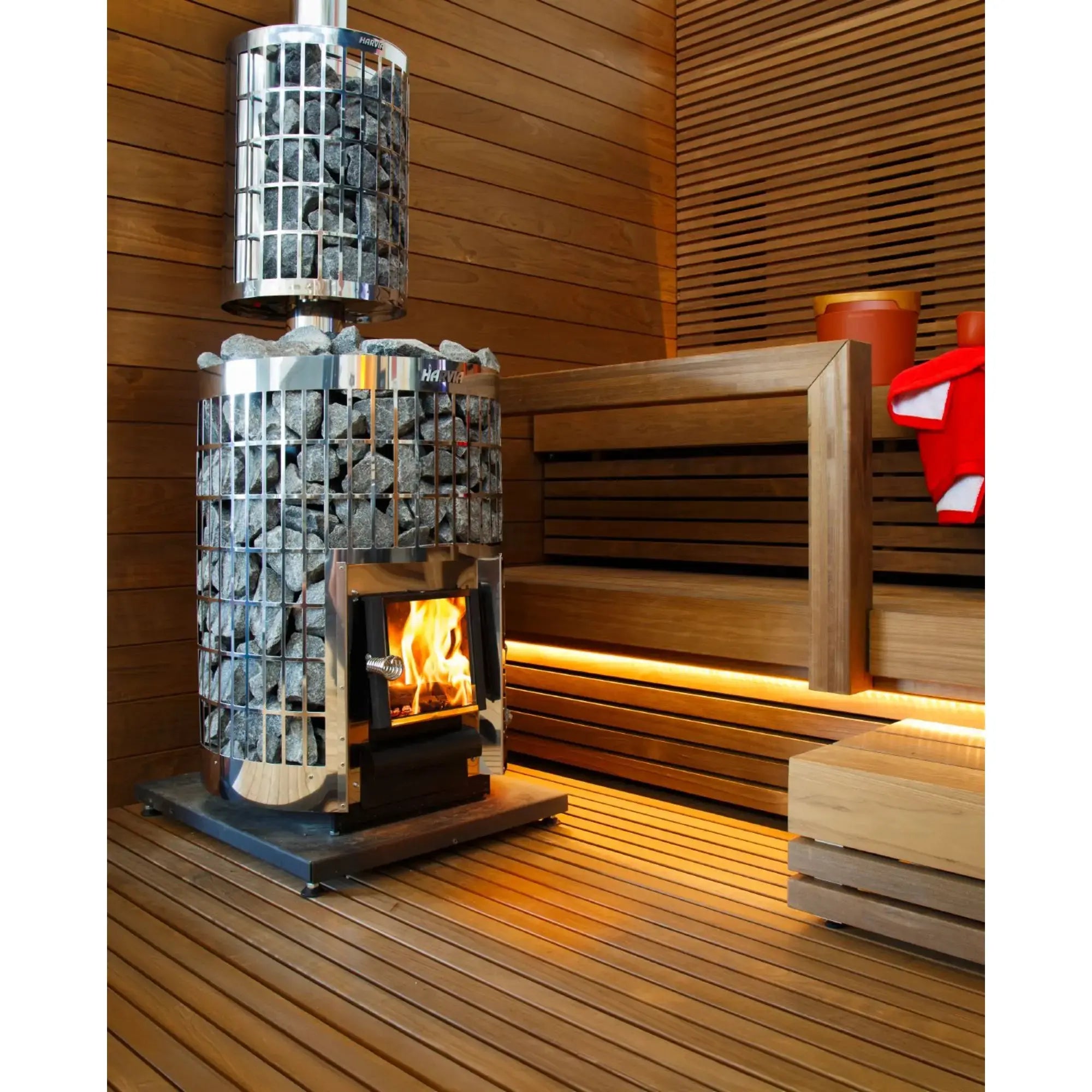
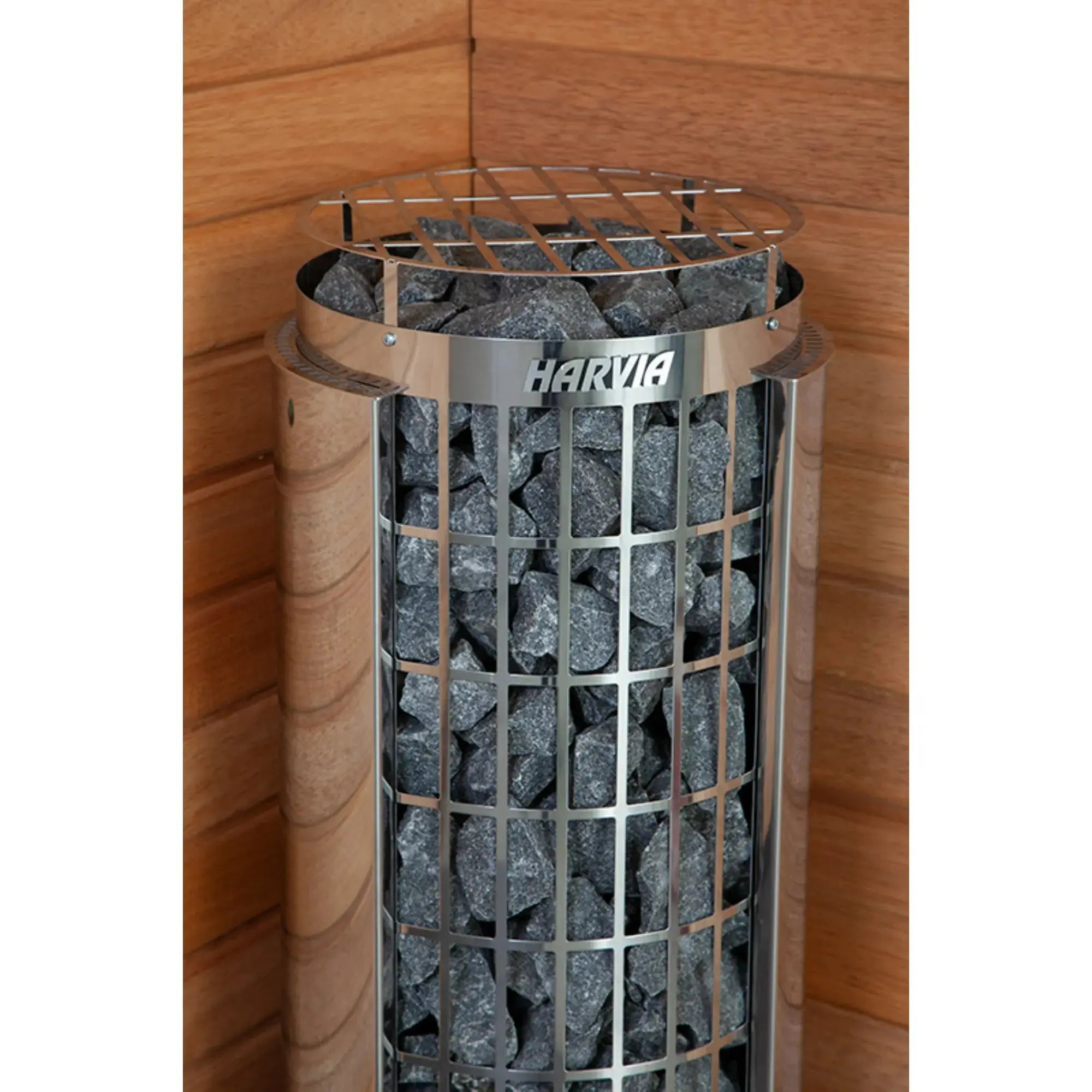
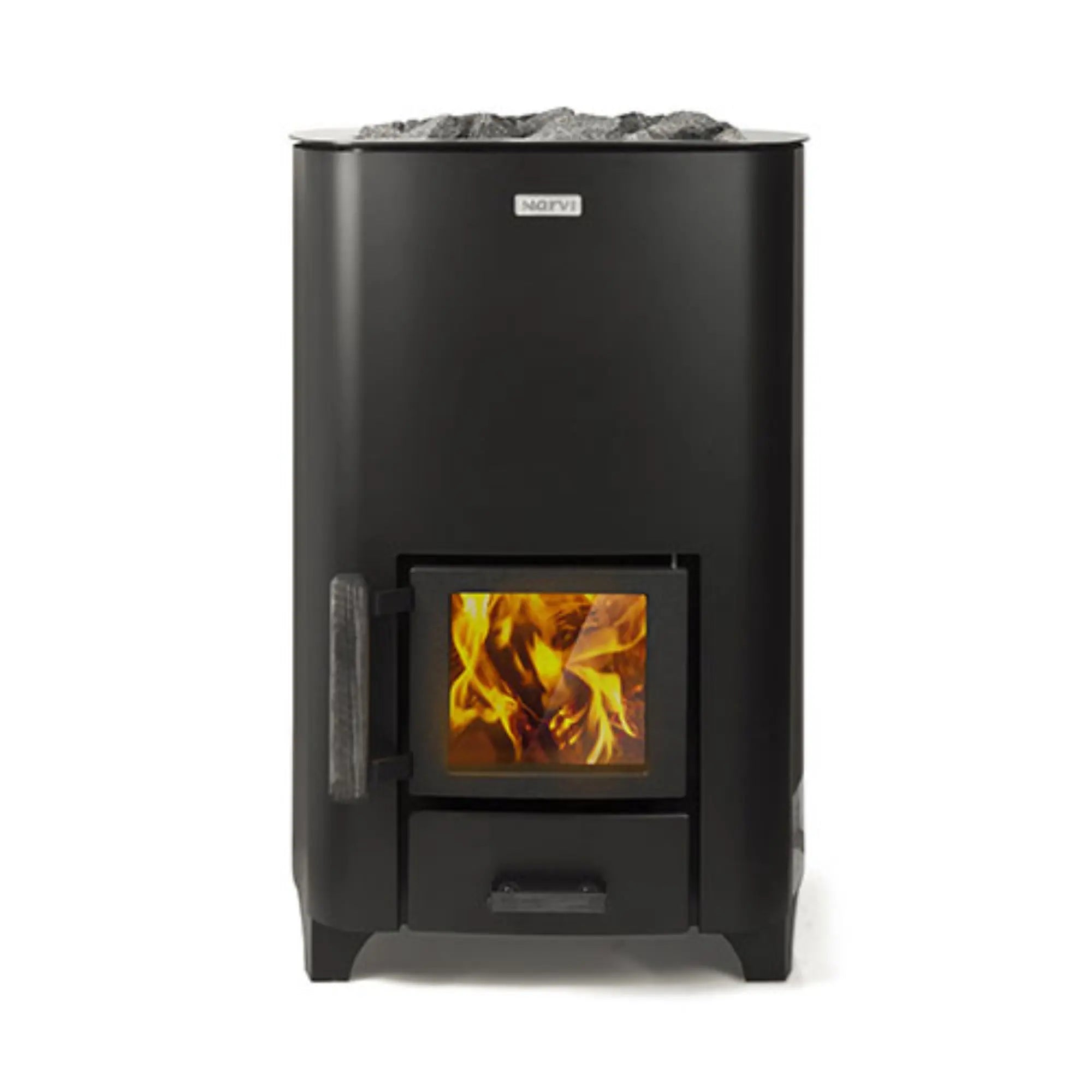
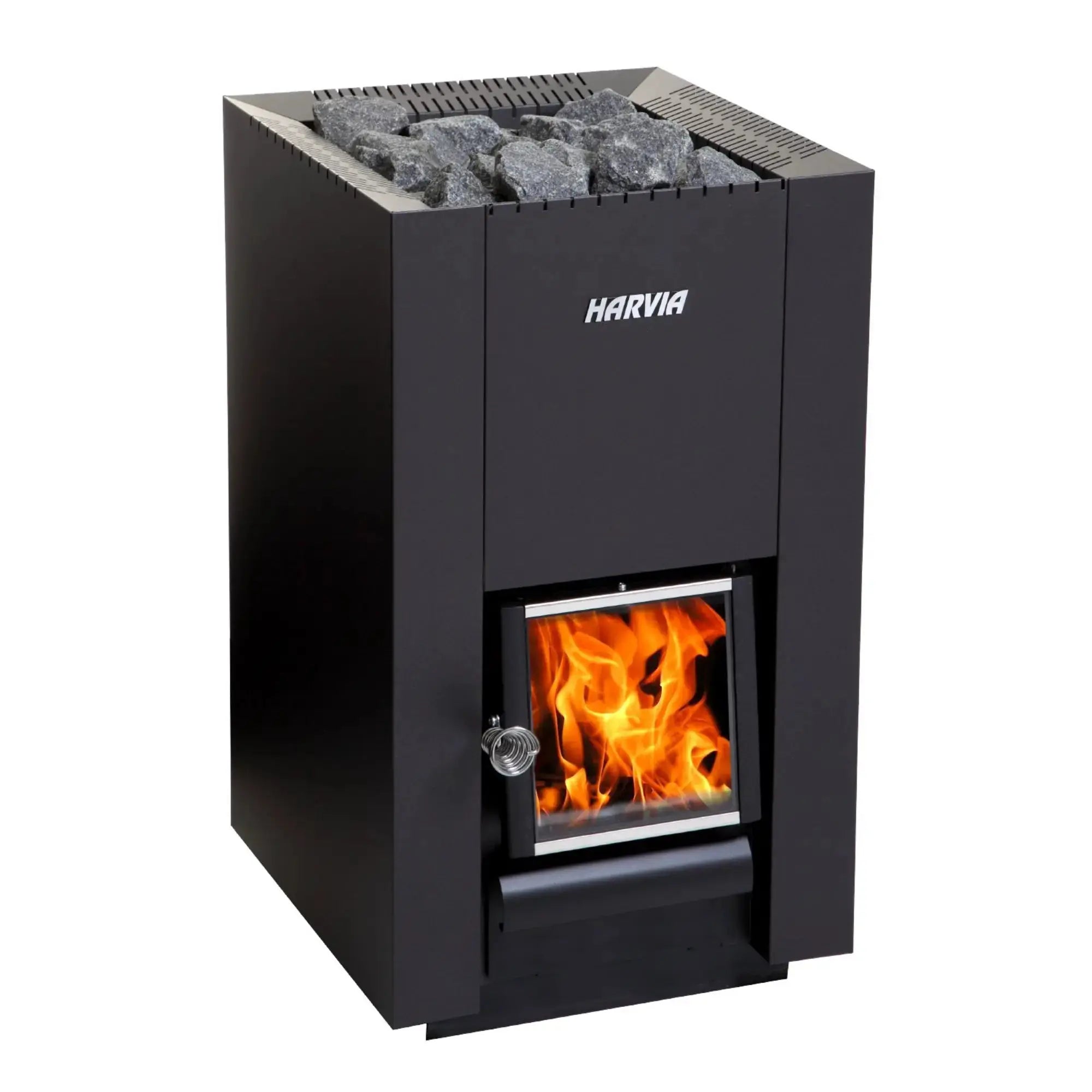
| 16 kW wood | Harvia Cilindro 16 | 212 to 459 cu ft | 4 to 6 person, off grid |
| 17 kW wood | Harvia Cilindro 20 | 283 to 706 cu ft | 6 to 8 person, off grid |
Wood stoves carry a much higher kW number for the same room because a fire delivers heat far less efficiently than a resistance element. Compare each against its own stated volume range, not against each other. HUUM publishes the underlying calculation if you want to see where the volume ranges come from.
Work out your room with our sauna heater size calculator, or read how to choose sauna size for your backyard if you are still deciding on the room itself.
Electric or wood-burning: which should you buy?
Buy electric if you have or can run 240V power to the sauna. Buy wood-burning if you can't, or if you want the fire itself. That's most of the decision. Everything below fills in the details.
| Electric | Wood-burning | |
|---|---|---|
| Heat-up time | 30 to 60 minutes, unattended | 45 to 75 minutes, needs tending |
| Start it from indoors | Yes, with a control unit or app | No |
| What it needs installed | Dedicated hardwired circuit, licensed electrician | Code-compliant chimney, floor protection, usually a permit and inspection |
| Running cost | Metered electricity per session | Firewood, plus your time |
| Stone load | 44 to 528 lb depending on format | 77 lb to 264 lb depending on the stove |
| Heat after shutdown | Fades quickly | Stones keep giving for an hour or more |
| Best for | Weeknight use, indoor saunas, anyone who wants it ready on arrival | Cabins, off-grid sites, weekend rituals |
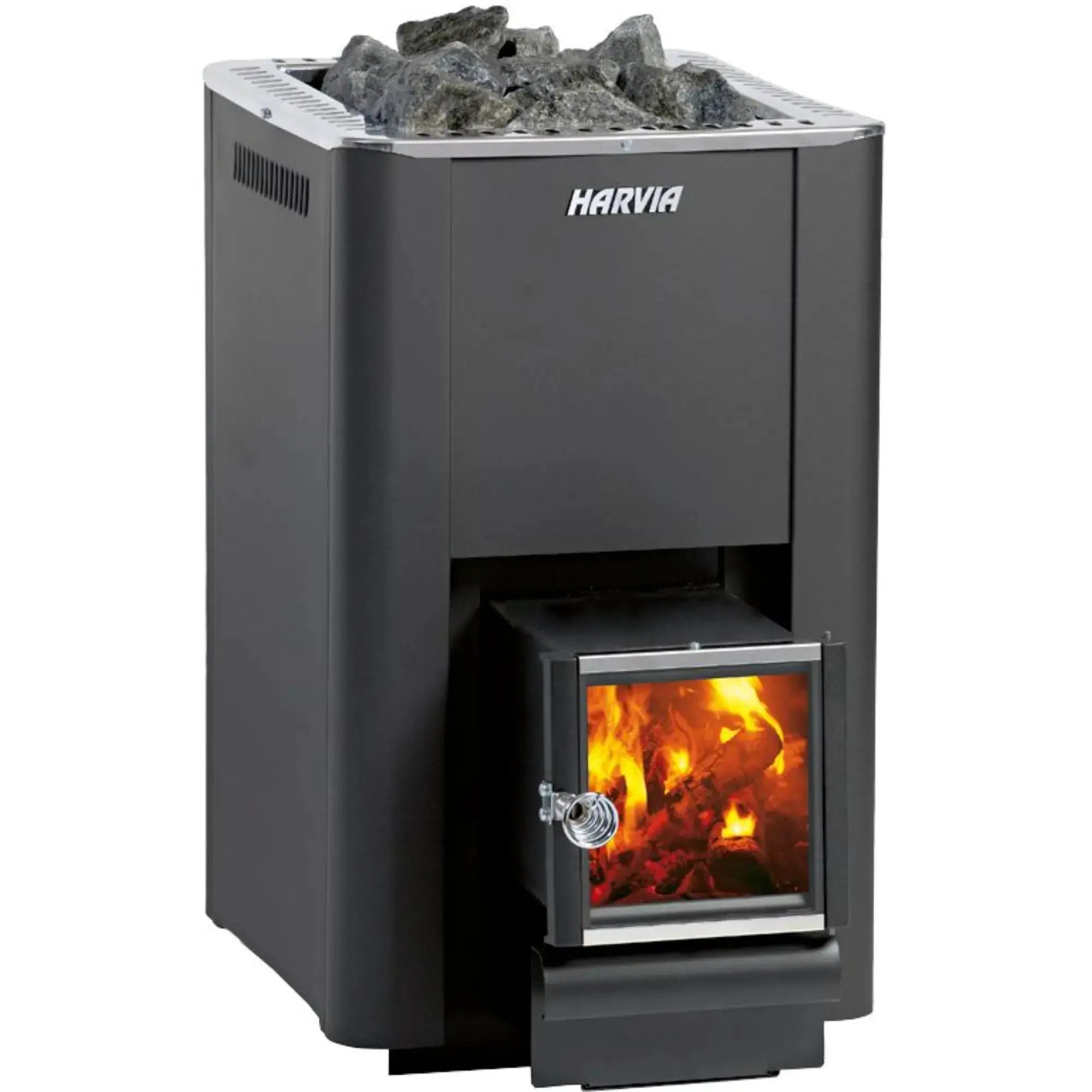
Here's the trade-off. Electric is far more convenient, and a sauna that's inconvenient to start doesn't get used. Wood is better for atmosphere and for the quality of the heat. That's because a wood stove's stone load, 77 lb to 264 lb depending on the model, holds more energy than 44 lb does. If you'll use the sauna twice a week after work, buy electric. If it's a Saturday-afternoon thing at a cabin, buy wood.

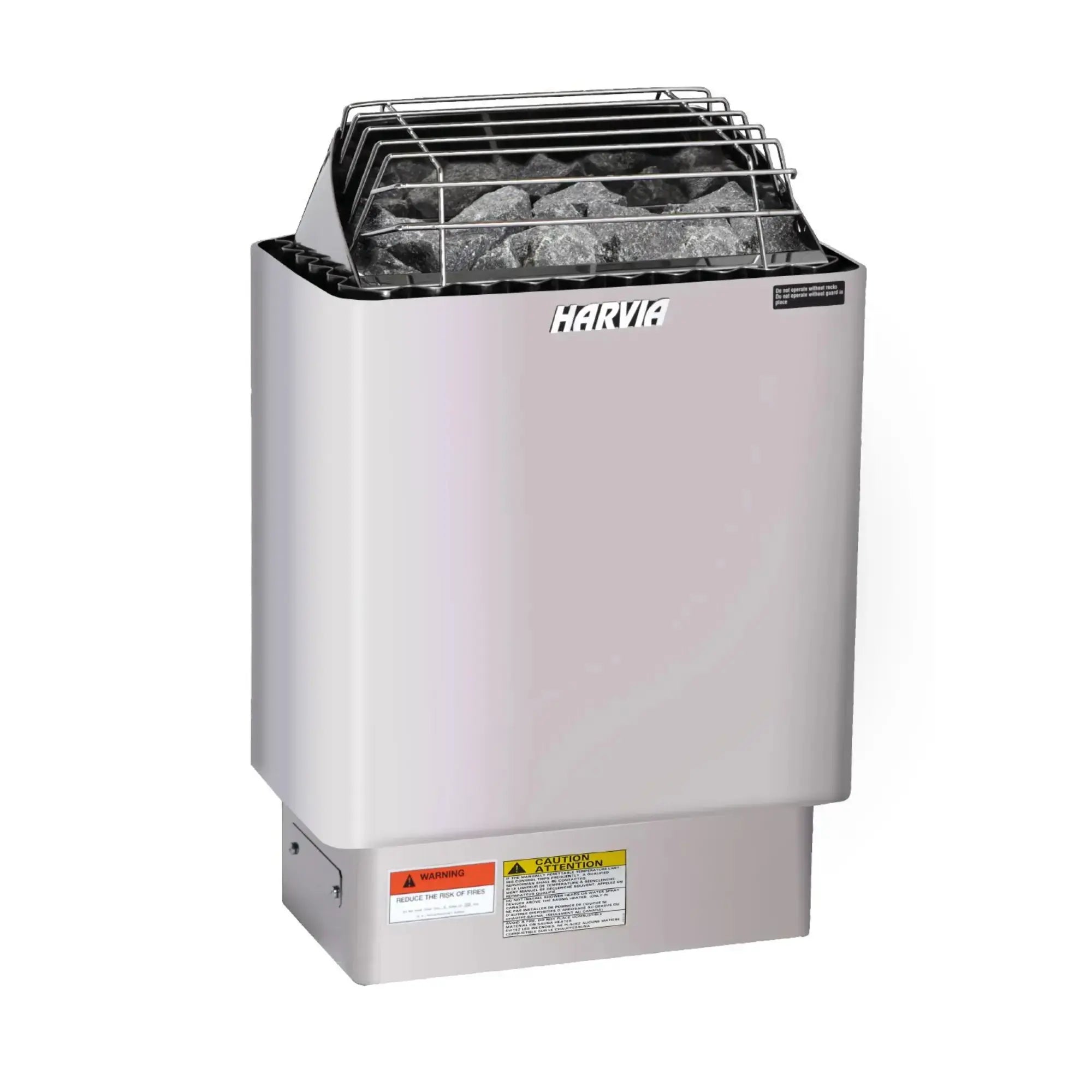
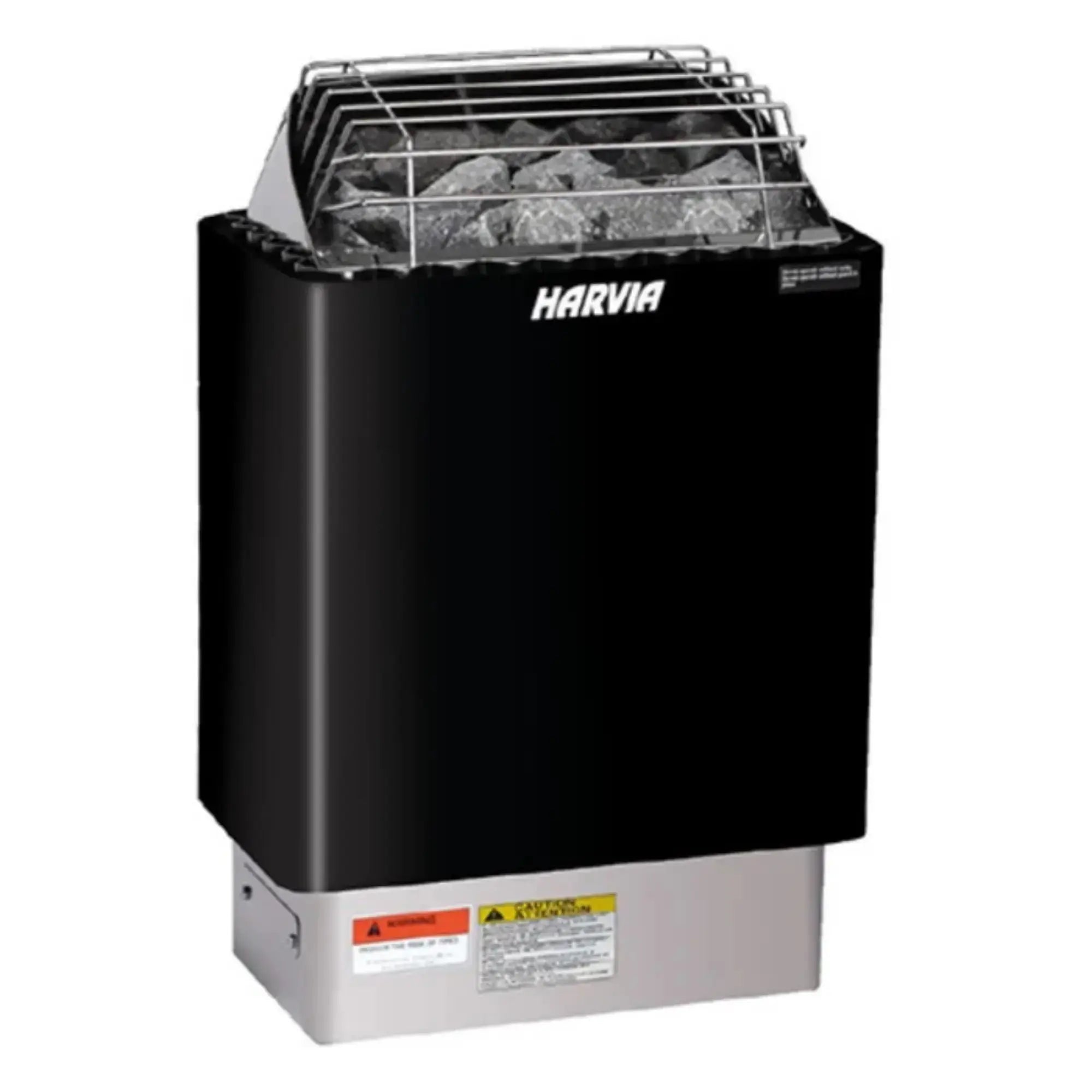
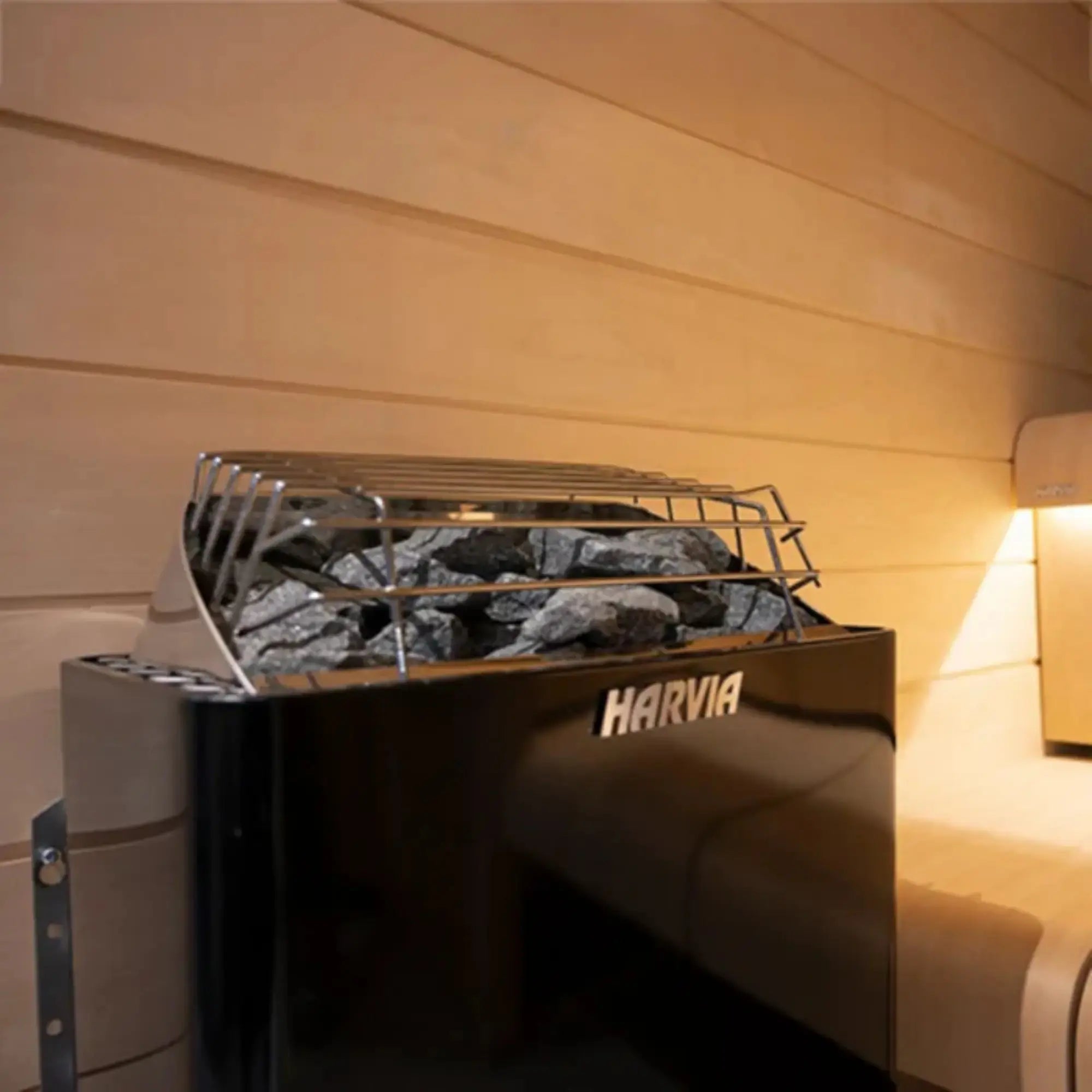
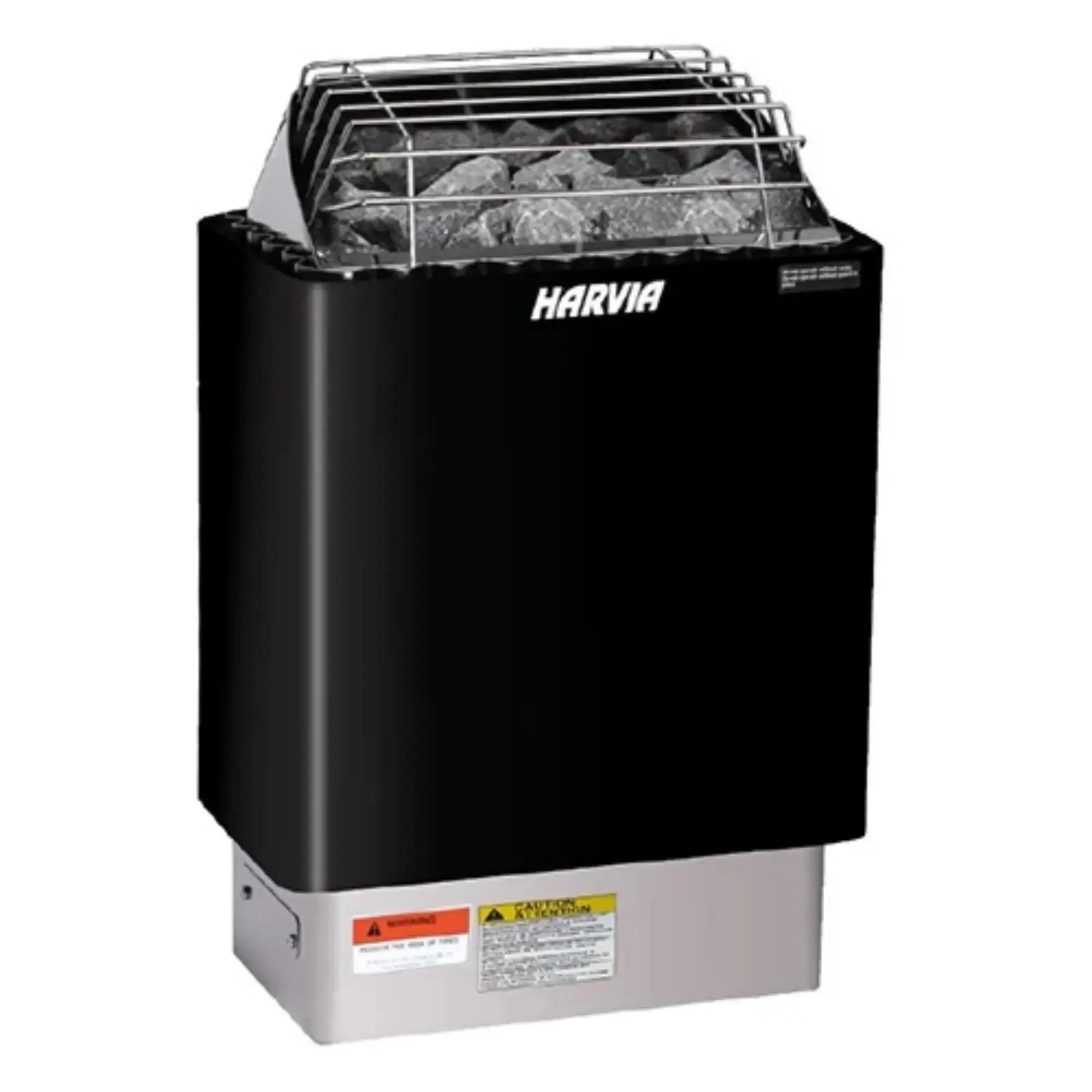
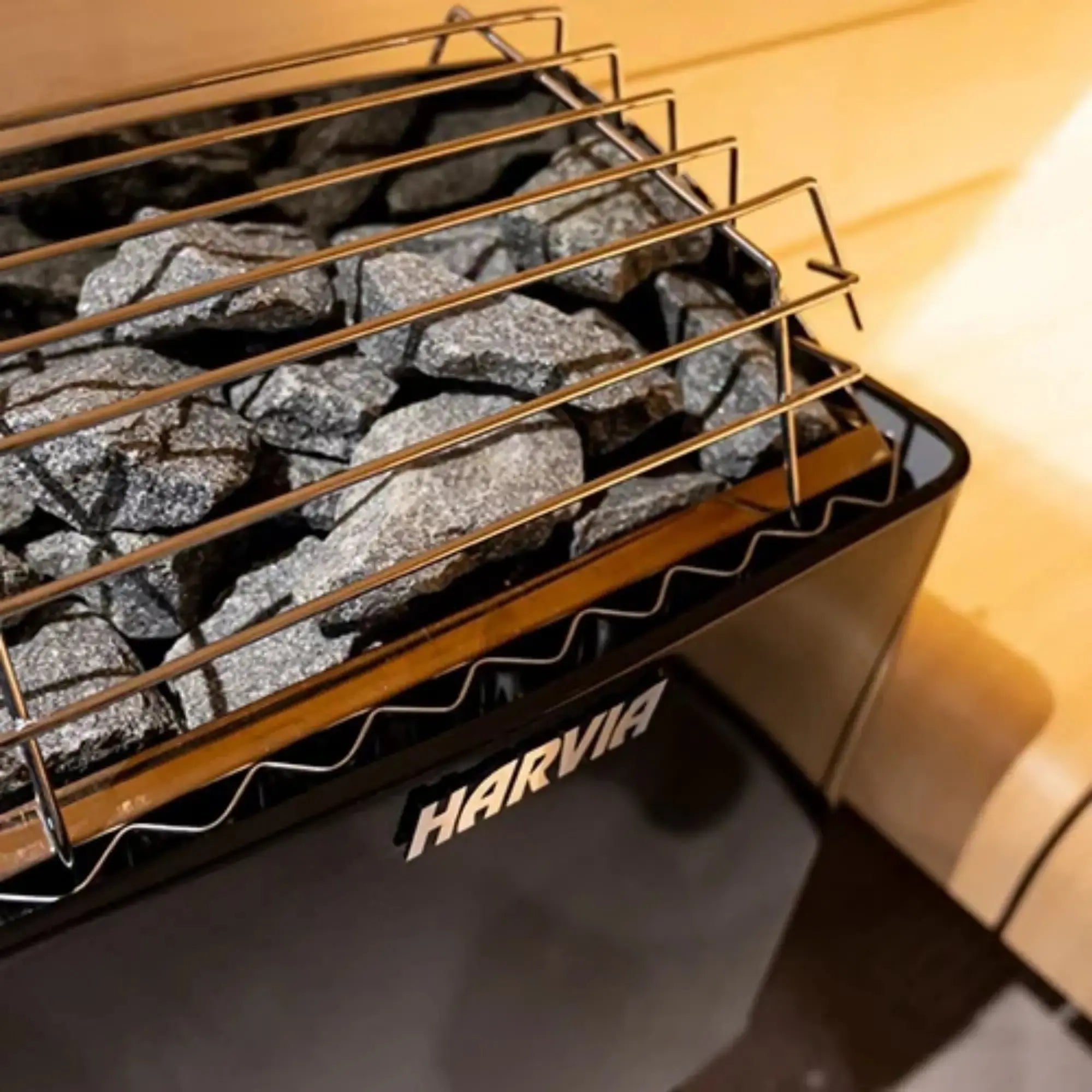
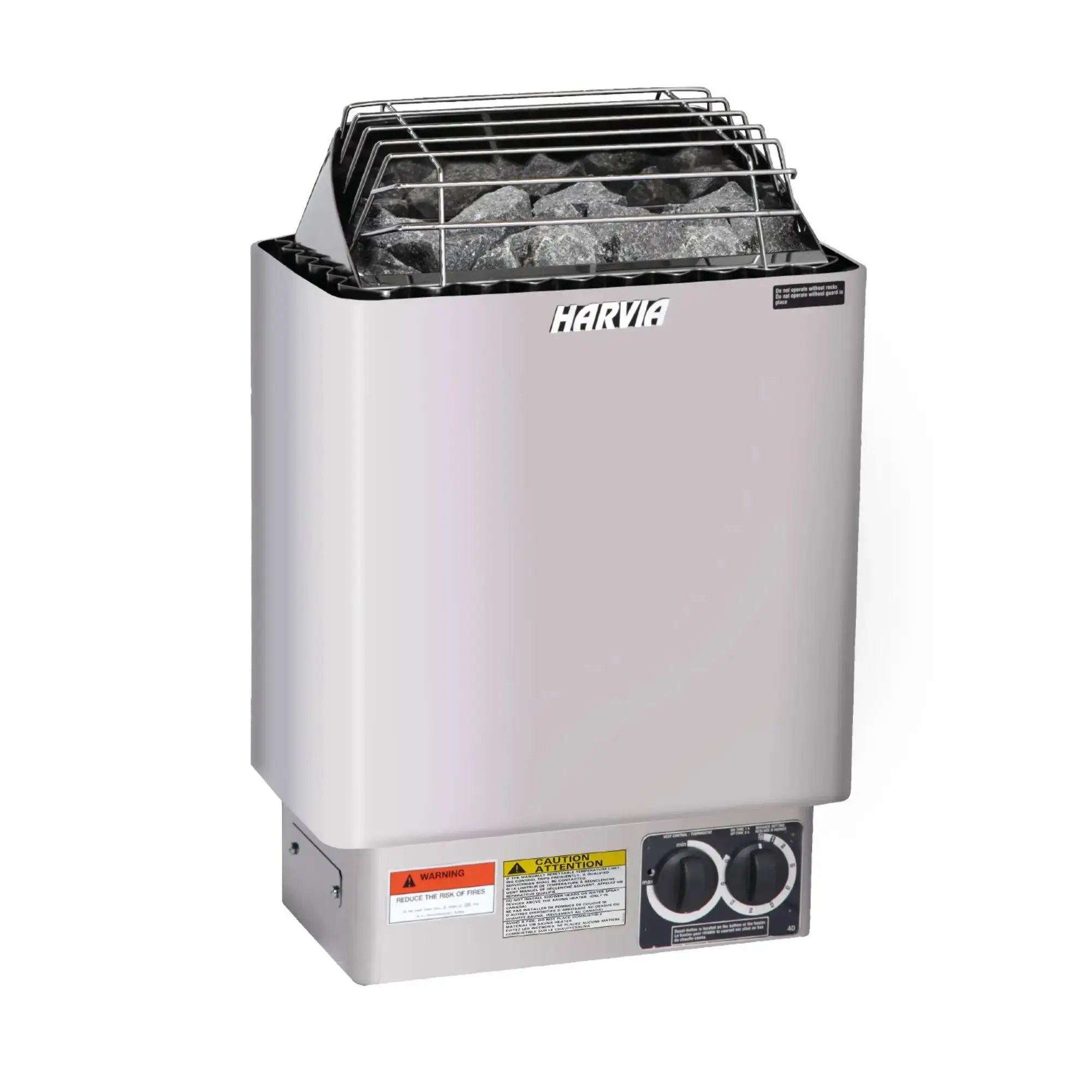
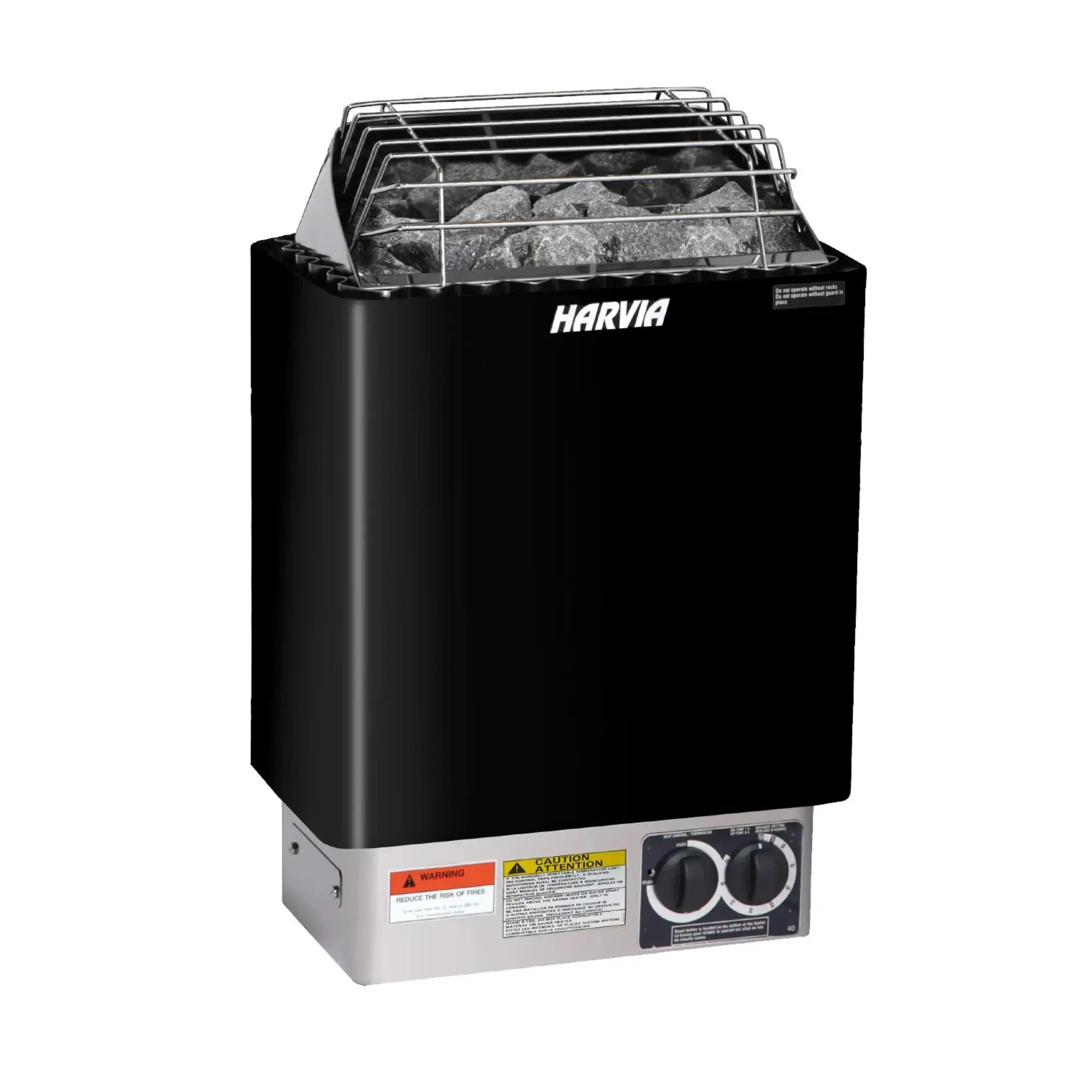
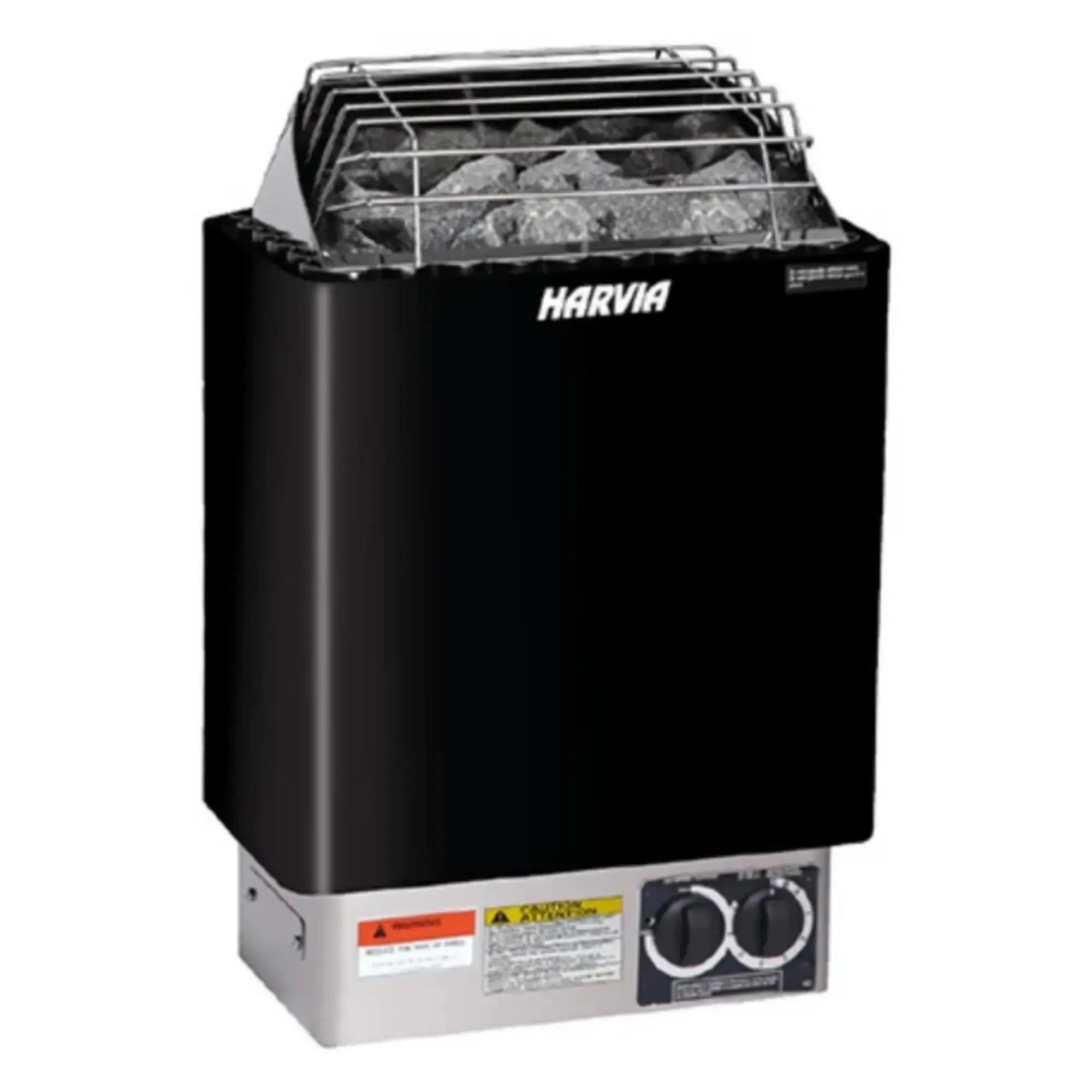
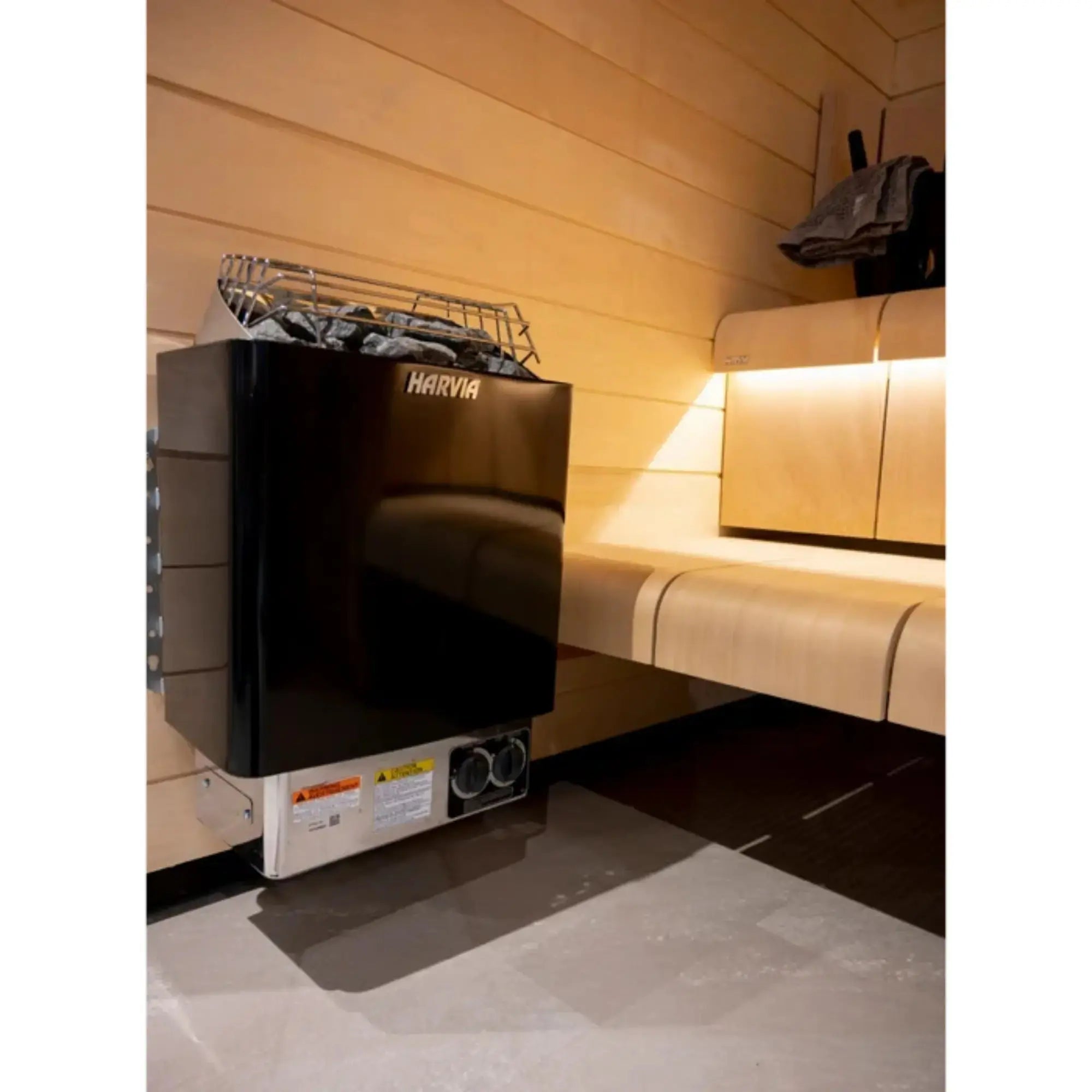
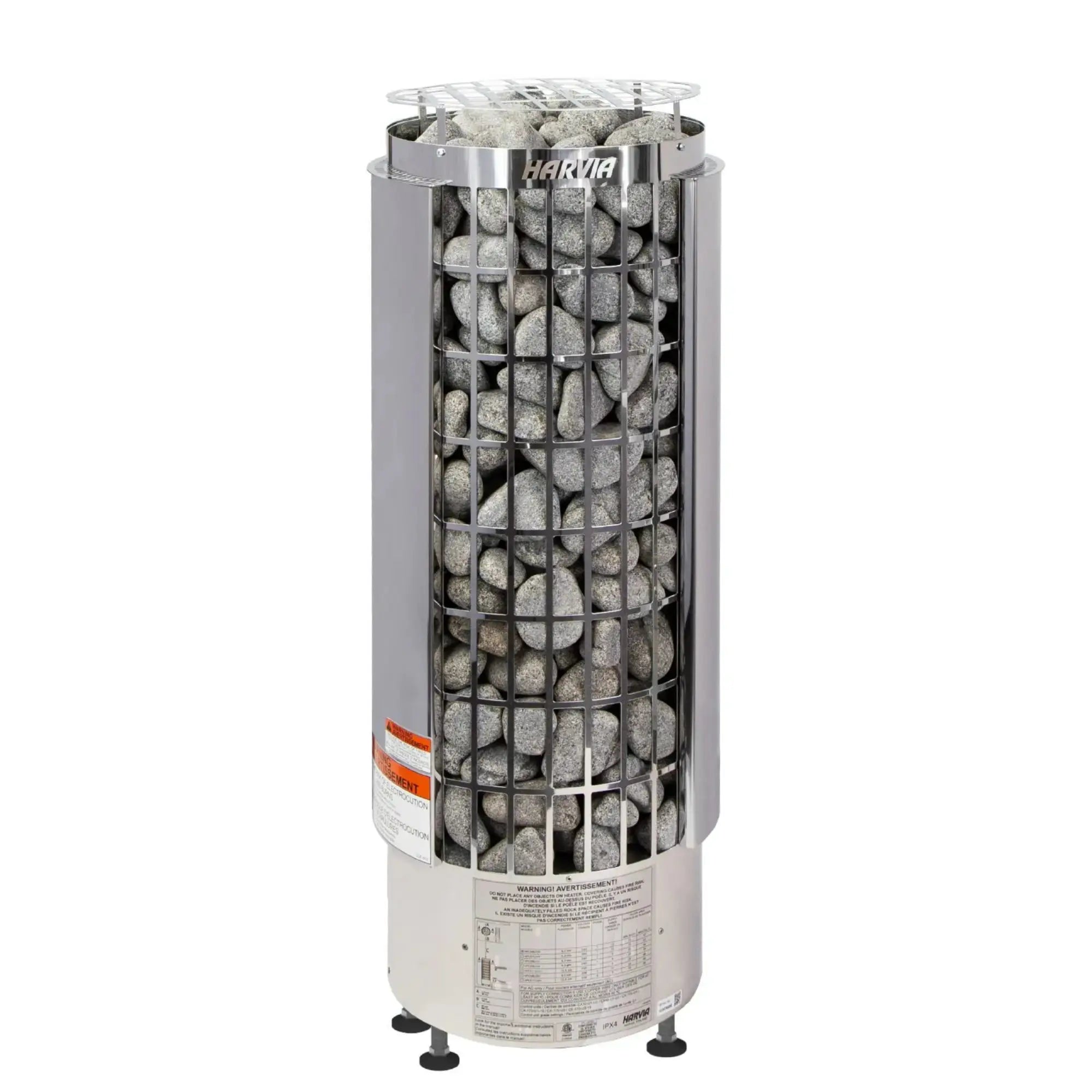
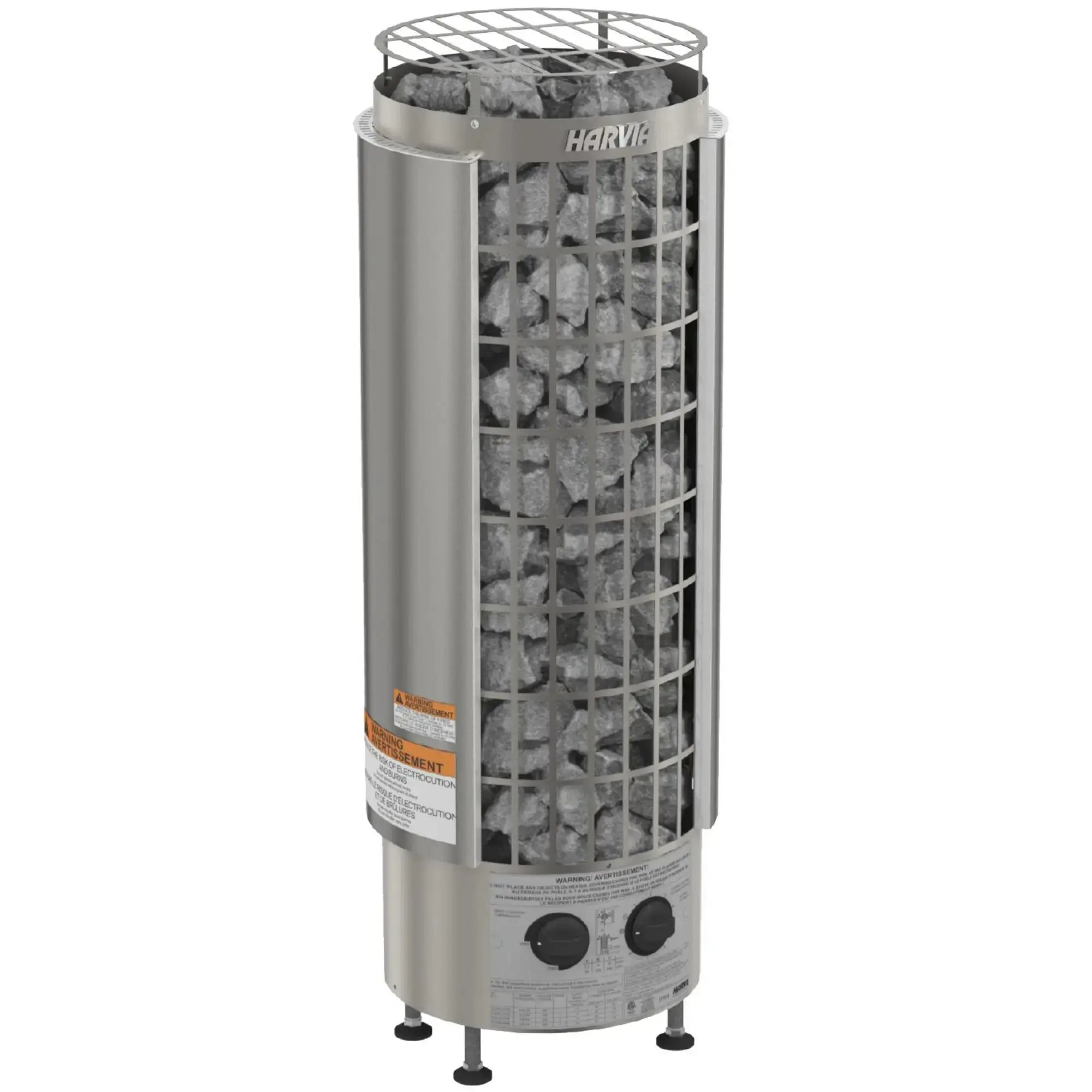
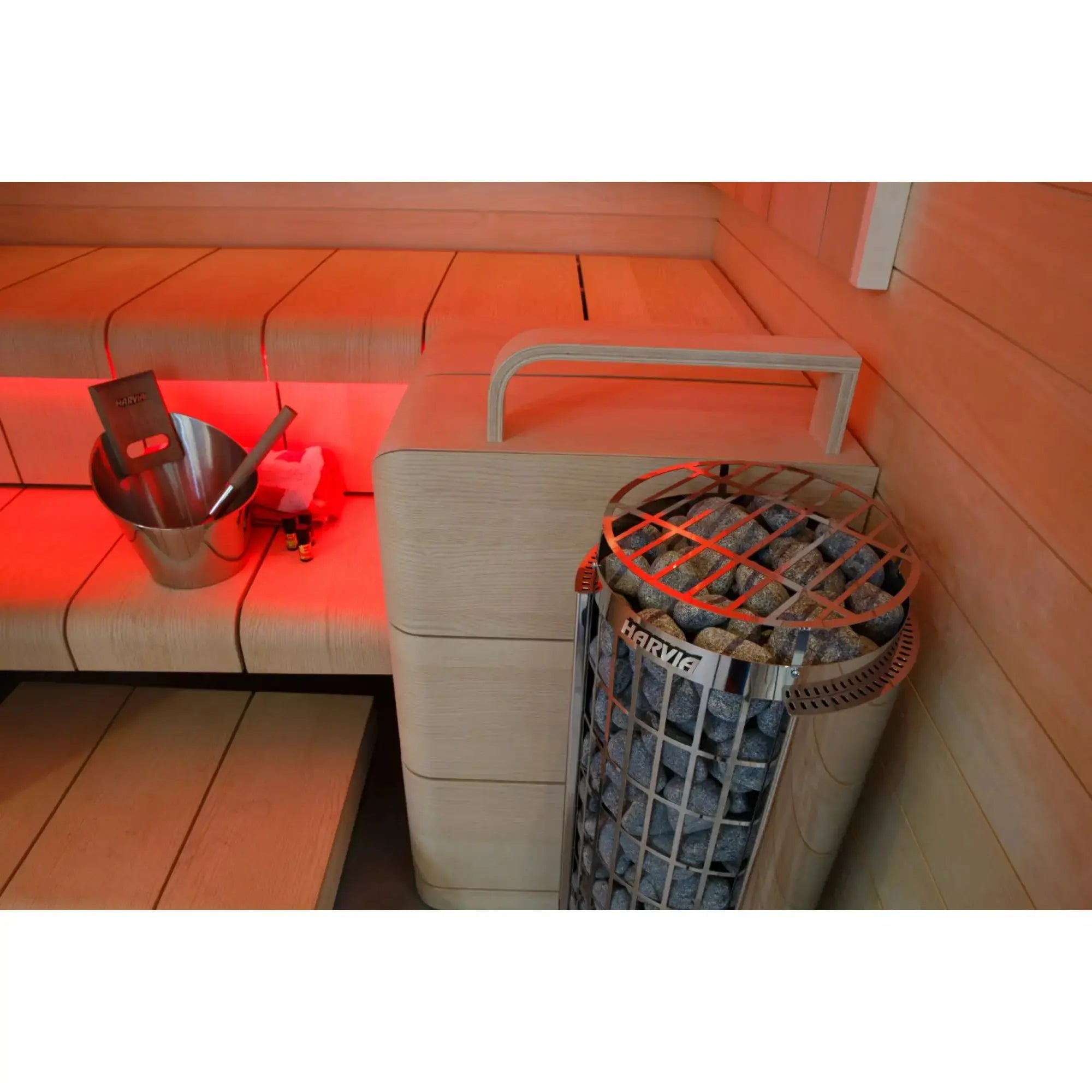
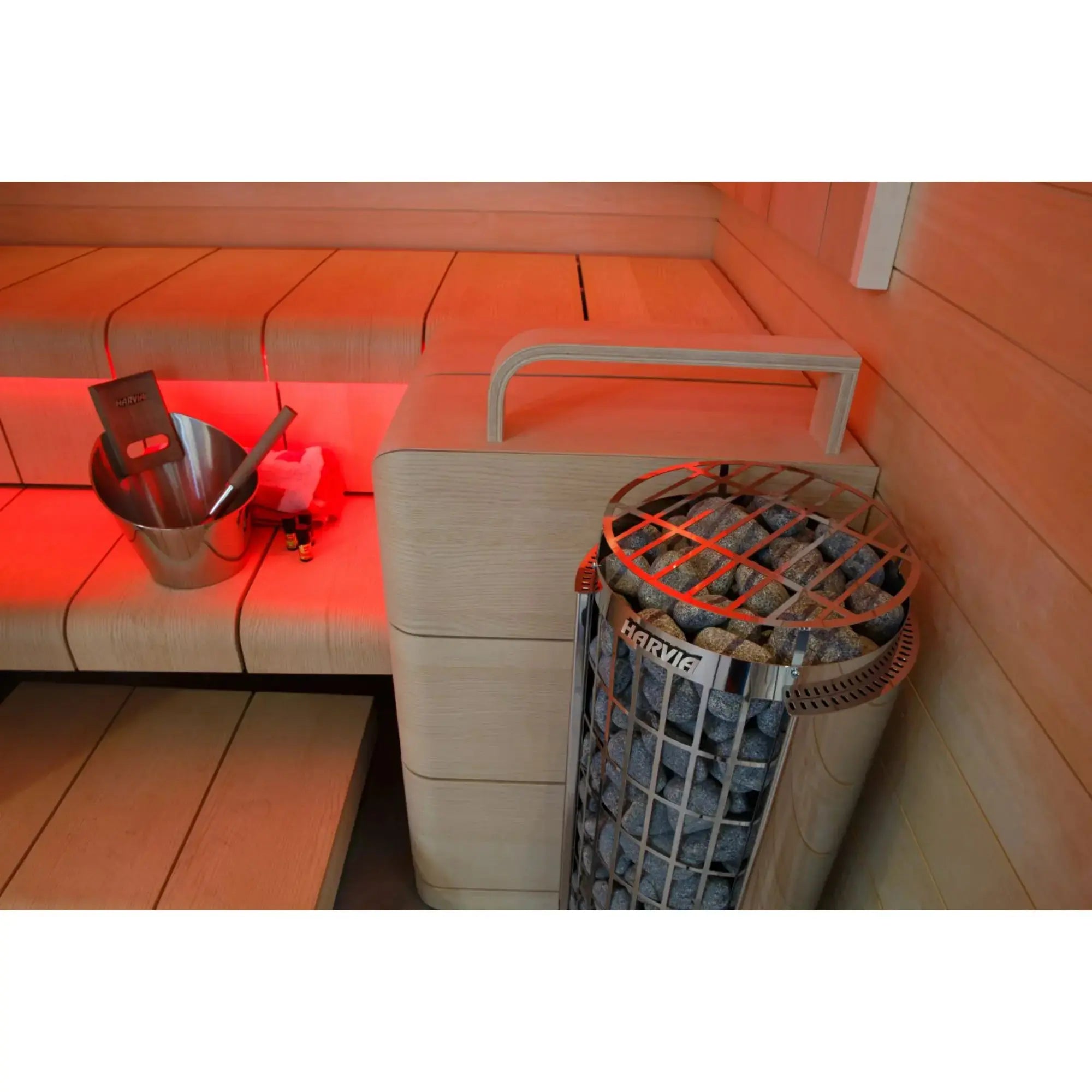
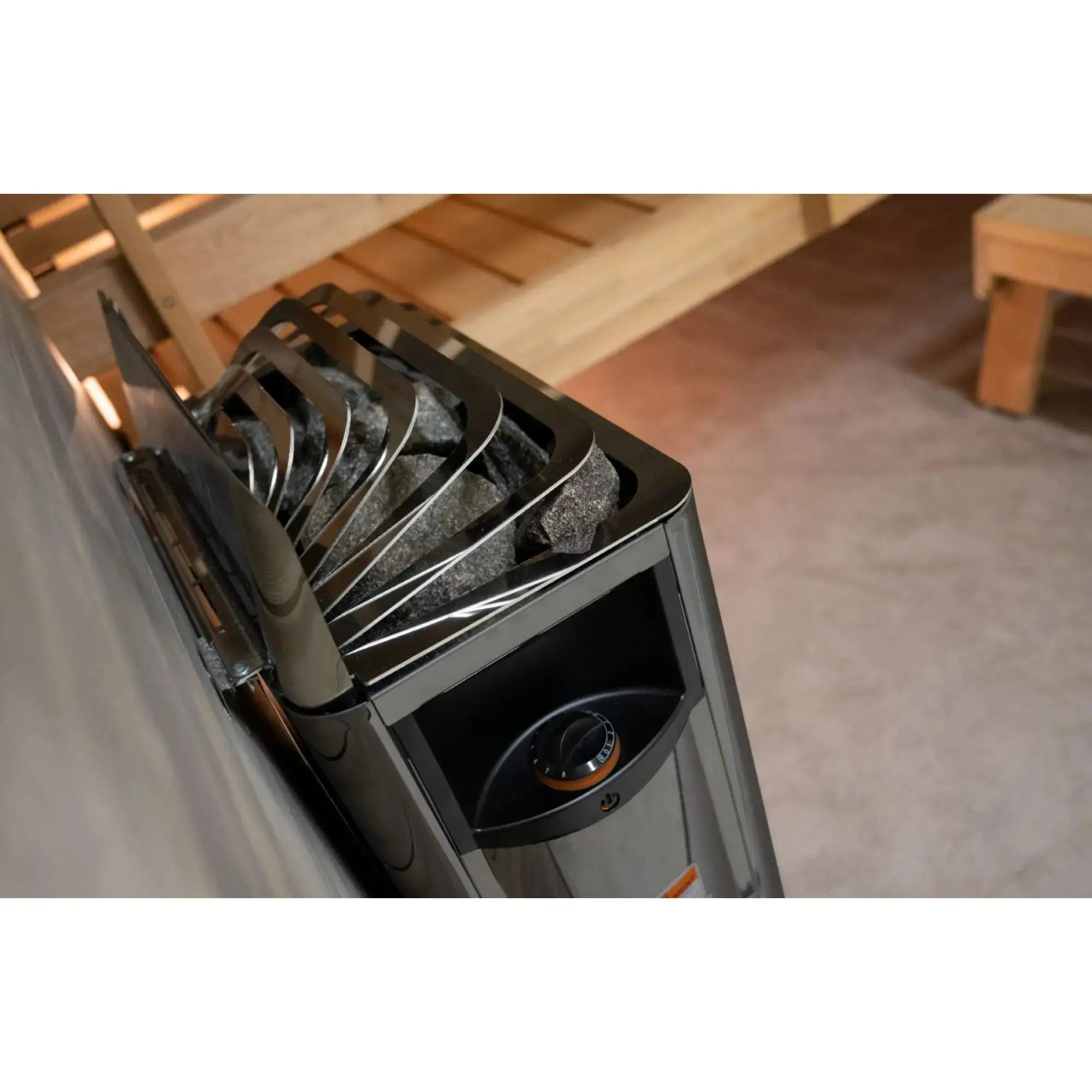
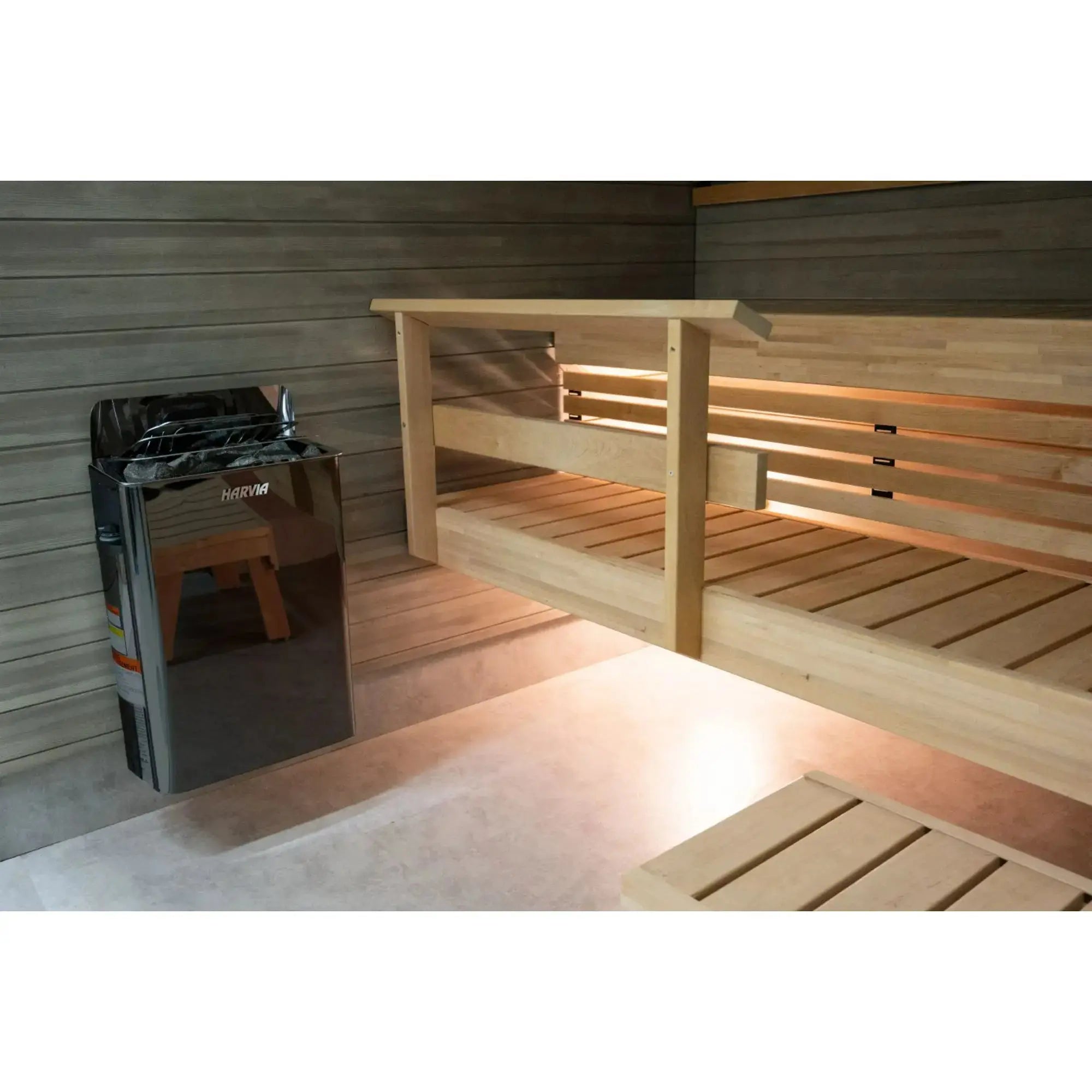
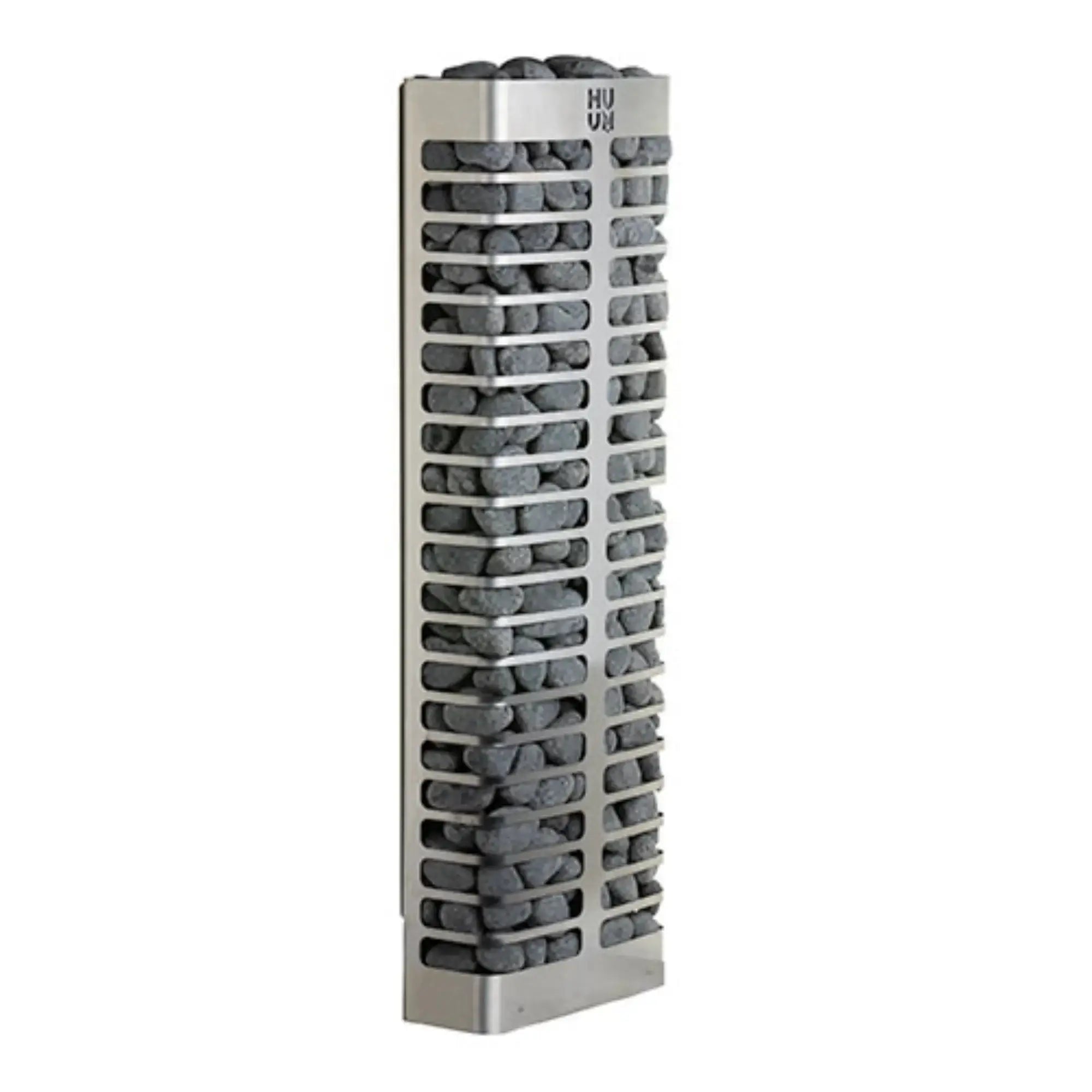
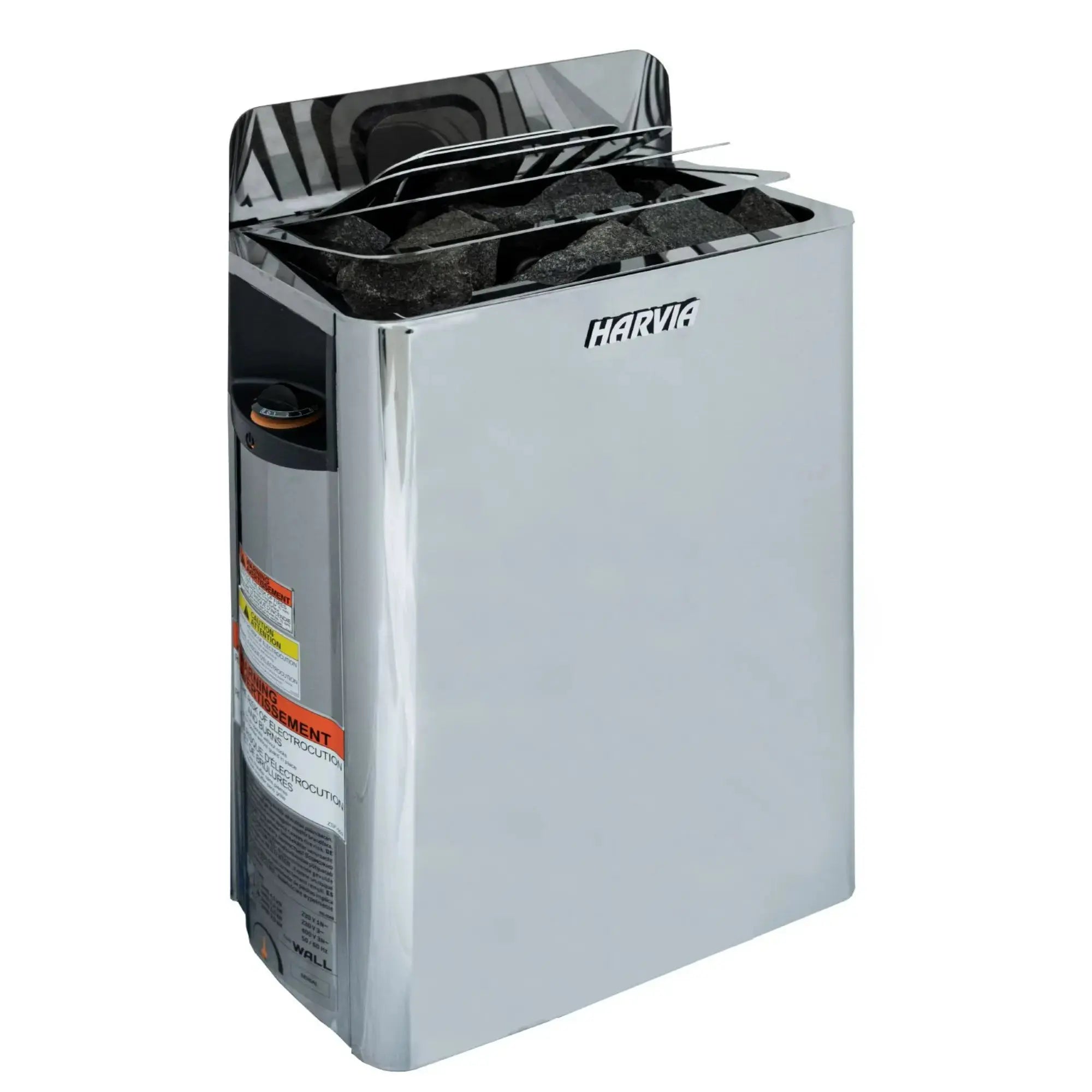
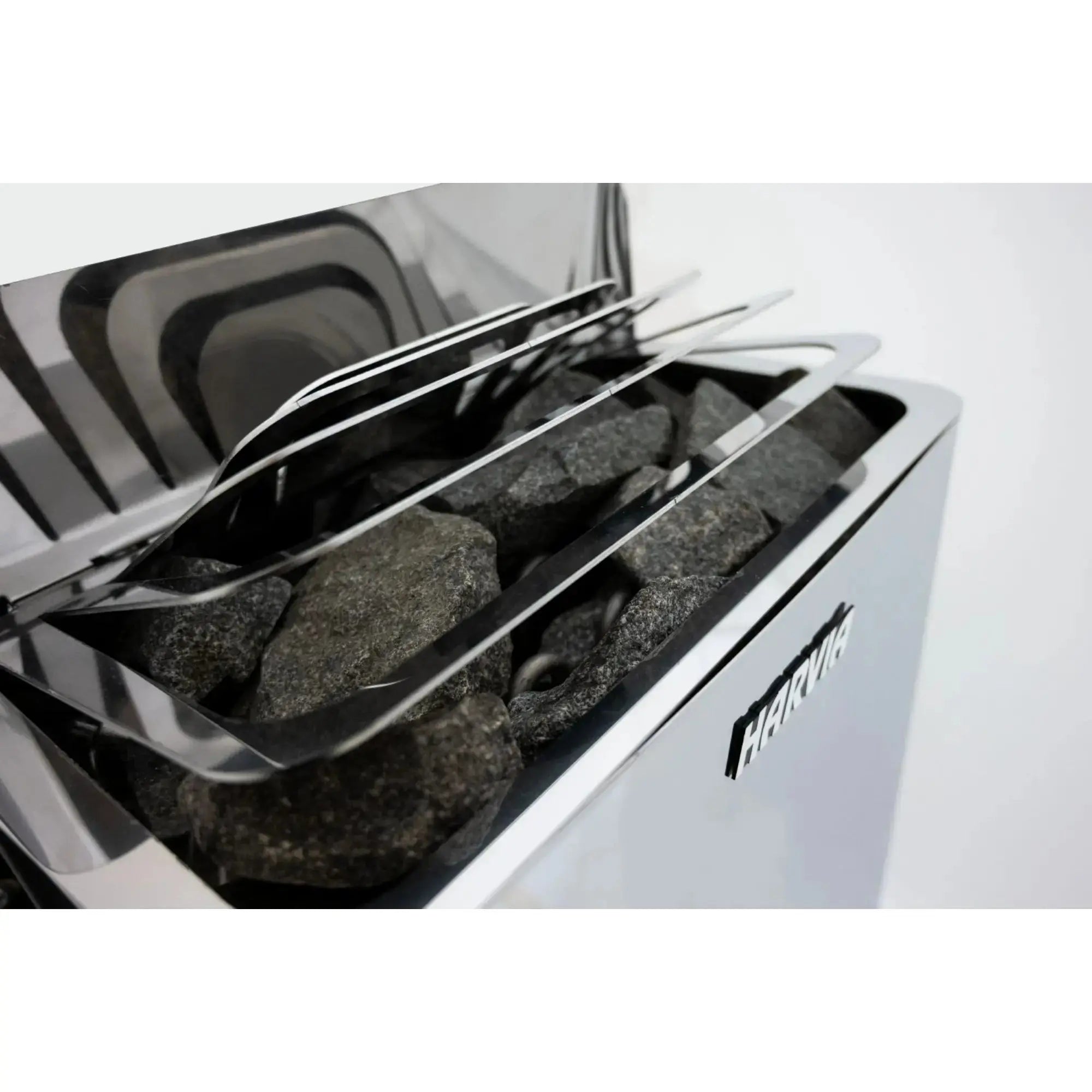
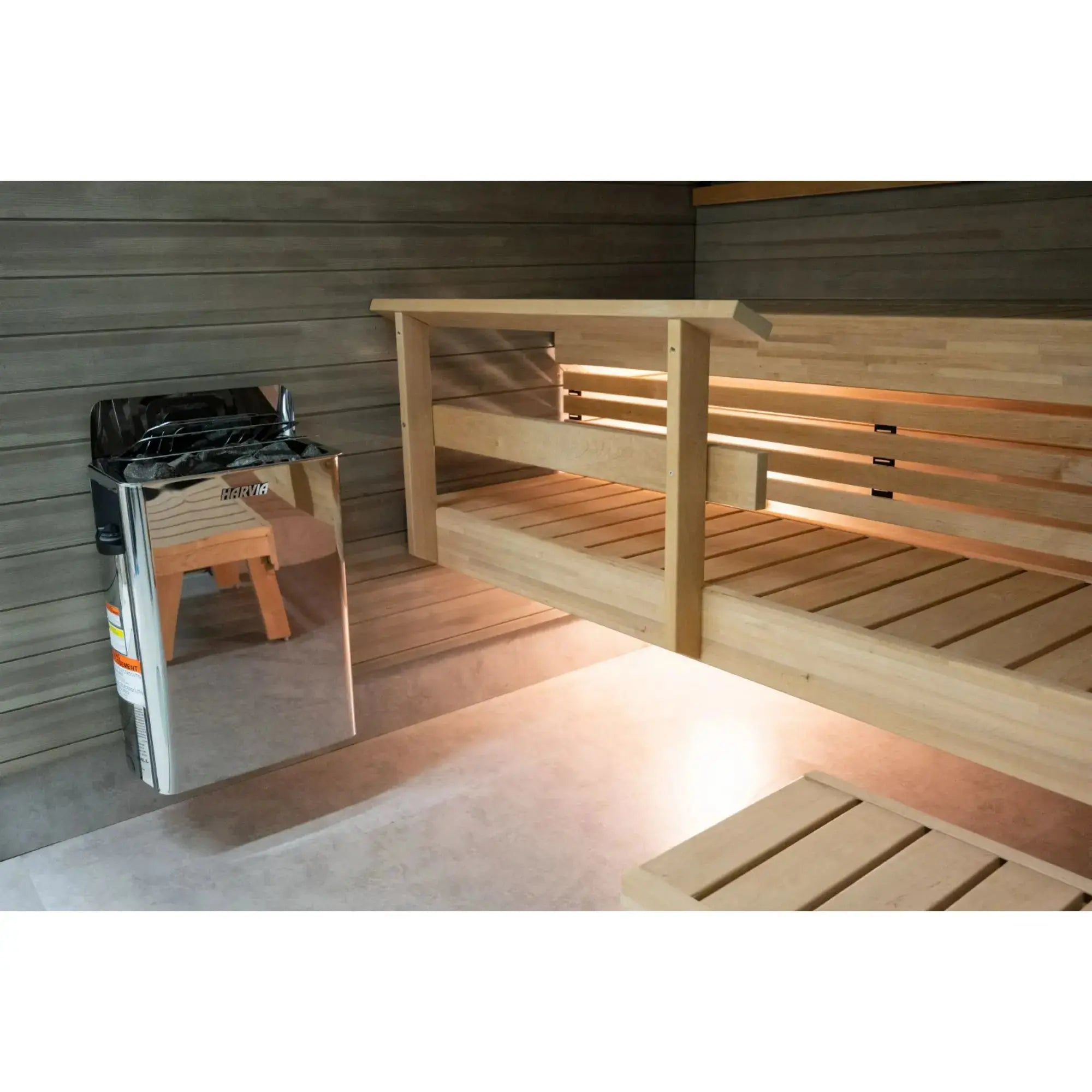
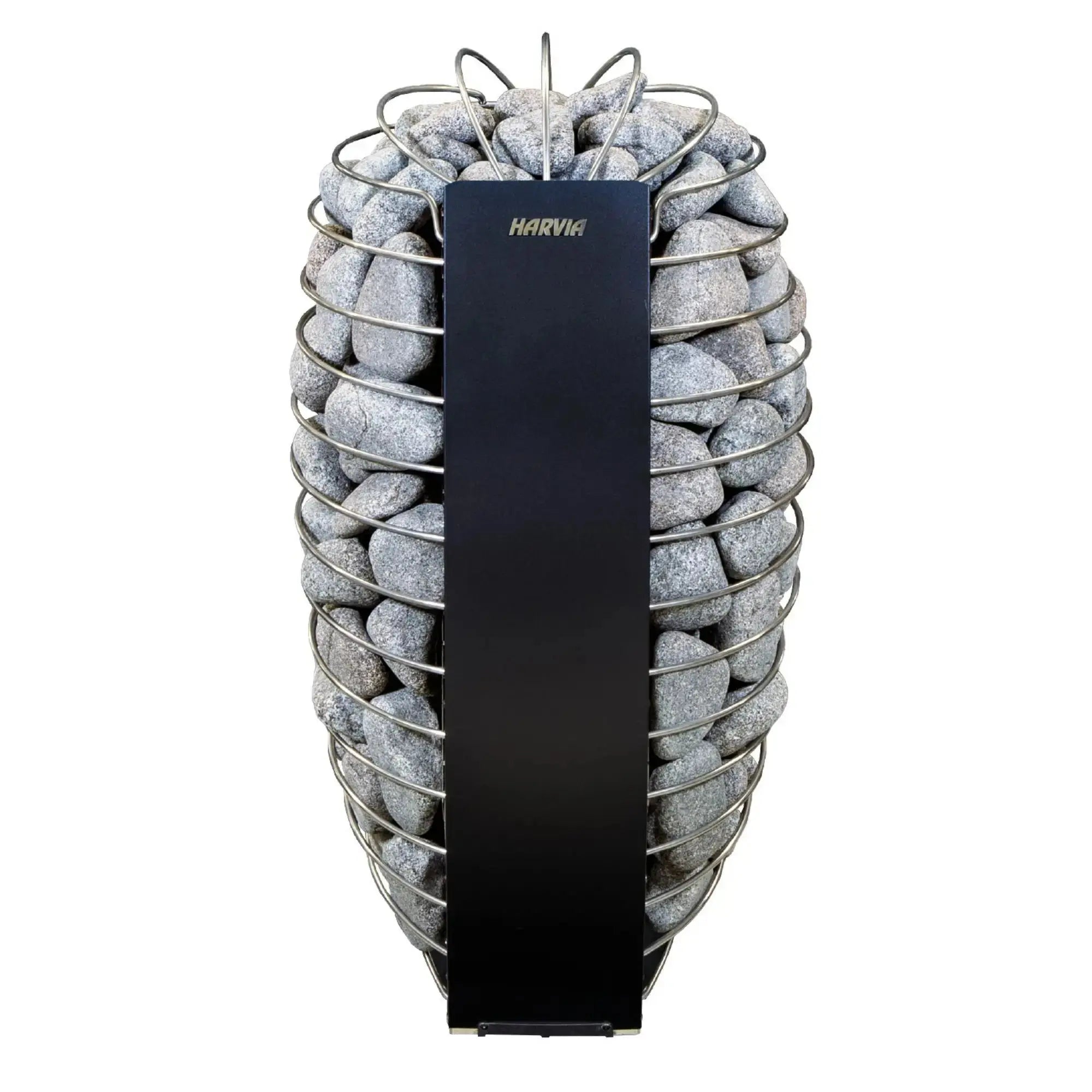
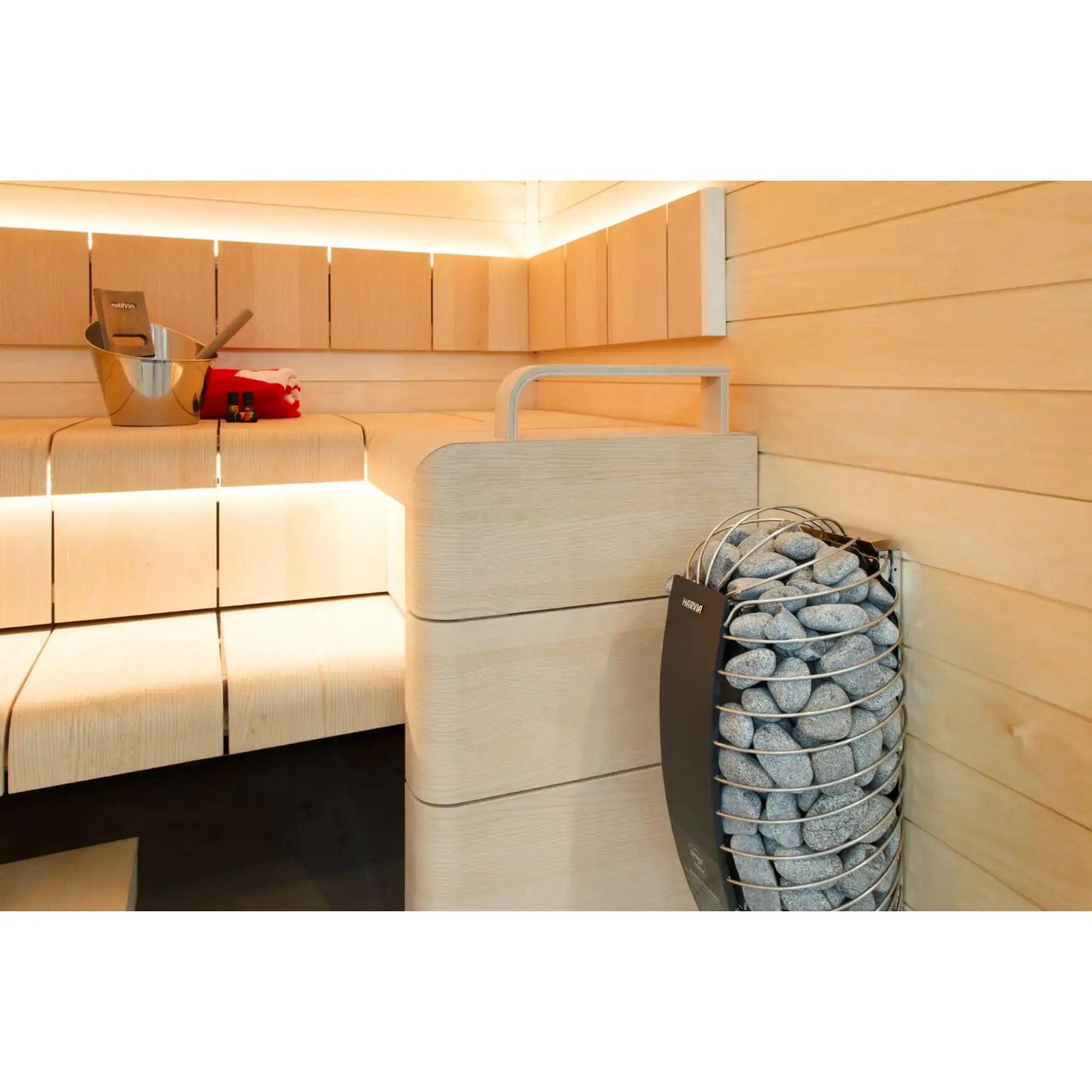
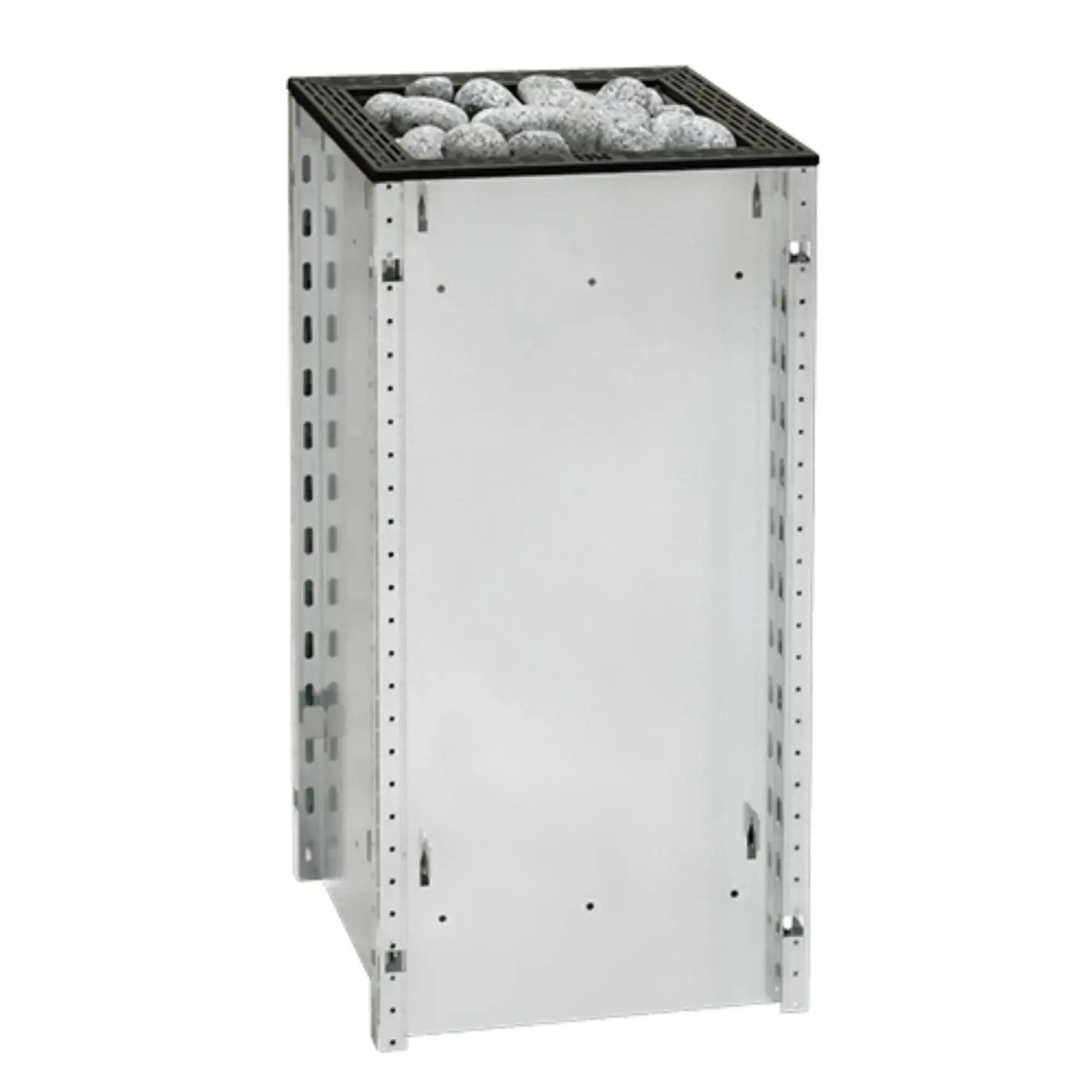
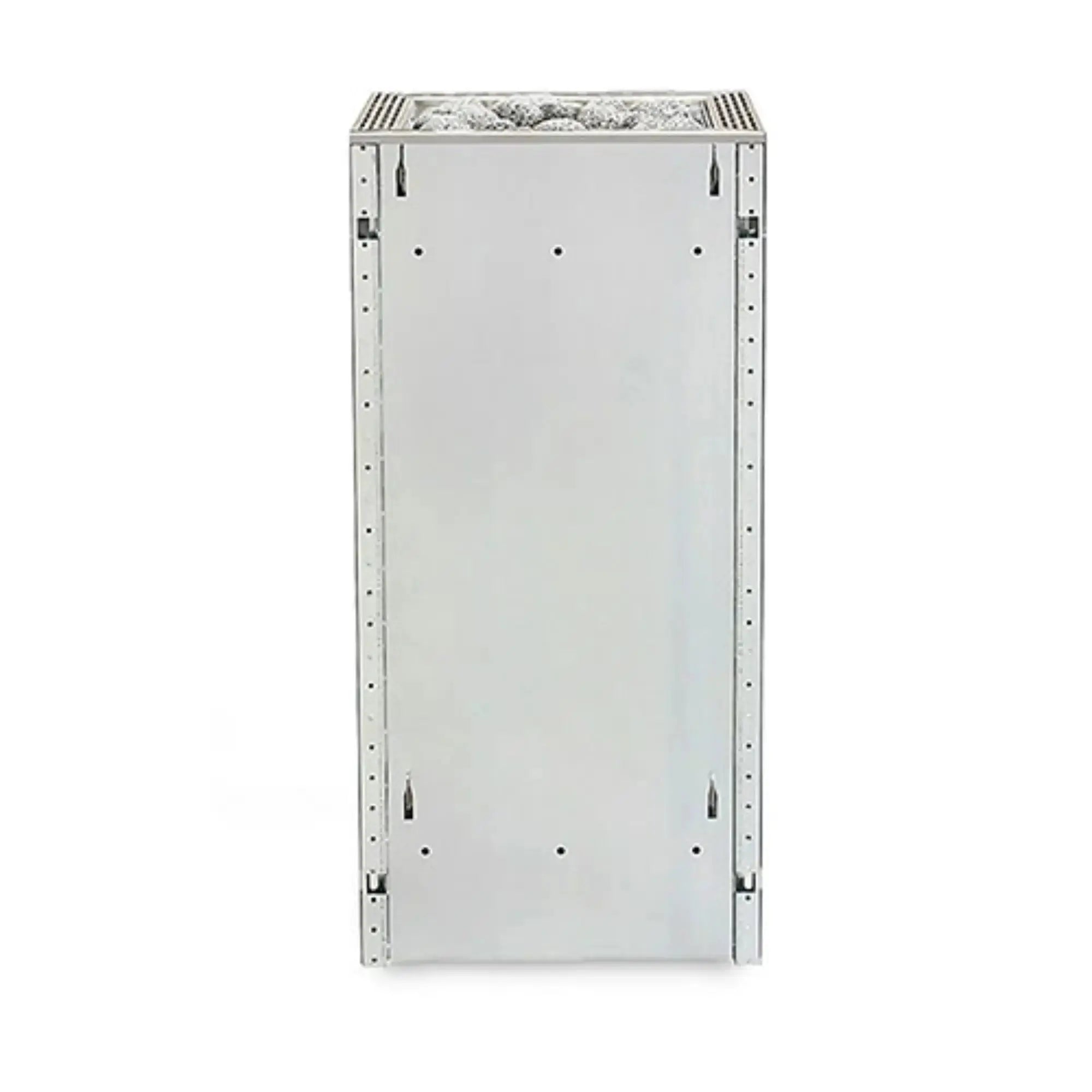
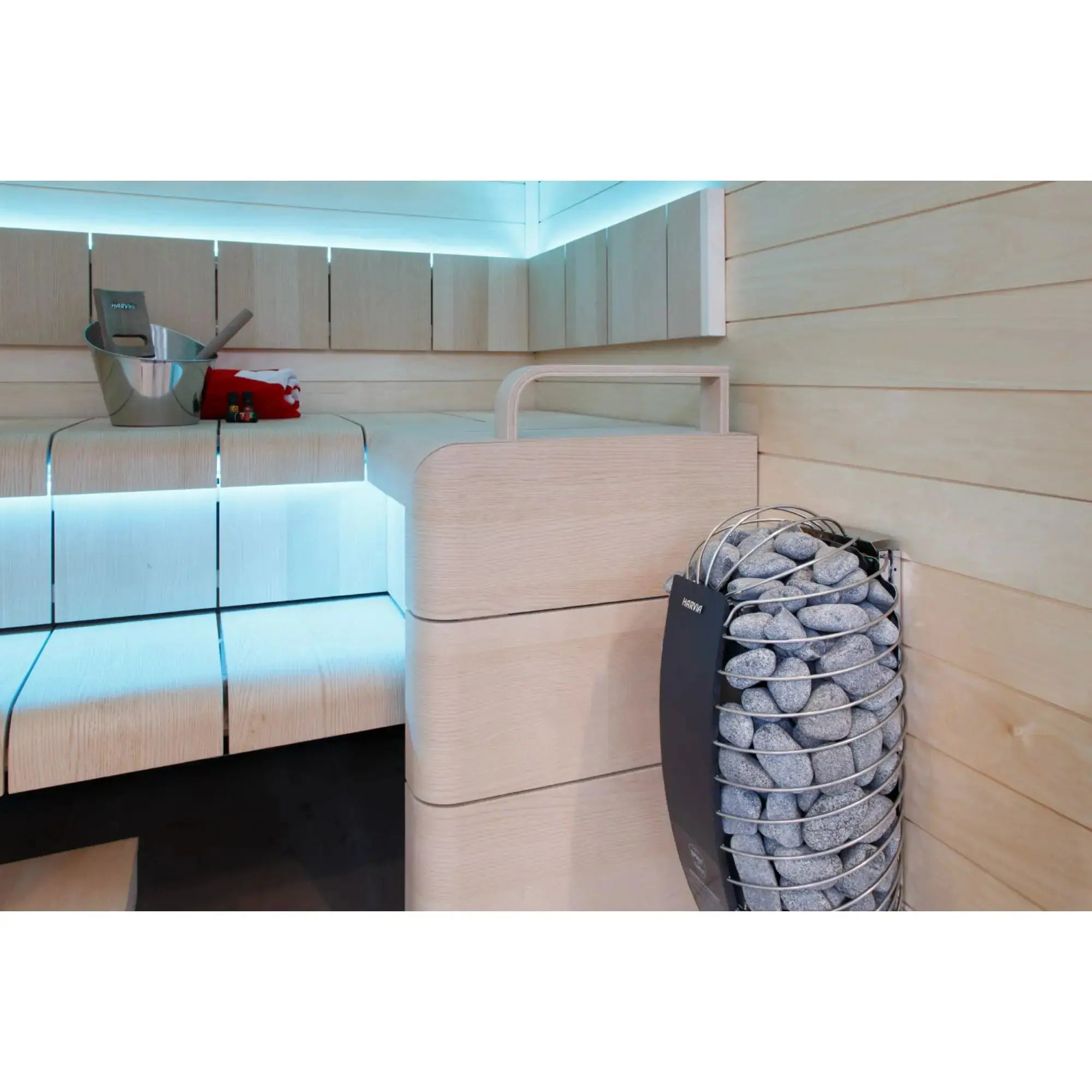
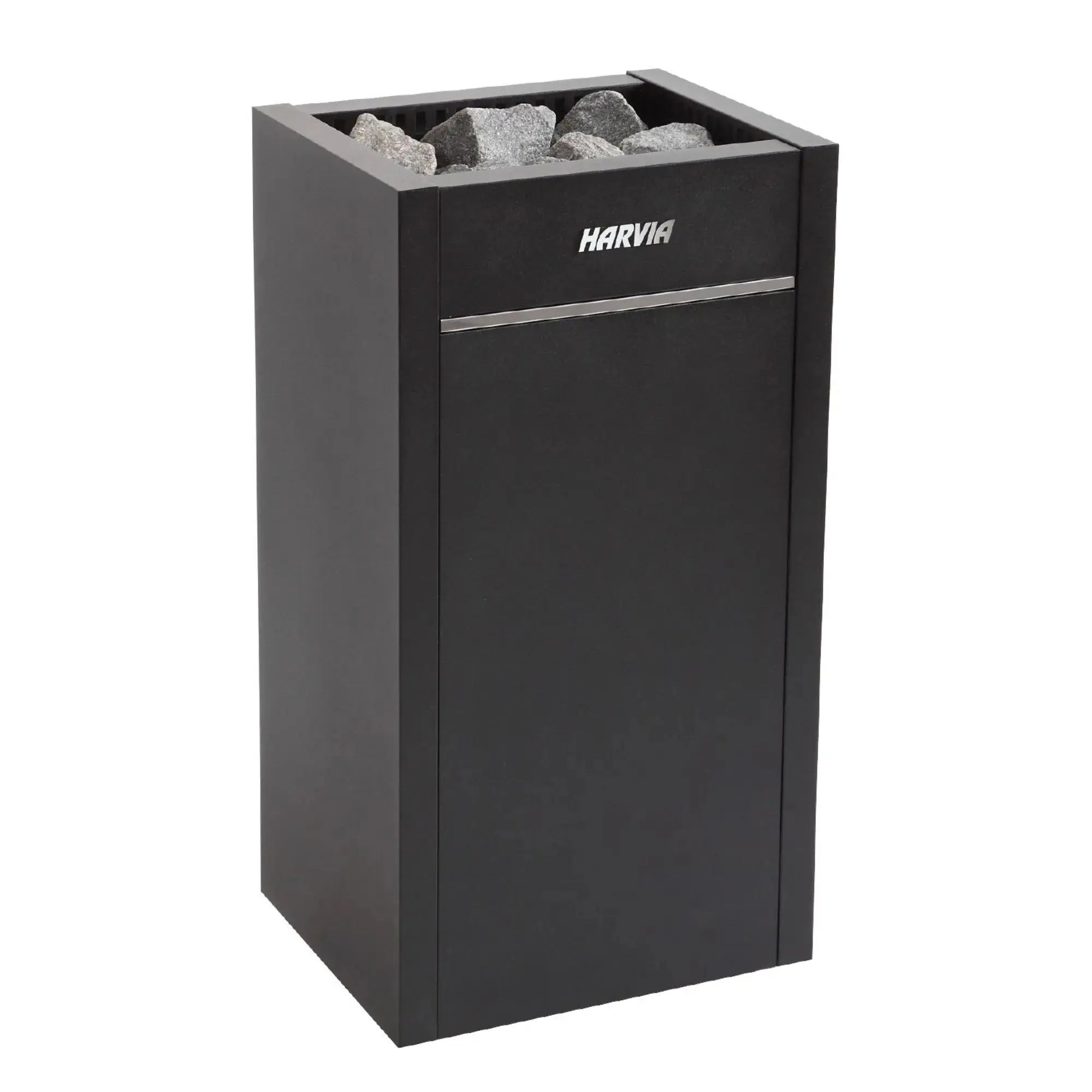
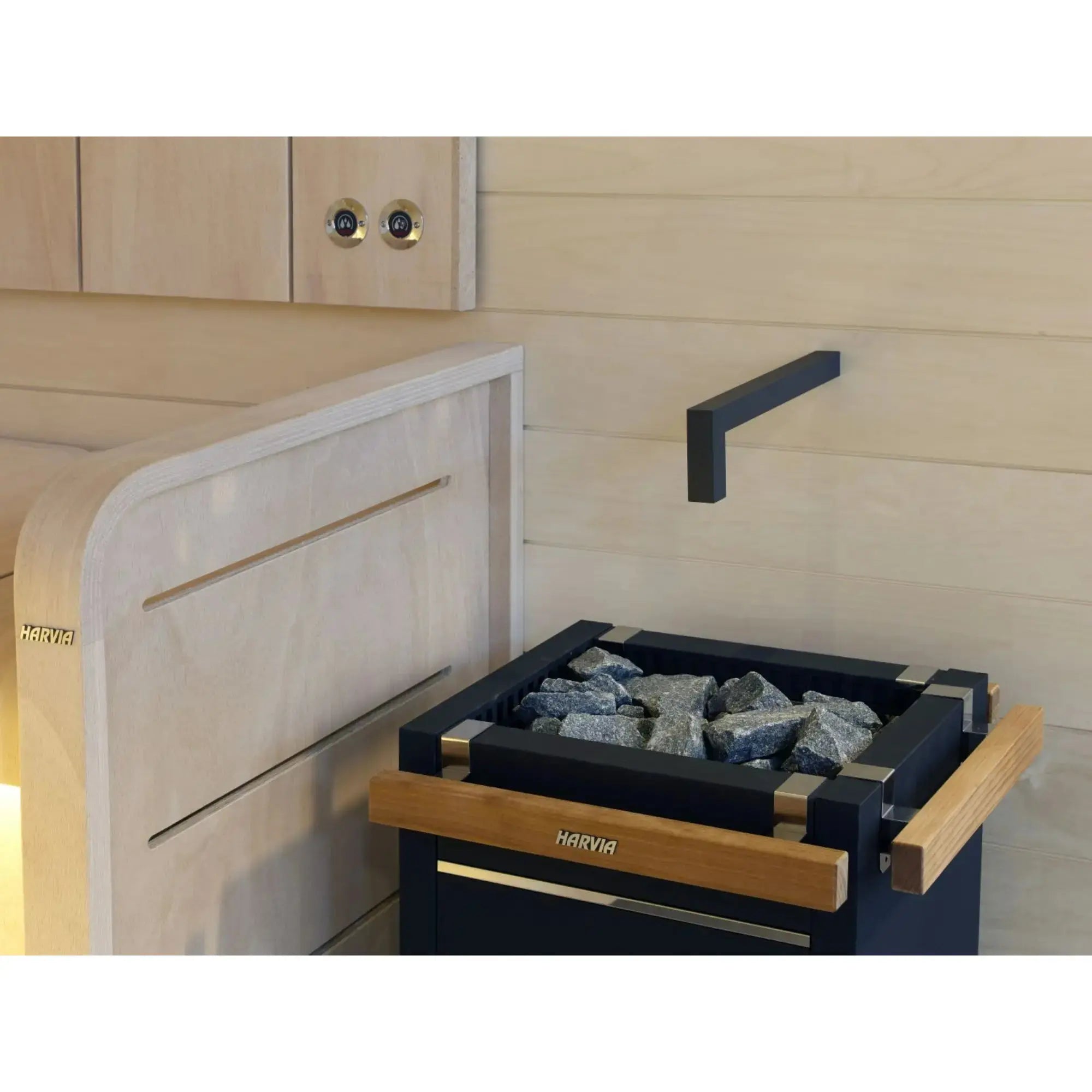
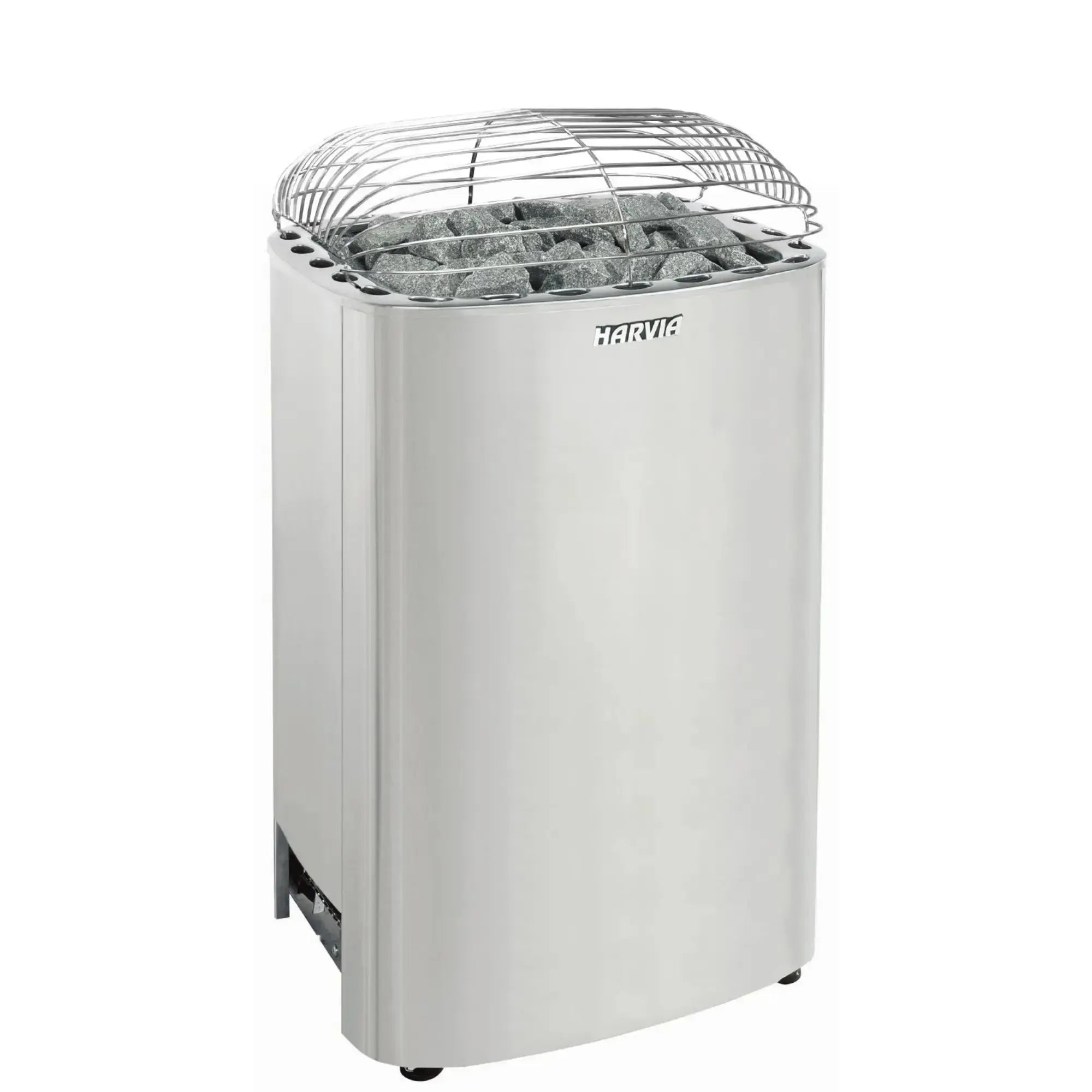
Wall-mounted, UL listed, rated for 170 to 300 adjusted cu ft. Takes one 44 lb box of stones and a Xenio control, both sold separately. Two finishes: stainless steel from $1,010, graphite black $1,092.

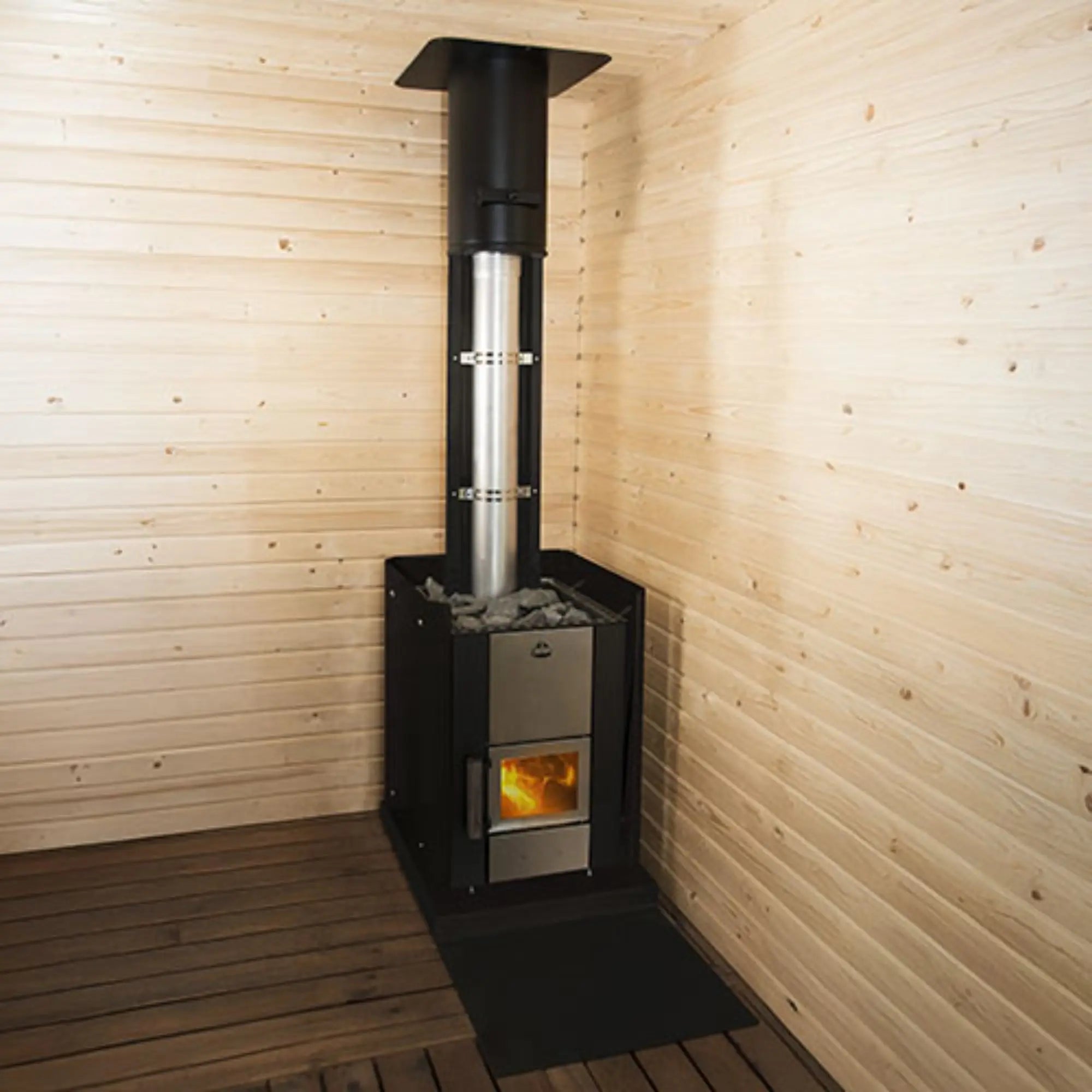
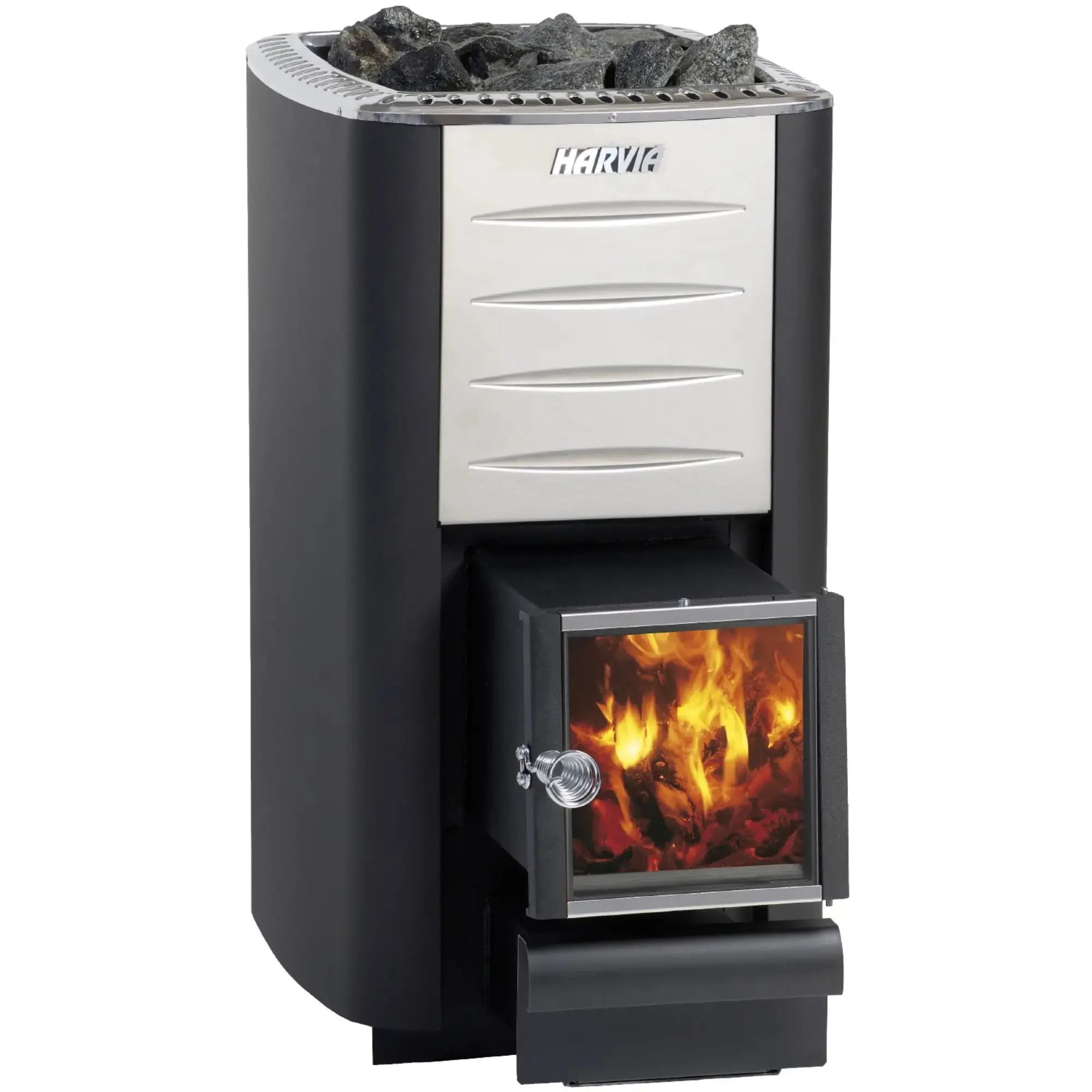
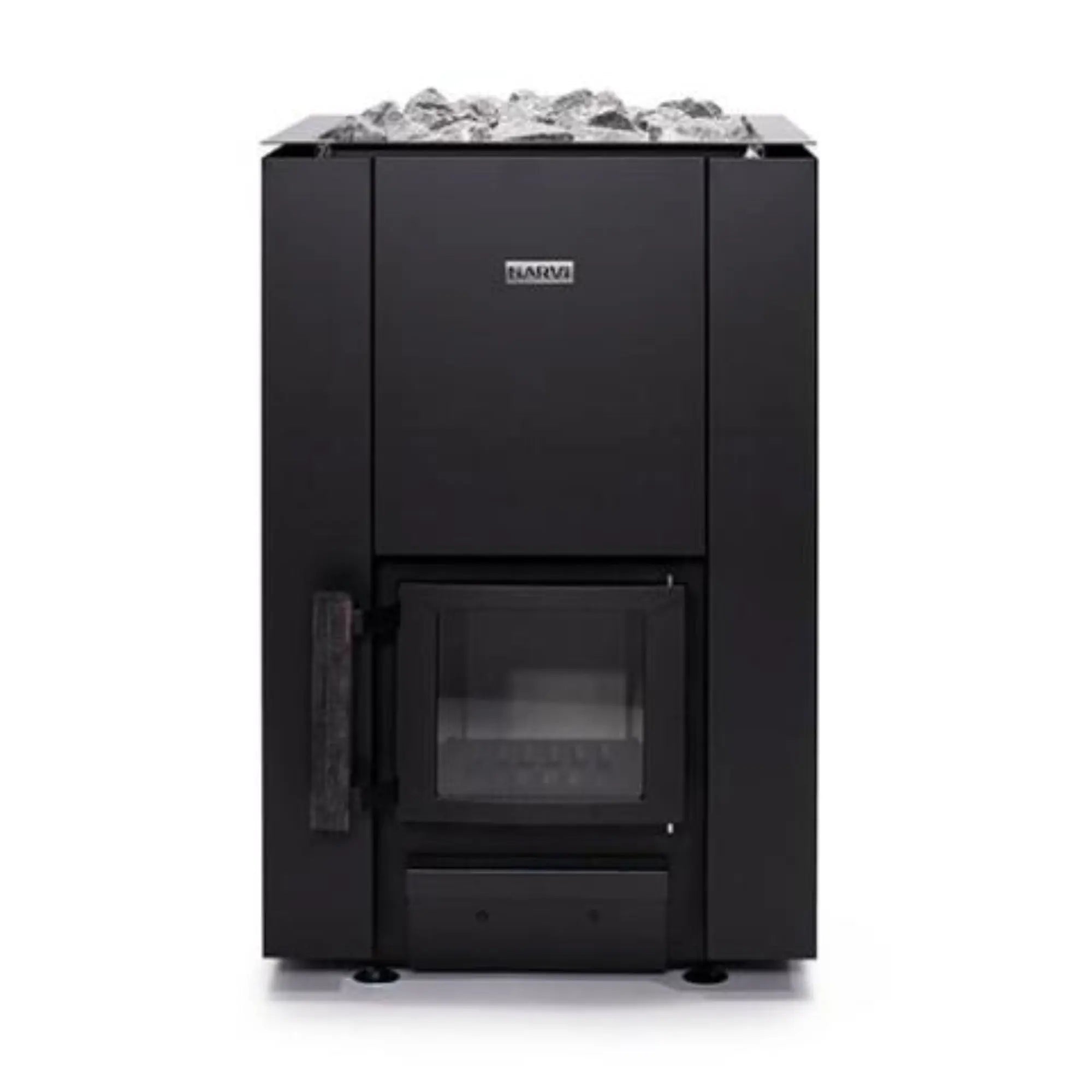
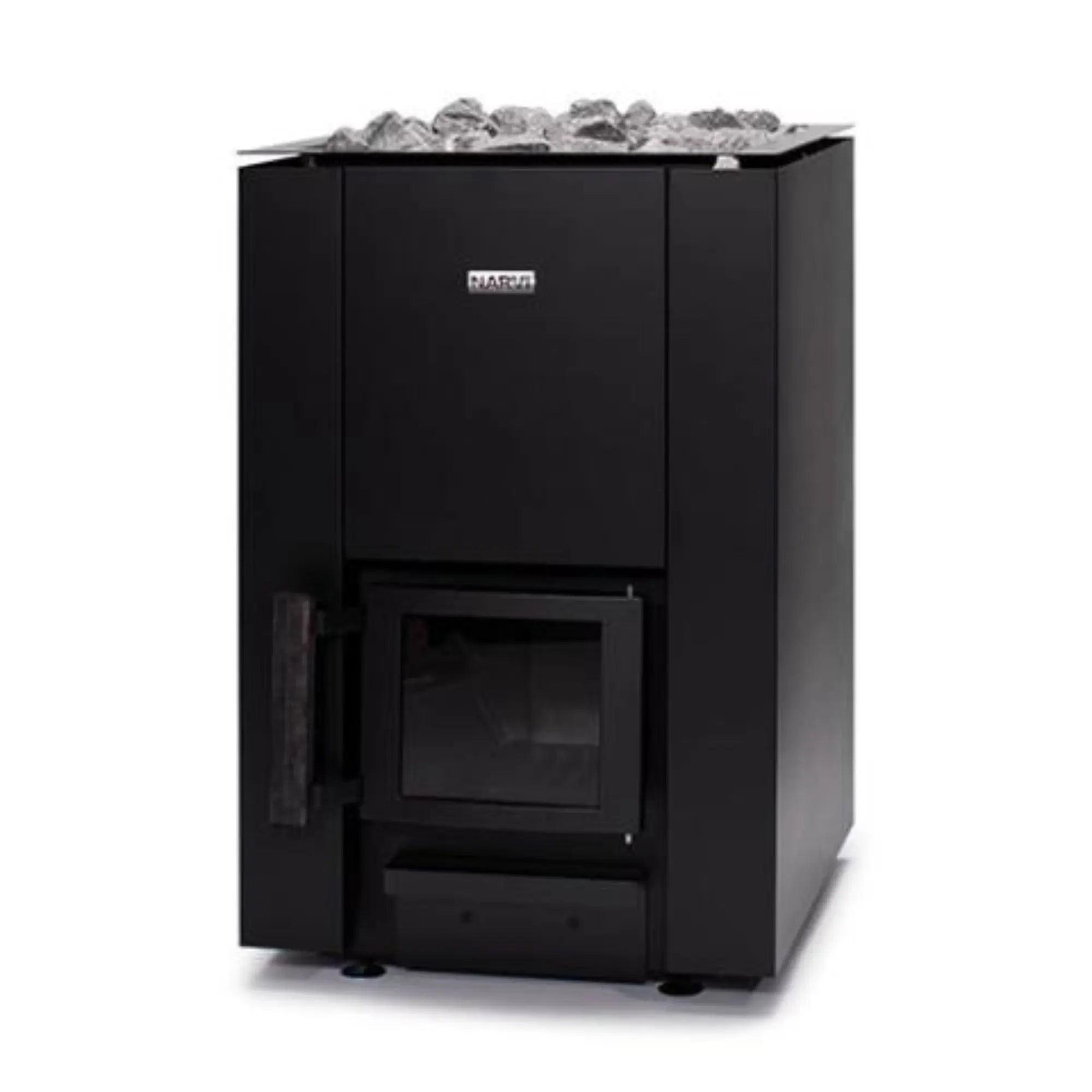
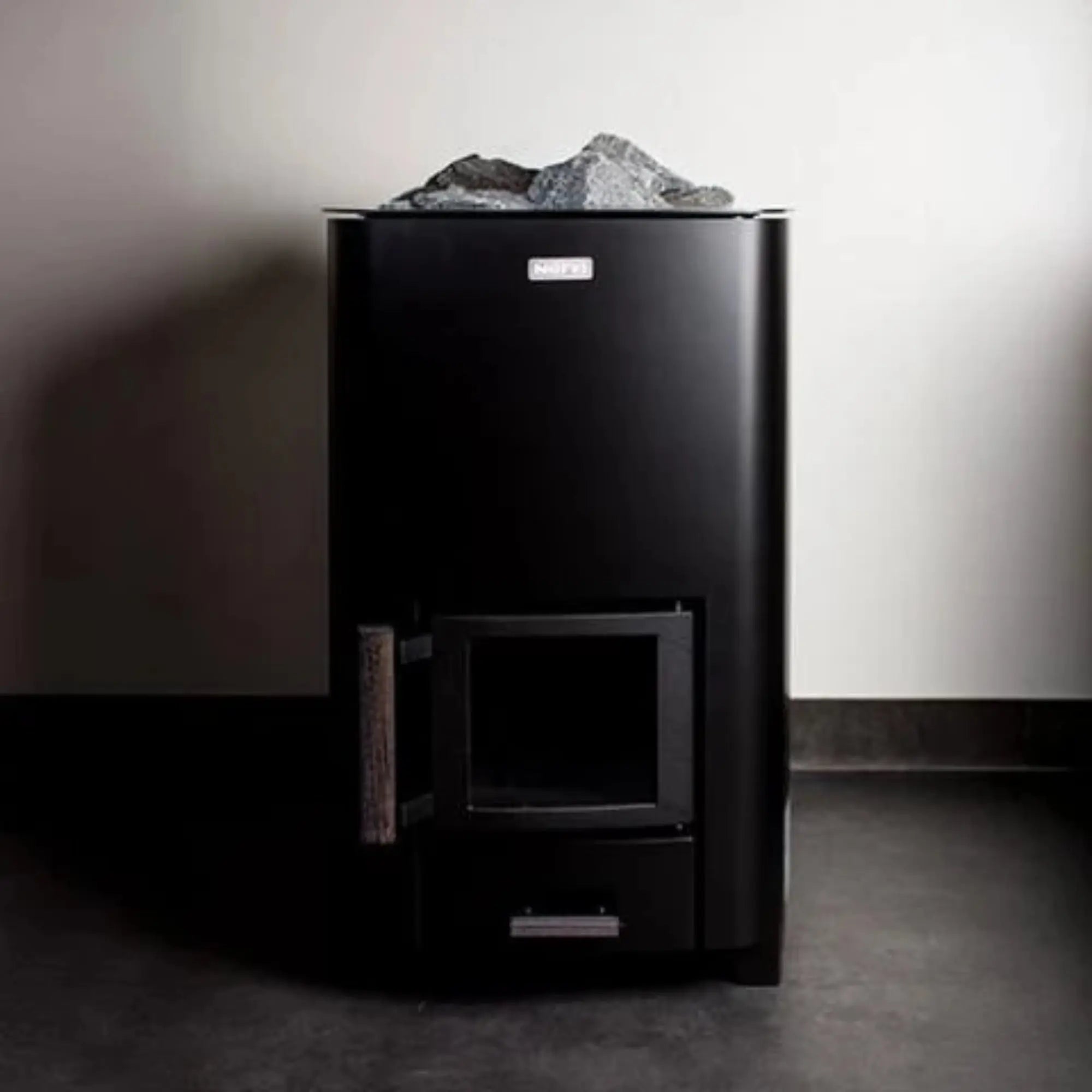
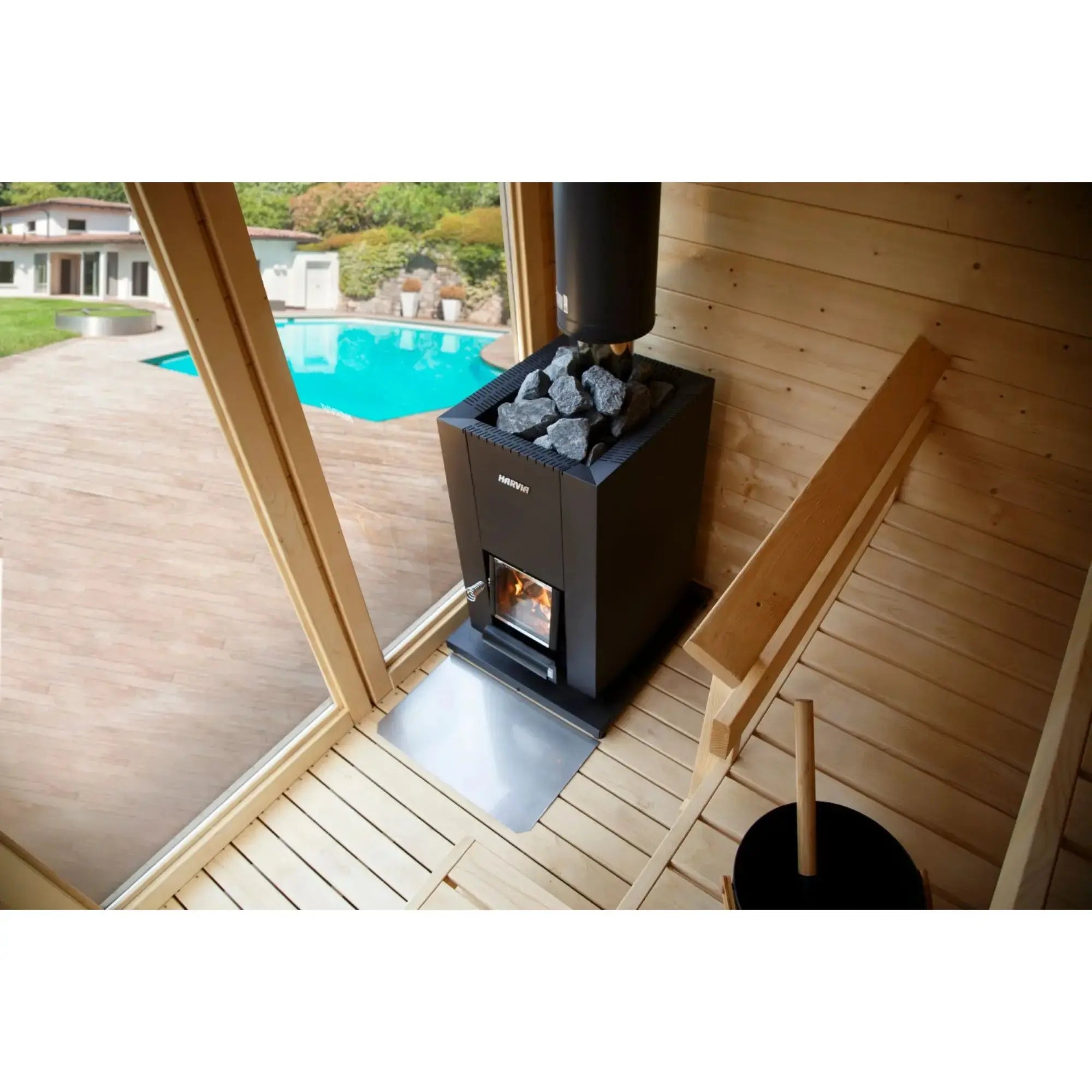
Here's one warning about wood stoves in the US. Most Finnish stoves ship with 115 mm (4.5 in) European flue pipe. A North American 6 in chimney system needs an adapter. The most common mistake on a wood sauna build is ordering chimney parts before you confirm your flue diameter and whether the connection is top or rear. Check the product page's installation notes first.

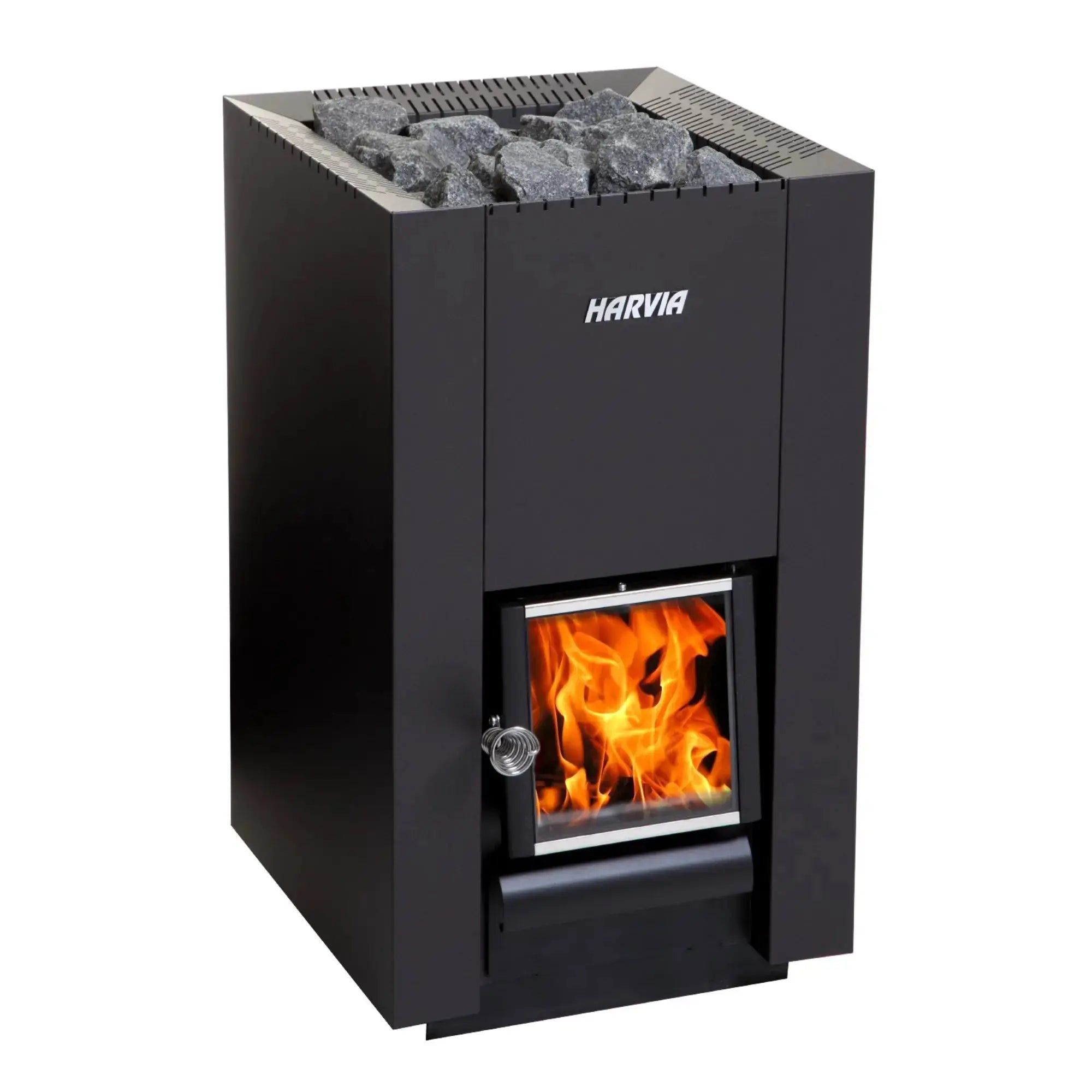
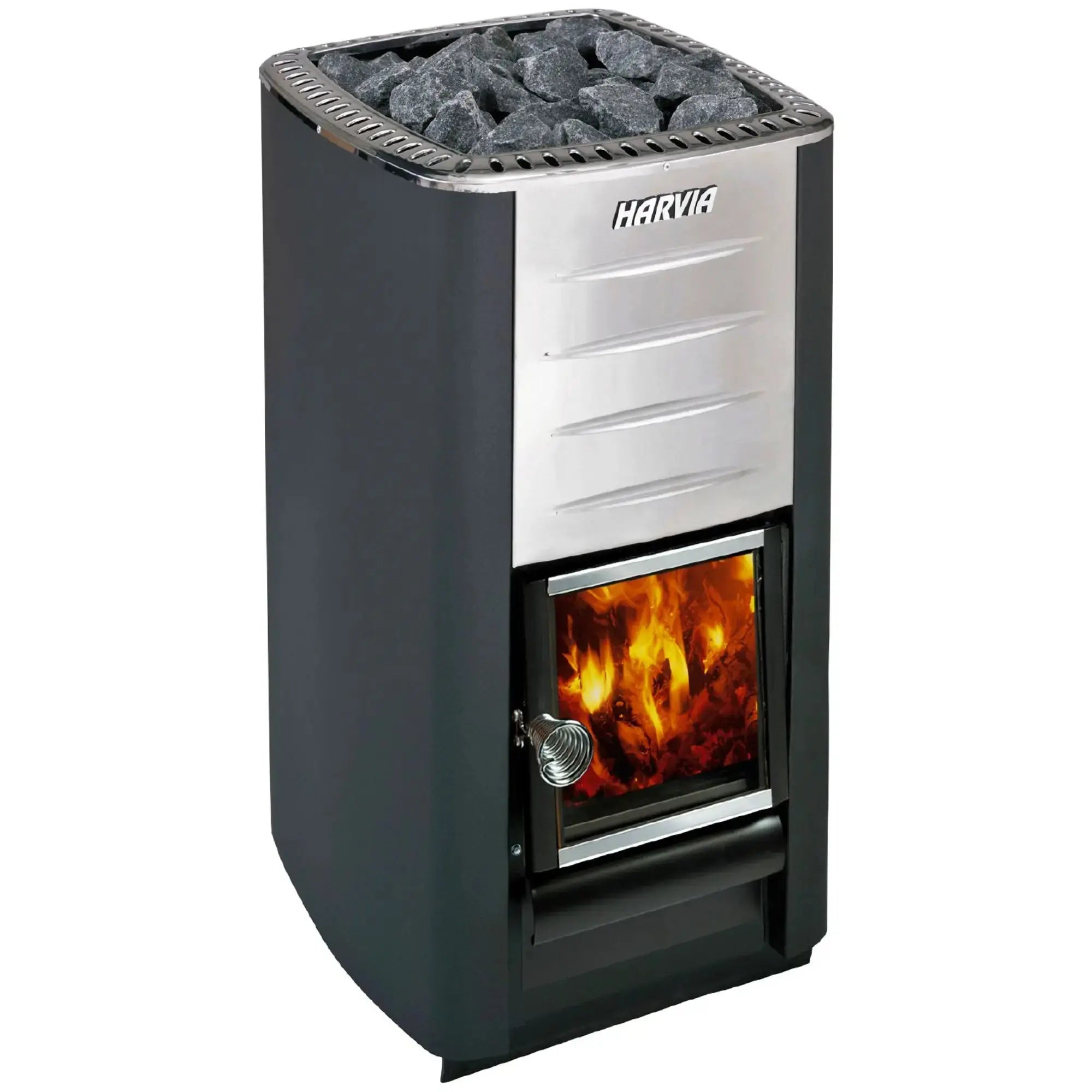
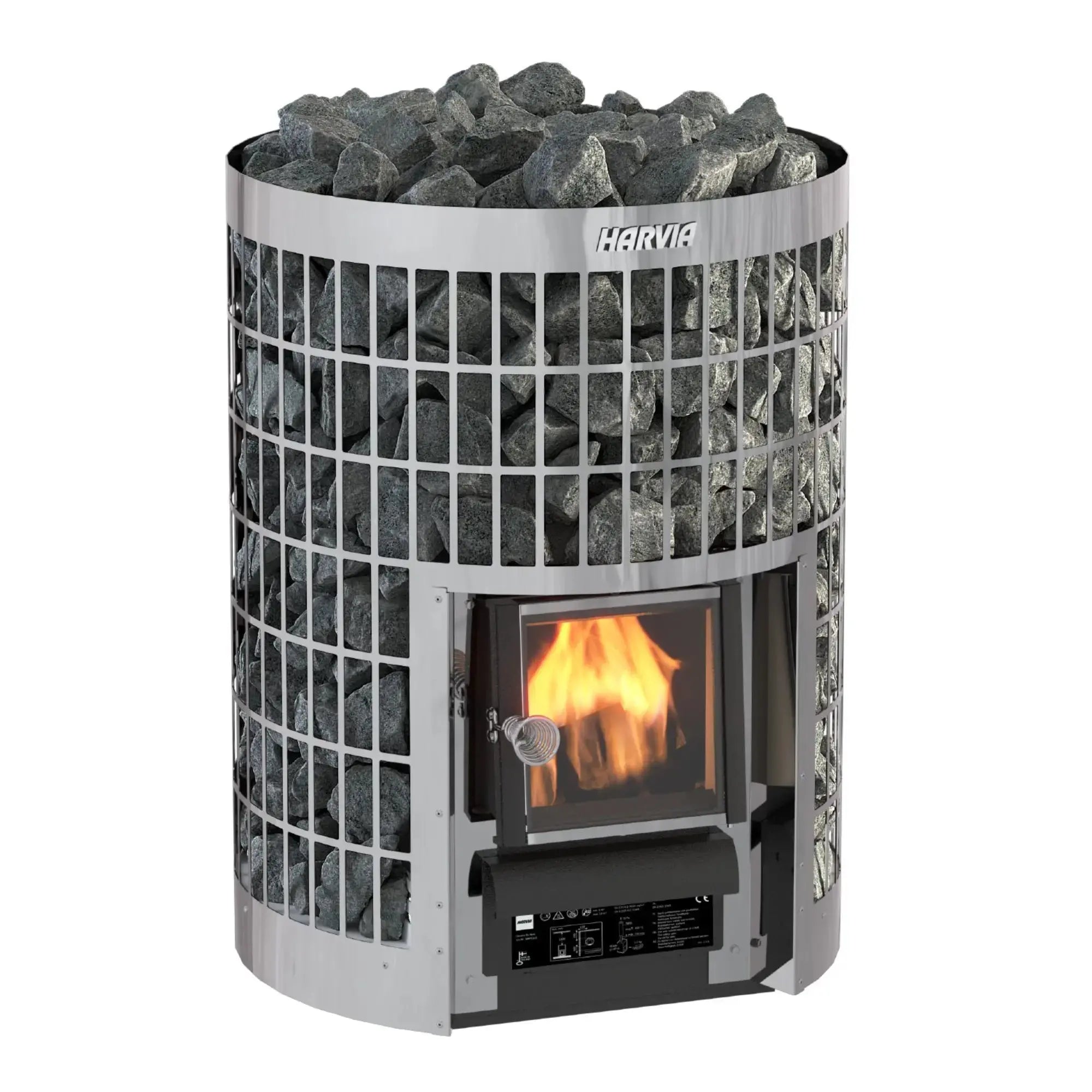
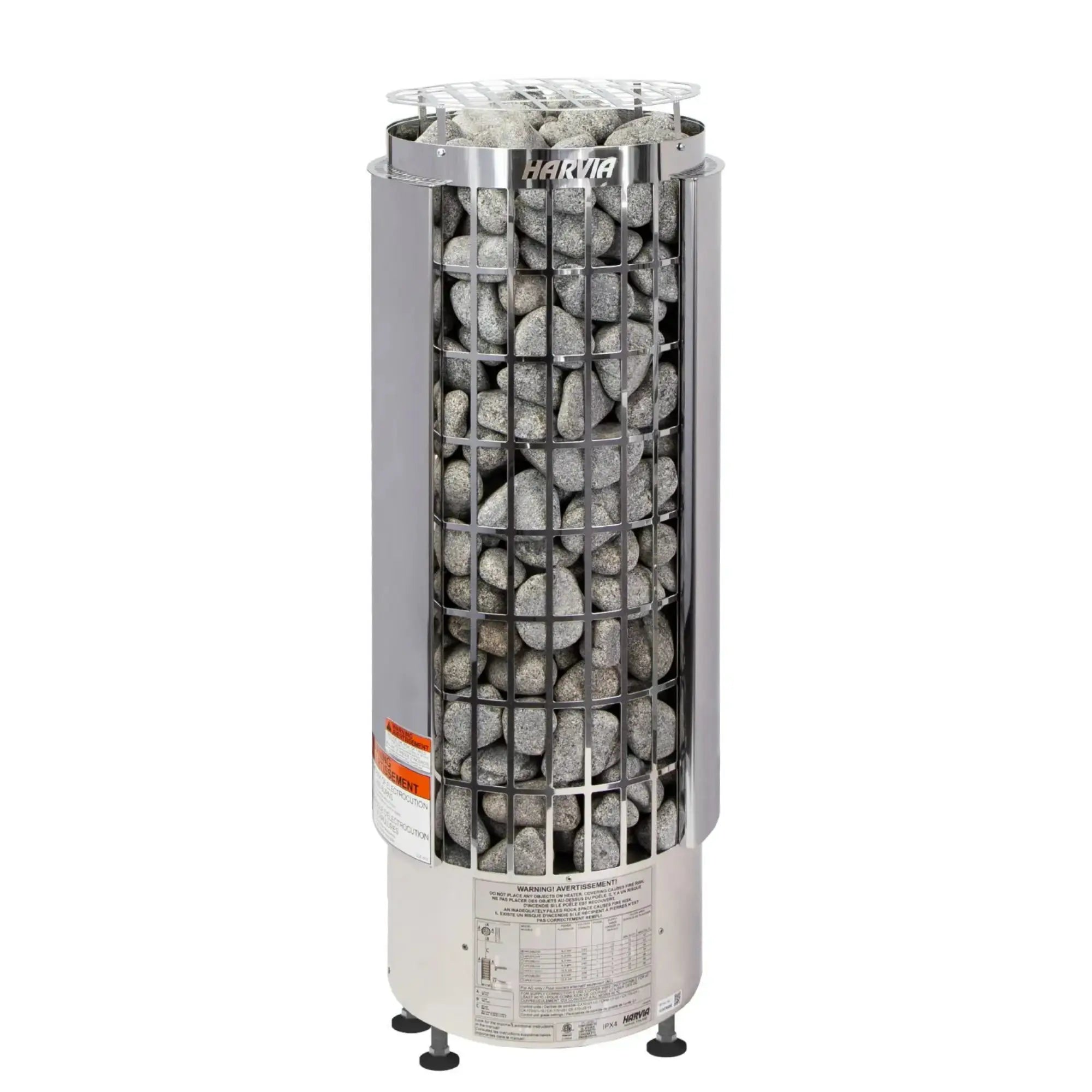
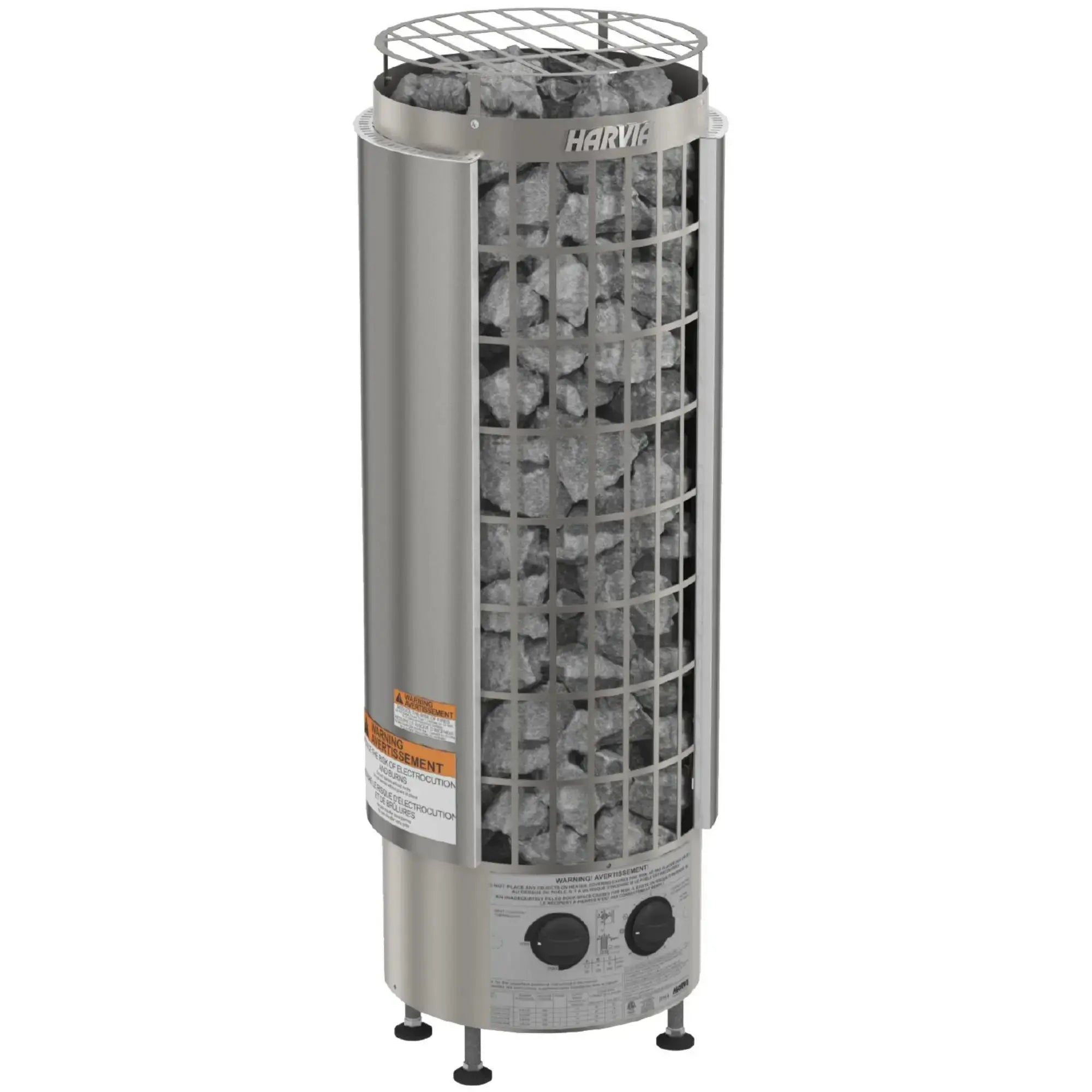
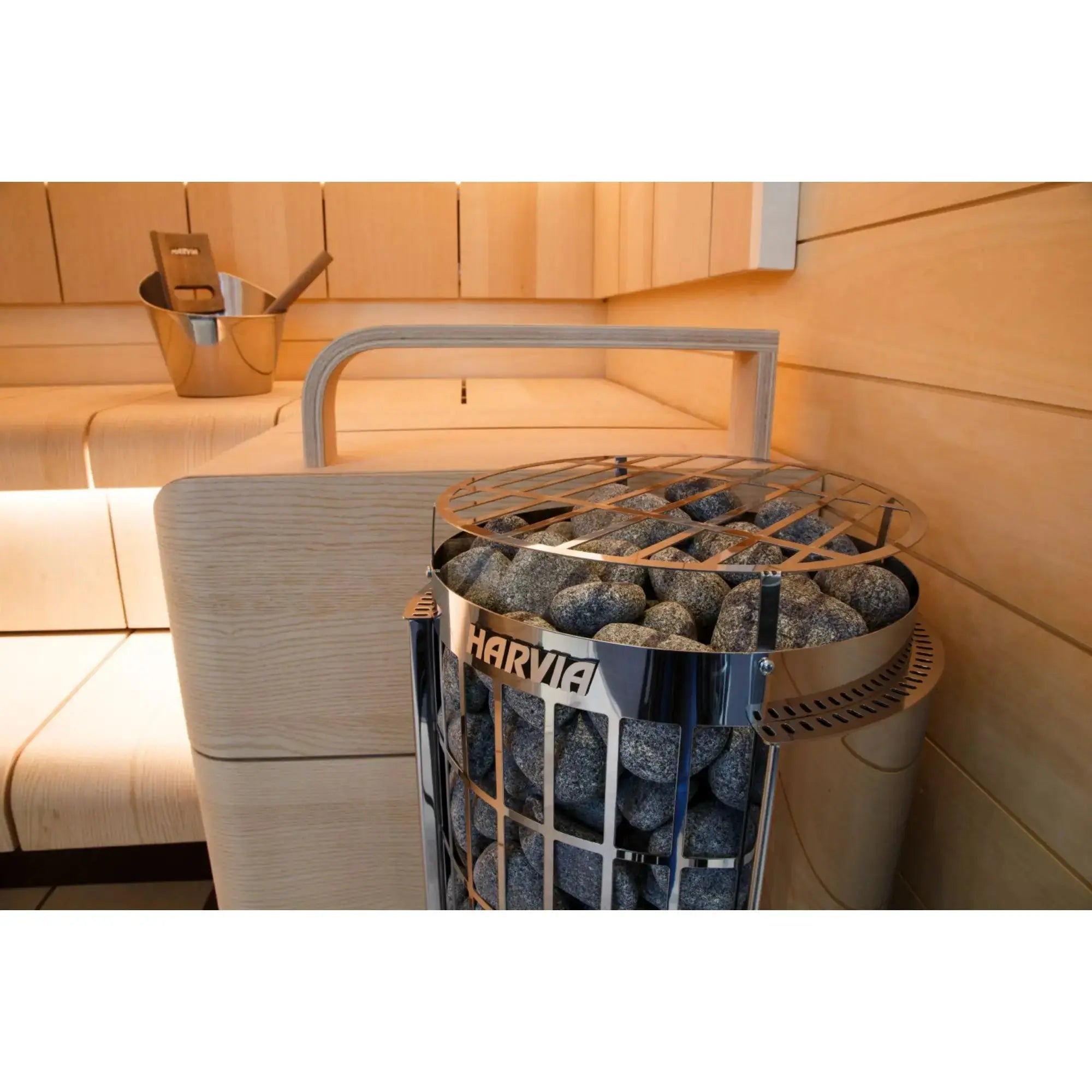
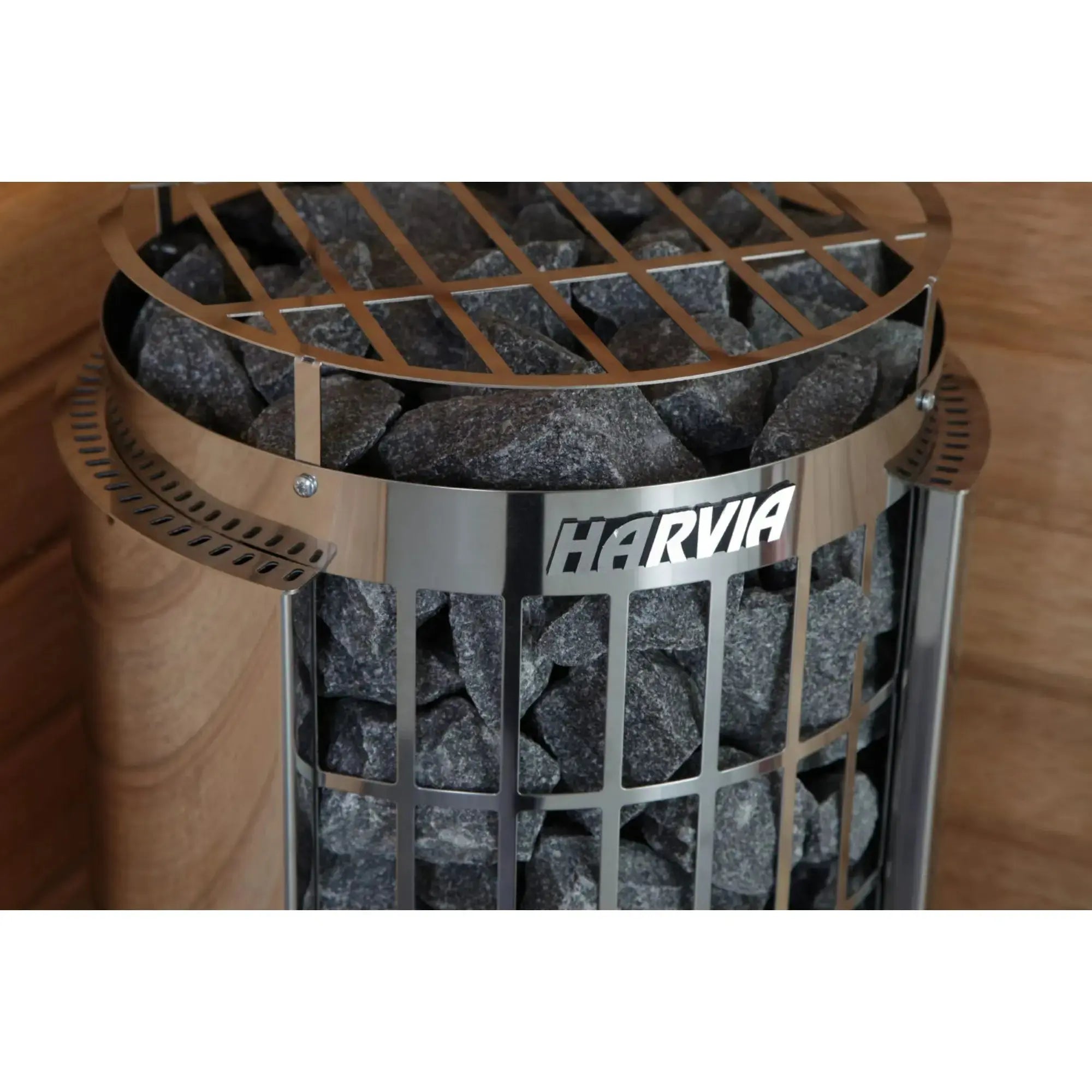
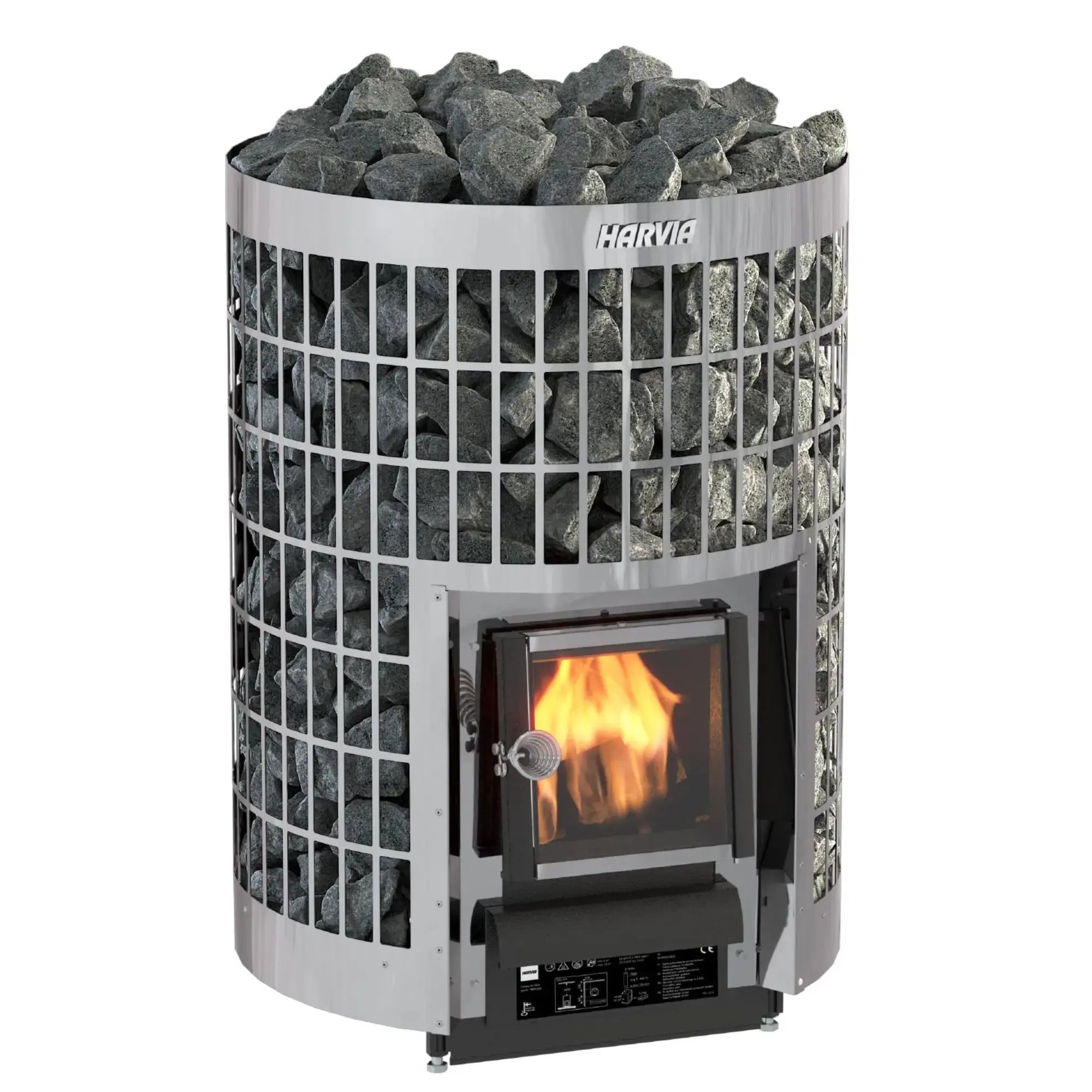
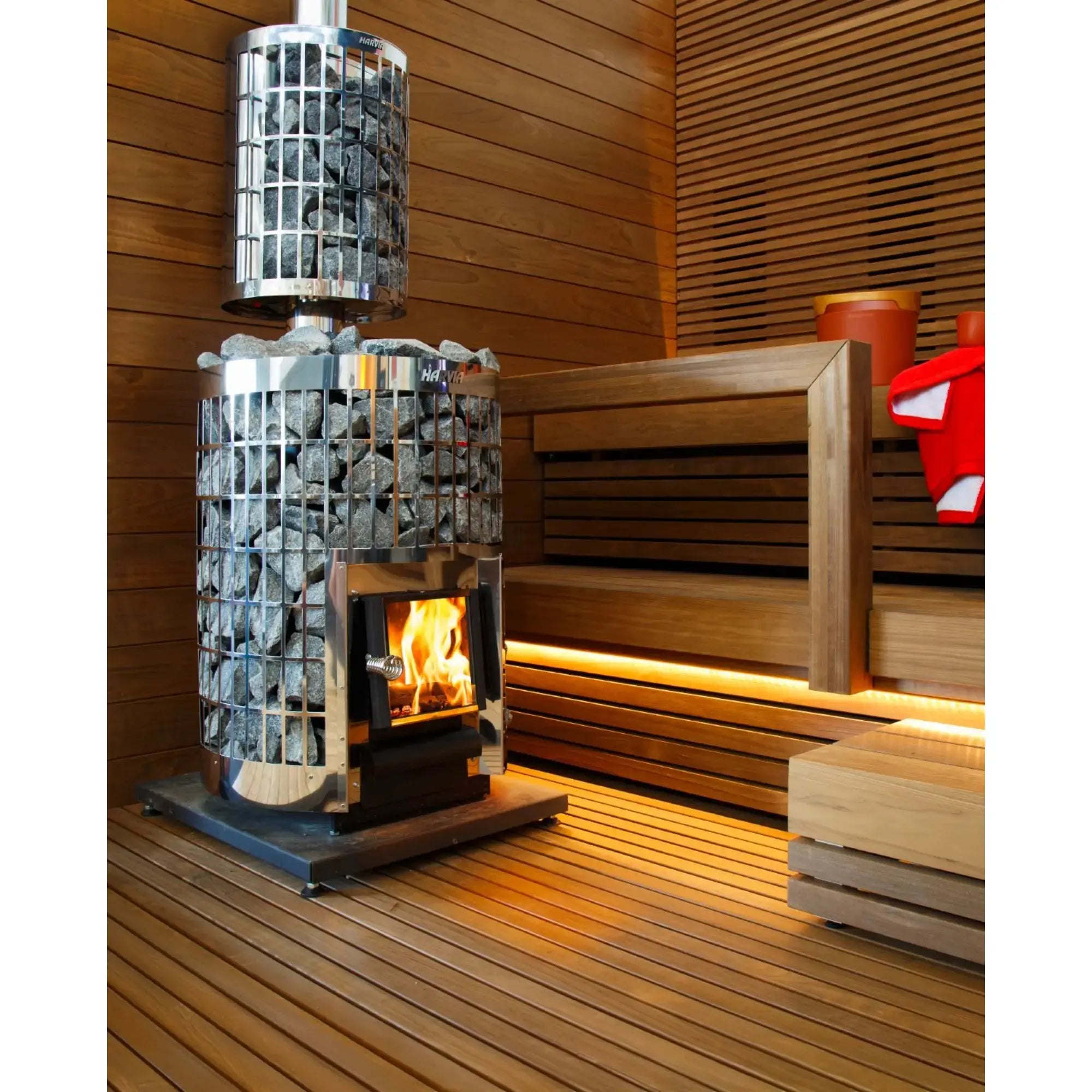
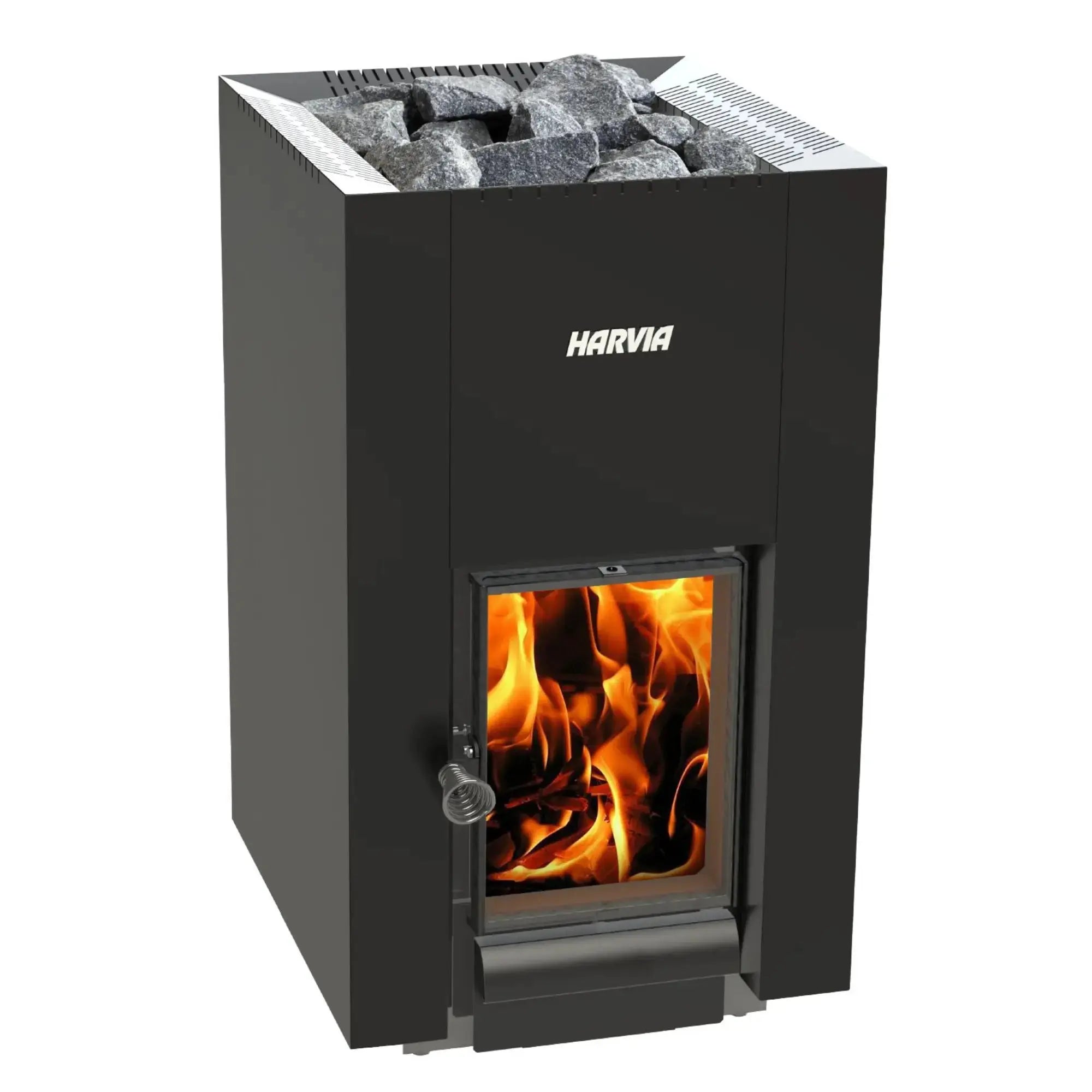
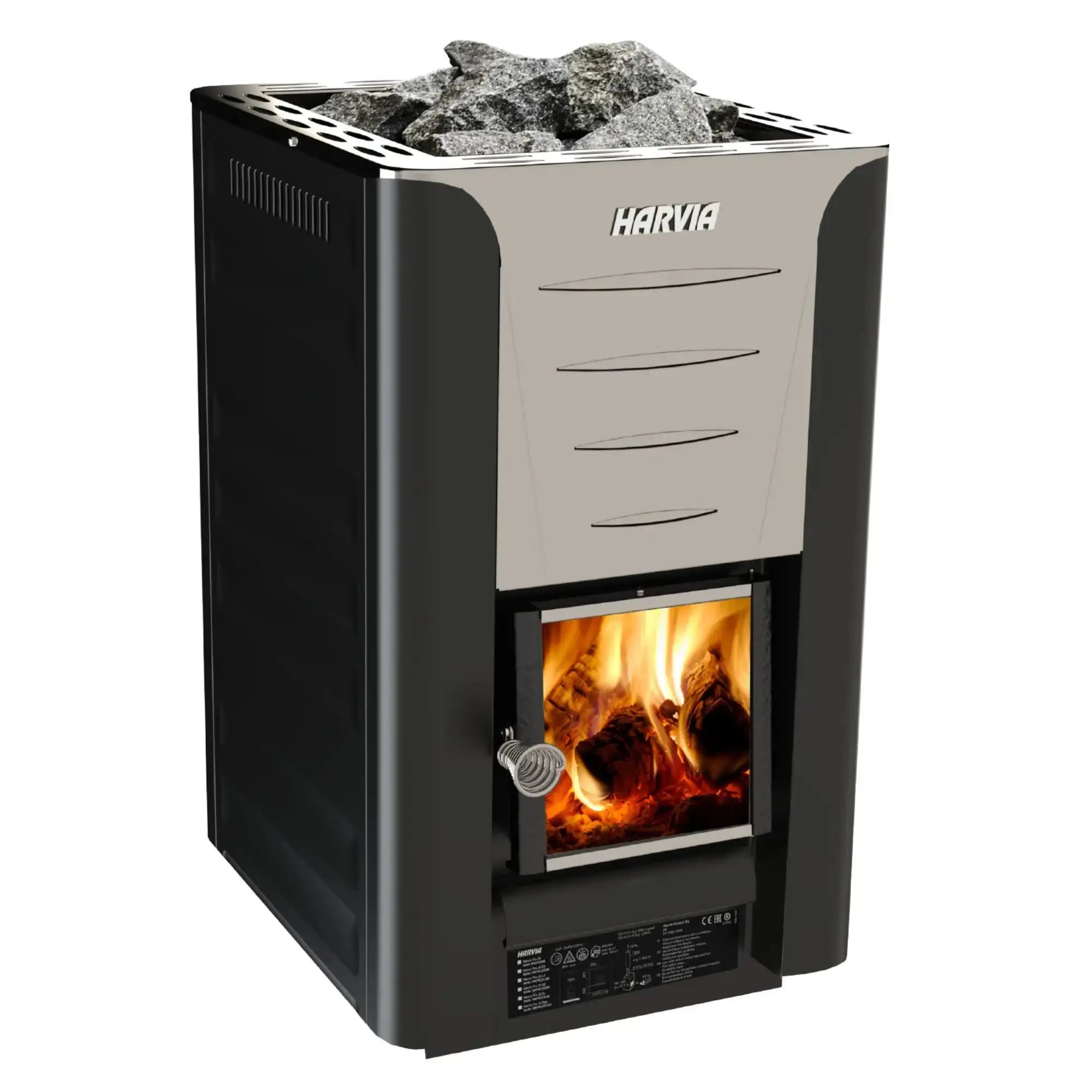
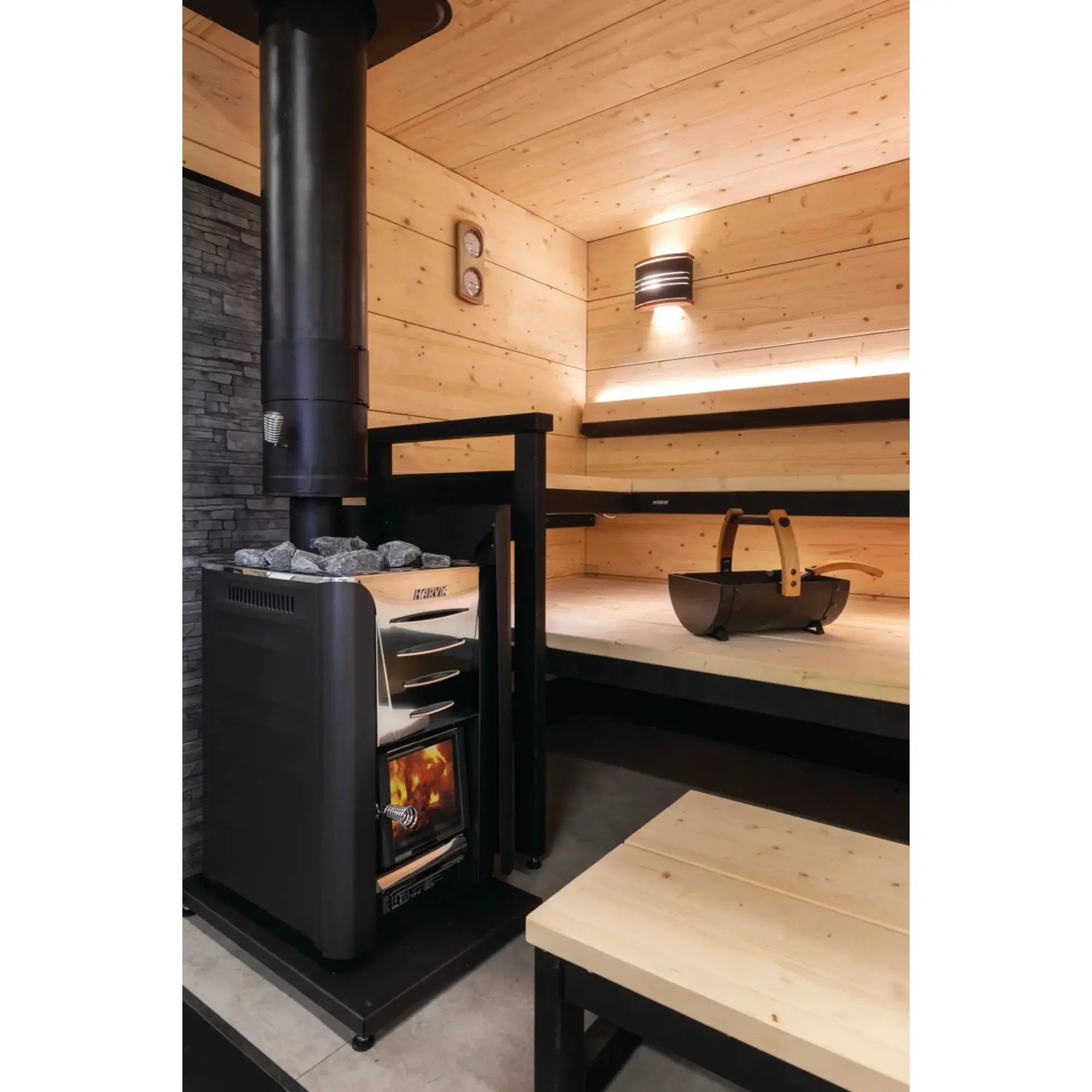
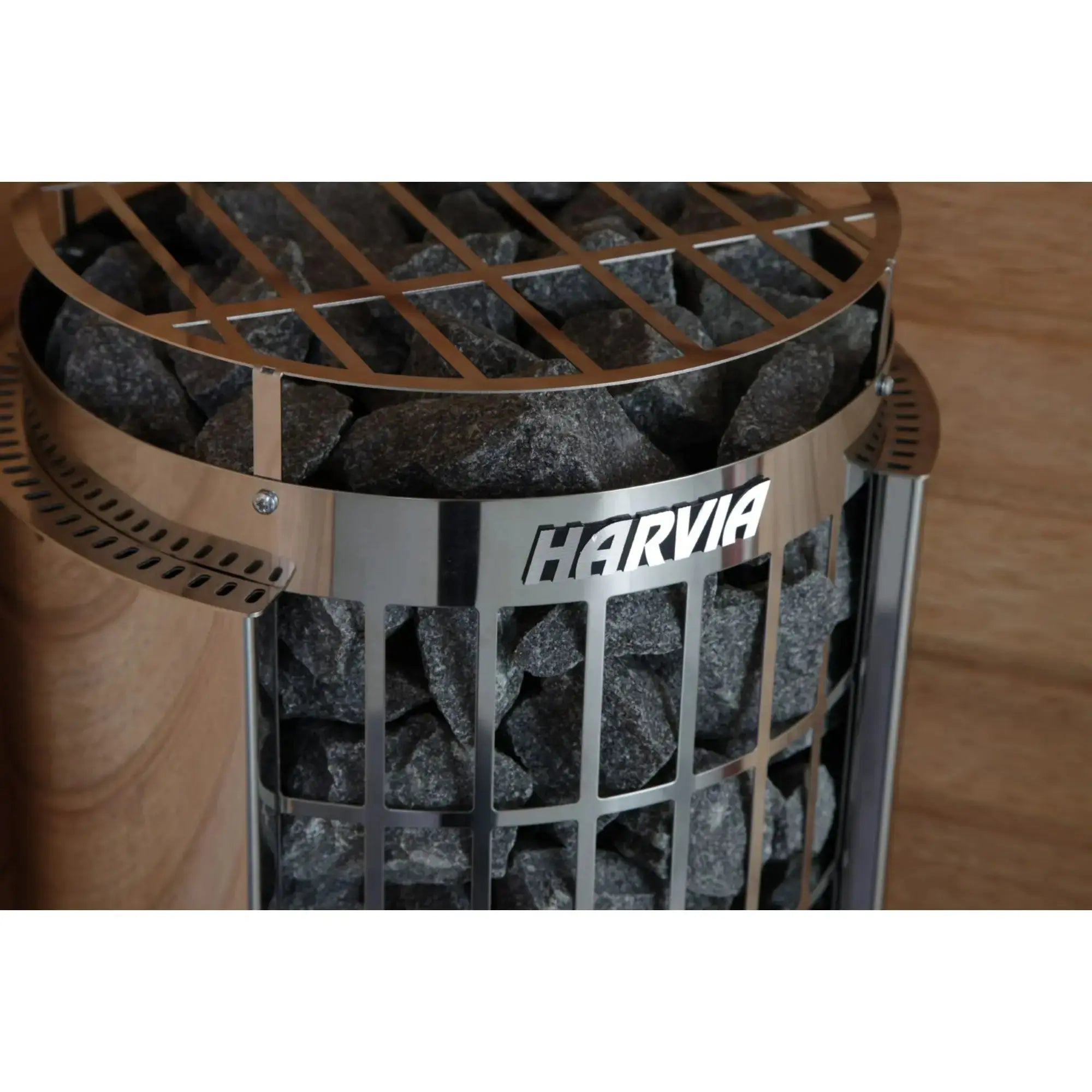
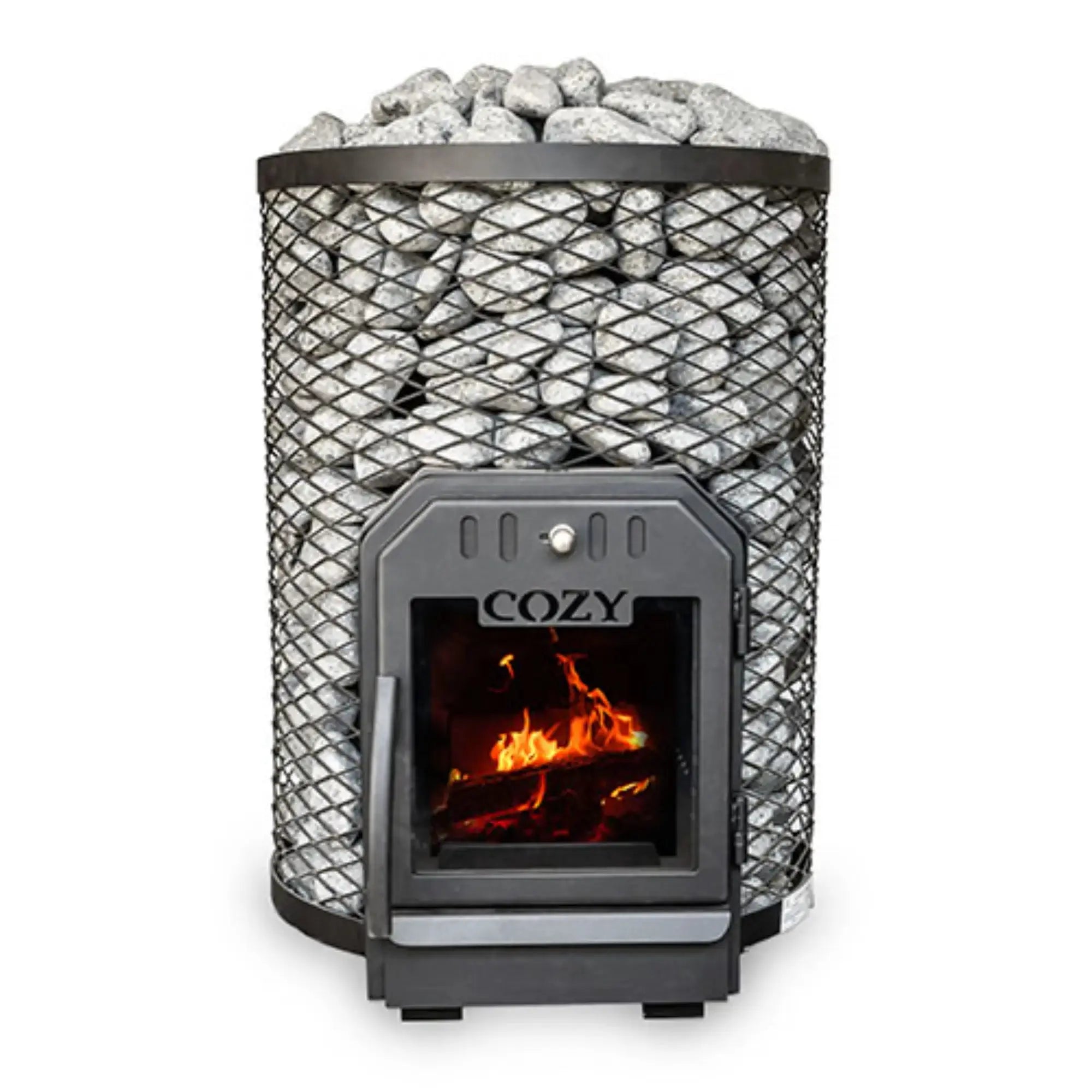
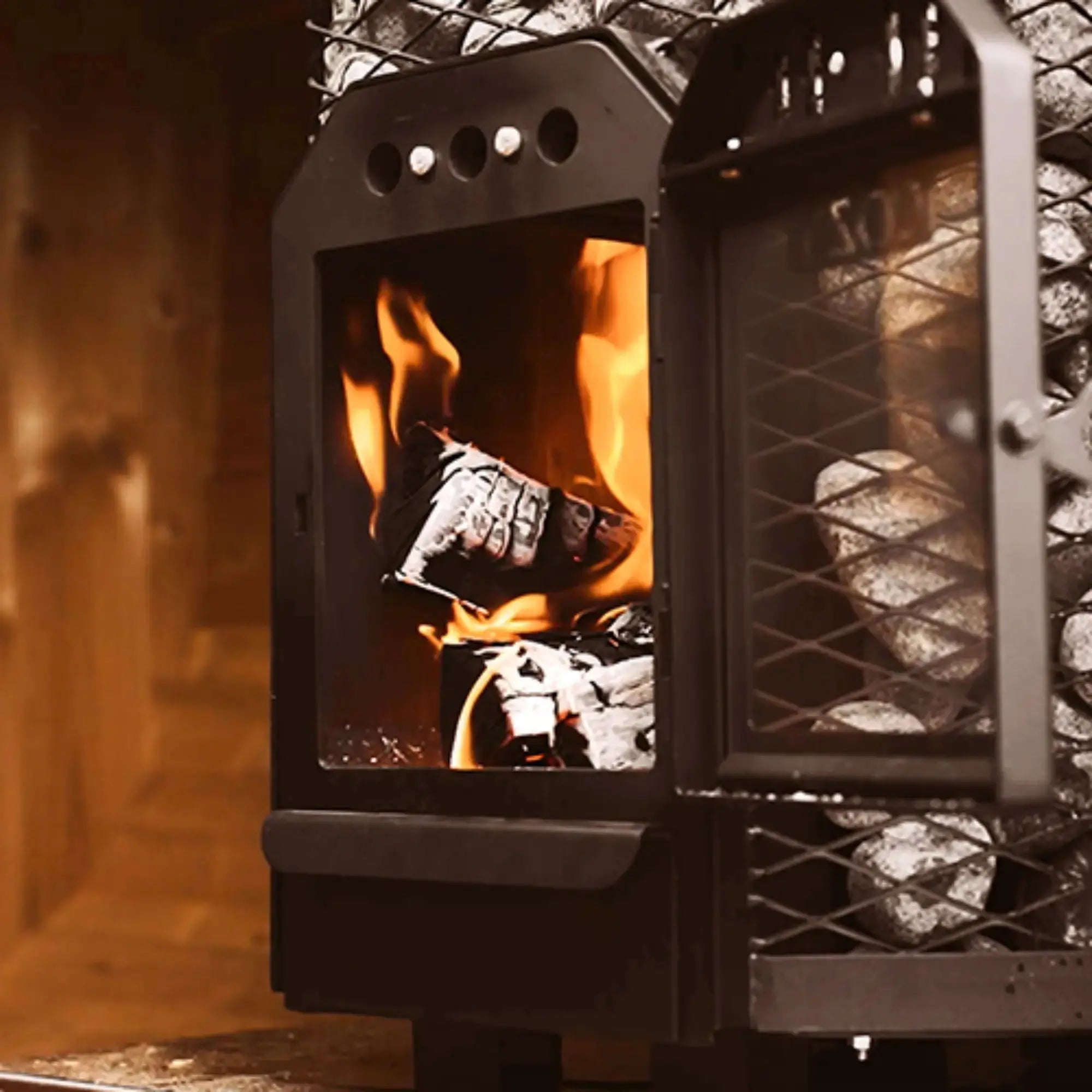
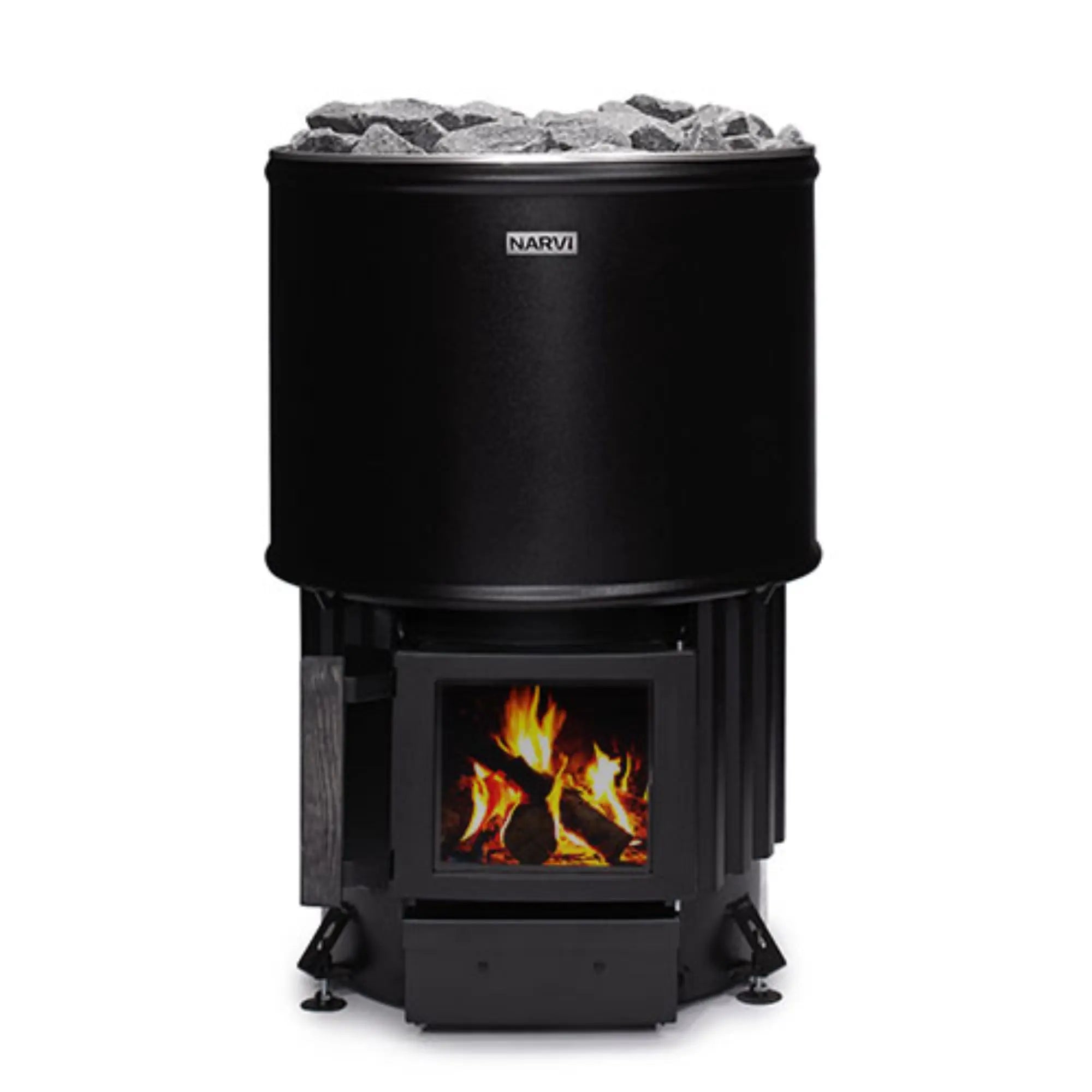
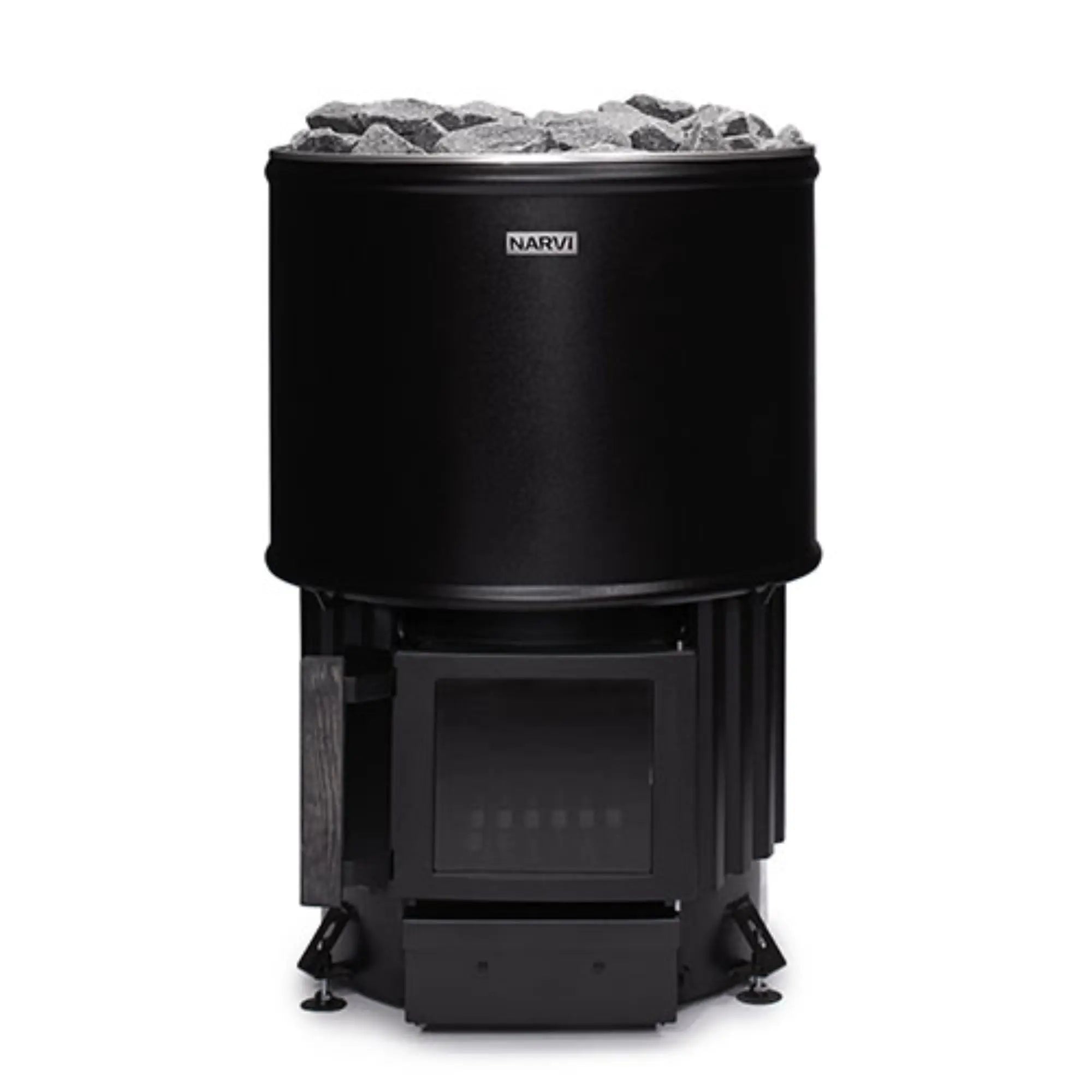
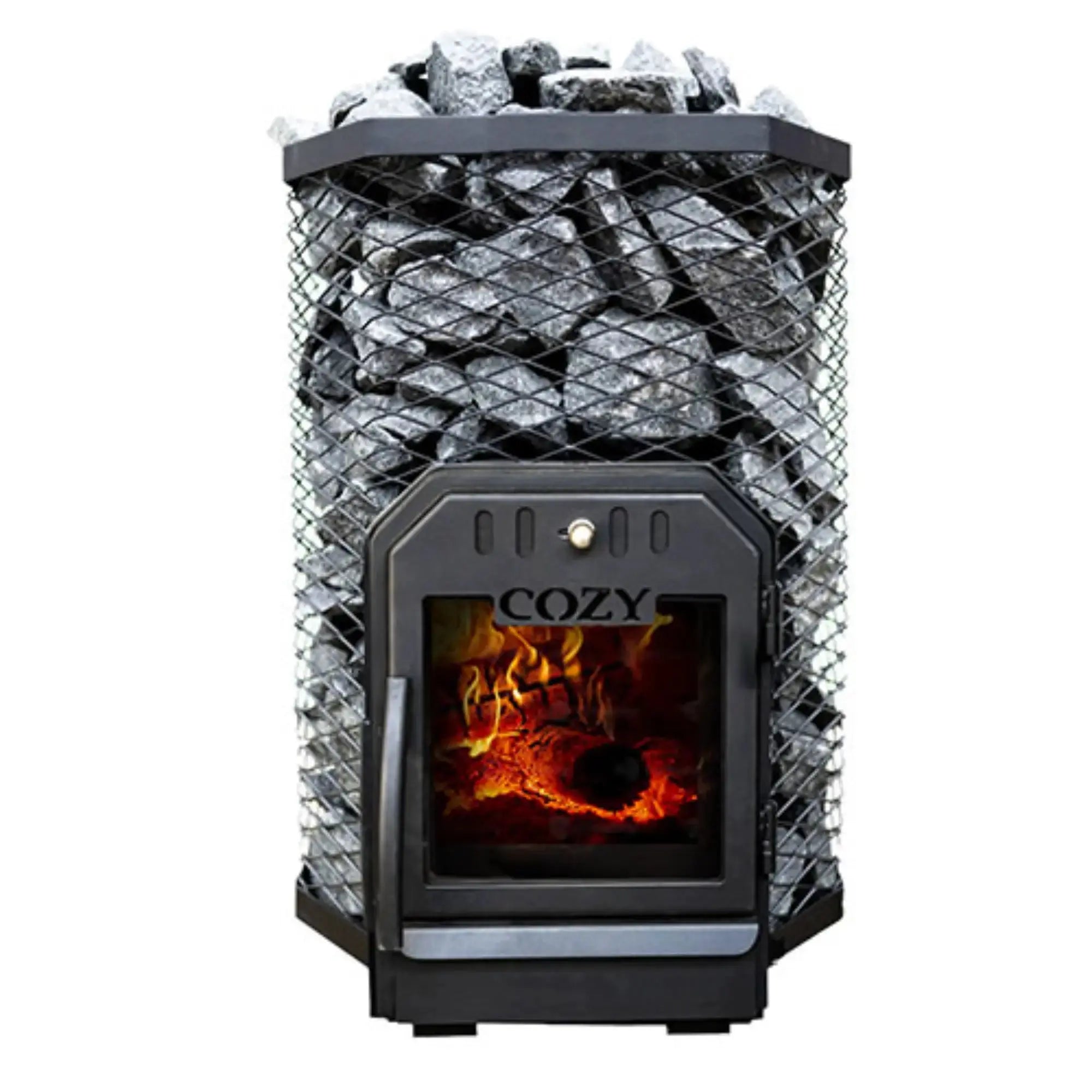
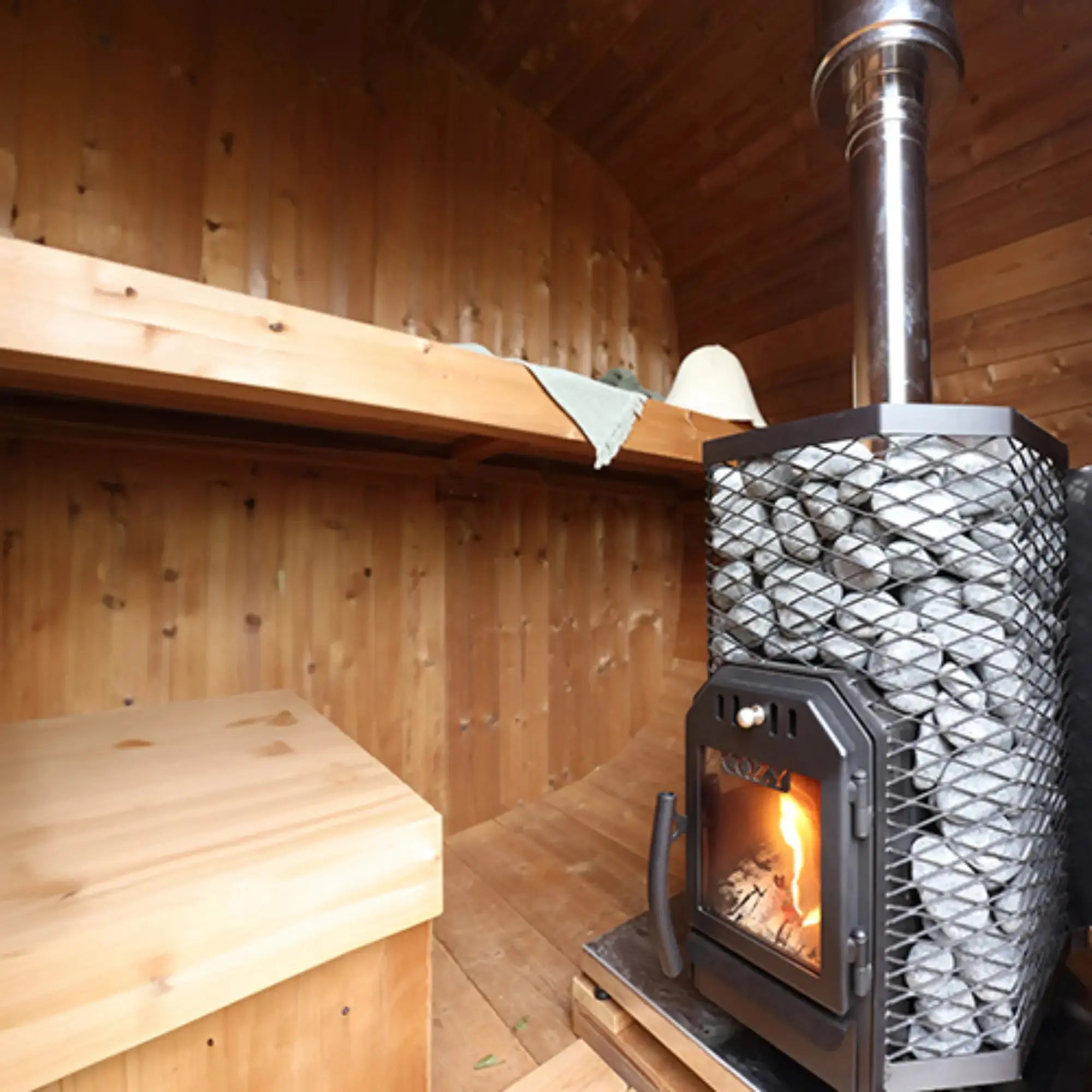
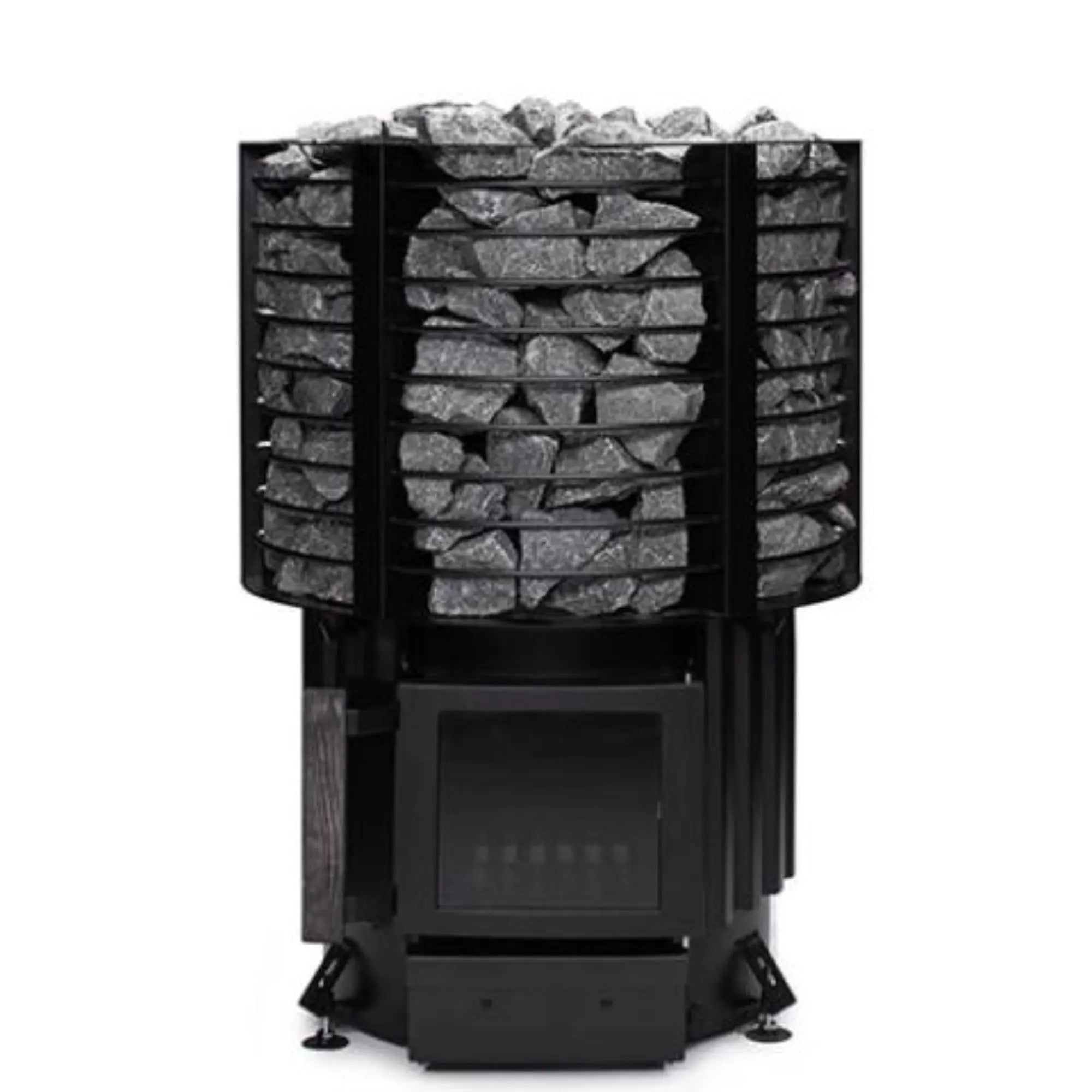
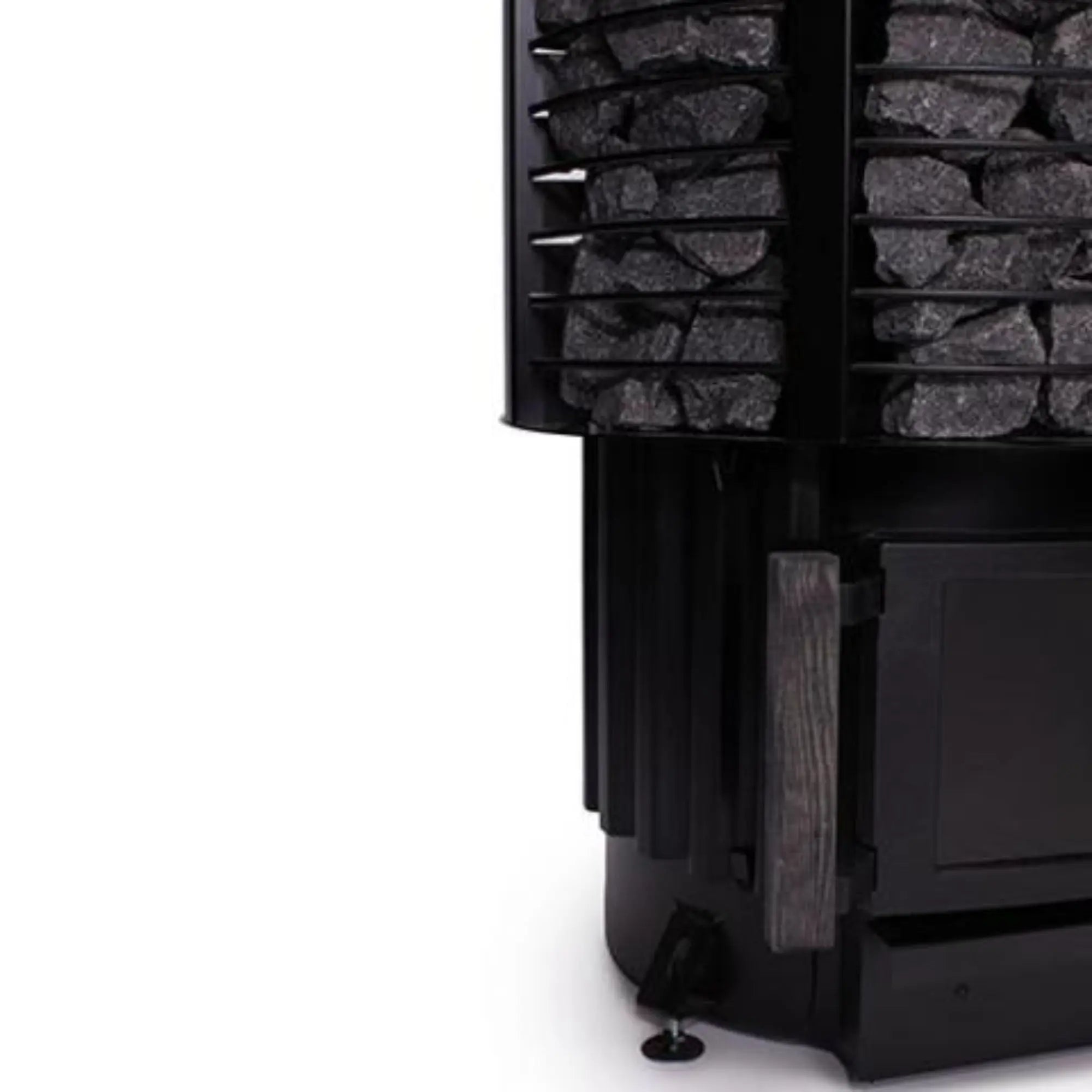
16 kW for 212 to 459 adjusted cu ft. A stainless cage holds 264 lb of stones around the firebox, so heat radiates evenly instead of off one flat face.
What electrical supply does an electric sauna heater need?
You need a dedicated, hardwired 240V circuit. No home sauna heater plugs into a normal outlet. This is the cost that surprises people, so price it before you choose a heater, not after.
Rated amperage for the heaters we stock:
| Output | Voltage | Rated amps |
|---|---|---|
| 4.5 kW | 240V 1PH | 18.8 A |
| 6 kW | 240V 1PH or 208V 3PH | 25 A |
| 7.5 kW | 240V 1PH | 31.25 A |
| 8 kW | 240V 1PH | 33.3 A |
| 9 kW | 240V 1PH | 37.5 A |
Breaker and conductor sizing is your electrician's call, not a blog post's. They size it from the heater's nameplate and installation manual under the current NFPA 70 National Electrical Code. The question to plan around is whether your panel has room for another 30 A to 50 A double-pole breaker, and how far the run to the sauna is. On a detached backyard build, that trench is often the biggest single cost in the project. Our guide to sauna heater installation goes through what drives that quote.
Three practical points before you call anyone:
- The control unit sits between the supply and the heater on most systems, so the electrician wires to the control, not straight to the heater.
- The temperature sensor goes inside the hot room, and the manual sets its exact placement. Our sauna control panel guide covers that in full.
- Check the certification marks against your local rules. Some heaters carry a UL listing. Others come with CE, EAC or SGS marks only, and those aren't the same thing in North America. Your building department and your insurer may both care. Every product page on this site lists the marks the manufacturer supplies.
Do you need a separate control unit?
Usually you do. Sauna heaters come in two forms. Some have built-in controls, with a dial or panel on the heater body. Others need a separate control, which is a wall-mounted unit outside the hot room that runs the heater.
Built-in is simpler and cheaper, and it's fine for a small room you're happy to switch on and wait beside. A separate control mounts outside the room. That way you start the heater from the house and walk into a sauna that's already at temperature. Most add a weekly timer, and several brands add app control.
Here's the thing to watch out for. A heater that requires a separate control doesn't include one. Harvia's KIP W models need a Xenio unit. Every HUUM electric heater needs a UKU. Neither is in the box, and neither will run without it, so add the control to your budget at the same time as the heater. Our sauna control units page lists which control pairs with which heater.

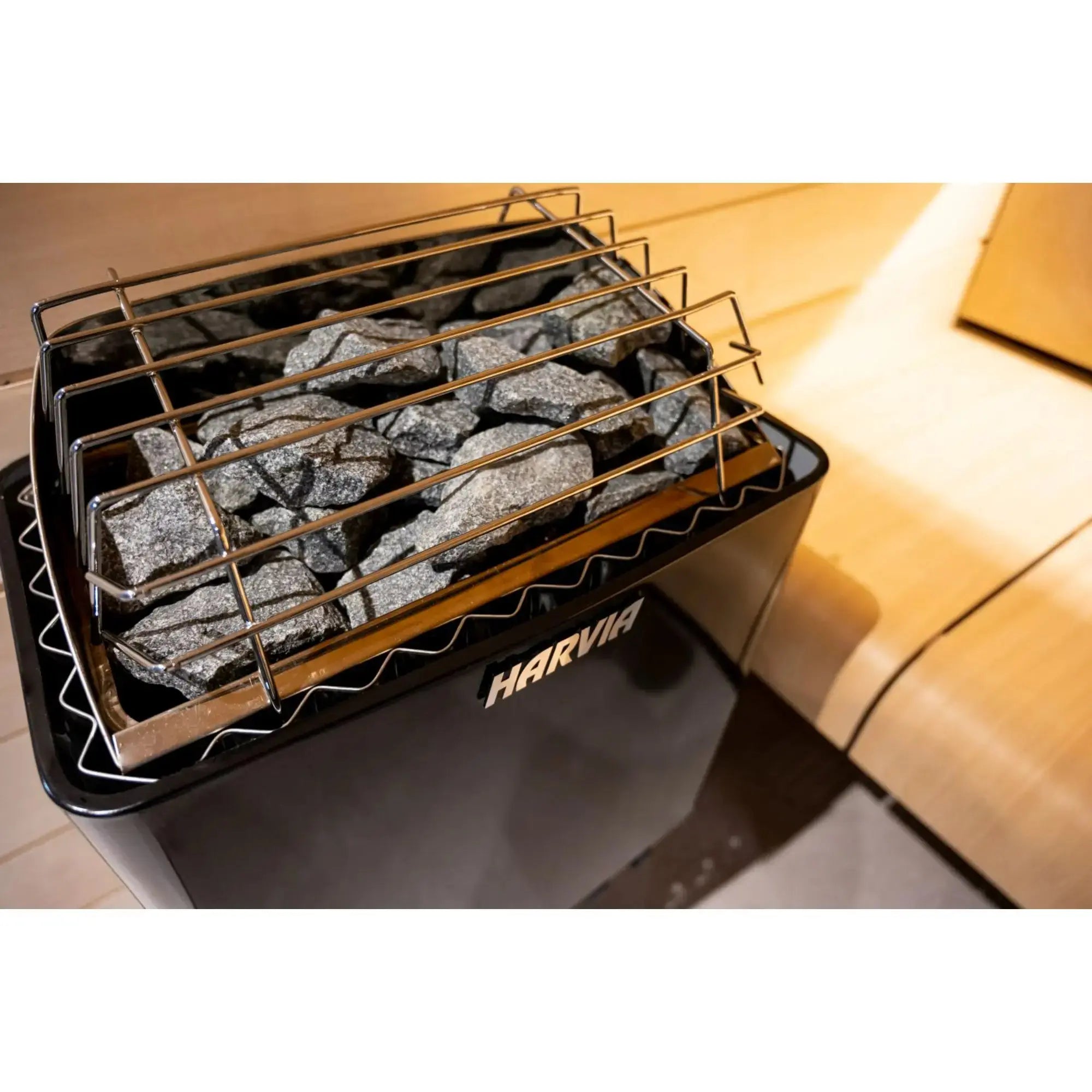
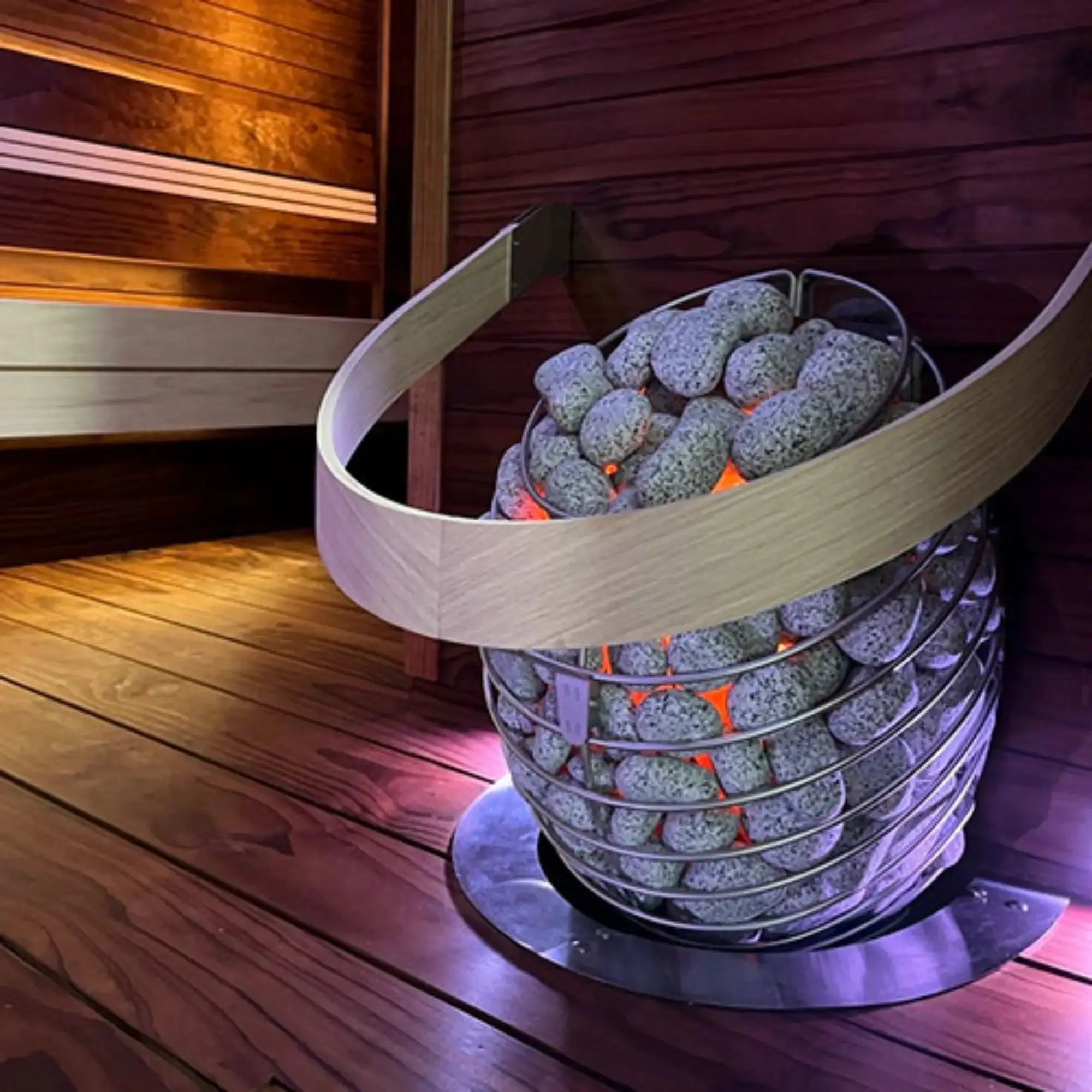
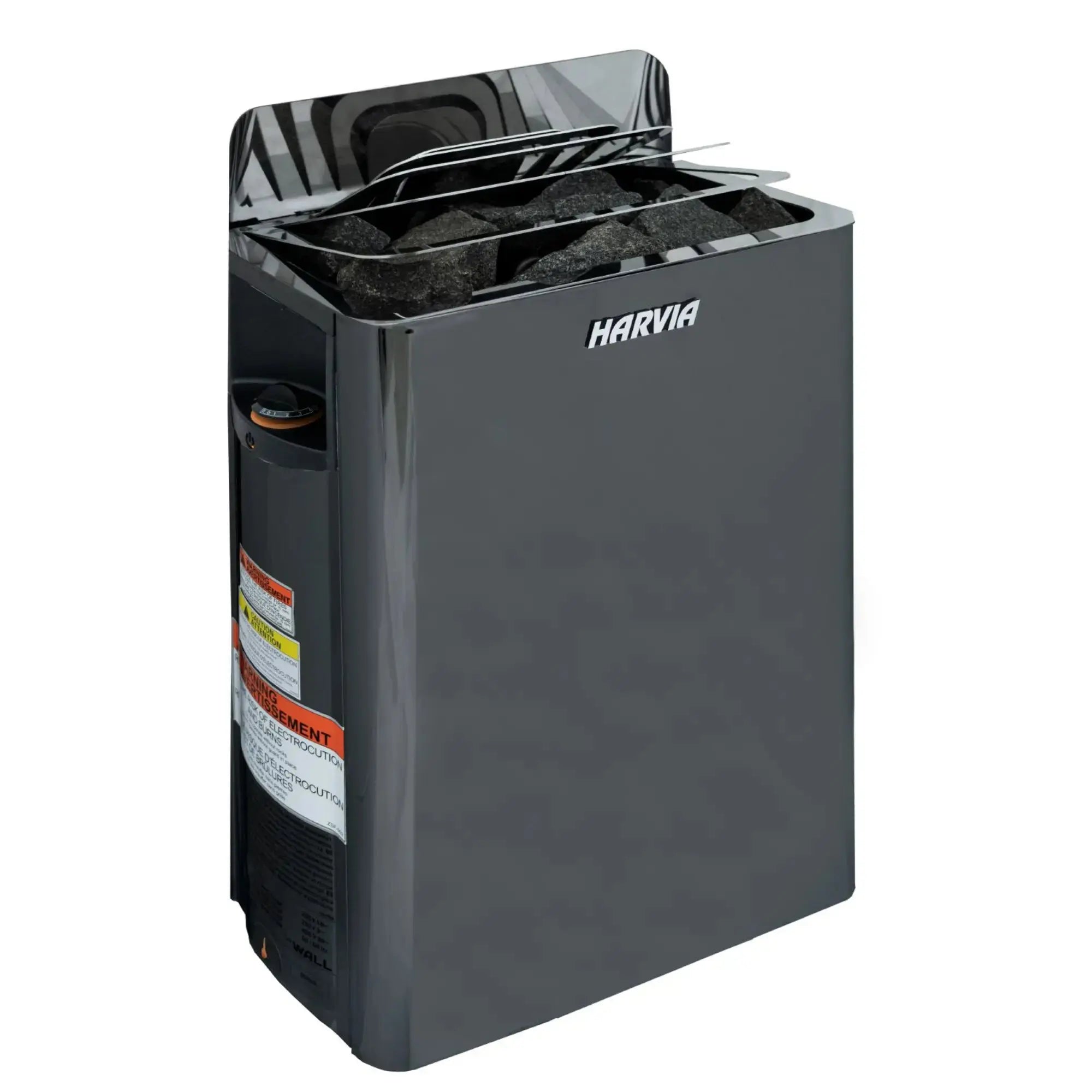
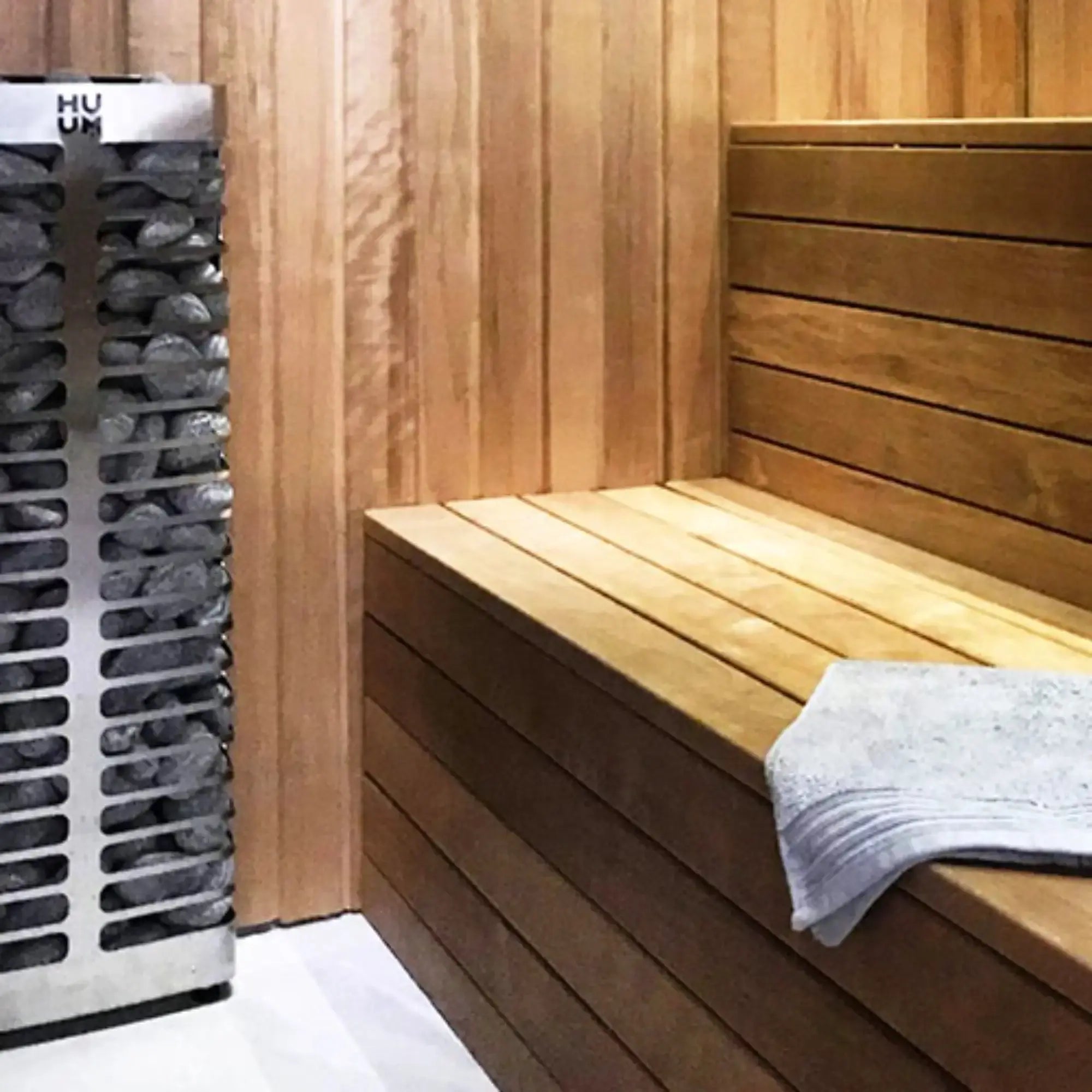
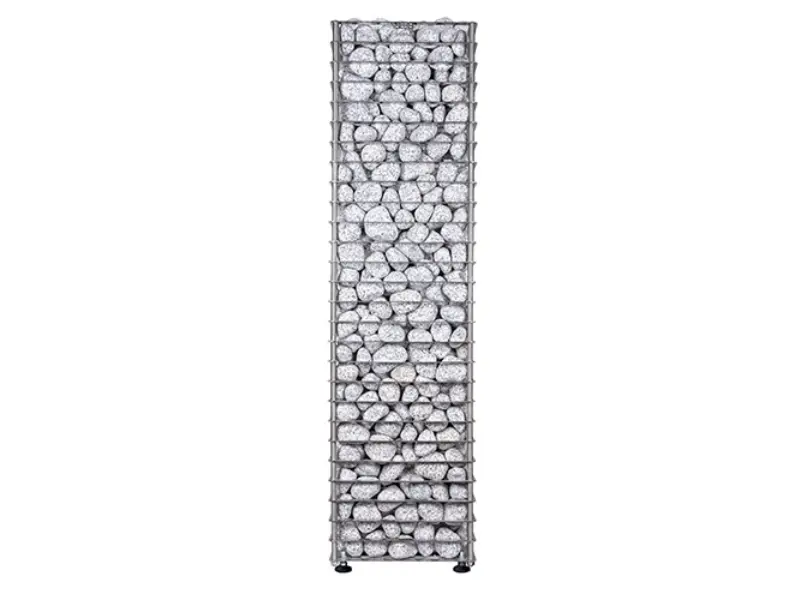
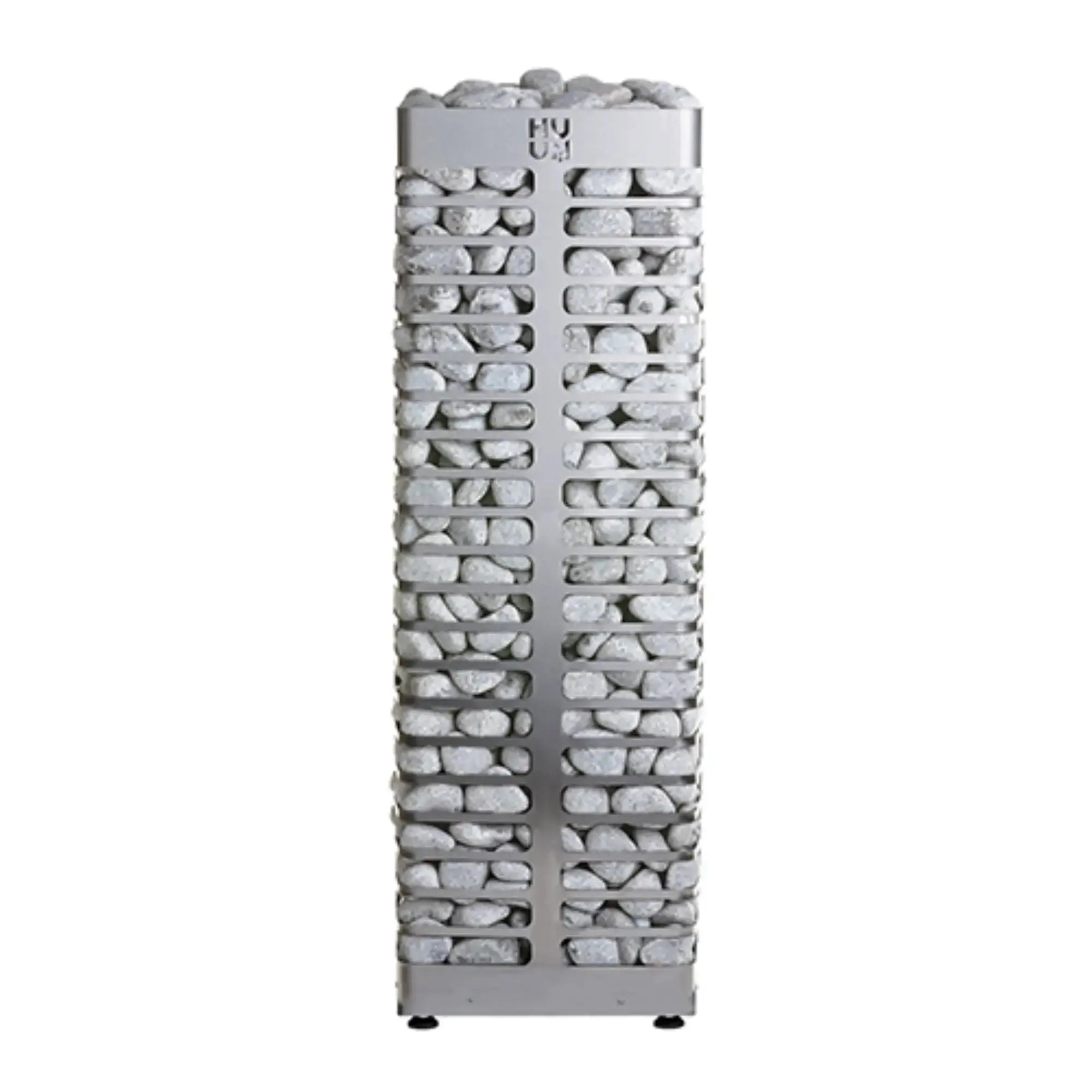
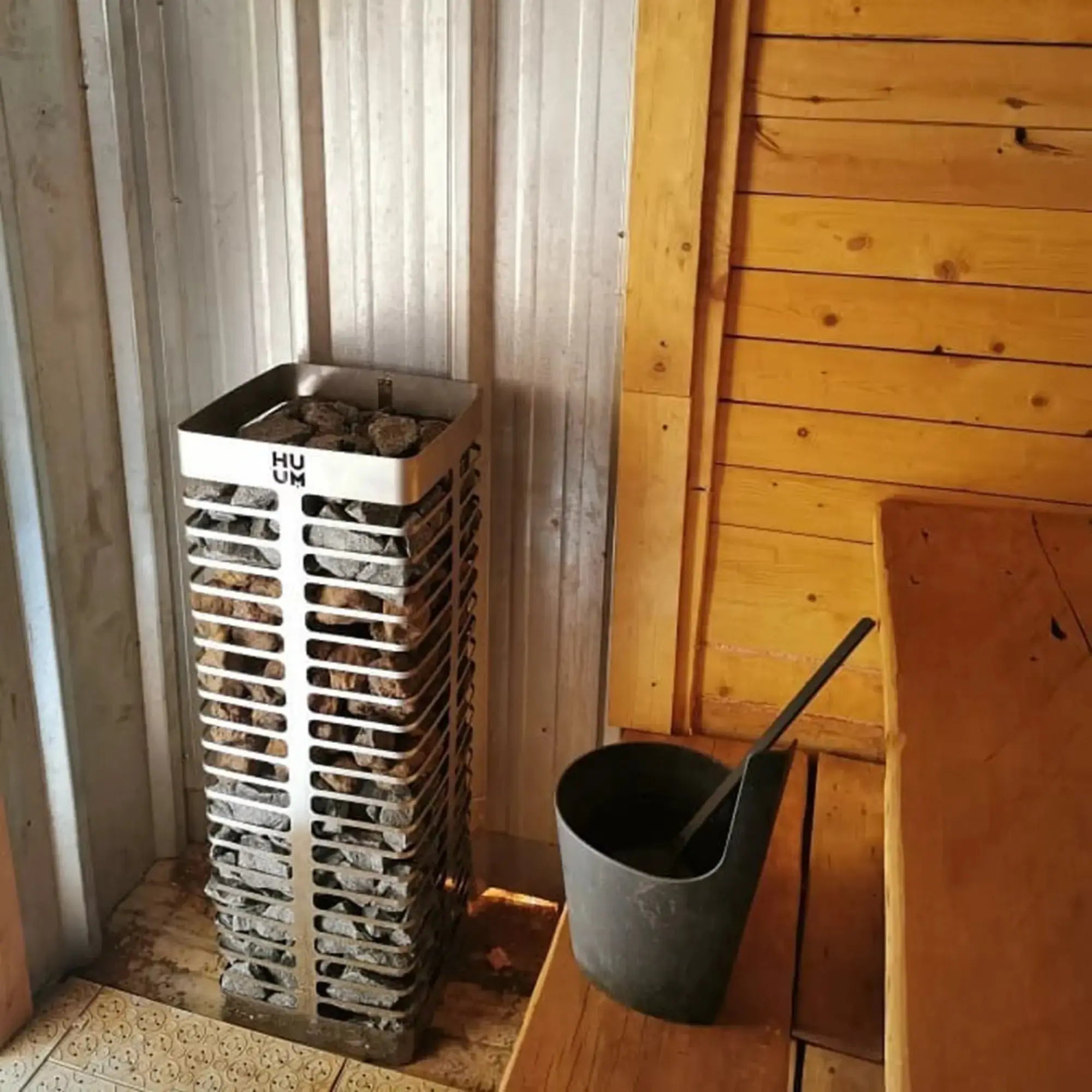
4.5 kW for 106 to 247 cu ft, and it carries 122 lb of stones, more than some wood stoves. Softer steam that lasts between pours. Needs a HUUM UKU, sold separately.
How many sauna stones does a heater take?
Every heater publishes a stone capacity, and stones are almost never included. This is the most common gap between what people order and what they need.
The math is simple. Divide the heater's stone capacity by the box weight of the stones it takes, and round up:
| Heater | Stone capacity | Boxes needed |
|---|---|---|
| Harvia KIP60W | 44 lb | 1 x 44 lb box |
| HUUM DROP 4 | 122 lb | 4 x 33 lb boxes |
| Harvia Cilindro 16 | 264 lb | 6 x 44 lb boxes |
We publish the box count on every heater page. Always round up. Buying too many stones costs a few dollars, while running a heater with exposed elements costs you the heater. The full method is in our guide to sauna rocks.

Which stones, and how to load them
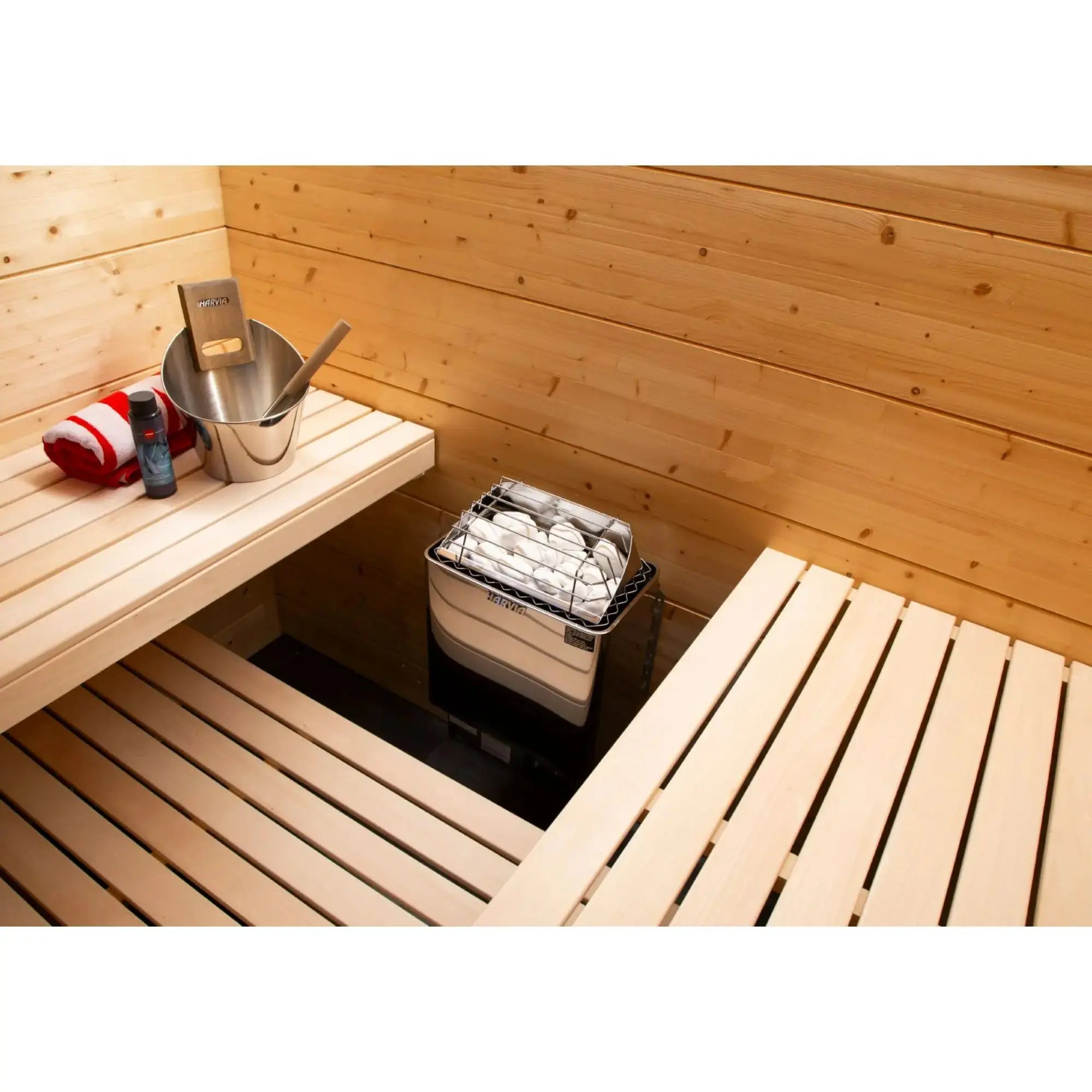
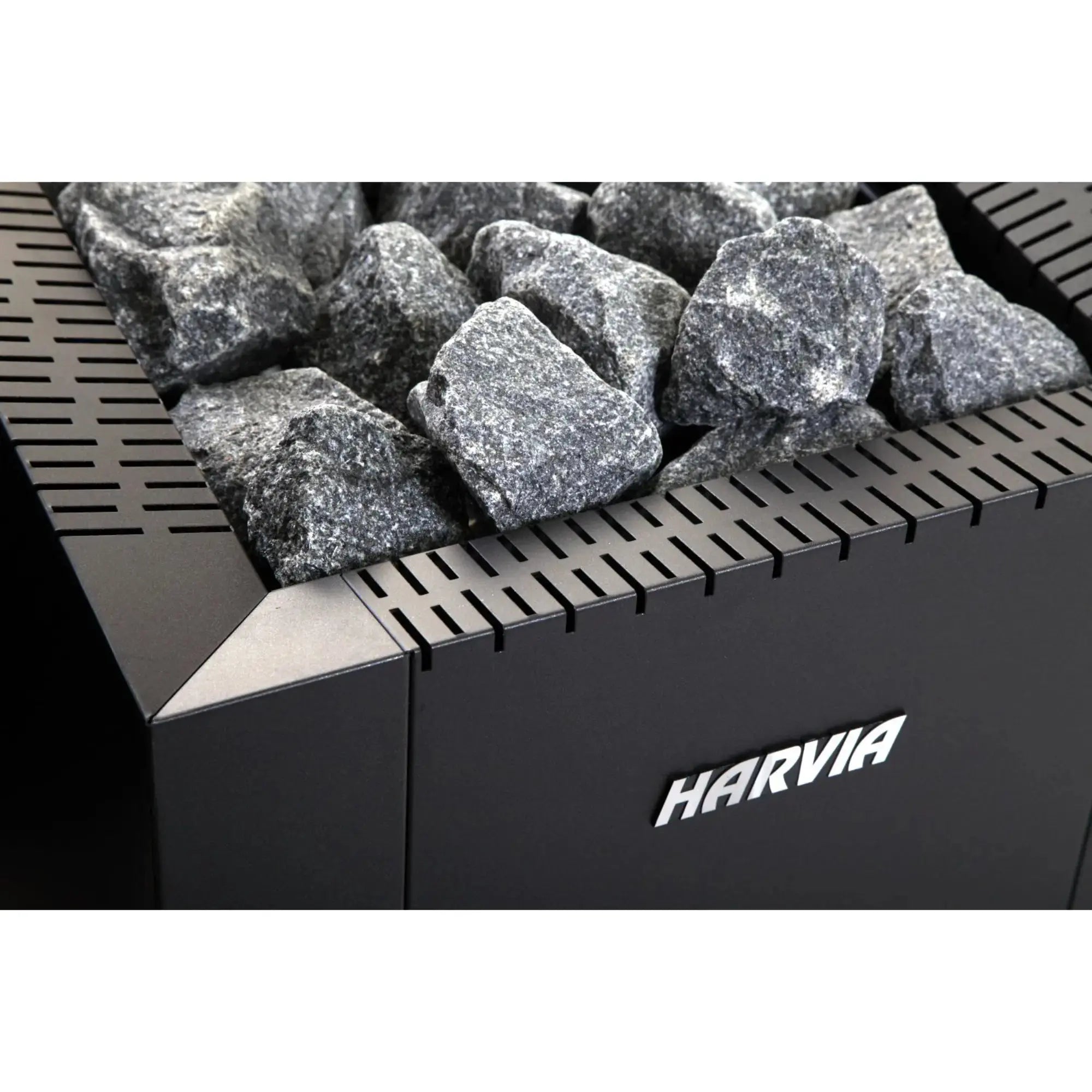
- Buy stones made for saunas. Olivine diabase is the standard because it's dense, non-porous and survives repeated thermal shock. River rock, granite and anything you found in the yard can crack or flake apart when cold water hits it.
- Match the shape to the brand. Most heaters take split-face 5 to 10 cm stones. HUUM calls for rounded olivine instead, because the open HUUM basket needs stones that stack into it cleanly.
- Load loosely by hand, largest at the bottom, so air moves freely between them. Packing them tightly is as bad for the heater as not using enough.
- Re-stack once a year and replace any stone that has cracked or started to crumble.
Browse sauna stones by heater brand.
Which sauna heater brand is right for you?
We carry heaters and stoves from every major Nordic name, plus one German brand and one Estonian brand. That means we can be straight about where each one fits instead of talking up the only line we stock.
| Brand | Makes | Choose it when |
|---|---|---|
|
Harvia Model guide |
Electric and wood, Finland | You want the widest range and the largest choice of UL-listed electric models |
|
HUUM Model guide |
Electric and wood, Estonia | The heater is part of the room's design, and you want a big stone load and app control |
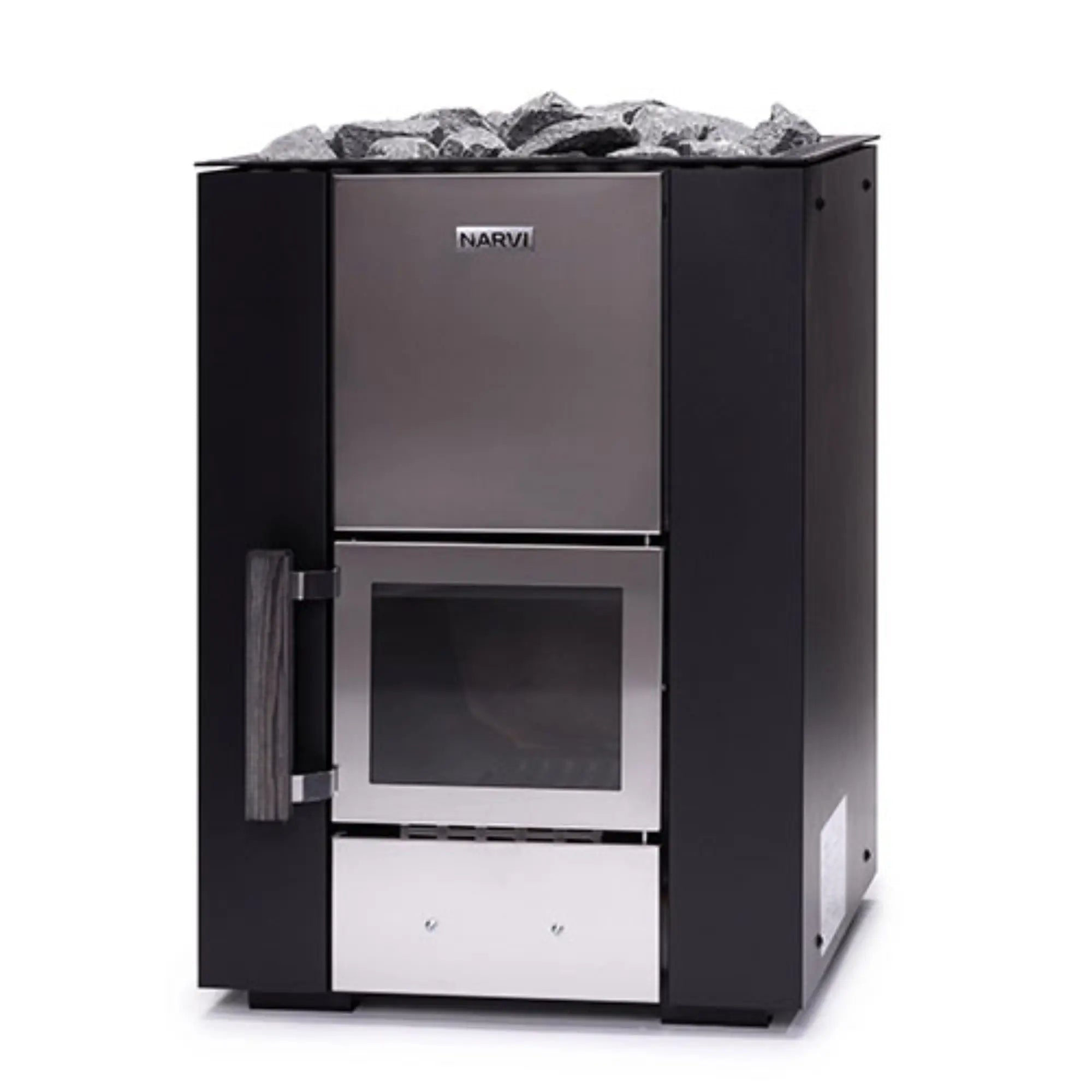
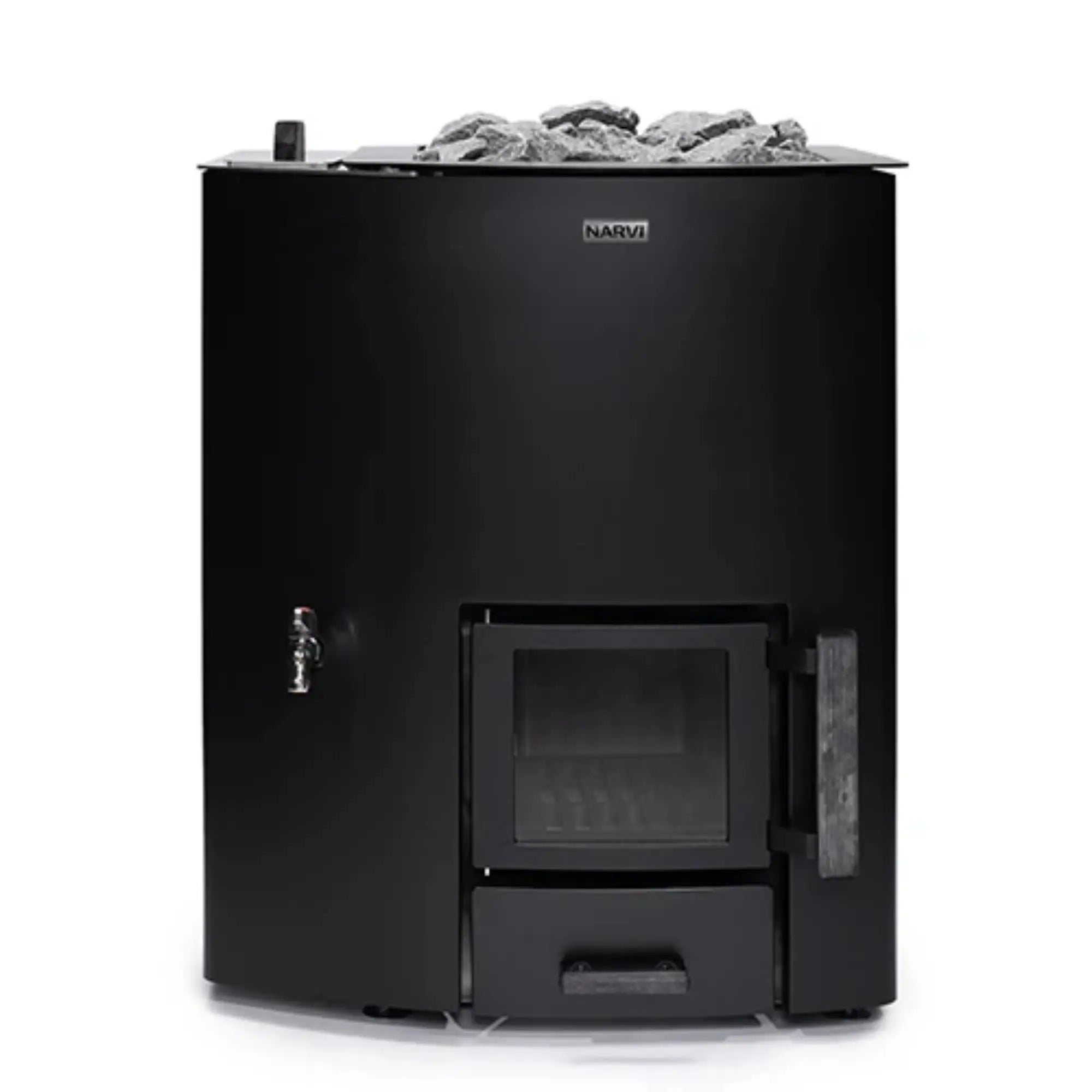
| Narvi | Mostly wood stoves | You are building wood-fired and want something few US stores carry |
| Saunum | Electric with air circulation | Even heat from floor to ceiling matters more to you than the lowest price |
| Cozy Heat | Wood stoves | You want a heavy, generous stone load in a traditional stove |
| EOS | Electric, German engineering | You are building commercial or high-spec, you want German engineering, and you can budget a control and a power box on top of the heater |
If you can't decide, the deciding factor is rarely the heater itself. It's usually the control system, the stone type and whether the certification marks suit your inspector. Ask us and we'll check all three.
Browse the full range: electric sauna heaters, wood-burning sauna stoves, or everything together.
What does a sauna heater cost?
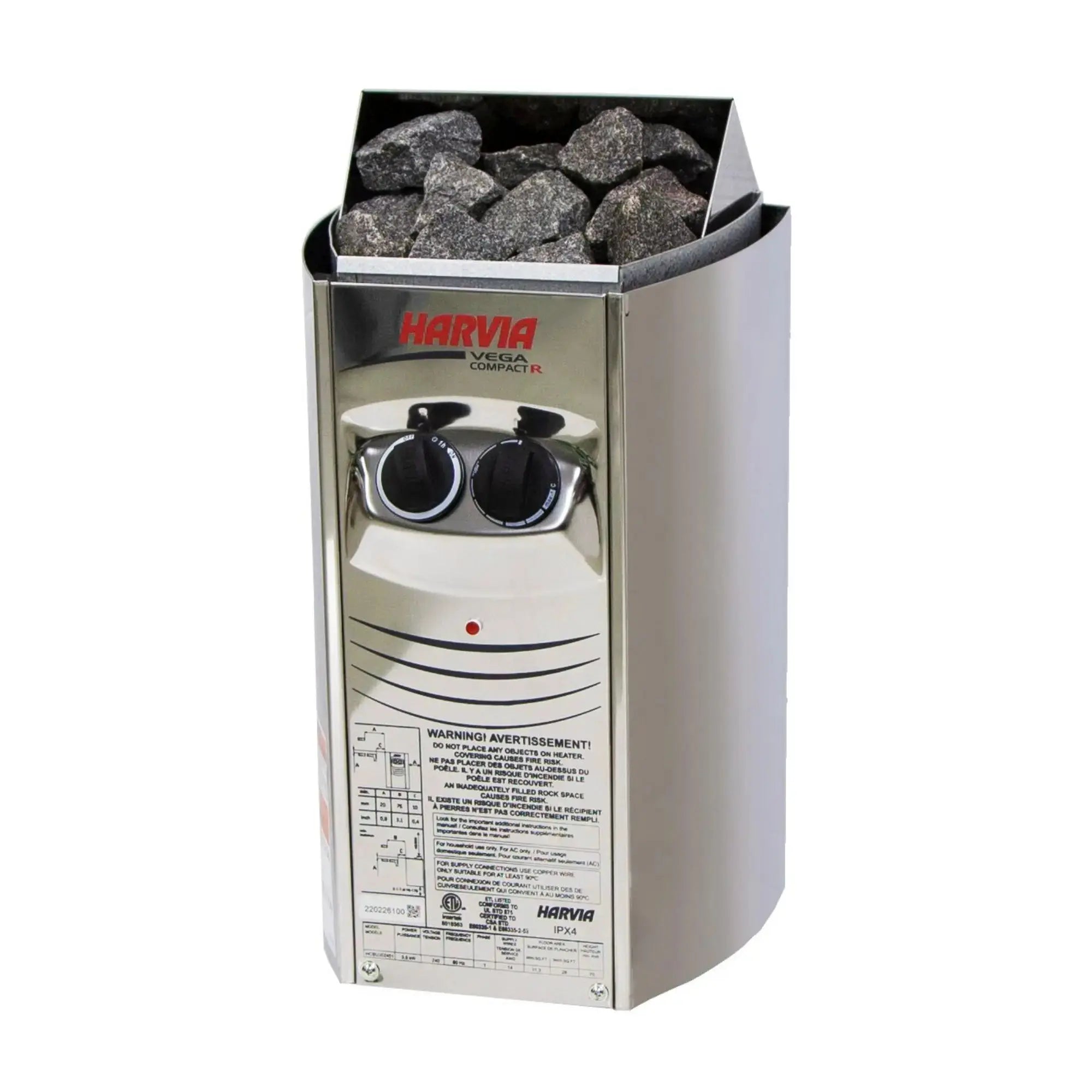
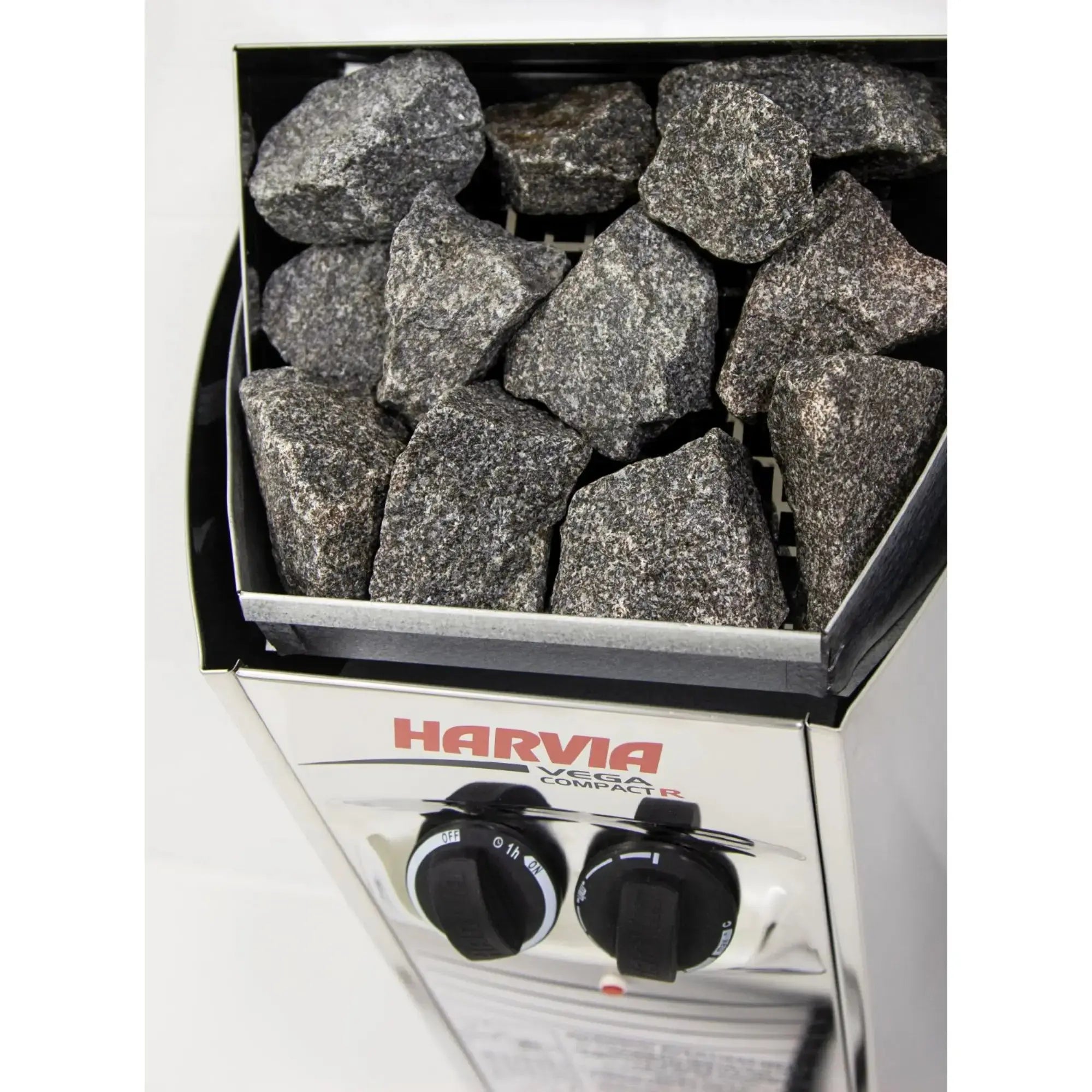
Most home heaters cost between about $950 and $2,400, and prices start lower still at $886 with the Harvia Vega Compact 3500. Above that range you're into specialist and commercial equipment, which gets expensive fast and isn't what a backyard room needs. Add stones, a control unit and installation on top. The heater is rarely the biggest cost in the project.
Here's a realistic 6 kW electric build: the heater from $1,010, one 44 lb box of stones, a control unit, and the electrical work. The electrical work is the hard part to predict. A short run inside an existing garage doesn't cost much. A trenched circuit to a detached backyard sauna can cost several times more than the heater. Get that quote early.
With wood-fired, you skip the electrician. Instead you need a chimney system, floor protection, a permit and an inspection, plus two to six times the stone weight. The stove is often cheaper than an equivalent electric setup, but the install usually isn't.
Running costs are a separate question, covered in are outdoor saunas expensive to run.
Frequently asked questions
What size sauna heater do I need for a 6 x 8 sauna?
A 6 x 8 ft room with a 7 ft ceiling is 336 raw cubic feet. That points to a 7.5 kW to 8 kW electric heater: the HUUM DROP 7 (230 to 441 cu ft) or the Harvia KIP80W (250 to 425 cu ft). Add a glass door or any tile and the adjusted figure climbs quickly, so measure the glass and run the adjustment before you buy. For wood-fired, that same room falls in the range of a 16 kW to 17 kW stove.
Can a sauna heater be plugged into a normal outlet?
No, it can't. Home sauna heaters are hardwired appliances on a dedicated 240V circuit, rated between roughly 18.8 A and 37.5 A depending on output. A licensed electrician sizes the breaker and conductors from the nameplate and installation manual.
Do sauna heaters come with stones?
They almost never do. Stones ship separately, often on their own freight, and a heater needs its full published capacity before its first run. A 6 kW wall heater usually takes one 44 lb box, and a 16 kW wood stove takes six.
How long does a sauna heater take to heat up?
A correctly sized electric heater brings a well-insulated room to temperature in 30 to 60 minutes. Saunum is the one exception worth knowing about. It publishes 45 to 90 minutes for the Air series, because those heaters circulate air through the room instead of only radiating heat from the stones. A wood stove takes 45 to 75 minutes from lighting. If it consistently takes longer than the manufacturer's published time, the heater is usually too small for the room's adjusted cubic feet.
Is electric or wood-burning cheaper to run?
It depends on your electricity rate and whether you buy or cut firewood. The more useful comparison is installed cost. Electric means an electrician and a dedicated circuit, while wood means a chimney system, floor protection and usually a permit and inspection. Price both for your site.
How often should sauna stones be replaced?
Re-stack them once a year and replace any that have cracked or crumbled. Heavy or commercial use means annual replacement; light home use can stretch to two years.
Read next: the full sauna heater series
Each of these covers one decision in depth, using the same published specs from the same product pages.
- What Size Sauna Heater Do I Need? Why 9 kW Is Your Real Ceiling The full chart, by room dimensions and adjusted cubic feet.
- Wood Burning Sauna Stoves: How to Choose One (and When Electric Wins) Flue diameters, stone loads and the case for each fuel.
- Sauna Heater Installation: What It Costs and What Your Electrician Needs Published rated amps, what drives the quote, and the GFCI conflict.
- Harvia Sauna Heaters: Which Model Is Right for Your Room? KIP, Cilindro, Vega and The Wall, matched to room sizes.
- HUUM Sauna Heaters: DROP, CLIFF, HIVE and CORE Compared Stone loads, UKU controls and which shape suits which room.
- Sauna Rocks: Which to Buy, How Many, and When to Replace Them The box-count math, stone types and the annual re-stack.
- Sauna Control Panels: Do You Need One, and Which? Which heaters will not run without one, and what it costs.
Not sure which heater fits your room?
Send us your interior dimensions and how much glass you have. We'll size it, tell you the stone count and tell you which control it needs.
Shop heaters and stoves →Every heater and stove we stock is here, with every spec published on its page.