Wood Burning Sauna Stoves: How to Choose One (and When Electric Wins)
Three things decide which wood burning sauna stove you buy: the kW rating against your room size, how much stone it holds, and whether you load the fire from inside the sauna or through the wall. Everything else is chimney, floor protection and paperwork.
Wood is the older way to heat a sauna, and it's still the right answer if there's no power at the site. Just know that the stove is the cheap part. Here's how to pick one, what else you'll have to buy, and when electric is the better call.

In this article
How do you choose a wood burning sauna stove?
Start with the room, in adjusted cubic feet, not floor area.
Adjusted cu ft = width x depth x height in feet, plus 45 cu ft for every square foot of glass, tile, concrete or stone, plus 15 cu ft for every square foot of exposed log wall.
A 6 x 7 ft room with a 7 ft ceiling is 294 raw cubic feet. Add a full glass door and it behaves like 834. That bigger number is what every stove is rated against. Our sauna heater size calculator does the math for you. Then check four things.
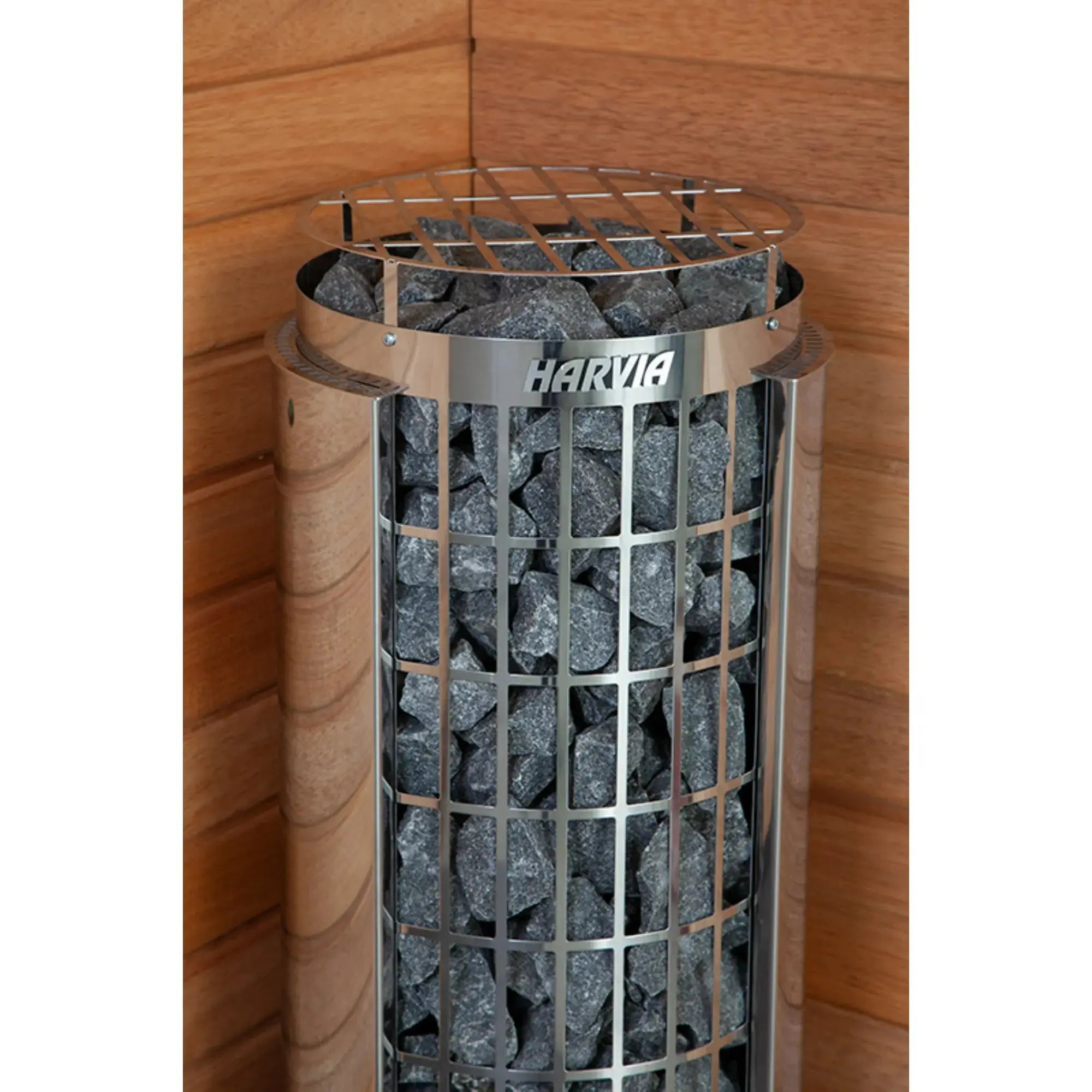
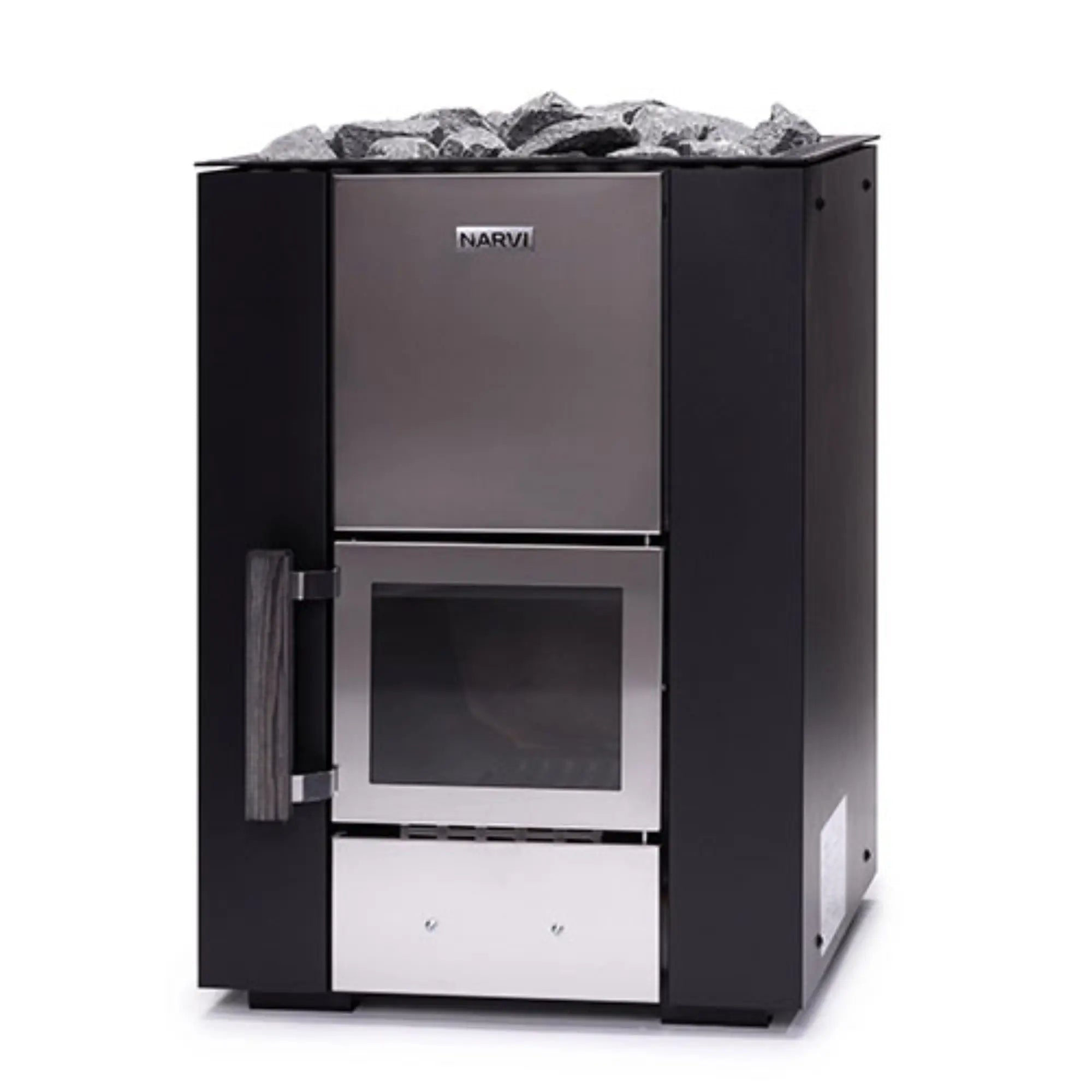
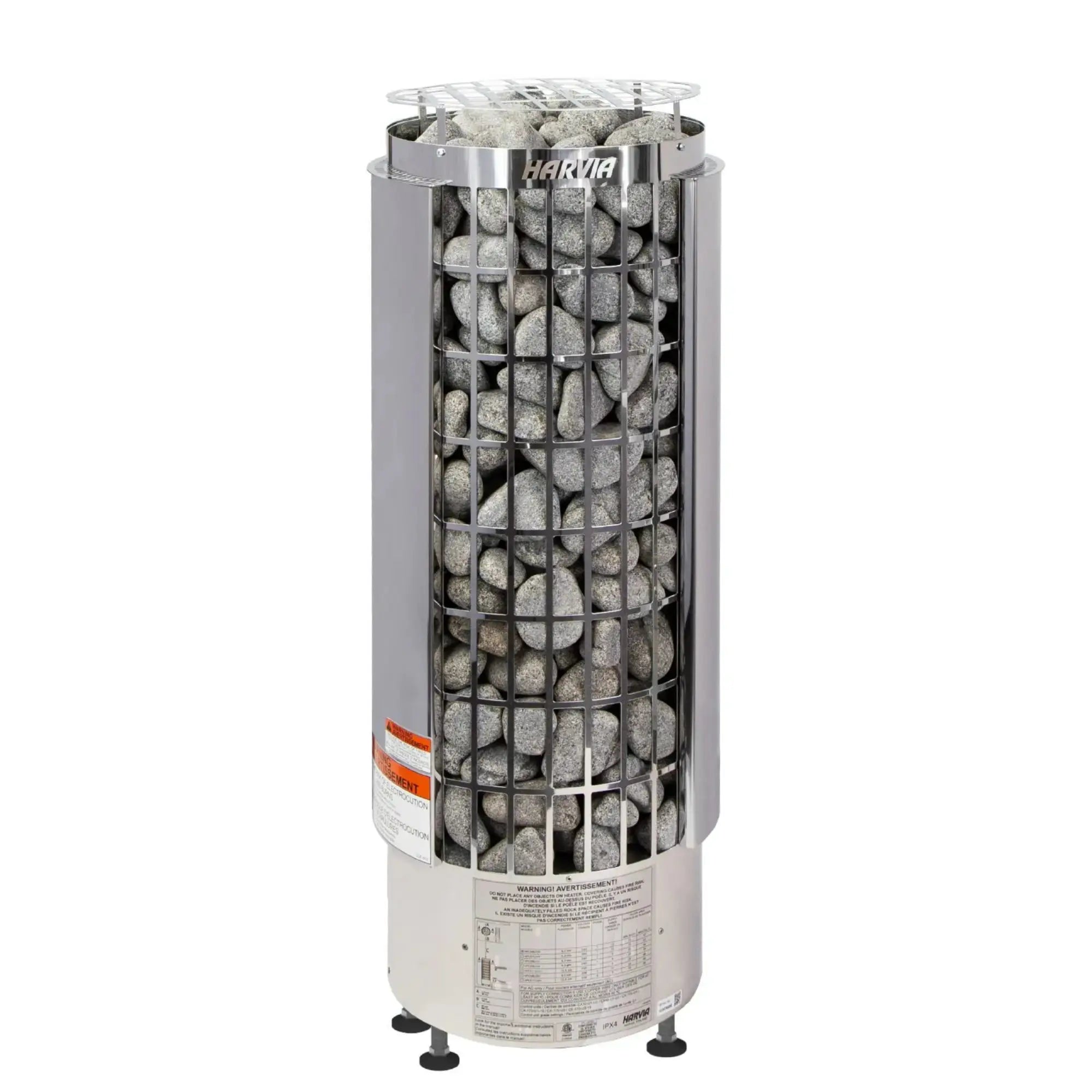
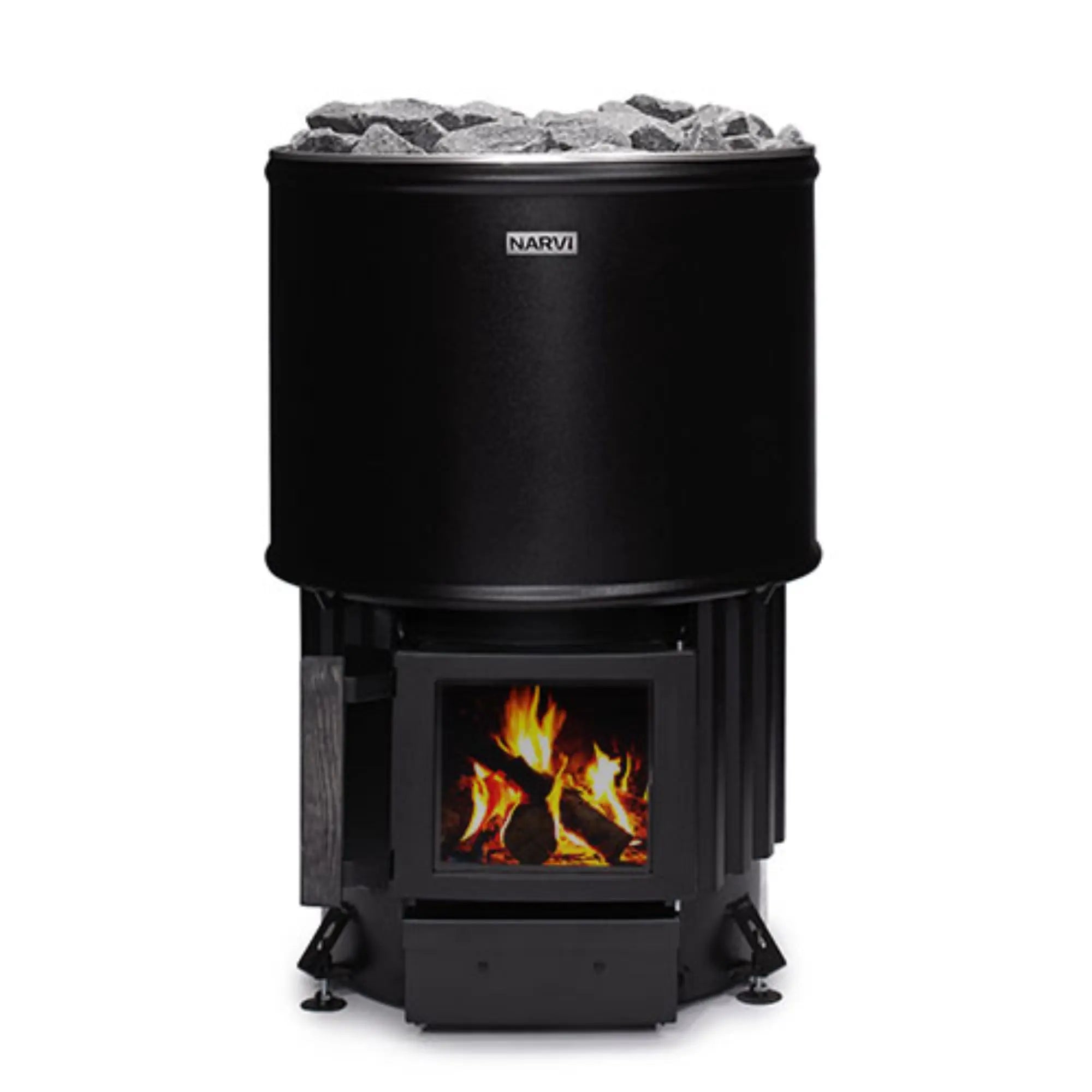
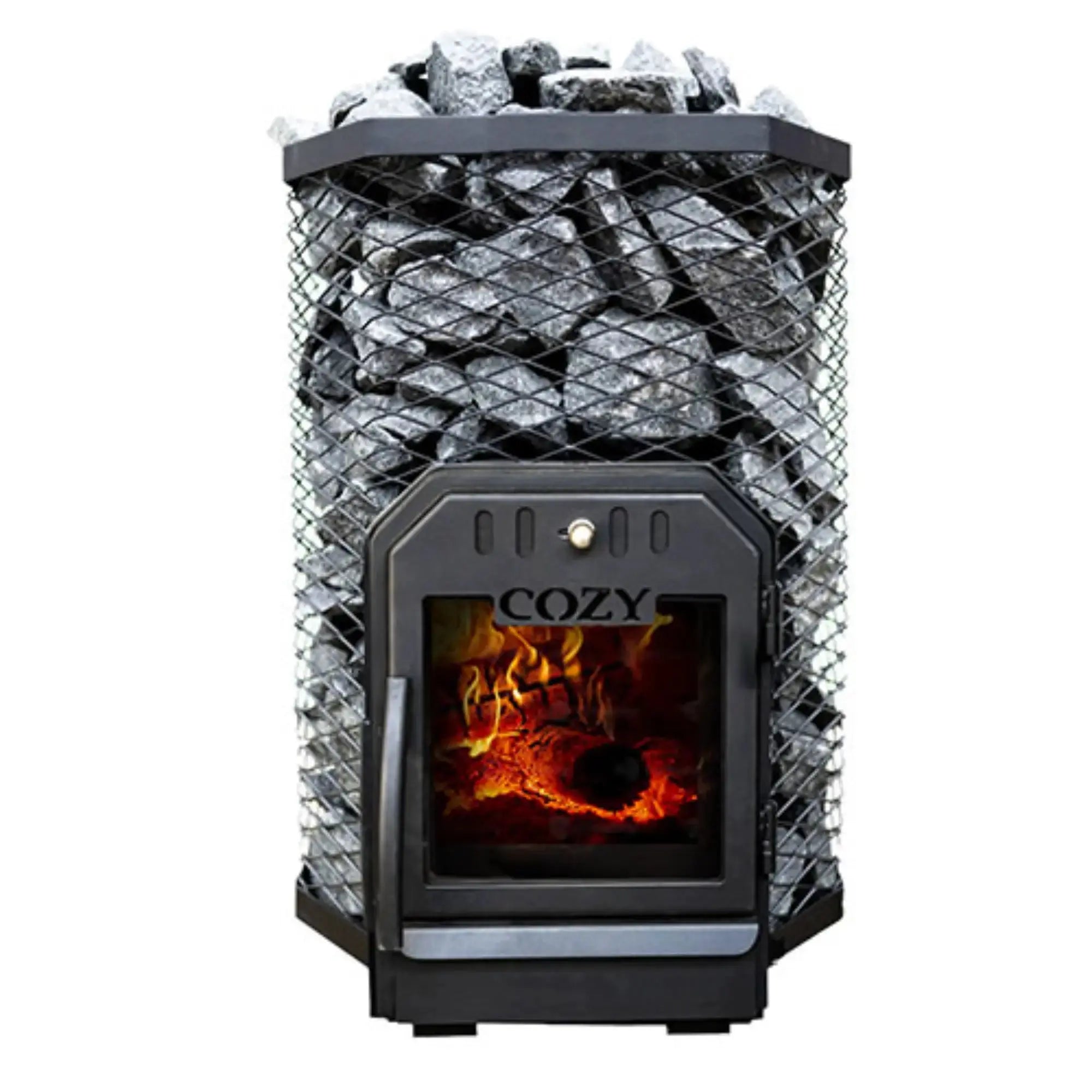
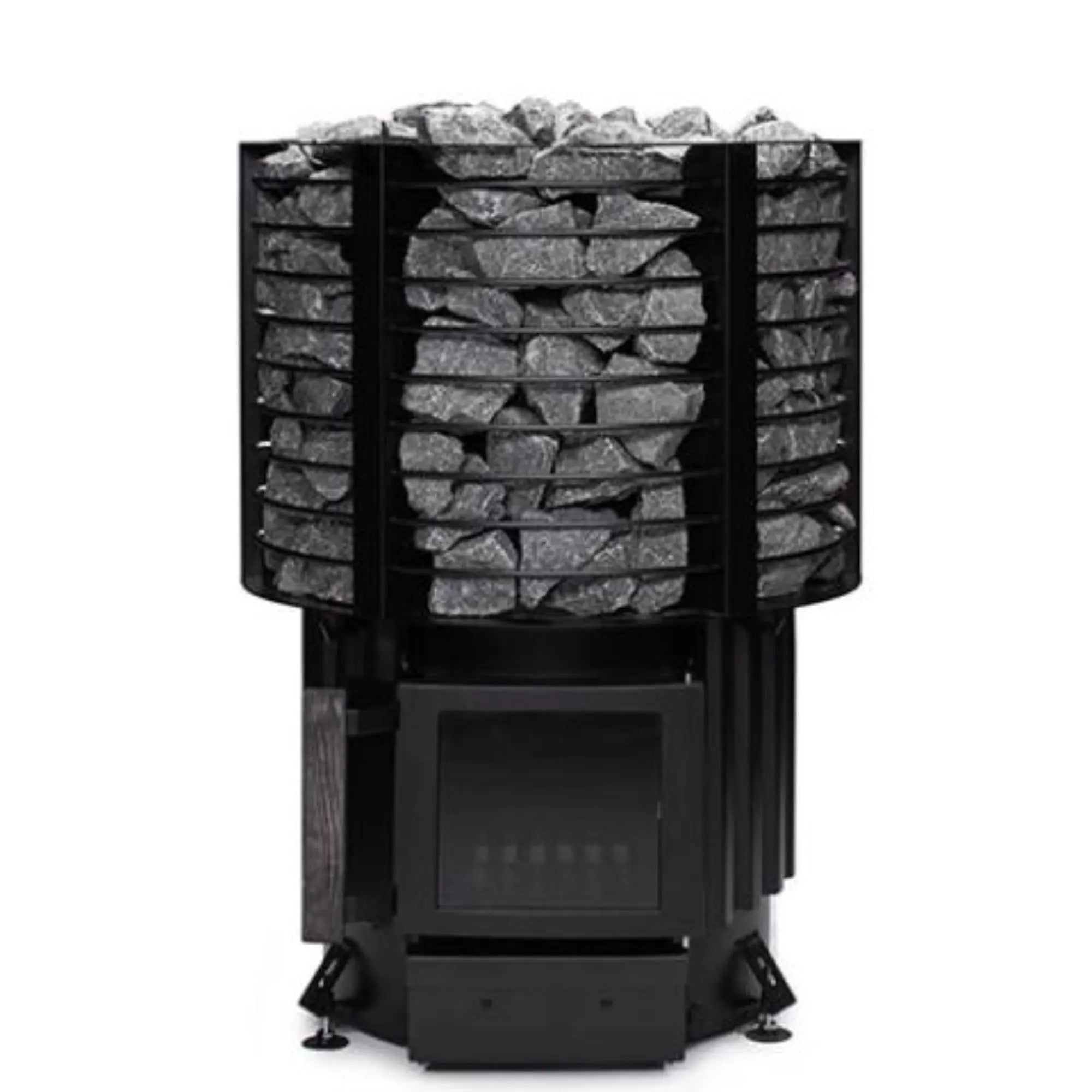
- kW against room volume. Published ratings are volume ranges: Harvia Cilindro 16 is 16 kW for 212 to 459 adjusted cu ft, Narvi Kuru 14 is 13 kW for 283 to 494, Cozy Heat O 12 is 12 kW for 210 to 423. Too small and the stones never fully heat. Too big and the air is scorching before the stones are ready.
- Stone capacity. This decides your steam, and it varies more than kW does: 77 lb minimum on a Kuru 14, 200 lb on a Cozy Heat O 12, 264 lb on a Cilindro 16. More stone gives softer steam that lasts longer, but the stove takes longer to warm up.
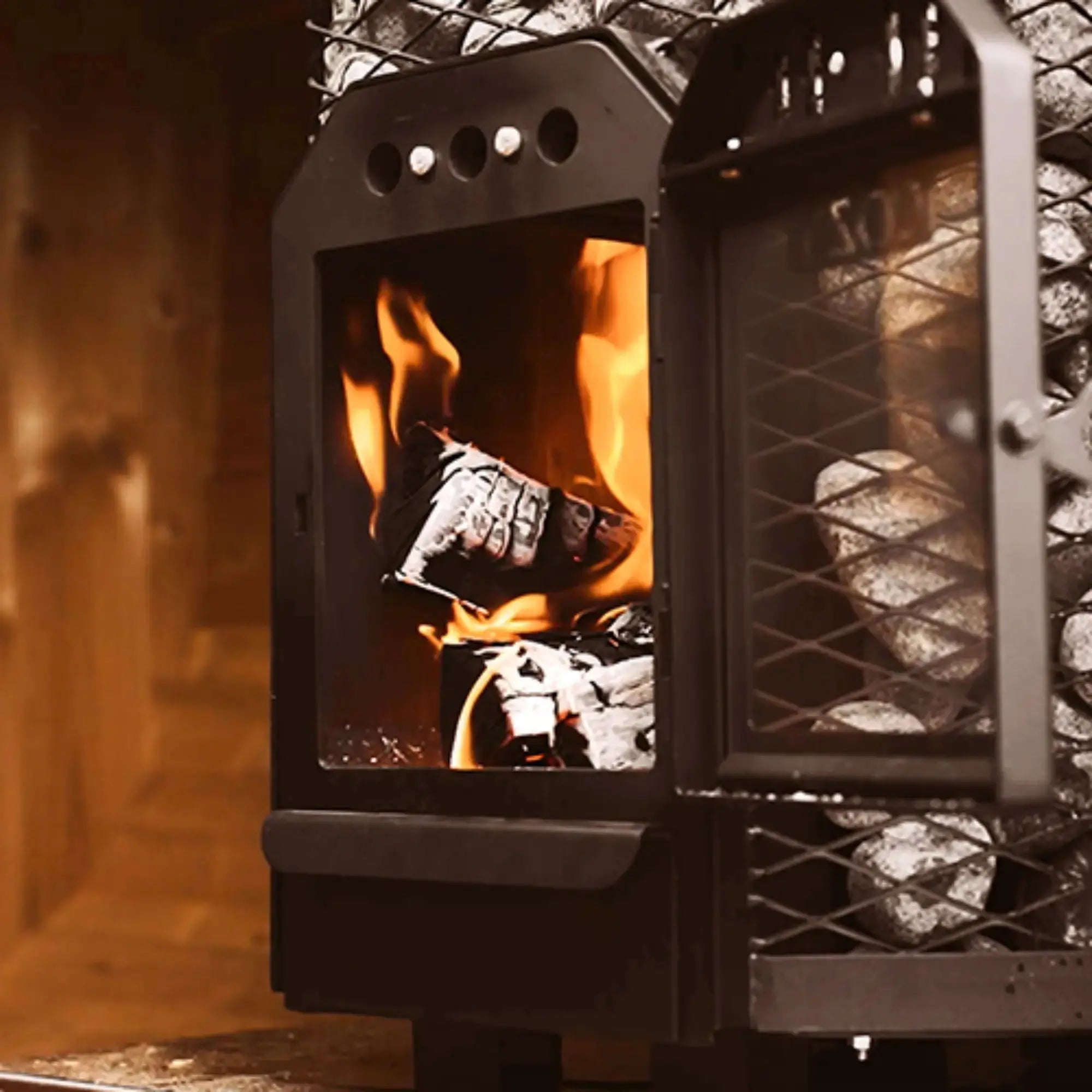
- How the firebox loads. From inside the sauna, or through the wall from a changing room so ash and firewood never come into the hot room. Loading through the wall needs an extension tunnel and a framed opening, so decide before you build the wall.
- The flue. Most Finnish stoves come with a 115 mm (4.5 in) European collar. To connect one to a 6 in North American chimney you need an adapter. On a Harvia that's the WZ115155, and you should order it with the stove.

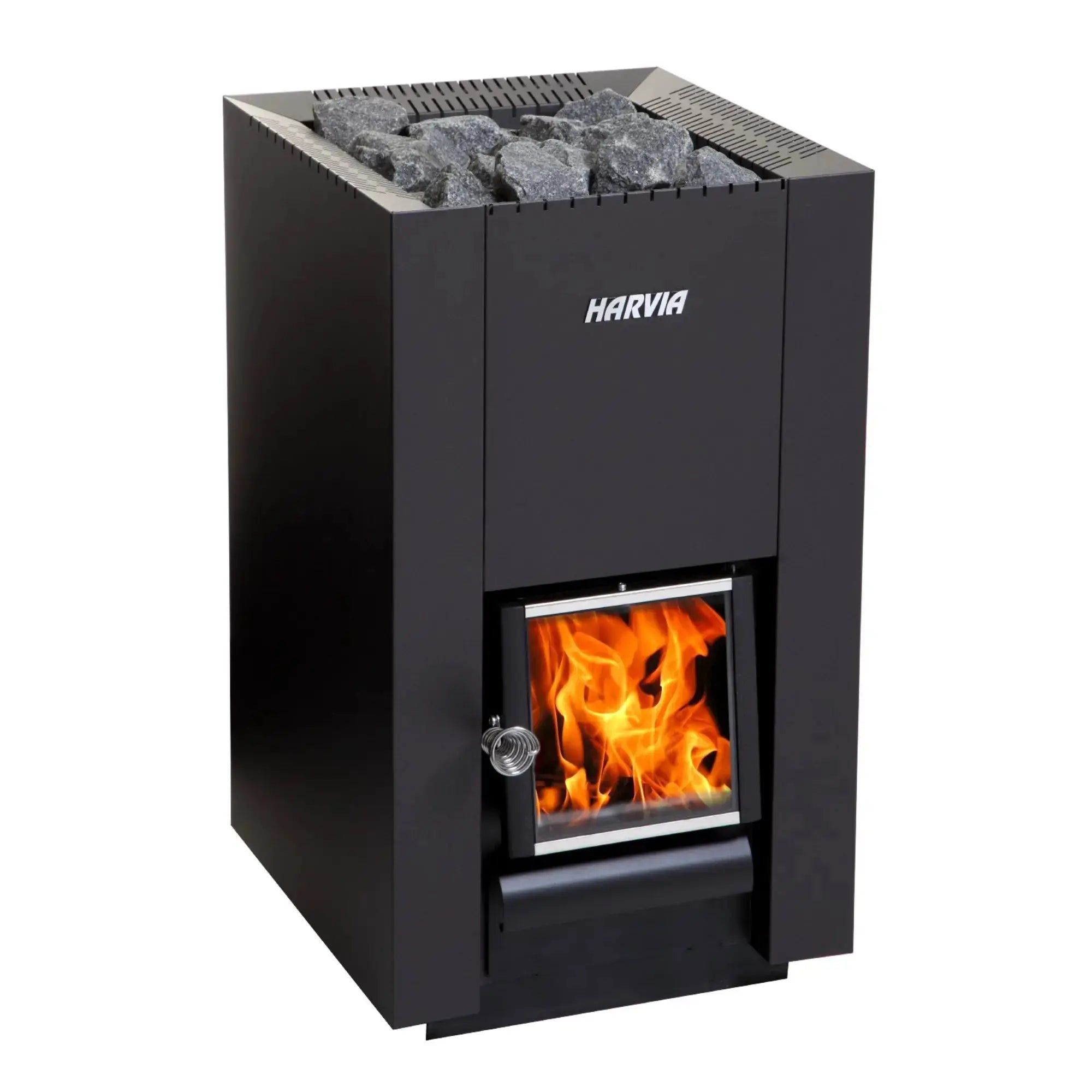
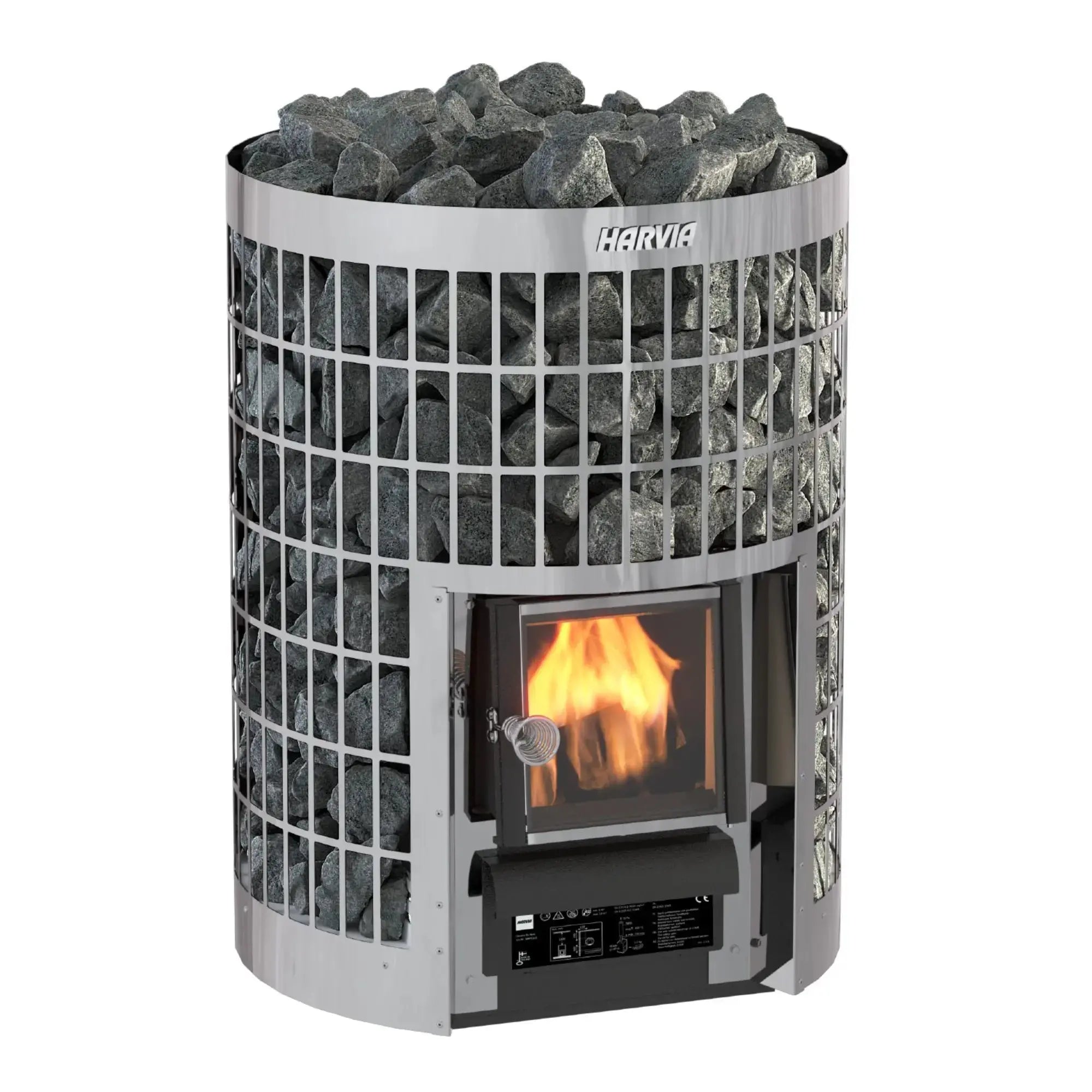
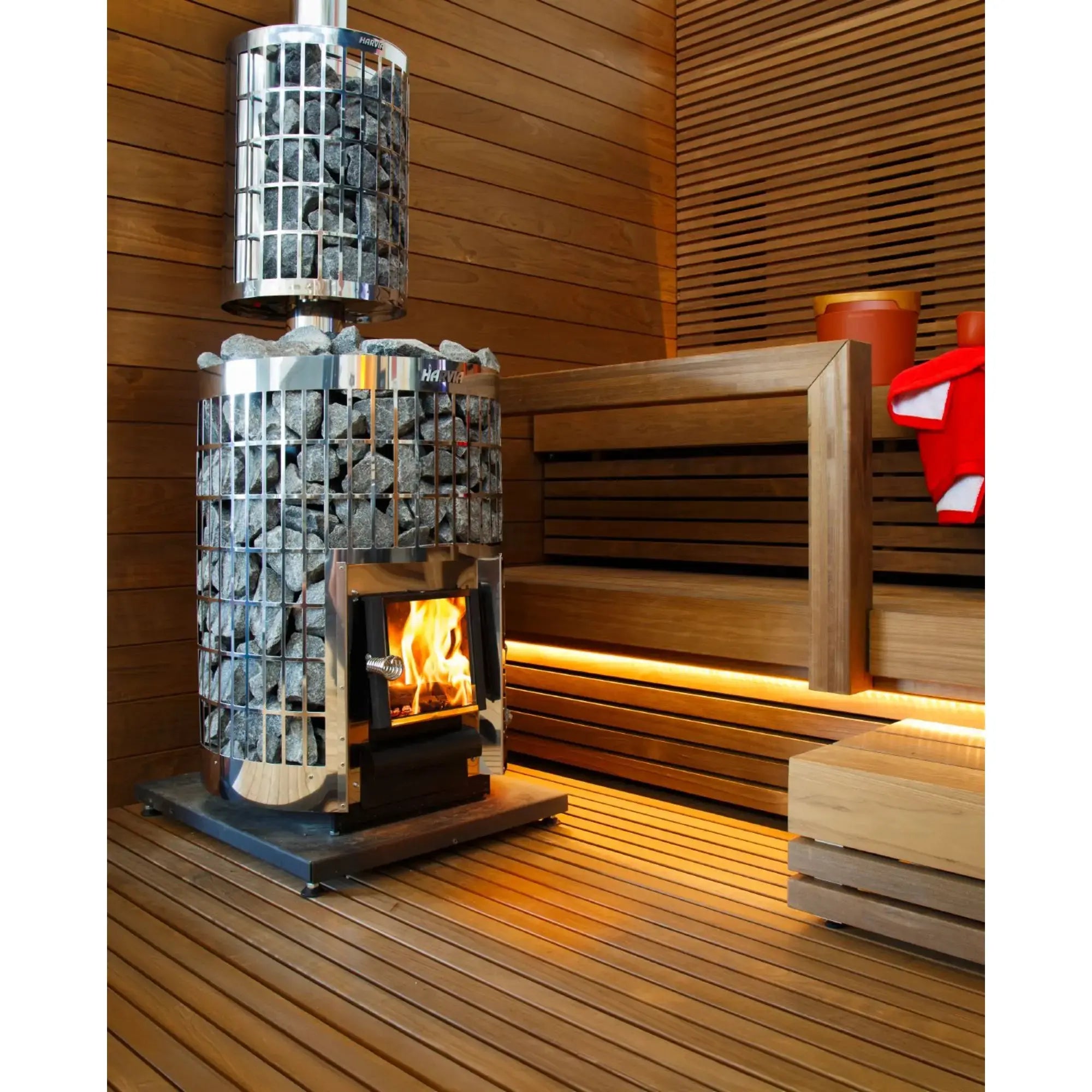
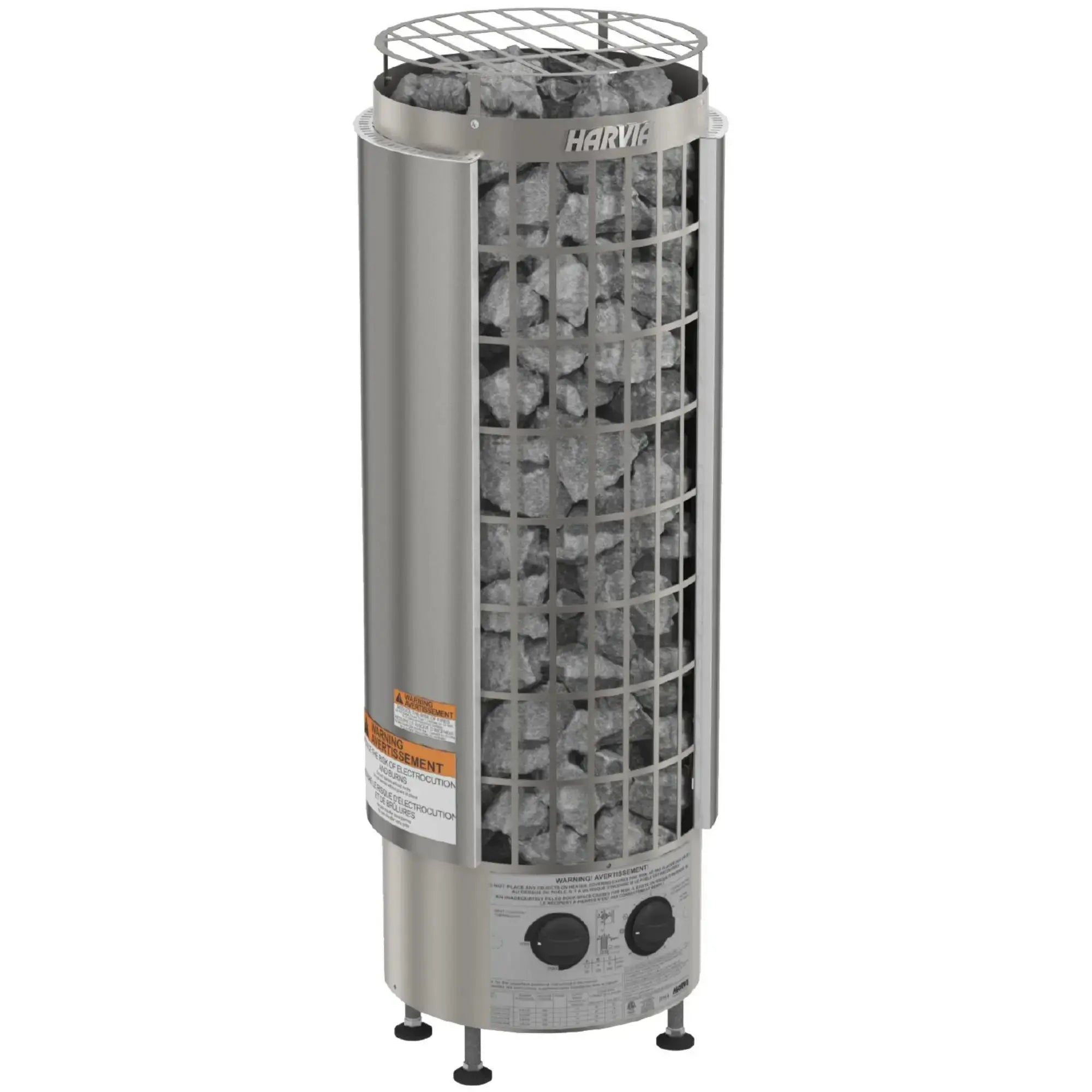
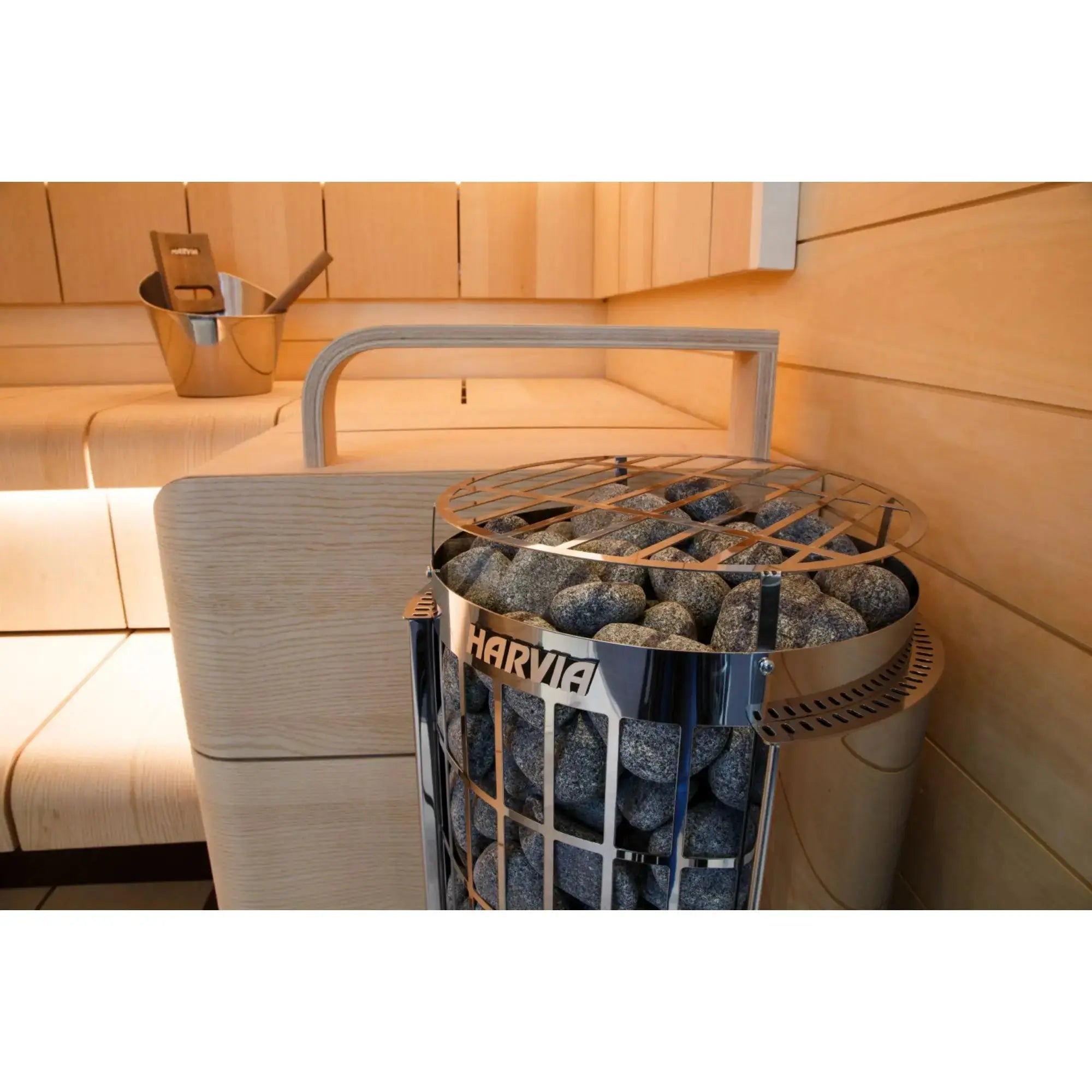
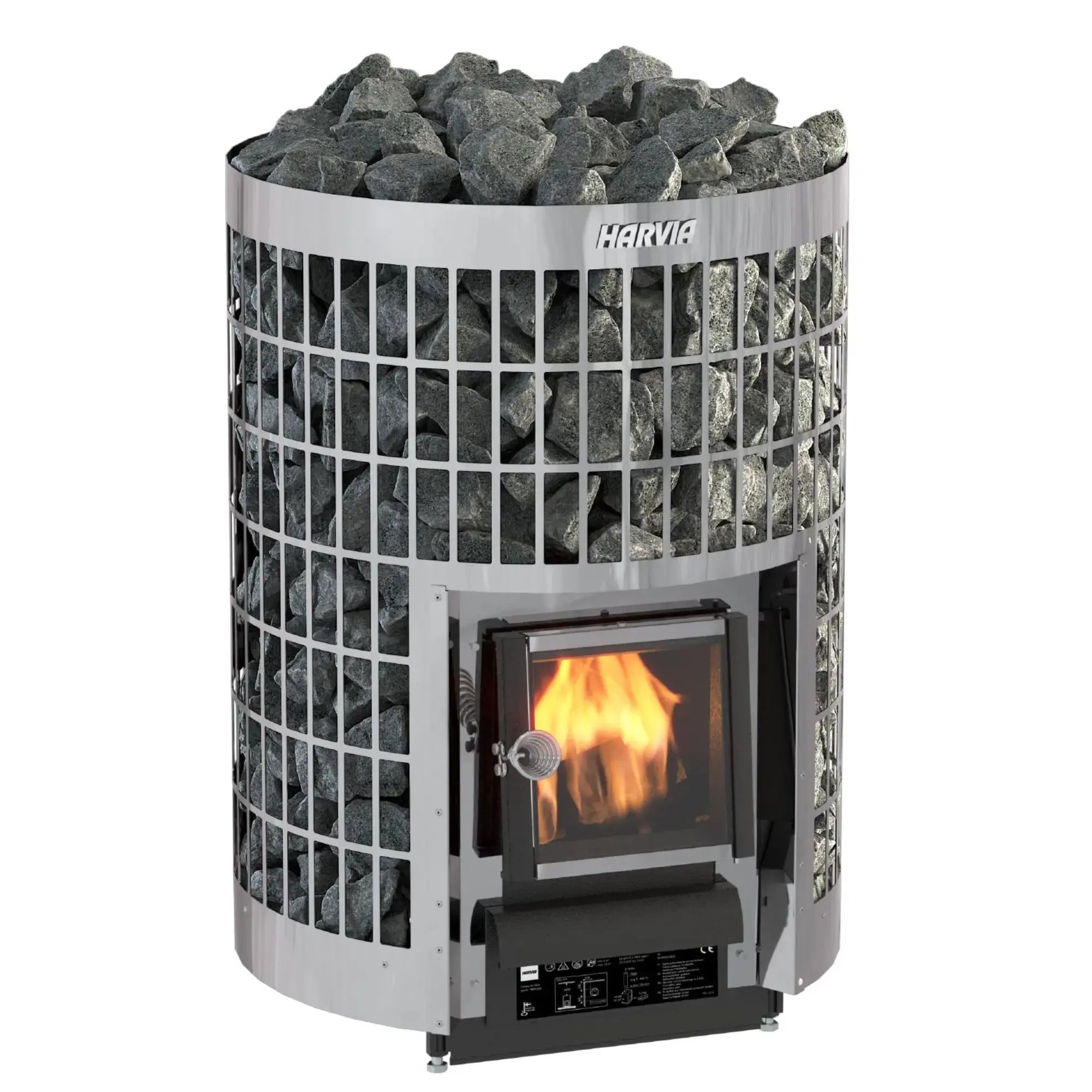
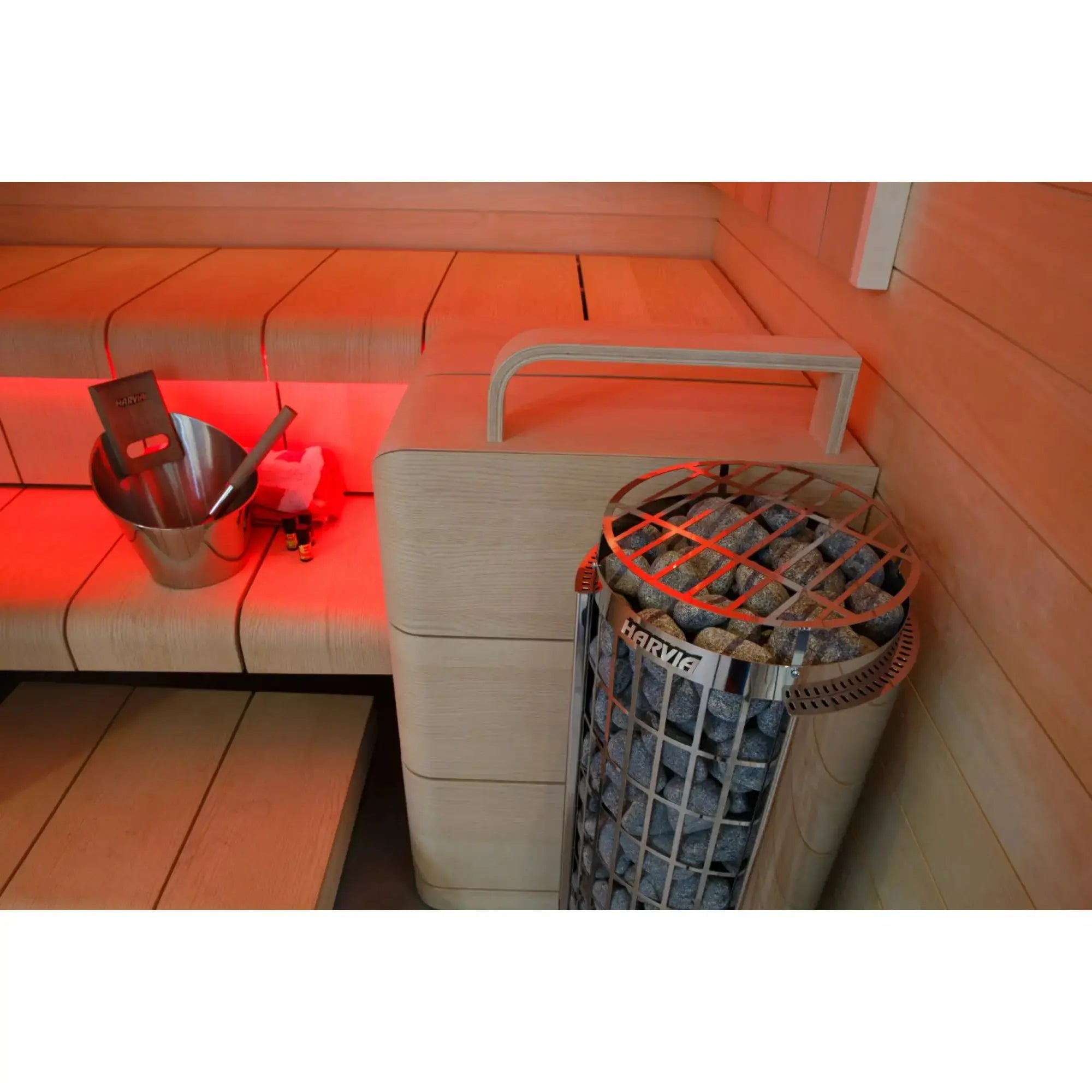
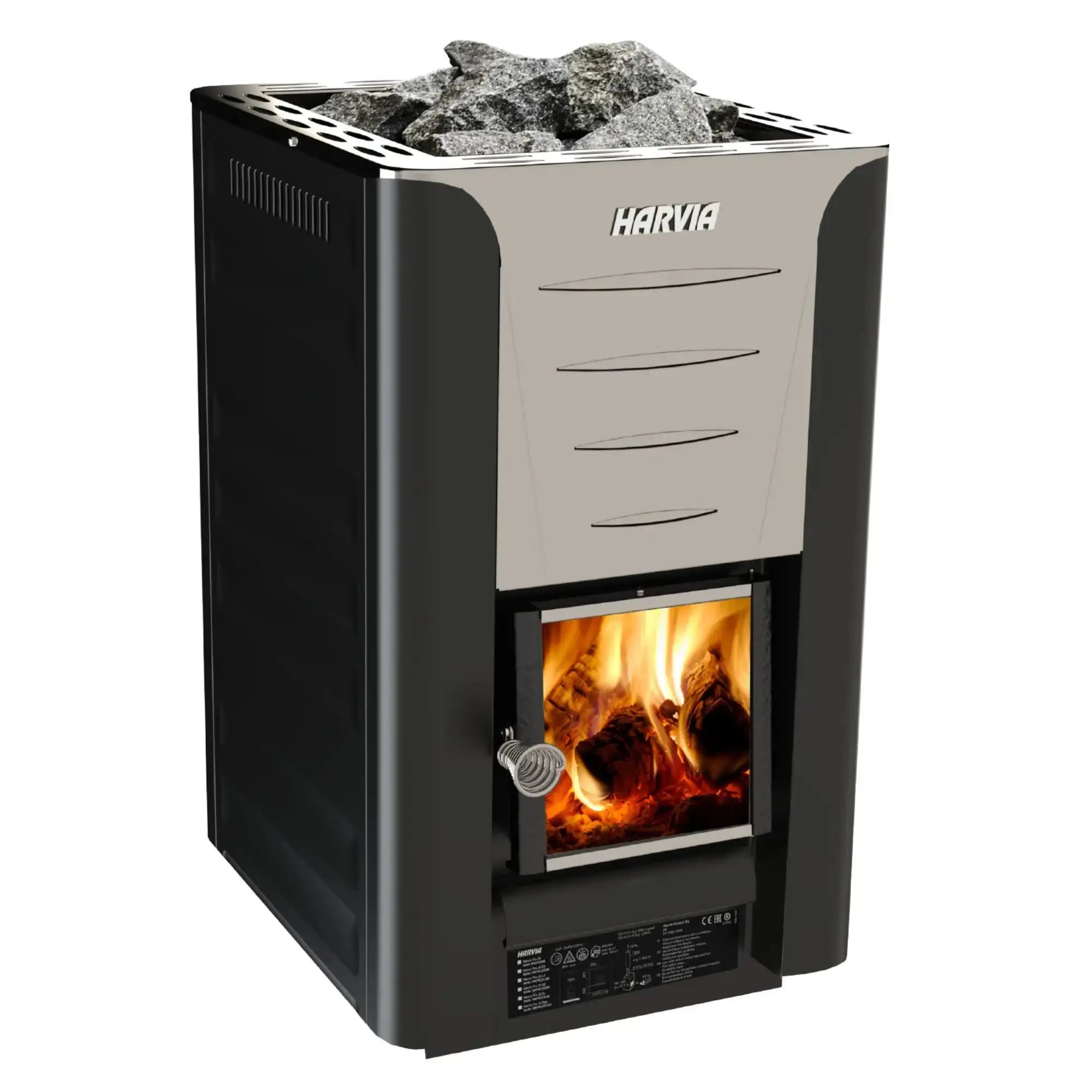
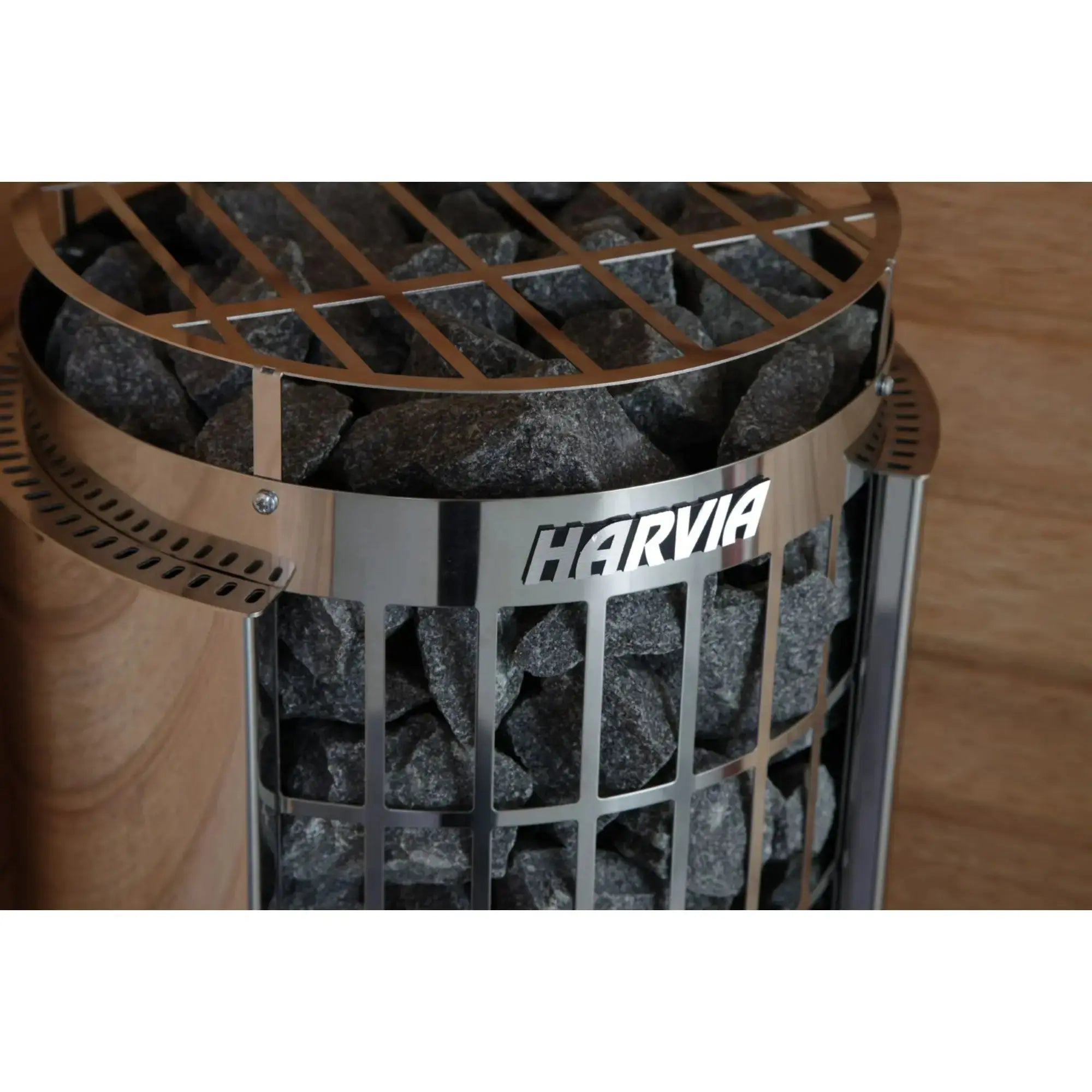
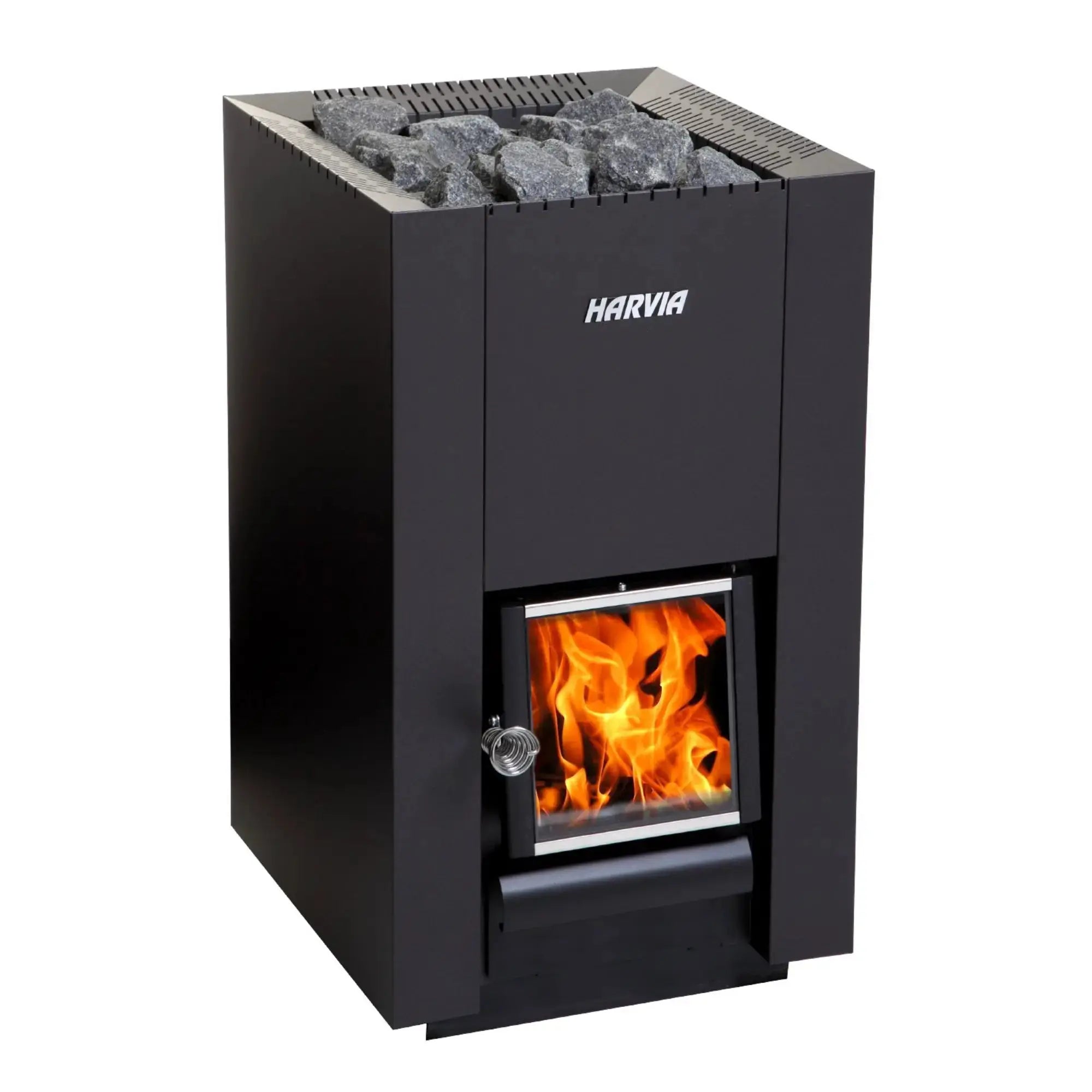
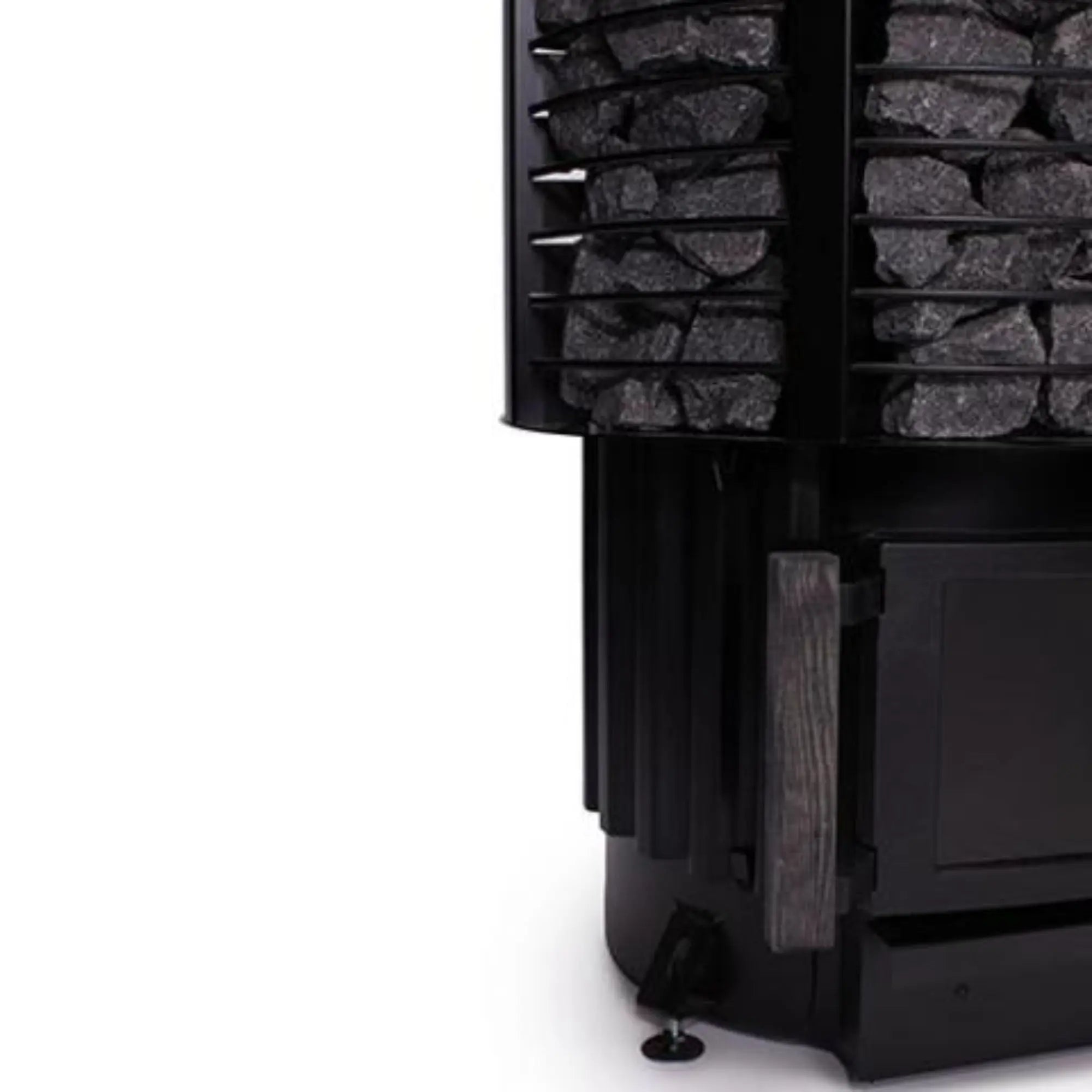
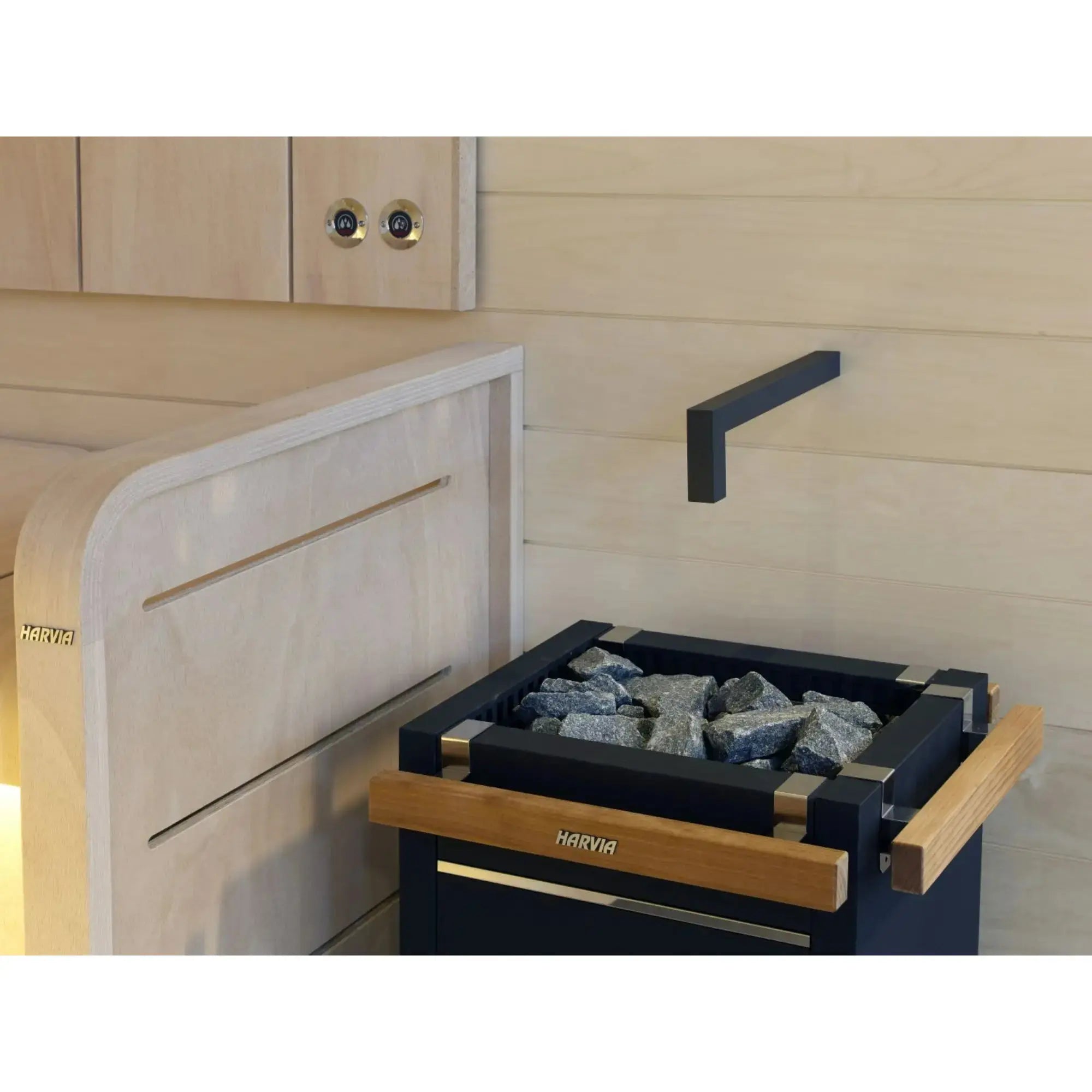
16 kW, 212 to 459 adjusted cu ft, 264 lb of stone and about 383 lb loaded. Made in Finland. CE and EAC, not UL.
What do you need besides the stove?
This is where wood budgets go wrong. The stove is only one of five things you're buying.
- A listed chimney system. Code compliant, with a roof or wall penetration and the right clearances. Get it quoted locally. On most Finnish stoves you need the flue adapter first.
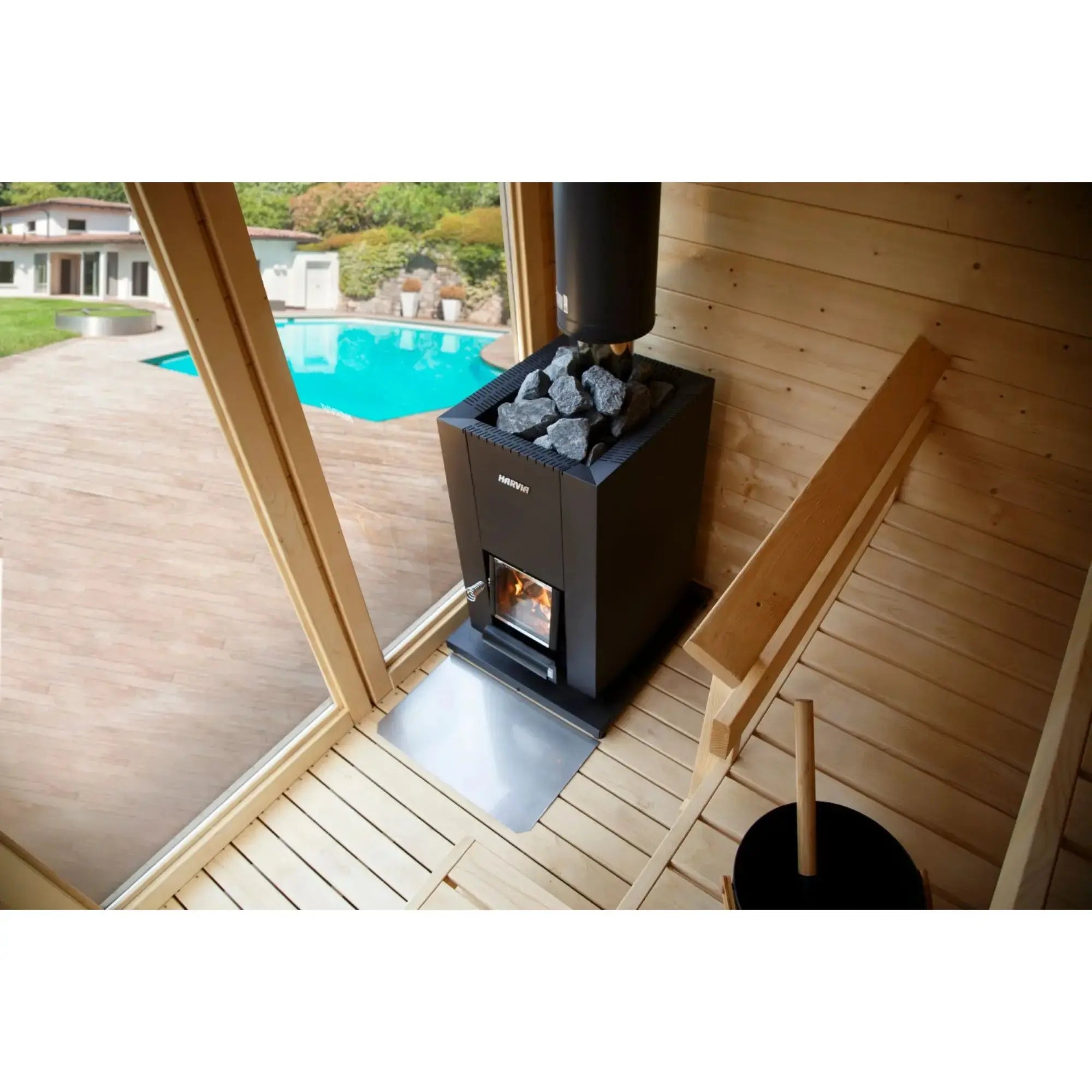
- Floor protection and wall shielding. Something non-combustible under the stove, plus the clearances to anything that can burn, taken from the stove's manual and your local code. In a 6 ft wide room those clearances shape the floor plan, so work them out early.
- A permit and an inspection. Most places treat a sauna stove as a solid fuel appliance, and your insurer will want the paperwork.
- Stones, almost never included. You need 77 lb to 264 lb depending on the stove. Harvia AC3020, 10 to 15 cm split-face at 44 lb a box, is the usual choice: a Cilindro 16 takes six boxes, a Kuru 14 takes two. Our guide to sauna rocks lists the box count for every stove we sell.
- Certification. Harvia wood stoves carry CE and EAC. Narvi is CE only, tested to EN 15821, and its own product page says there's no North American listing. Cozy Heat carries a German BIMSCH certificate. Ask your building department and your insurer about this before you order. It's a paperwork question, not a safety one.

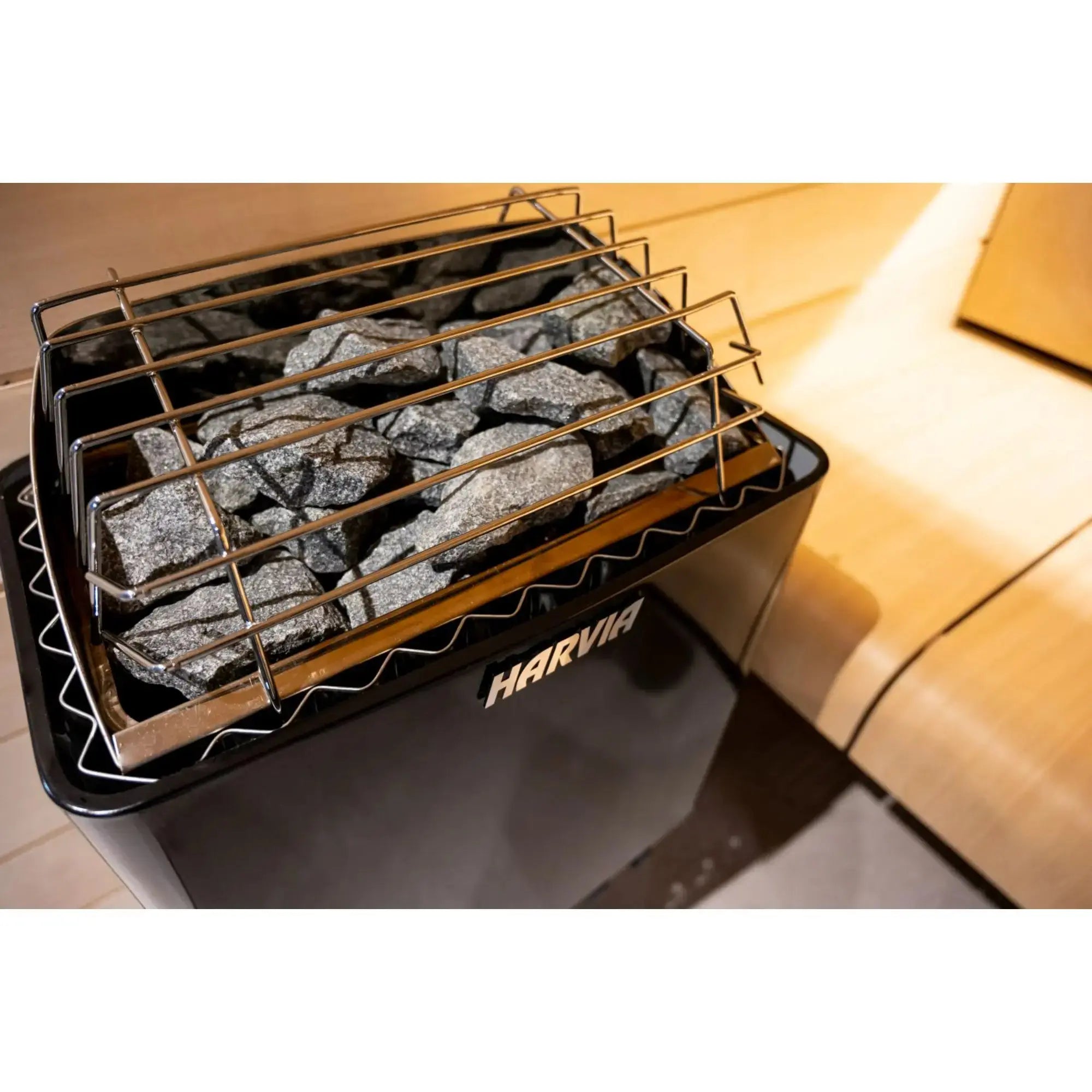
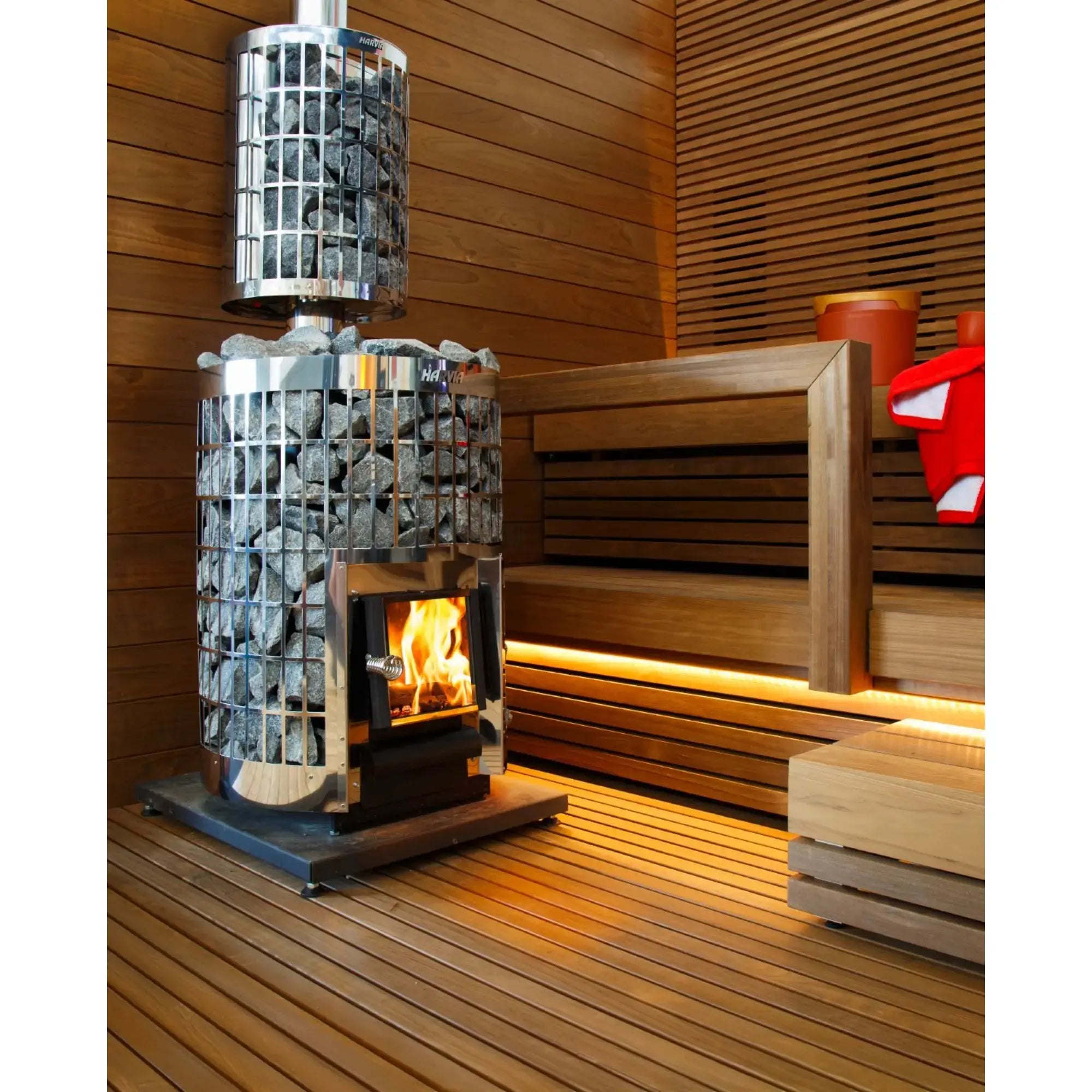
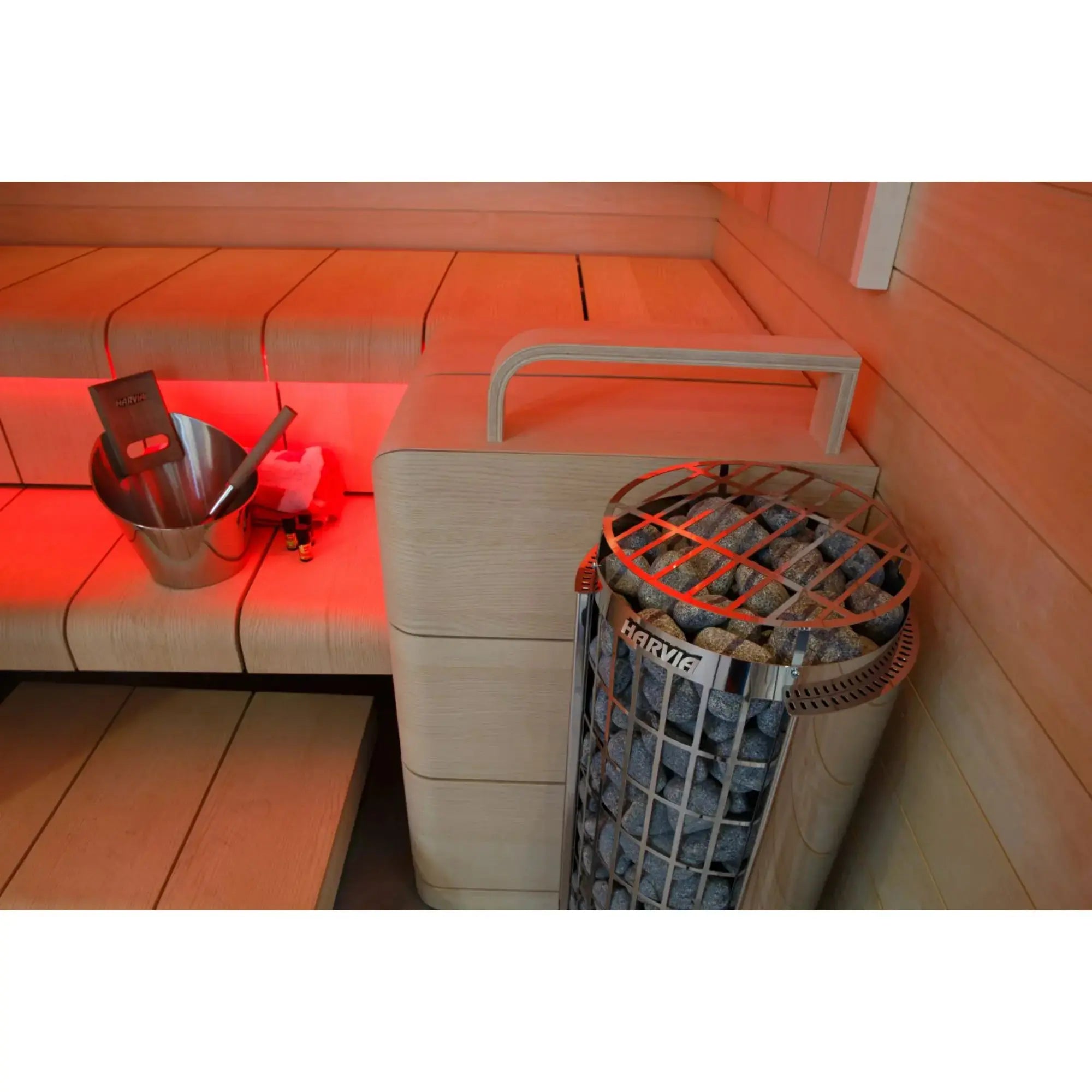
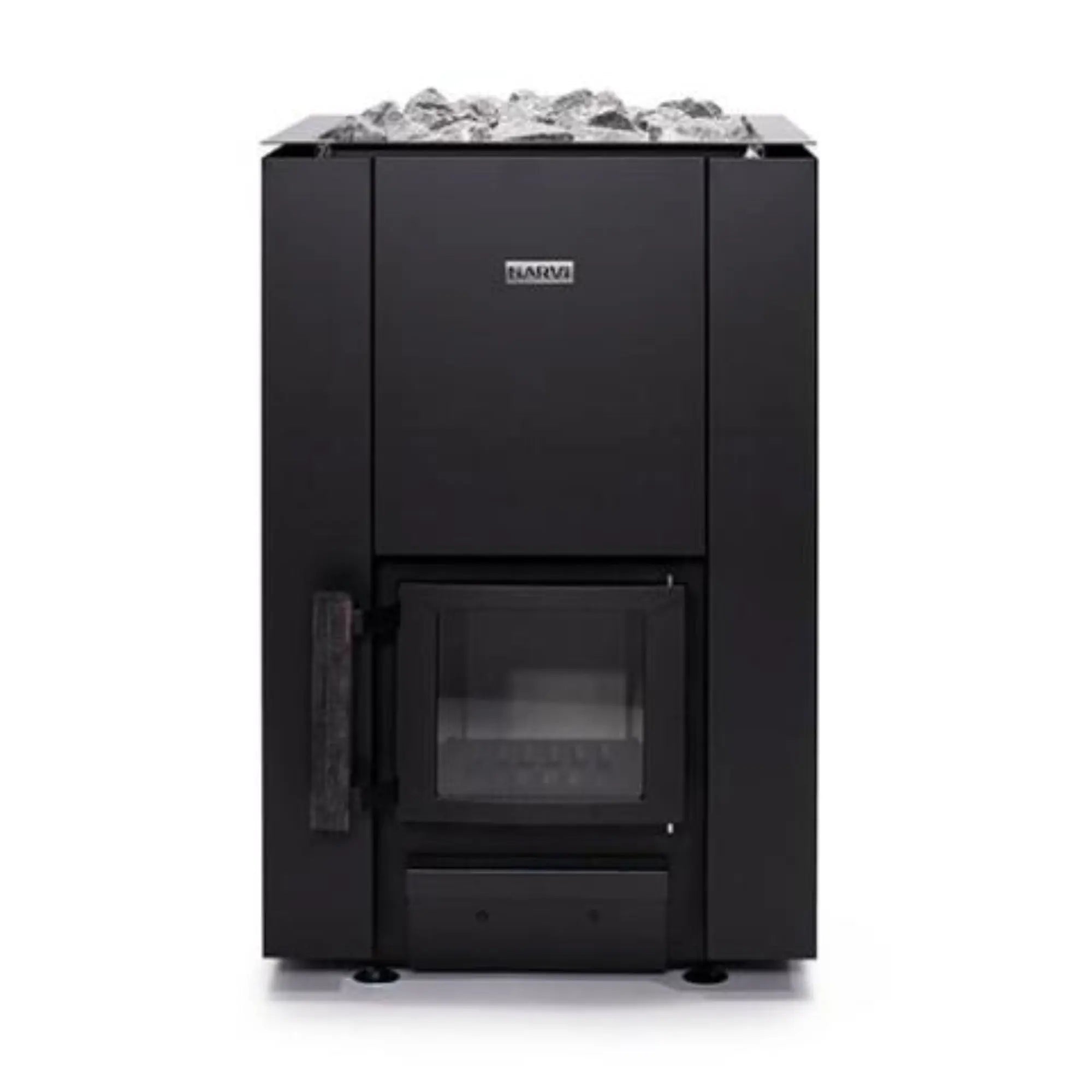
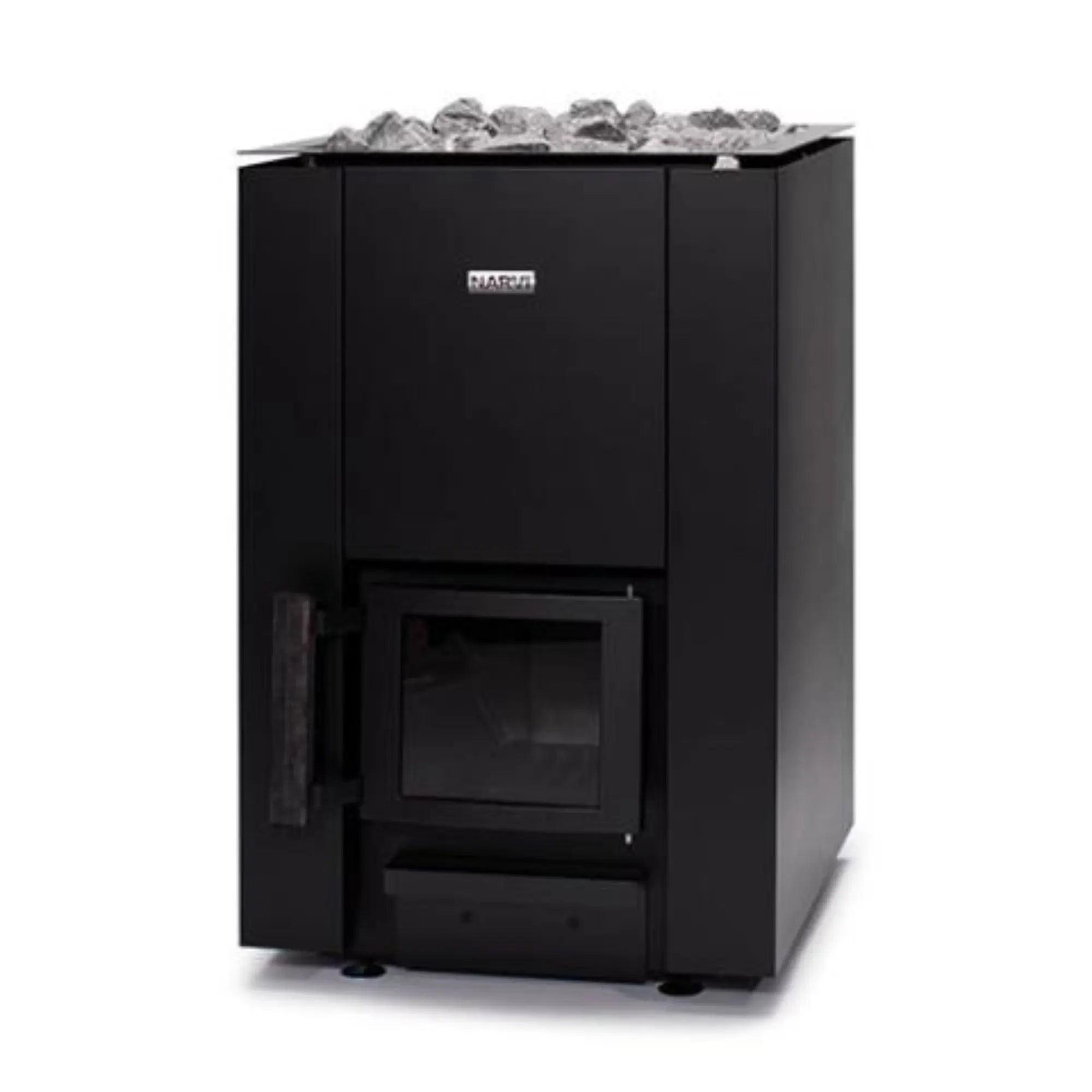
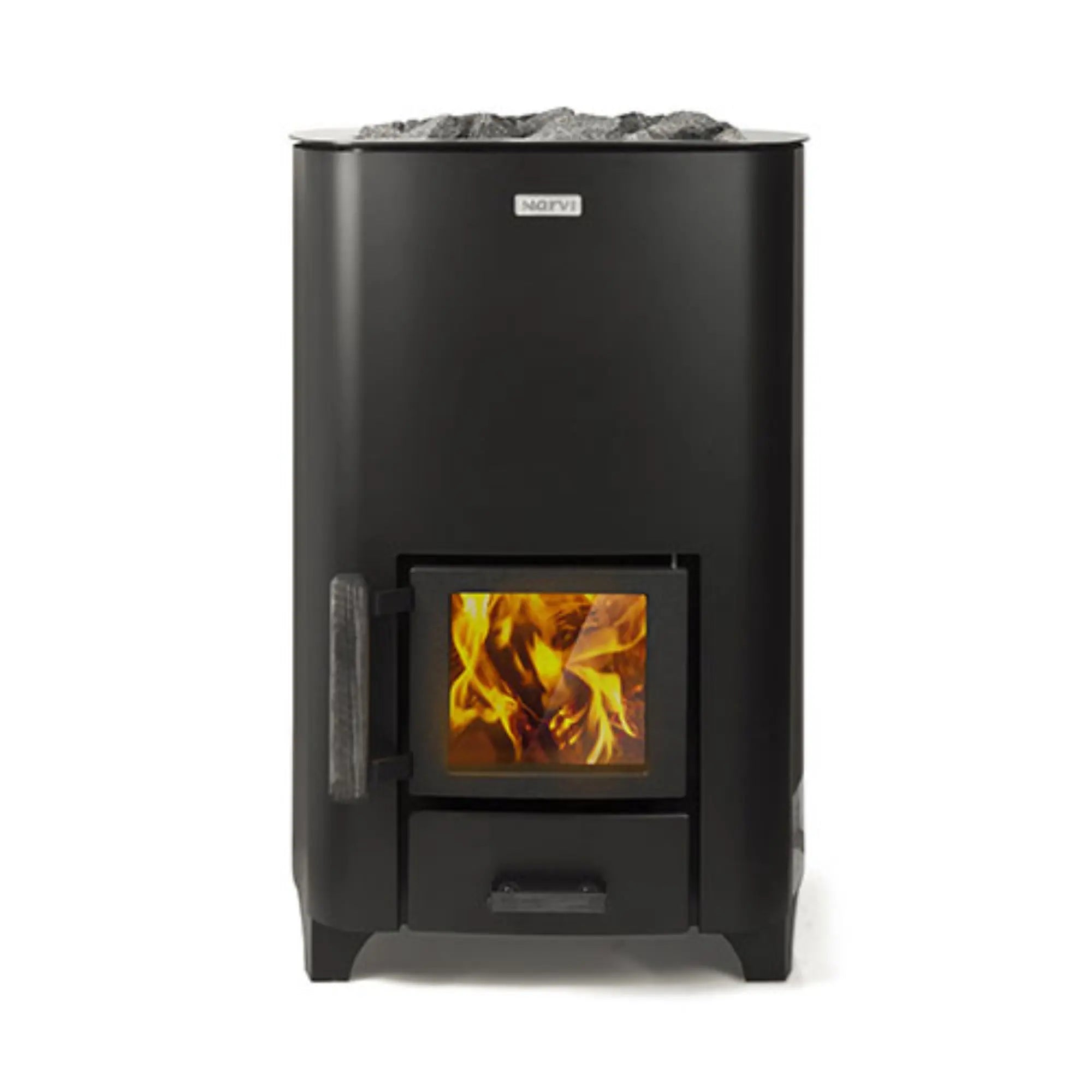
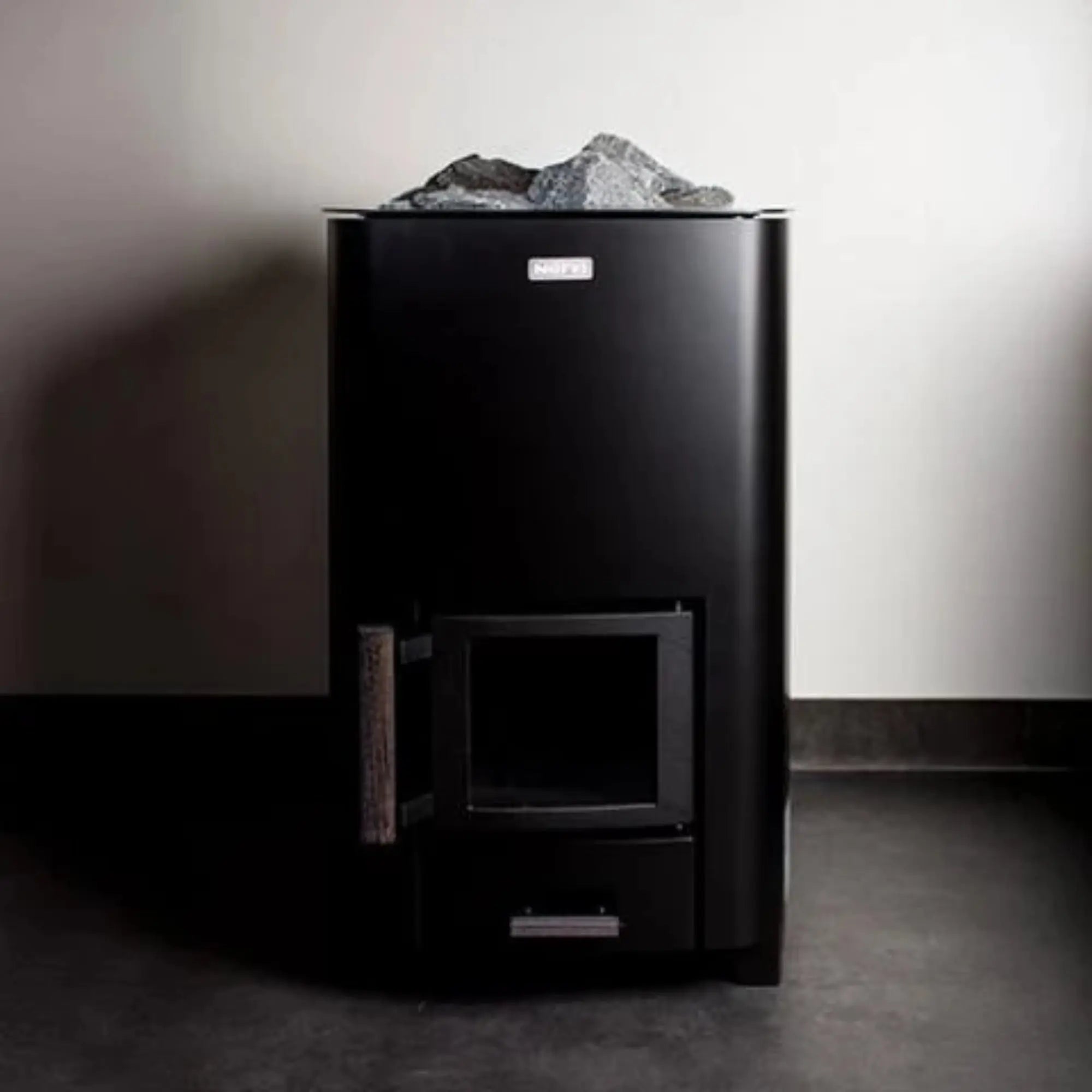
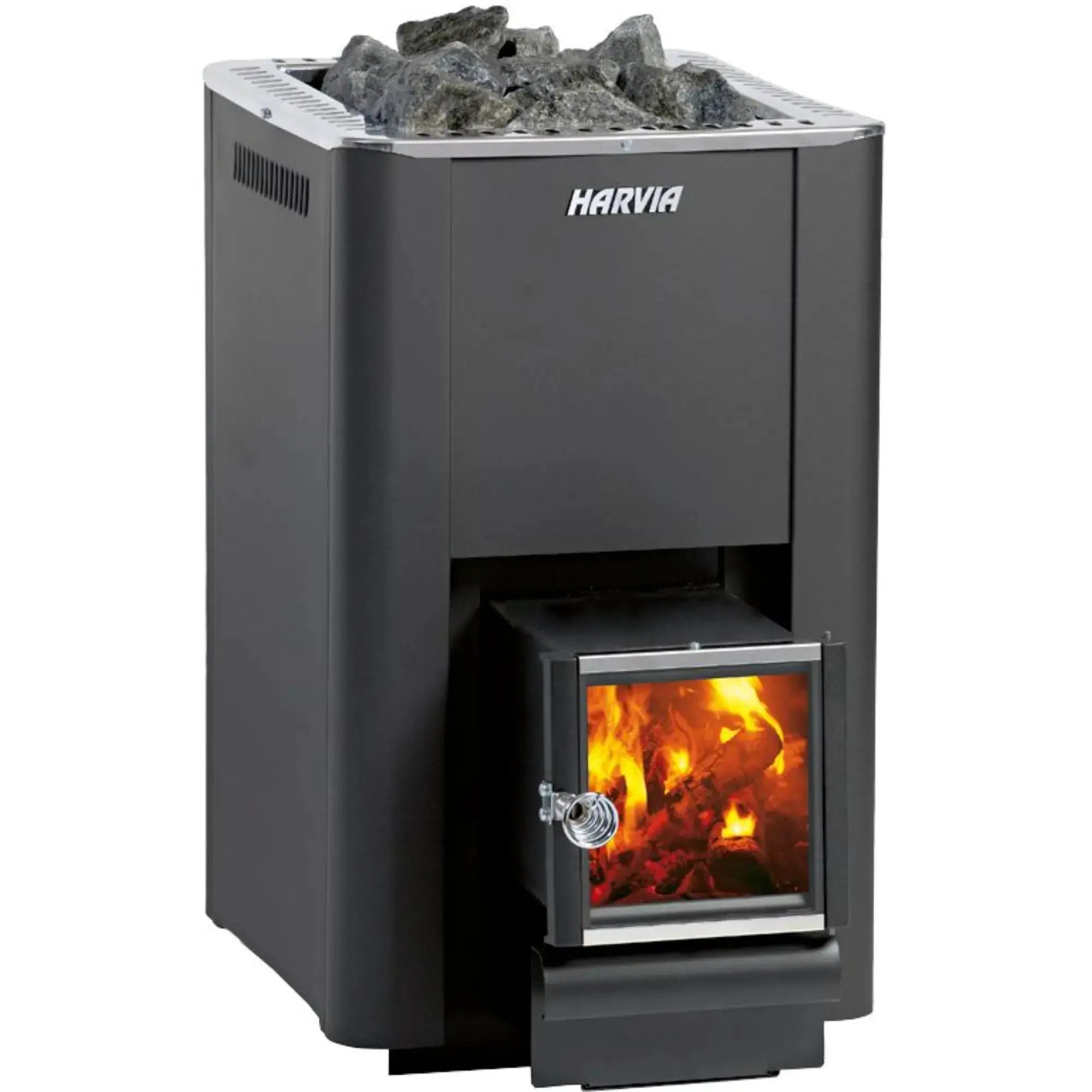
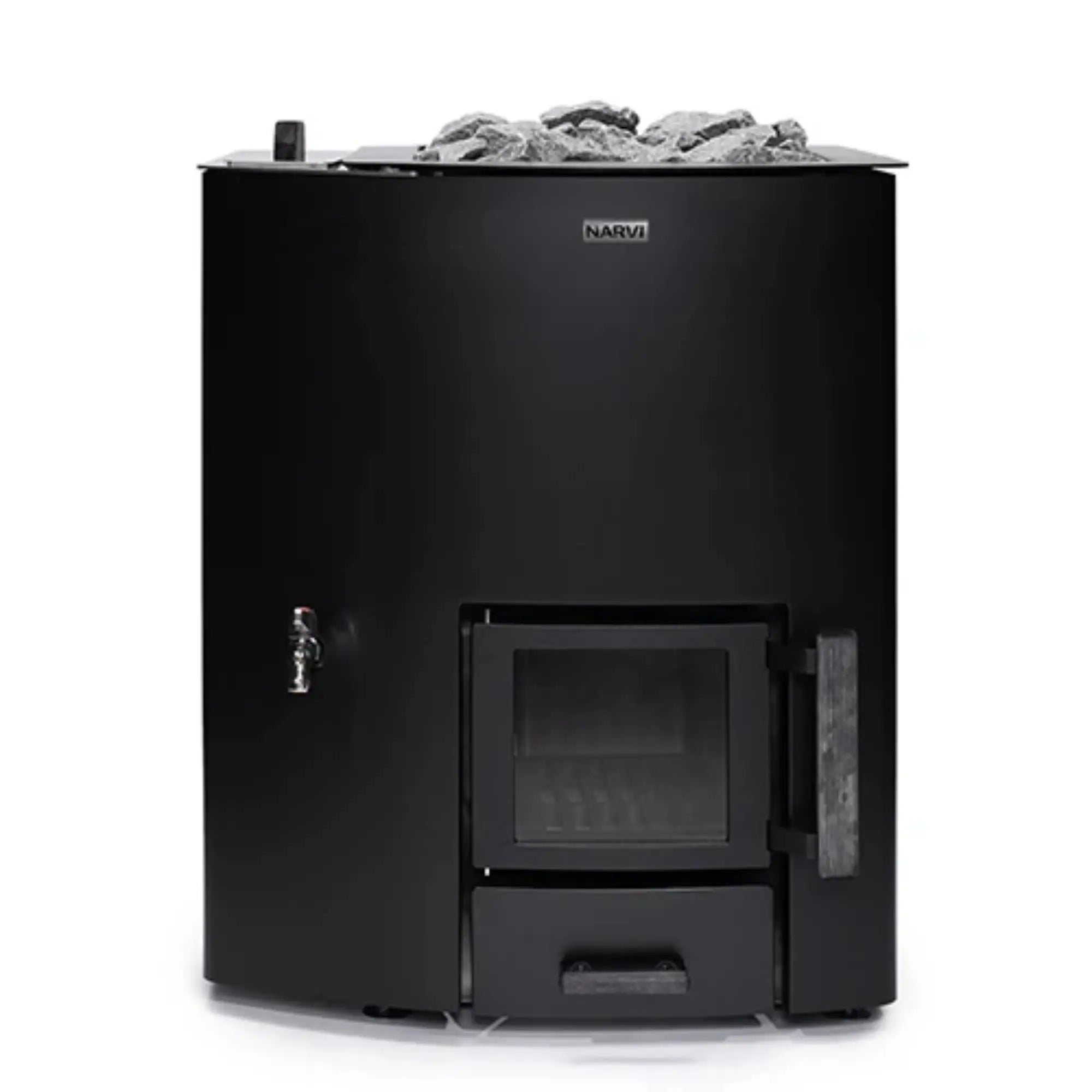
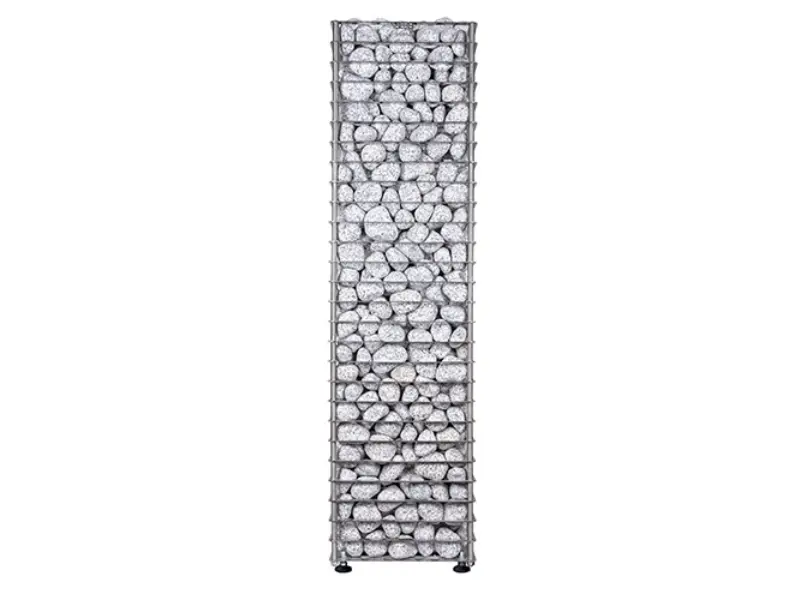
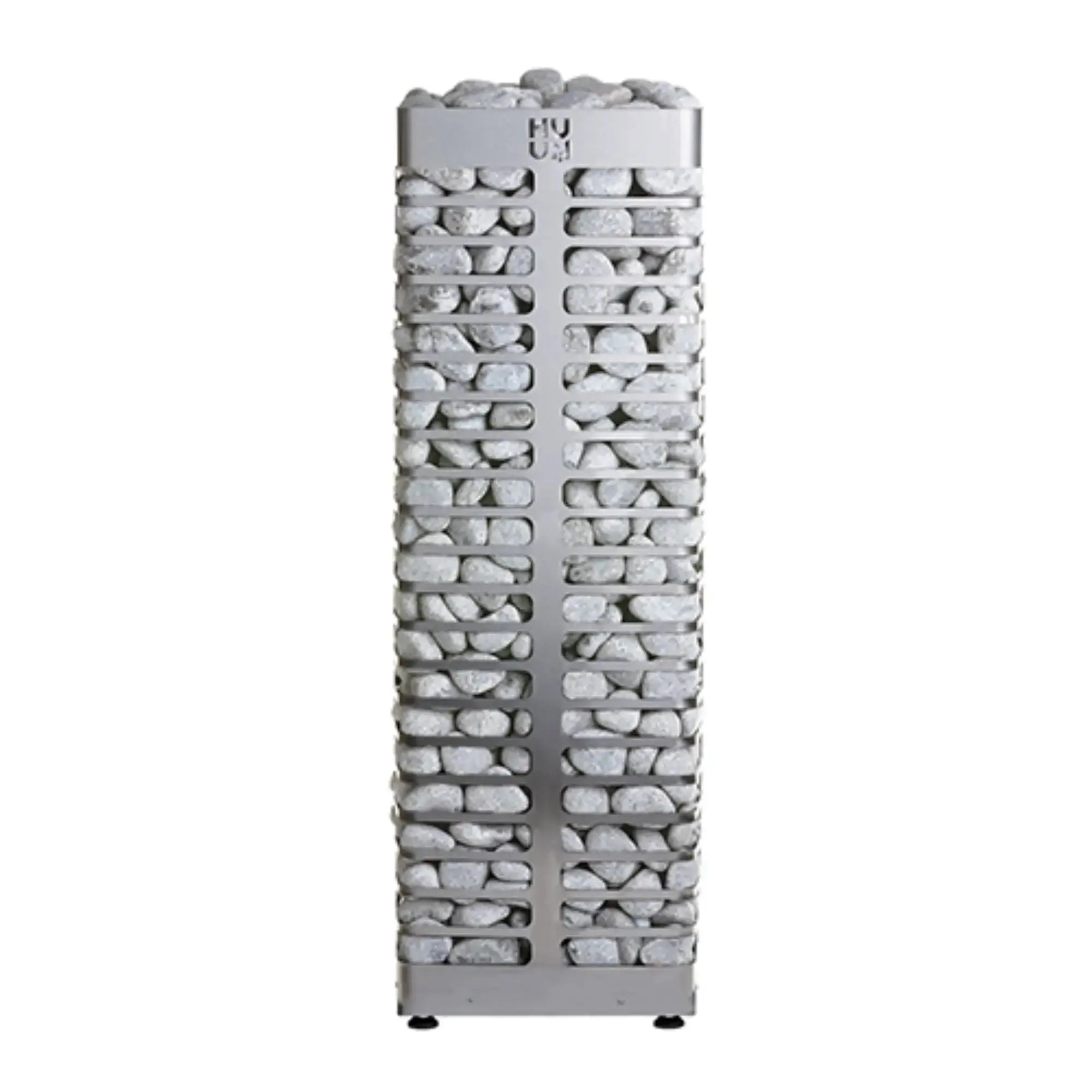
13 kW, 283 to 494 cu ft, 77 lb of stone minimum and not included. The 14 is the model name, not the output. CE only, tested to EN 15821, no North American listing.
Does a wood fired sauna stove really give better steam?
People describe wood heat as softer and deeper, and electric as harsh. Some of that is real. The rest is the fuel taking credit that belongs to the stones.
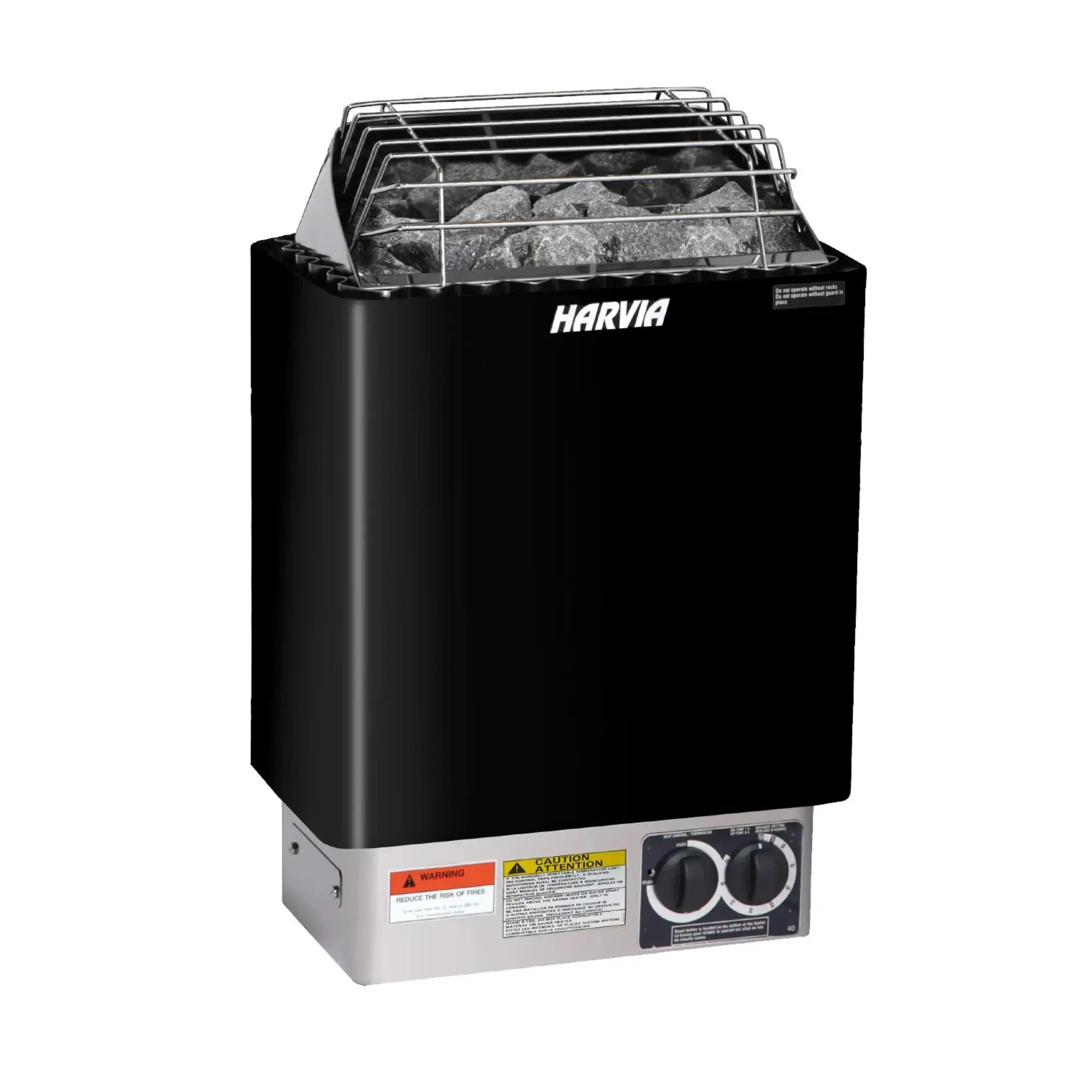
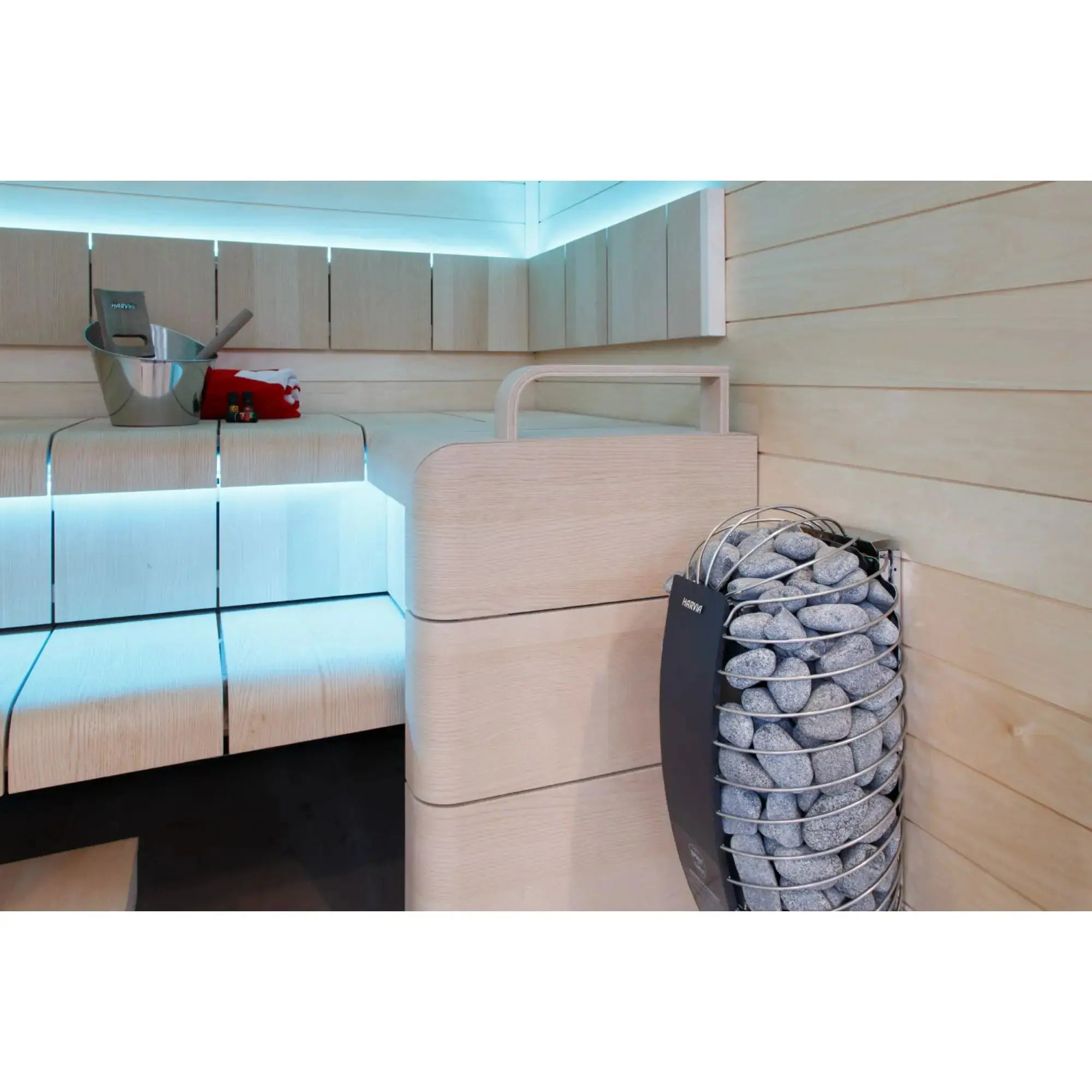
A 6 kW wall heater holds 44 lb of stone. A 16 kW Cilindro holds 264 lb. Those stones are the store of heat that turns a ladle of water into real steam instead of a hiss. If a room feels like a hot box, the usual causes are too little stone, a thermostat that shuts the heater off before the stones are hot, or poor ventilation. None of that is about the fuel.
So: tending a fire is a real pleasure and worth paying for. But the better steam comes from the stones, not the wood, and you can get plenty of stone on either fuel.

Stone isn't the only difference between stoves. How cleanly a stove burns decides what a season of firewood costs you, and how much smoke your neighbors get.

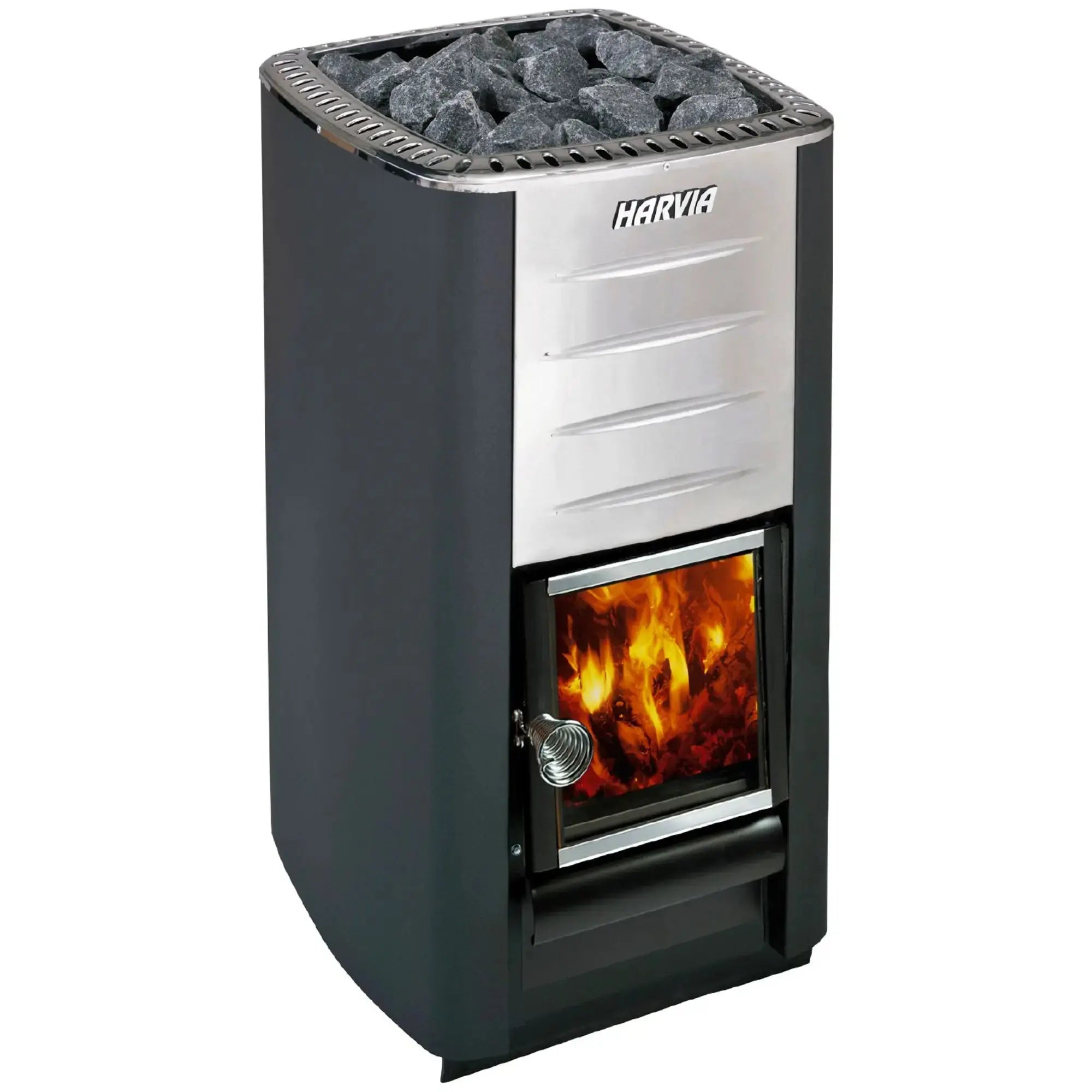
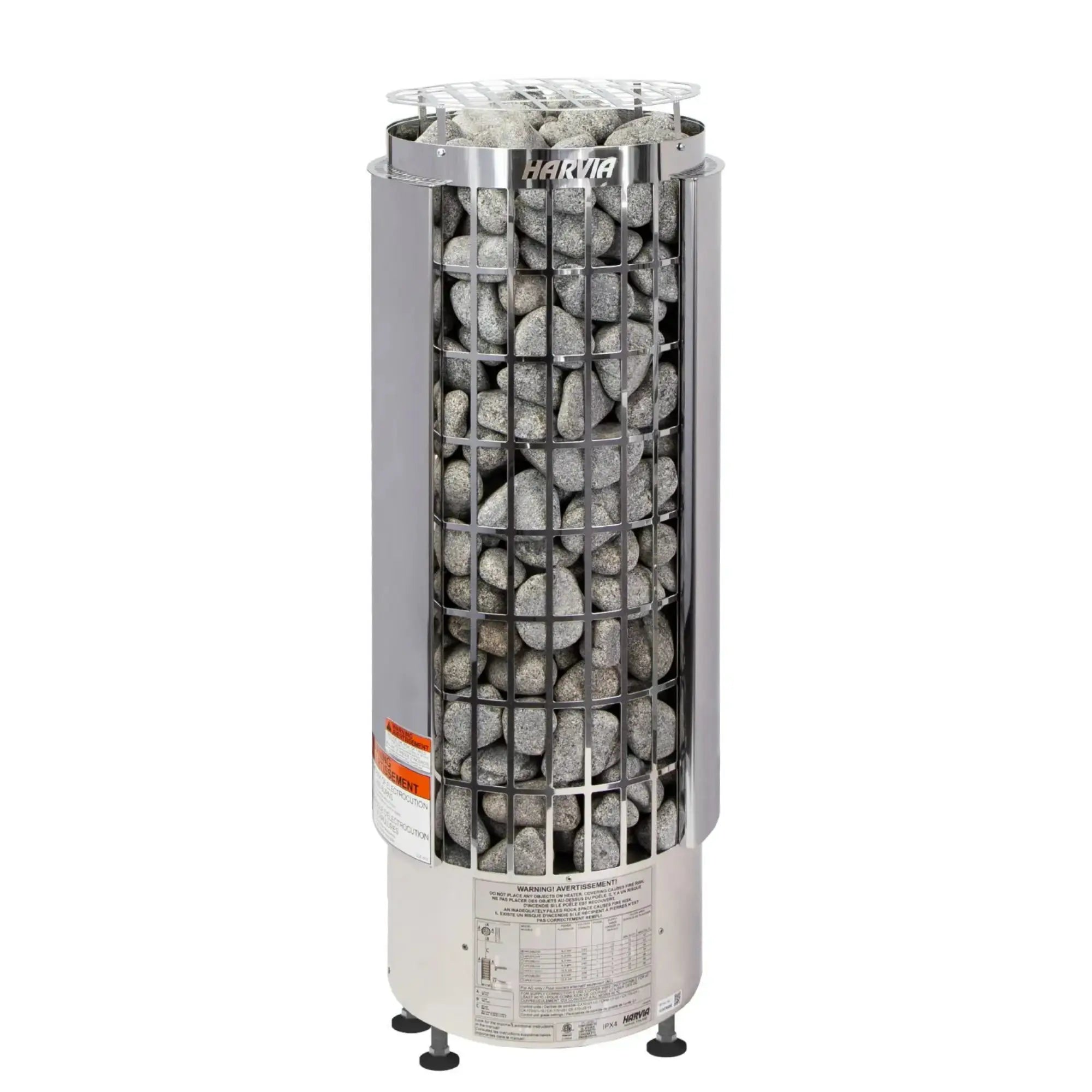
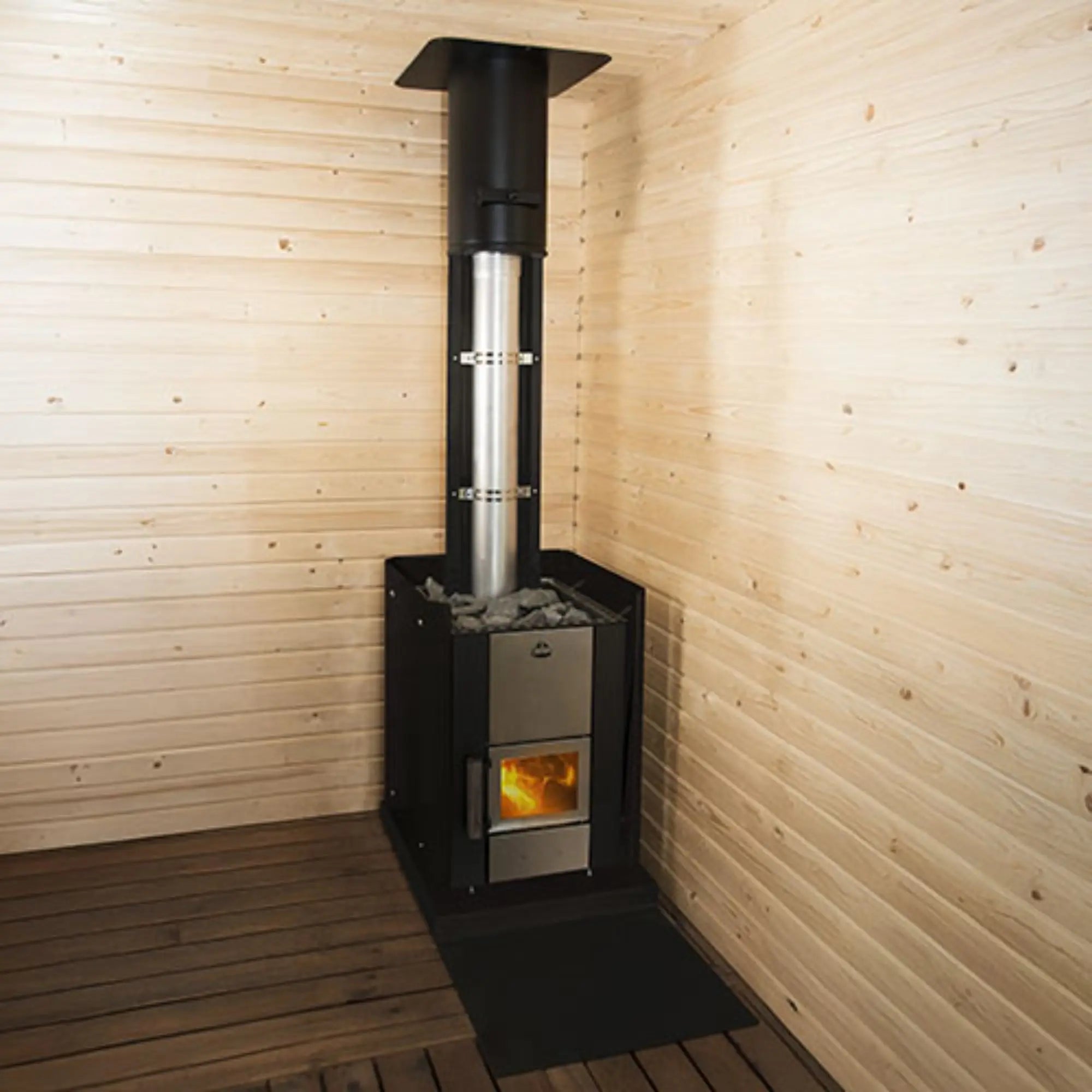
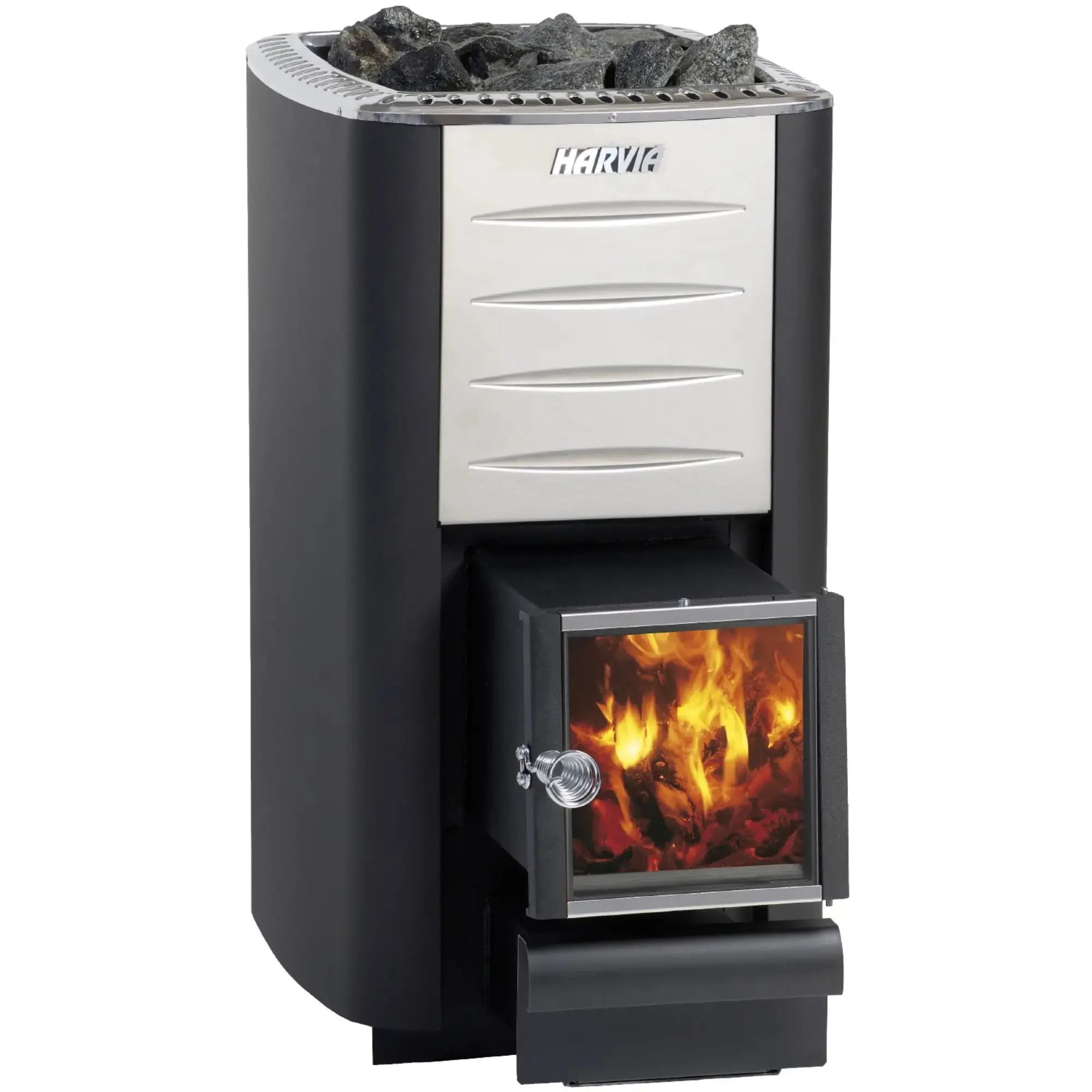
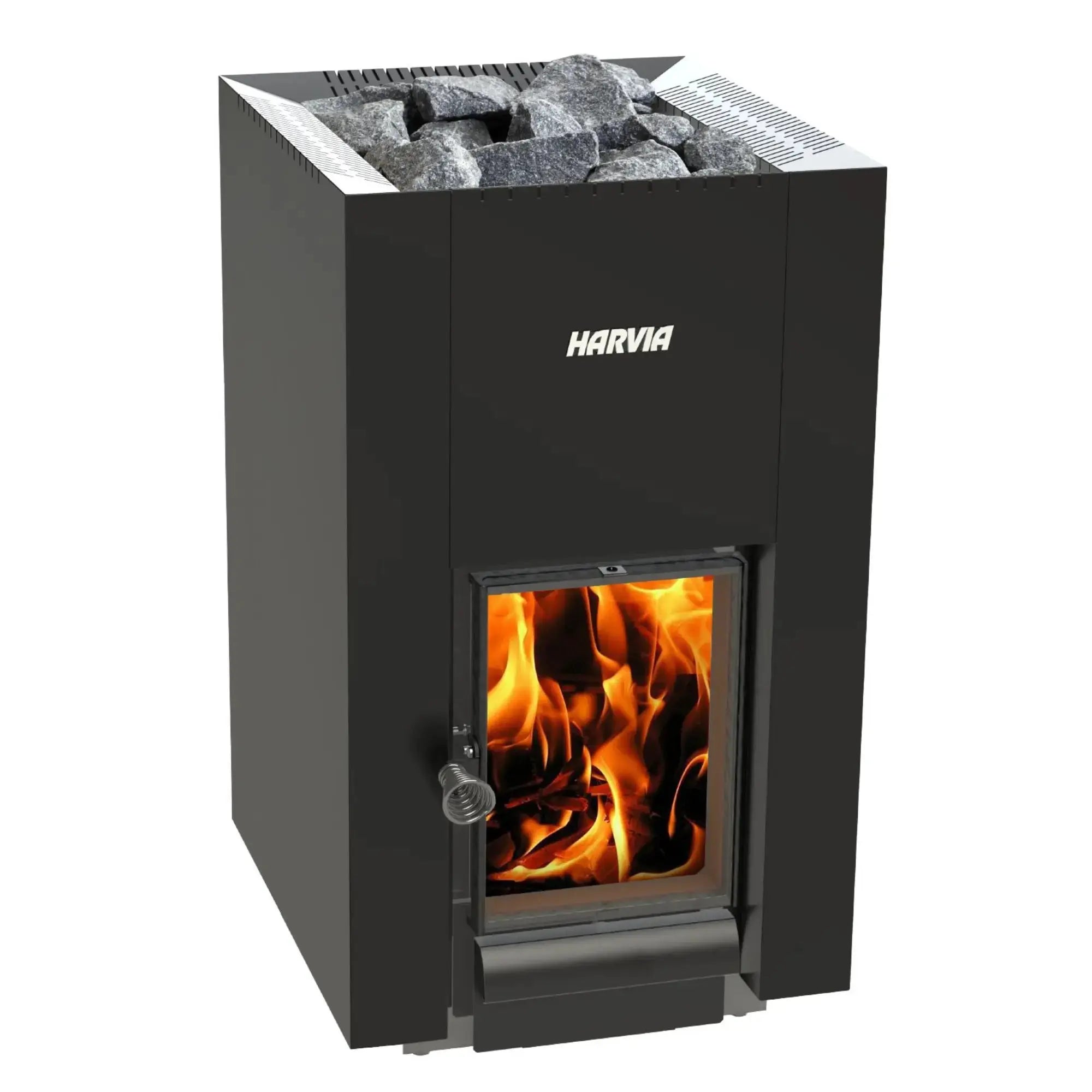
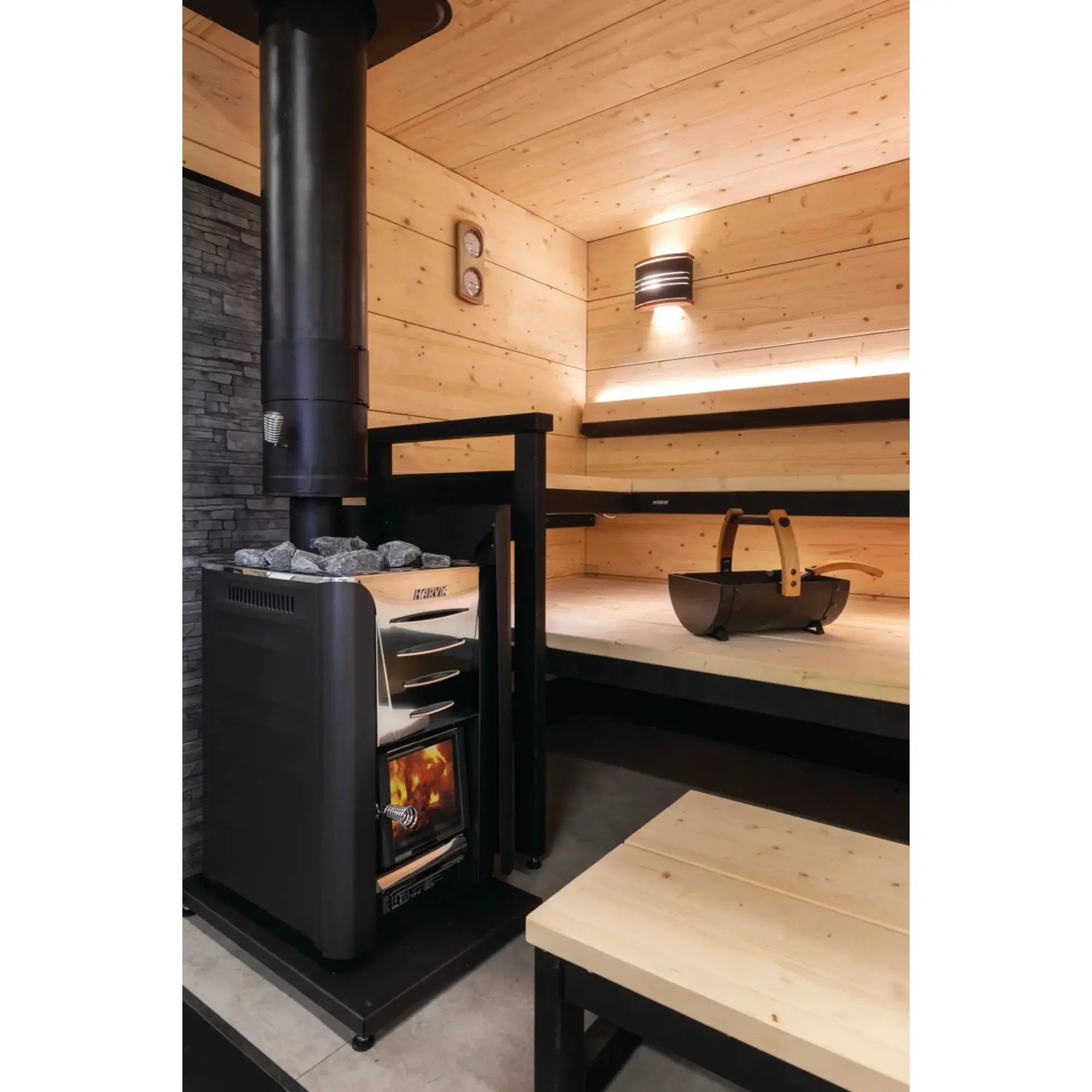
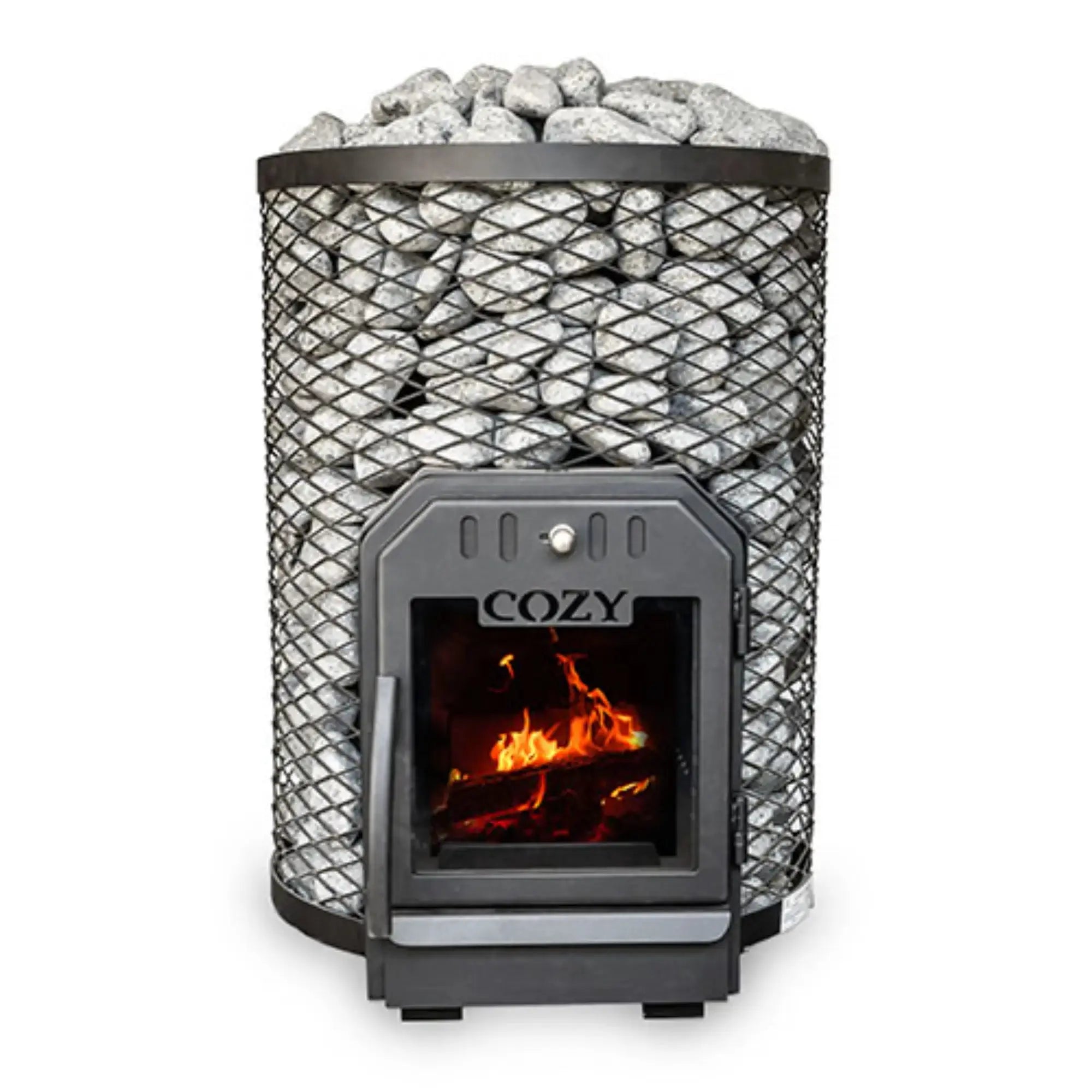
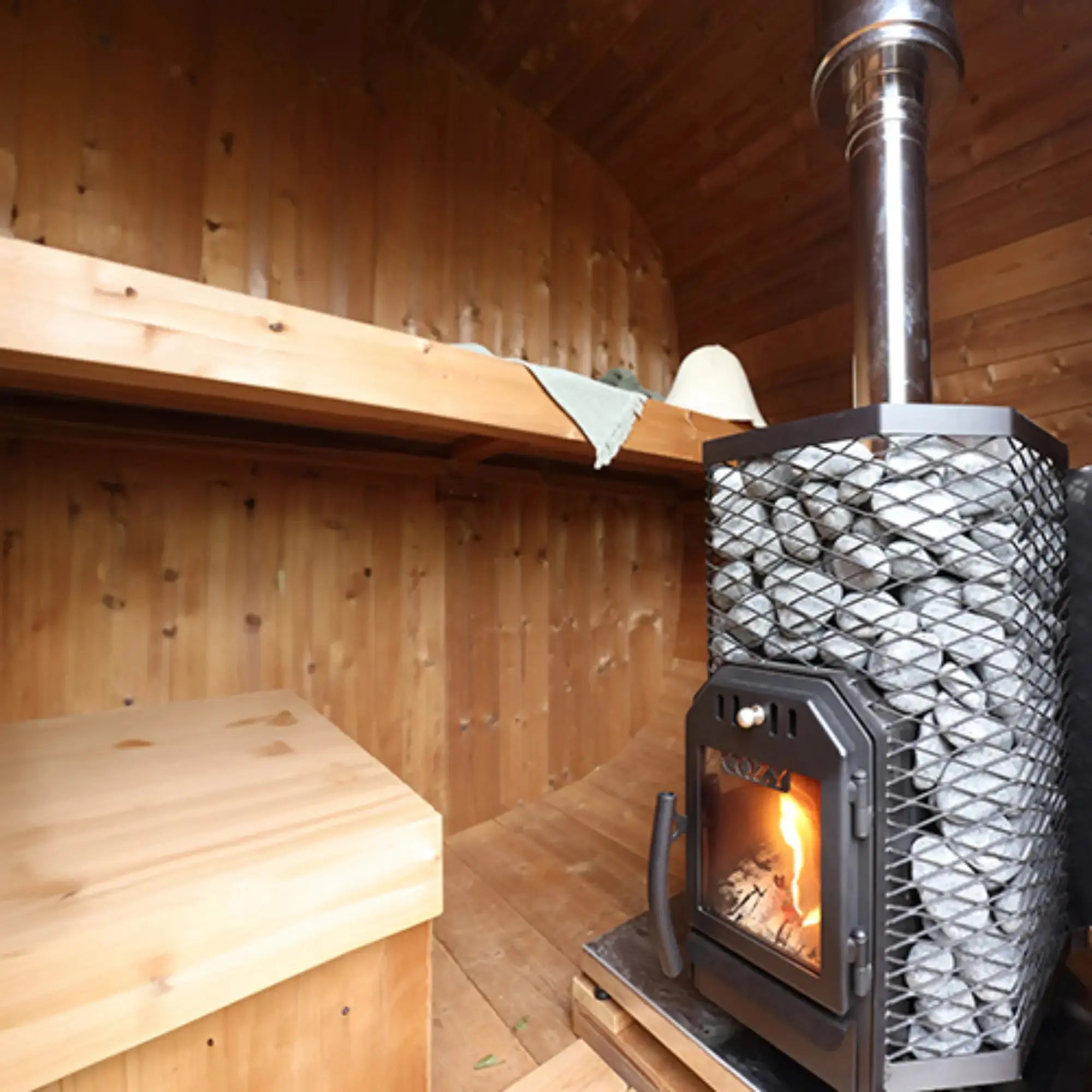
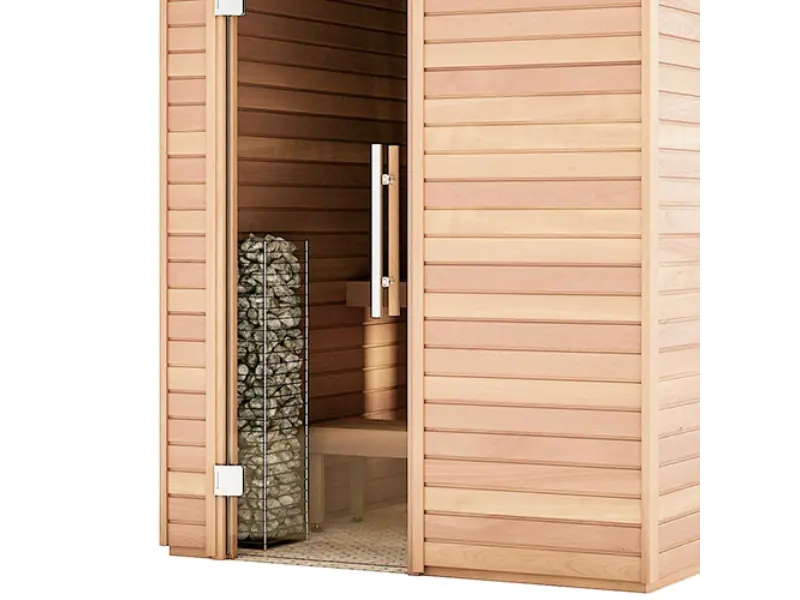
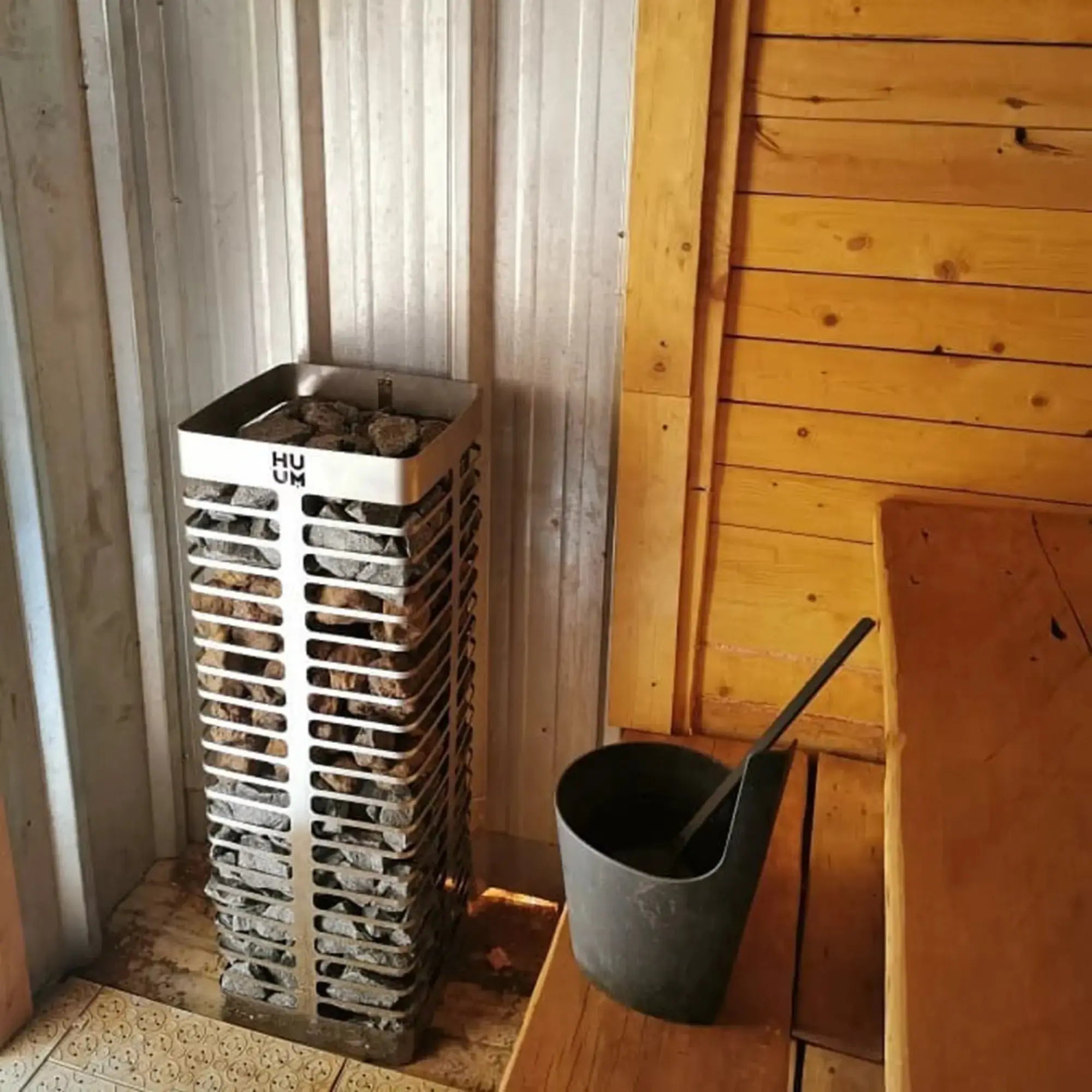
12 kW, 210 to 423 cu ft, 200 lb of stone. Cozy Heat publishes 25 to 40 percent lower fuel use and clearances as tight as 6.69 in to the sides. Black steel, made in Estonia. German BIMSCH certificate, not UL. Loads from inside the room, with a through-wall version available.
Wood or electric: which should you buy?
Buy electric if you already have 240V at the sauna, or can run it there. It's easier to control, needs no chimney and no solid fuel permit, and you can start it from the kitchen. Buy wood if you can't get power to the site, or if the fire is the whole reason you want a sauna. Here's the same build priced both ways.
| Cost line | Electric | Wood burning |
|---|---|---|
| The heater or stove | From $886 | From $1,128 |
| Control unit | Required, $973 to $1,551 | None needed |
| Install | 240V circuit, electrician | Chimney, floor protection, flue adapter |
| Permits | Electrical permit and inspection | Solid fuel permit and inspection |
| Heat-up | 30 to 60 minutes, on a timer | 45 to 75 minutes, and you tend it |
Two things usually decide it before preference comes into it. First, whether your panel can carry a 25 to 33 A circuit for the sauna. That's your electrician's call under the current NFPA 70 National Electrical Code, and sauna heater installation covers what they'll need. Second, whether your town restricts burning on still winter evenings. There's no point buying a stove you're not allowed to light.

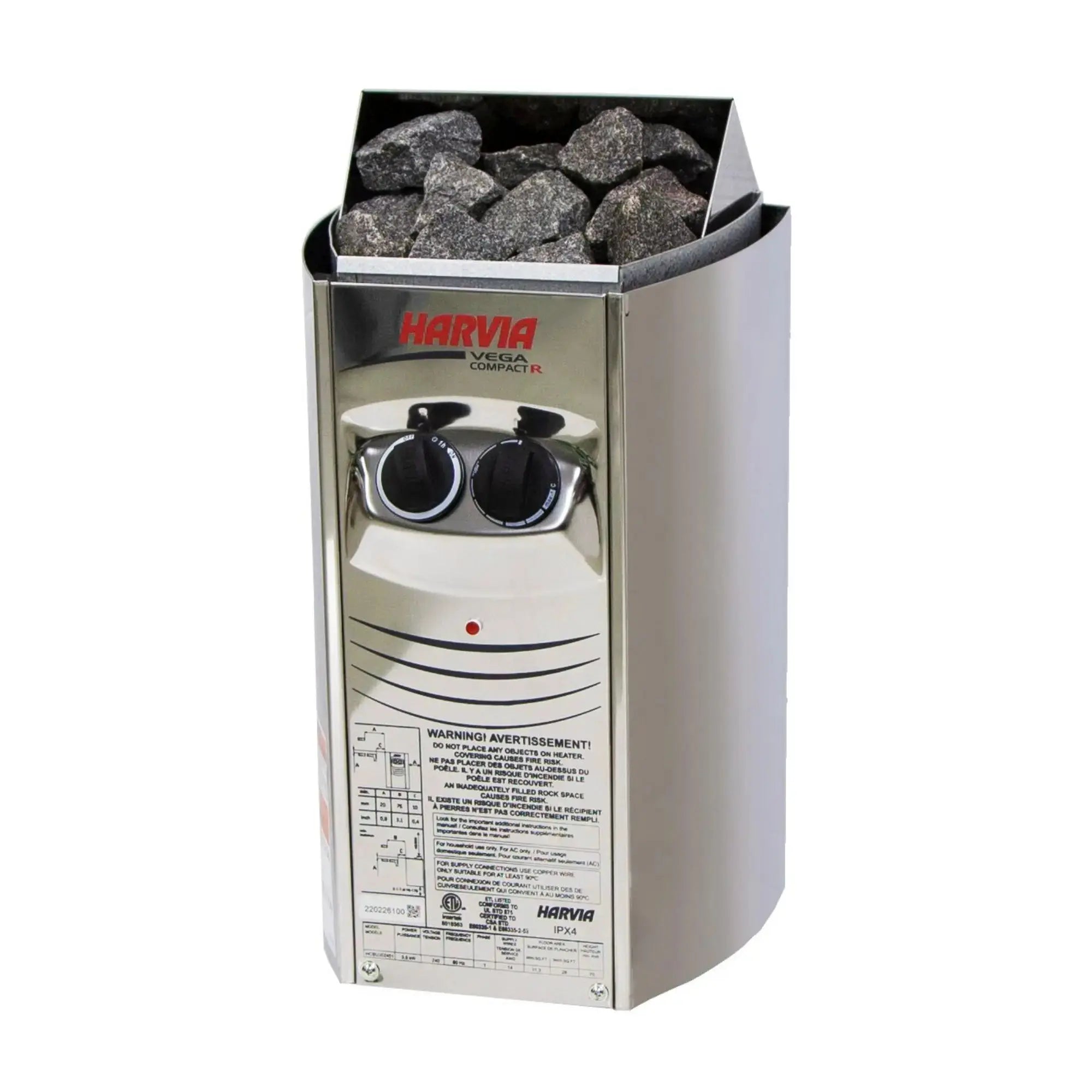
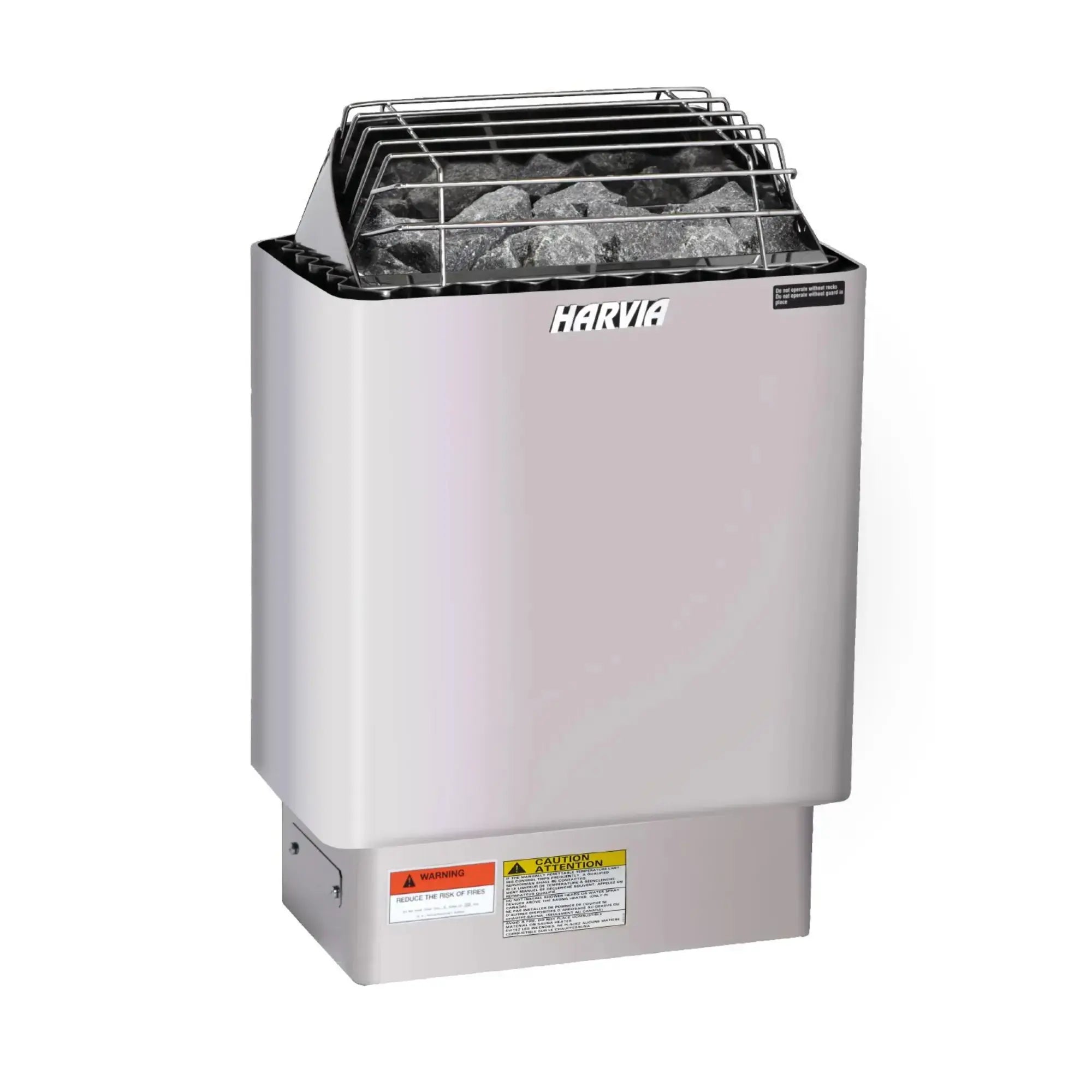
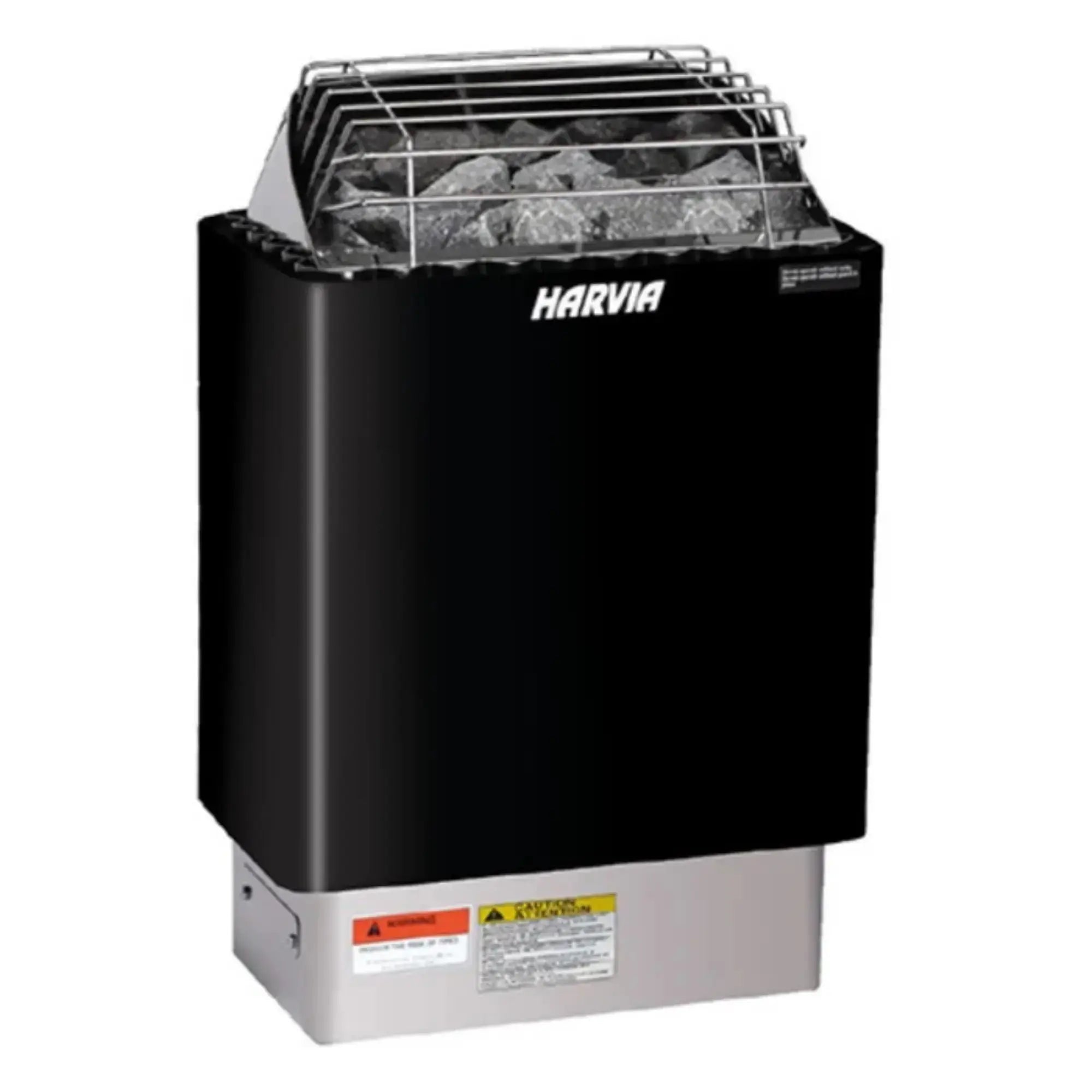
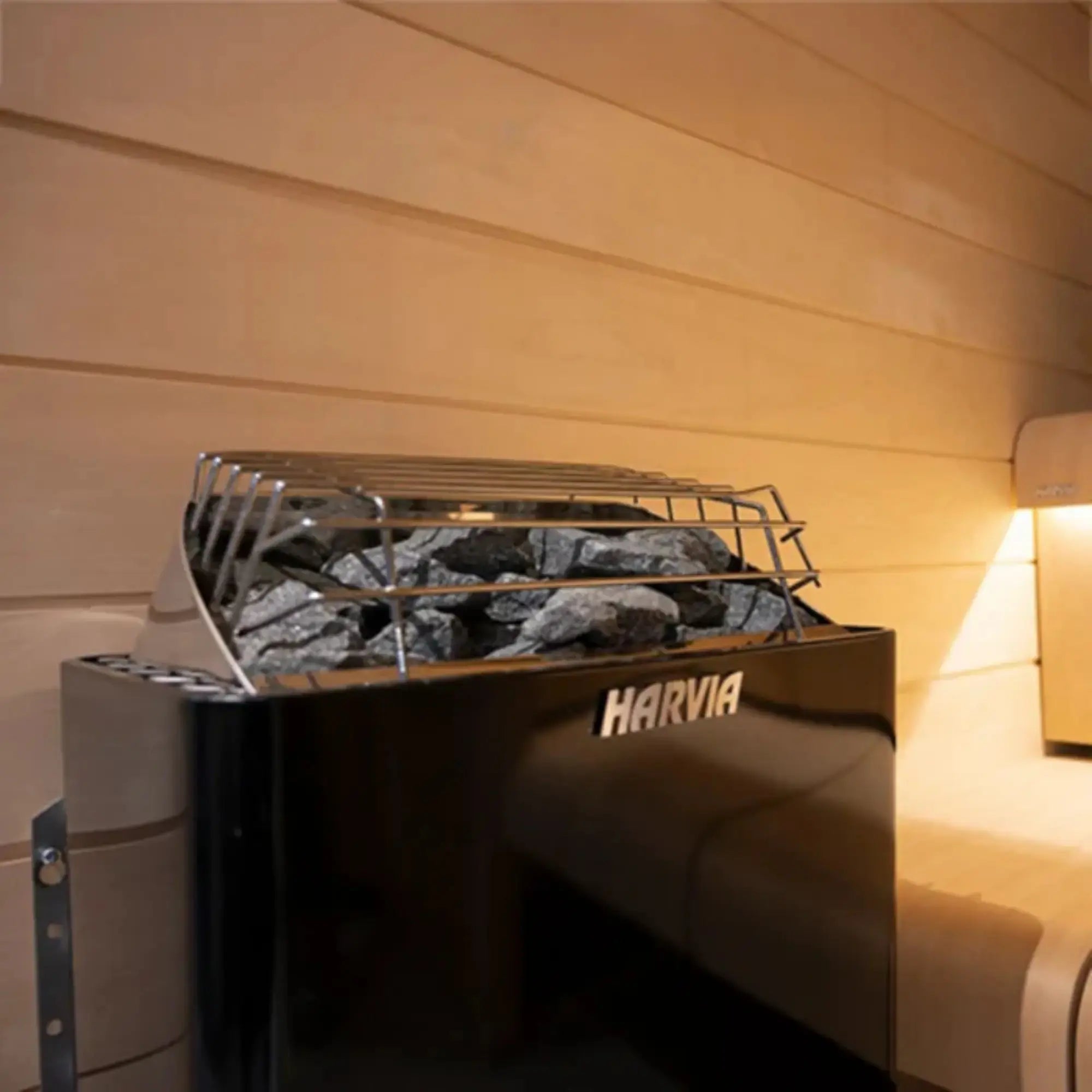
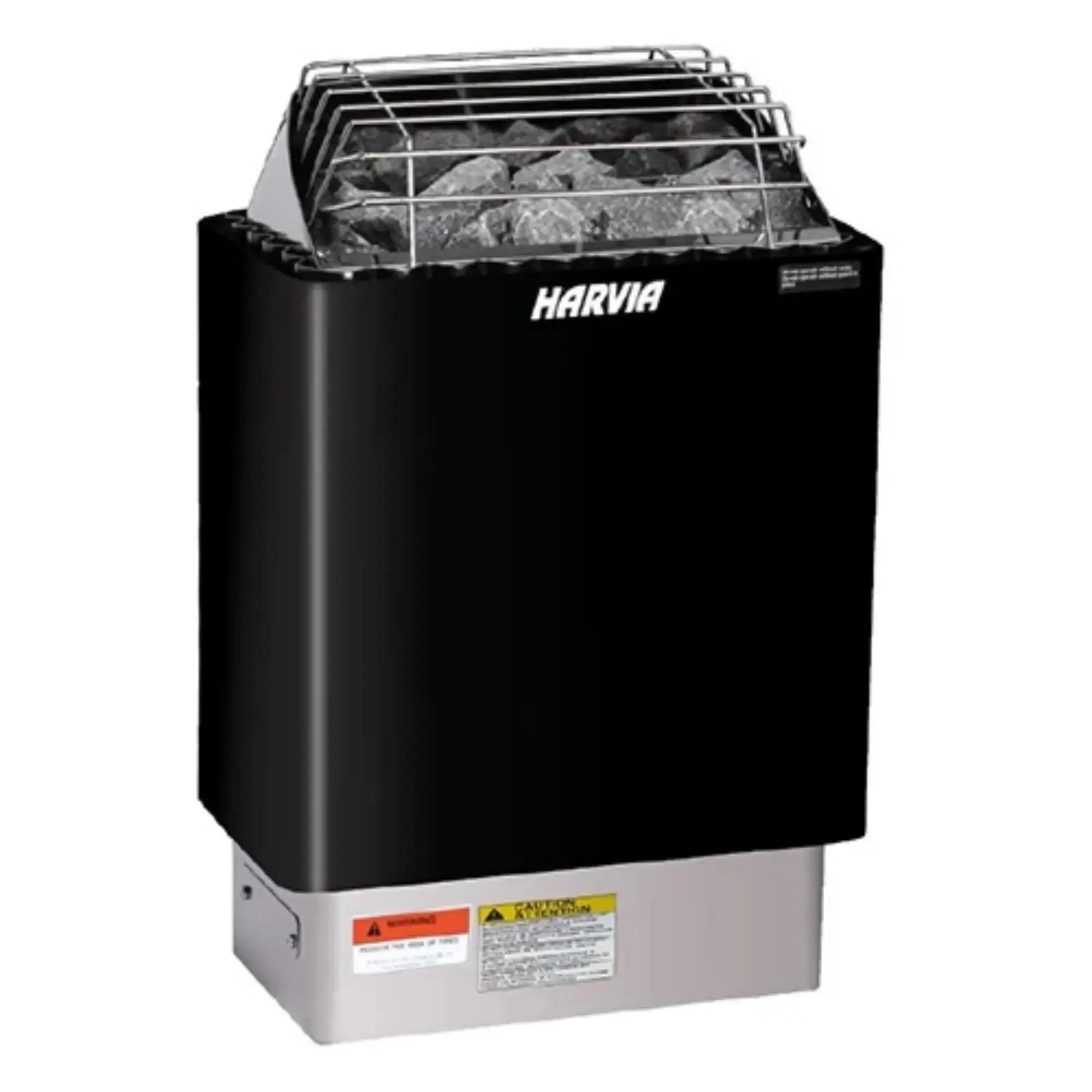
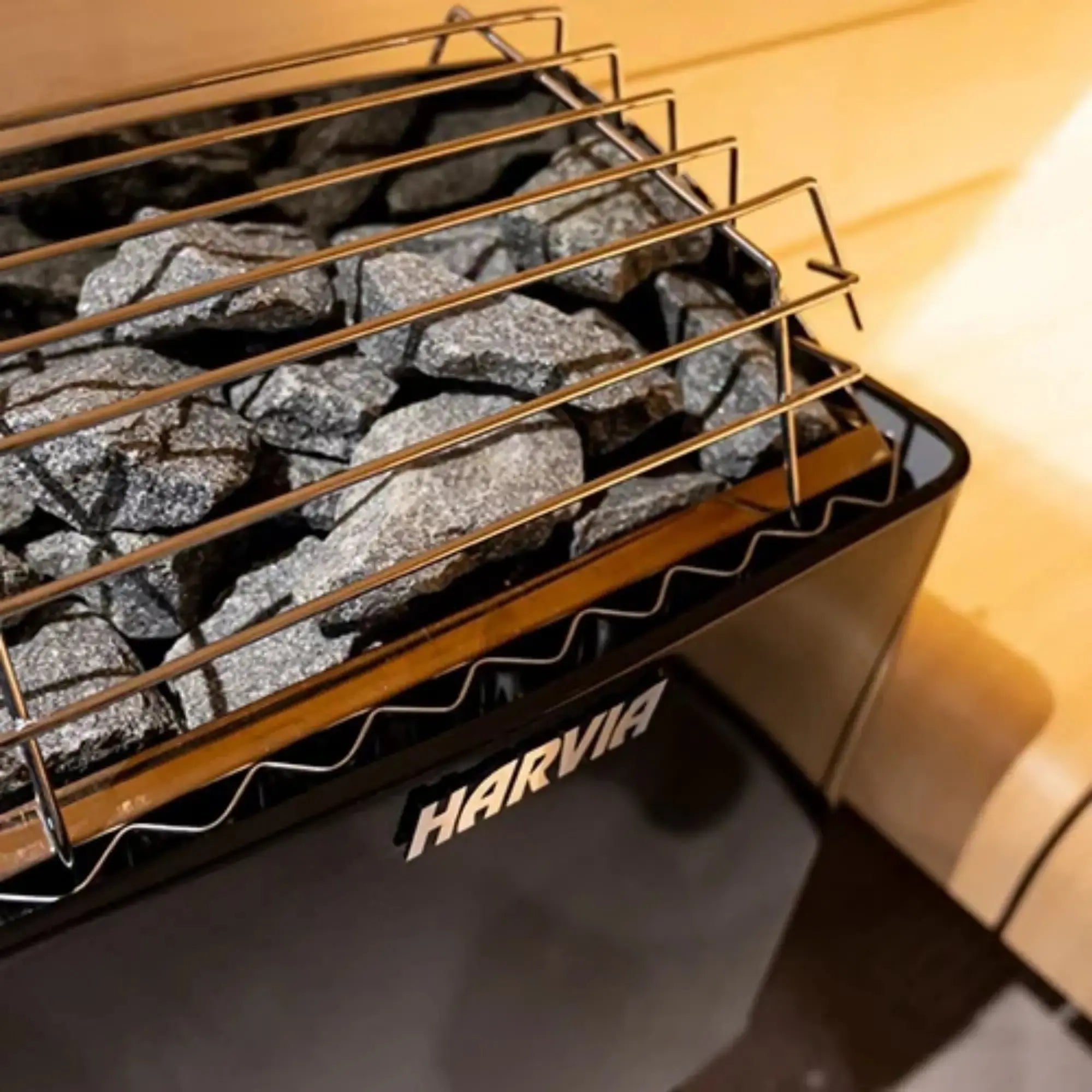
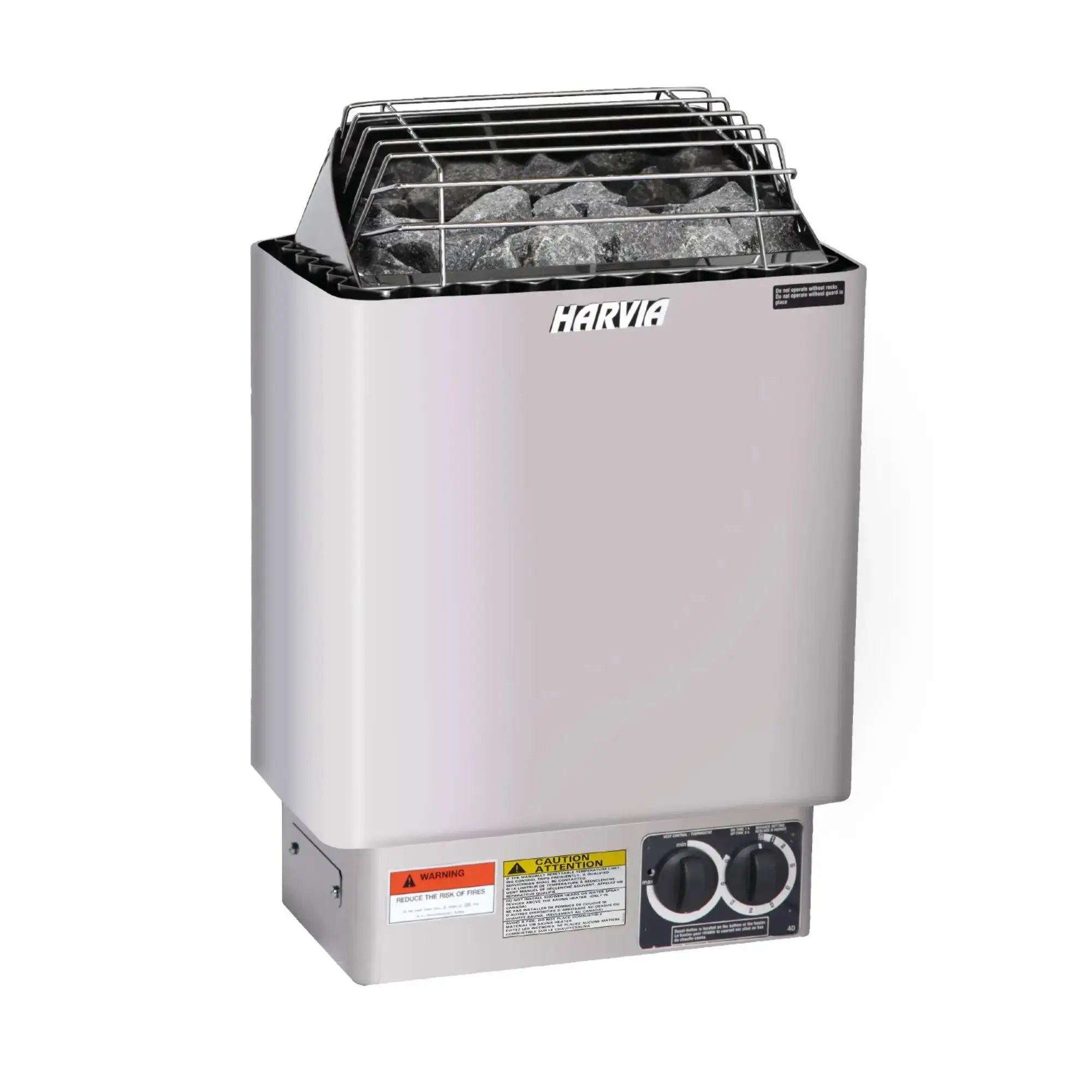
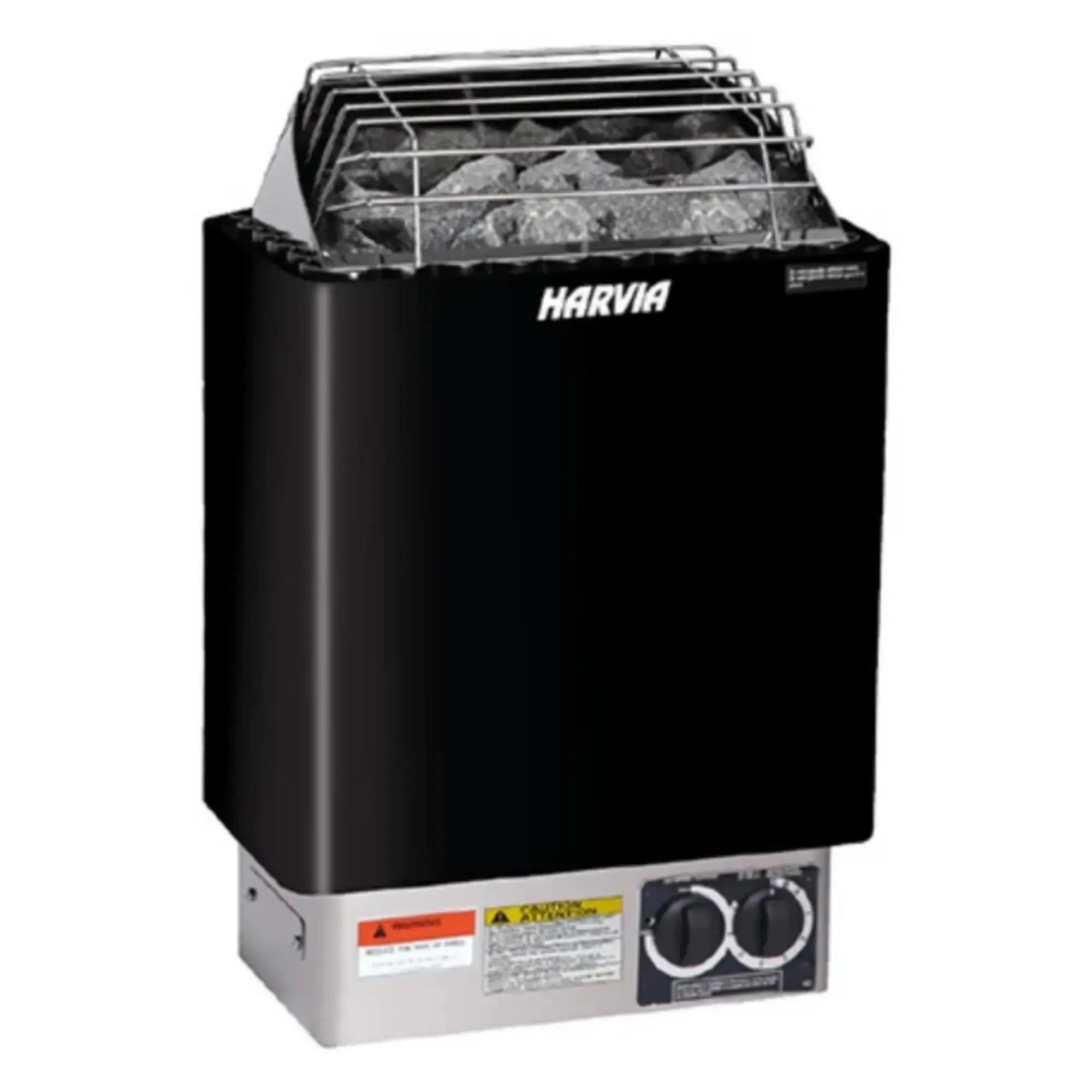
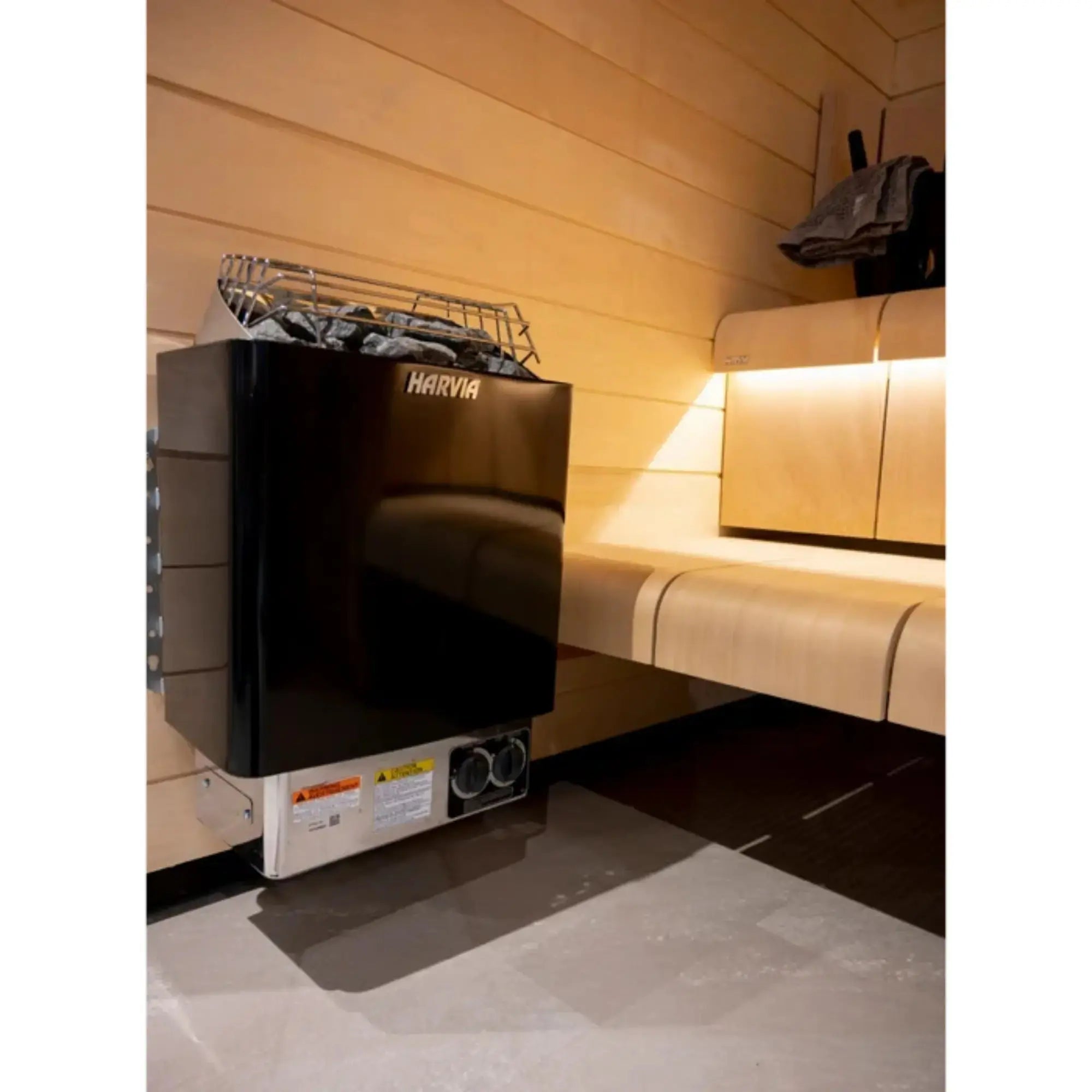
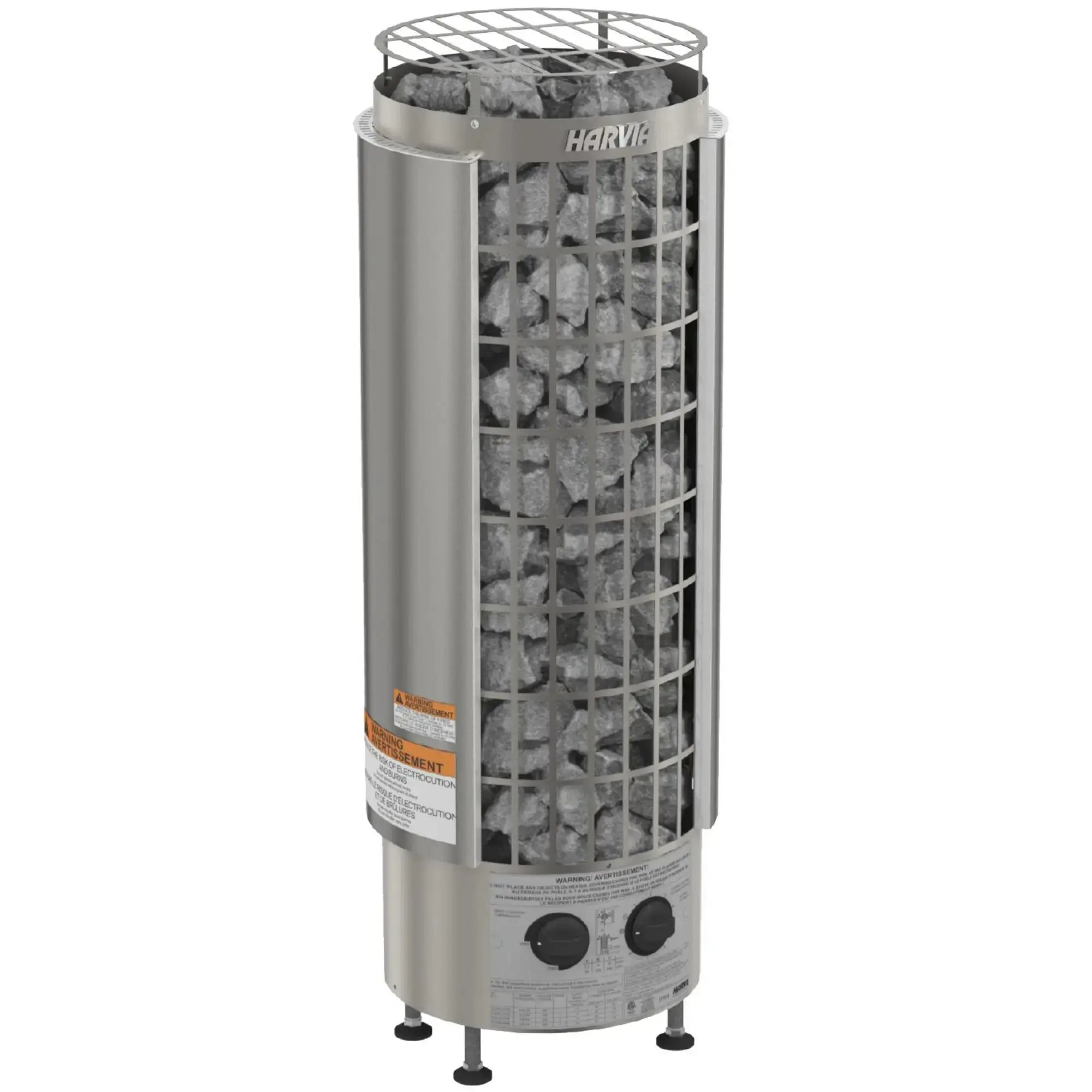
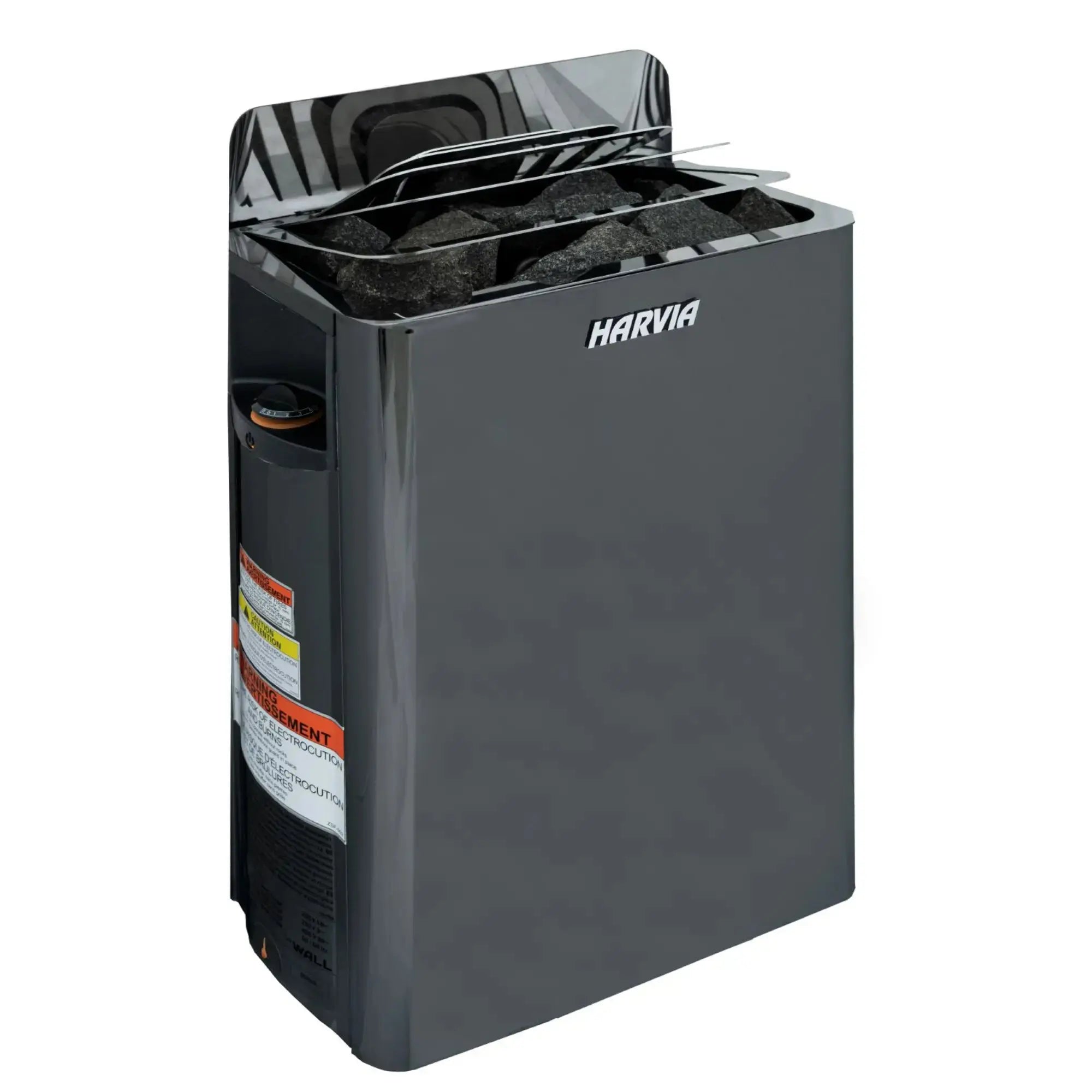
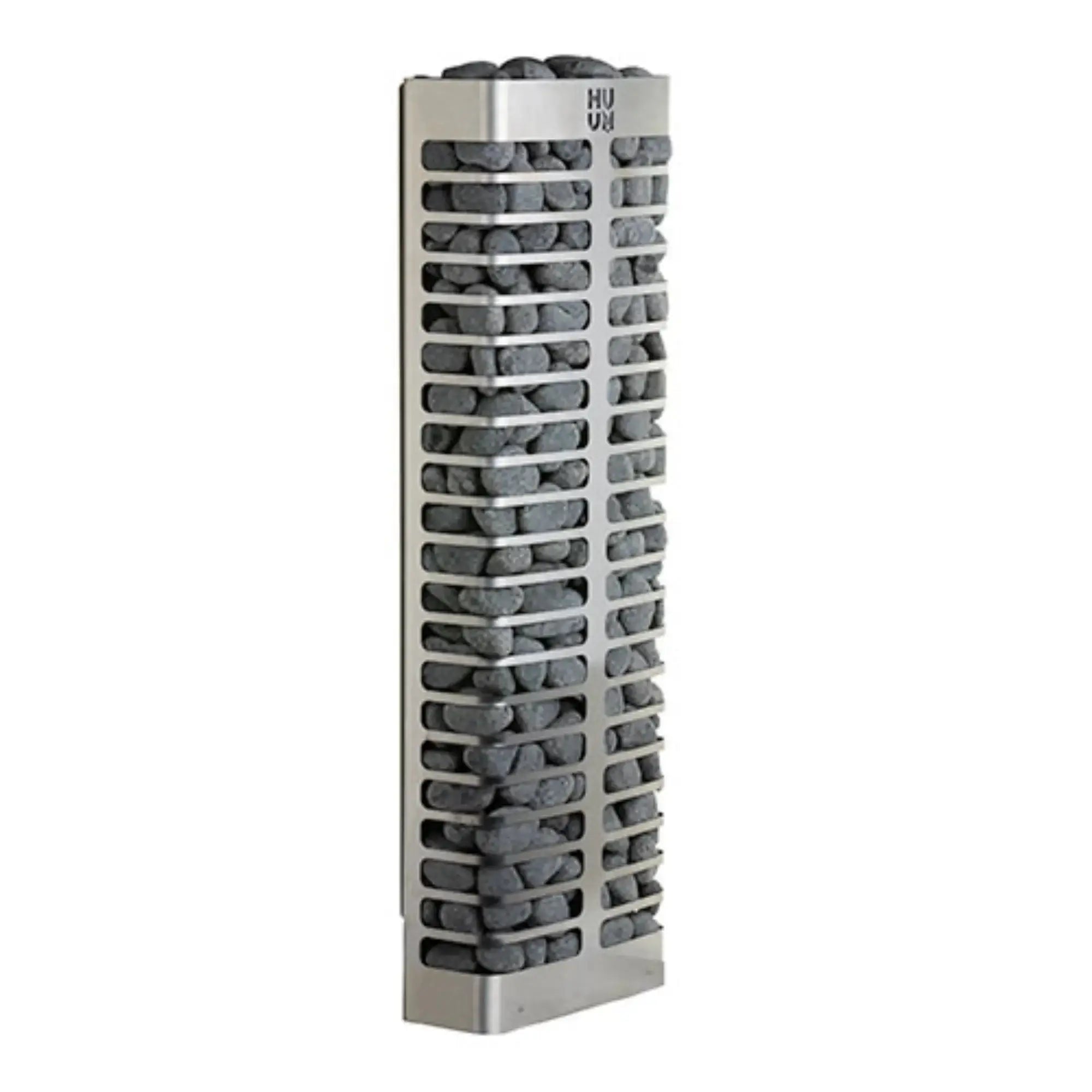
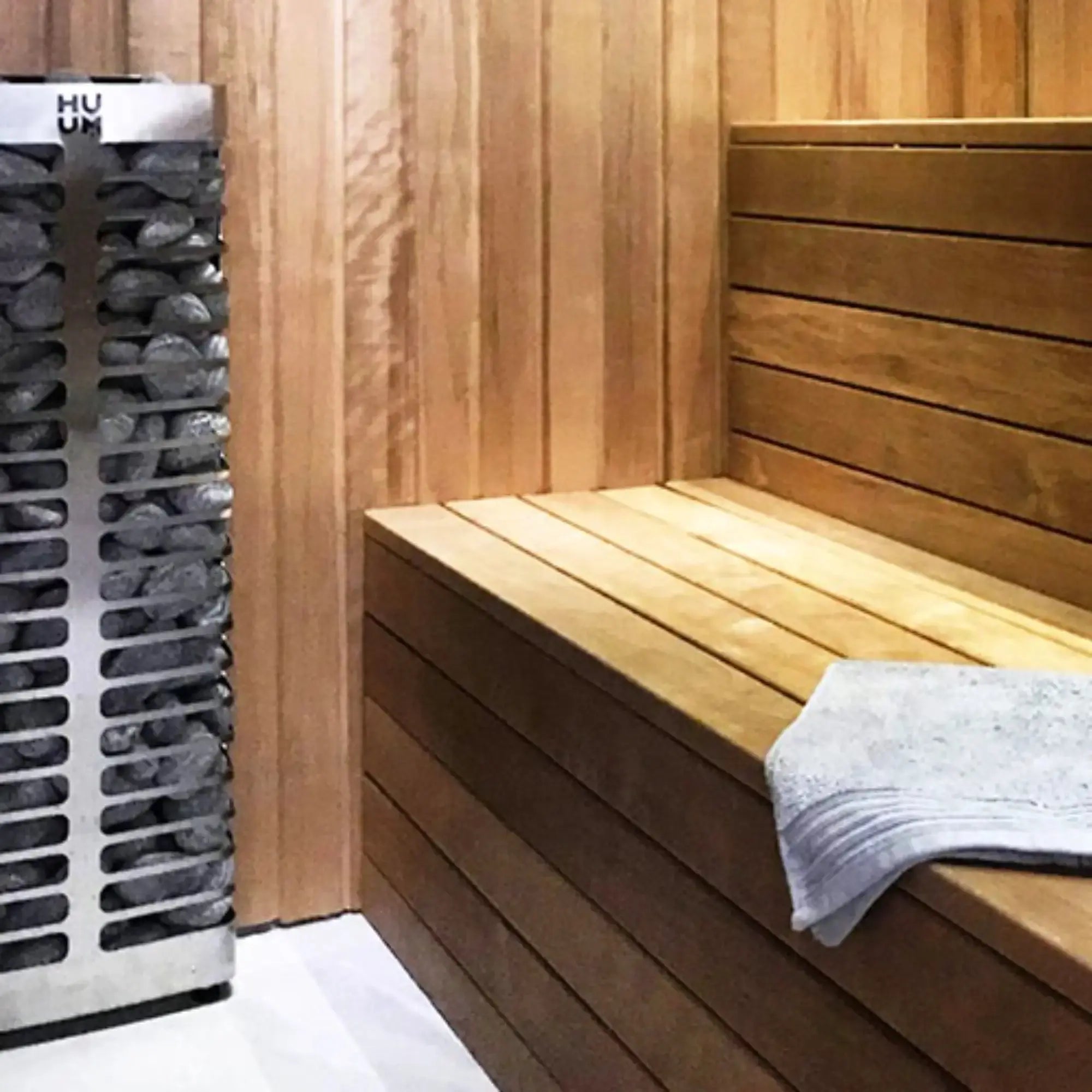
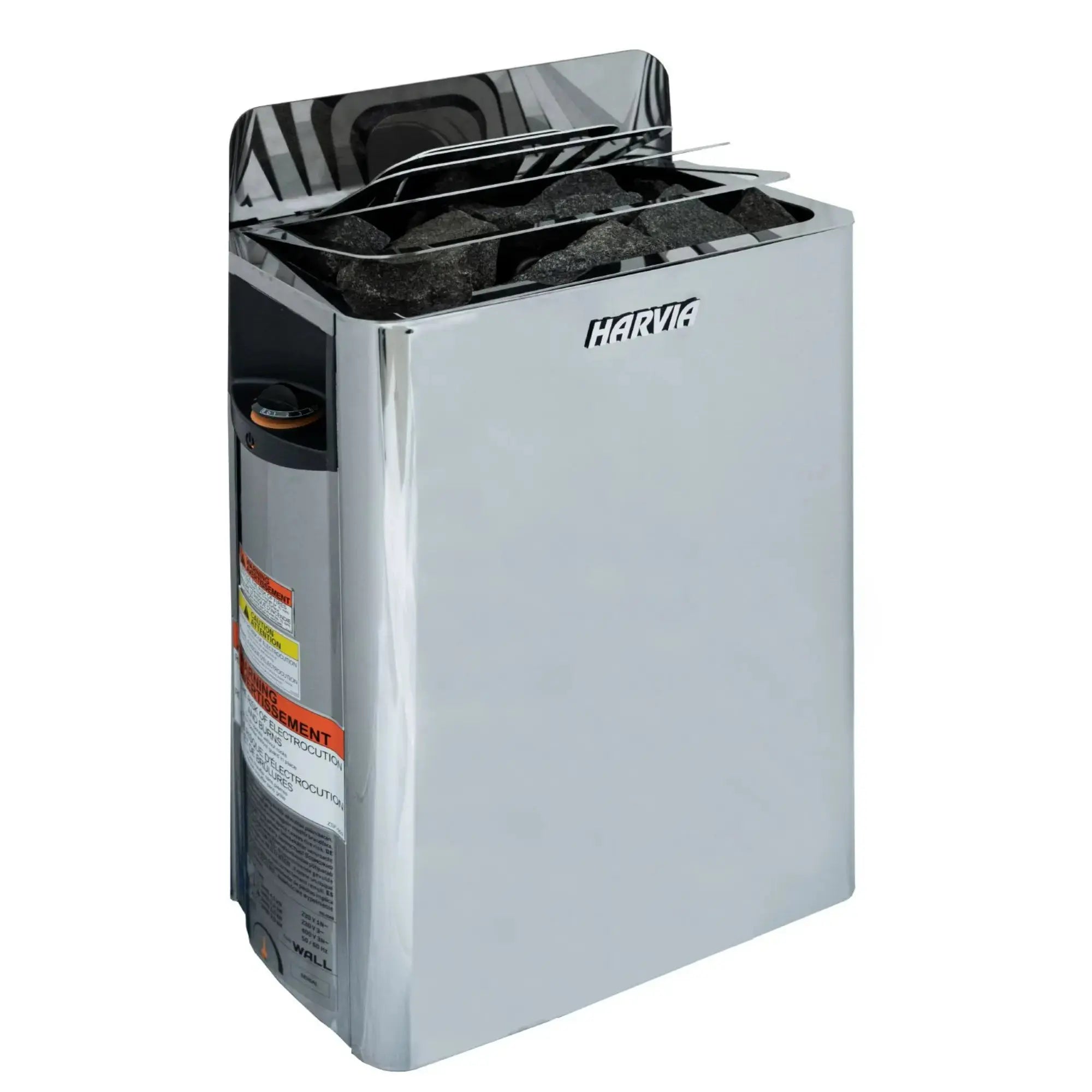
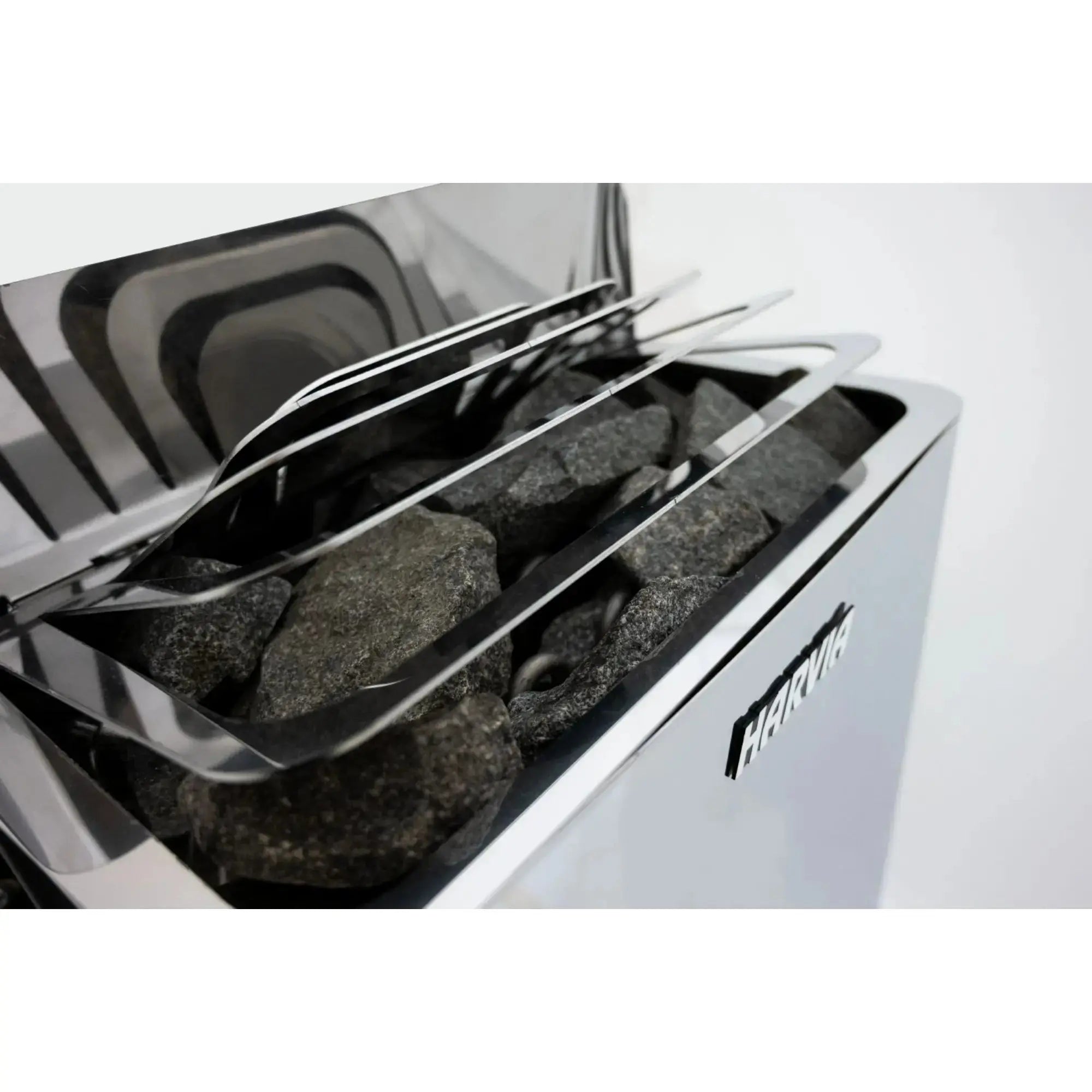
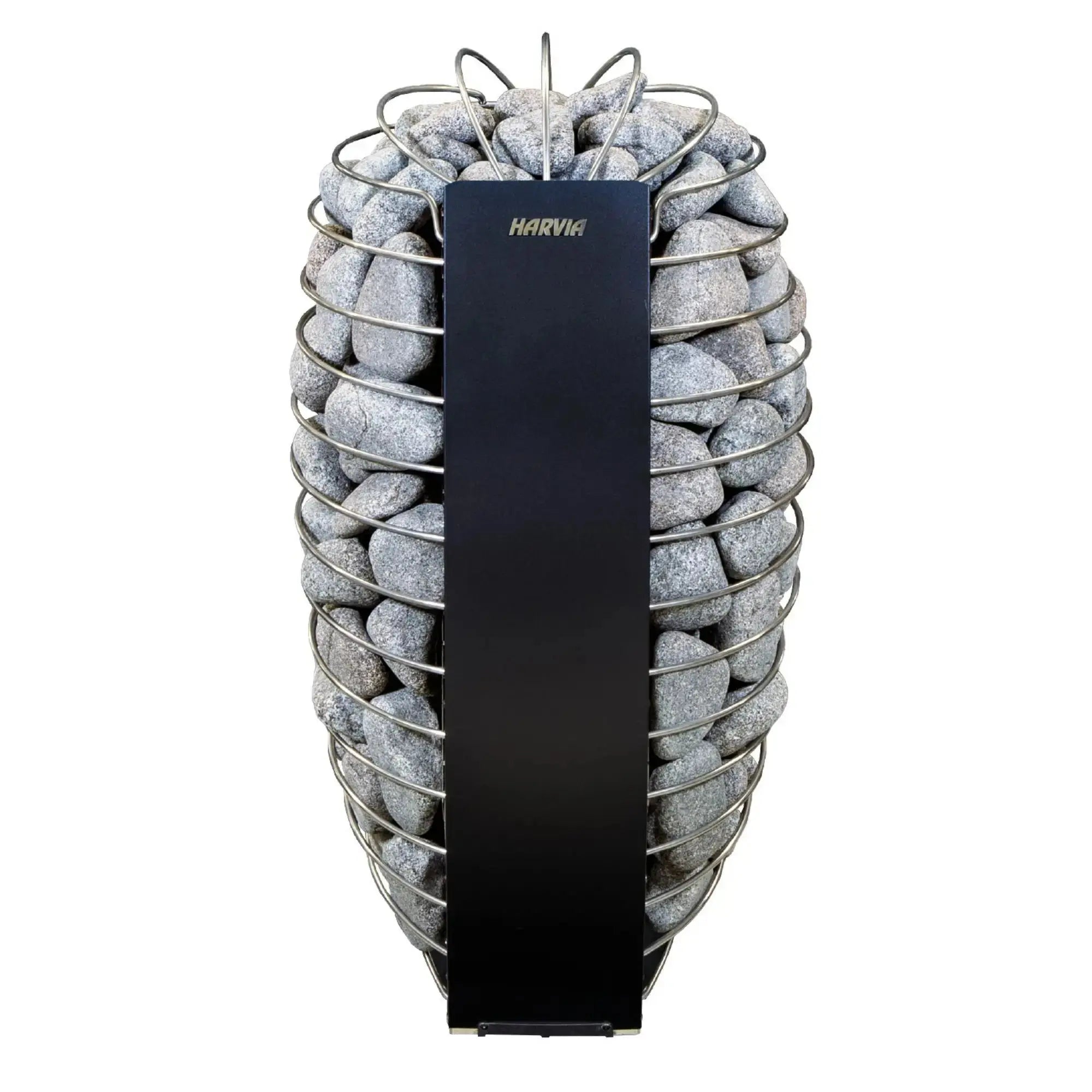
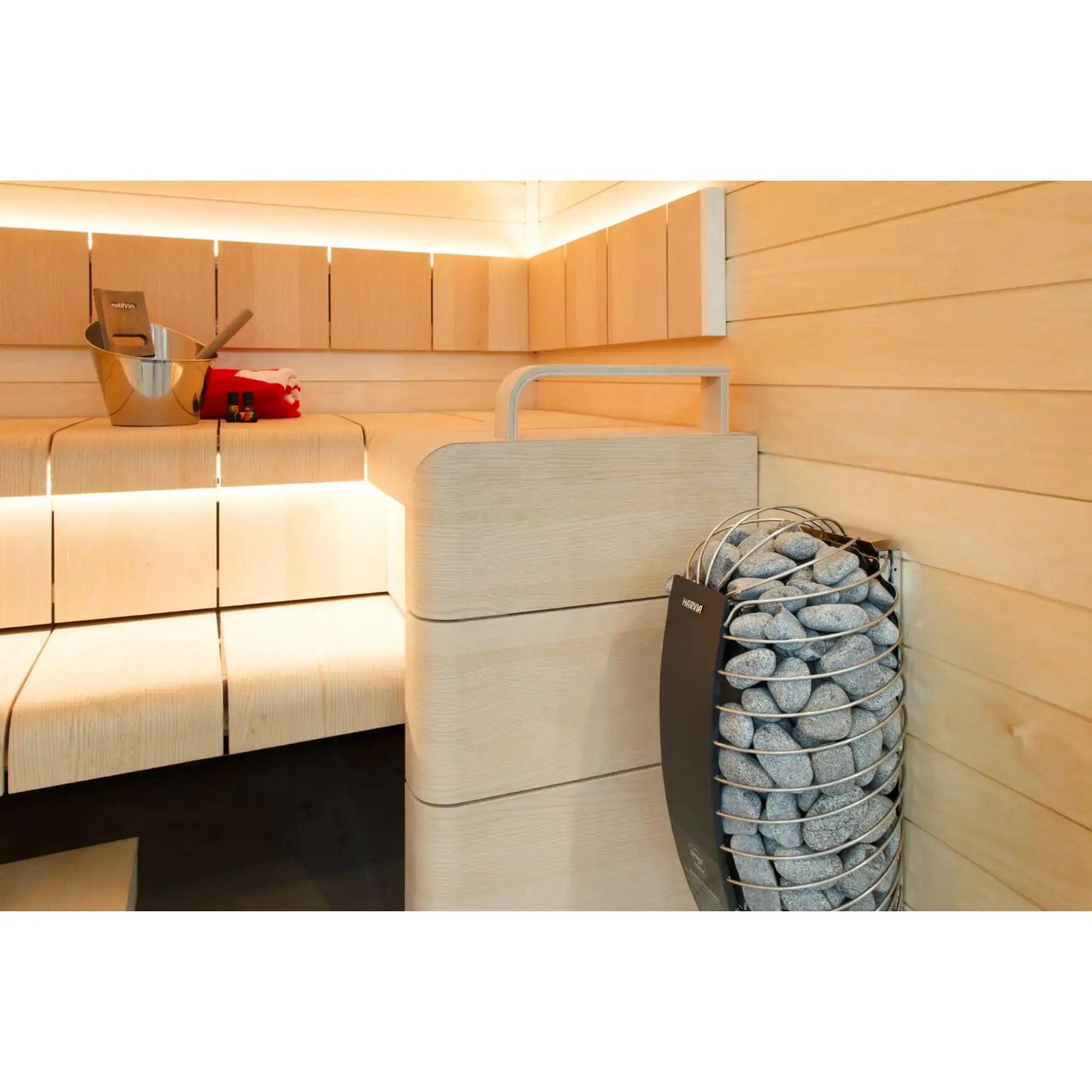
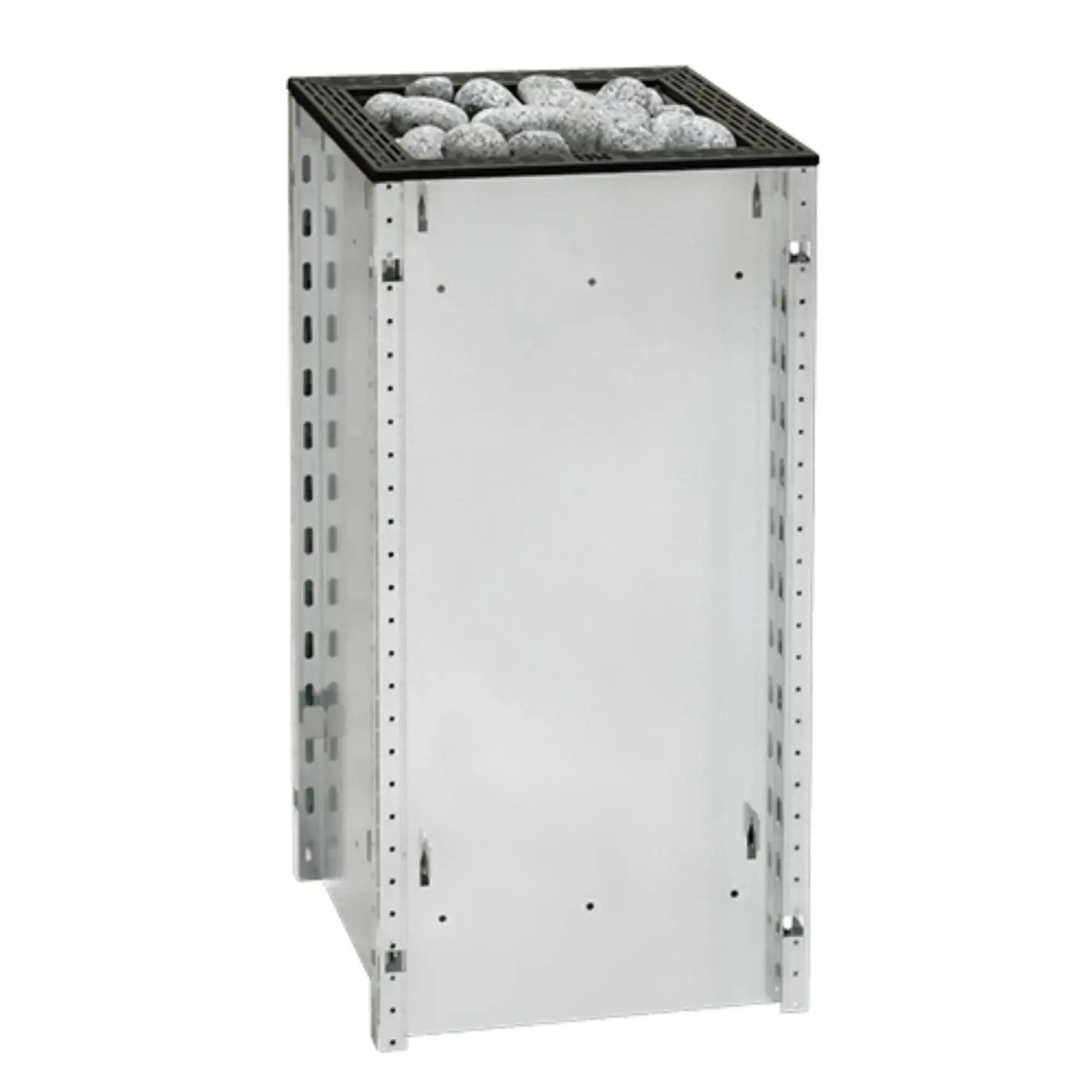
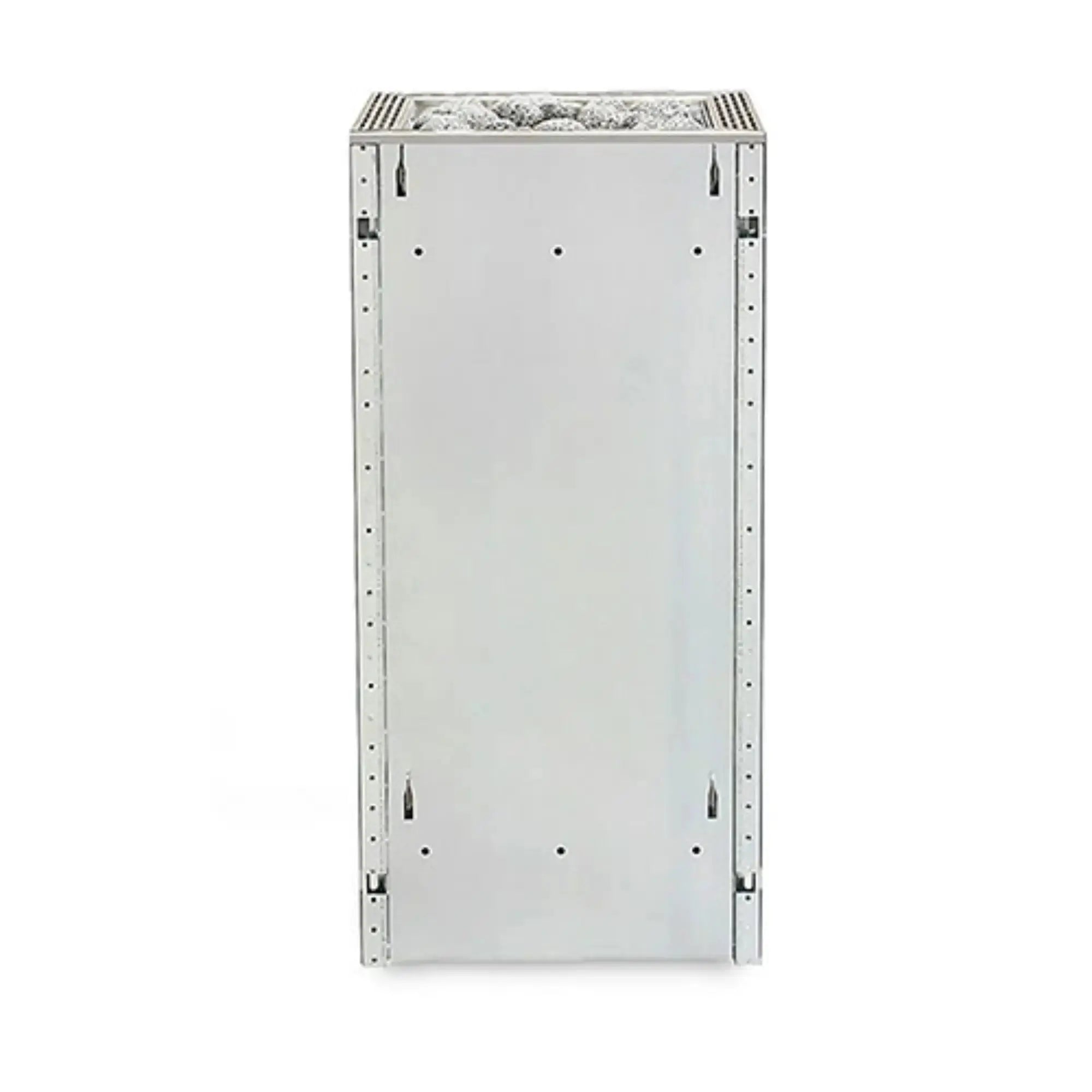
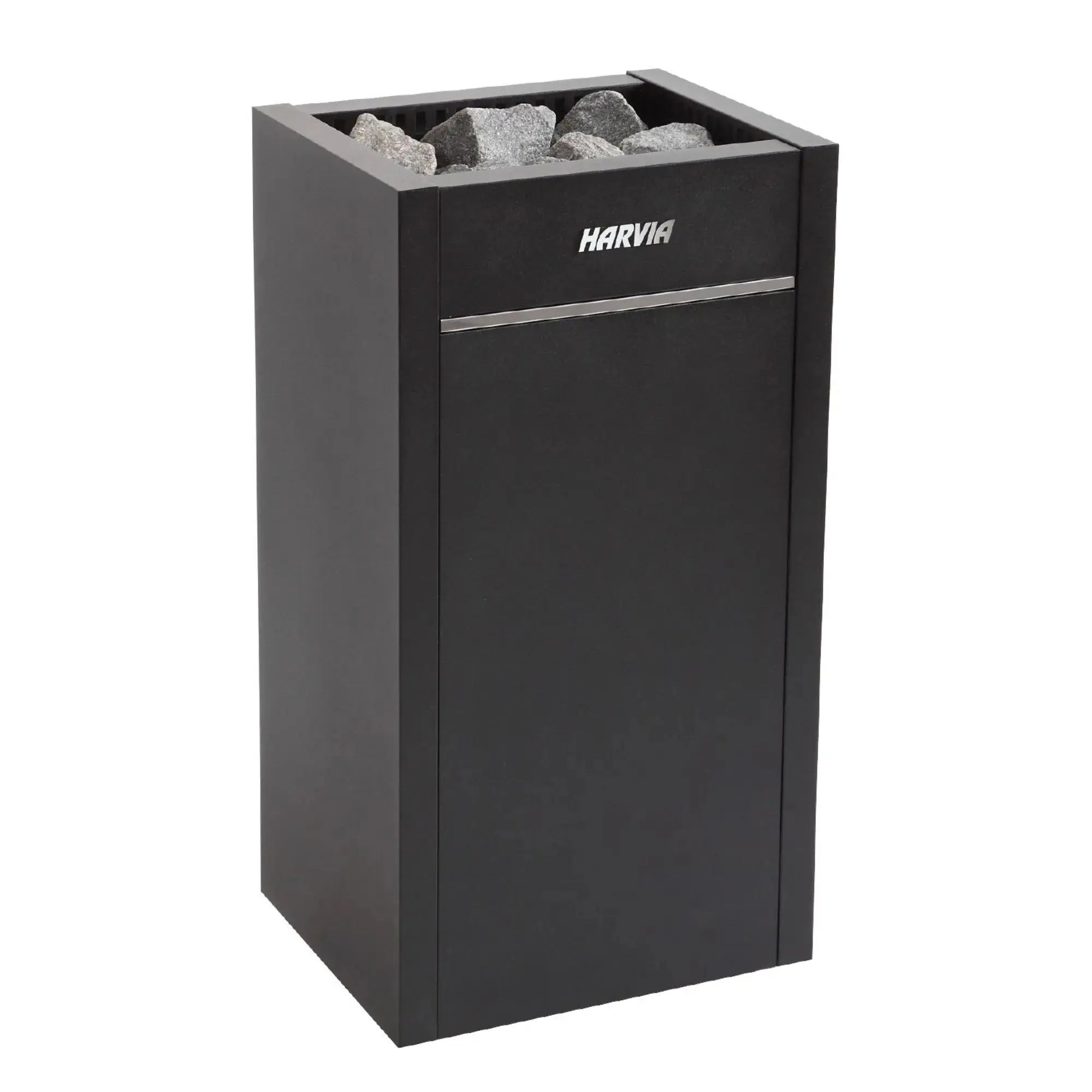
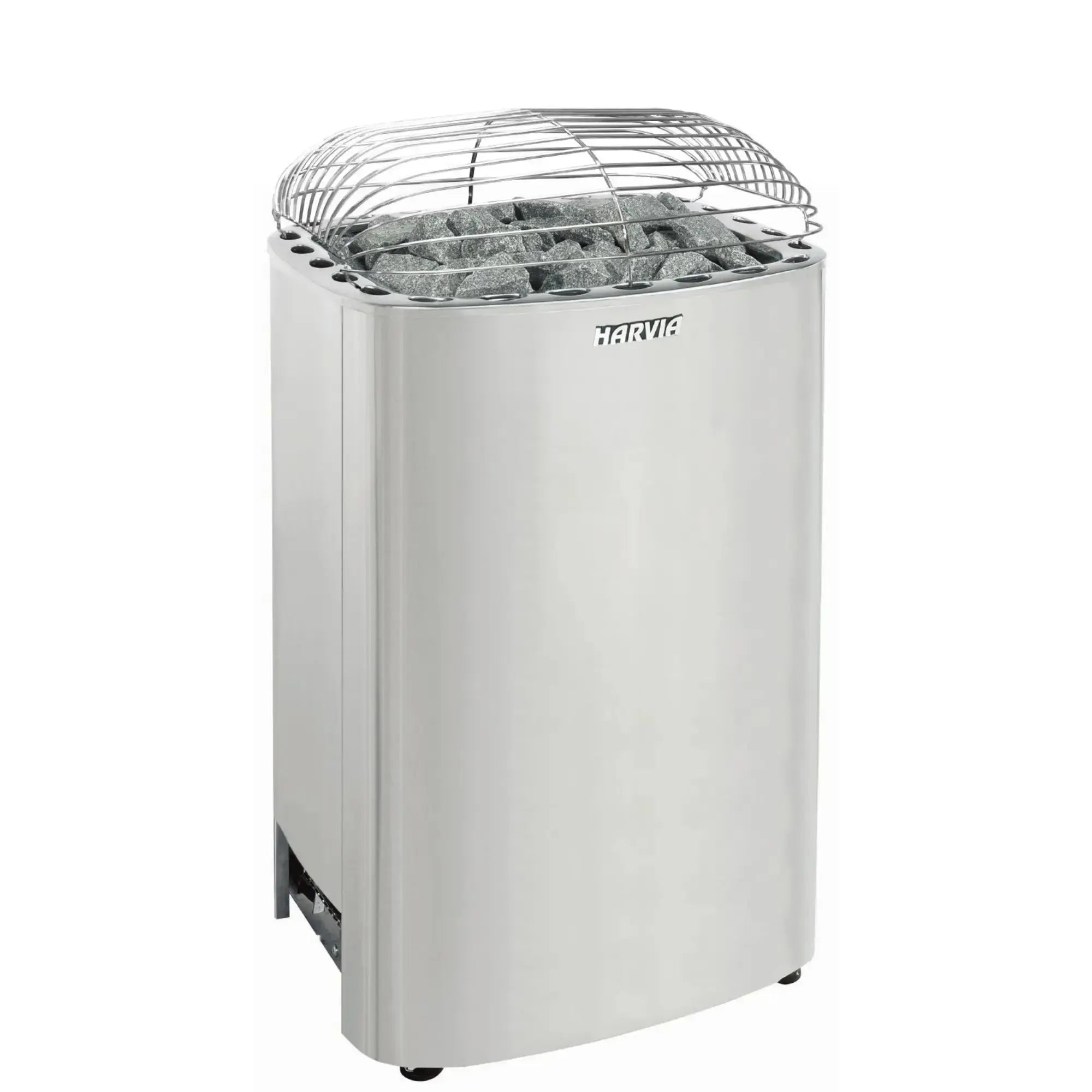
170 to 300 adjusted cu ft, 25 A at 240V, one 44 lb box of stones, UL listed. Xenio CX170 control required. Two finishes: stainless steel from $1,010, graphite black $1,092.
Still narrowing it down? Start with what size sauna heater you need, compare the Harvia range, or read the sauna heater buying guide. Going electric? Budget the sauna control panel too.
What does a wood burning sauna cost to run?
Wood is only the cheap fuel if the wood is free. The math is simple on both sides, so work it out rather than assume.
- Electric. Take the rating literally. A 6 kW heater uses 6 kWh an hour at full power, and it only runs flat out while heating up. A preheat plus an hour in the sauna is roughly 6 to 9 kWh. Multiply that by your own rate.
- Wood. Divide what a cord costs you delivered by the number of burns you get from it, then add a yearly chimney sweep and the odd door gasket. If you cut and season your own wood, nothing beats it. If you buy cords at retail, it's much closer to electric than people expect. A stove that burns 25 to 40 percent less fuel, as Cozy Heat publishes for its range, helps every season.
Our post on what a sauna costs to run works through the metered side.

Frequently asked questions
What size wood burning sauna stove do I need?
Go by adjusted cubic feet, not floor area, and pick a stove whose published range covers your number. A 6 x 7 ft room with a plain door suits a 12 to 16 kW stove. Add a full glass door and the same room can need the next size up. Work it through in what size sauna heater do I need.
Do wood burning sauna stoves need a chimney?
Yes, always, and it has to be a listed chimney system fitted to code with the right clearances. There's no vent-free option. Budget for the chimney at the same time as the stove, because on many builds it costs more than the stove.
Can I use an ordinary indoor wood stove as a sauna stove?
No. A house wood stove is built to warm a room slowly over hours. It has nowhere to hold stones and can't get them to sauna temperature. It's also certified as a different type of appliance, so an inspector can fail the install and an insurer can refuse a claim.
How long does a wood fired sauna stove take to heat up?
Around 45 to 75 minutes from lighting, for a correctly sized stove in a well built room. A big stone load takes longer, and so does hard cold. If yours takes much longer than that, the likely causes are a stove that's too small for the room, a leaky room, or poor ventilation.
Are wood burning sauna stoves UL listed?
Most sold here aren't. Harvia wood stoves carry CE and EAC, Narvi is CE only, and Cozy Heat carries a German BIMSCH certificate. UL listings are mainly an electric heater thing. Raise it with your building department and your insurer early. It's a permitting question, not a safety one.
Can I have both wood and electric?
In one room, rarely. You'd need two sets of clearances and two sets of paperwork. The usual answer is two rooms: electric where the power already is, wood where you want the fire.
Price the whole wood build, not just the stove
Every wood burning sauna stove we stock, plus the stones each one needs.
Shop wood stoves →Or compare electric heaters and sauna stones side by side.