What Size Sauna Heater Do I Need? Why 9 kW Is Your Real Ceiling
Most home saunas land between 4.5 kW and 9 kW. Measure the room in cubic feet, add for glass, tile and stone, then match that adjusted number to a heater's published range. Above 9 kW you go past what standard North American home wiring can handle. Treat 9 kW as your real ceiling, not a starting point.
Want the answer without reading the whole guide? Put your room's numbers into our sauna heater size calculator. Then read on for why the published sizing rules don't agree.
In this article
What size sauna heater do I need?
Start with what the manufacturers publish. Each heater below has its own room volume range in adjusted cubic feet. We don't merge them into one rule, because they aren't the same.
| Heater | Output | Adjusted cu ft | Stone load | Rated amps |
|---|---|---|---|---|
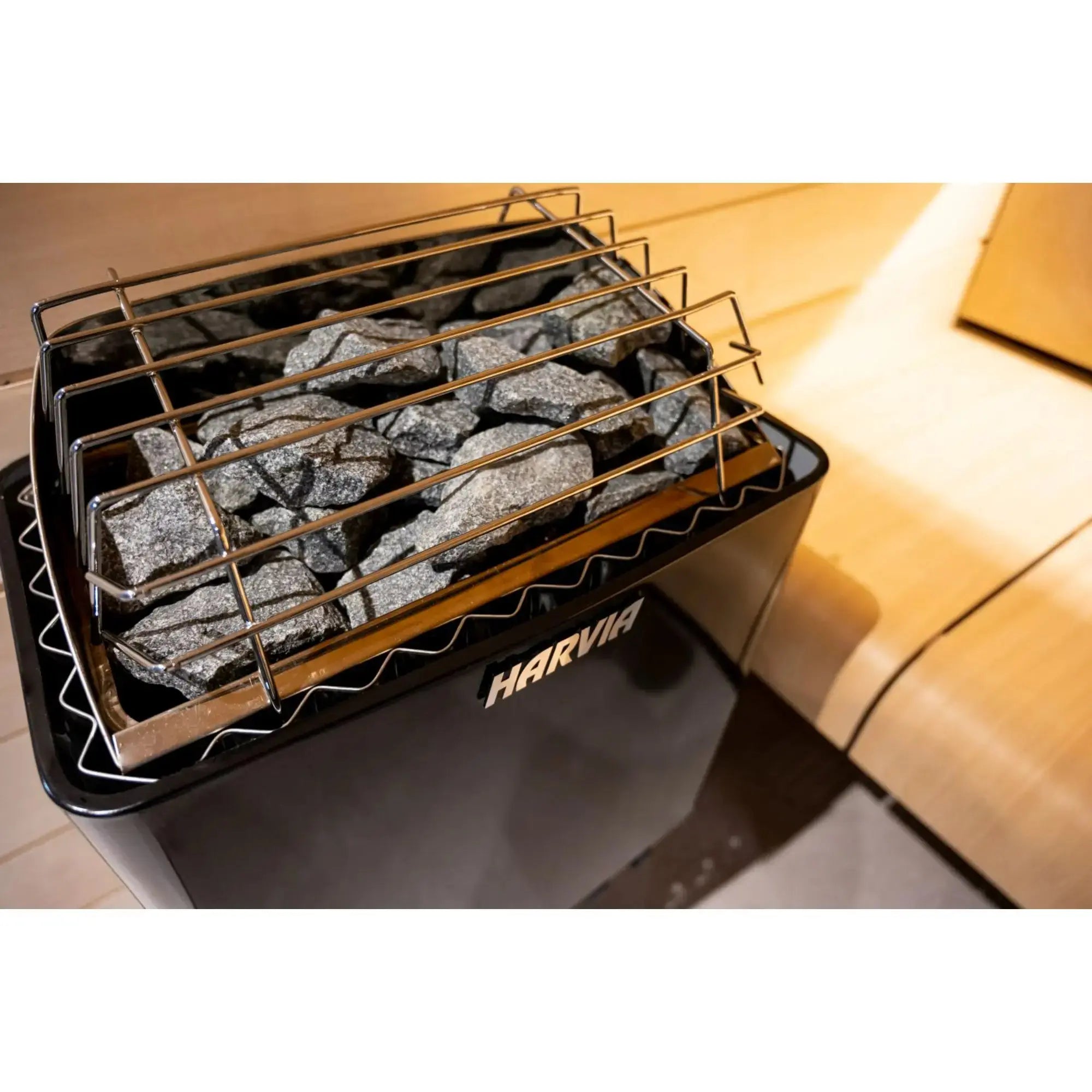
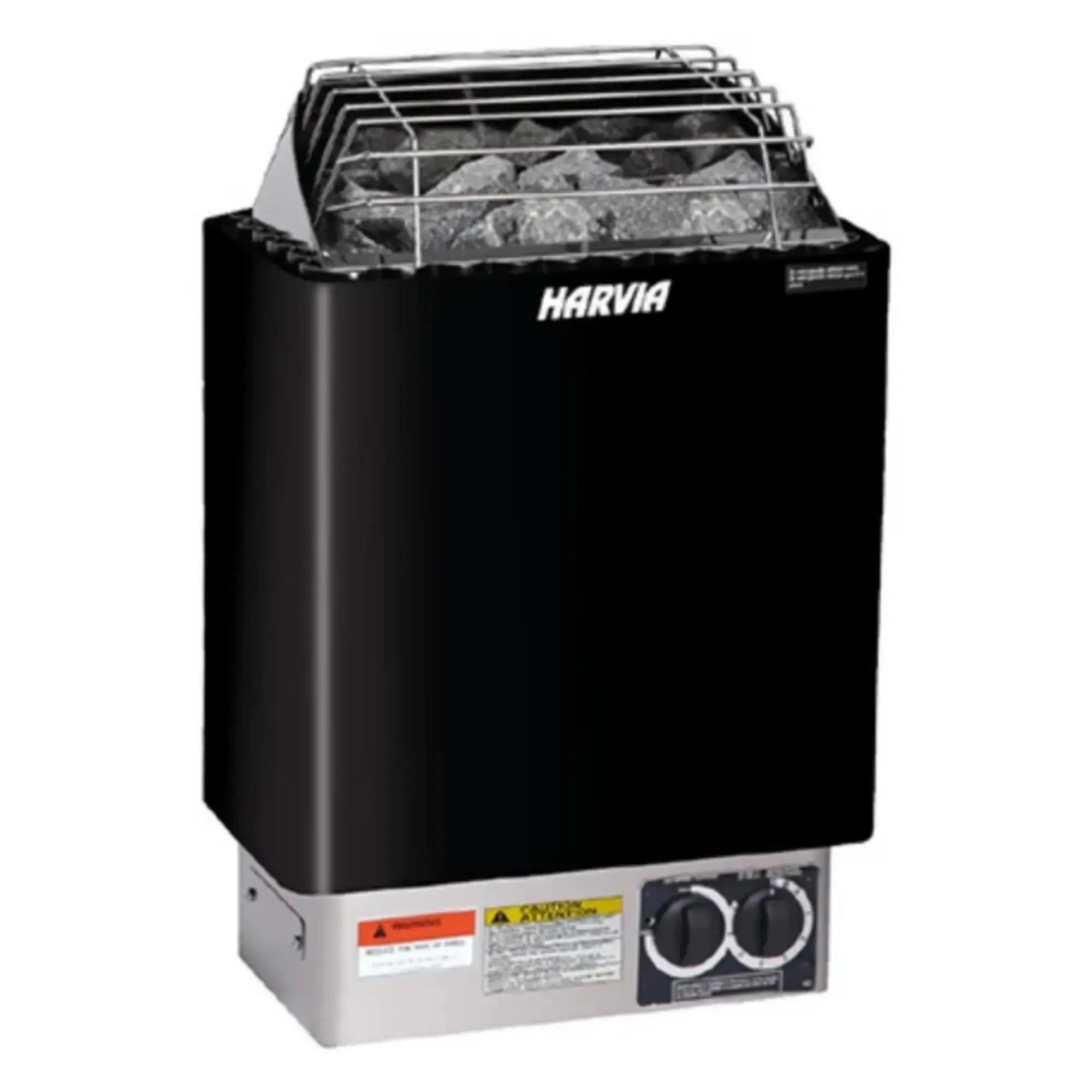
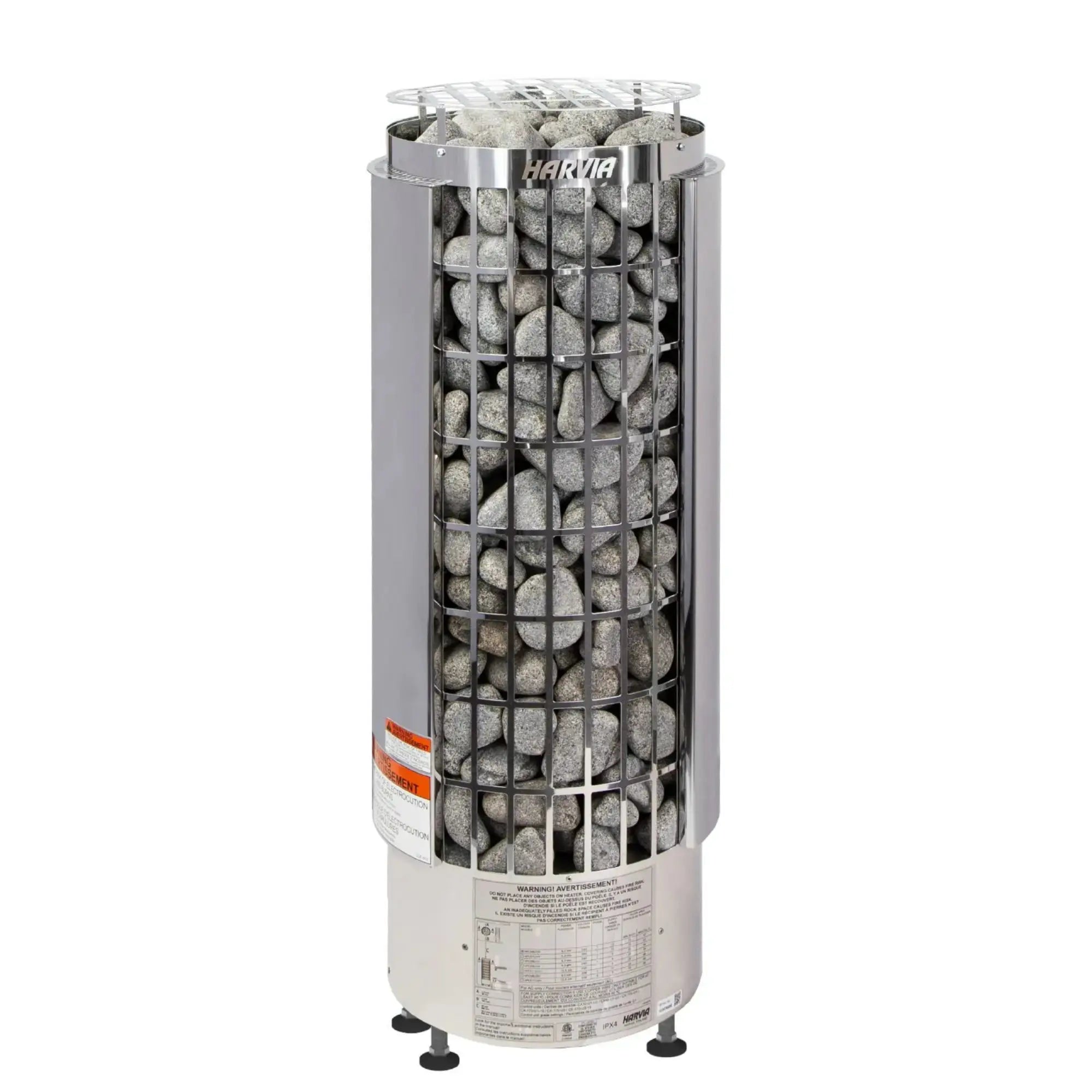
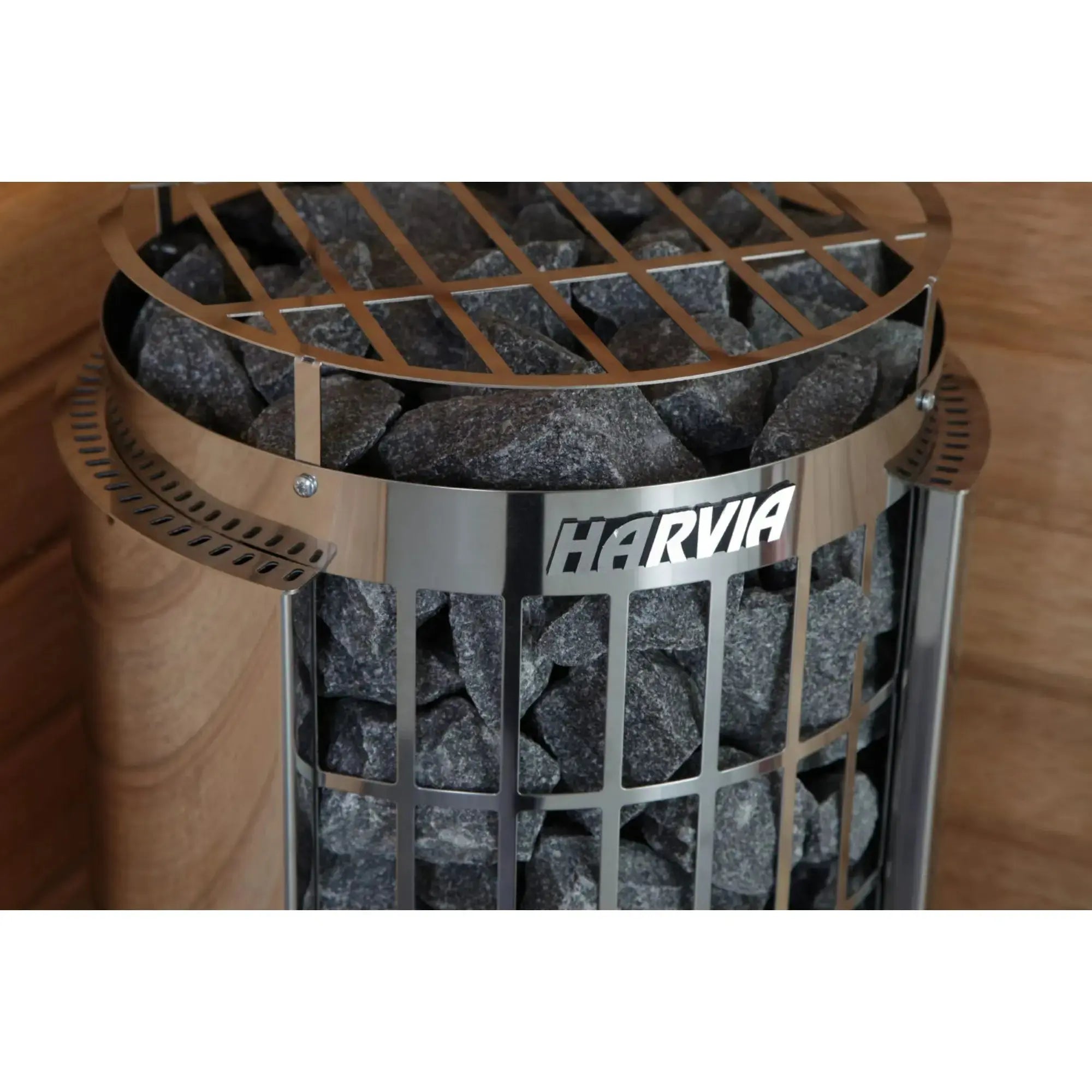
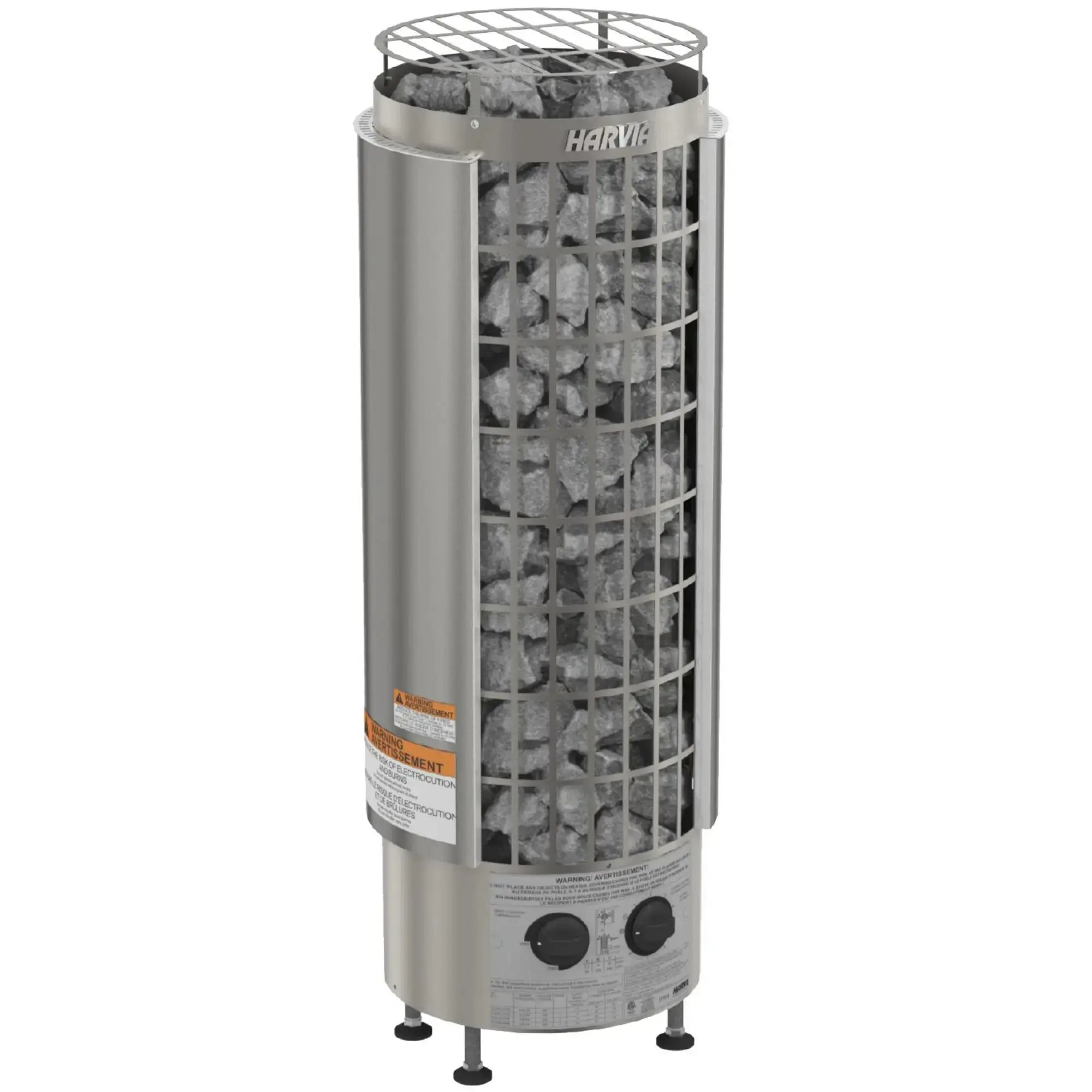
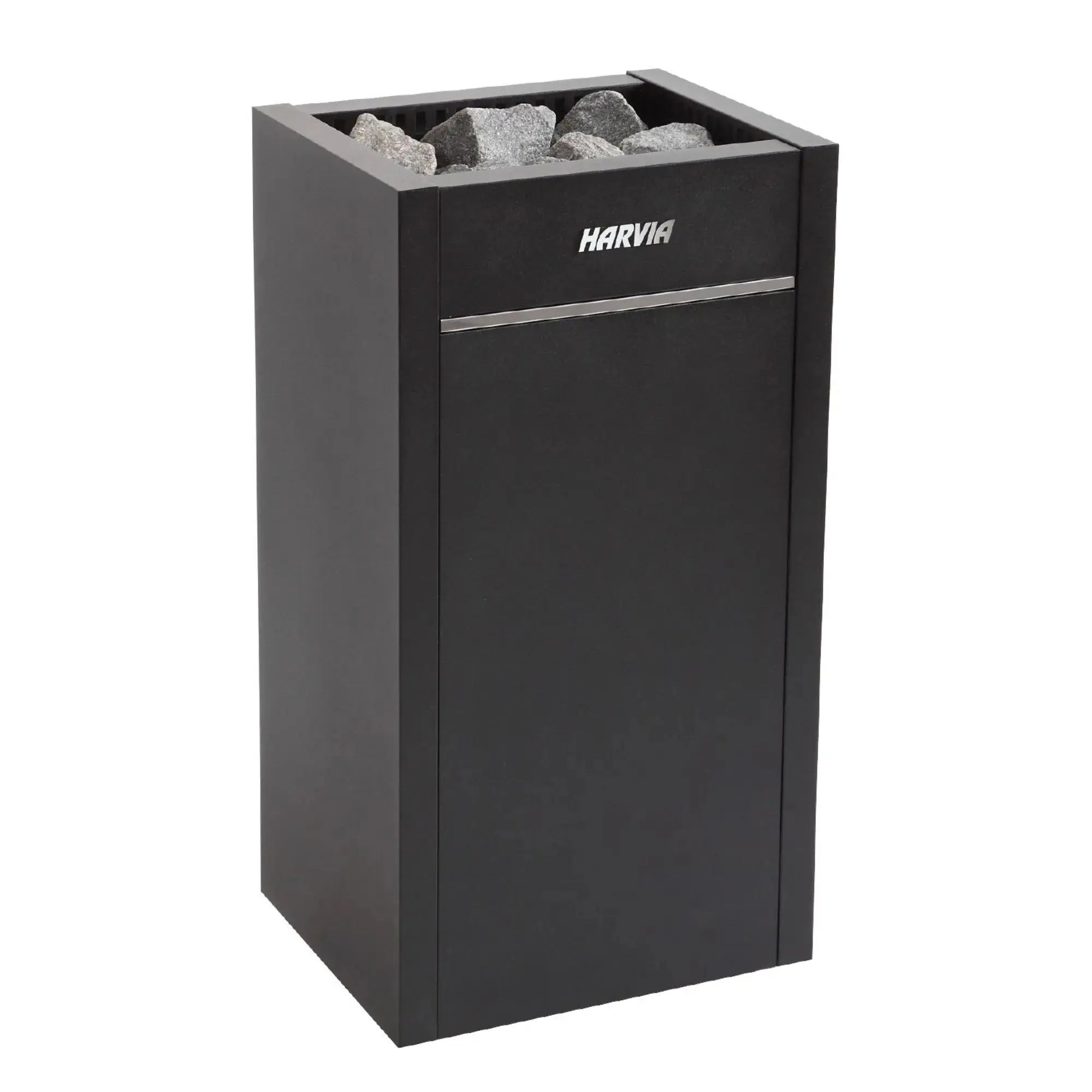
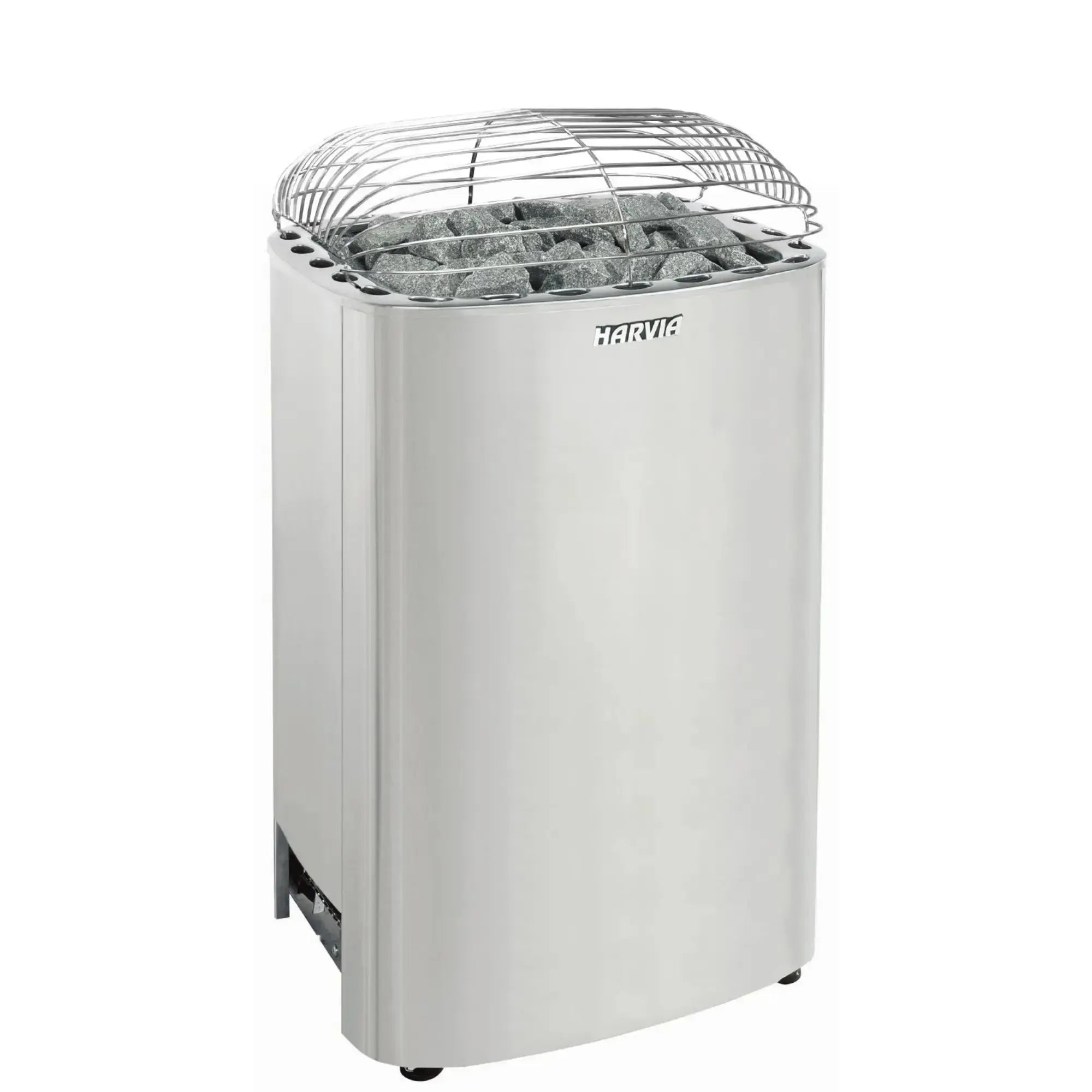
| Harvia KIP45W | 4.5 kW | 100 to 210 | 44 lb | 18.8 A |
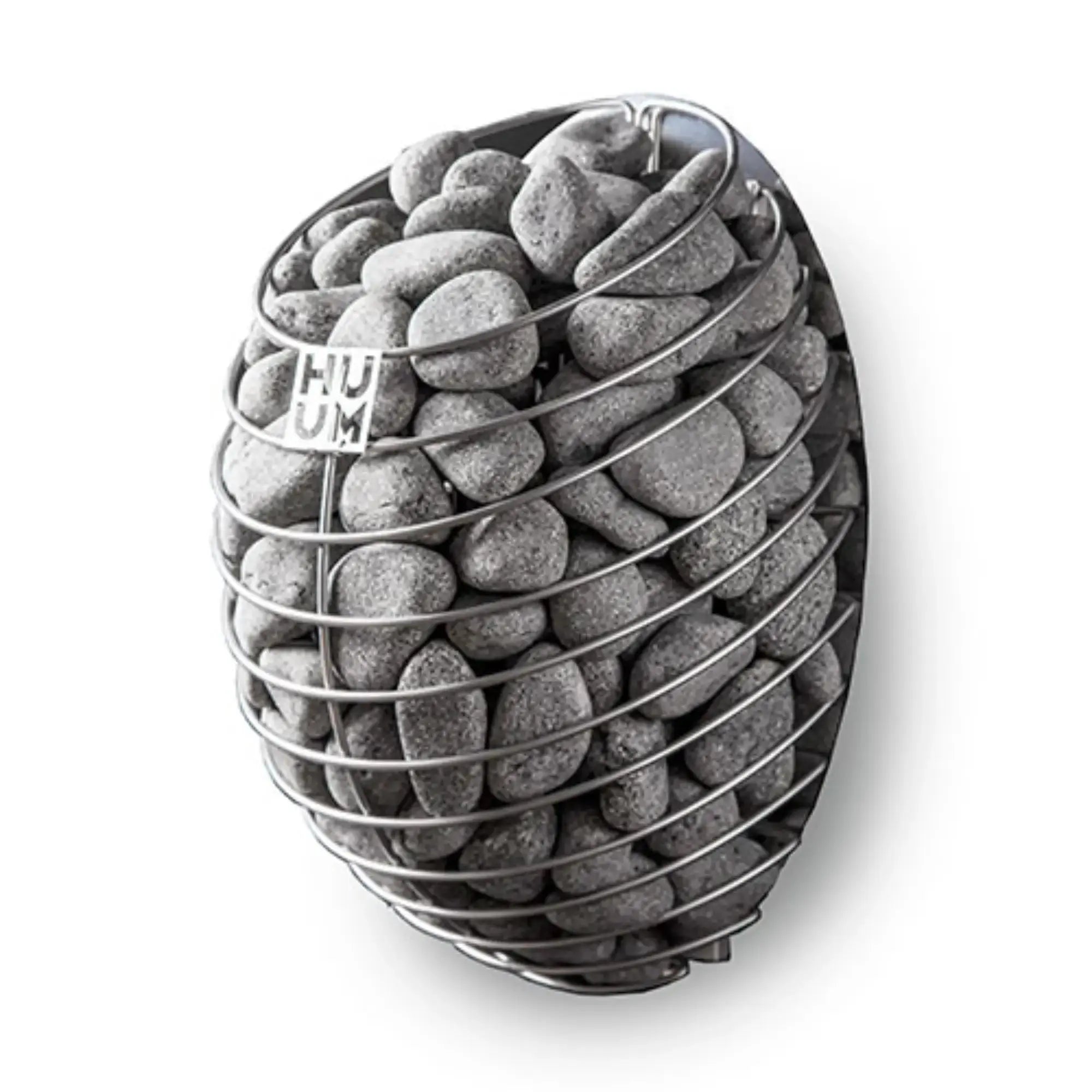
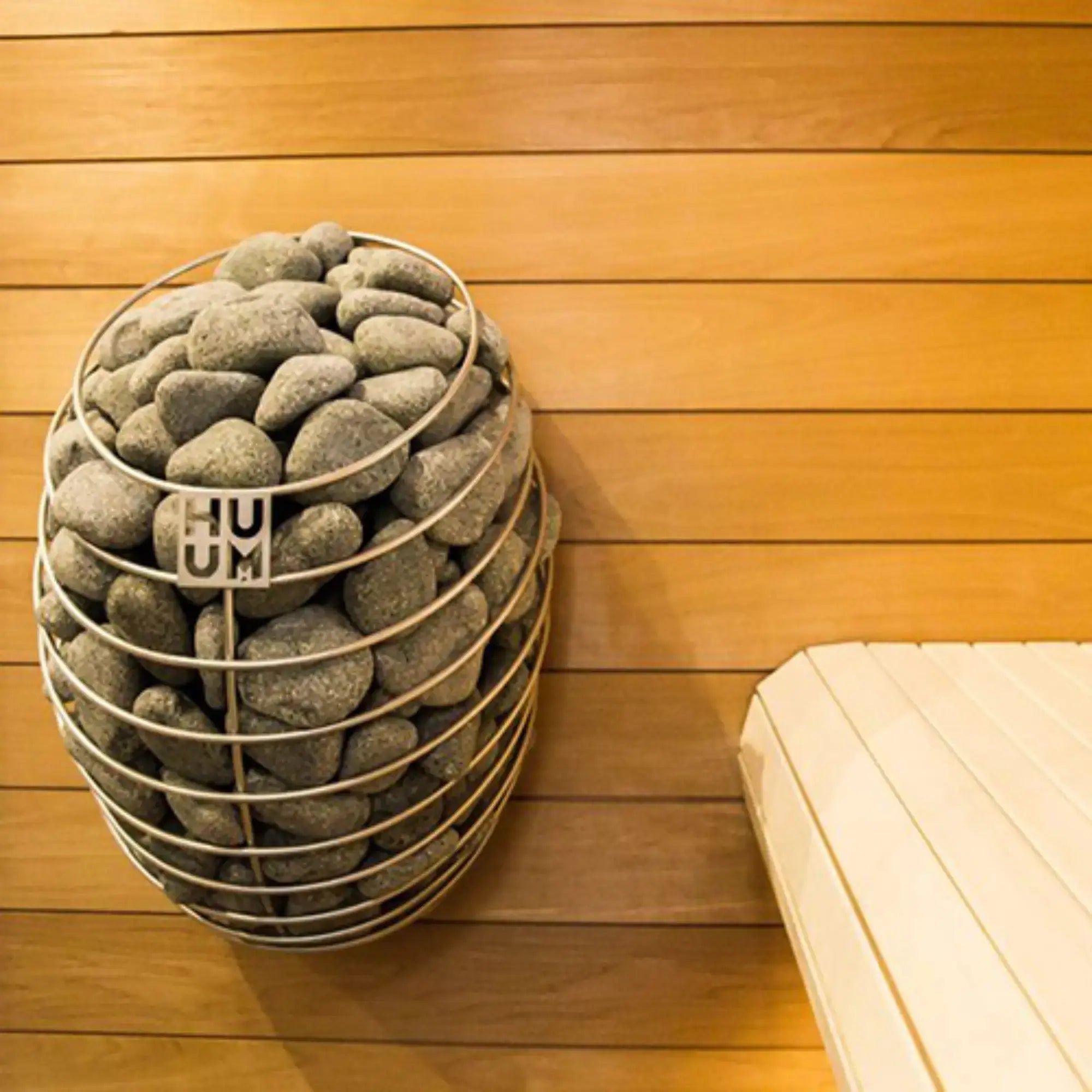
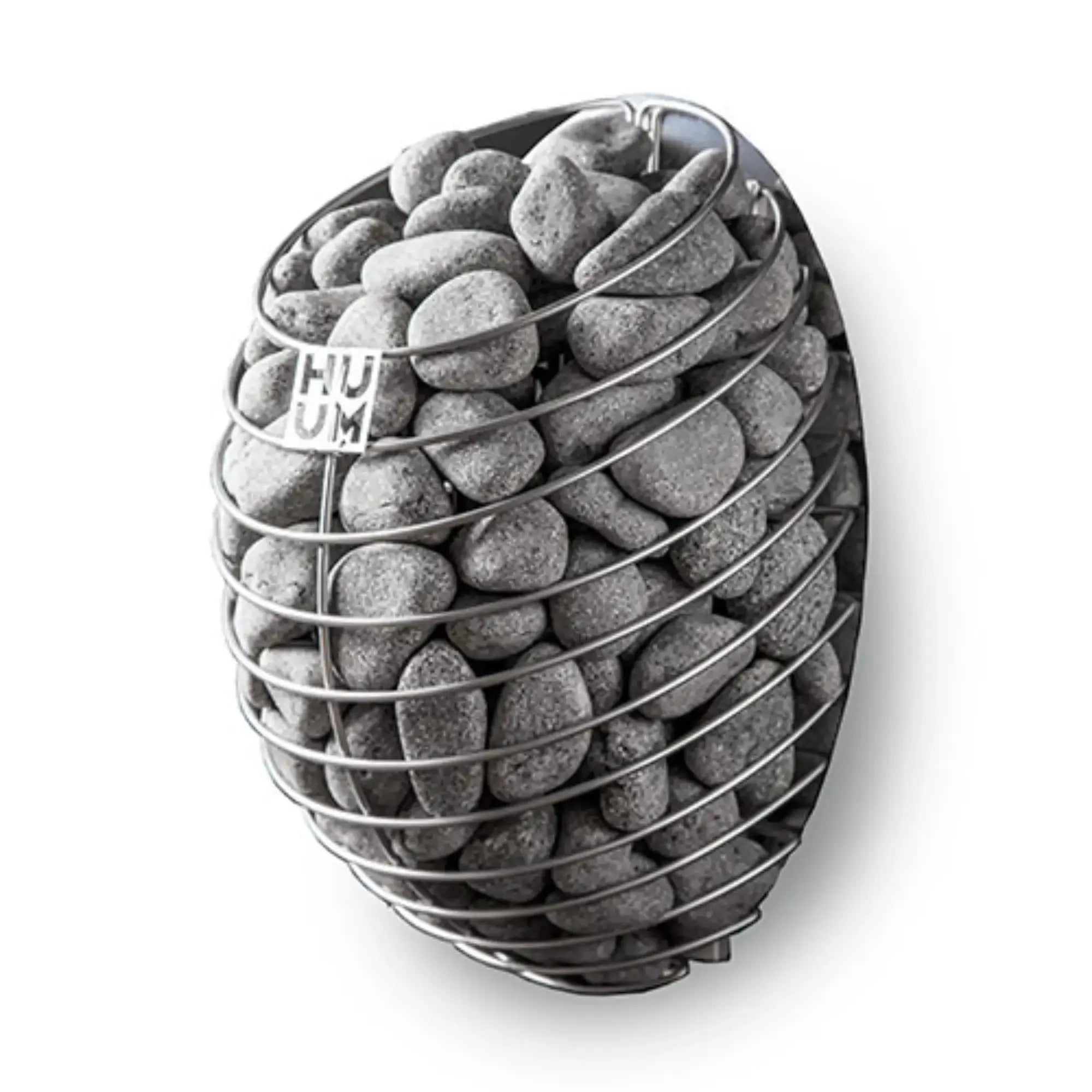
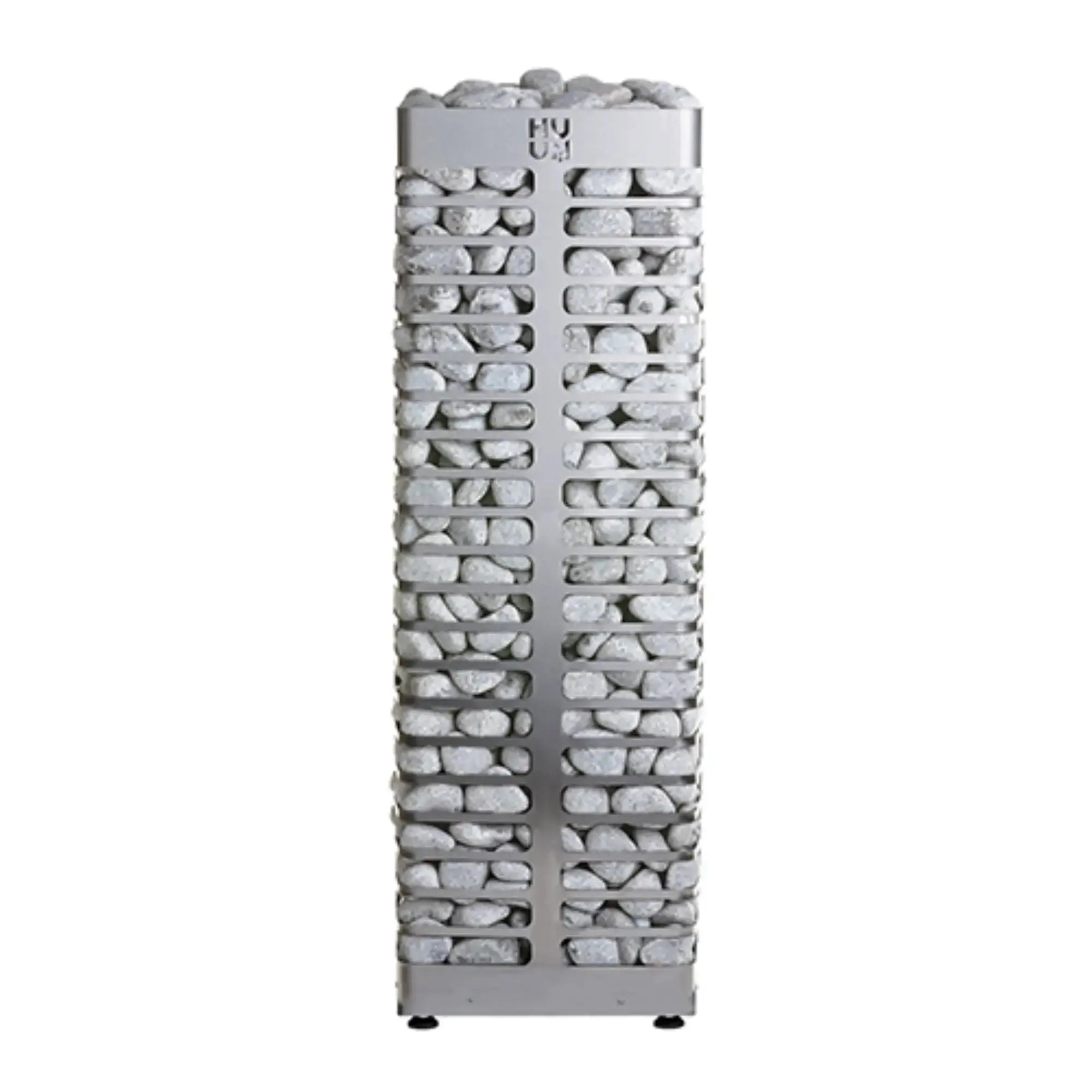
| HUUM DROP 4 | 4.5 kW | 106 to 247 | 122 lb | 18.8 A |
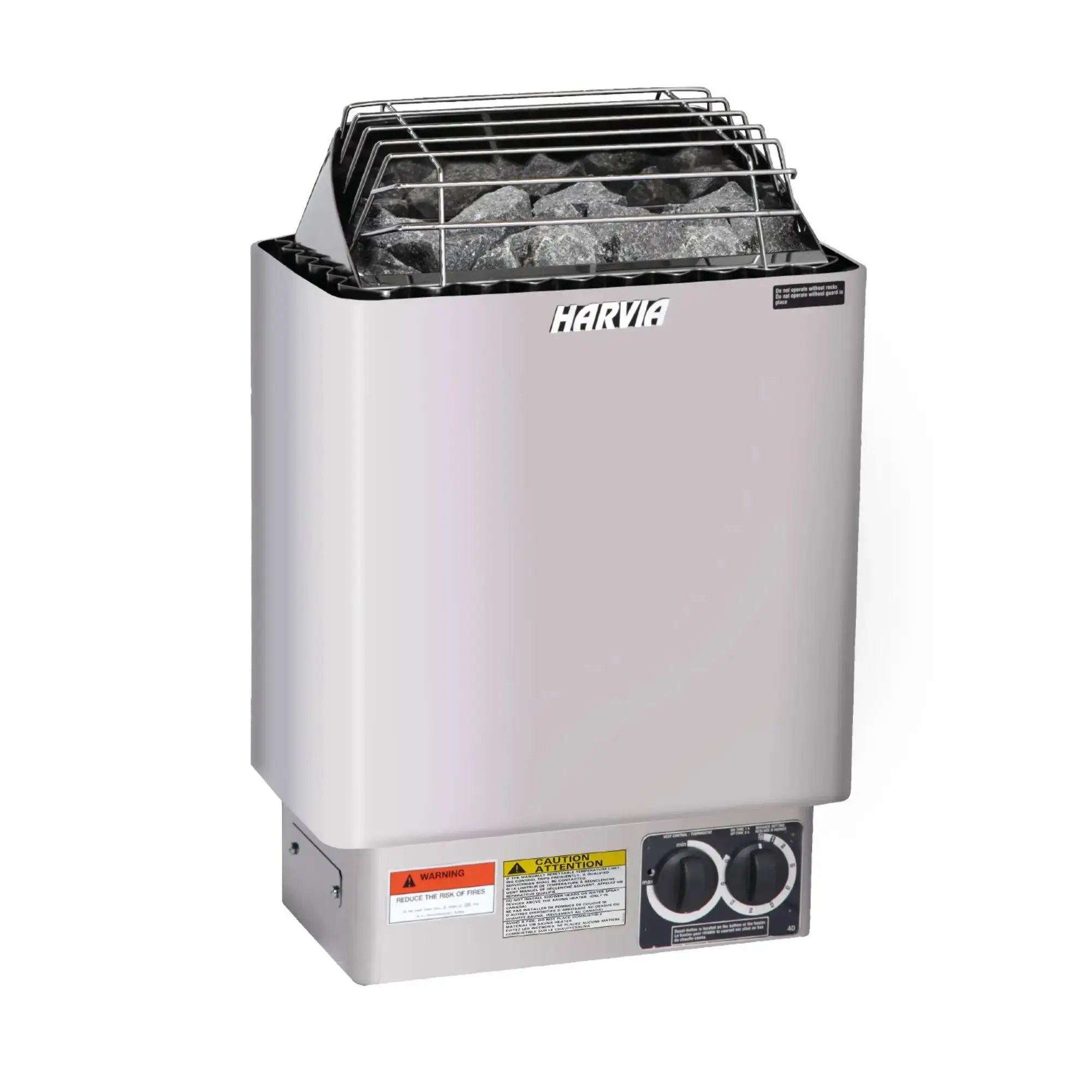
| Harvia KIP60W | 6 kW | 170 to 300 | 44 lb | 25 A |
| HUUM DROP 6 | 6 kW | 177 to 353 | 122 lb | 25 A |
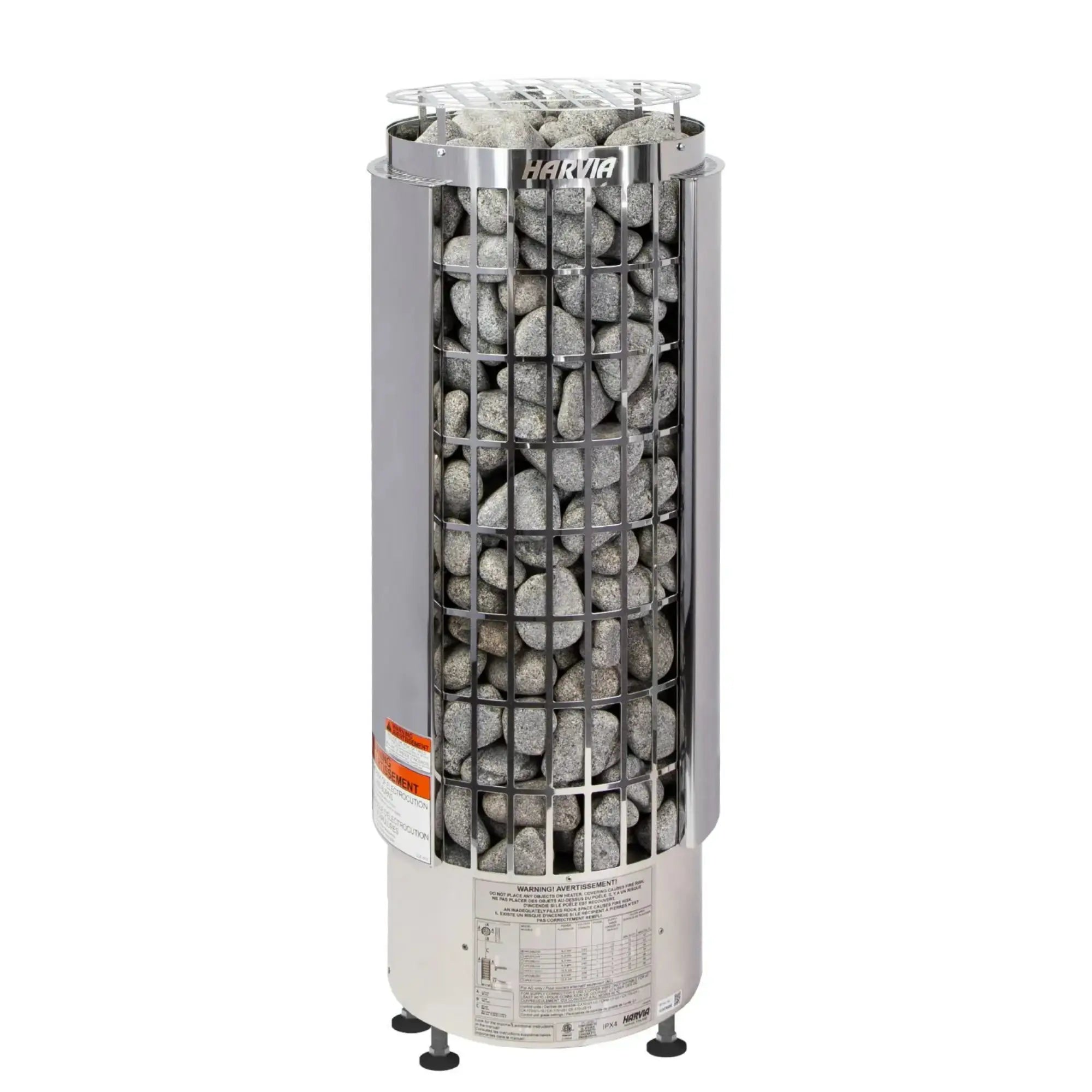
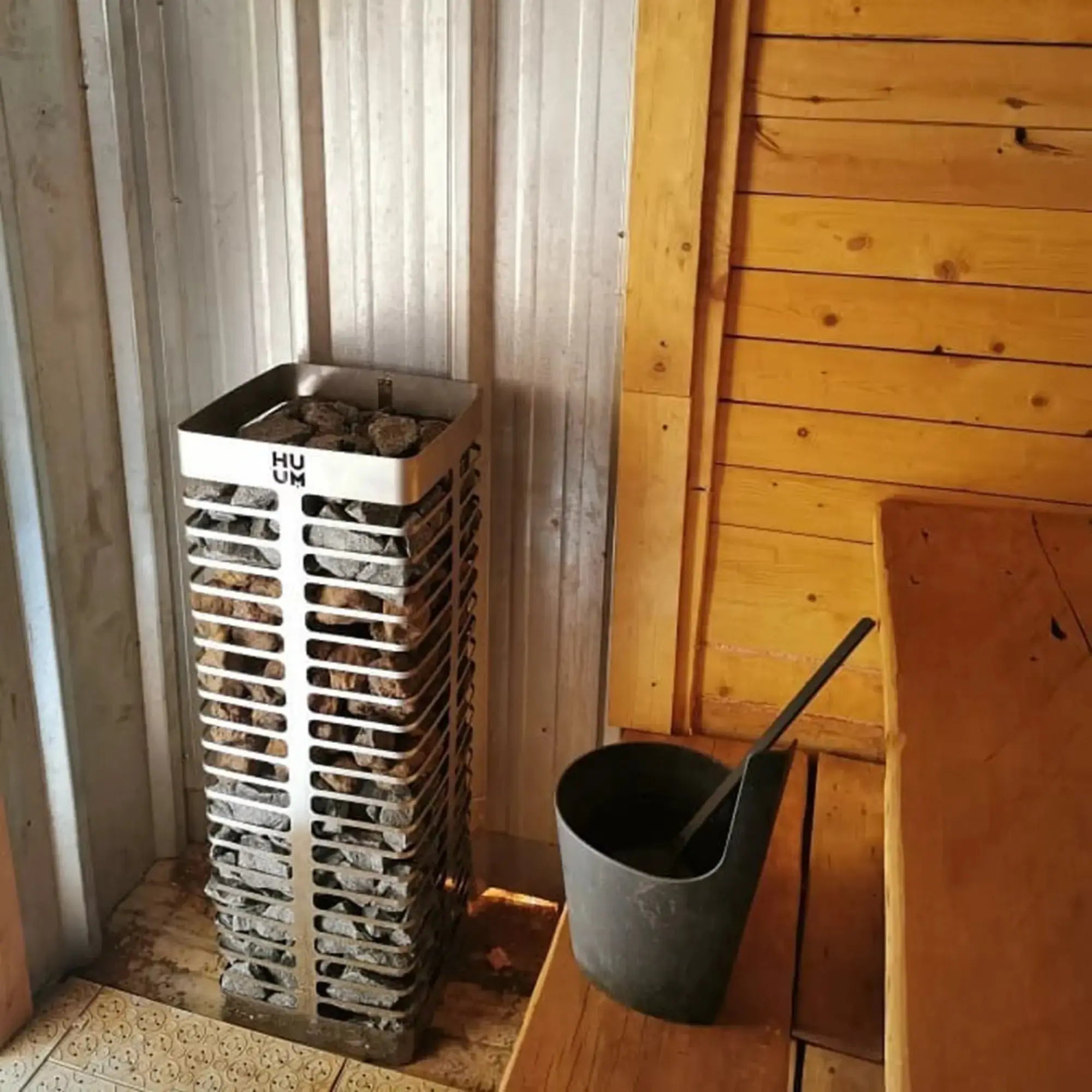
| HUUM Cliff 6 | 6 kW | 176 to 353 | 165 lb | 25 A |
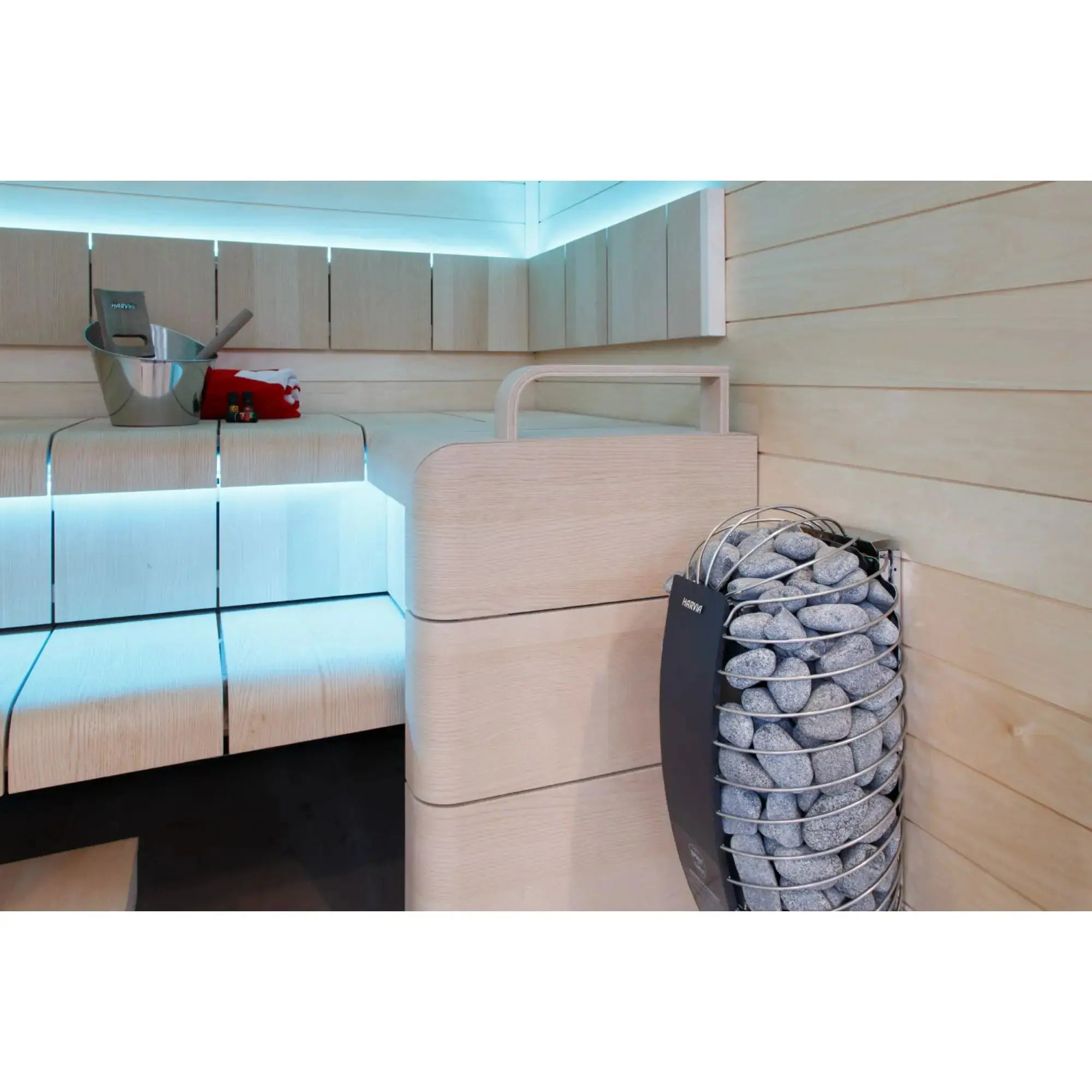
| Saunum Air 7 | 7 kW | 177 to 318 | 110 to 130 lb | 28.75 A |
| HUUM DROP 7 | 7.5 kW | 230 to 441 | 122 lb | 31.25 A |
| Harvia KIP80W | 8 kW | 250 to 425 | 44 lb | 33.3 A |
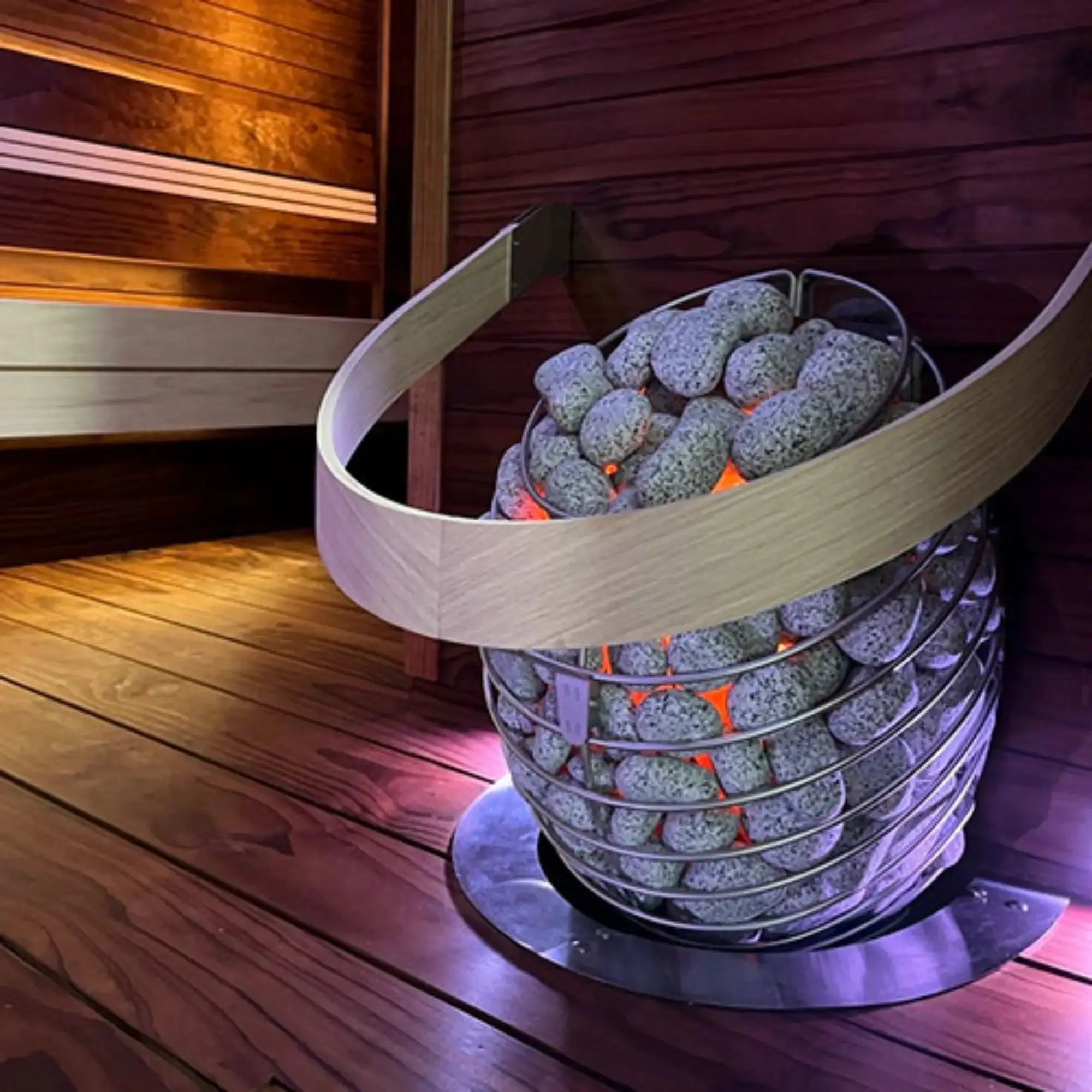
| HUUM DROP 9 | 9 kW | 282 to 530 | 122 lb | 37.5 A |
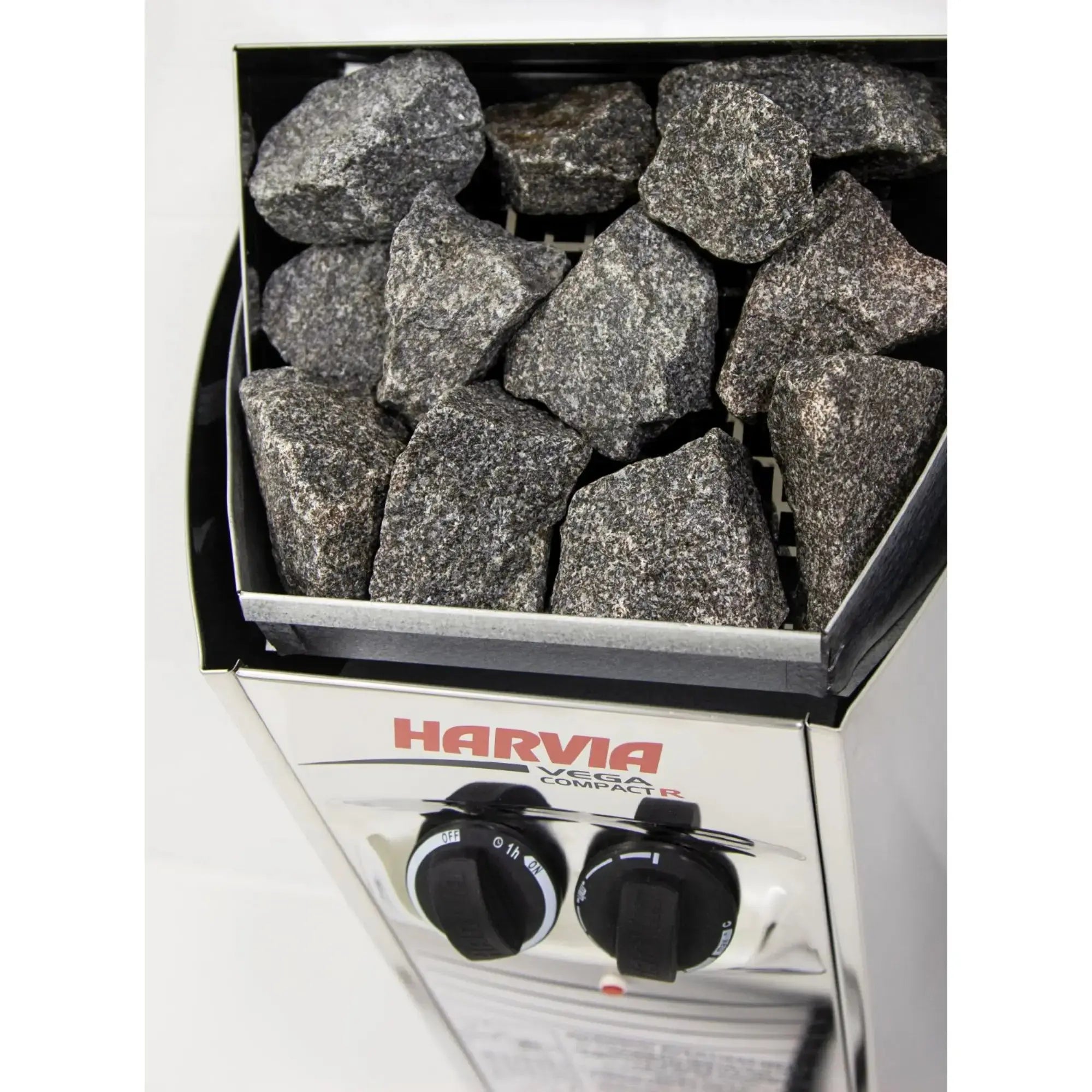
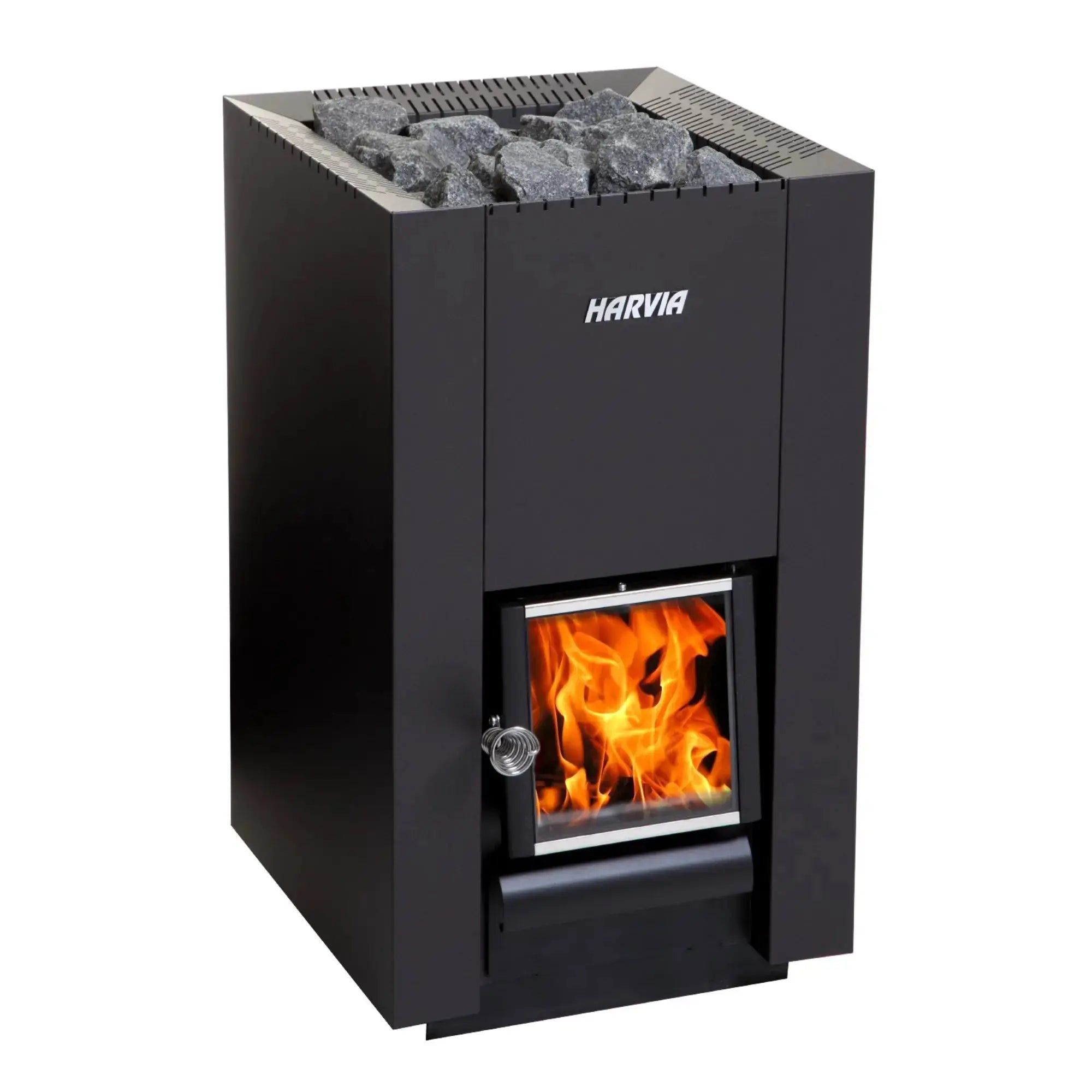
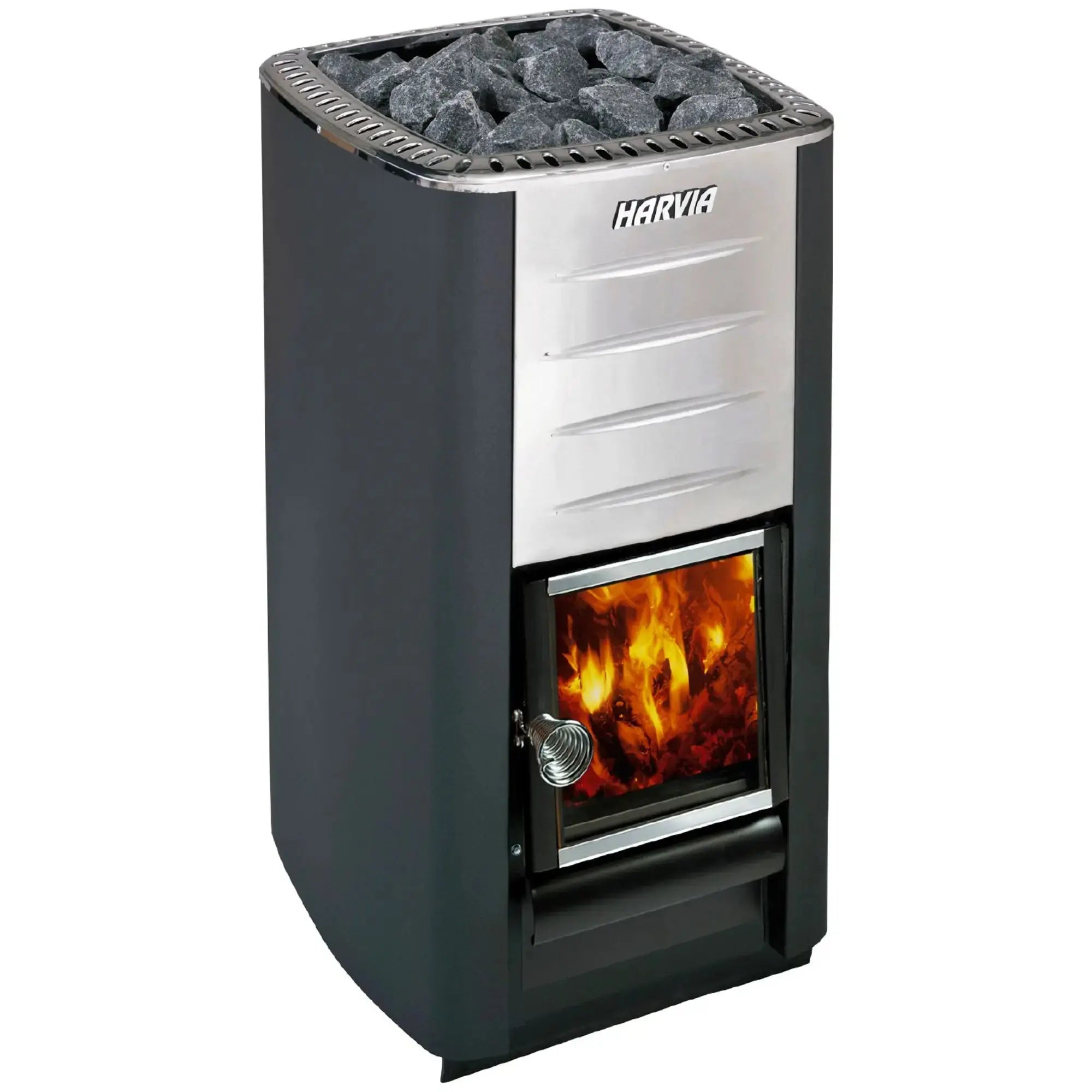
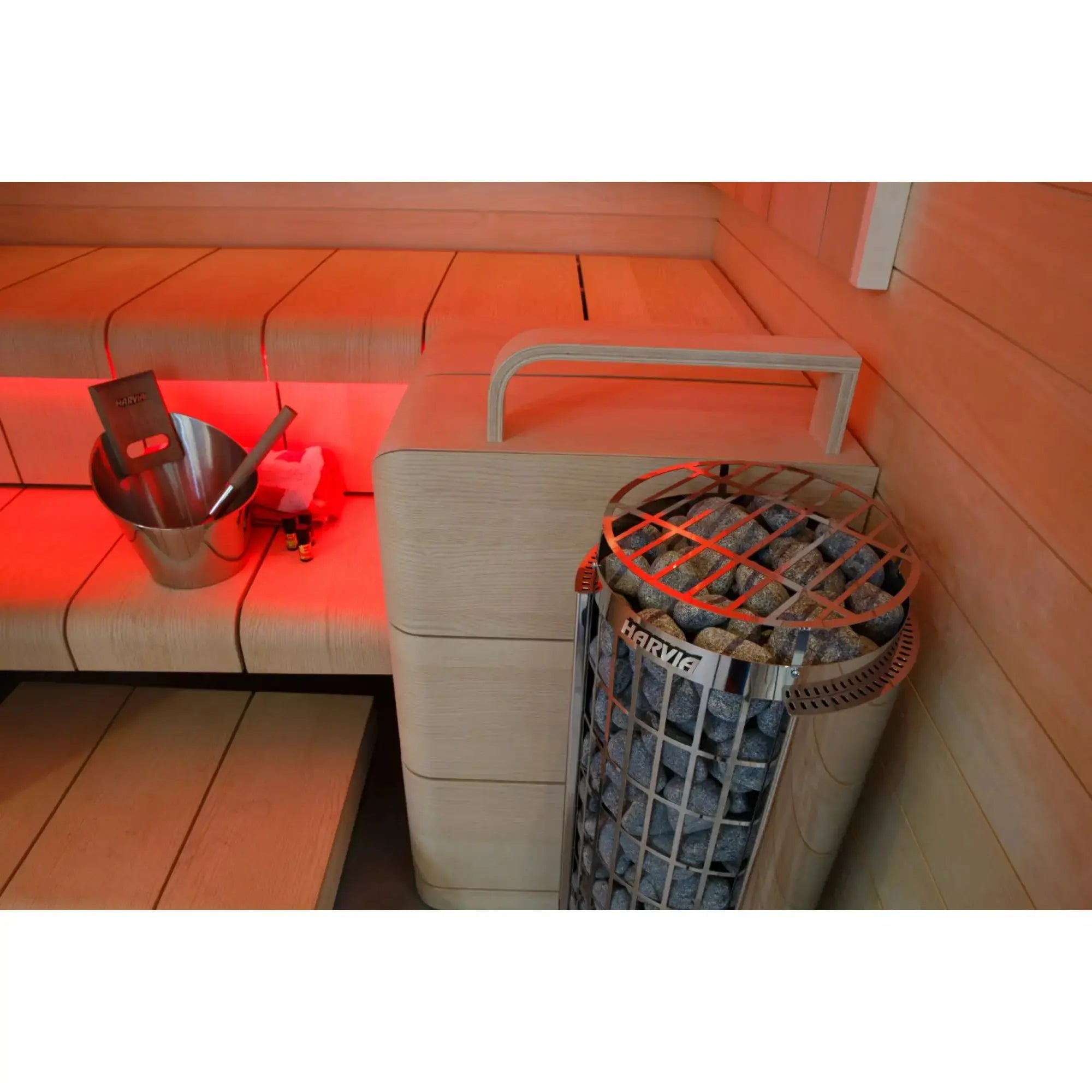
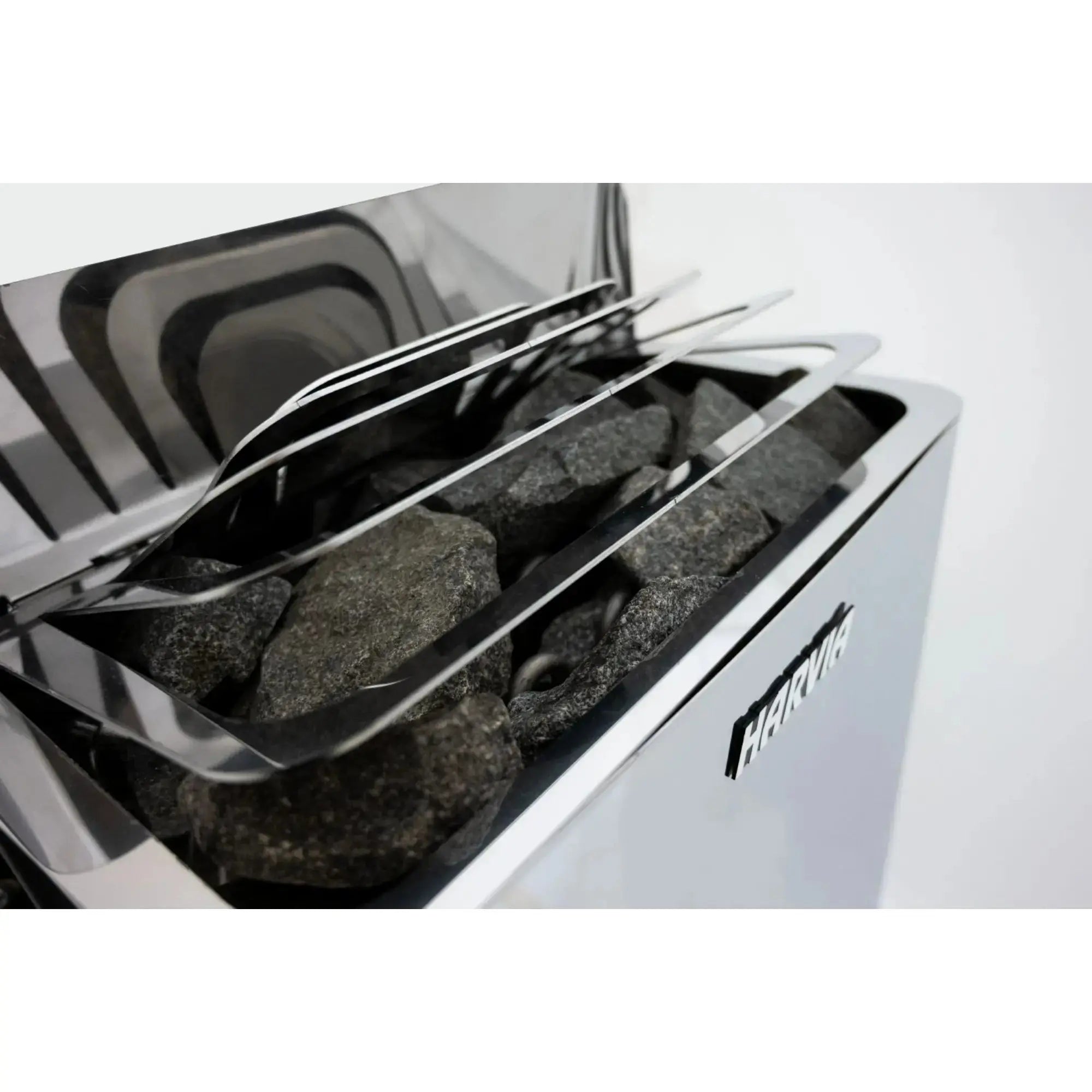
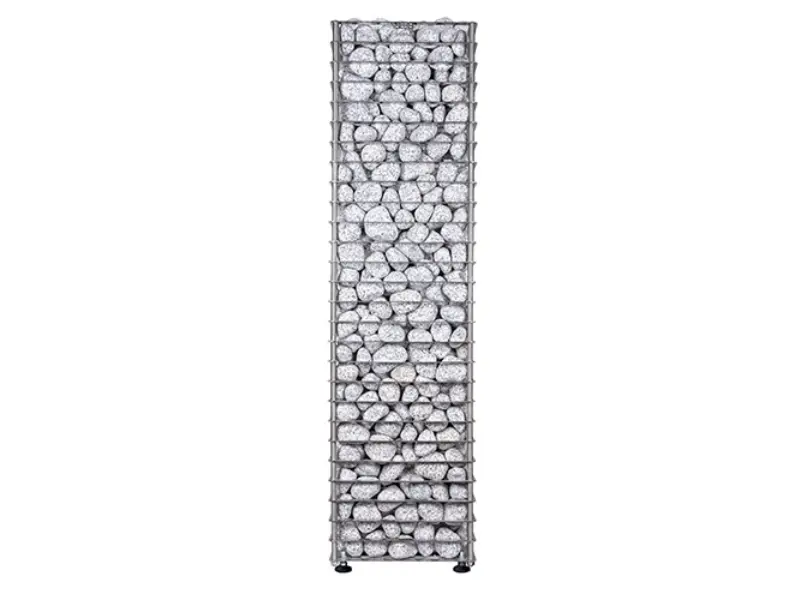
Two heaters with the same output publish different ranges, because they assume different insulation and hold different amounts of stone. A 6 kW Harvia KIP takes 44 lb of stone. A 6 kW HUUM Cliff takes 165 lb. That second number is what decides how the steam feels.

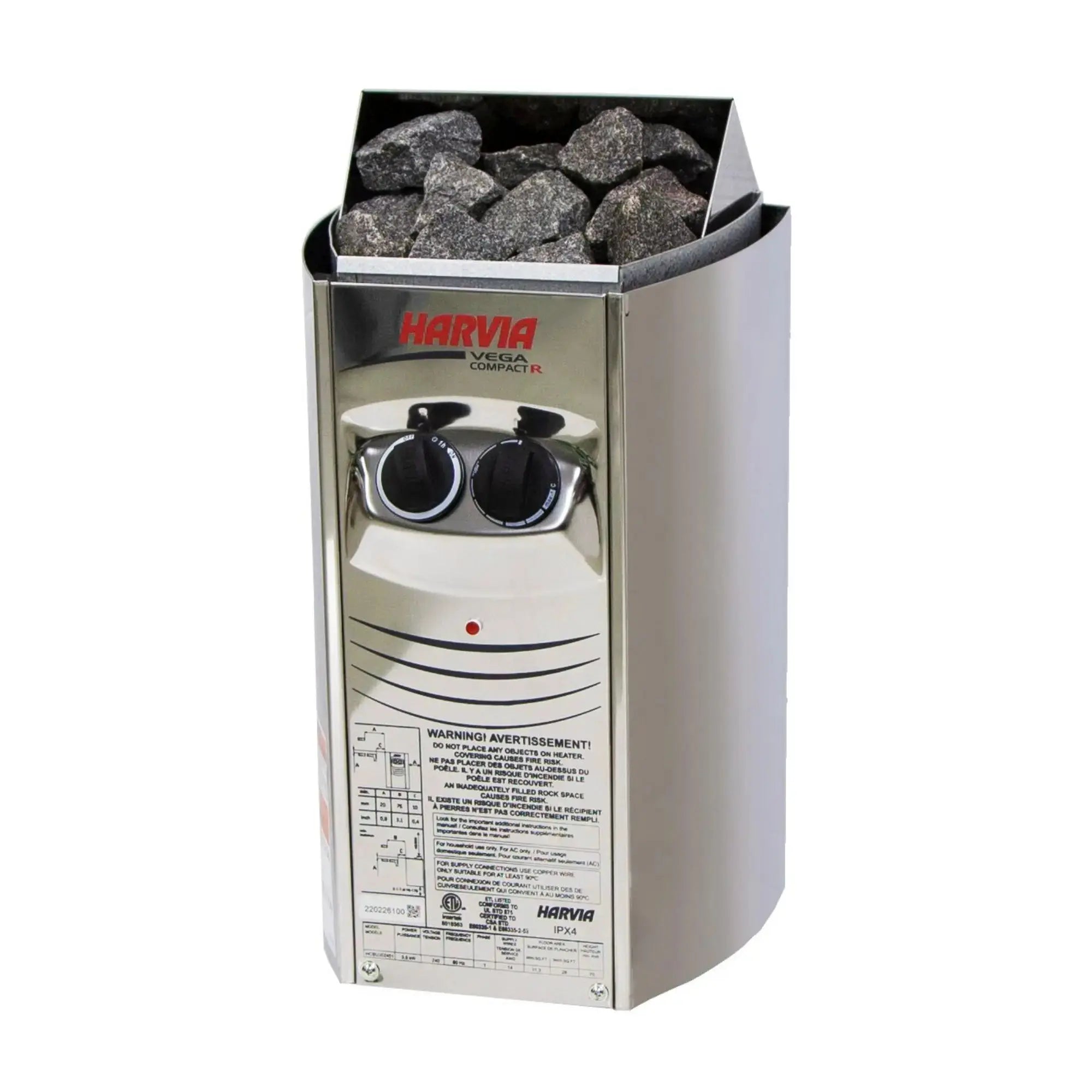
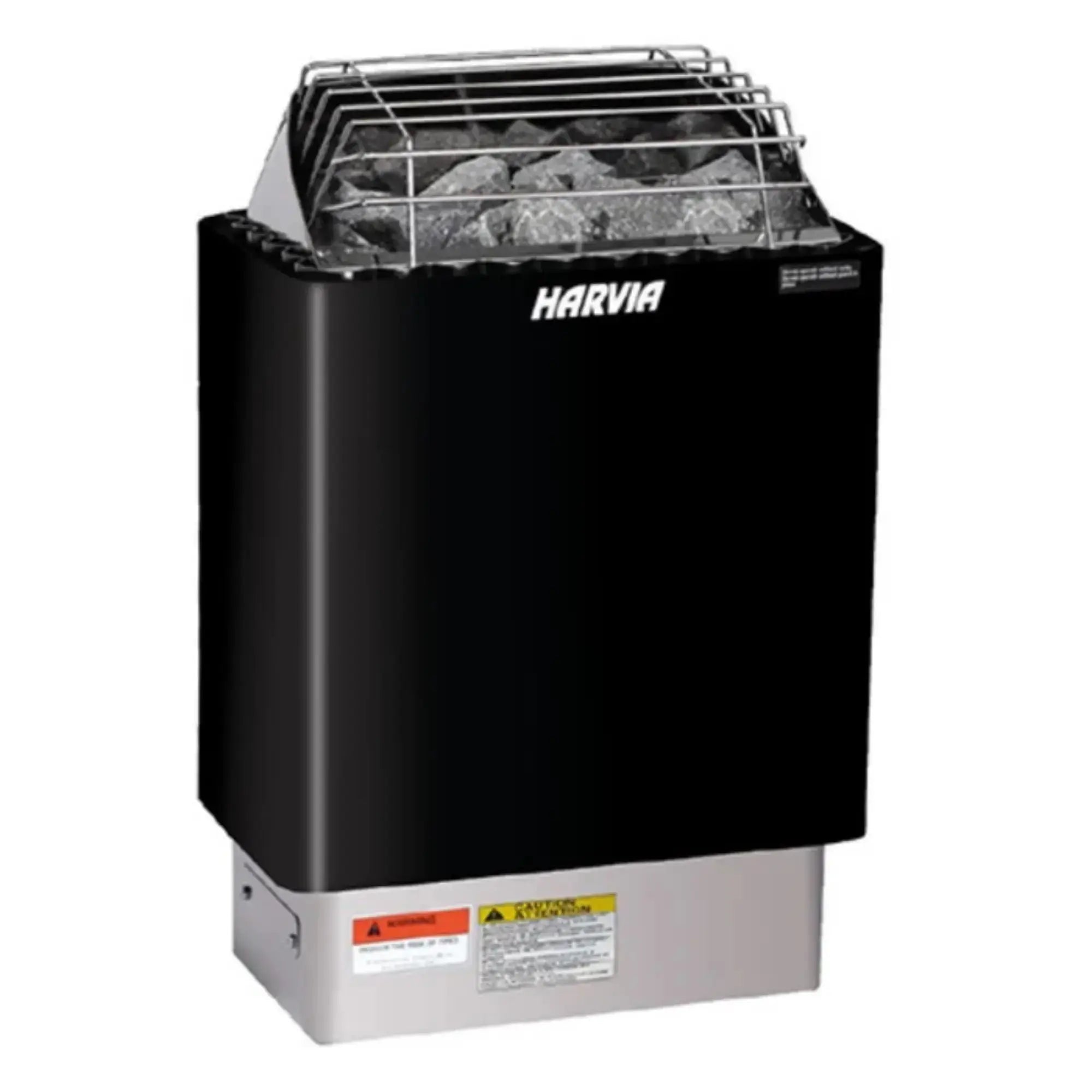
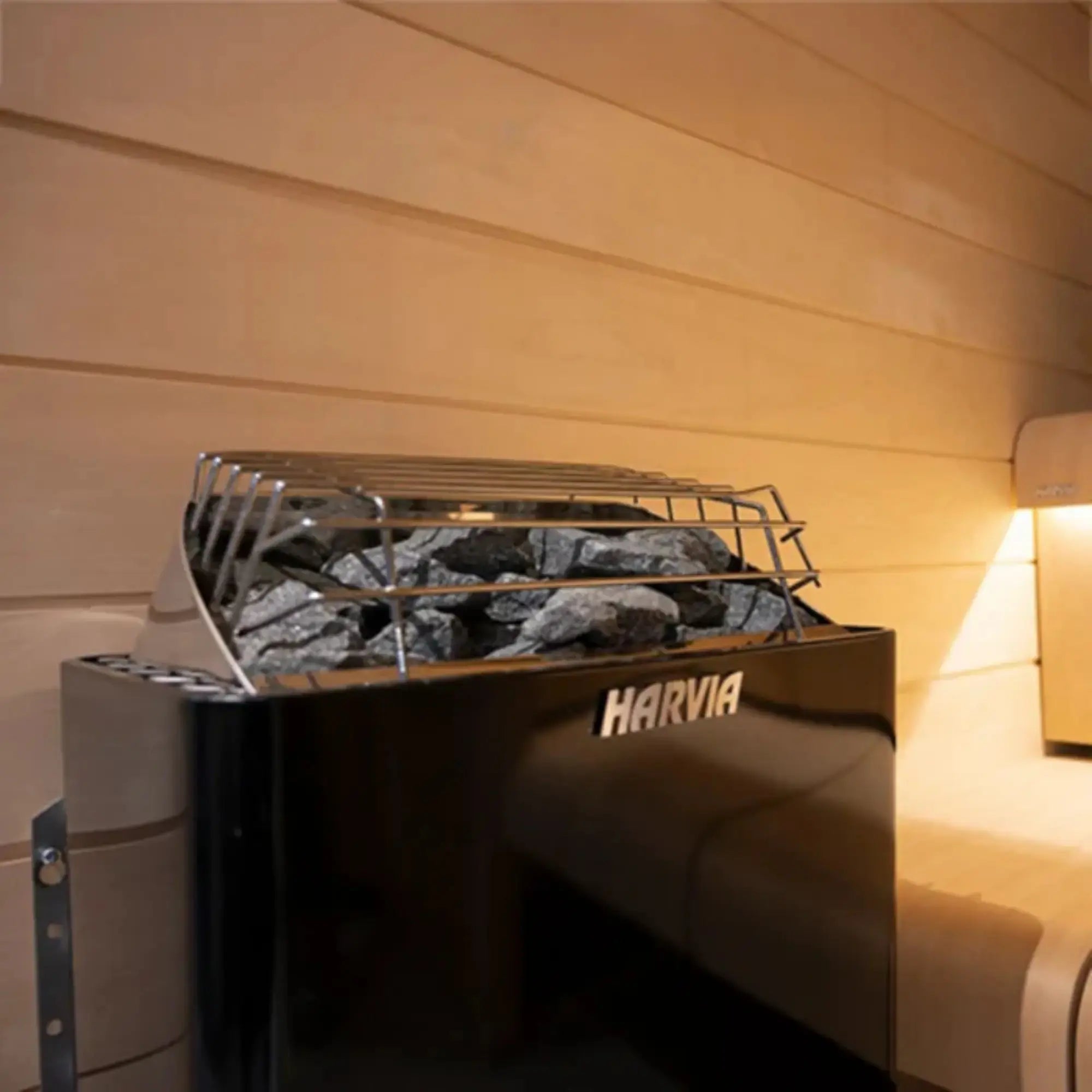
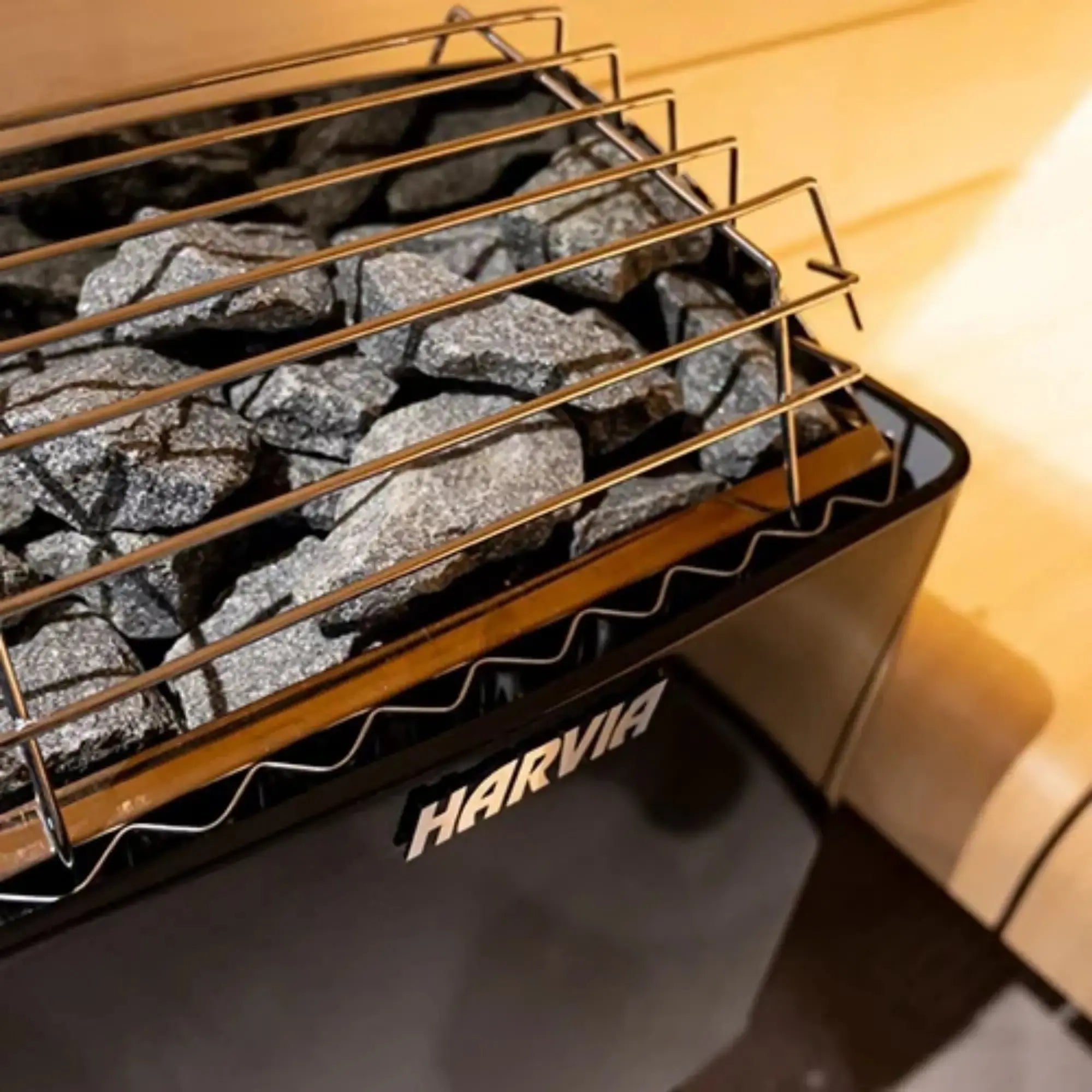
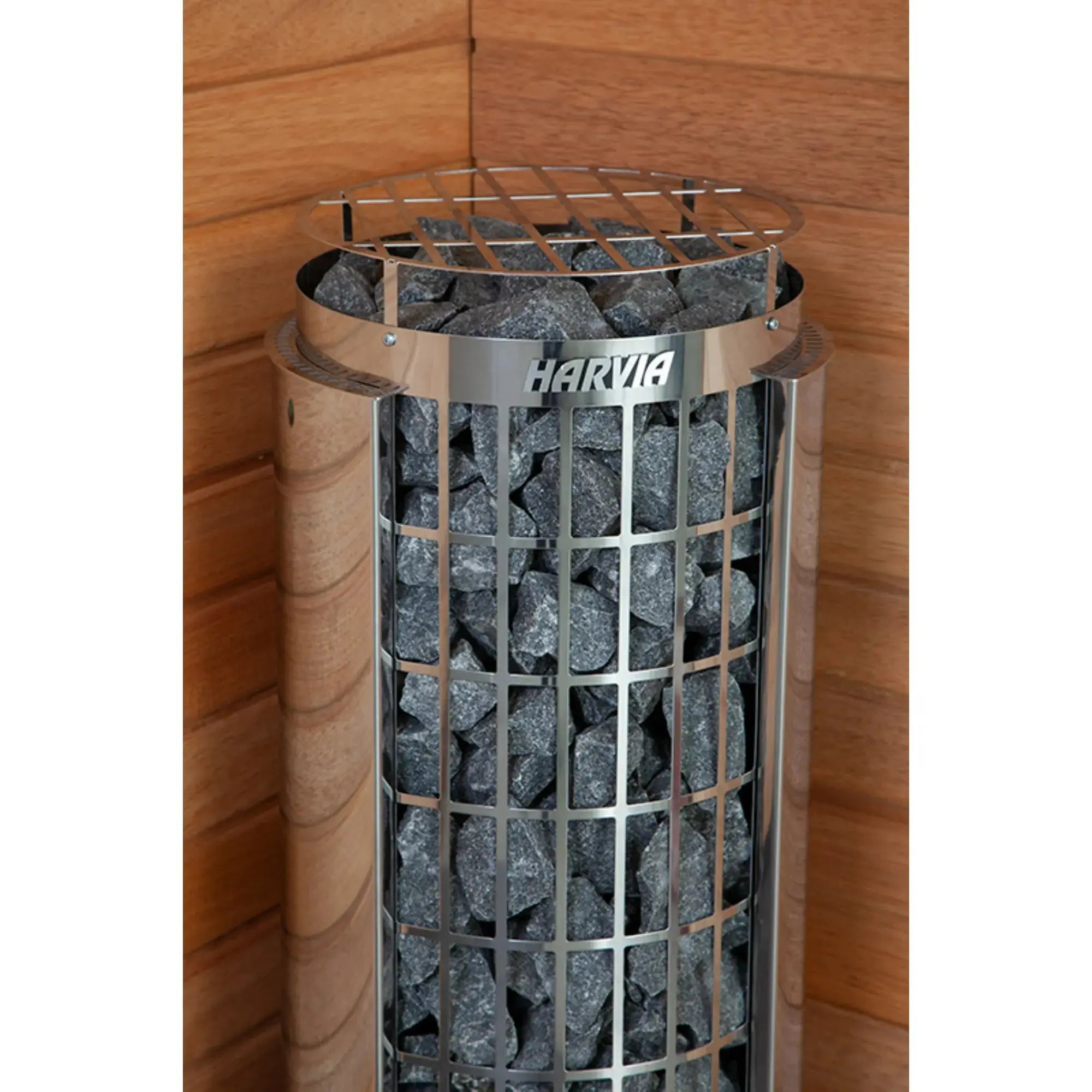
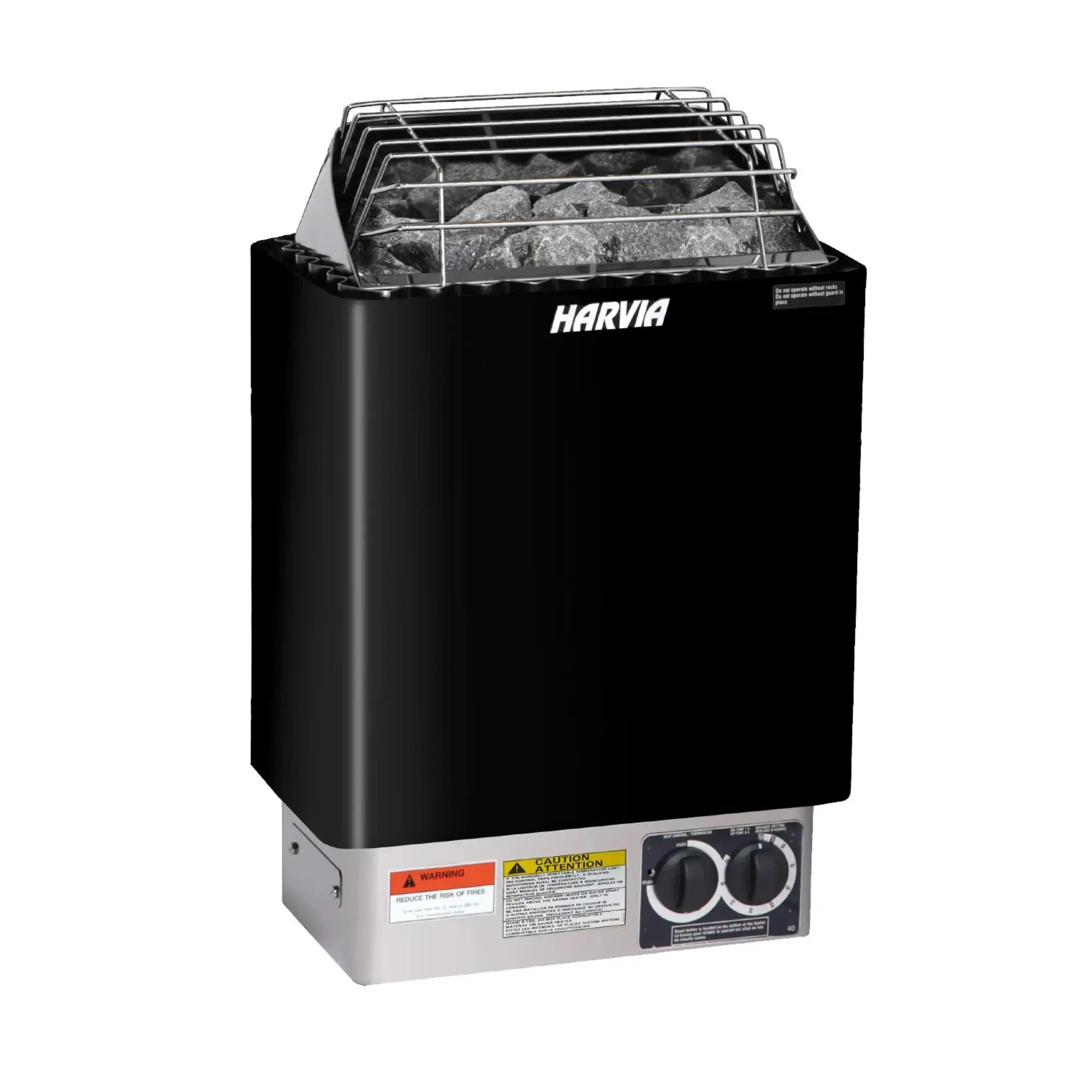
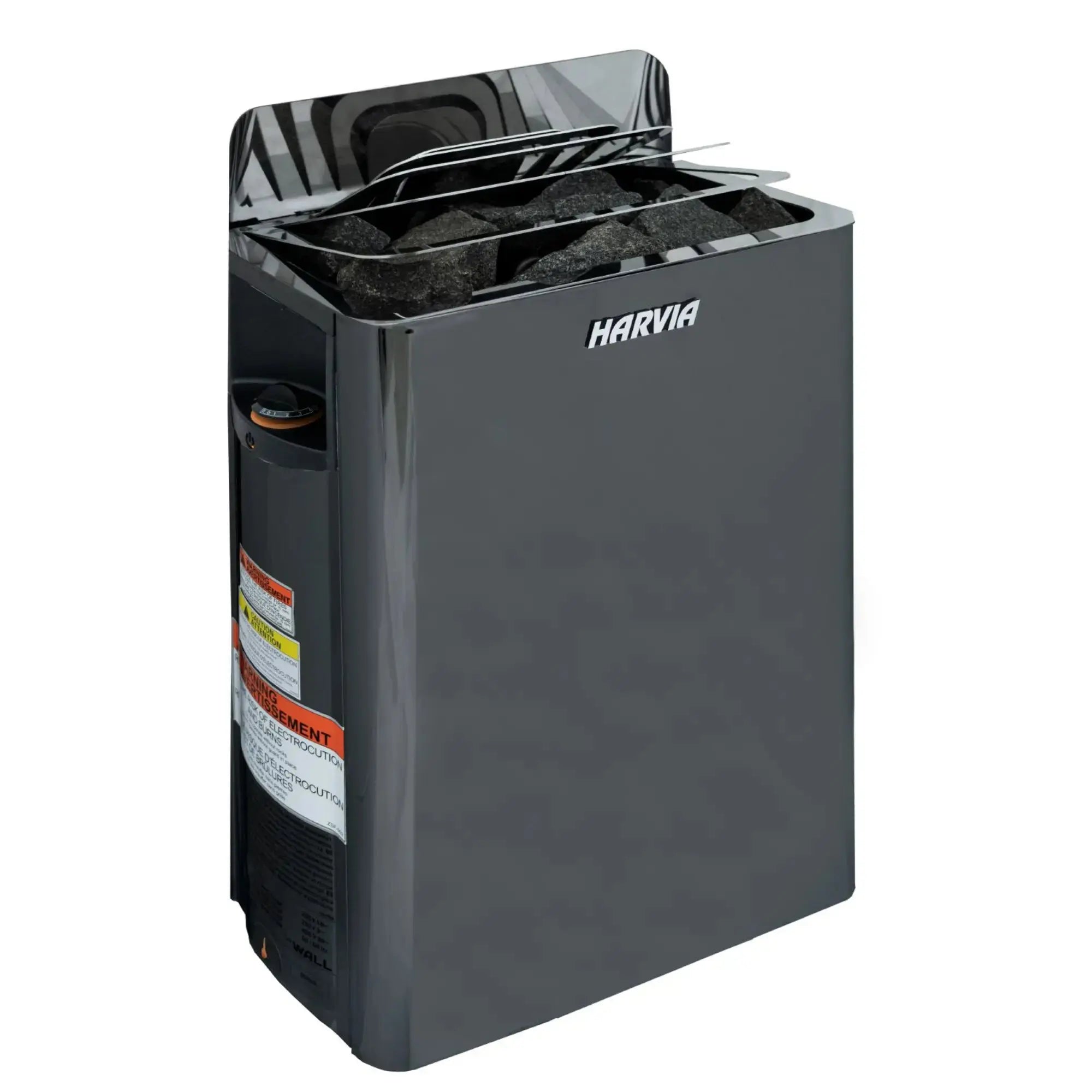
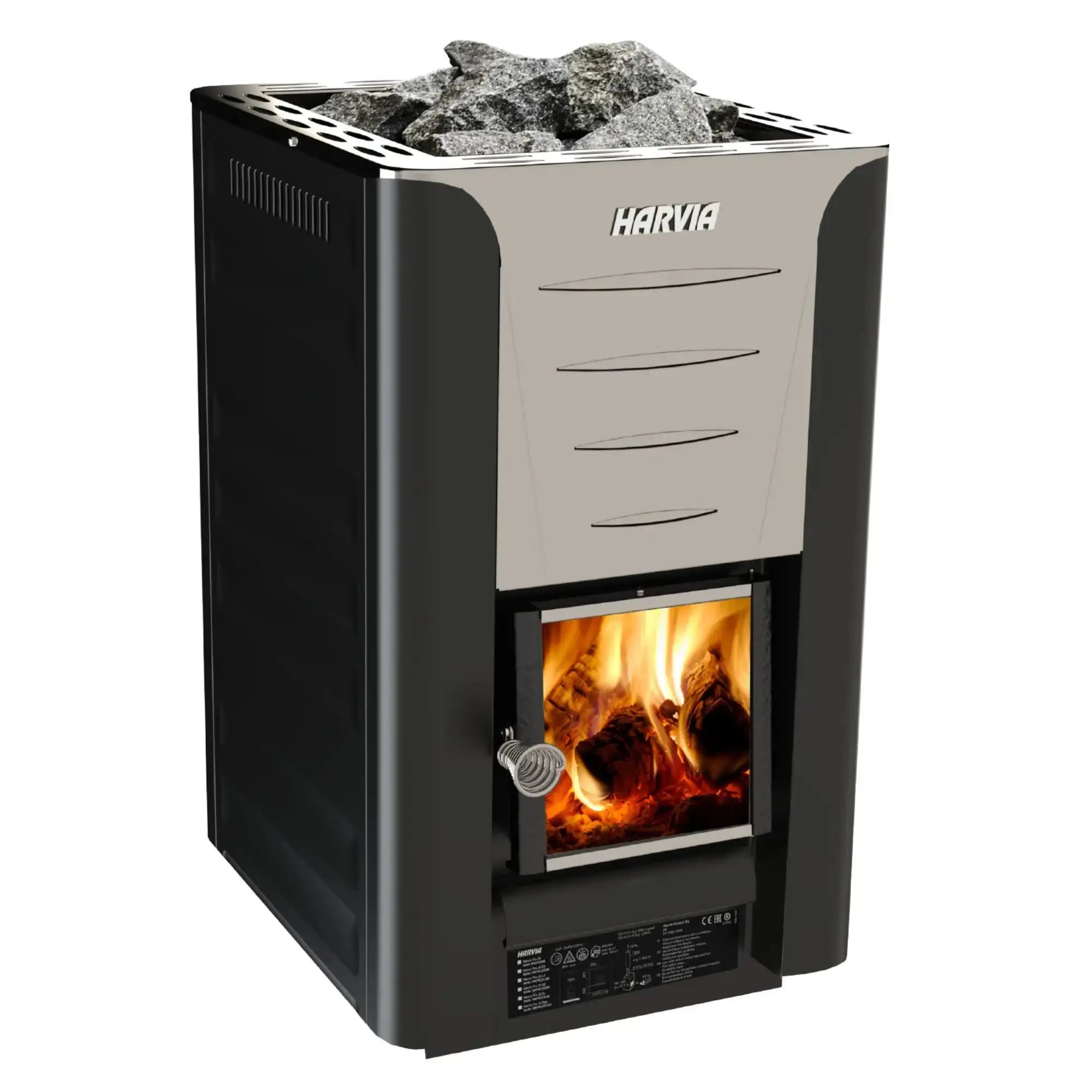
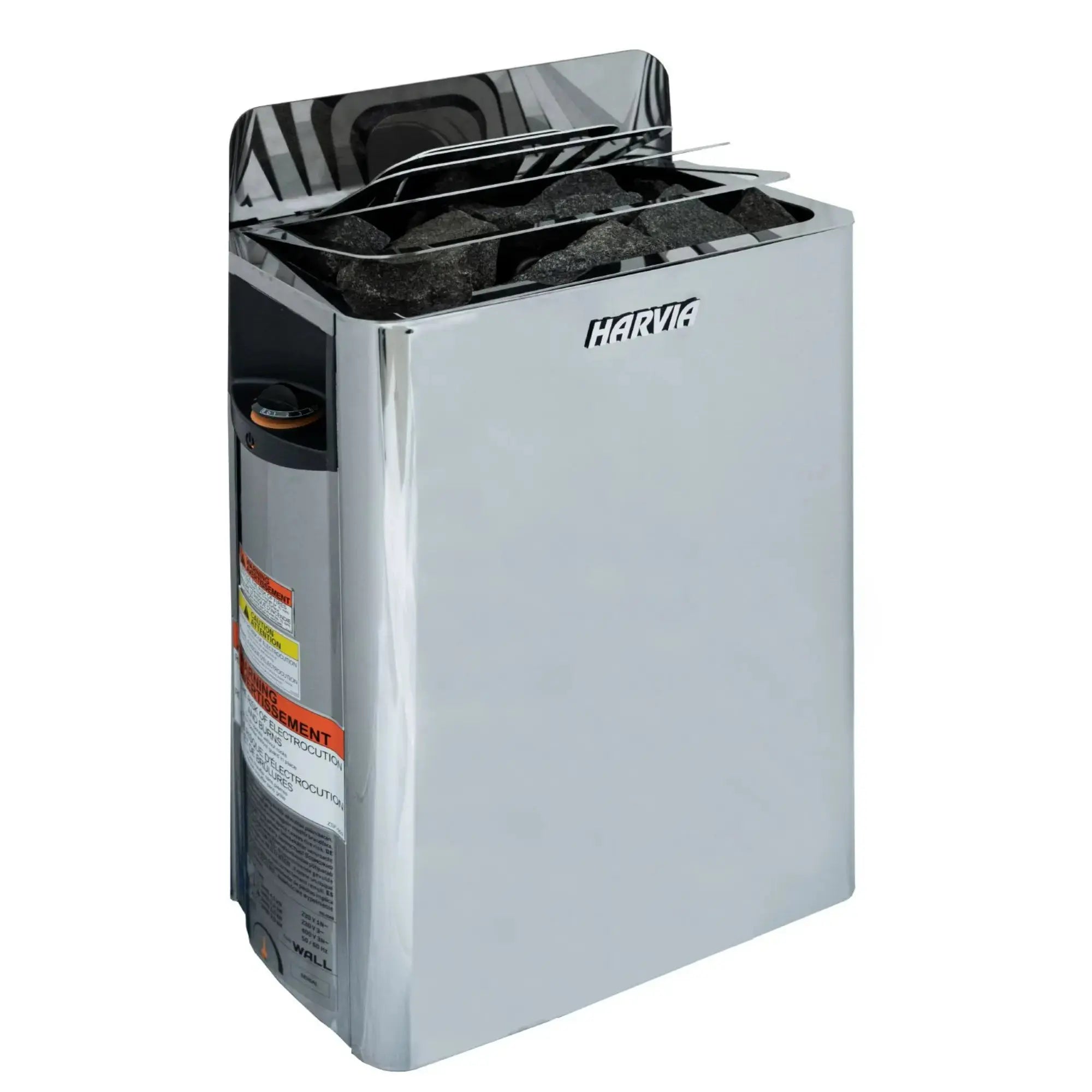
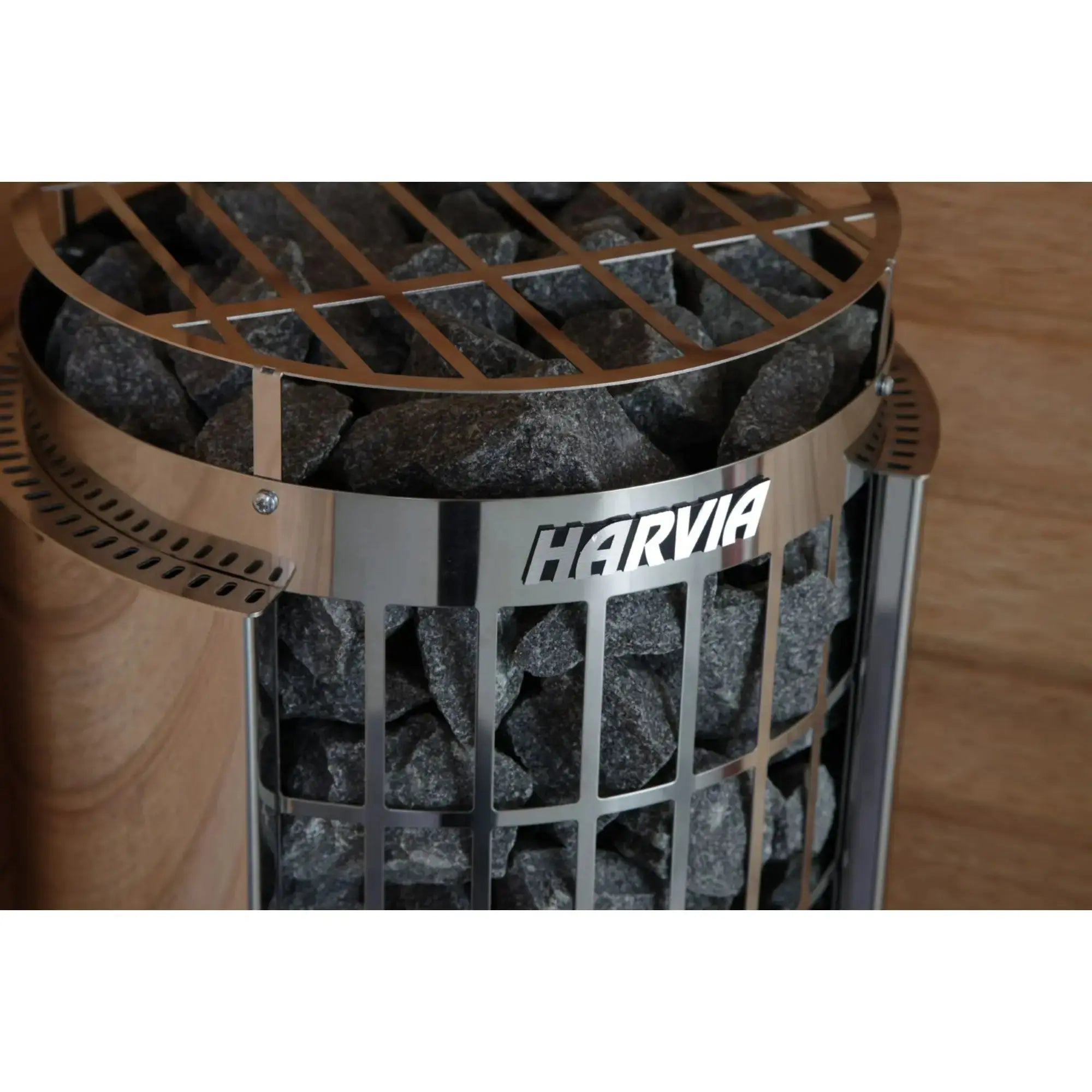
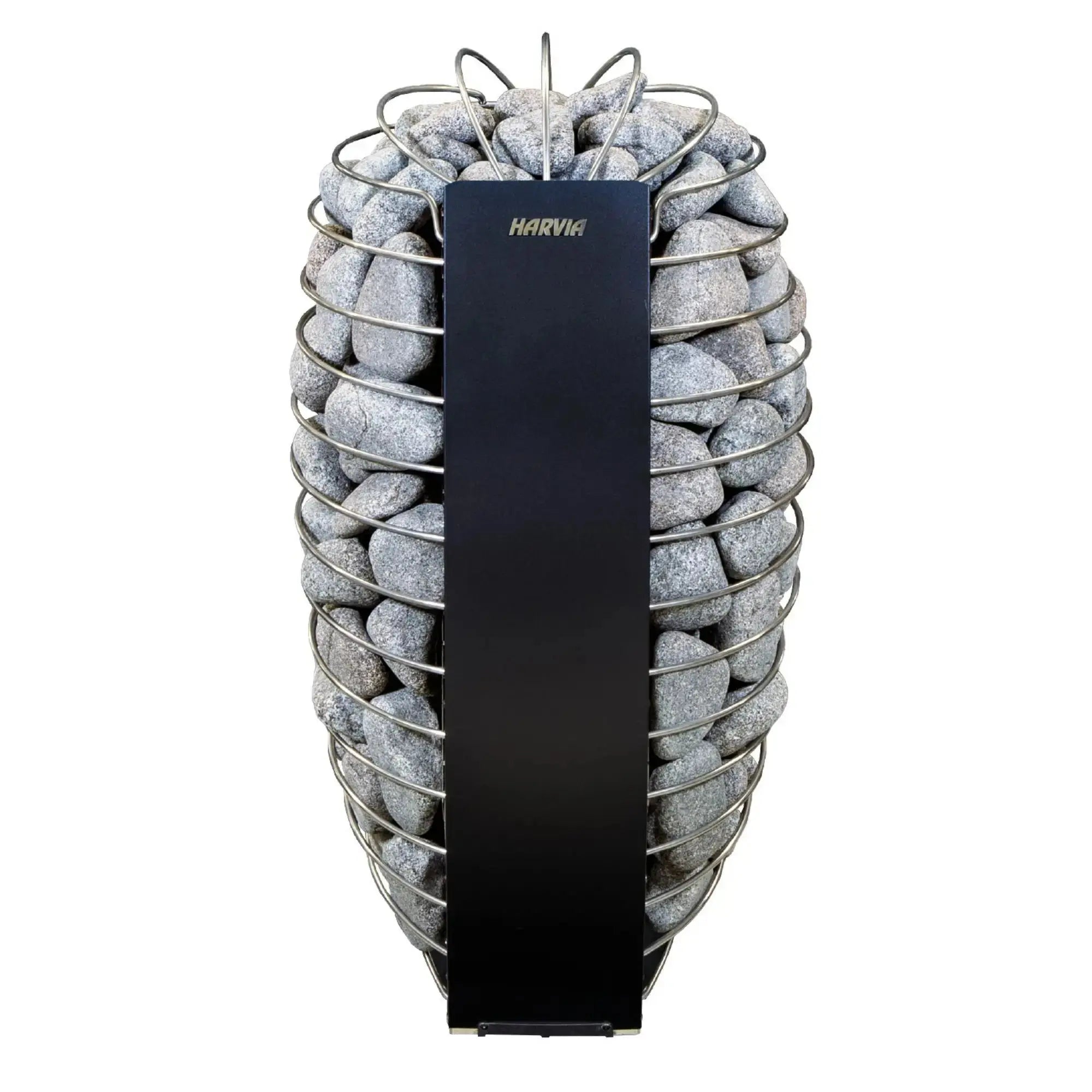
Rated for 100 to 210 adjusted cu ft at 18.8 A. Needs a Xenio CX170 control.
How do I calculate my room's adjusted cubic feet?
Here's the formula we use on every heater page:
Adjusted cu ft = (width x depth x height in feet) + 45 cu ft for every square foot of glass, tile, concrete or stone + 15 cu ft for every square foot of exposed log wall
Worked example one, the ordinary room. A 5 x 7 ft room with a 7 ft ceiling is 245 raw cubic feet. Add a 2 sq ft window, worth 90, and you're at 335. That sits inside the Harvia KIP80W range of 250 to 425 and the HUUM DROP 7 range of 230 to 441.
Worked example two, the one nobody publishes. A 6 x 7 ft room with a 7 ft ceiling is 294 raw cubic feet. Fit a full glass door of about 12 sq ft and the formula adds 540. That takes you to 834 adjusted cu ft.
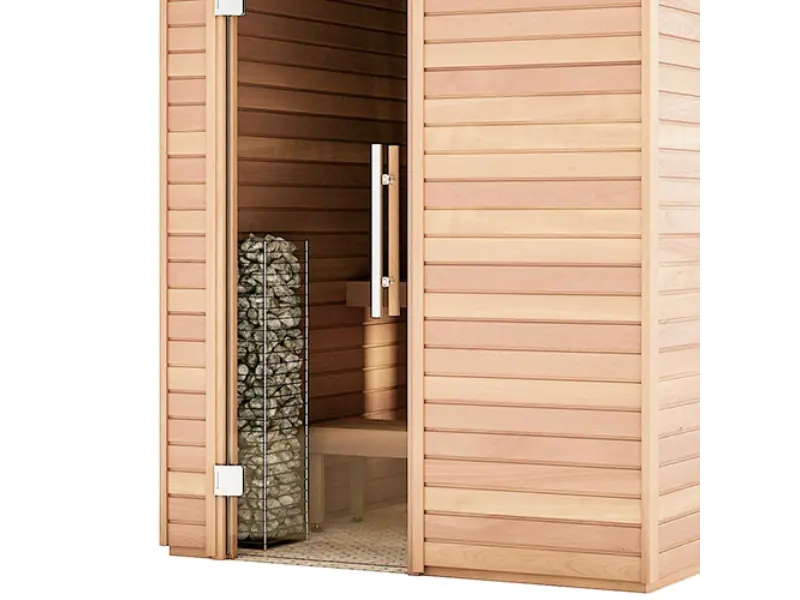
834 is past every heater we stock, including the 9 kW HUUM DROP 9 and its published ceiling of 530. You have two real options. You can cut the glazed area down, swapping a full glass door for a half glass door or a vision panel, or you can run the numbers with us. A big glass wall is a design choice that adds to your heating bill.


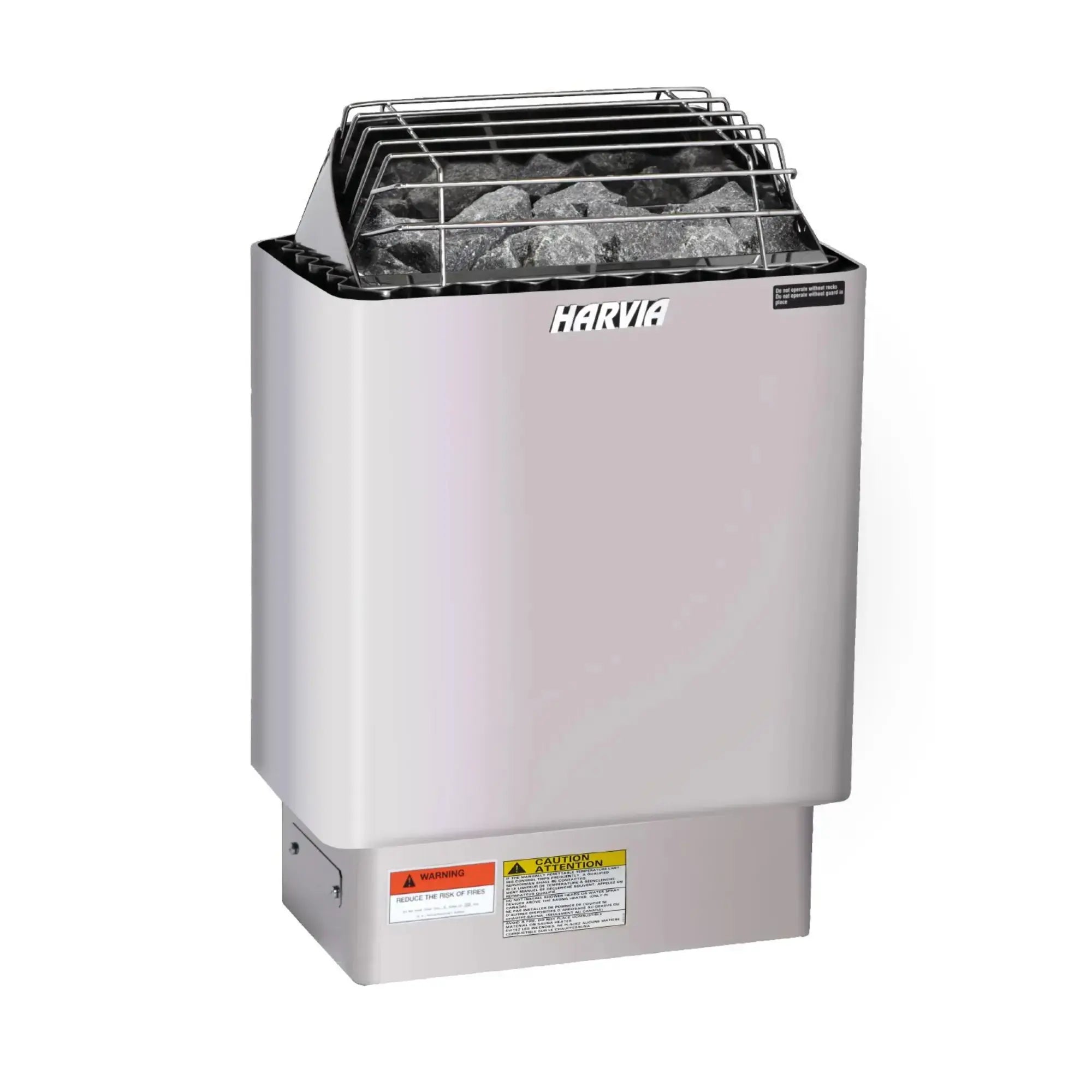
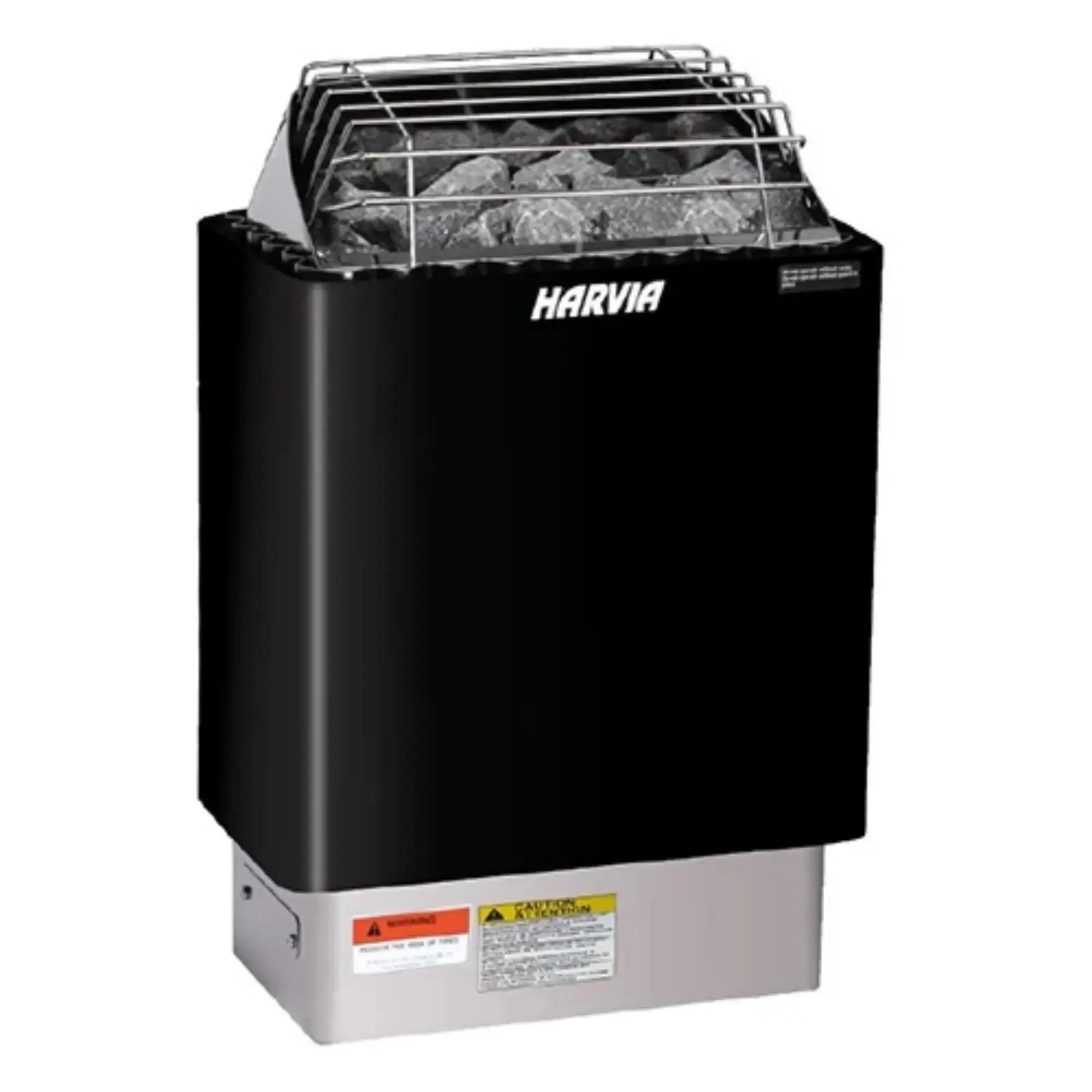
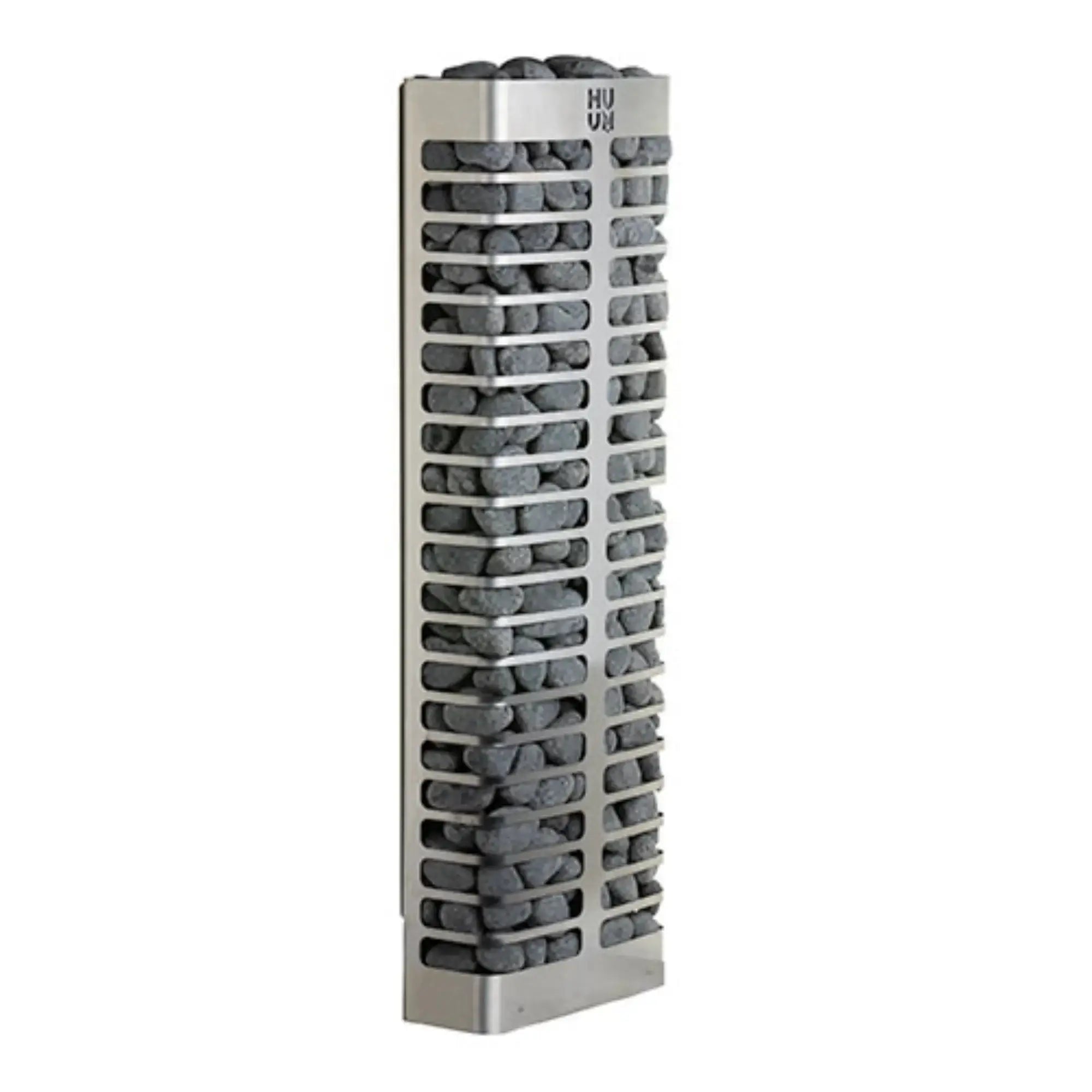
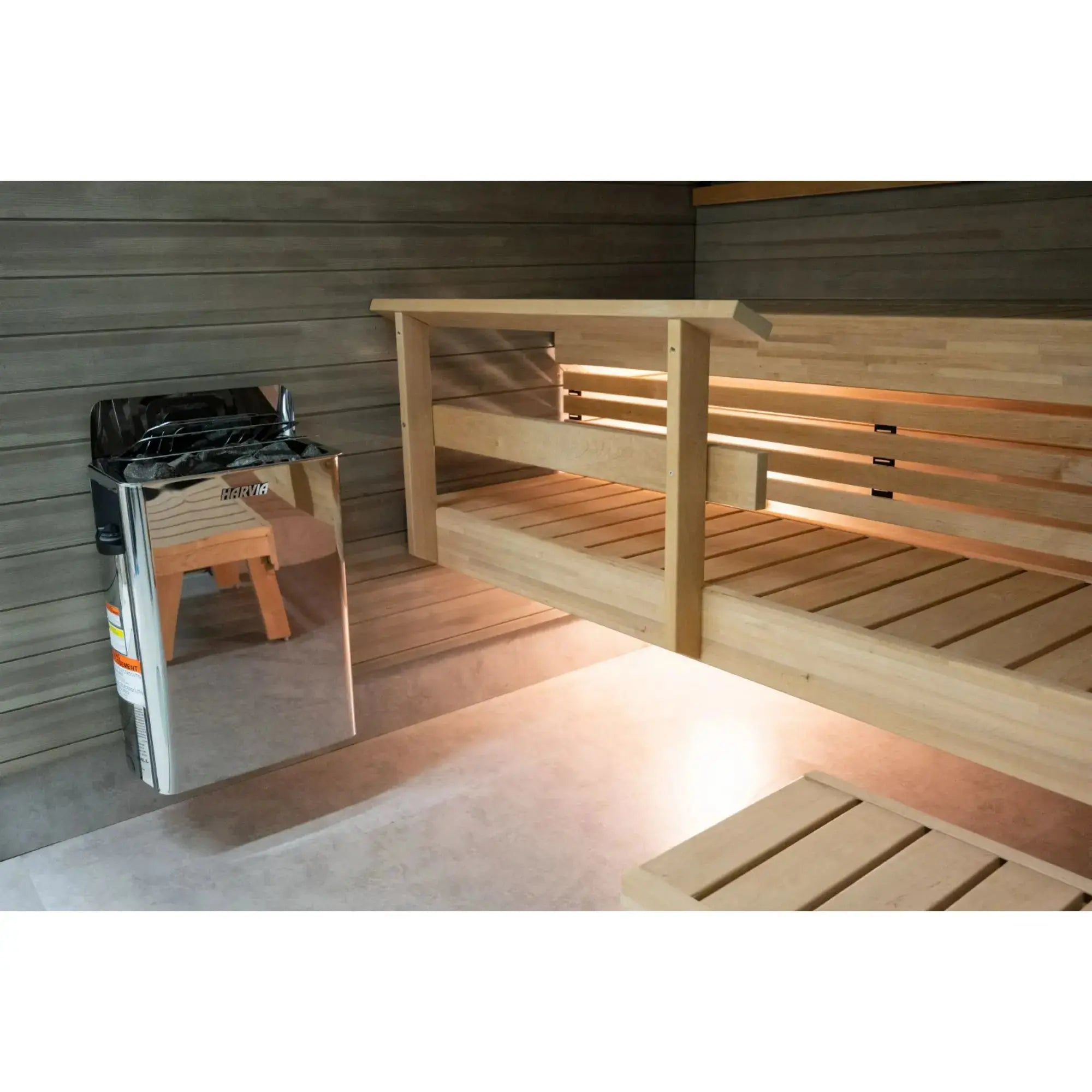
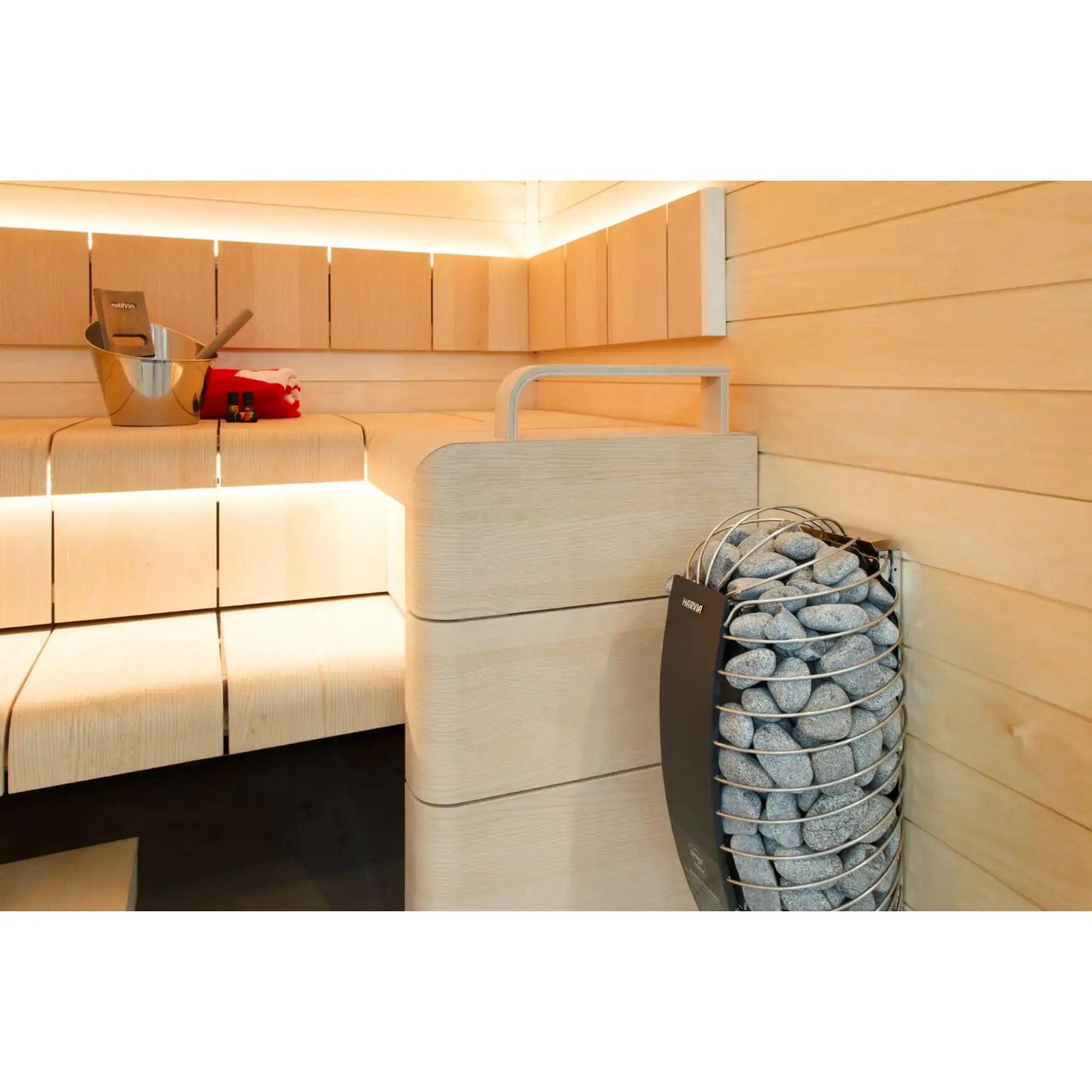
170 to 300 adjusted cu ft. 25 A rated, 30 A line fuse, 240V single phase. Two finishes: stainless steel from $1,010, graphite black $1,092.
Why does sauna heater sizing give different answers?
Because there's no single published rule, and the manufacturers don't agree. Here's what happens when you run one 350 cubic foot room through four published methods.
| Published method | What it says | Answer for a 350 cu ft room |
|---|---|---|
| HUUM's published baseline | 1 kW per 35 cu ft | 10 kW |
| HUUM's own model ranges | DROP 7 at 7.5 kW is rated 230 to 441 cu ft | 7.5 kW, mid range |
| Harvia's model ranges | KIP80W at 8 kW is rated 250 to 425 cu ft | 8 kW |
| EOS | Sizes by floor area at a 6.2 ft ceiling, not by volume | About 56 sq ft of floor, past what its 6 kW model covers |
The same room gets answers from 7.5 kW to 10 kW, and the widest gap is inside one manufacturer's own documents. HUUM's baseline of 1 kW per 35 cubic feet assumes nothing about build quality, so it still works for a cabin with cold air on all six sides. Its model ranges assume a normally insulated room. Both are honest. They just answer different questions.
EOS doesn't use volume at all. It rates by floor area at a 6.2 ft ceiling, so the unit of measurement changes, not just the divisor. Convert first before you compare a German spec sheet to a Finnish one.
Our product pages use adjusted cubic feet instead of a flat divisor, because a divisor hides the thing that matters most. Cold mass inside the hot room, such as glass, tile, concrete and stone, absorbs heat for the whole session. You have to put that into the volume number first, or a model's published range doesn't tell you much.
Why is 9 kW the practical ceiling in North America?
Not because bigger elements don't exist. The limit is electrical. Our electric range stops at 9 kW, and in practice so does single phase North American supply. A 9 kW heater is rated at 37.5 A, which is already most of what a residential double pole circuit is asked to carry. Go above that and you're into three phase supply, a second circuit, or a service upgrade.
This is why a sizing rule that gives you 12 kW is a problem on paper long before it's a problem in the yard. If you get a number above 9 kW, read it alongside our guide to sauna heater installation. Your panel decides whether that heater is an option for you at all.
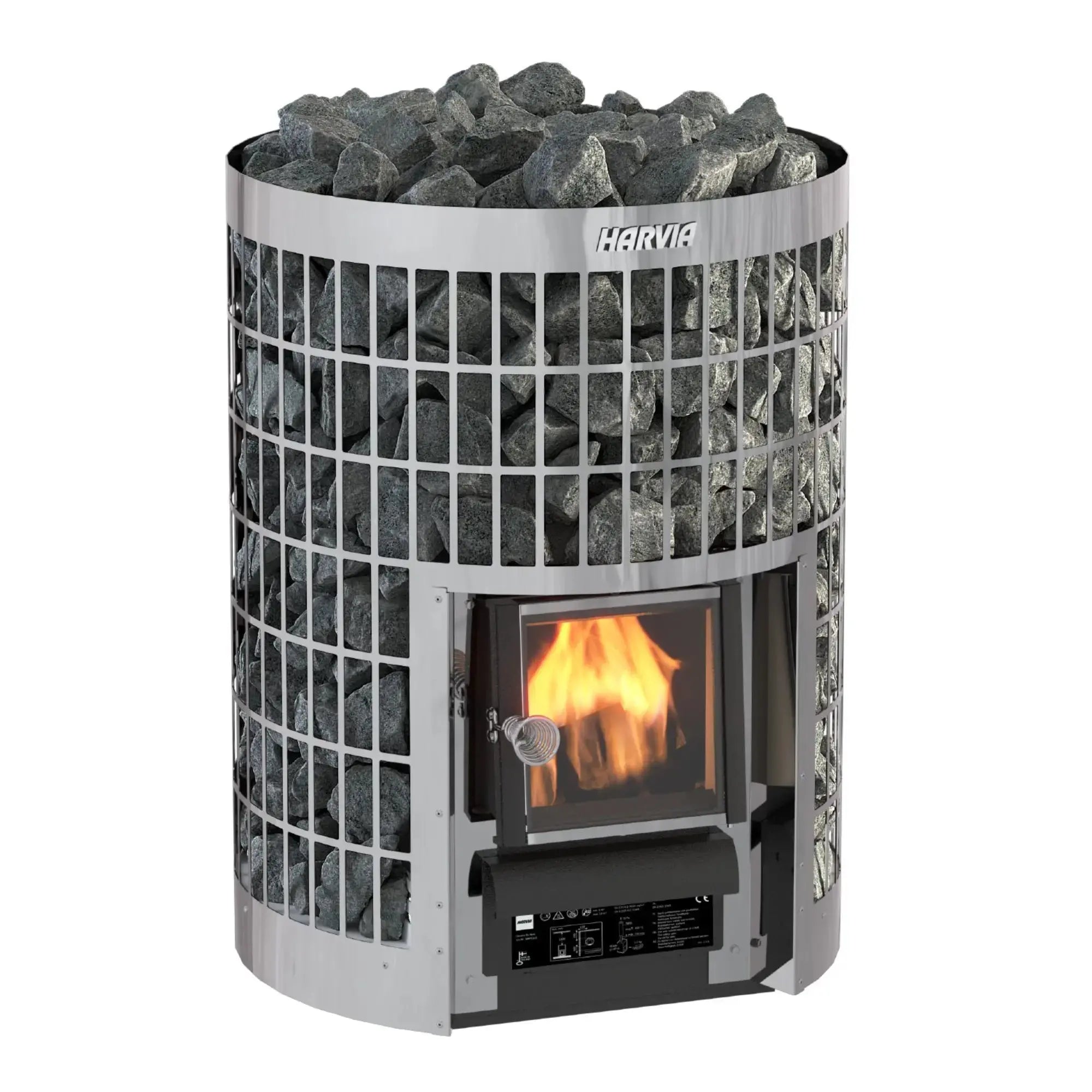
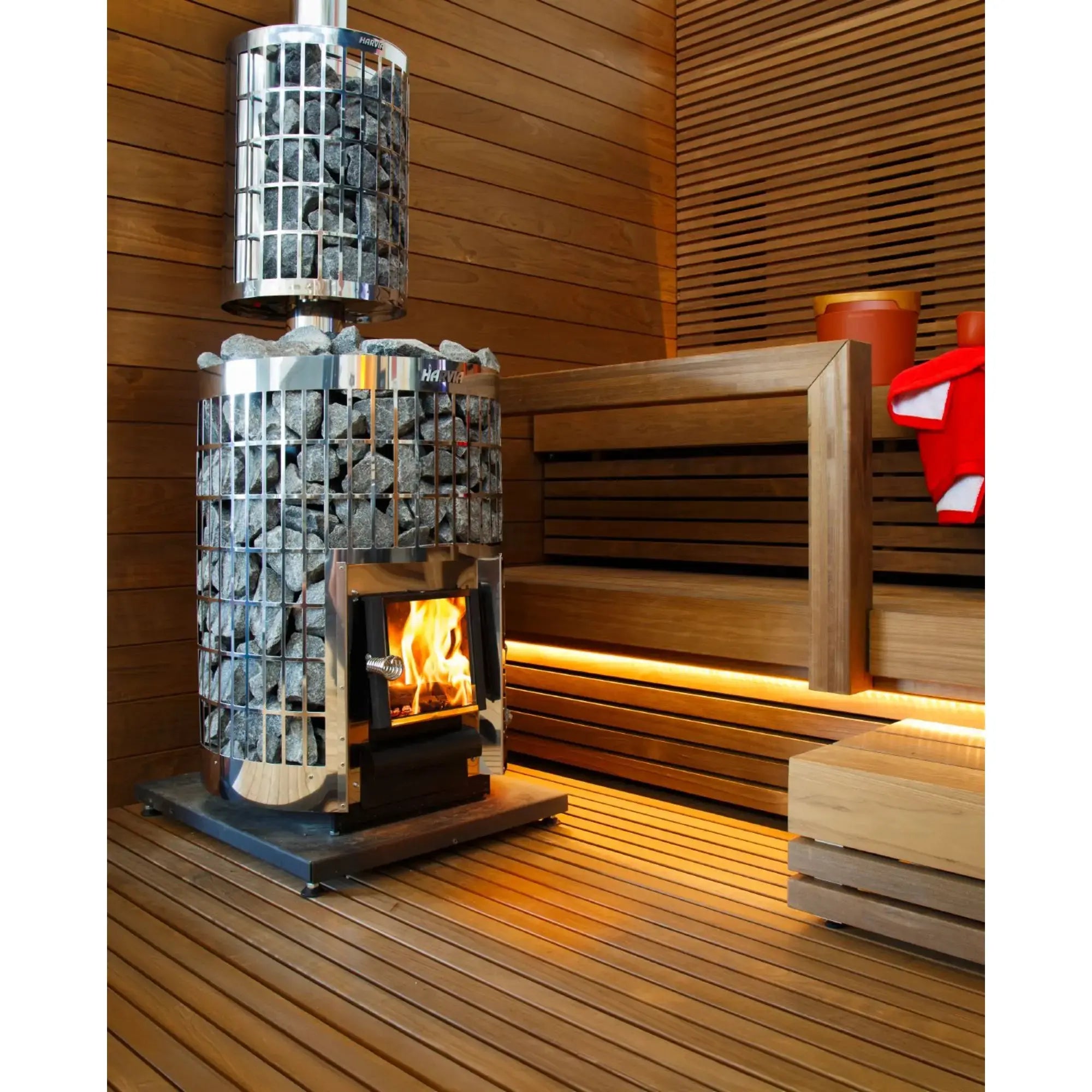
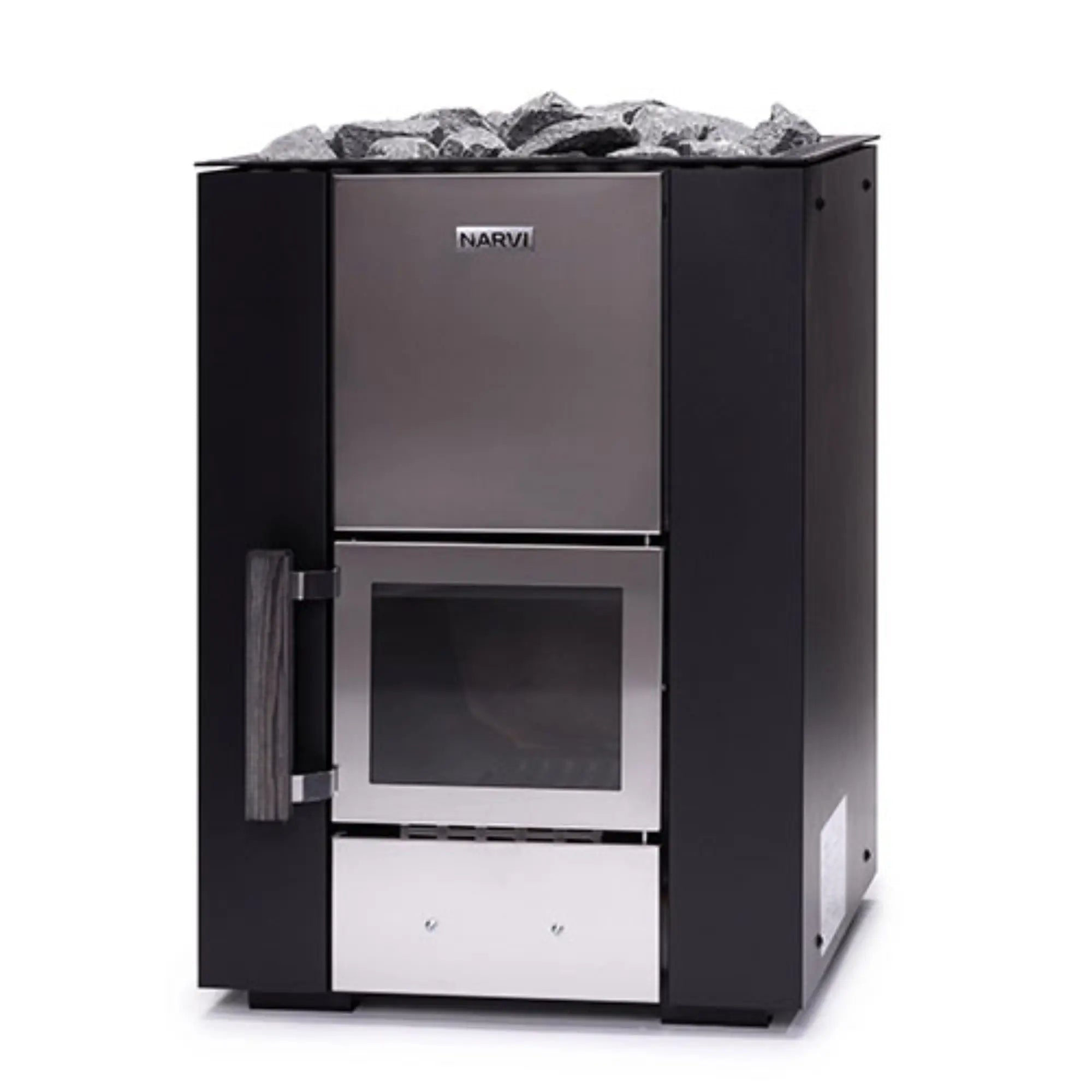
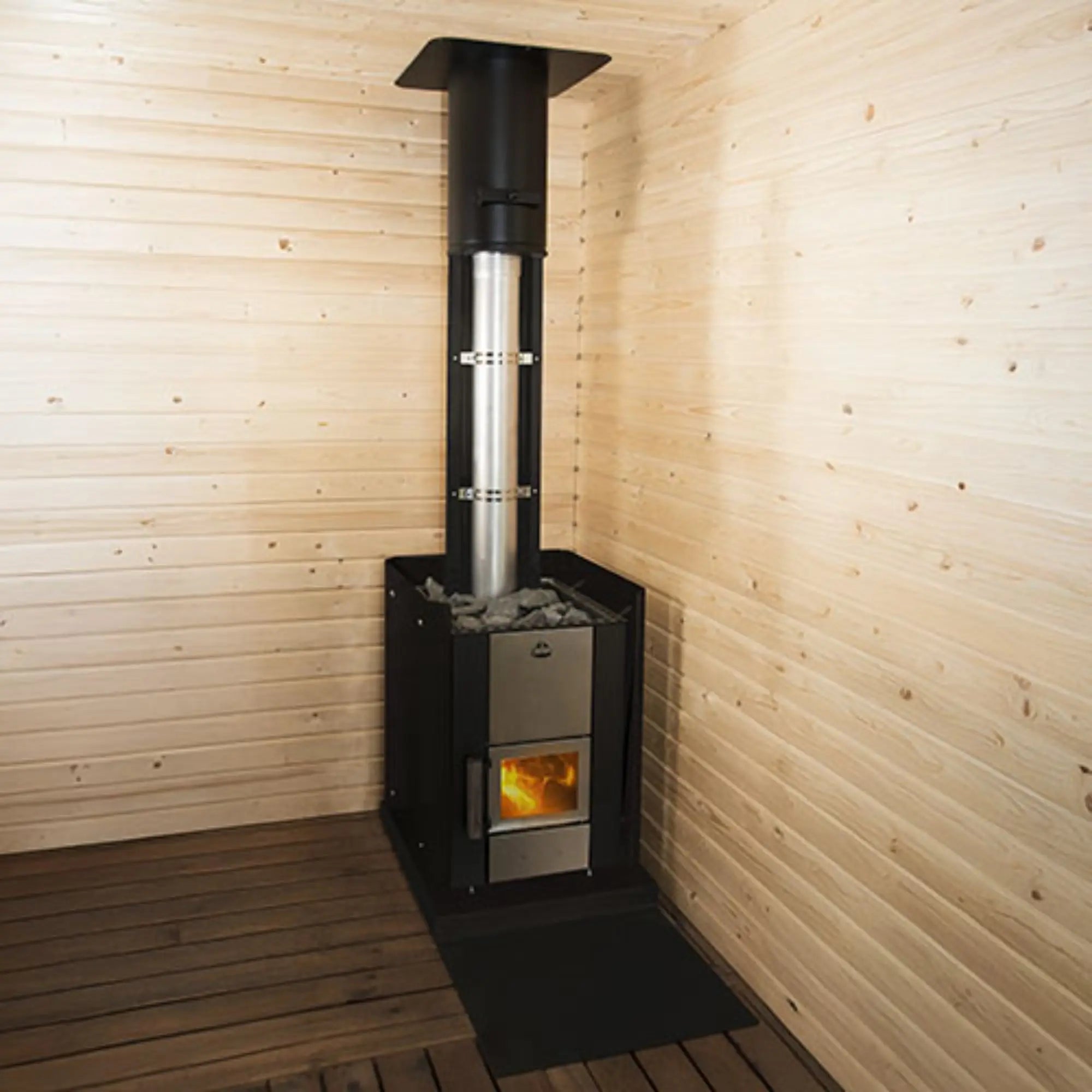
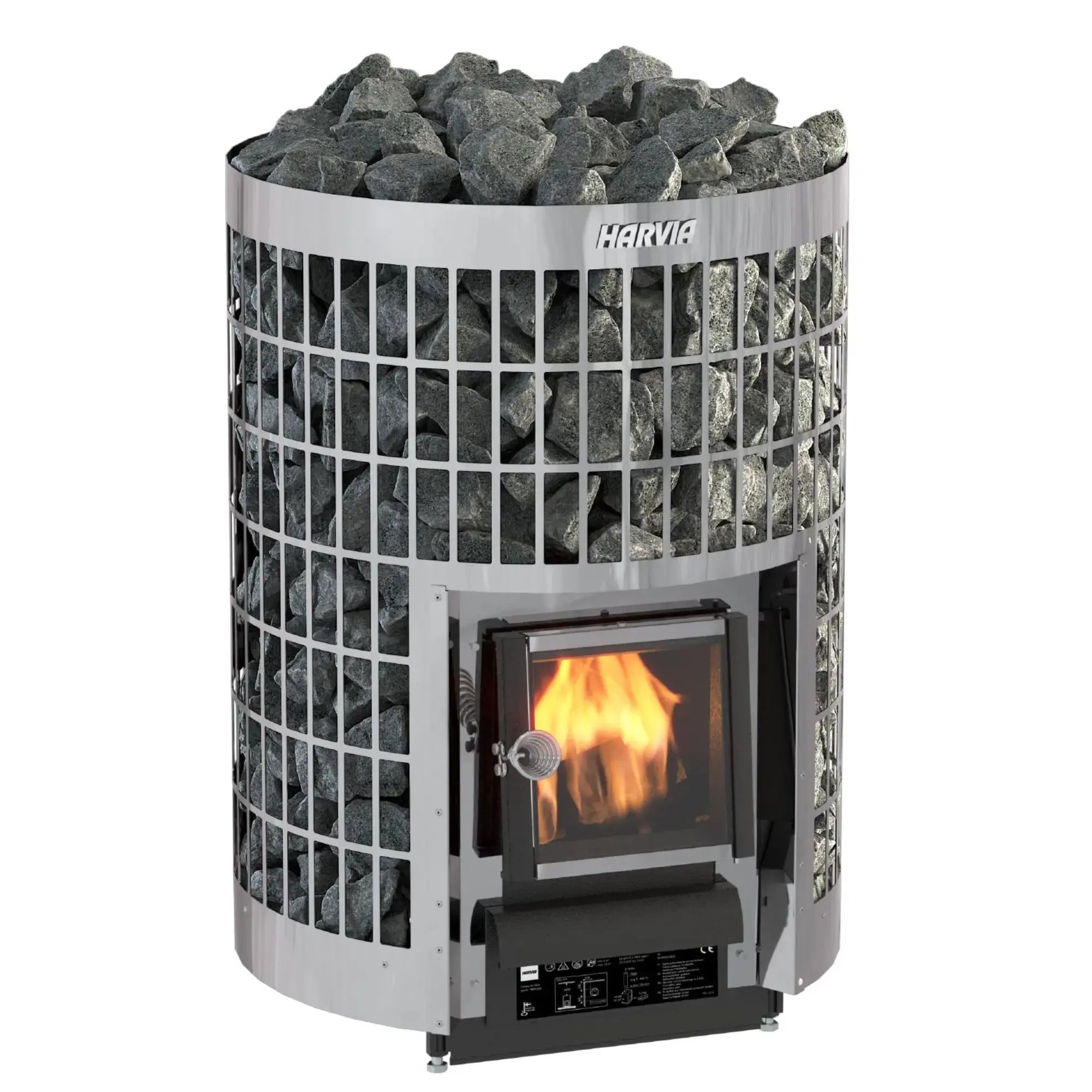
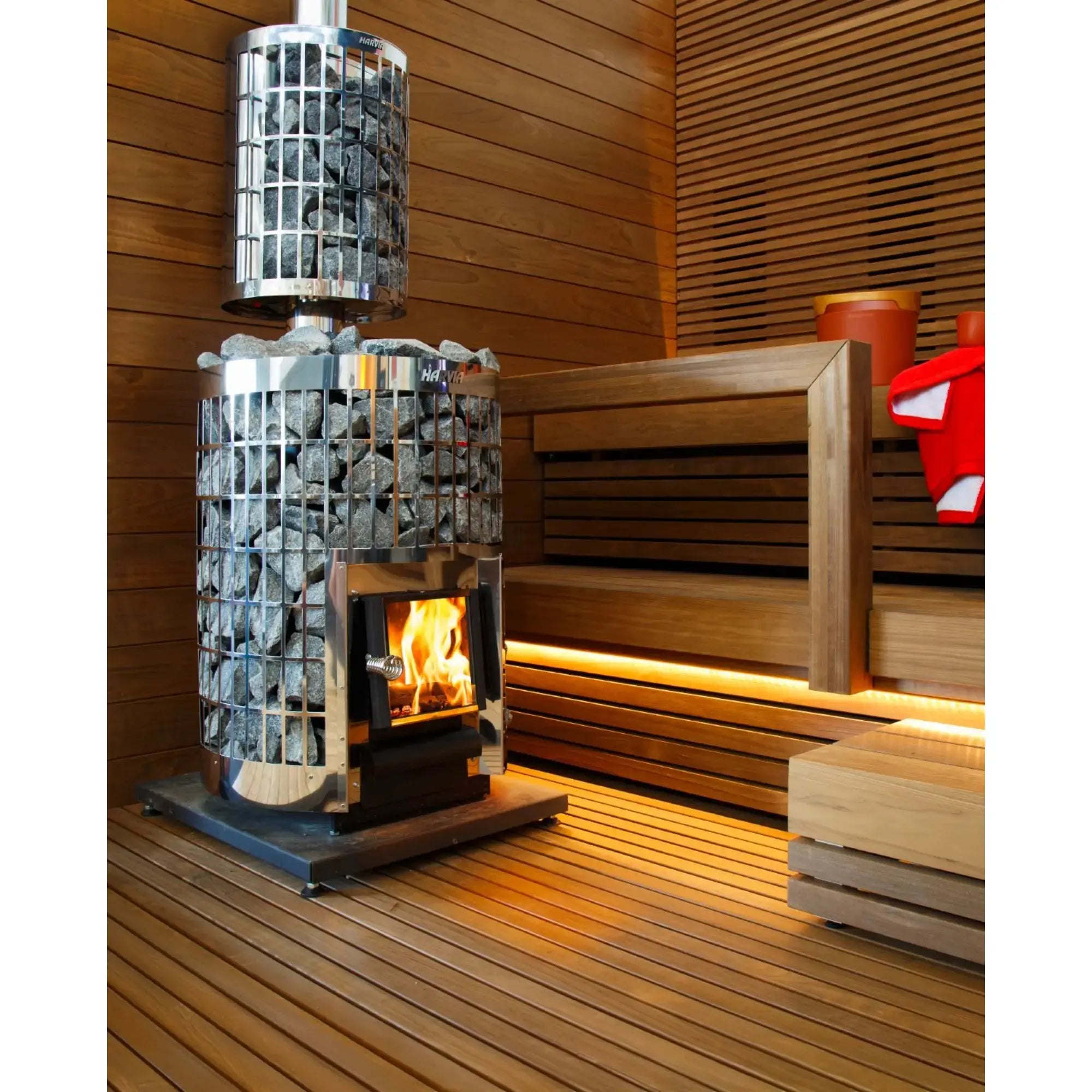
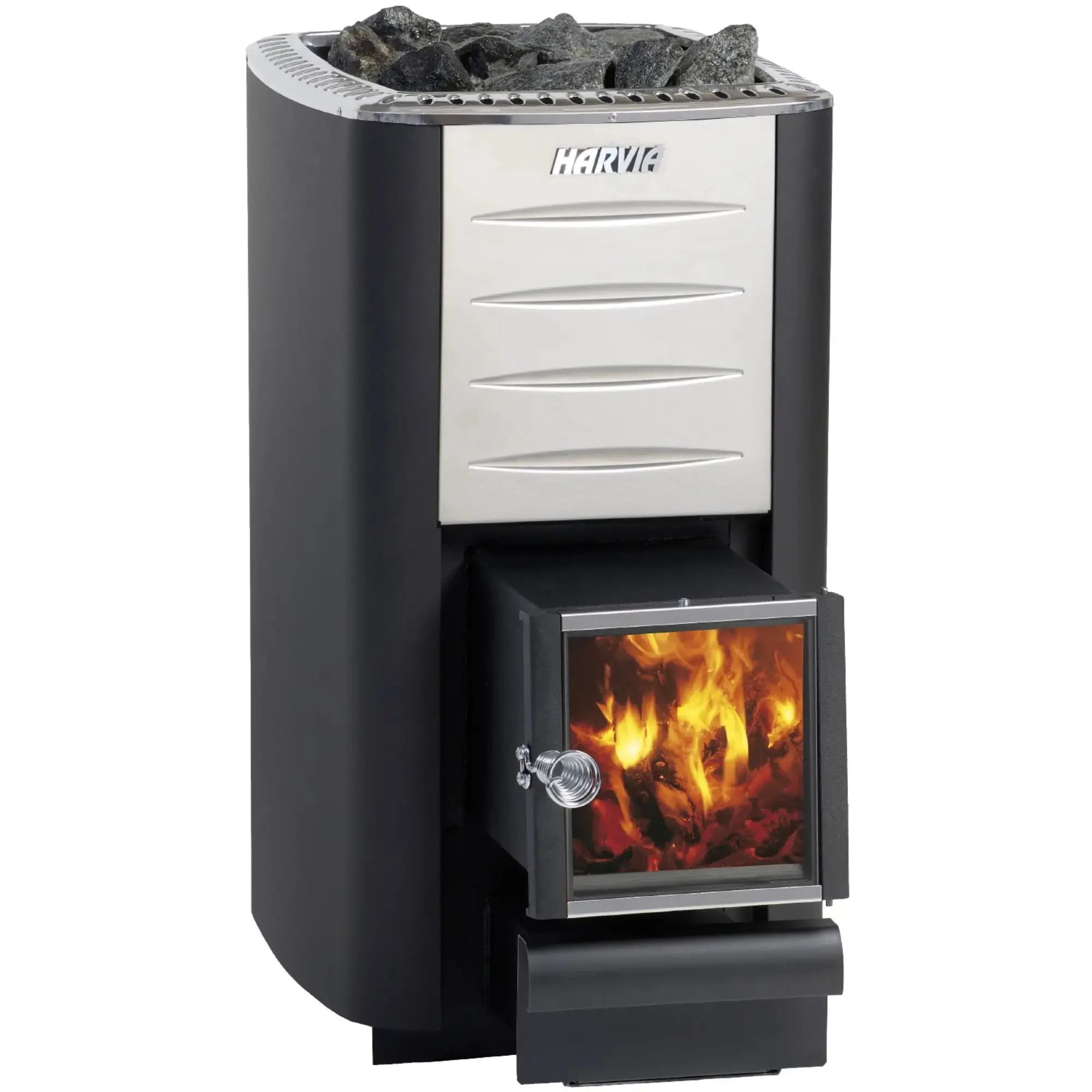
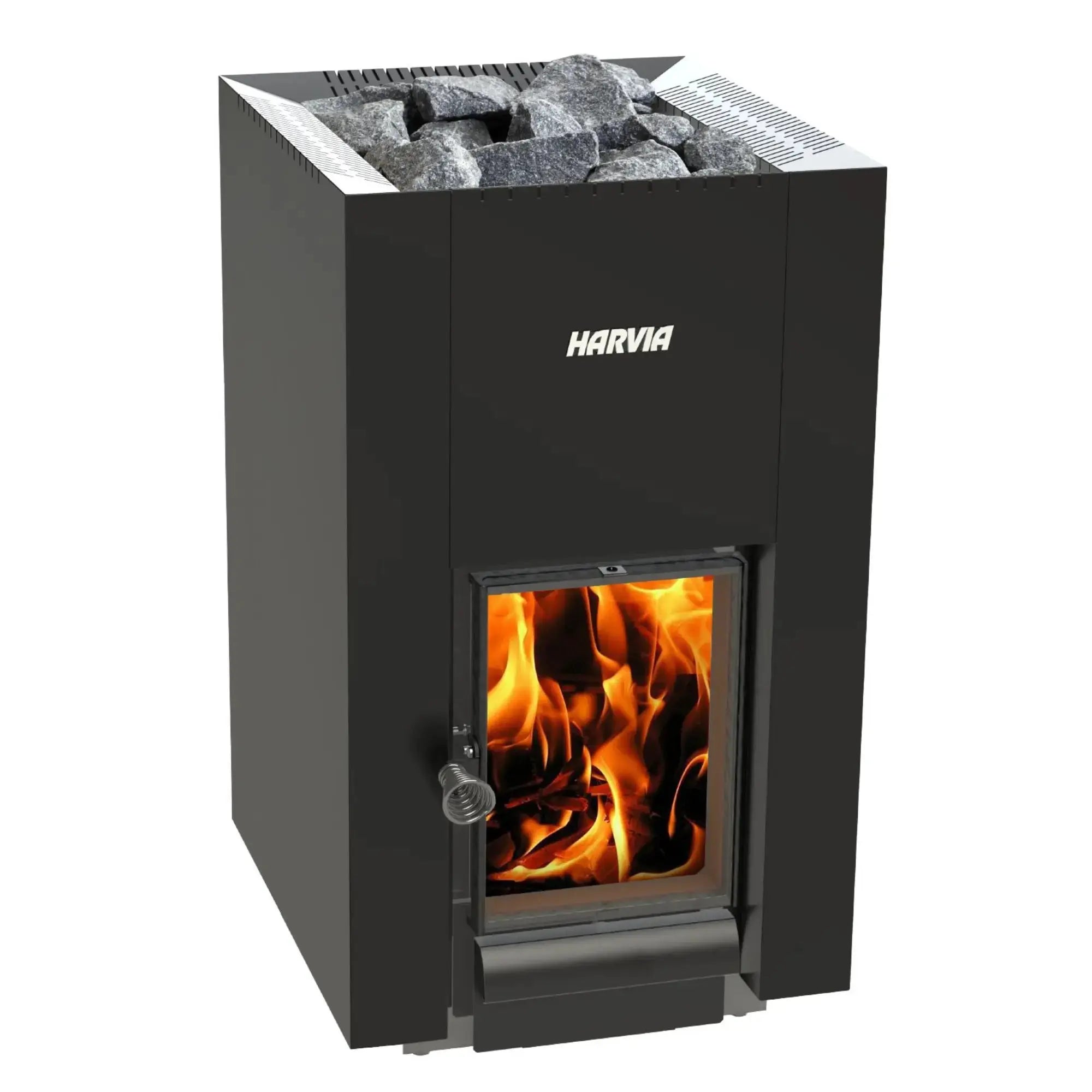
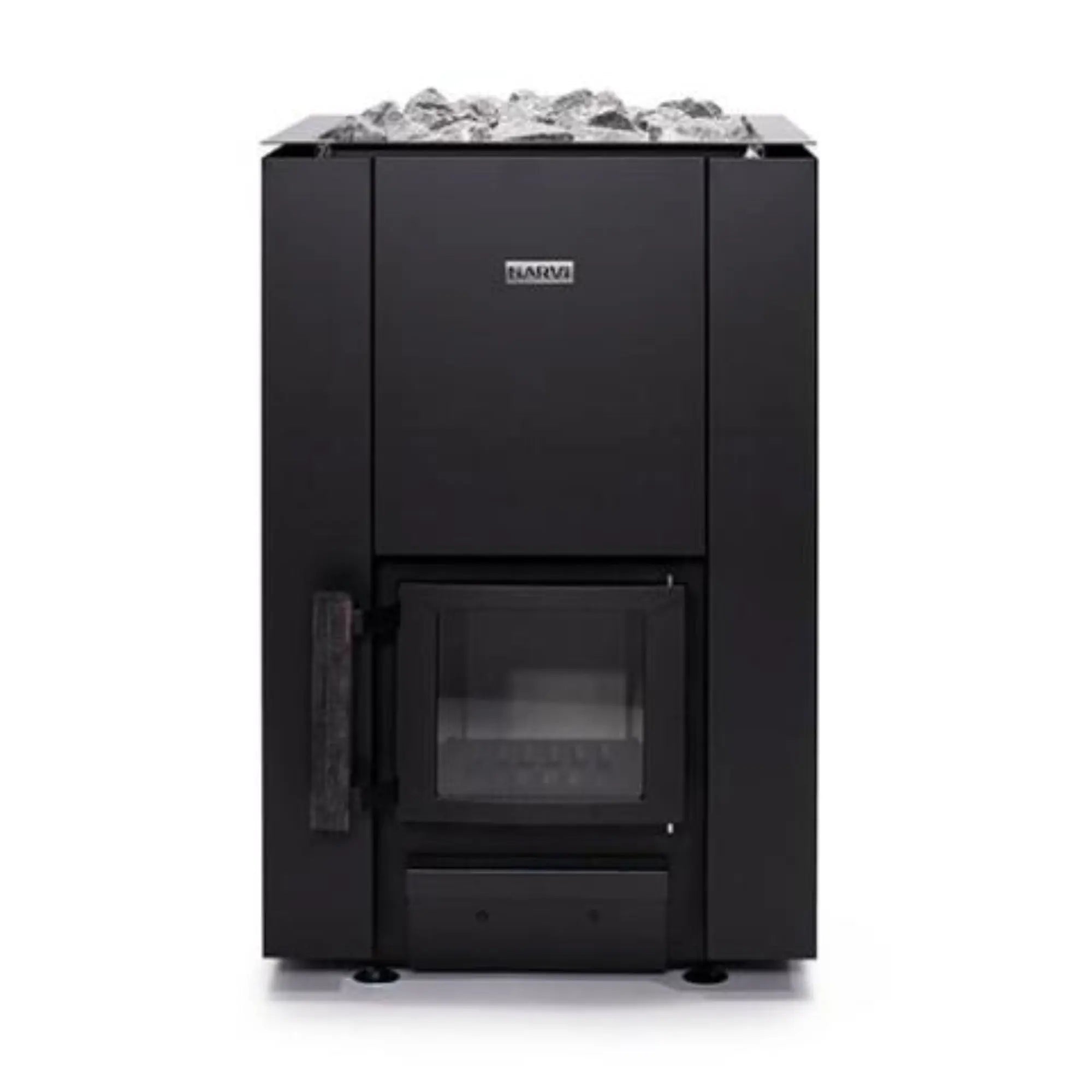
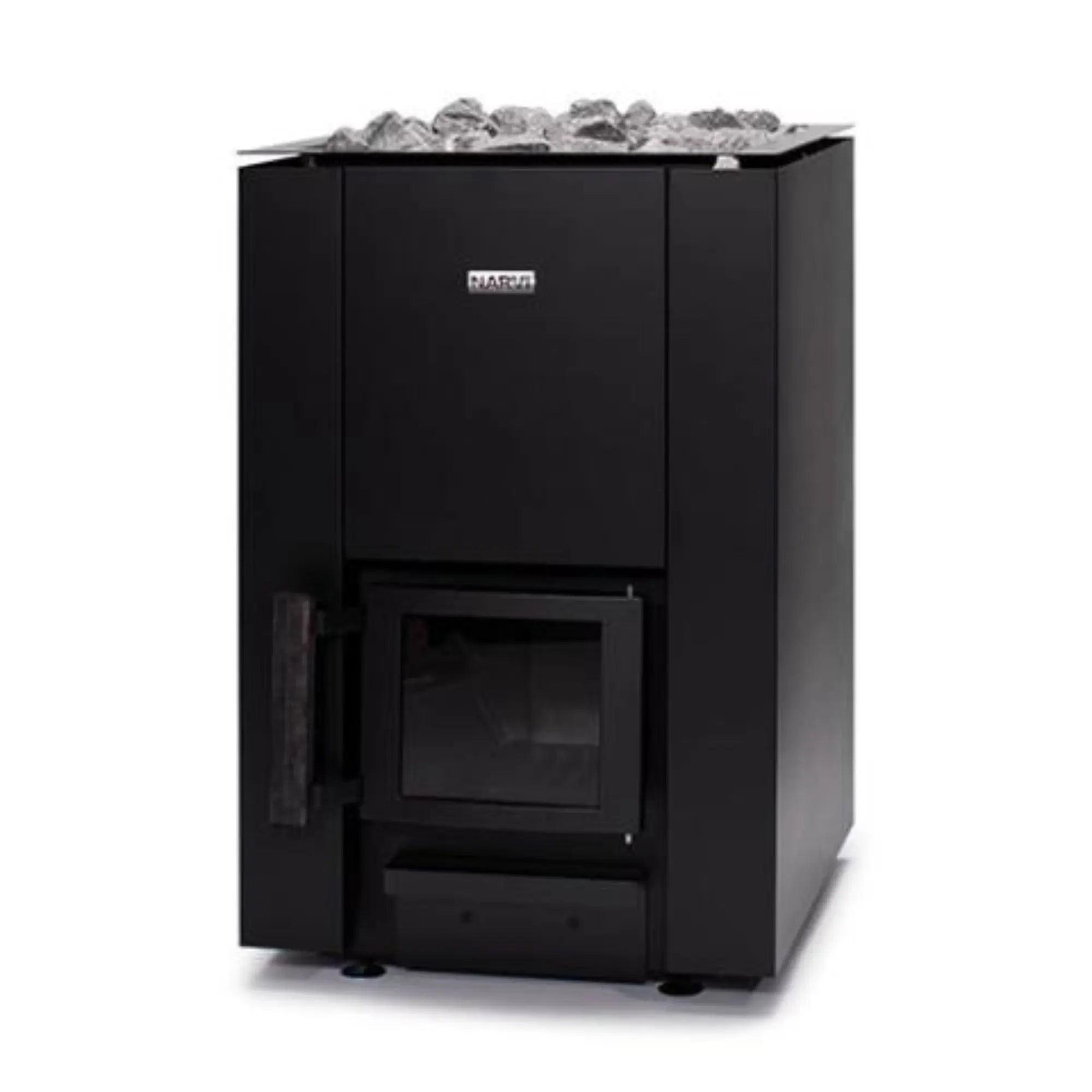
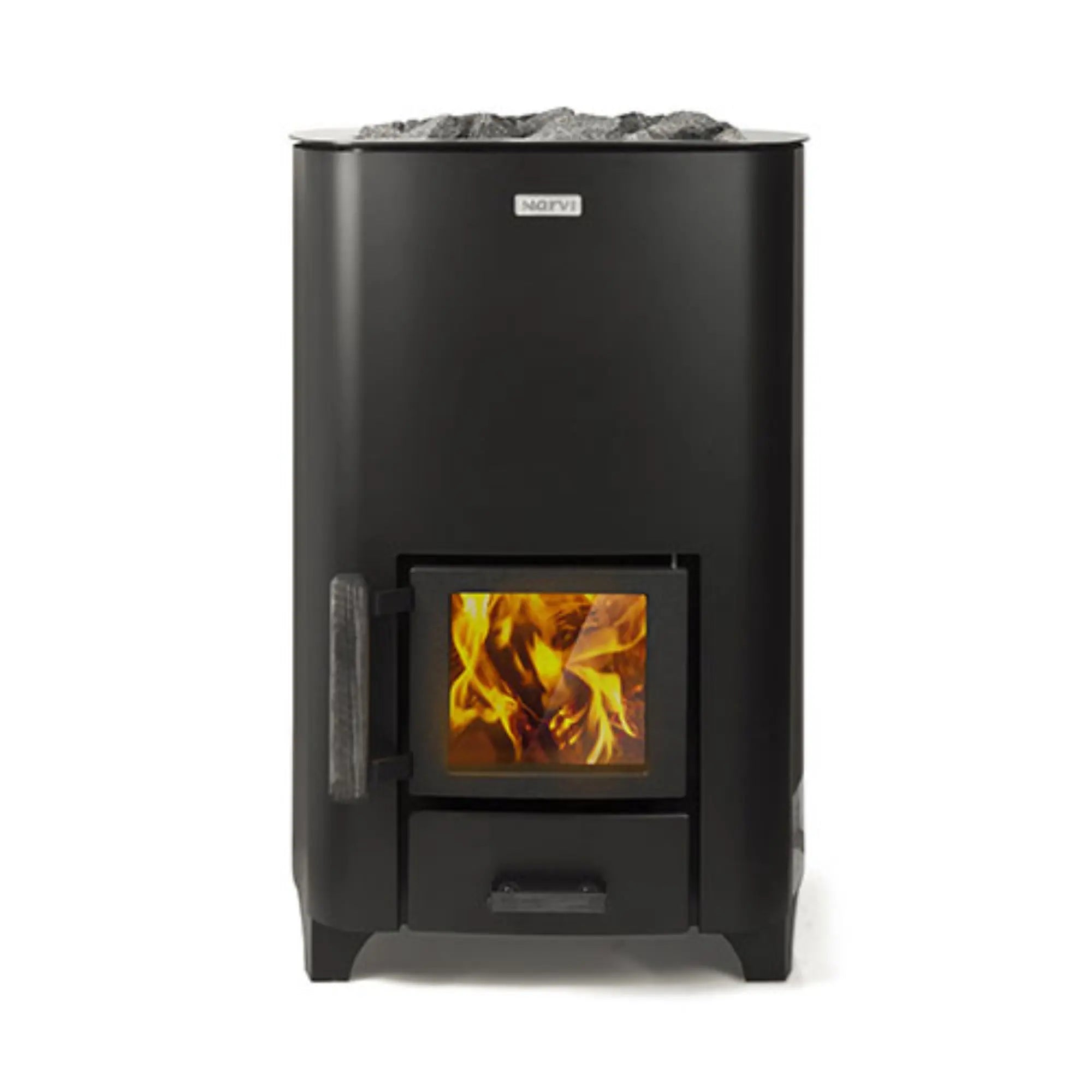
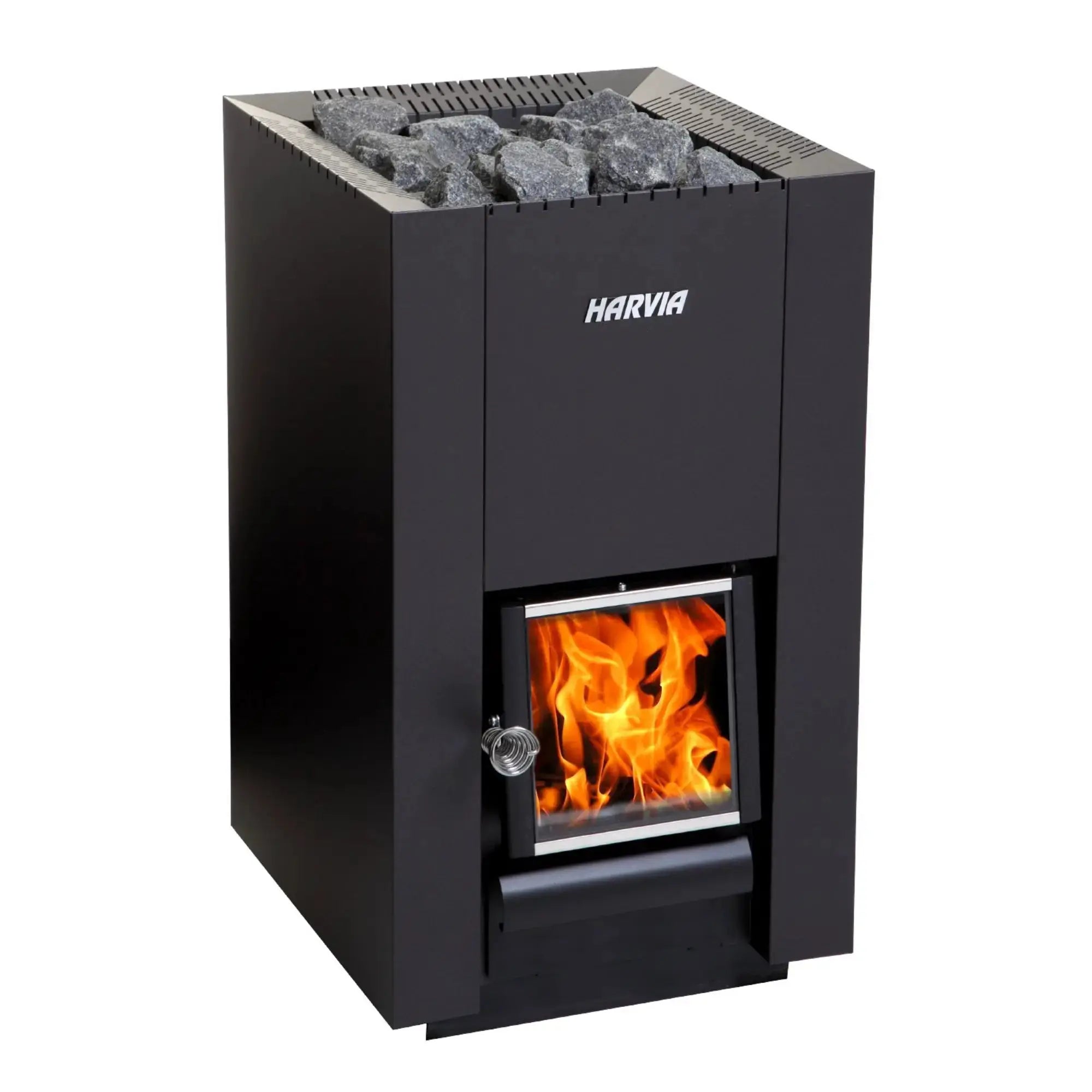
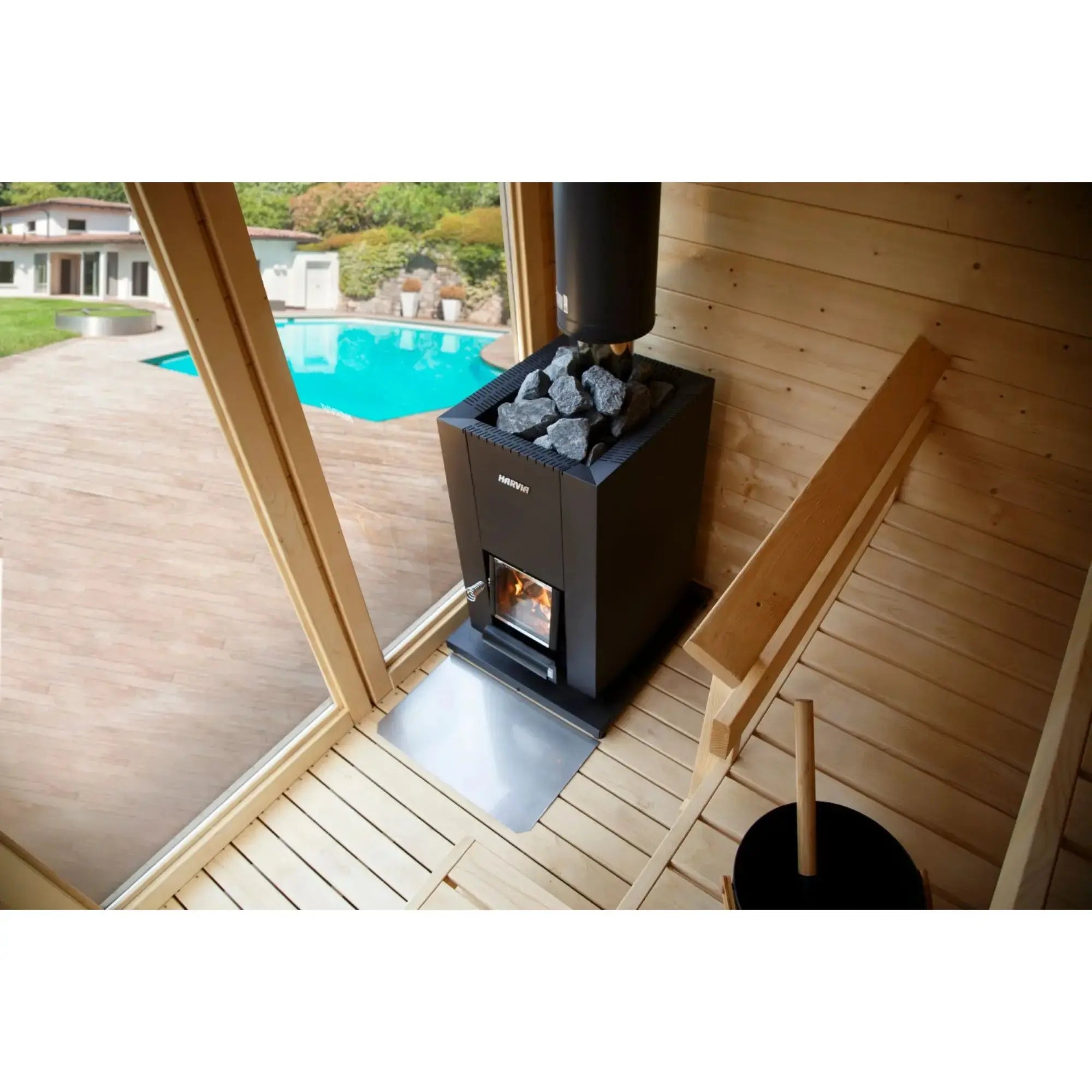
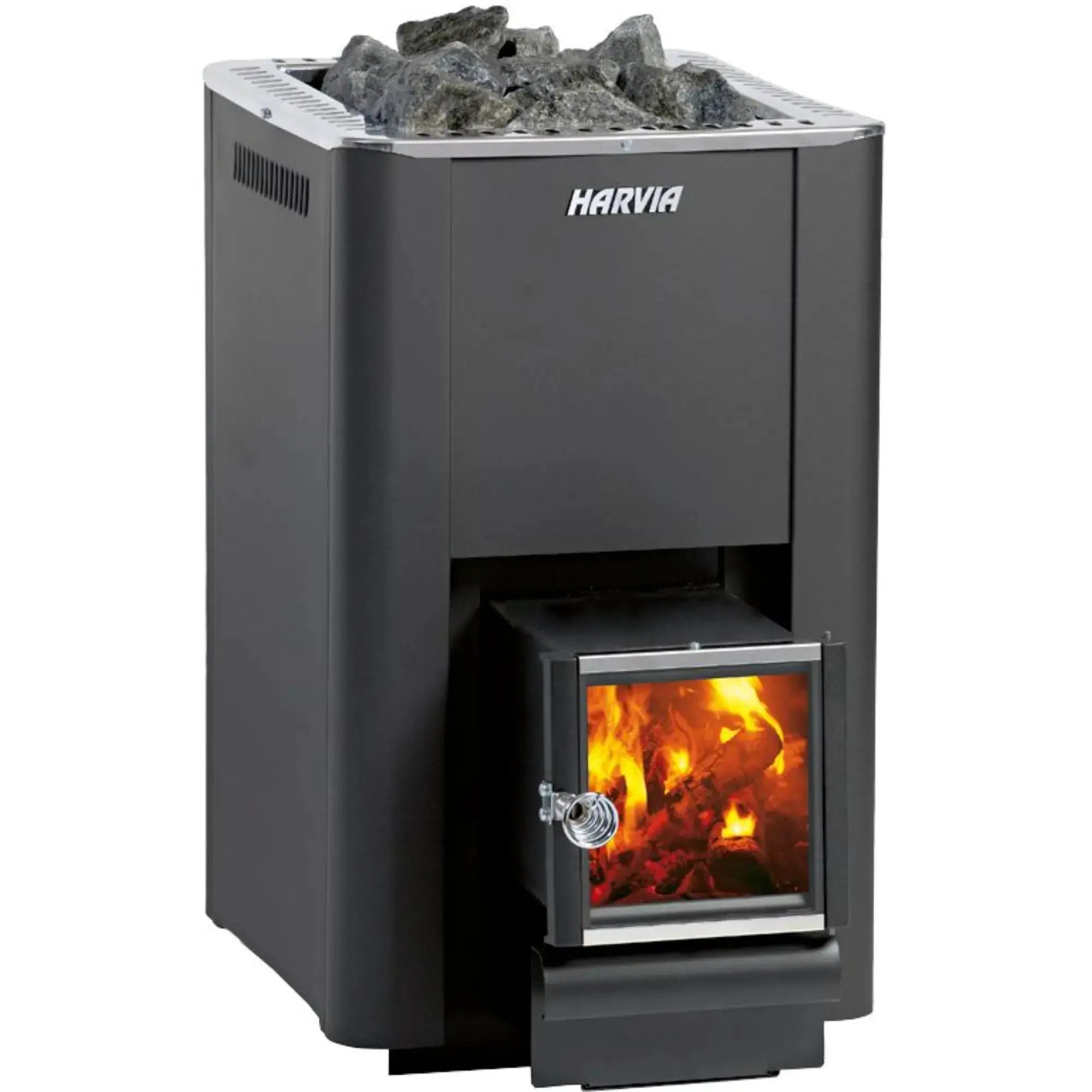
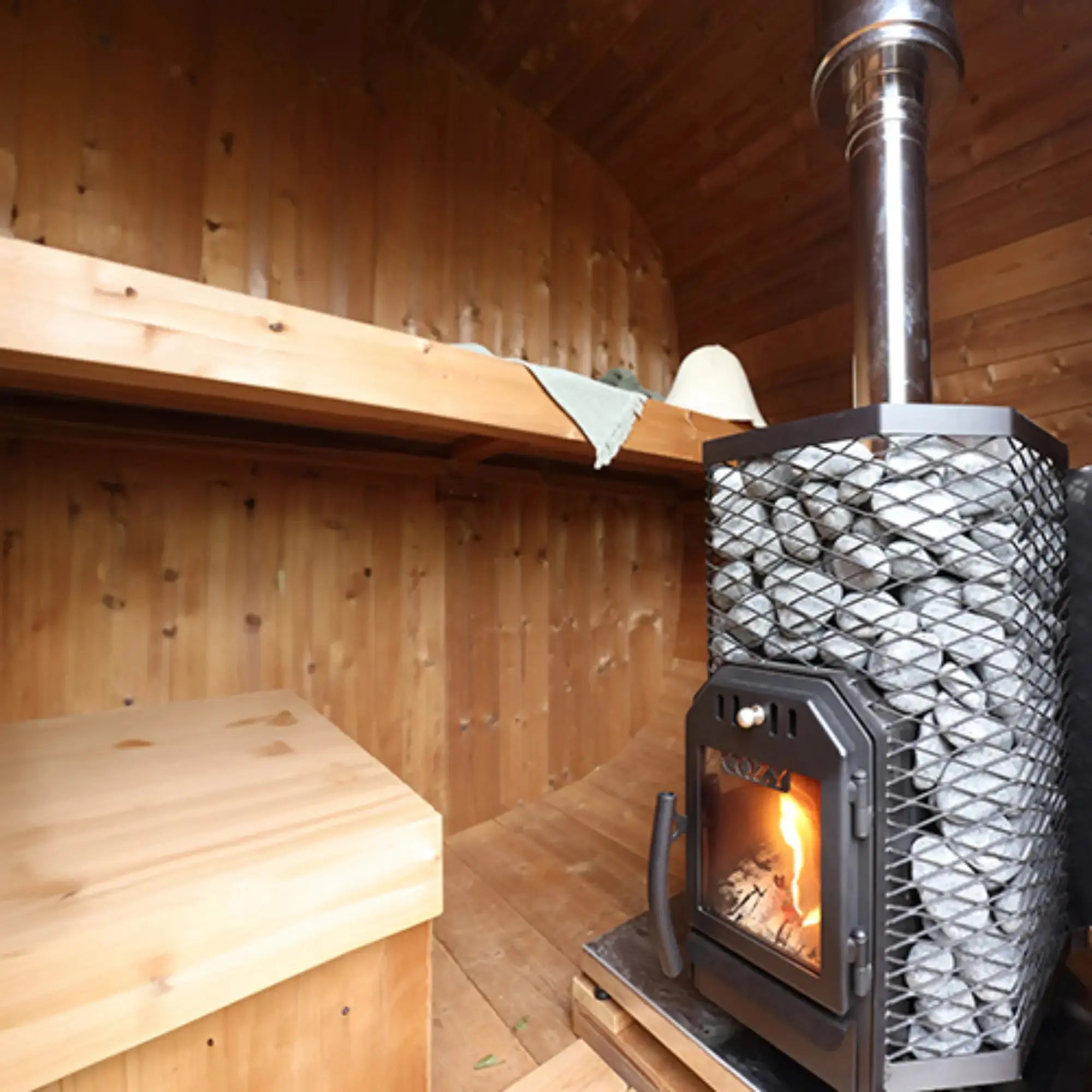
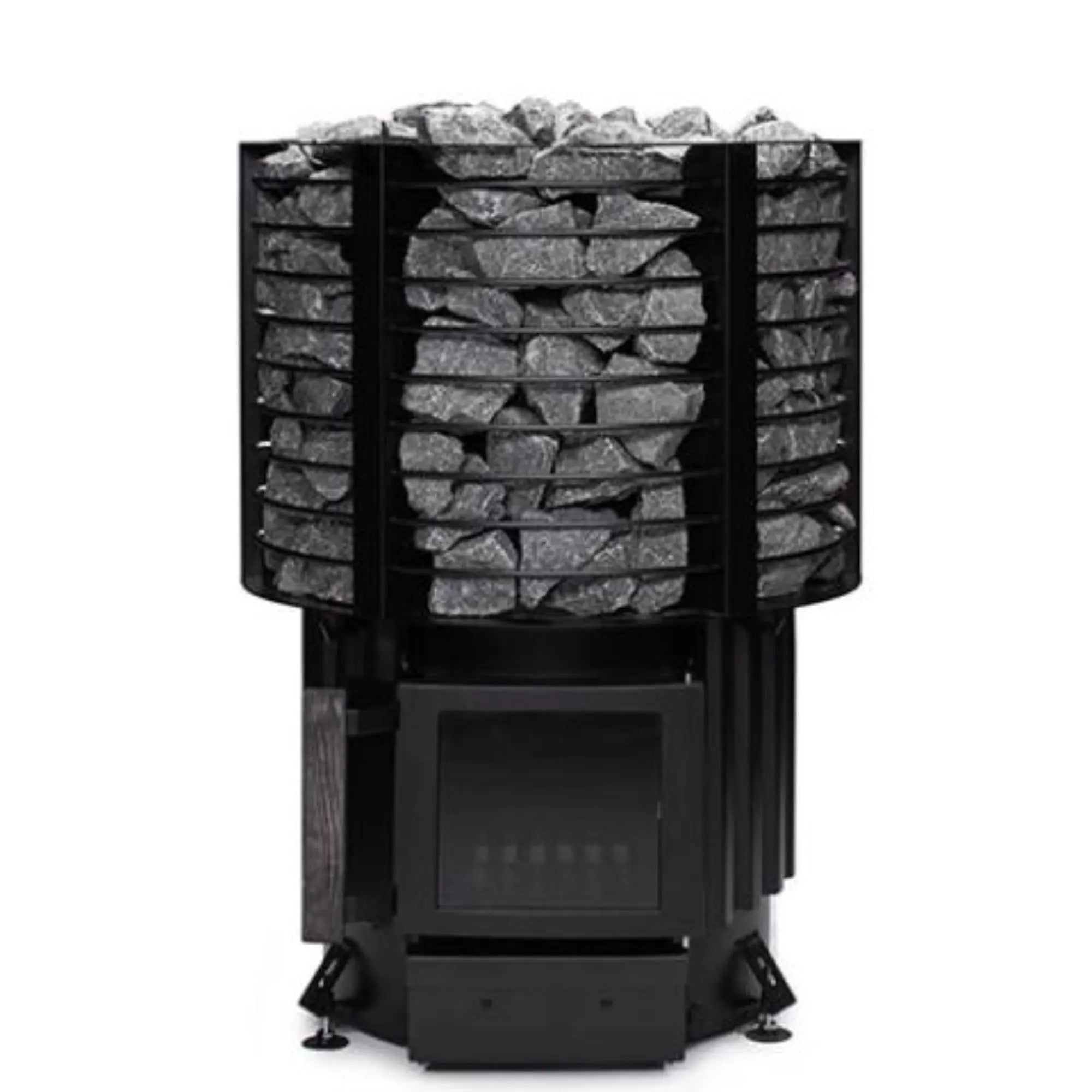
So what do you do with a genuinely large room? The answer is rarely a bigger element. Better insulation and a tighter vapor barrier lower the adjusted number itself. The other option is wood. Wood stoves pick up where electric stops, and no breaker is involved at all. Our guide to wood burning sauna stoves covers the trade-offs.


282 to 530 adjusted cu ft, 122 lb of stone, 37.5 A. The largest single phase heater most homes can take.
Can a sauna heater be too powerful?
Yes. The reason people usually give, that it wastes electricity, is wrong. An oversized heater doesn't run long enough to waste much. That's exactly the problem.
A thermostat switches the heater on and off based on air temperature. An oversized element pushes the air up to setpoint fast and cuts out long before the stones are fully heated. Throw water on and you get thin steam that fades in seconds instead of a soft wave of loyly. The room reads 180 and still feels flat.
Here's what makes this hard to fix. You pick the heater first, then the circuit gets built to match it. You don't find out anything is wrong until your first proper pour of water, and by then the expensive half of the job is already inside the wall.
Size to the middle of the published range.
Why can't I get my sauna above 150 degrees?
This is the most common complaint we hear, and the usual advice is to buy a bigger heater. That's the last thing you should check, not the first.

Work the list in order.
- Thermostat and sensor placement. A sensor near a vent, a door or the ceiling peak reads a temperature bathers never feel, so it cuts the heater off early. You'll find the placement rules in our guide to sauna control panels.
- Ventilation. Too much draw pulls heated air straight out. Too little and the room stalls and goes stale. Adjustable vents fix it.
- Insulation and vapor barrier. Gaps, missing foil or an uninsulated floor leak heat the whole time. This is the fix that lowers your adjusted cubic feet.
- Wet wood, on a wood stove. Unseasoned wood spends its energy boiling off water. Use dry split wood and the room comes up to temp.
- Then heater size. If the first four are right and the room still stalls past an hour, recheck the adjusted cu ft.
Frequently asked questions
What size sauna heater do I need for a 6x8 sauna?
A 6 x 8 ft room with a 7 ft ceiling is 336 raw cubic feet, so 7.5 to 8 kW before adjustments. The Harvia KIP80W covers 250 to 425 adjusted cu ft, and the HUUM DROP 7 covers 230 to 441. Add for glass and tile first.
Is it better to size up or size down?
Neither. Aim for the middle of a published range. Size down and the room never comes up to temp. Size up and you get hot air over lukewarm rocks and poor steam.
What size heater do I need for a barrel sauna?
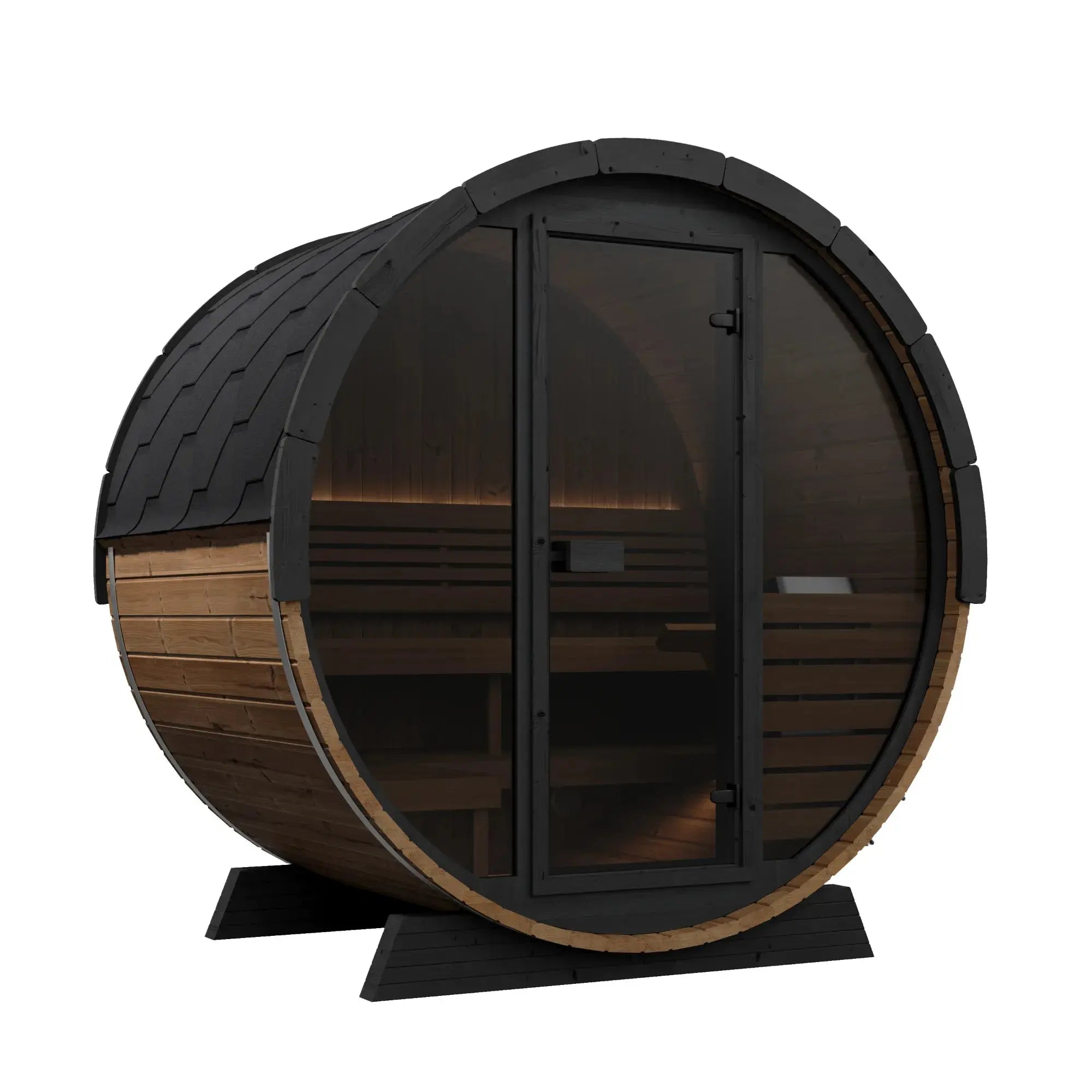
Treat the barrel as a cylinder, not a box. A 6 ft diameter barrel 6 ft long is about 170 cubic feet, which puts you at 4.5 kW to 6 kW. Glass ends add up fast, so apply the adjustment first. Our post on how to choose sauna size covers layout.
Does insulation affect heater size?
A lot, and it's the main reason the published sizing methods disagree. A model range assumes a normally insulated room. HUUM's 1 kW per 35 cu ft baseline assumes nothing at all, and a poorly insulated cabin behaves like that second case. Insulating is usually cheaper than a bigger heater plus a bigger circuit.
I have a tile floor, does that count as a cold surface?
Yes. Tile, concrete and stone count at 45 cu ft per square foot, the same as glass. On a fully tiled floor that math runs past every heater we stock. That means the formula has hit its practical limit, not that your sauna is impossible. Insulate under the slab, use duckboards, and talk to us before you order.
Why does my sauna take so long to heat up?
Electric heaters should come up to temp in 30 to 60 minutes, and wood stoves in 45 to 75 from lighting. Saunum's Air series is the exception, at 45 to 90. If yours is consistently slower than that, look at sensor placement, ventilation or insulation. Only once those check out is the heater genuinely undersized.
For brands, controls and wiring, start with our sauna heater buying guide, or browse wood burning sauna stoves if your room has outgrown 9 kW.
Not sure which number to trust?
Send us your dimensions and glazing. We'll size it against the heater's own published range, not a rule of thumb.
Shop electric heaters →We stock heaters across every brand we carry, so we have no reason to talk you into the wrong one.