How to Choose Patio Heaters for Your Space
A patio heater can turn a crisp evening into another hour around the table - or become an expensive fixture that never quite keeps anyone warm. Knowing how to choose patio heaters starts with the space itself: where people sit, how much wind reaches the patio, whether you have fuel access, and how often you plan to entertain after sunset.
For a premium outdoor space, the best heater is rarely the one with the biggest BTU number. It is the one that delivers useful warmth where your guests actually gather, fits the layout without creating safety issues, and looks at home beside the furniture, fire feature, or outdoor kitchen you have invested in.
Start With How You Use the Patio
Before comparing finishes or fuel types, think through a typical cool-weather gathering. A small bistro table used by two people needs a different solution than a large dining area where eight guests linger after dinner. Likewise, a covered porch, an open pool deck, and a built-in outdoor kitchen each have different clearance, ventilation, and power considerations.
Measure the seating zone rather than the entire backyard. Patio heaters warm a defined area, and open air absorbs heat quickly. A heater intended for a 10-foot seating circle will not make a 30-foot-wide patio comfortable just because it is placed in the middle.
Wind matters as much as square footage. In a protected courtyard, a freestanding gas heater may provide reliable comfort across a broad area. On an exposed deck or rooftop, radiant electric heat aimed directly at chairs can be more effective because wind has less opportunity to carry the warmth away. If your patio is consistently breezy, consider multiple targeted heaters instead of one oversized unit.

Choose a Fuel Type That Fits the Installation
The right fuel source should be convenient for your household and appropriate for the heater location. Each option has a clear role.
Propane offers flexibility
Propane patio heaters are popular because they can be placed almost anywhere outdoors without an electrical connection or gas line. Many freestanding mushroom-style heaters conceal a standard propane tank in the base, making them a practical option for dining patios and lounge areas that may be rearranged seasonally.
The trade-off is refilling or exchanging tanks. A standard 20-pound propane tank may provide roughly 8 to 10 hours of use at high output, depending on the heater. Keeping a spare tank on hand prevents a gathering from ending early. Propane heaters also need stable, level placement and enough open-air clearance around the burner and reflector.
Natural gas is best for permanent entertaining areas
A natural gas patio heater makes sense when the patio is a long-term extension of the home and a gas line is already available or can be professionally installed. You do not have to monitor fuel levels, and the heater is ready whenever you are.
This option is especially appealing near built-in kitchens, fixed dining areas, and covered outdoor rooms designed for frequent use. The limitation is placement: once the gas connection is installed, the heater is not truly portable. Factor in the cost and logistics of a licensed gas-line installation before deciding that natural gas is automatically the lower-cost choice.

Electric works well in covered and targeted spaces
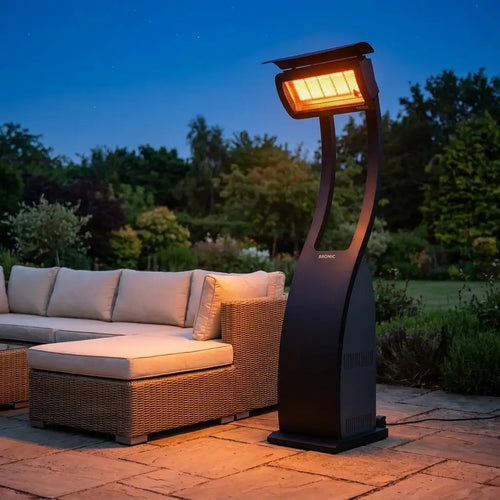
Electric infrared heaters produce directional radiant heat rather than heating a large volume of surrounding air. They are often a strong choice for covered patios, pergolas, screened areas, balconies, and locations where a visible flame or propane tank does not fit the design.
Electric models can be wall-mounted, ceiling-mounted, or installed on a stand. They are quiet, simple to operate, and available with remote controls, timers, and heat settings. But they require adequate electrical capacity and a properly located outlet or hardwired connection. For higher-wattage heaters, professional electrical installation is often the right call.
Match Heat Output to the Space, Not the Marketing Claim
Gas patio heaters are commonly rated in BTUs, while electric heaters are usually rated in watts. Higher output can be helpful, but it does not tell the whole story. Reflector size, burner design, mounting height, wind exposure, and heater placement all affect real-world comfort.
As a practical reference, a freestanding propane or natural gas heater in the 40,000 to 50,000 BTU range can work well for an open dining or conversation area in mild to moderately cool conditions. In colder climates or exposed settings, plan on more than one unit. Trying to solve a large, windy patio with one heater usually leads to cold seats at the perimeter.
For electric models, a 1,500-watt heater is often suited to a small, close-range seating area. Larger 2,400- to 6,000-watt units can cover more space when mounted at the manufacturer-approved height. Infrared heat is most effective when people are within its direct path, so aim it toward chairs, not across walkways or toward an empty corner.

Do not rely on advertised coverage alone. Those estimates are typically based on ideal conditions. A good rule is to size for your coldest expected use, not the mild fall afternoon when nearly any heater feels sufficient.
Plan for Clearance, Ventilation, and Stability
Patio heaters involve high heat, fuel, electricity, or all three. Safety requirements should shape the purchase before style does. Always use the clearance dimensions and installation instructions supplied by the manufacturer. They vary by model, particularly for wall-mounted and ceiling-mounted electric heaters.
Freestanding gas heaters need open space above and around them. They should not be tucked beneath a low pergola roof, umbrella, awning, or tree canopy unless the specific model is approved for that location and all clearance requirements are met. Never use an outdoor gas heater inside a garage, enclosed porch, or other unventilated area.
For electric heaters, pay close attention to mounting height, distance from combustible materials, and whether the model is rated for exposed outdoor use. A covered patio may protect the heater from direct rain, but it does not eliminate the need for a weather-appropriate rating.
Stability also matters. Choose a solid base for freestanding units, especially in areas with wind or active children and pets. Some models can be weighted or secured according to manufacturer guidance. Keep traffic patterns in mind so the heater does not become a trip hazard beside the dining table or grill.
Select a Form Factor That Supports the Layout
A freestanding heater is the familiar choice for open patios because it can be moved as furniture arrangements change. It provides broad warmth and a visible focal point, but it takes up floor space. This can be a poor fit on a narrow deck or beside a compact outdoor kitchen.
Tabletop heaters are useful for intimate dining setups, though they provide a smaller heat radius and require stable surfaces. They work best as supplemental heat rather than the primary source for a large gathering.
Wall-mounted and ceiling-mounted electric heaters preserve valuable floor space and create a cleaner, more built-in appearance. They are particularly effective over a fixed dining table, outdoor sofa, or bar seating area. Their position must be planned carefully because they cannot follow a rearranged furniture layout as easily as a portable heater.
For large patios, combine formats. A mounted heater can serve the dining zone while a freestanding gas heater supports the lounge area. Heating in zones is usually more comfortable and more efficient than trying to blanket every square foot at once.

Consider Materials, Finish, and Weather Exposure
A patio heater should hold up as well as it looks. Stainless steel is a common choice for durability, but not all stainless performs identically in humid or coastal environments. Powder-coated finishes can offer a more tailored color palette and may coordinate better with dark furniture frames, grills, and outdoor kitchen cabinetry.
If you live near salt air, frequent rain, or heavy snow, look for weather-resistant construction and make seasonal care part of the plan. A fitted cover can help protect the finish when the heater is cool and not in use. It is also wise to store propane tanks and portable units according to local guidance during severe weather or long periods of nonuse.
Design still matters. A tall commercial-style heater may suit a lively entertaining patio, while a slim infrared unit can disappear into the structure of a modern pergola. Choose a heater that supports the atmosphere you want without competing with the fire pit, lighting, or view.

Think Beyond the Purchase Price
The lowest-priced patio heater is not always the least expensive one to own. Propane requires fuel exchanges, natural gas may require installation work, and electric operation depends on local utility rates and electrical upgrades. The best value comes from choosing a heater you will use often, in a location where it can perform properly.
Also consider controls and maintenance. Variable heat settings, electronic ignition, remote operation, timers, and shutoff features can make regular use easier. For fixed electric installations and natural gas connections, professional setup adds cost but can protect your investment and help ensure the heater operates as intended.
A patio heater should make your outdoor space feel more usable, not more complicated. Start with the seats you want to keep warm, confirm the installation and clearance requirements, and choose the fuel and format that fit your patio for the long haul.