Pellet Grill vs Gas Grill: Which Should You Buy in 2026?
Pellet grill vs gas grill, the short answer: choose a gas grill if you cook fast and often and want maximum convenience for weeknight grilling and searing. Choose a pellet grill if wood-fired flavor and low-and-slow cooking matter more than speed. Gas wins on startup time, searing power, and simplicity. Pellet wins on flavor, smoking, and set-and-forget temperature control. Here is how the two compare in real life, and how to know which one fits the way you actually cook.
In this article
- What's the difference?
- Which has better flavor?
- Which is faster and better at searing?
- Which is easier to use?
- Which costs more to run?
- Which needs more maintenance?
- Which works better in an outdoor kitchen?
- Who should choose a pellet grill?
- Who should choose a gas grill?
- FAQ
| Pellet grill | Gas grill | |
|---|---|---|
| Flavor | Real wood-fired smoke character | Clean and neutral; smoker box adds a little |
| Preheat time | About 15 minutes | About 10 minutes |
| Top temperature | Most max out near 450-500°F | Typically 500°F; premium models near 700°F |
| Best at | Smoking, roasting, long cooks at 200-350°F | Weeknight grilling, burgers, steaks |
| Fuel | Wood pellets (must stay dry) | Propane or natural gas |
| Electricity needed | Yes | No |
| Maintenance | More: ash cleanup every 2-3 cooks, auger, electronics | Less: burners and grease management |
Pellet grill vs gas grill: what's the difference?
A pellet grill burns compressed wood pellets, using an electric controller and auger to feed fuel into a fire pot. That design holds a set temperature automatically and adds real wood-fired flavor with far less work than a traditional smoker. It shines at low-and-slow cooking, roasting, and long sessions where consistency matters.
A gas grill uses propane or natural gas burners for fast, direct heat. Turn the knobs, preheat, and cook. The right choice comes down to whether you care more about smoke flavor and versatility or fast startup and everyday ease.
Which grill has better flavor?

If flavor is your top priority, pellet grills usually win. They produce a mild but noticeable wood-fired character that gas cannot naturally replicate. Chicken, ribs, pork shoulder, salmon, and vegetables all come off a pellet grill with more depth. It is not stick-burner intensity, but it is a real advantage if you want smoke flavor without managing a live fire.
Gas grills still produce very good food, especially at higher heat: burgers, kebabs, shrimp, and weeknight chicken all do well. A smoker box with wood chips adds some smoke, but the result is lighter and less integrated than what a pellet grill delivers by design. If your household mostly wants a clean, straightforward result, that may be exactly right.
Which is faster and better at searing?
Gas pulls ahead here. A quality gas grill preheats in about 10 minutes, responds instantly when you adjust burners, and reaches searing temperatures most pellet grills cannot: gas grills typically hit 500°F with premium models near 700°F, while most pellet grills max out around 450-500°F. Taste of Home's test of 18 gas and pellet grills reached the same conclusion: gas for fast, hot, direct cooking.
Pellet grills are improving, especially premium models with direct-flame access or sear zones, but most remain better at roasting and smoking than steakhouse-style searing. If you want one grill for everything and you mostly cook hot and fast, gas feels more natural. If brisket, ribs, and smoked wings excite you as much as steaks, pellet makes a stronger case.
Which is easier to use day to day?
Gas is simpler: open the fuel supply, ignite, preheat, cook. Cleanup is familiar and fast, with no hopper to monitor and no controller to think about. For people who grill often and want zero learning curve, gas is the lower-friction option.
Pellet grills are user-friendly in a different way. The controller holds temperature automatically, so long cooks need almost no babysitting, which is a major advantage for smoking. The catch: they need electricity and have more moving parts, so there is more technology that can need attention over time.
Which costs more to run?
For typical use the costs are comparable. A standard 20 lb propane tank delivers roughly 20 hours of cooking, and natural gas is even more convenient if you already have a line, with no tank swaps at all. Pellet consumption rises with temperature and cook length, so long smoking sessions burn noticeably more fuel than a quick roast.
There is also a storage factor: pellets must stay dry, propane tanks need refilling or swapping, and natural gas costs more upfront to install but the least to live with.
Which needs more maintenance?
Neither is maintenance-free. Gas grills need regular cleaning, burner checks, and grease management, but the systems are simple and familiar. Pellet grills add ash cleanup roughly every 2 to 3 cooks, plus attention to pellet dust, moisture, and the electrical feed system, as Smoked BBQ Source's comparison details.
This matters most for premium buyers thinking in years, not seasons. A well-built model in either category holds up; cheap units in both categories show their weaknesses quickly.
Which grill works better in an outdoor kitchen?

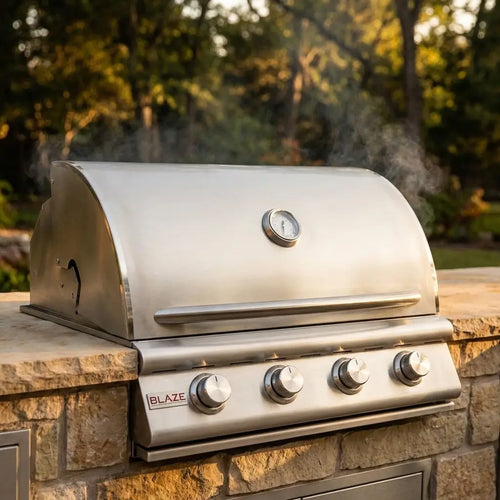
For a complete backyard setup, gas usually integrates more naturally. Built-in gas grills are fast, clean-lined, and suited to outdoor kitchens where convenience and repeatable performance matter. If you host often, gas supports that rhythm well.
Pellet grills fit high-end outdoor cooking spaces too, especially ones built around all-day cooking and weekend entertaining, where the grill is part smoker, part oven, part social centerpiece. Be honest about how the space will be used: frequent family meals favor gas; cooking as a hobby favors pellet.
Who should choose a pellet grill?
A pellet grill makes the most sense if you value flavor, want strong smoking and roasting performance, and accept a little extra maintenance in exchange for versatility. It suits people who cook for longer stretches, like to experiment, and want wood-fired results without managing charcoal or split logs.

Wi-Fi temperature control, a big hopper, and steady wood-fired heat for long smoking sessions.
Who should choose a gas grill?

A gas grill is usually the better answer if you grill often, want speed and direct control, and care most about convenience. It is ideal for weeknight cooking, quick searing, and households where several people use the grill. For buyers upgrading a patio or planning an outdoor kitchen in phases, gas is the practical first purchase.
Fast, even heat and a rugged cart build, an easy first premium grill for weeknight cooking.

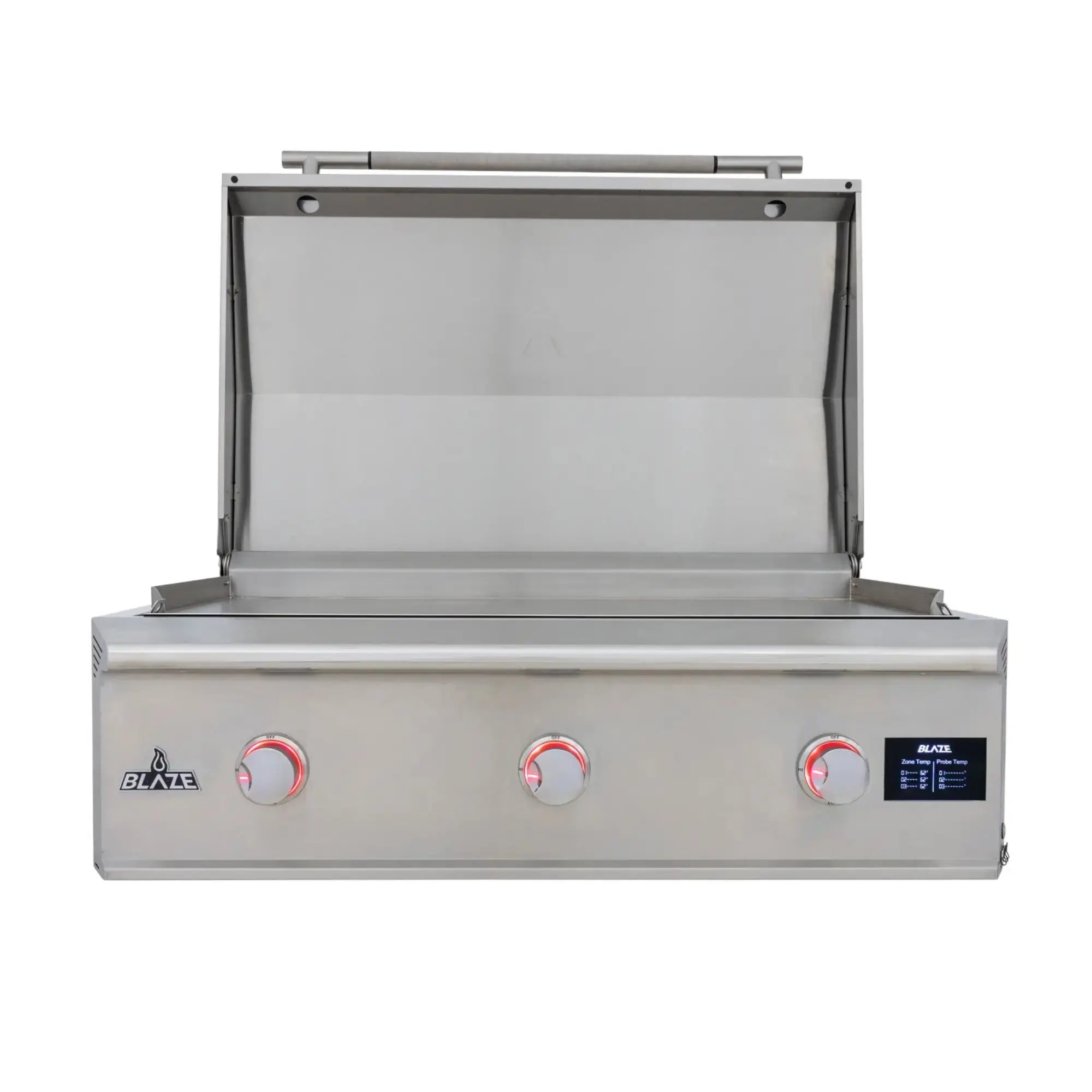
The drop-in choice if your gas grill is going into an outdoor kitchen island.
Frequently asked questions
Is a pellet grill better than a gas grill?
Neither is better across the board. Pellet grills are better for smoke flavor, roasting, and long low-temperature cooks. Gas grills are better for speed, searing, and everyday convenience. The better grill is the one that matches how you cook most weeks.
Is steak better on a pellet grill or a gas grill?
For a hard, steakhouse-style crust, gas wins: it reaches 500 to 700°F, while most pellet grills top out near 450-500°F. A pellet grill can still cook an excellent steak, especially reverse-seared, and adds a light smoky note gas cannot.
Can a pellet grill replace a gas grill?
For many households, yes, especially premium pellet models with sear zones. But if most of your cooking is fast, high-heat grilling on busy evenings, a gas grill will still feel quicker and simpler for daily use.
Do pellet grills use a lot of electricity?
No. The controller, auger, and fan draw a small amount of power, similar to a household appliance. The main practical requirement is simply having an outdoor outlet near the grill.
Is it cheaper to cook with pellets or propane?
For typical use, costs are comparable. A 20 lb propane tank gives roughly 20 hours of grilling, while pellet use rises with cook length and temperature. Natural gas is the cheapest per cook if you already have a line installed.
The better question is how you actually cook
The pellet grill vs gas grill debate often gets framed like one is serious and the other is convenient. Real life is simpler: the better grill is the one that matches your habits. At All Season Patio, we encourage customers to buy for the meals they know they will cook, not the ones they imagine making twice a year. That is the choice that holds up after the novelty wears off.
Find your grill
Premium pellet and gas grills from Blaze, Broil King, and more.
Shop all grills →Free shipping on every grill, all in stock and ready to ship.
More grilling guides: charcoal grill vs gas grill, the best grill for an outdoor kitchen, and the best modular outdoor kitchen kits.