The 5 Best Modular Outdoor Kitchen Kits for 2026 (Top Picks by Budget)
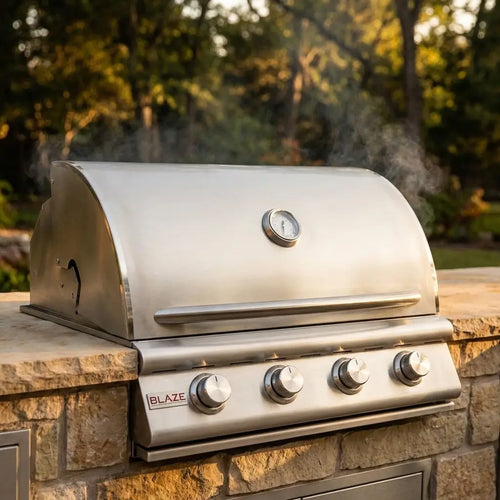
The best modular outdoor kitchen kit for most homeowners in 2026 is the Blaze Sunrise 8-Ft Outdoor Kitchen Island with the 32-Inch LTE+ Gas Grill. It delivers a finished, built-in look, weather-ready construction, and appliance-ready storage at a price well below a custom masonry build. If you host bigger groups, step up to the 40-inch grill version. If you live near the coast, the Marine Grade version is built for salt air. And if you would rather build in stages, modular components let you start with a grill and add storage, refrigeration, and prep space over time.
In this article
- The best modular outdoor kitchen kits
- What makes a kit worth buying
- How to judge quality before you buy
- Which layout works best
- What a modular outdoor kitchen really costs
- Common mistakes to avoid
- Frequently asked questions
What are the best modular outdoor kitchen kits in 2026?
Here are our top picks, matched to the way people actually buy: one best overall choice, options for bigger patios and tougher climates, and two smart paths for building in stages.
| Pick | Best for | Price | Key strength |
|---|---|---|---|
| Blaze Sunrise 8-Ft w/ 32" LTE+ Grill | Most homeowners | From $12,999 | Complete island, finished look, one delivery |
| Blaze Sunrise 8-Ft w/ 40" LTE+ Grill | Bigger gatherings | From $13,499 | More grill area for hosting crowds |
| Blaze Sunrise 8-Ft Marine Grade | Coastal homes | From $13,999 | Corrosion resistance for salt air |
| Build-your-own with components | Phased builds | Varies | Start small, expand as budget allows |
| Built-in grill + storage drawers | Compact patios | Varies | Premium core without the full island |

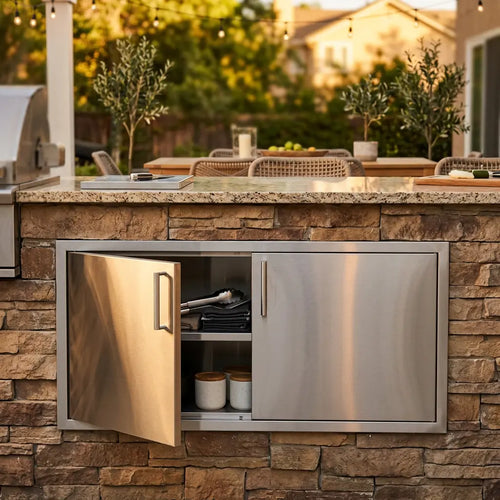
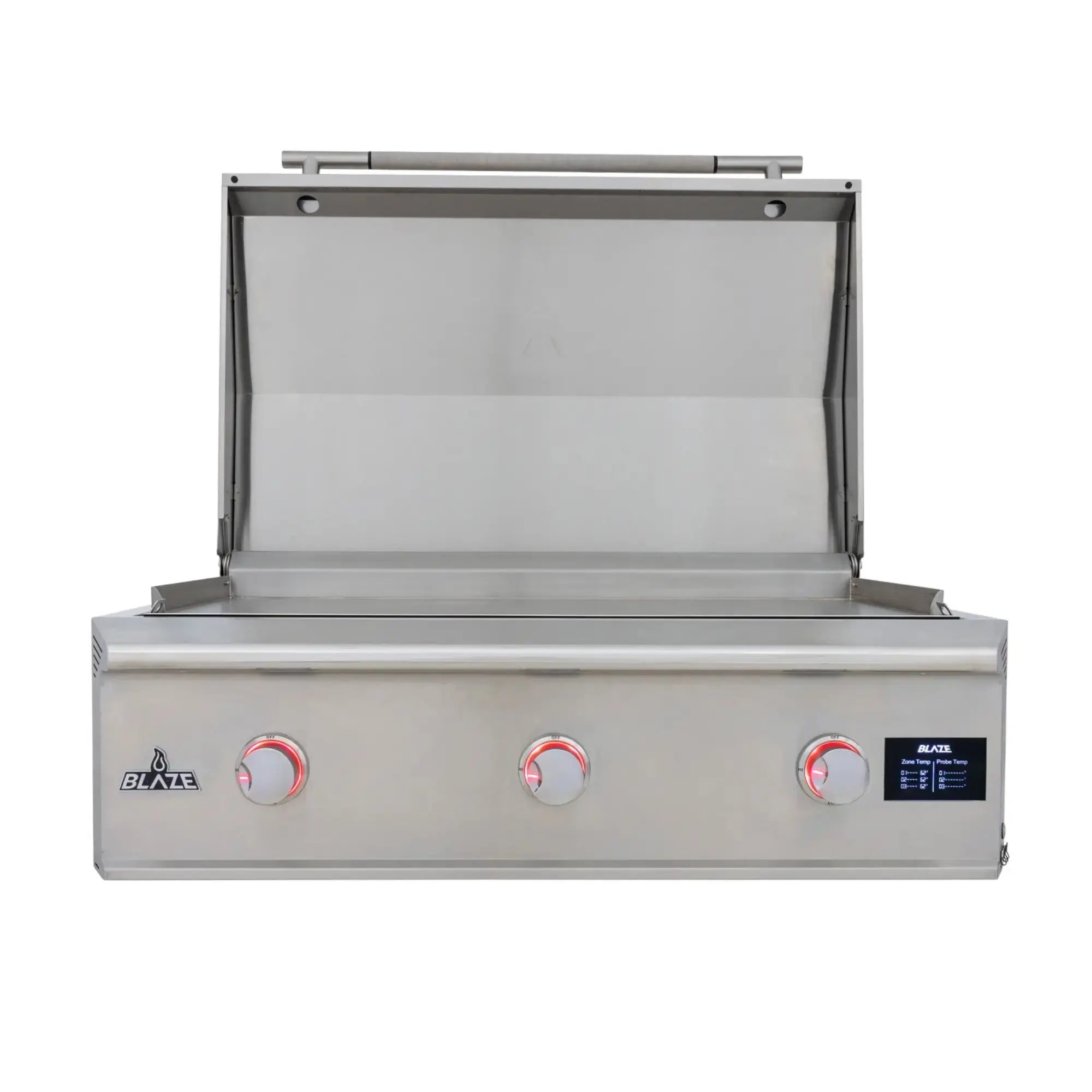
A complete 8-foot island with a premium built-in grill, weather-ready cabinetry, and a finished look, no masonry crew required.

The same island with a larger 40-inch grill, the right call if you regularly cook for a crowd.
Marine grade construction resists the salt air that quietly destroys standard stainless near the coast.

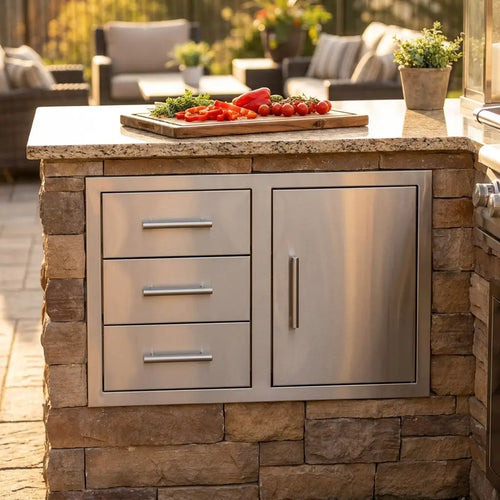
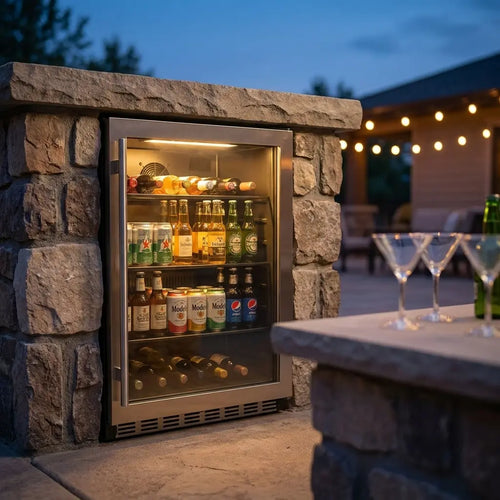
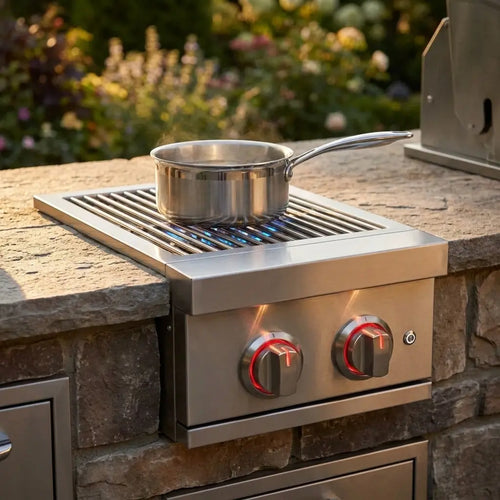
Start with a grill module, then add storage drawers, doors, refrigeration, and prep space as the budget allows, all in matching finishes.

For tighter patios, a premium built-in grill with enclosed storage beats an oversized island that crowds the walkway.

What makes a modular outdoor kitchen kit worth buying?
The best kits are not automatically the biggest, nor the ones with the most accessories. A good modular kitchen starts with strong core construction, practical storage, and a layout that fits how you actually cook outside.
Material quality matters first. In a premium category, powder-coated aluminum and quality stainless steel tend to be the most dependable choices because they stand up better to weather, heat, and repeated use. Marine-grade polymer cabinetry can also work well in certain climates, especially where moisture is a constant concern. Avoid anything that looks substantial in photos but feels thin, rattles under normal use, or relies on low-grade hardware.
The second factor is whether the kit is truly modular or just sold that way. A real modular system gives you flexibility to build around your space: start with a grill base and add storage, refrigeration, sink space, or bar seating later. If every piece is locked into one rigid footprint, it is not adaptable for homeowners who plan to build in stages.
Countertop quality also separates better kits from disposable ones. Outdoor countertops need to handle heat, rain, UV exposure, and the occasional hard impact. If the surface stains easily or struggles with direct sun, it will age fast.
How do you judge quality before you buy?
Photos do not tell you enough. Pay attention to the cabinet frame, door hinges, drawer slides, and whether the unit is designed for actual outdoor exposure. Some products are sold for covered patios but are not ideal for open, weather-heavy locations. If you live in a coastal area, high-humidity region, or a place with freeze-thaw cycles, that distinction matters a lot.
Look at ventilation and utility planning too. Grill modules need proper airflow. Refrigeration needs the right clearances. If a sink is involved, plumbing access should not feel like an afterthought. The best systems make these practical needs easier to handle instead of leaving them for you to solve during installation.

It is also worth asking whether the finish will age well. Matte black, stainless, and neutral cabinet tones hold up visually over time because they pair easily with changing patio furniture. Trend-driven finishes can date the kitchen faster than homeowners expect.
Which layout works best for a real backyard?
Straight layouts are efficient and usually easiest to install. They work well against a wall or along the edge of a patio and keep utility runs simpler. L-shaped designs create better separation between cooking and prep space, useful if more than one person uses the kitchen at once. U-shaped configurations only work when you have enough room to move comfortably. In a modest backyard, they crowd quickly.
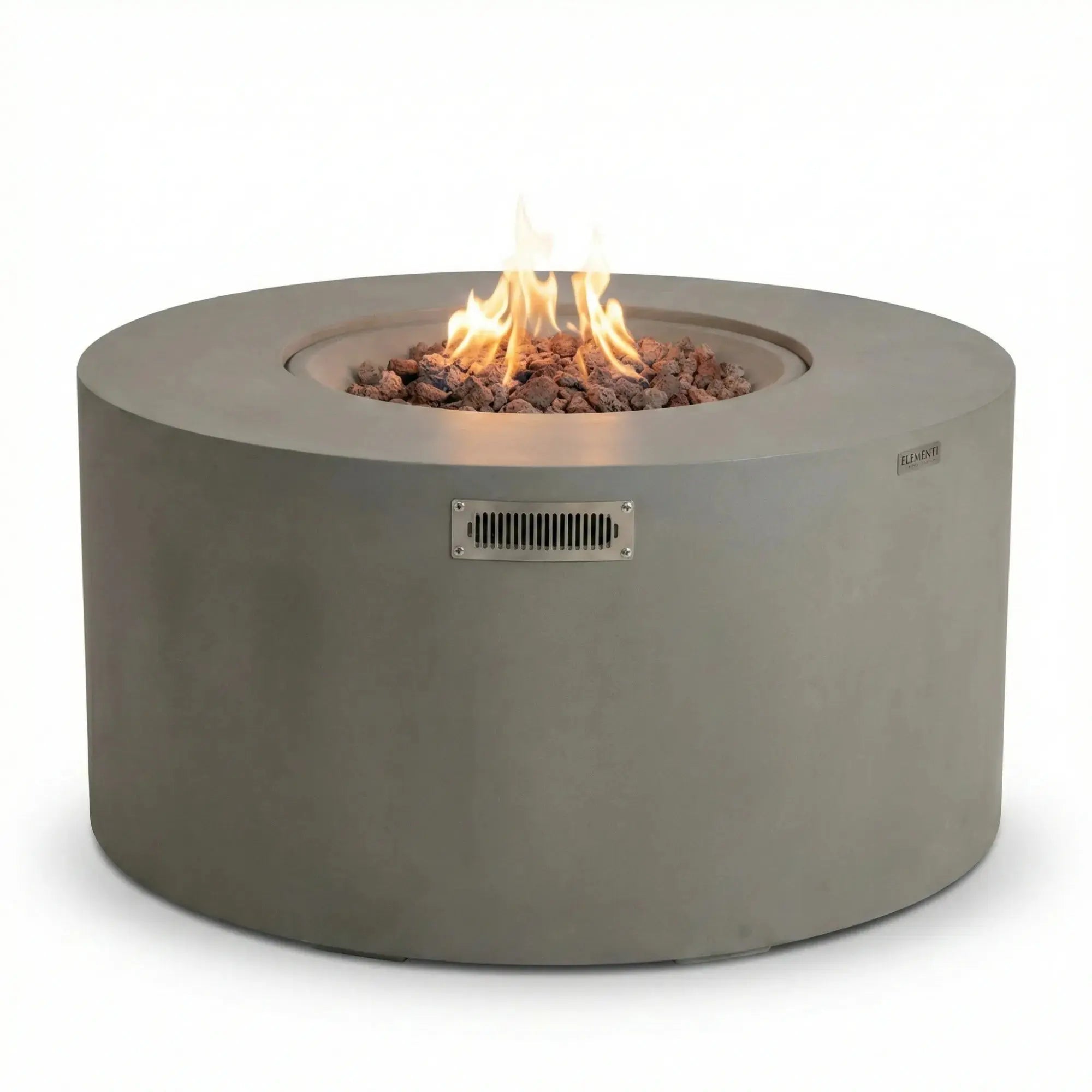
Think about where the kitchen sits in relation to seating, traffic flow, and wind. A grill placed too close to a dining zone makes hosting less comfortable. Too far away, and the cook gets isolated. Good outdoor kitchen planning is partly about appliances and partly about how people gather. If your patio is part of a larger outdoor living space with seating, lighting, and fire features, a cohesive modular system looks the most intentional.
How much does a modular outdoor kitchen really cost?
The headline price can be misleading. The cabinet package is only part of the cost: you may also need appliances, delivery considerations, countertop upgrades, utility connections, cover protection, and installation help. Some kits are attractively priced because they are cabinet-forward and appliance-light. Others look expensive at first glance but include more of what you would otherwise add separately.

As a rough guide, a complete premium island kit like the Blaze Sunrise runs $13,000 to $14,000, while a phased component build can start much lower and grow over time. A cheaper kit that needs multiple upgrades can end up costing more than a better-built system with fewer compromises. For premium outdoor living, durability usually wins the long game.
What are the most common mistakes buyers make?
One mistake is buying for appearance only. Looks matter, especially in a backyard where the kitchen is part of the design, but a beautiful setup with poor storage or weak materials gets frustrating fast.
Another is underestimating prep space. People focus heavily on the grill, then realize there is nowhere to set trays, season food, or plate dinner. If you cook outside more than occasionally, usable counter area is not a luxury.
The third is ignoring future use. A lot of homeowners start with weekend grilling in mind, then end up entertaining more often once the space is finished. A modular system should leave room for growth, whether that means adding cold storage or drawers, more cabinetry, or a better serving zone.
Frequently asked questions
Are modular outdoor kitchen kits worth it?
Yes, for most homeowners. A modular kit costs less than a custom masonry build, installs in days instead of weeks, and still delivers a finished, built-in look. The trade-off is less customization than a fully bespoke project.
What is the best modular outdoor kitchen kit?
For most buyers, the Blaze Sunrise 8-Ft Island with the 32-Inch LTE+ Gas Grill is the best combination of build quality, finished appearance, and value. Coastal homes should choose the Marine Grade version.
Is a modular outdoor kitchen cheaper than a custom build?
Usually, yes. Custom masonry outdoor kitchens commonly run well beyond the cost of a premium modular island once you include construction labor, countertops, and utilities. Modular kits arrive largely finished and need far less site work.
Can you add to a modular outdoor kitchen later?
That is the main advantage of a true modular system. Choose a brand with a deep component line, matching finishes across products, so refrigeration, drawers, and prep modules added later look like they were always there.
How long do modular outdoor kitchens last?
A well-built kit in powder-coated aluminum or quality stainless steel should last well over a decade with basic care. Cheap thin-gauge cabinets often show rust and wear within a few seasons.
Build your outdoor kitchen
Complete Blaze island kits and matching components, in stock with free shipping.
Shop outdoor kitchen islands →More outdoor kitchen guides: best outdoor kitchen appliance packages, the best grill for an outdoor kitchen, and pellet grill vs gas grill.