What Is the Best Grill for Outdoor Kitchen?

If you're asking what is the best grill for outdoor kitchen projects, the honest answer is not a single brand or burner count. The best grill is the one that fits how you cook, how often you entertain, and how permanent you want this setup to be. A grill that looks impressive in a showroom can be the wrong choice if it runs too small for your family, uses the wrong fuel for your yard, or doesn't hold up through years of weather and heavy use.
That matters more in an outdoor kitchen than it does with a freestanding grill. Once a built-in grill is installed into stone, stucco, or cabinetry, replacing it is a bigger job. This is one purchase where getting specific upfront usually saves money later.
What is the best grill for outdoor kitchen use?
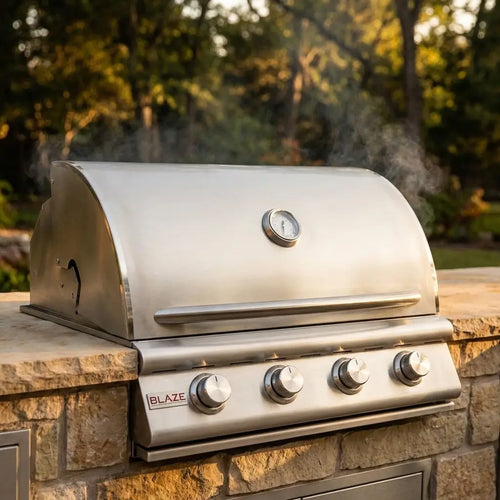
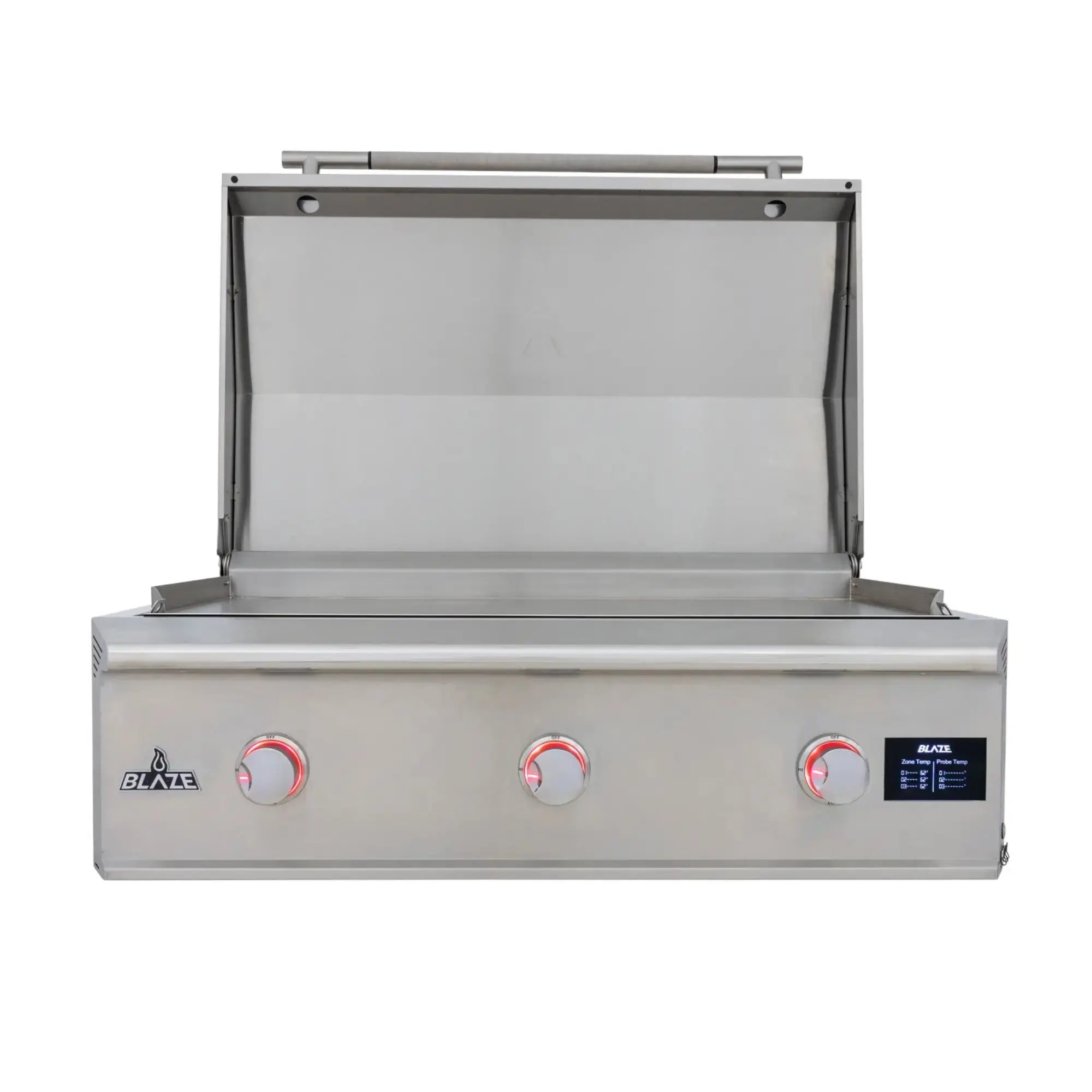
For most homeowners building a premium outdoor kitchen, the best choice is a built-in stainless steel gas grill from a reputable brand with strong heat performance, reliable ignition, and solid warranty support. That answer covers the majority of projects because gas is convenient, built-in models create a clean finished look, and quality stainless construction stands up better to outdoor exposure.
But that doesn't mean gas is automatically right for everyone. If you care most about smoke flavor and longer cooks, a pellet grill or charcoal setup may deserve a place in the plan. If speed, convenience, and weeknight cooking matter most, gas usually wins. The right answer depends on how you actually use the space, not just what looks high-end.
Start with how you cook, not just the spec sheet
A lot of buyers begin with burner count and BTUs. Those specs matter, but they are not the first filter. Think about your real cooking habits.
If your outdoor kitchen is going to be used two or three nights a week for burgers, chicken, vegetables, and quick entertaining, a gas grill is usually the most practical fit. It preheats fast, gives you direct control over temperature, and works well for households that want reliable performance without much fuss.
If your ideal weekend means ribs, brisket, reverse-seared steaks, and a more hands-on cooking style, then the best grill for your outdoor kitchen may not be a standard gas grill at all. A pellet grill brings wood-fired flavor and easier temperature management than charcoal. Charcoal still has a loyal following because of the flavor and high-heat searing potential, but it asks more from the cook and creates more cleanup.
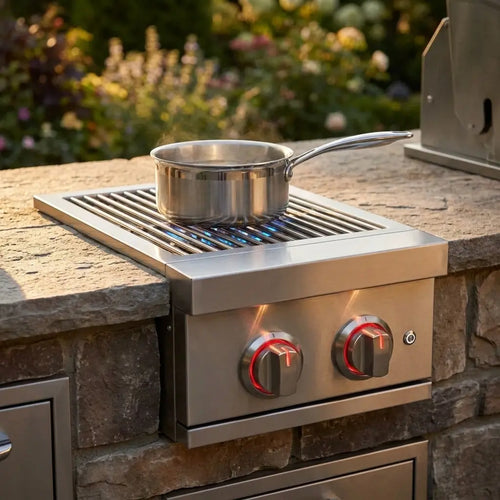
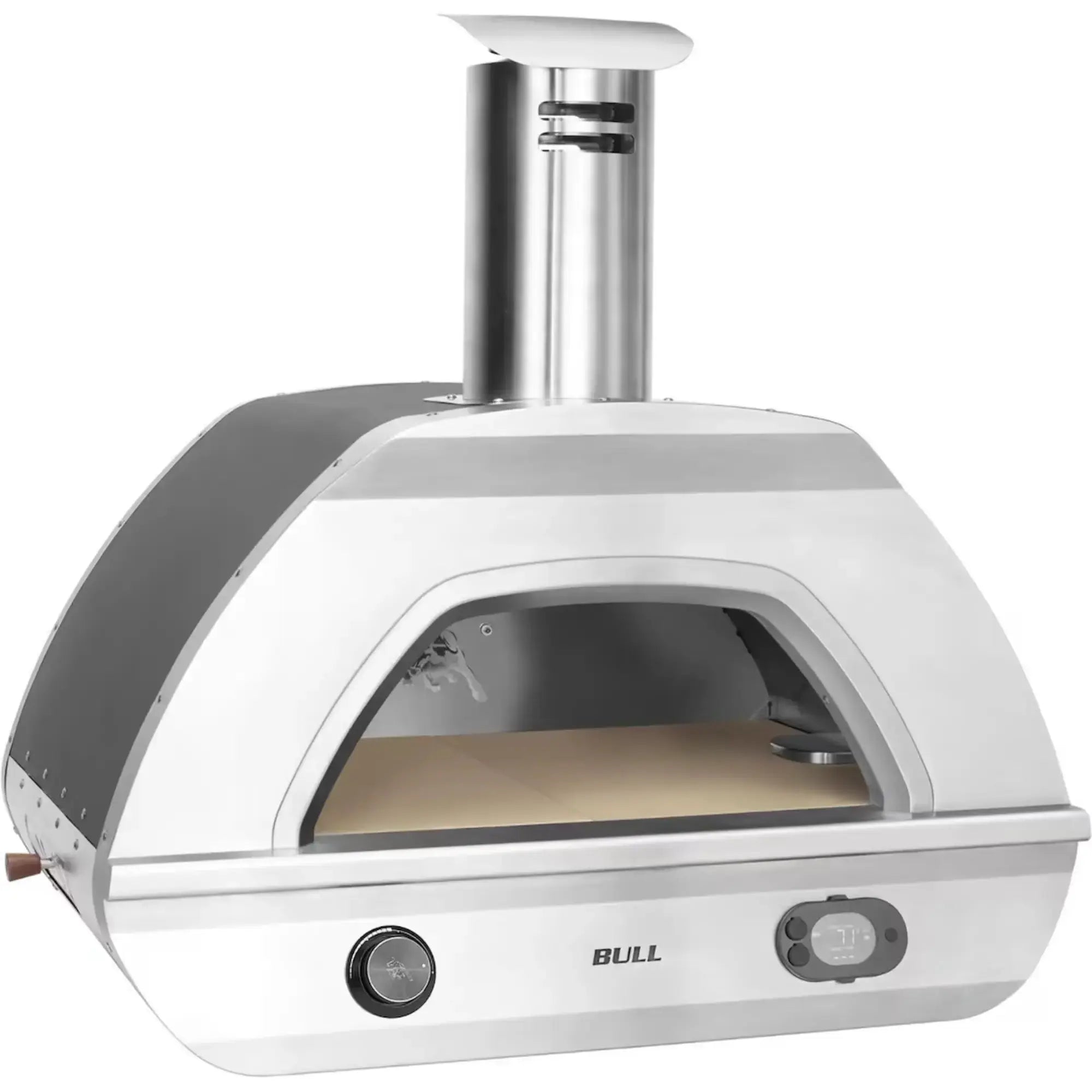
There is also a design question here. Some outdoor kitchens are built around one primary grill. Others work better with a grill plus a side burner, griddle, pizza oven, or smoker. If you want multiple cooking styles, it can make more sense to choose a dependable main grill and expand from there rather than trying to force one appliance to do everything.
Built-in gas grills are the default for a reason
When homeowners ask what is the best grill for outdoor kitchen installations, built-in gas grills usually rise to the top because they match the way most outdoor kitchens are used. They are easy to start, easy to control, and easy for guests or family members to use without a learning curve.
Natural gas is especially attractive if your home already has a gas line nearby. You never have to refill propane tanks, and fuel supply is consistent for longer gatherings. Propane gives you more flexibility if a gas line is not practical, but you need to plan for tank storage and replacement.
The real advantage of a premium built-in gas grill is day-to-day usability. If the grill is convenient, you will use the outdoor kitchen more often. That's a big deal when you're investing in a permanent setup.
Material quality matters more than extra features
In this category, build quality is not a luxury detail. It is the difference between a grill that performs well for years and one that starts showing problems after a couple of seasons.
Look for heavy-duty stainless steel construction, ideally 304 stainless in key exterior and cooking surfaces. Lower-grade materials can discolor, corrode, or wear down faster, especially in humid climates, coastal areas, or homes where the grill stays uncovered part of the year. Thicker grates, solid hood construction, quality welds, and dependable burners usually matter more than flashy add-ons.
This is one of the biggest trade-offs buyers face. A less expensive grill may offer more features on paper, but a better-built grill often delivers more value over time. Interior lighting, rotisserie kits, and infrared options can be useful, but they should come after the basics: construction, heat consistency, ignition reliability, and service support.
Choosing the right size for your outdoor kitchen
Bigger is not always better. Grill size should match both your cooking volume and your island layout.
A 32-inch to 36-inch built-in grill works well for many households. It gives enough room for family meals and moderate entertaining without dominating the entire kitchen. If you regularly host large groups or like cooking multiple proteins and sides at once, stepping up to a 40-inch or 42-inch model may be worthwhile.
At the same time, oversized grills can create problems. They cost more, take longer to preheat, and may reduce room for prep space, refrigeration, trash storage, or other useful components. In a well-planned outdoor kitchen, landing zones and counter space are just as important as grill width.
A practical breakdown is this: buy for your typical use, not the biggest party you host once a year. If entertaining is central to your lifestyle, size up. If not, prioritize balance in the overall kitchen design.
Heat performance: don't obsess over BTUs alone
BTUs are one of the most overused comparison points in grill shopping. Higher numbers do not automatically mean better cooking.
What matters more is how efficiently the grill delivers and retains heat. A well-designed grill with solid burner placement, a good hood, quality grates, and even heat distribution will usually outperform a weaker build with inflated BTU numbers. You want the grill to sear when needed, hold steady temperatures, and avoid major hot and cold spots.
If you cook a lot of steaks or want restaurant-style crust, an infrared sear burner can be a smart upgrade. If you mostly grill chicken, fish, vegetables, and weeknight meals, standard burners with strong overall consistency may serve you better than chasing maximum searing specs.
Think about maintenance before you buy
Outdoor kitchens are supposed to make life easier, not create another thing to fight with on the weekends. The best grill for an outdoor kitchen should be straightforward to clean and maintain.
Look for accessible drip trays, removable grates, durable burner covers, and construction that does not trap grease in hard-to-reach areas. In coastal or four-season climates, weather resistance is especially important. Even a premium grill benefits from a proper cover and routine cleaning, but some are clearly built with outdoor exposure in mind and some are not.
This is also where buying from a specialist retailer matters. You want clear guidance on cutout dimensions, ventilation requirements, fuel type, and long-term parts support. A grill is not just a product choice in an outdoor kitchen. It is part of a permanent system.
Gas vs pellet vs charcoal in an outdoor kitchen
Gas is the best all-around fit for most people because it balances performance, convenience, and design integration. It suits homeowners who want a polished outdoor kitchen that gets used often.
Pellet grills are a strong option for buyers who care about wood-fired flavor and lower-effort smoking. The trade-off is that not every pellet unit integrates as cleanly into a built-in kitchen, and not every buyer wants the slower startup and different maintenance routine.
Charcoal delivers excellent flavor and high-heat cooking, but it is the least convenient for frequent everyday use. For some grilling enthusiasts, that trade-off is worth it. For many families building a functional entertainment space, gas is simply more practical.
There is no wrong answer if the choice matches your habits. The mistake is buying a grill style that fits an idealized version of how you think you will cook instead of how you actually cook now.
The best grill is the one that fits the whole kitchen
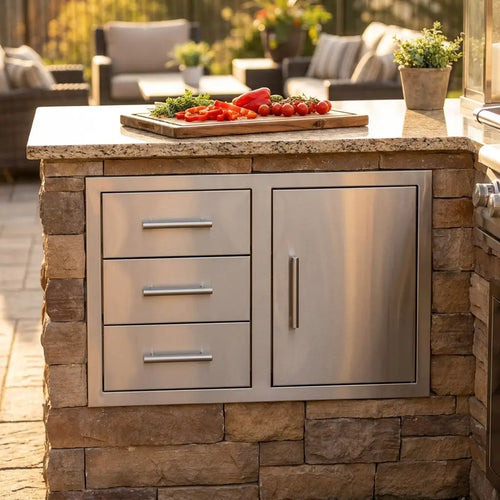
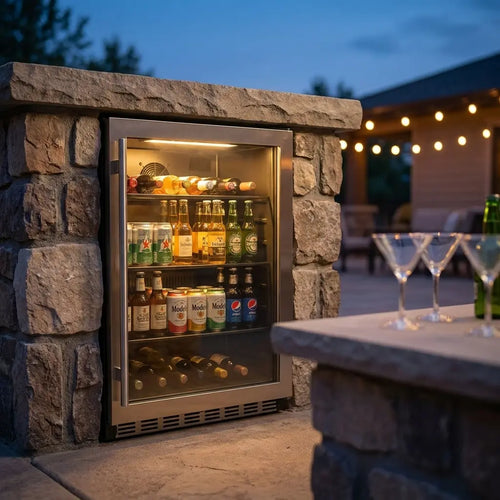
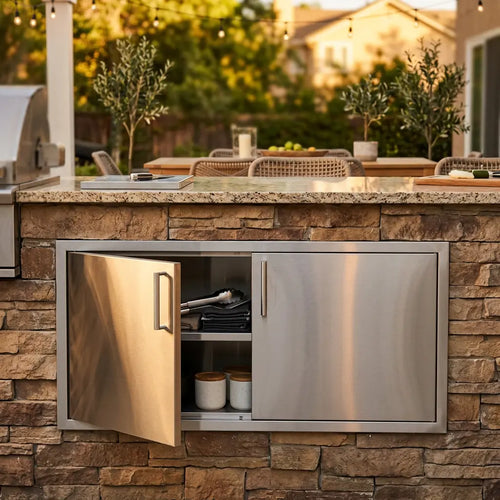
A premium grill should work with the rest of the space, not overpower it. Ventilation, counter space, storage, refrigeration, lighting, and traffic flow all affect how satisfying the finished kitchen feels. A great grill in a poorly planned island still leads to a frustrating setup.
That is why the best results usually come from thinking in terms of the full cooking zone. Where will hot food land? Where will raw prep happen? Will you have enough room for platters, utensils, and serving? Chosen by people who actually use this stuff, the best outdoor kitchens are not just beautiful. They are easy to move through and easy to use.
If you are investing in a long-term backyard setup, the smartest move is usually a premium built-in gas grill with durable stainless construction, the right size for your household, and support from a retailer that understands the category. At All Season Patio, that practical approach tends to lead people to better decisions than chasing trend features or inflated specs.
Buy the grill that makes your outdoor kitchen more usable on an average Tuesday, not just more impressive on install day.