
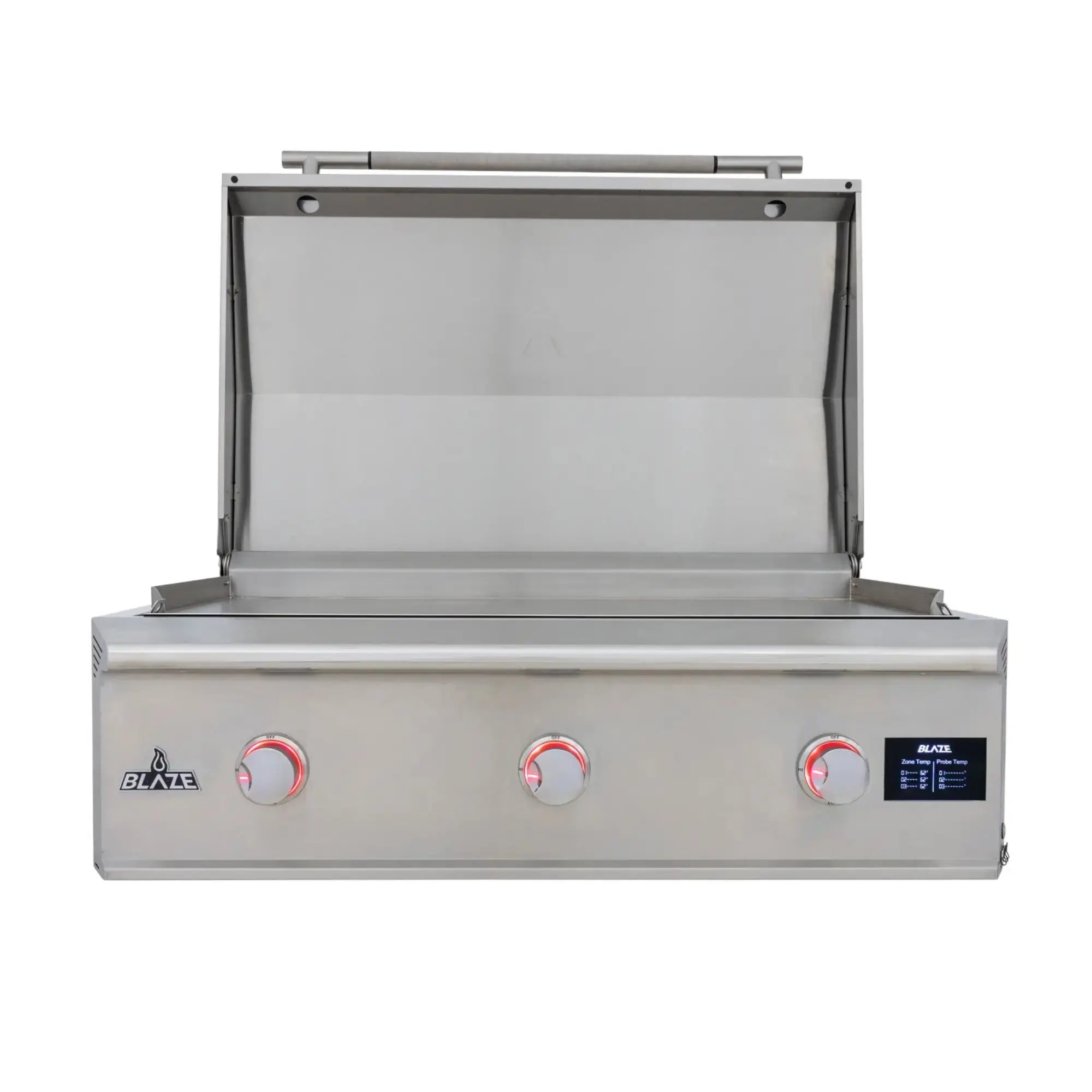
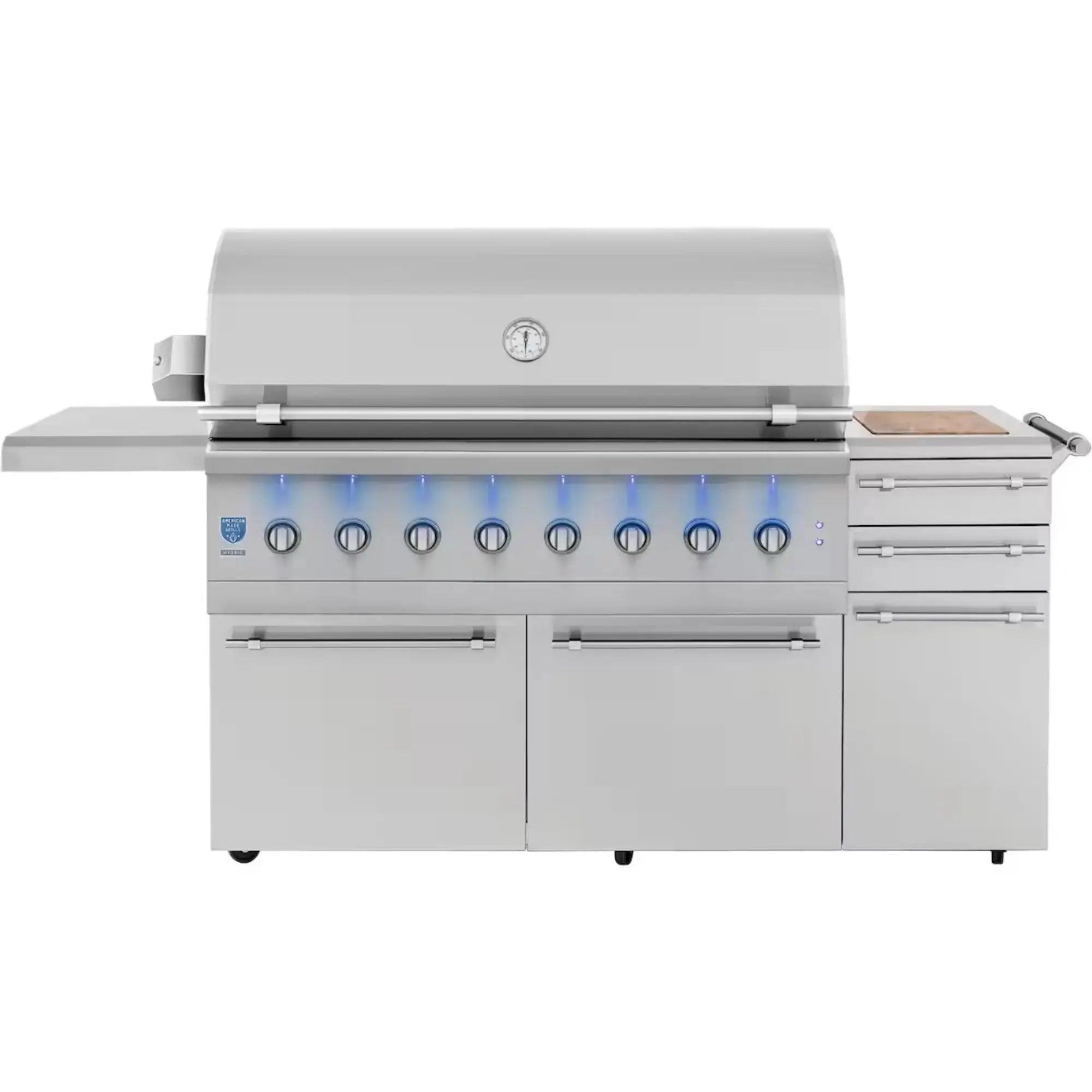
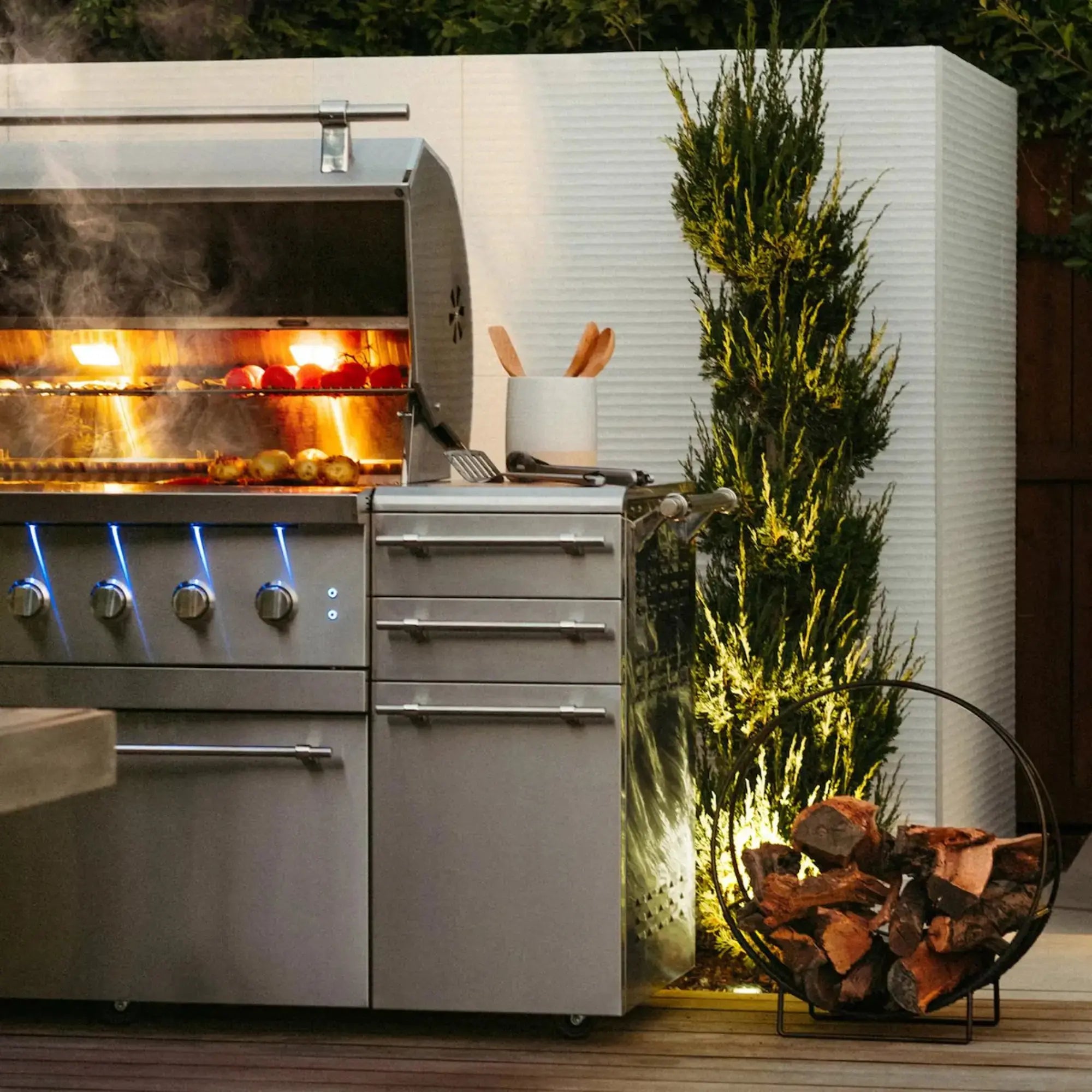
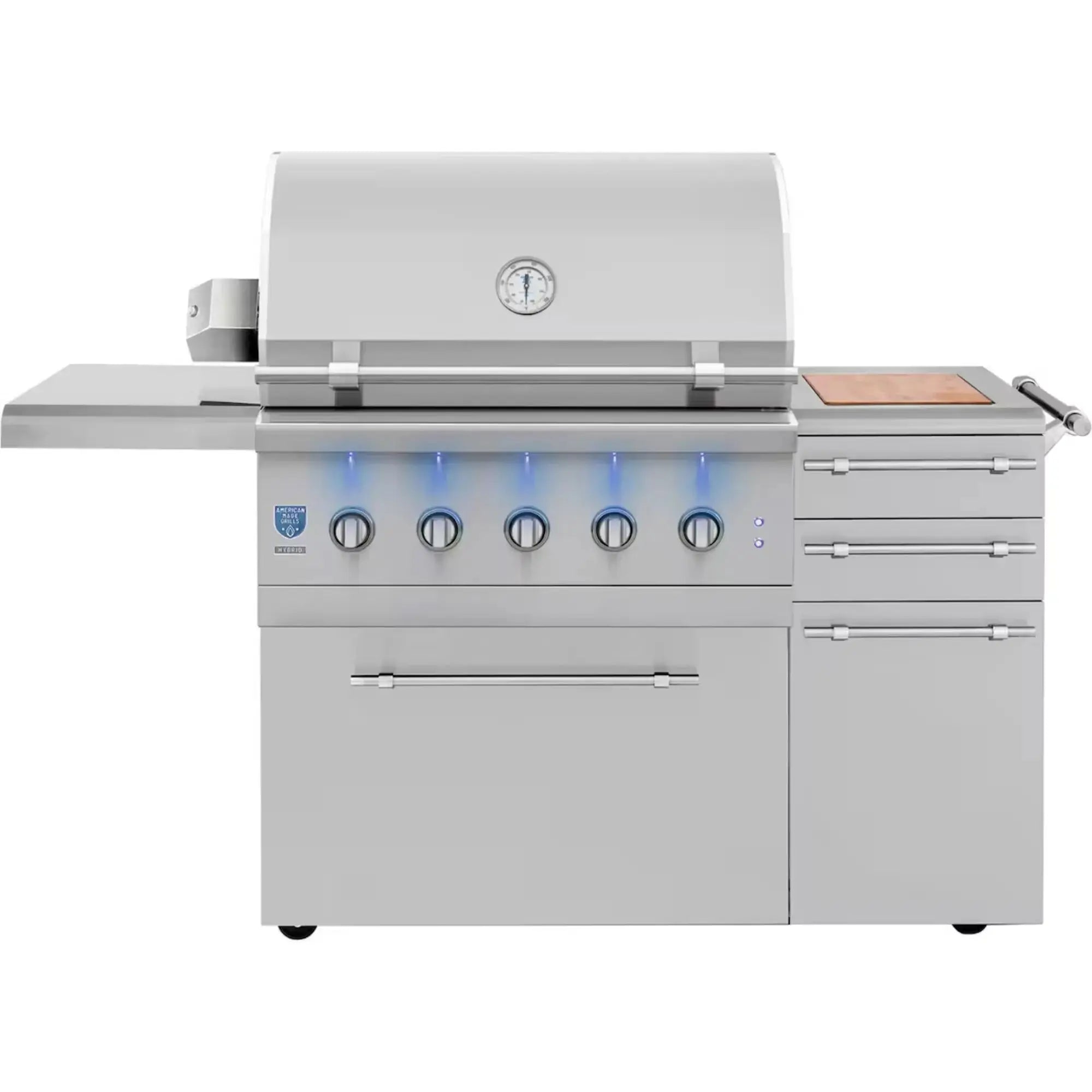
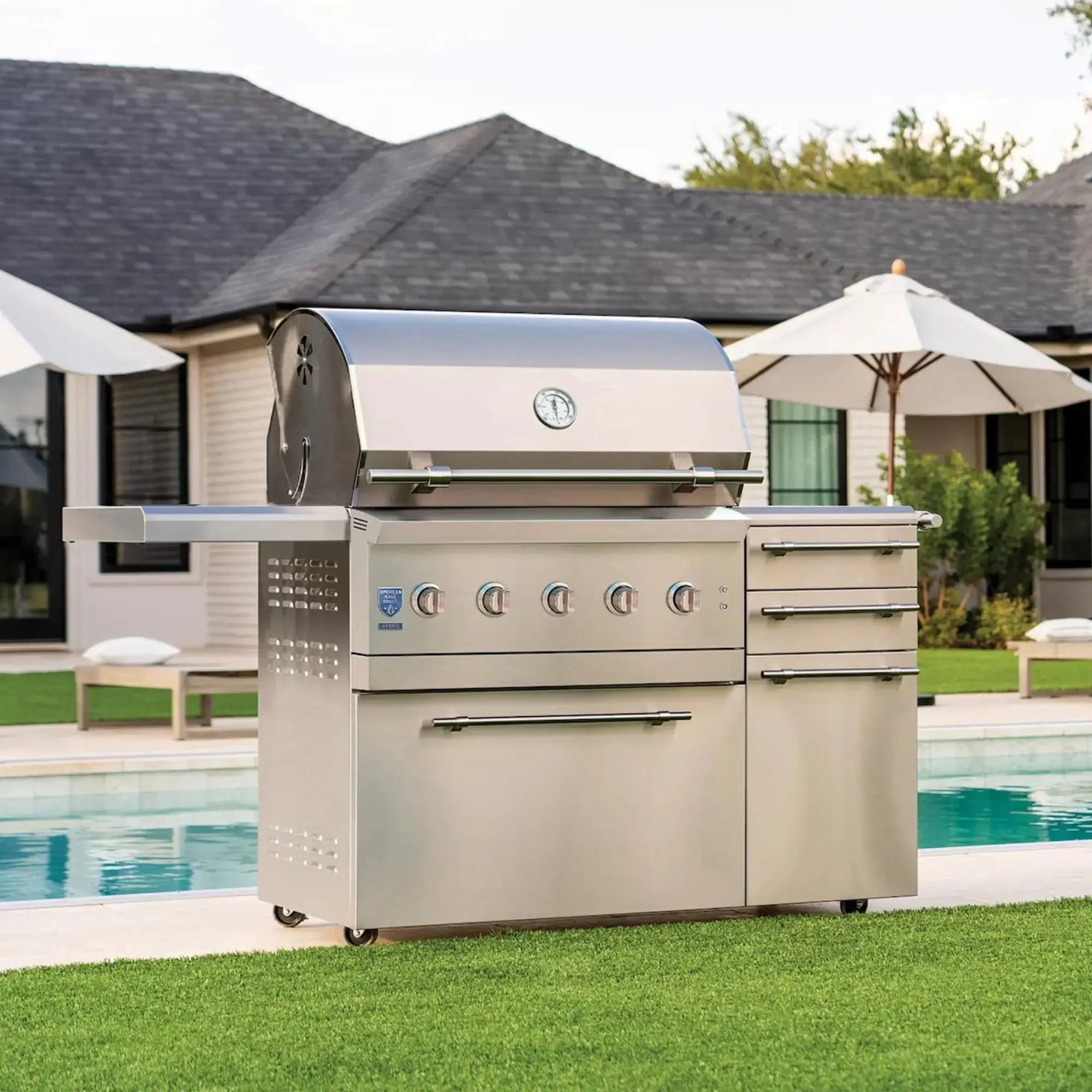
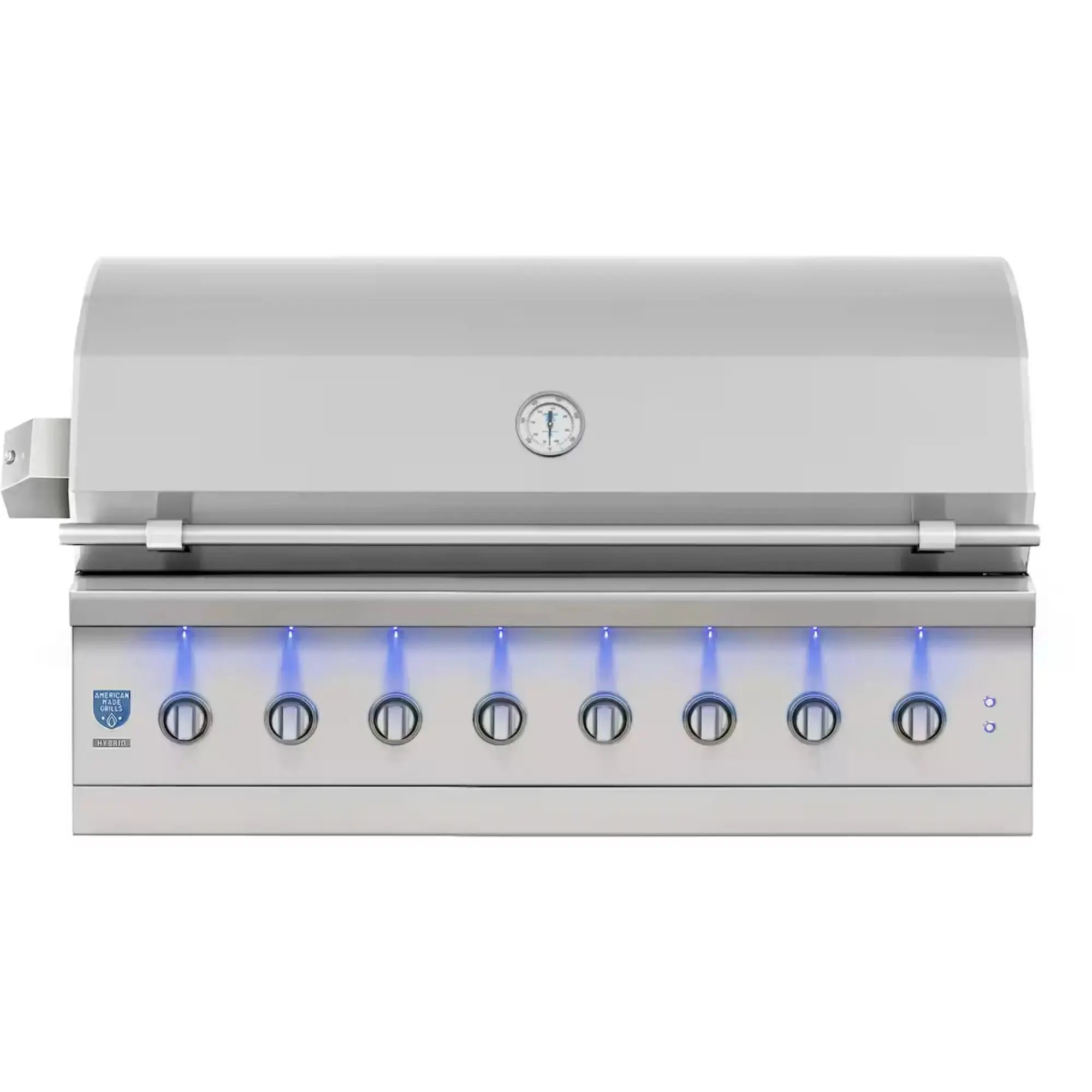
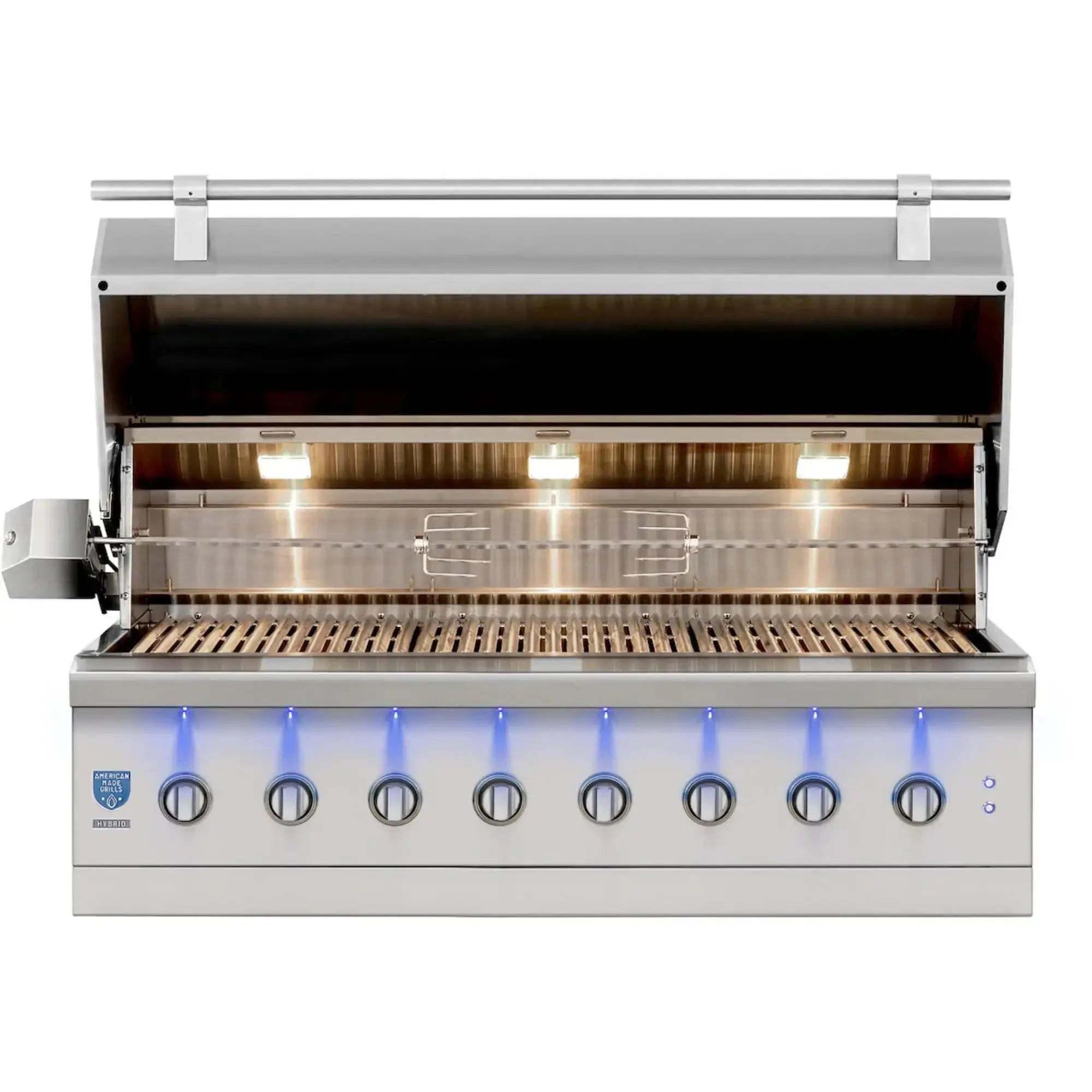
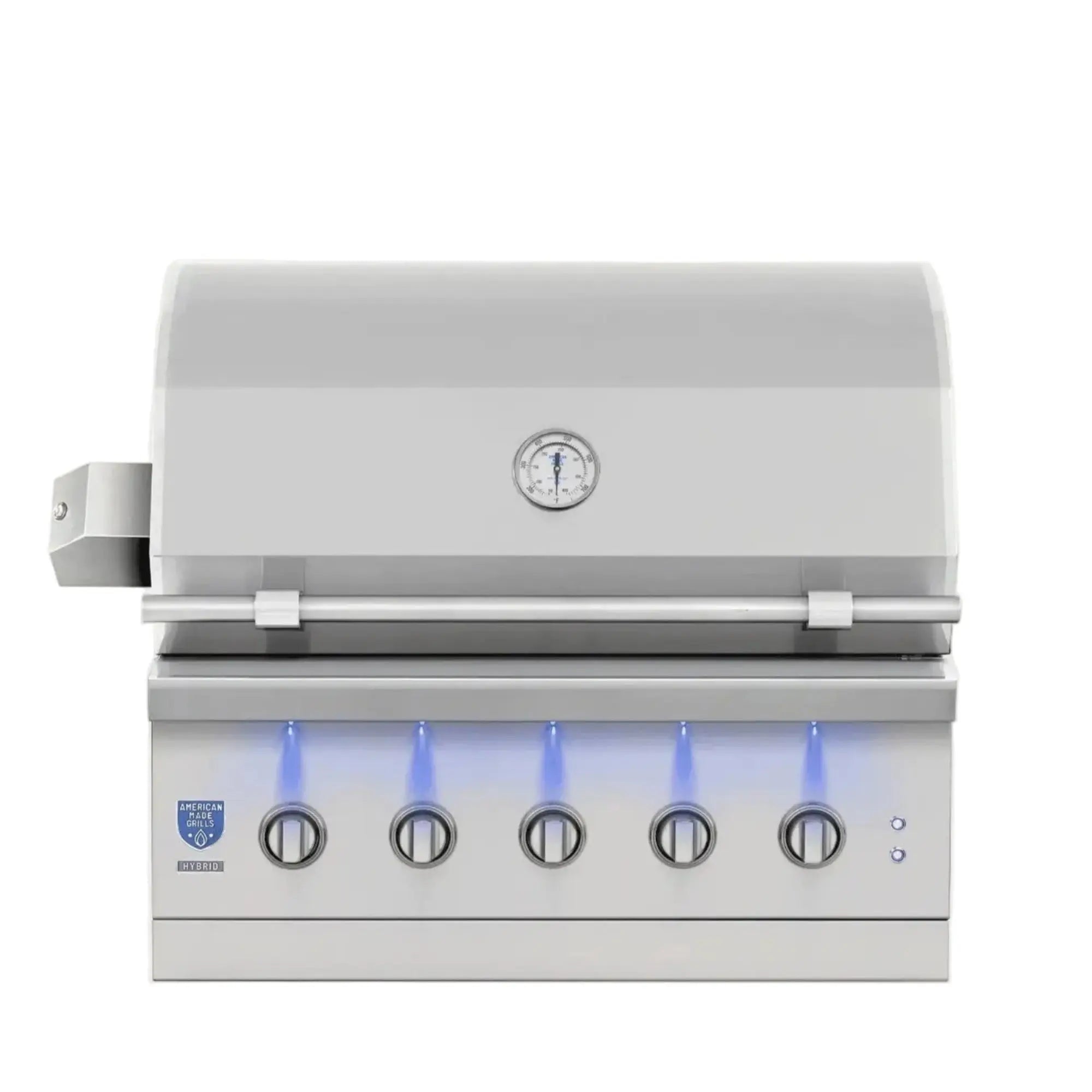
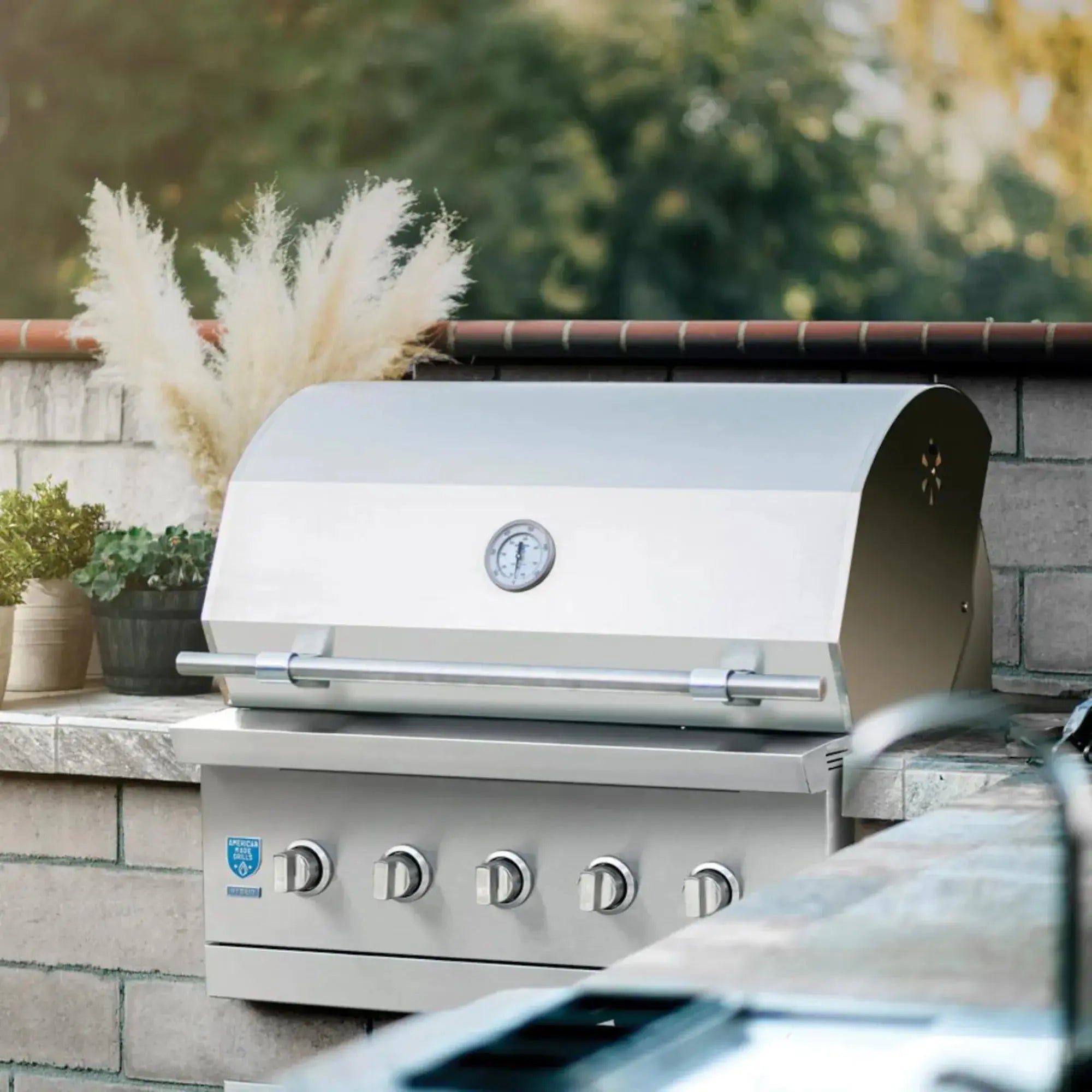
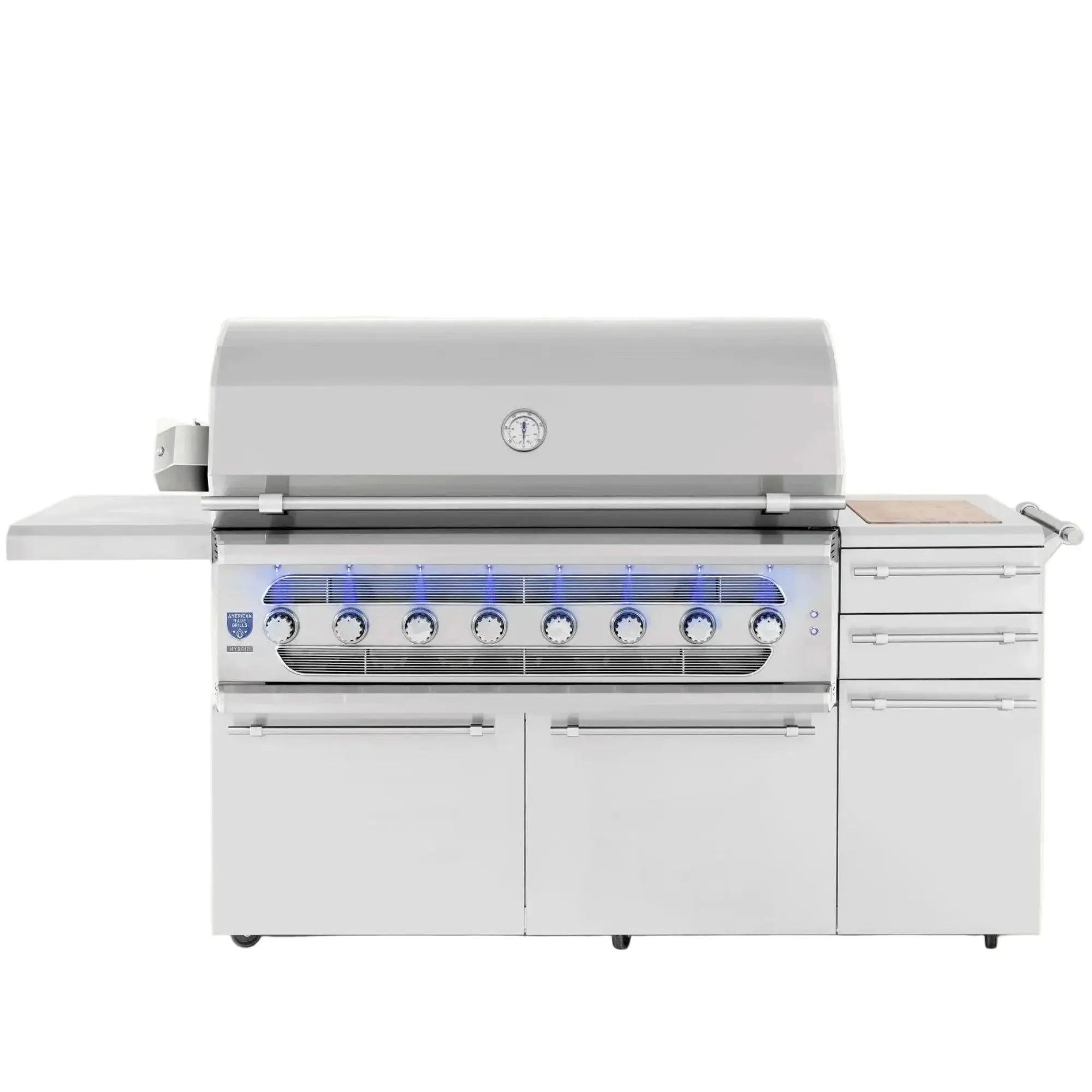
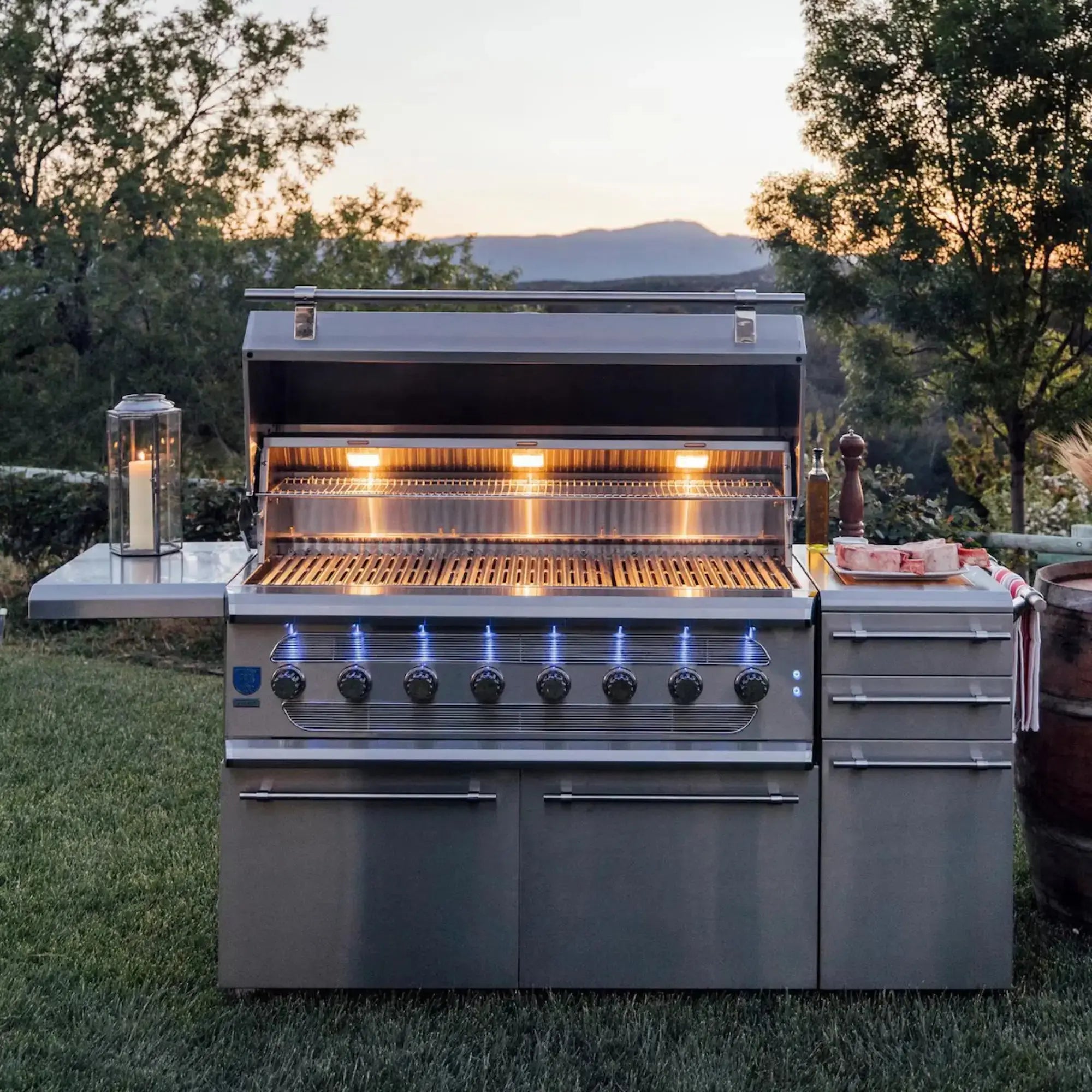
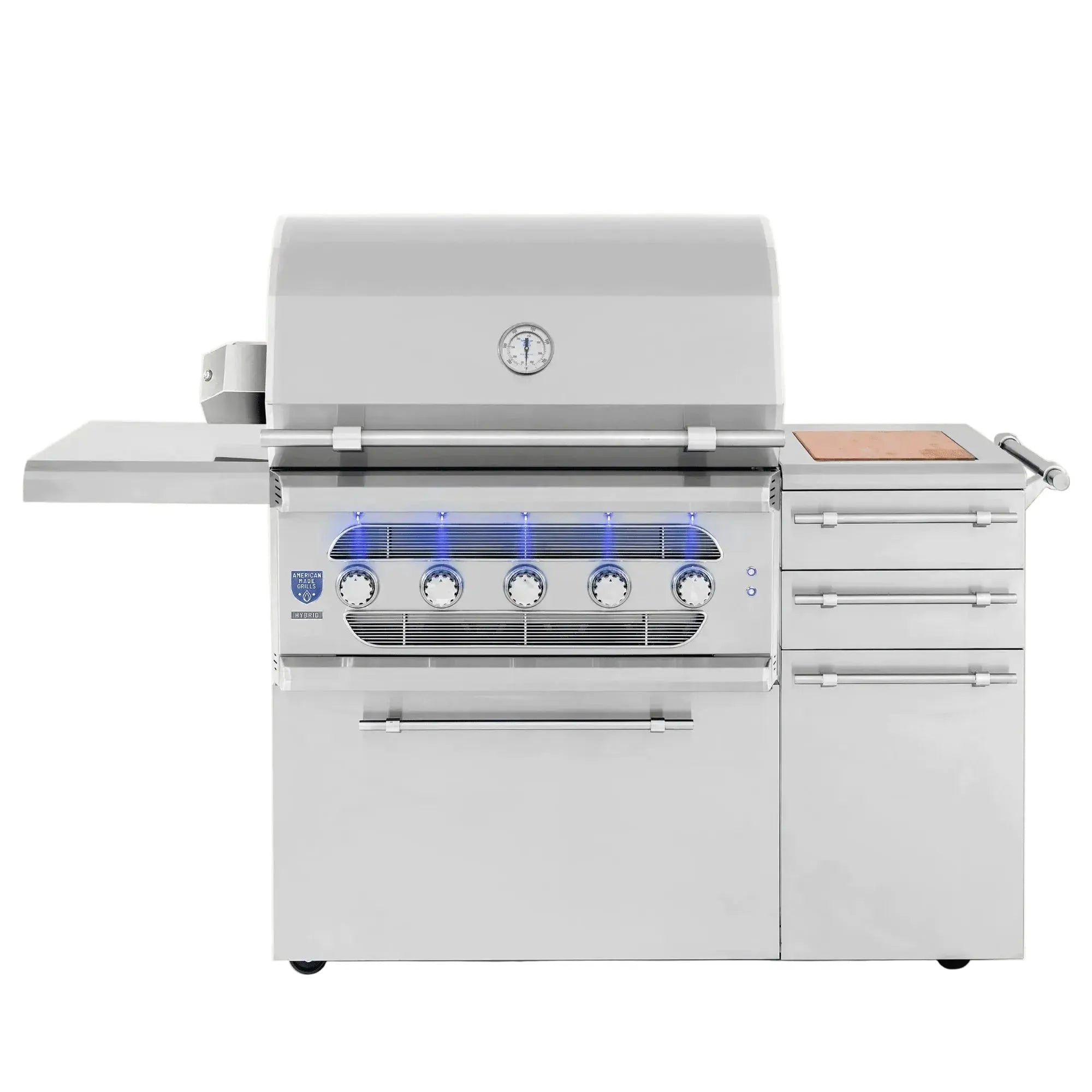
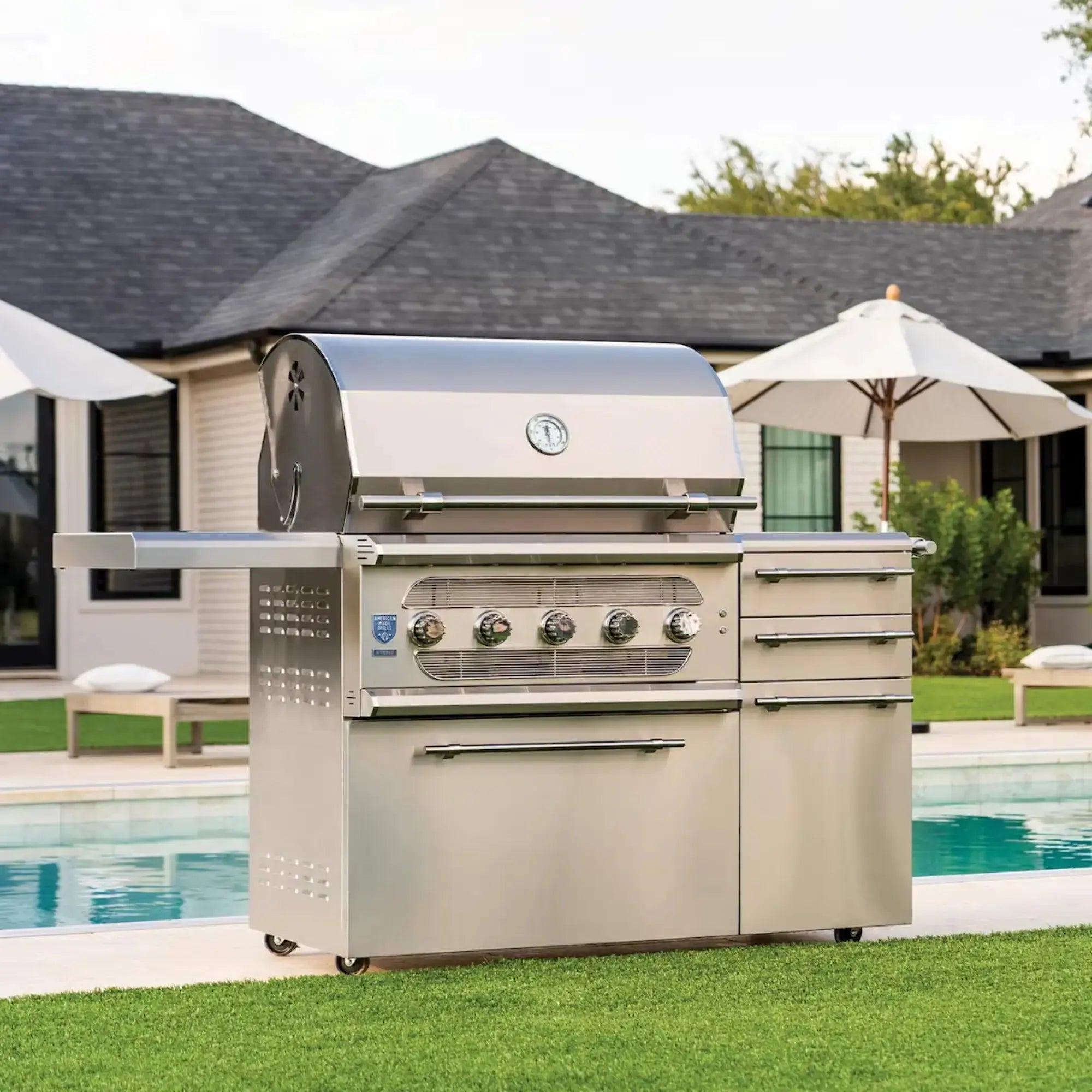
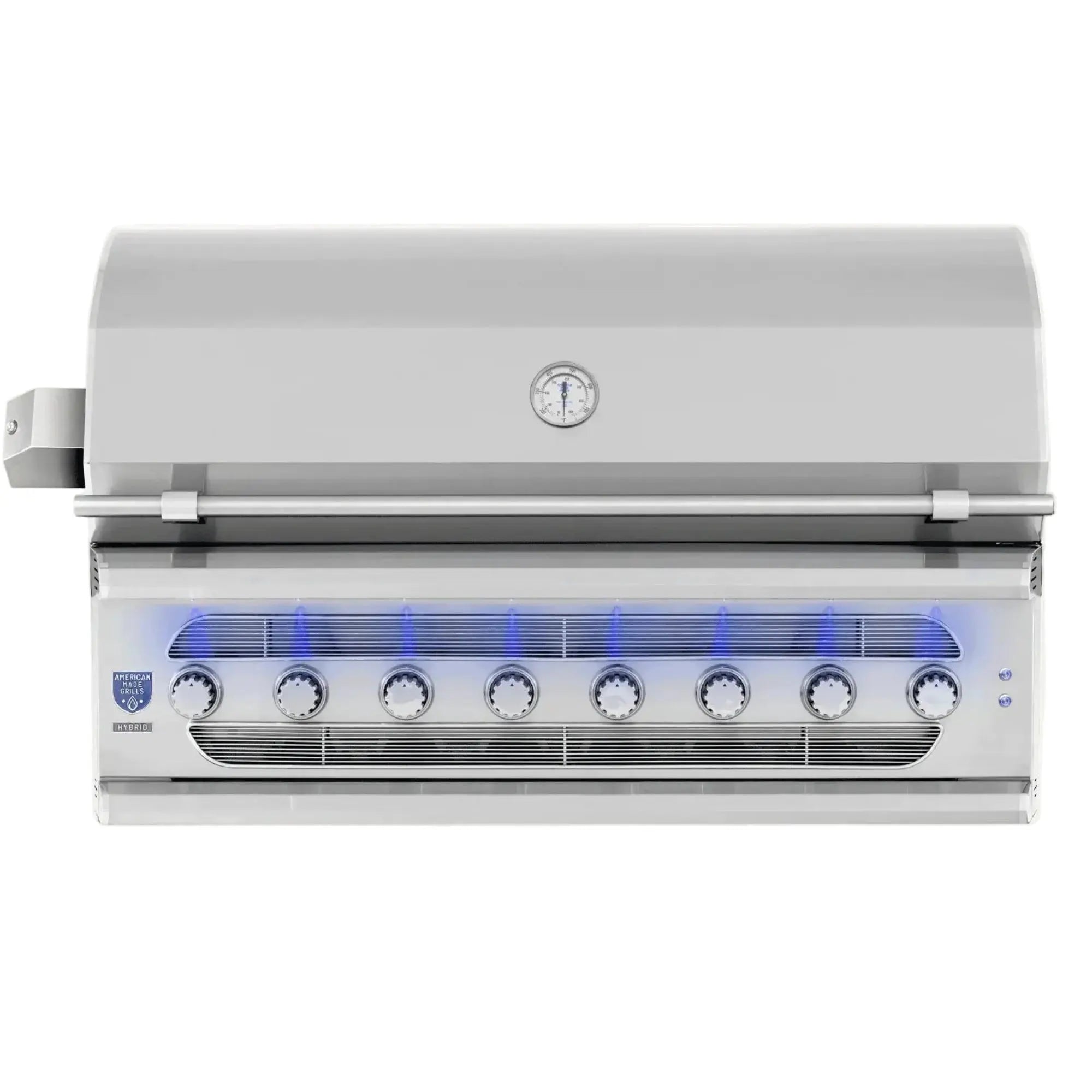
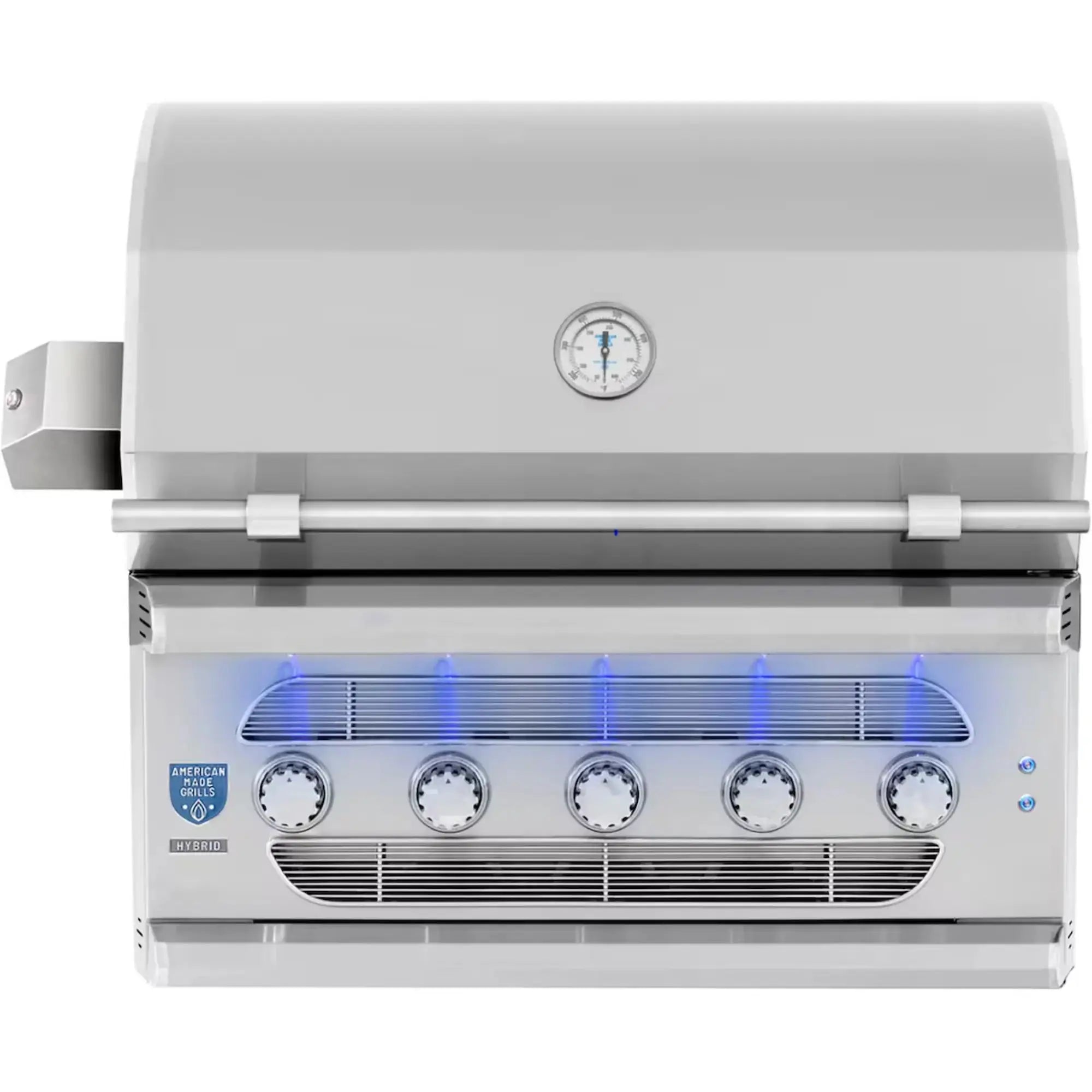

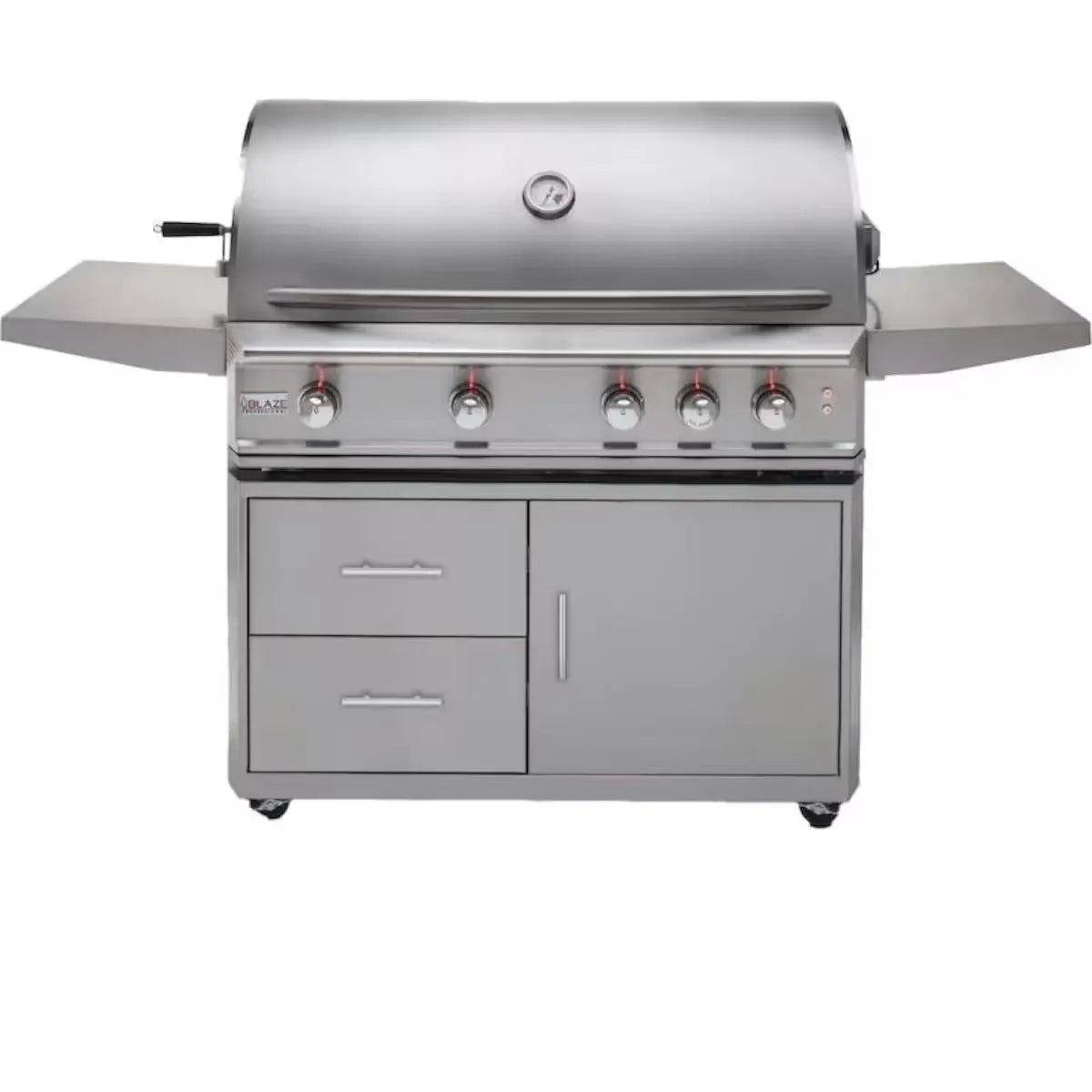
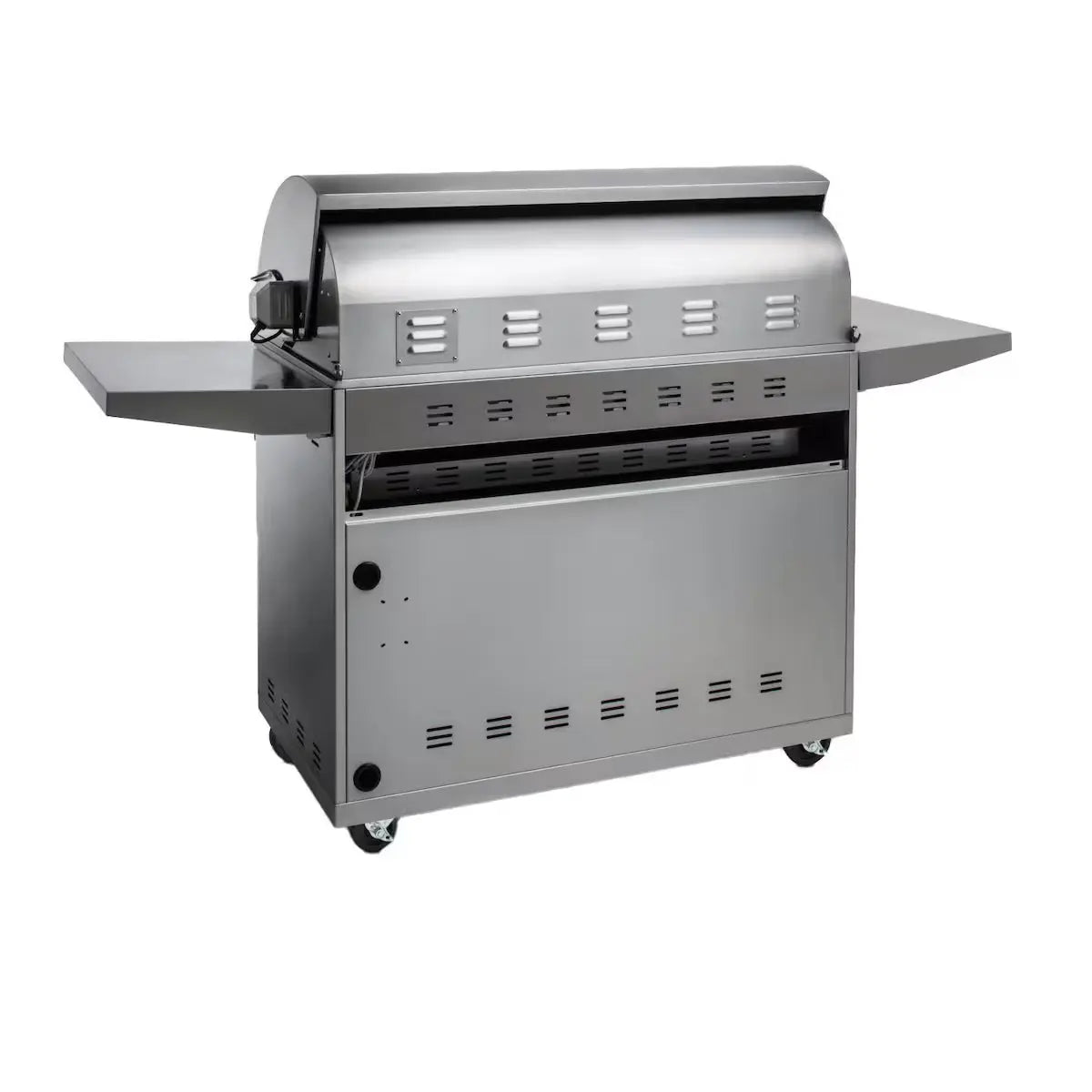
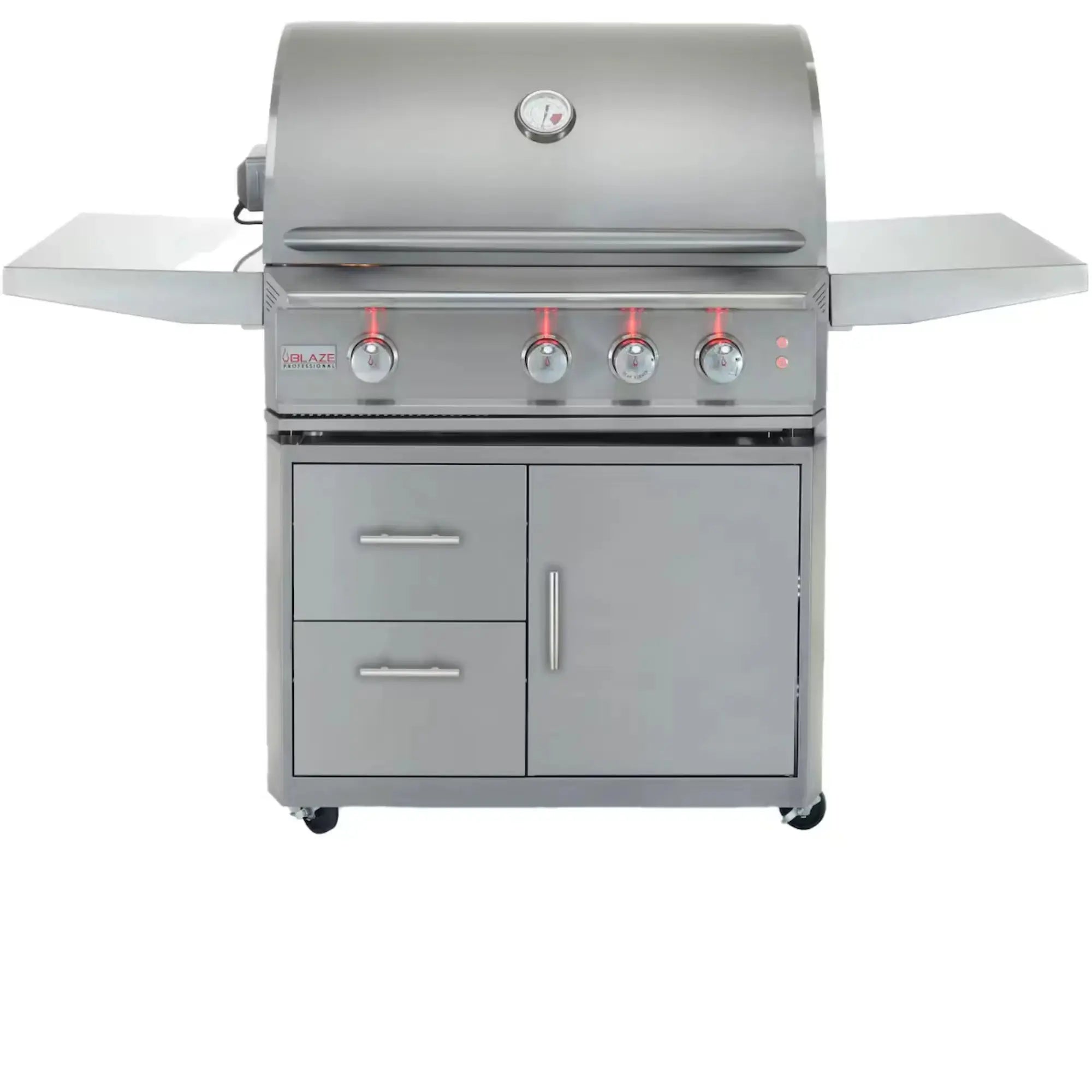
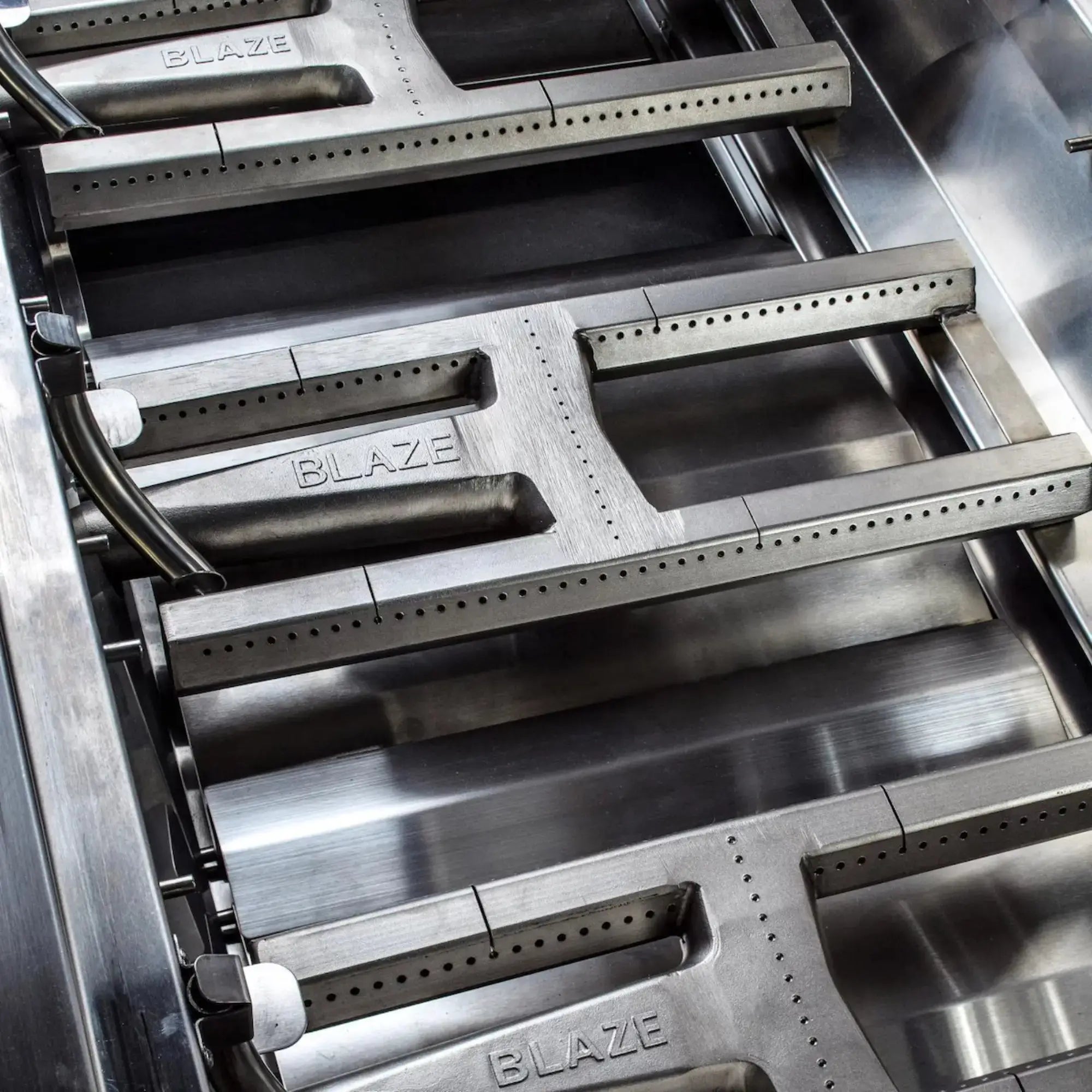
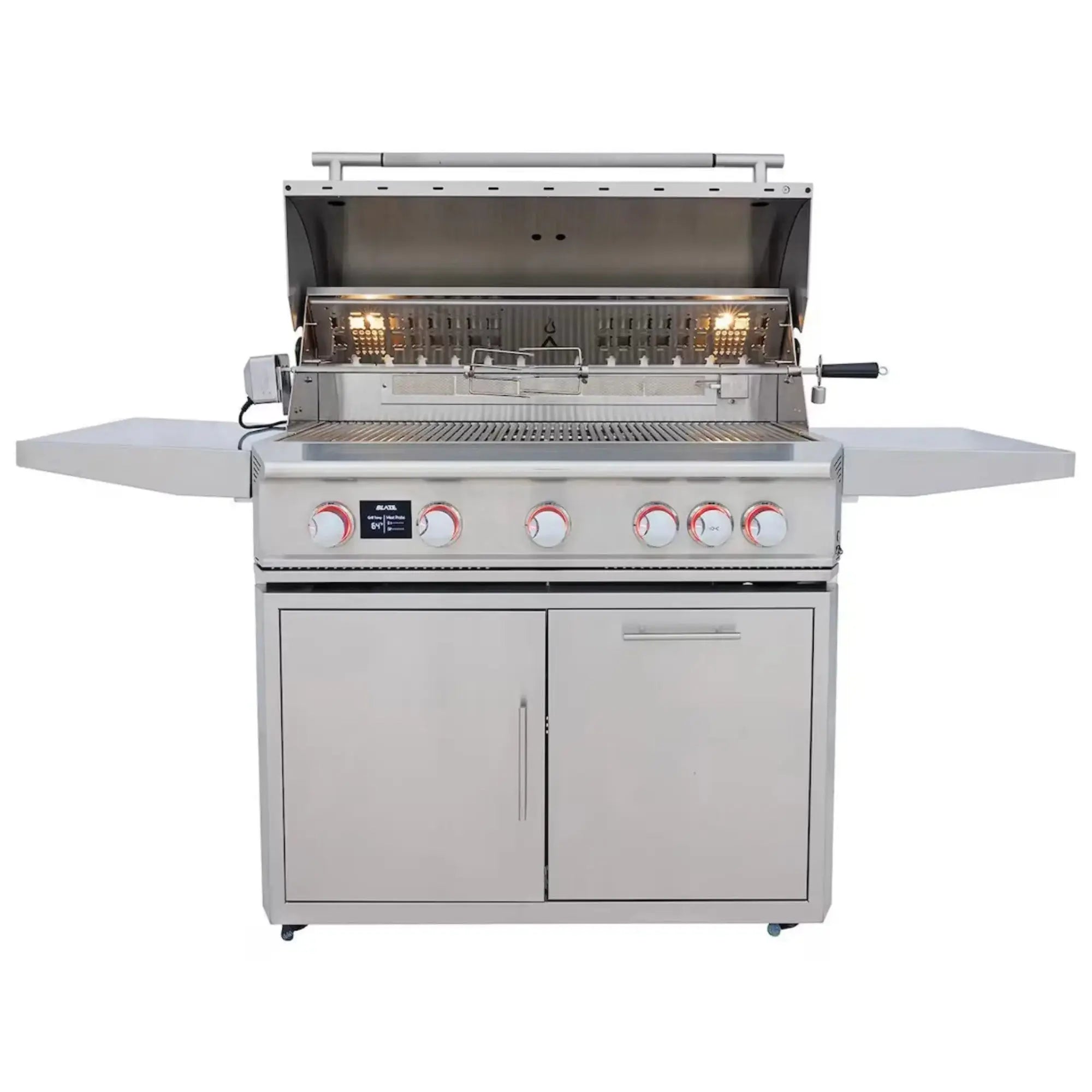
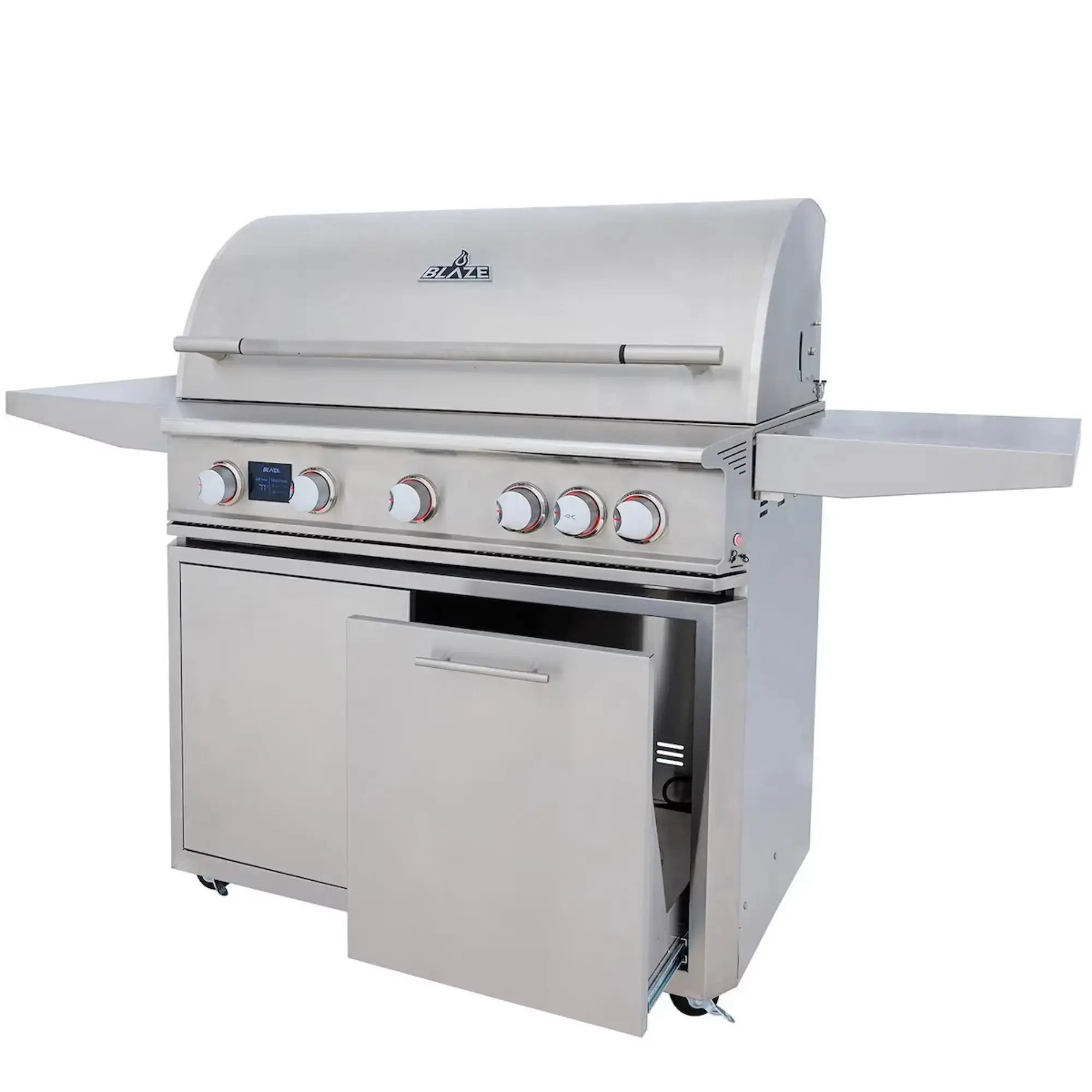
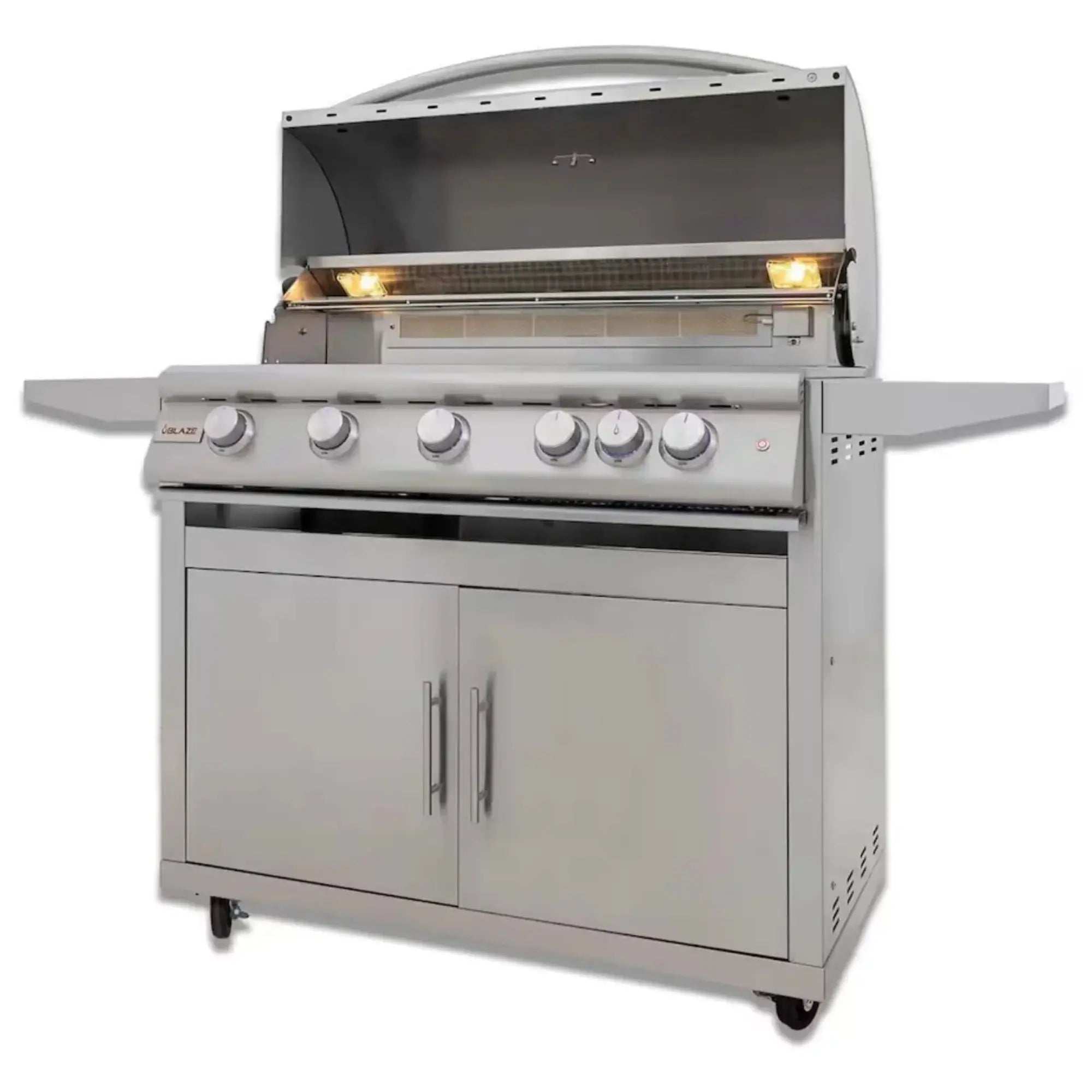
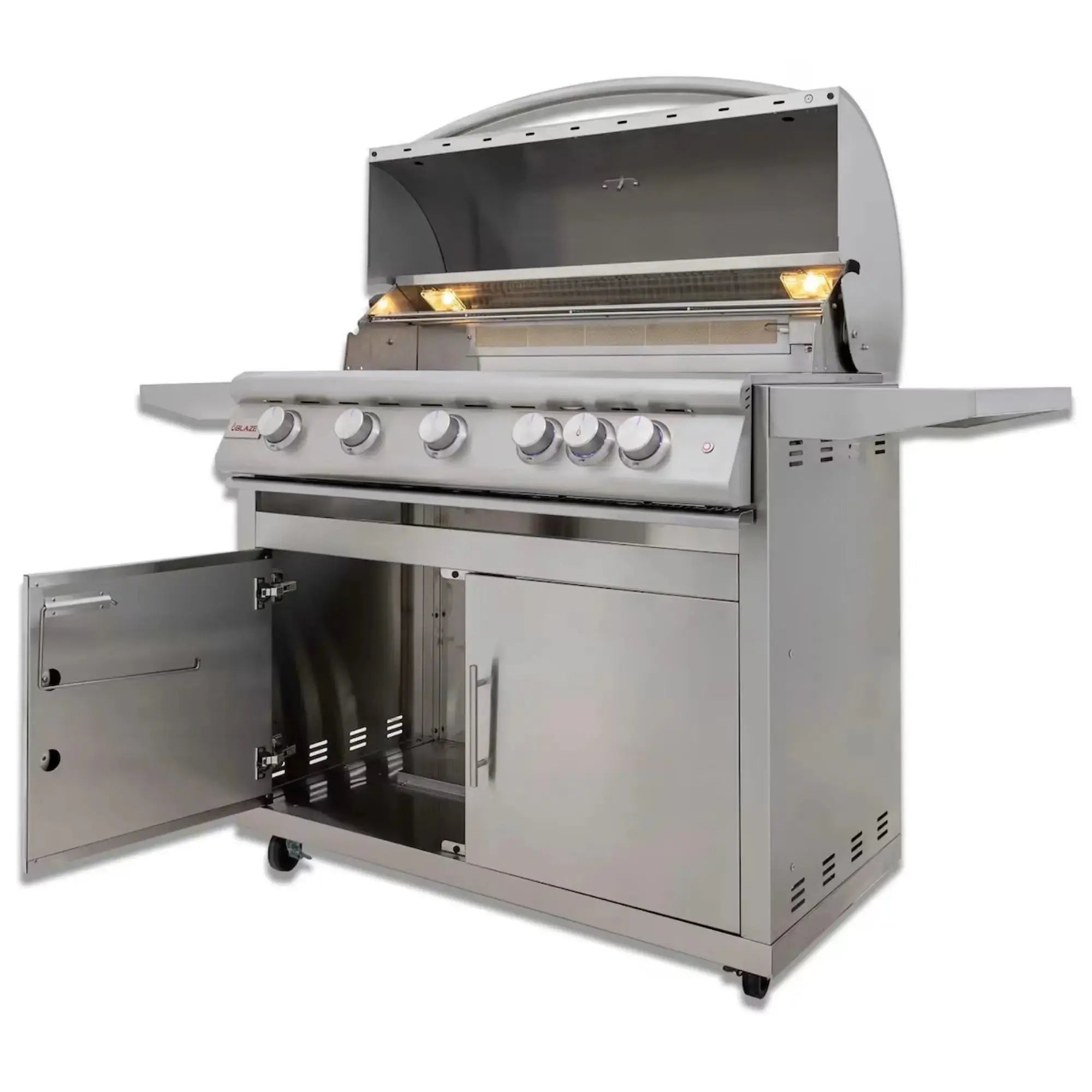
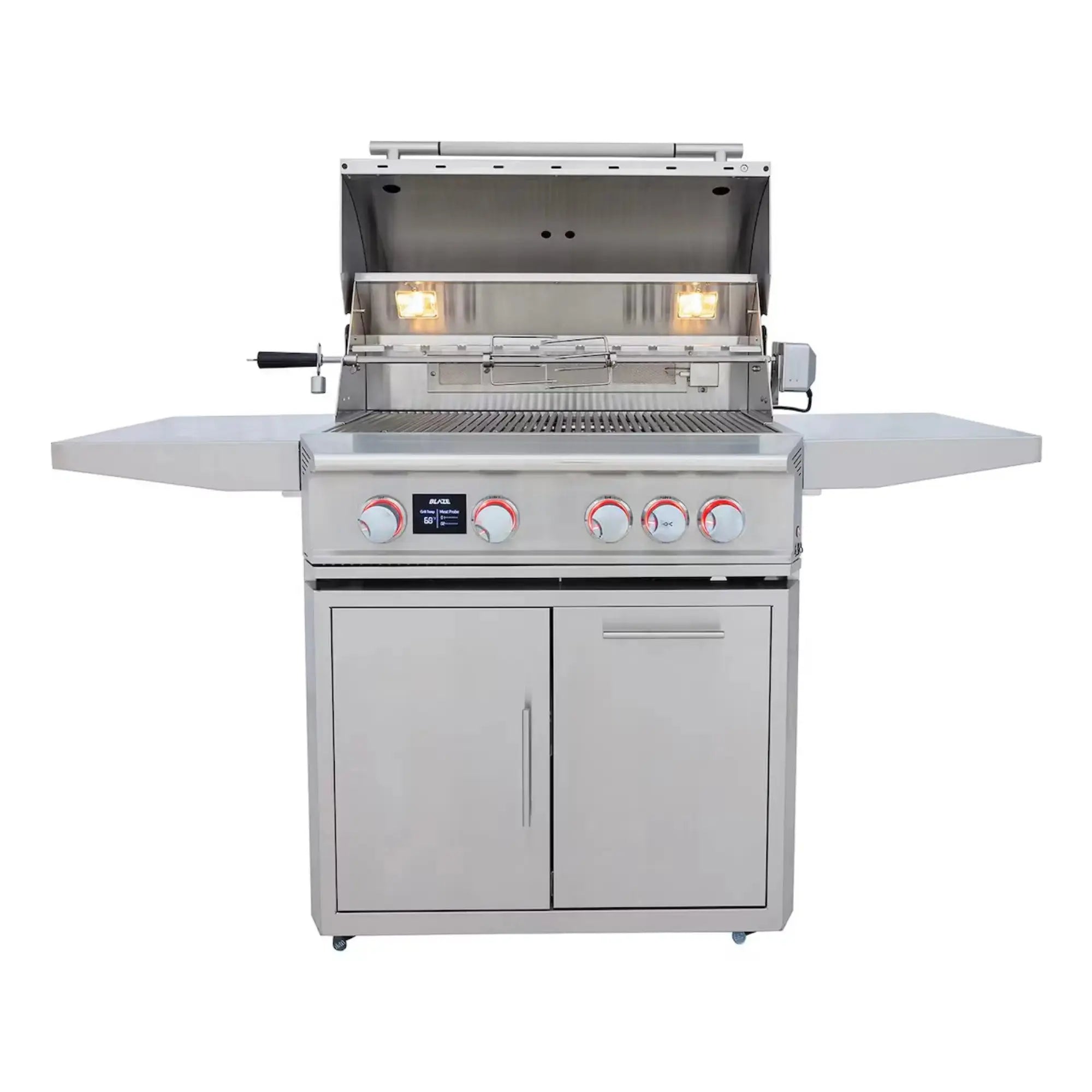

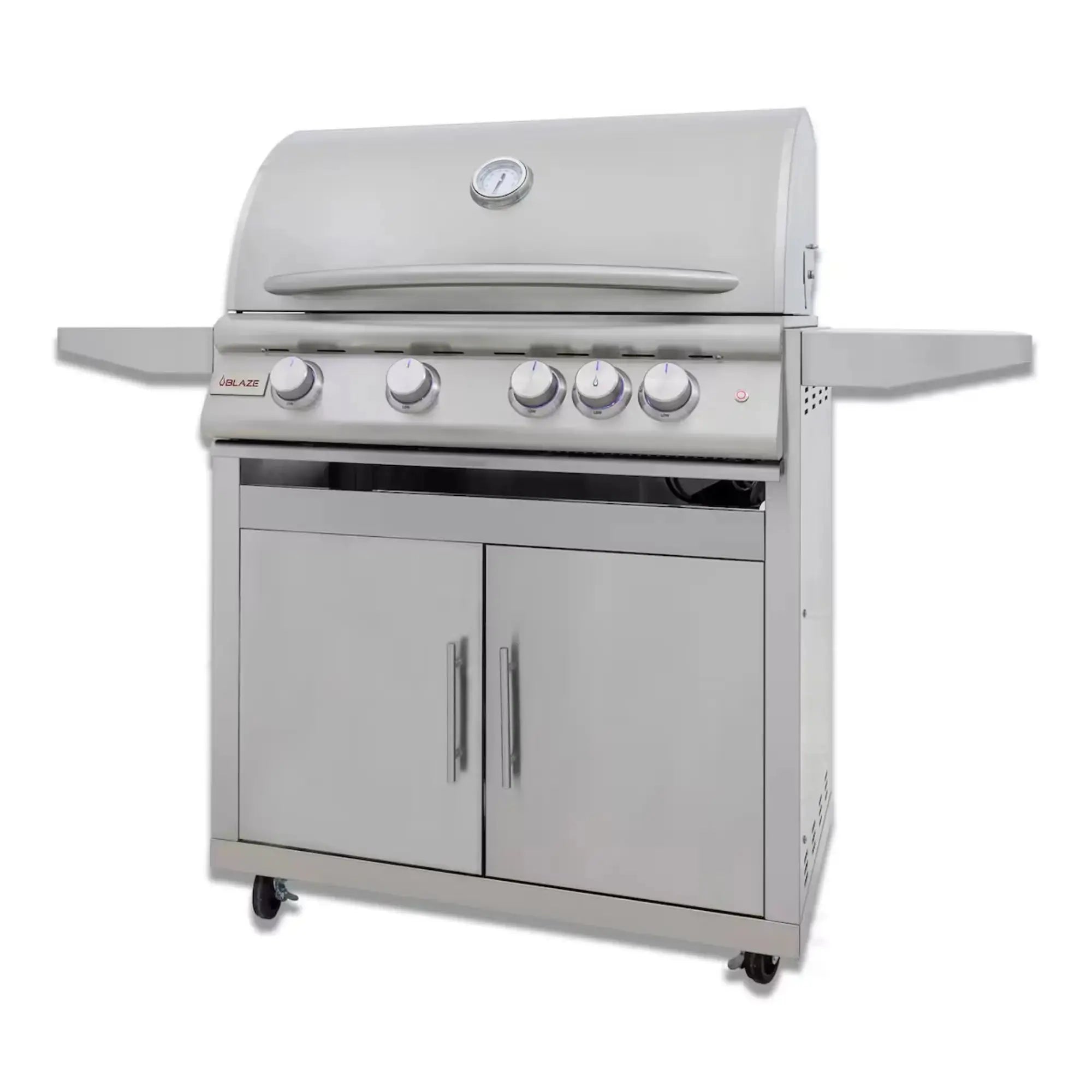
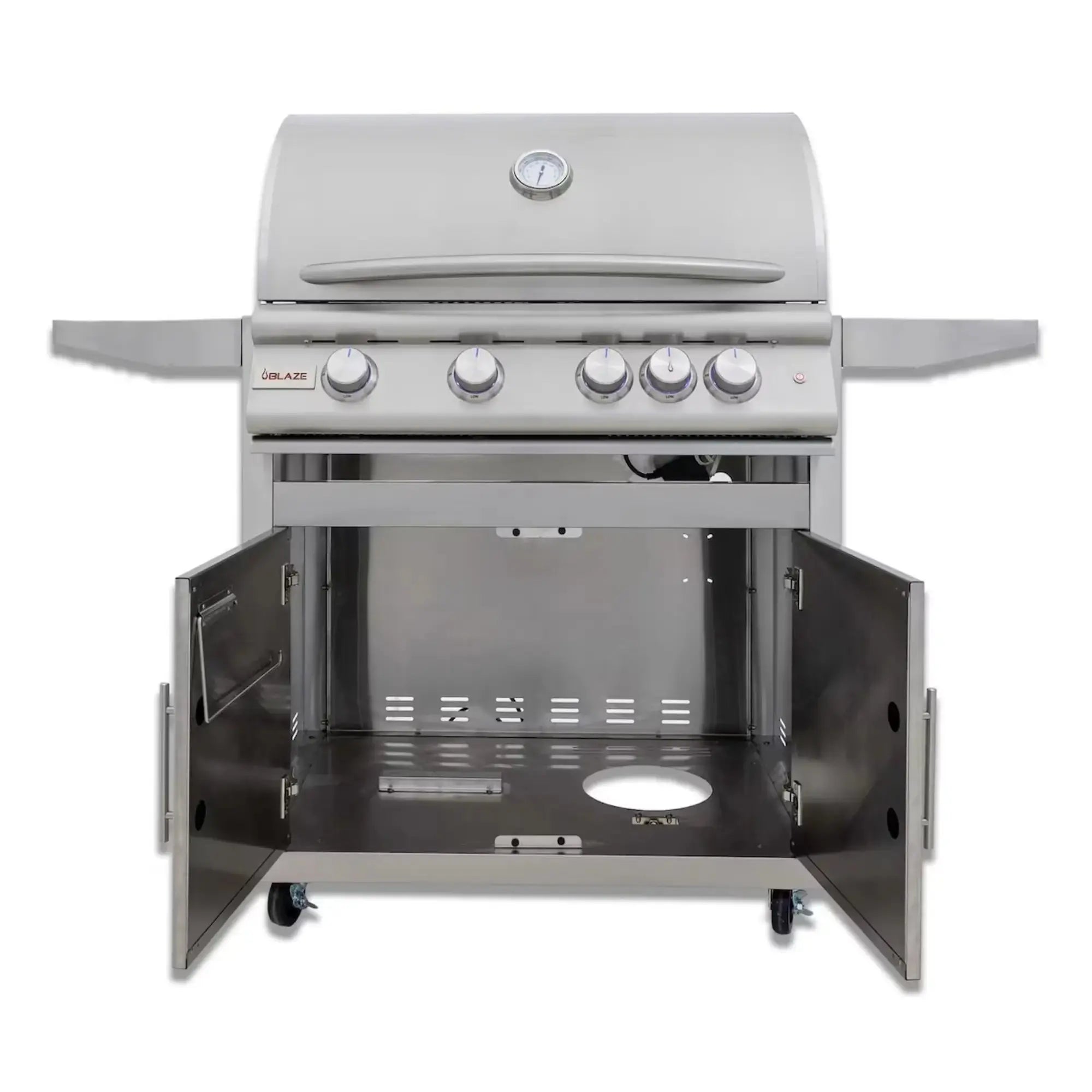
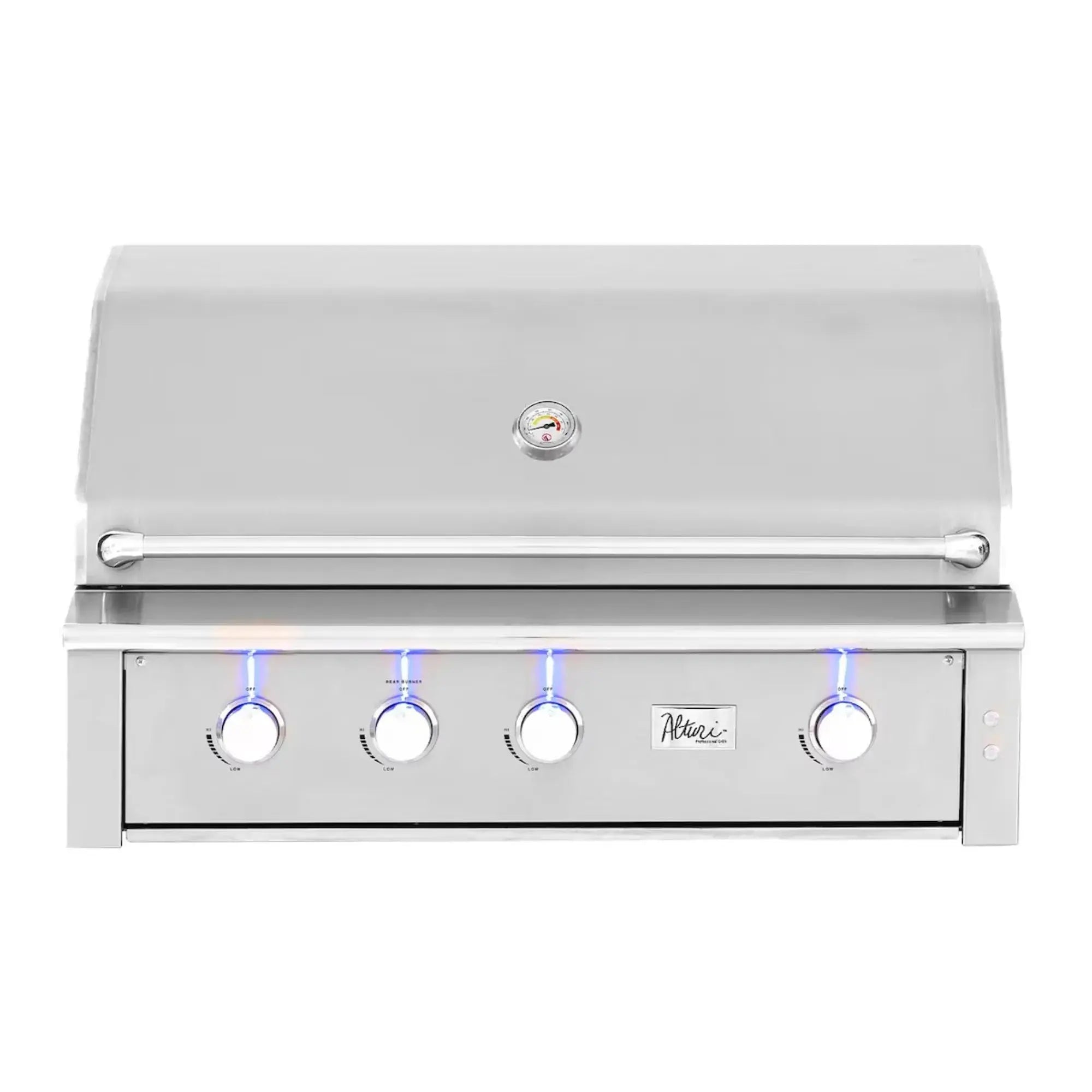
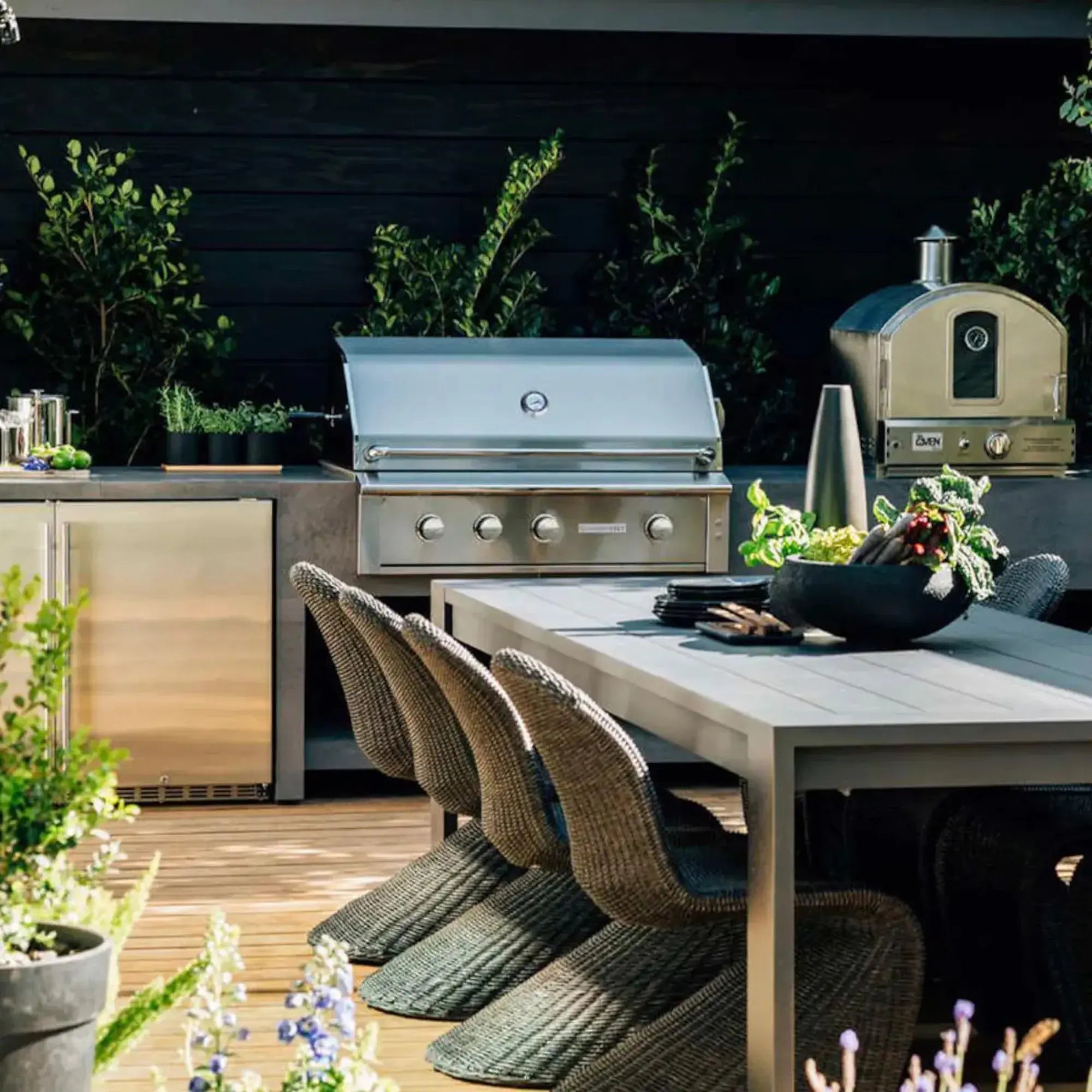
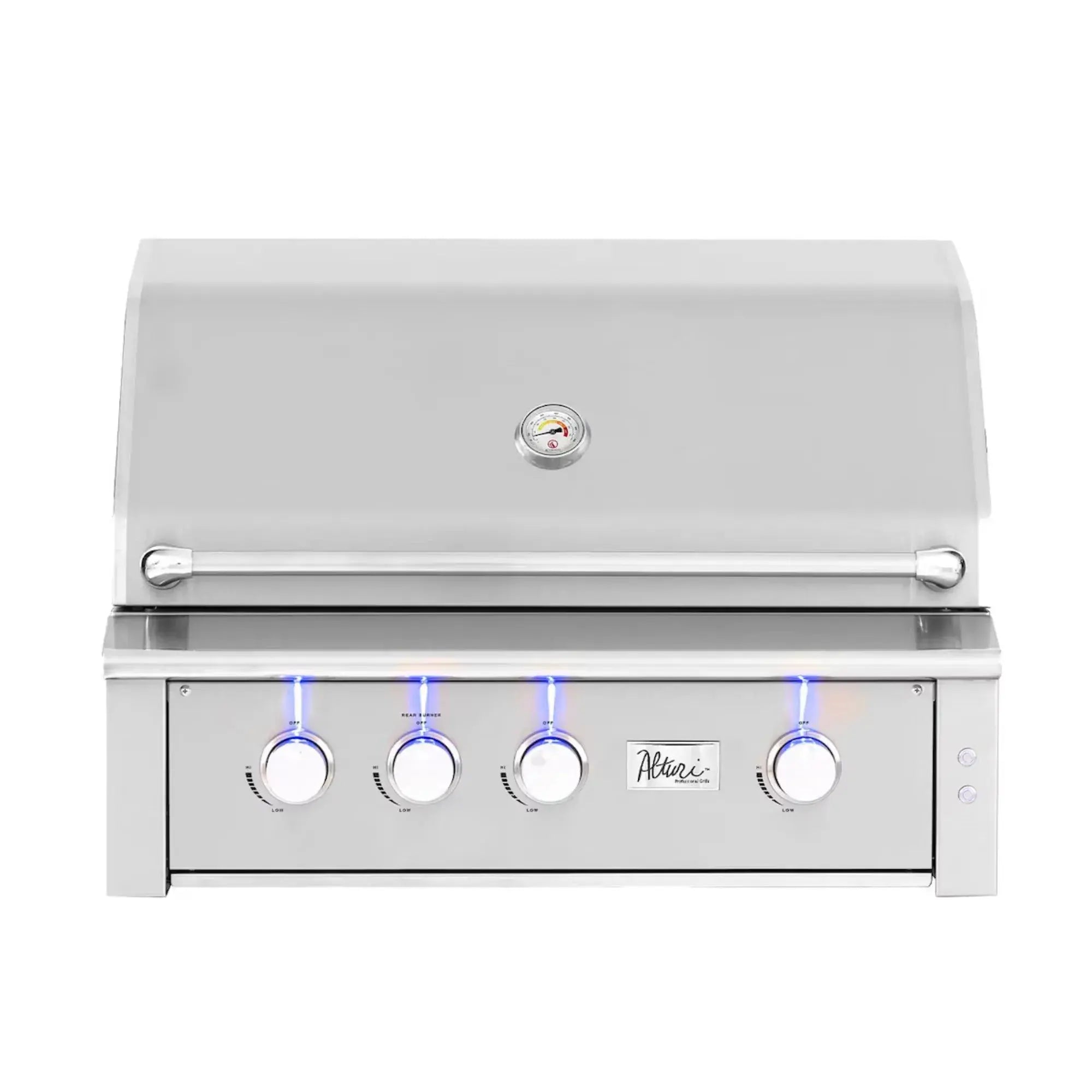
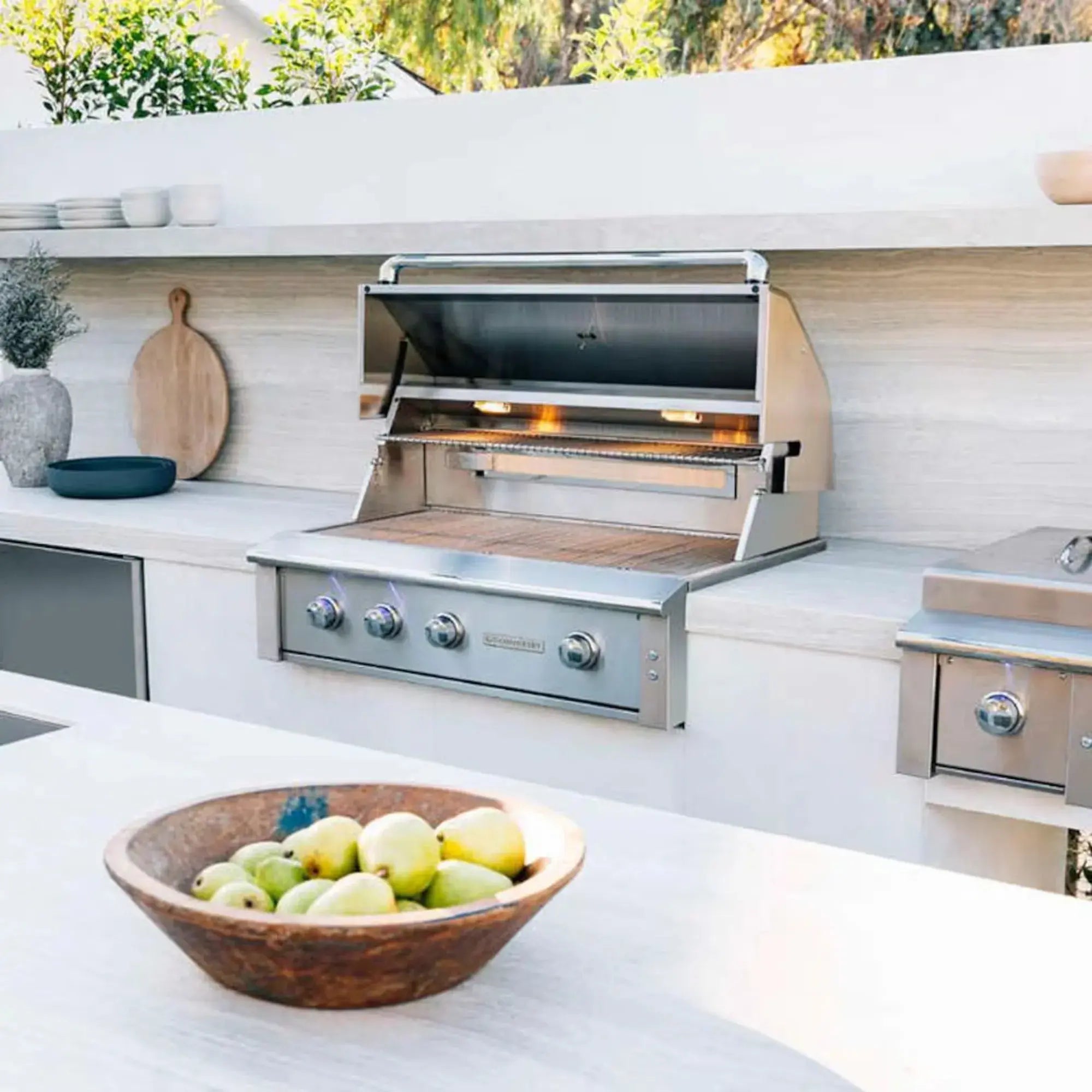
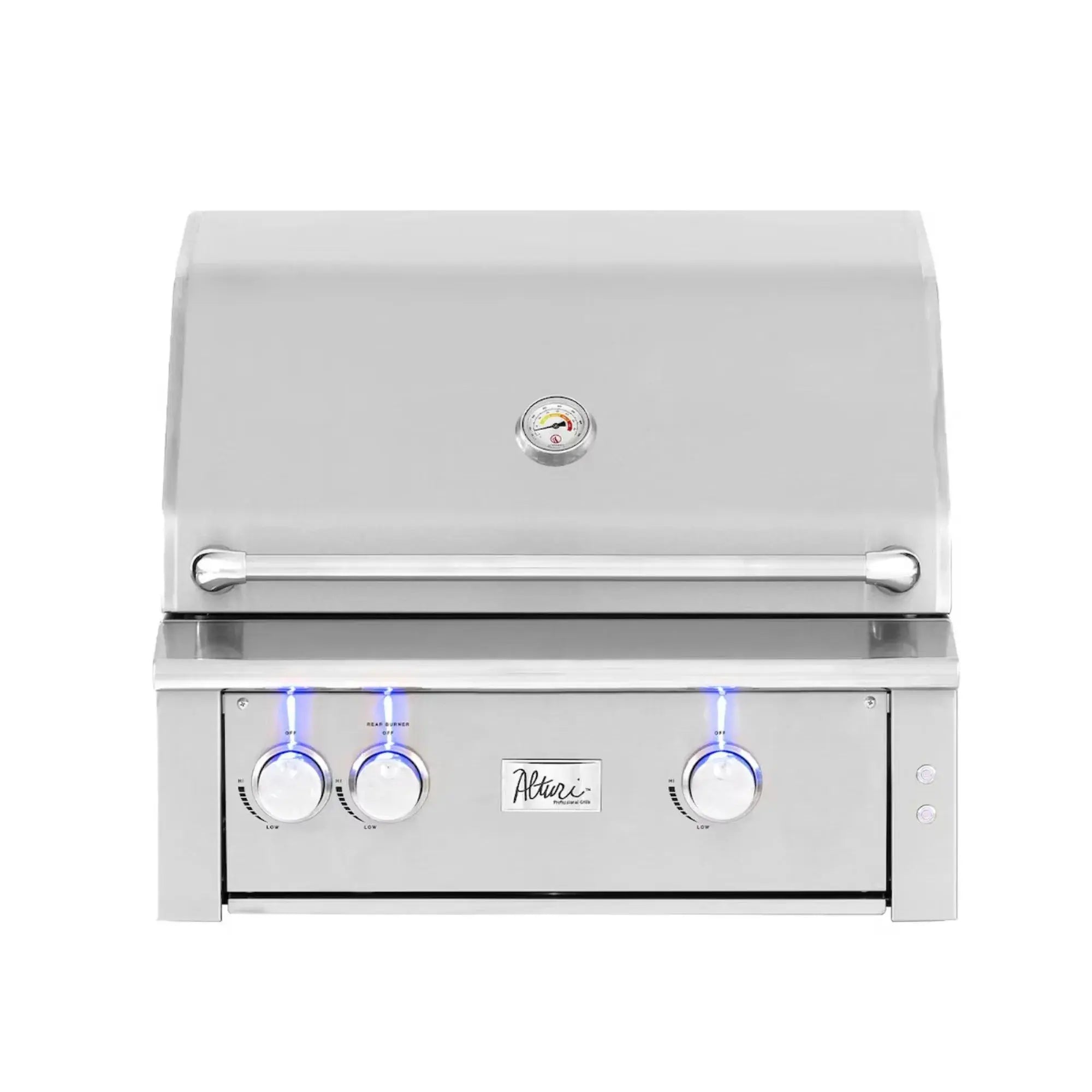
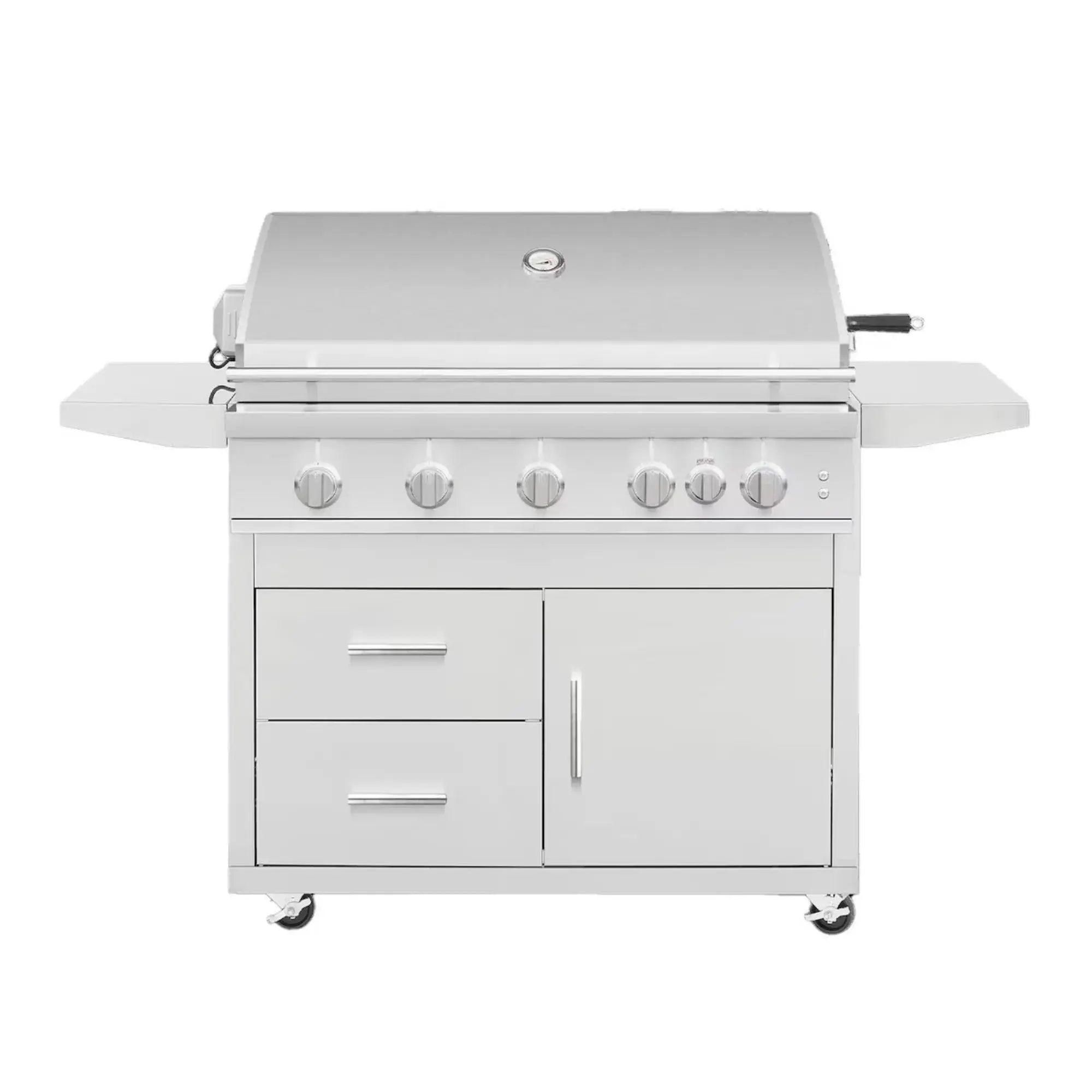
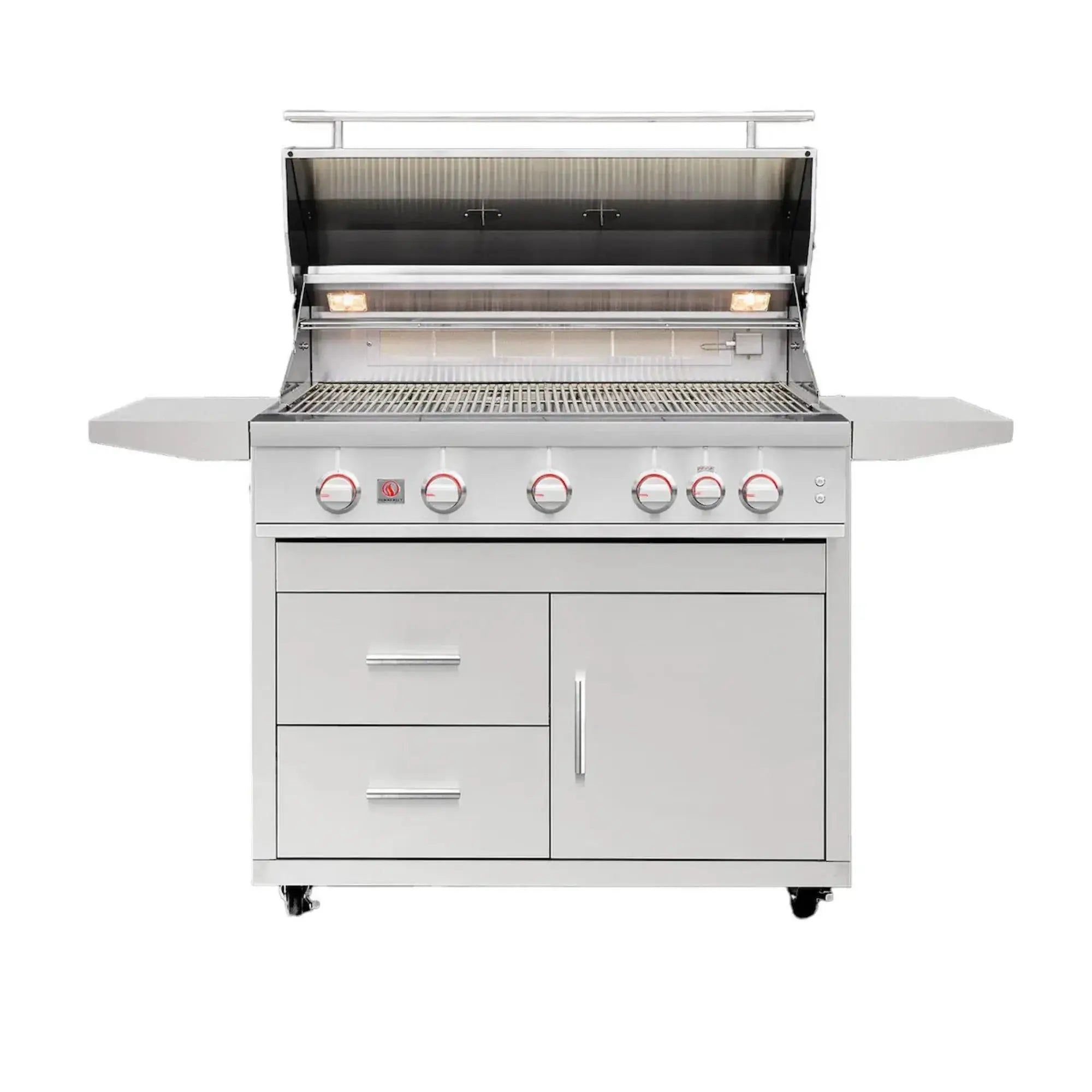
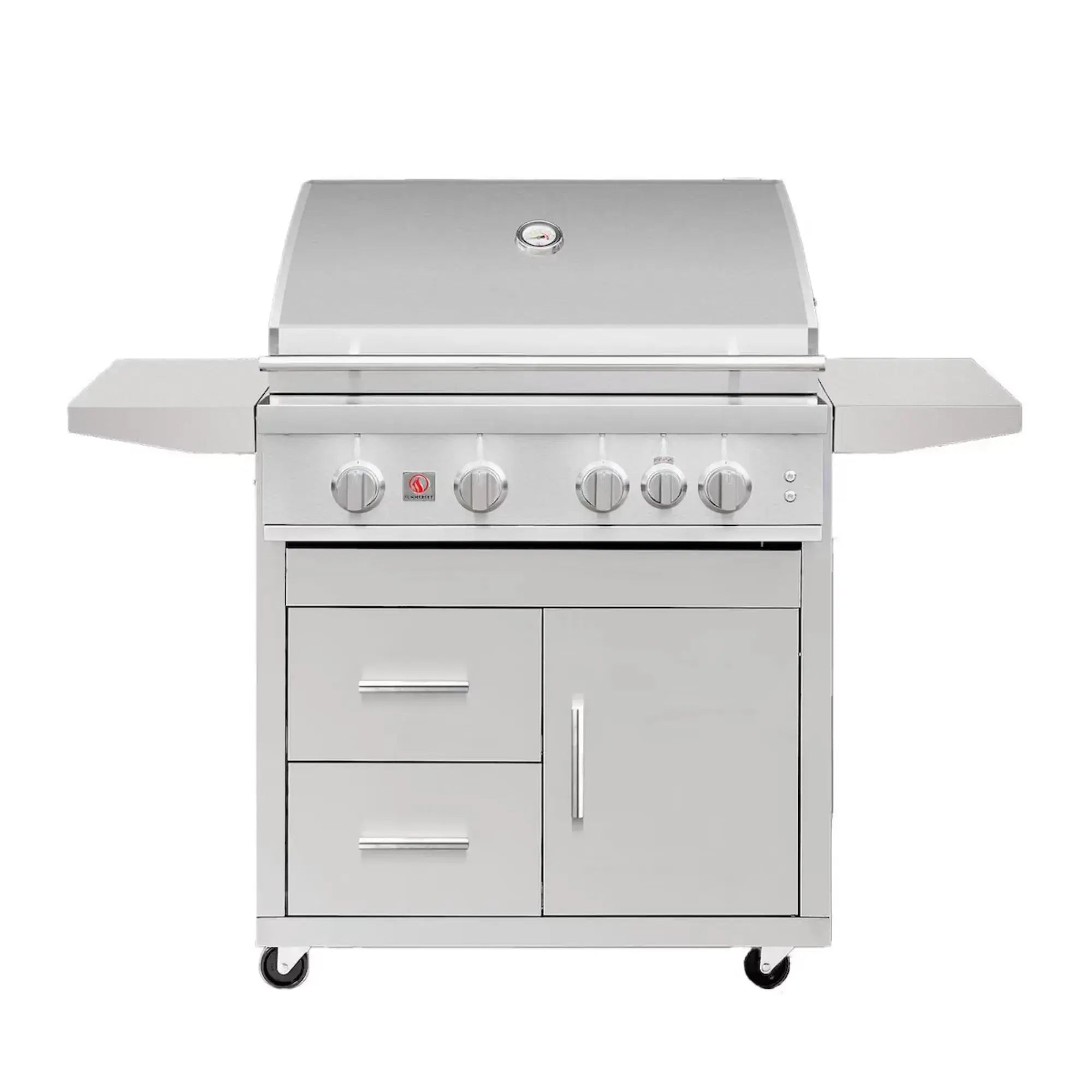
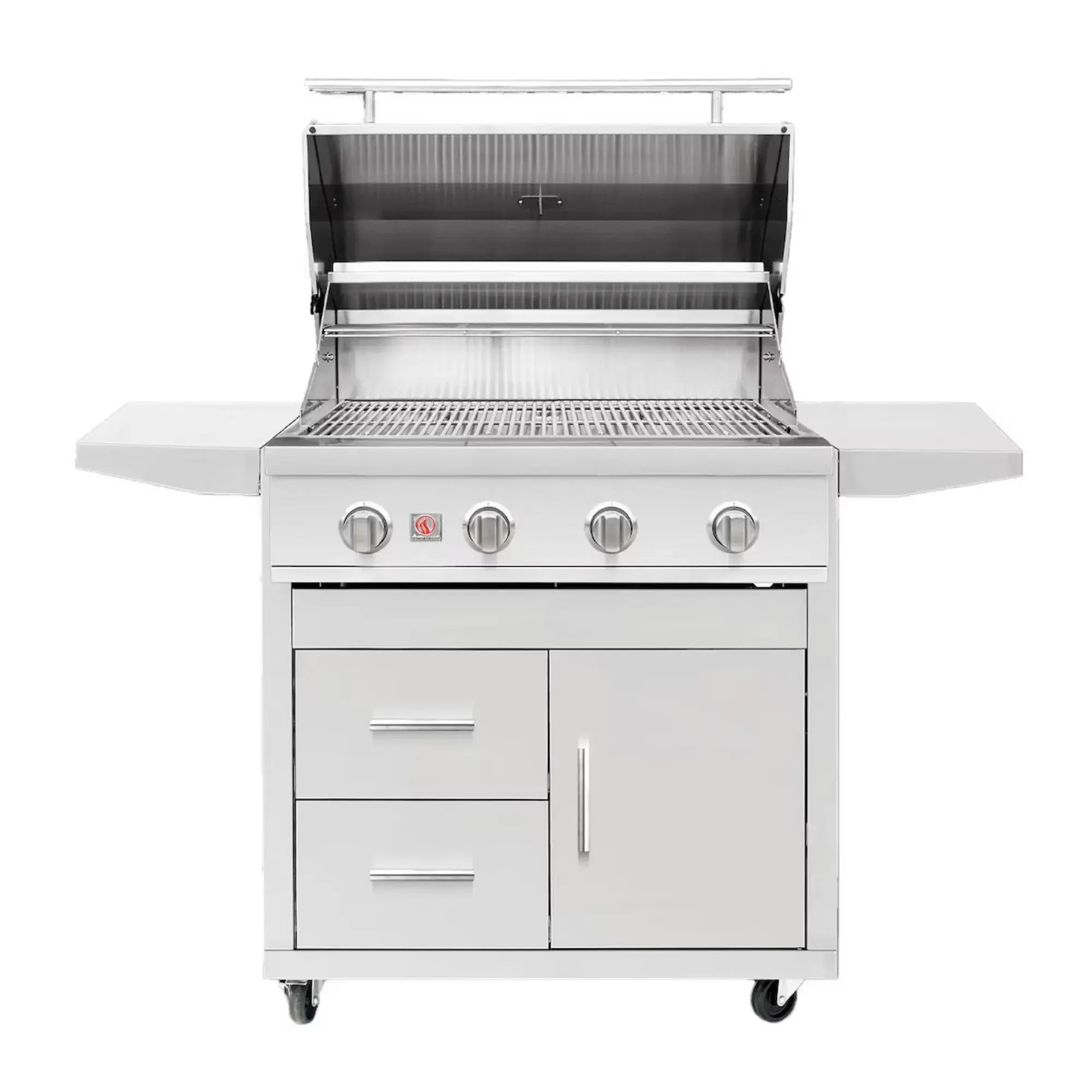
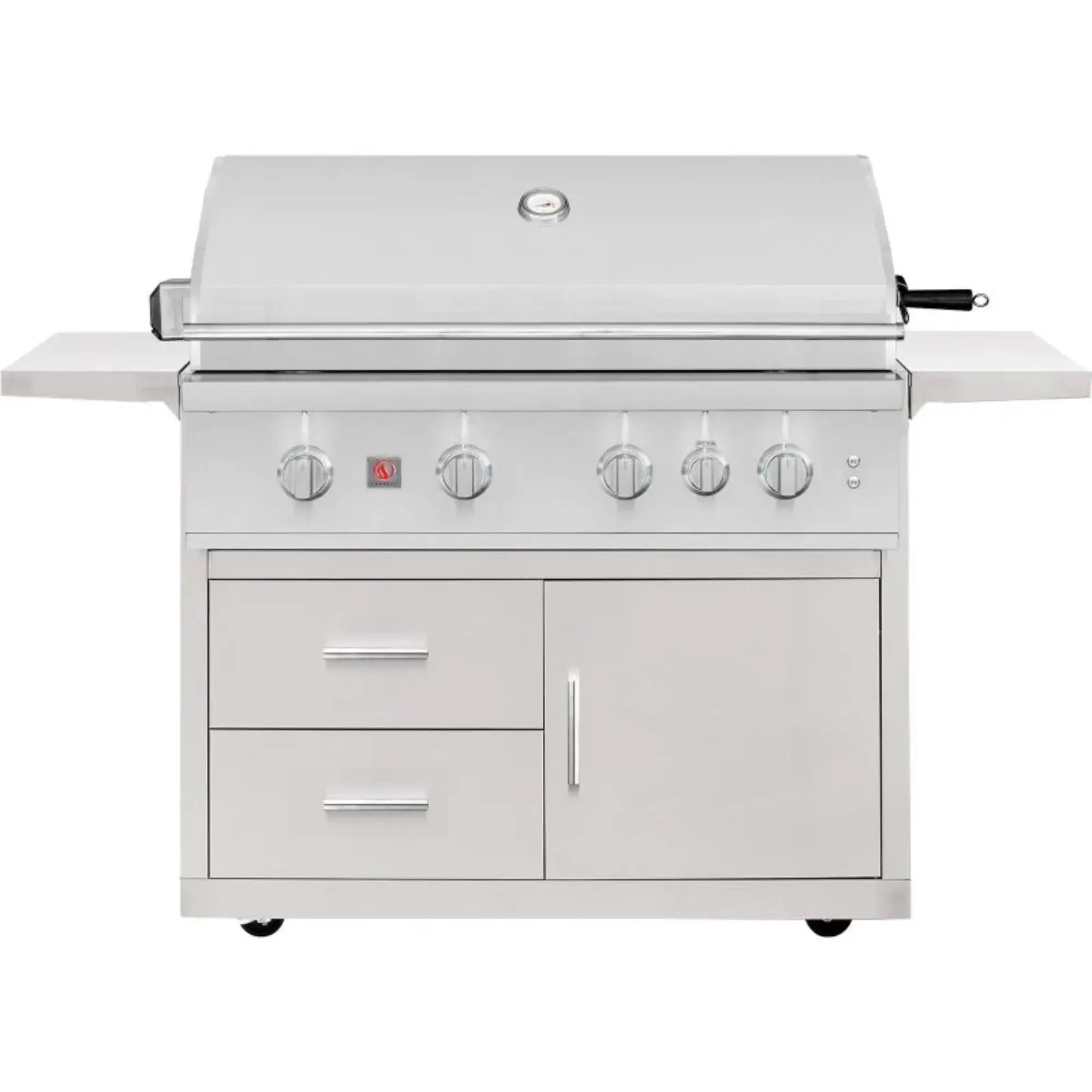
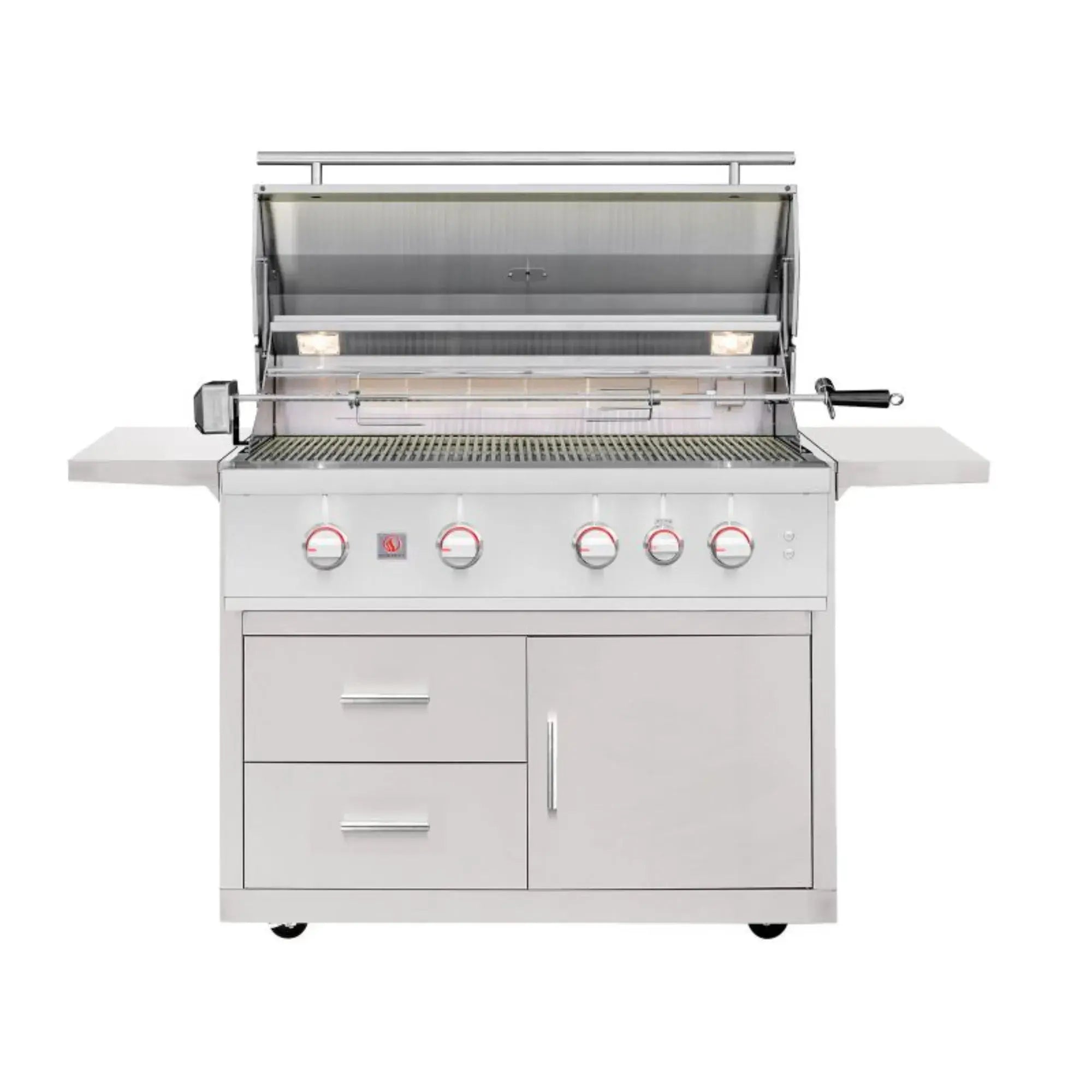
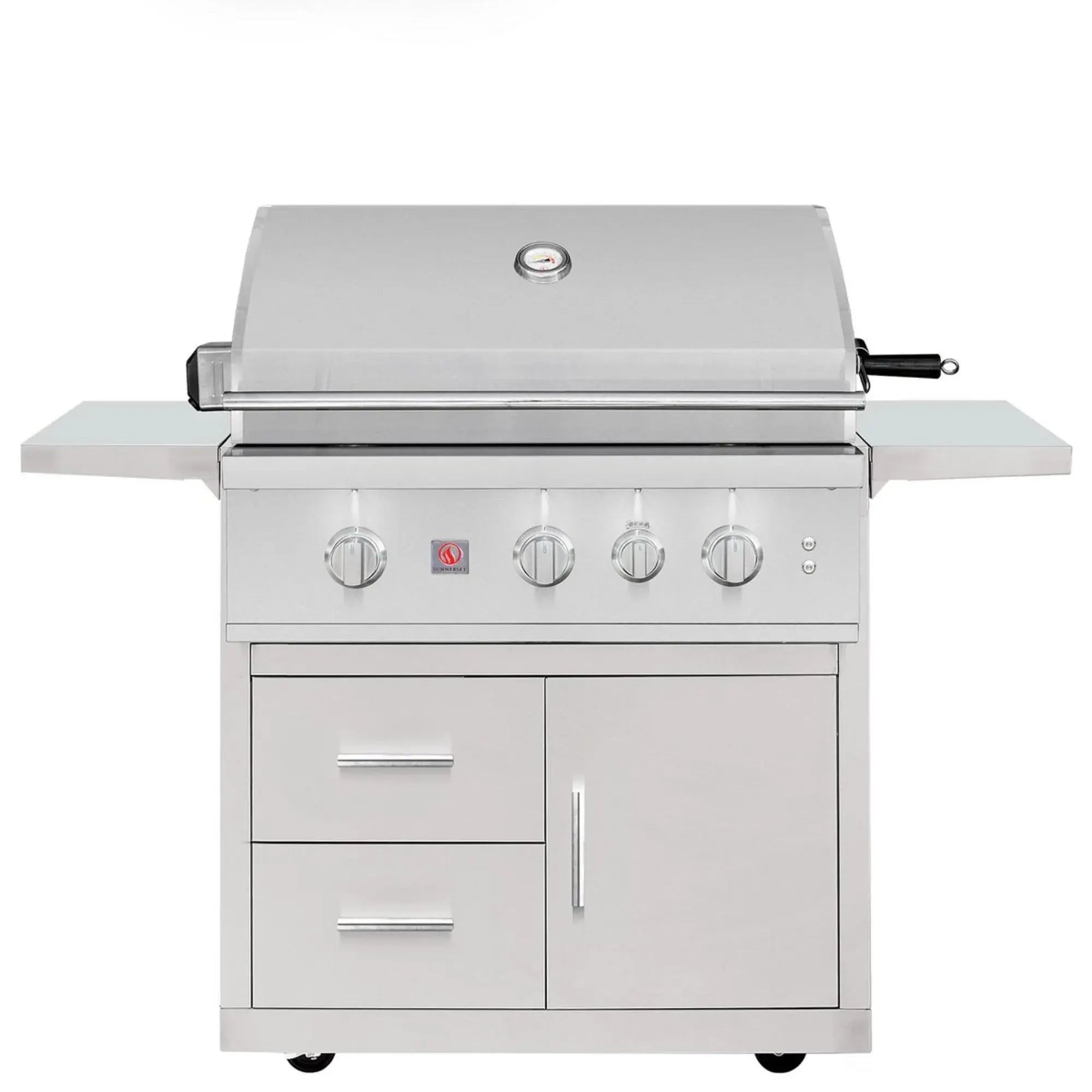
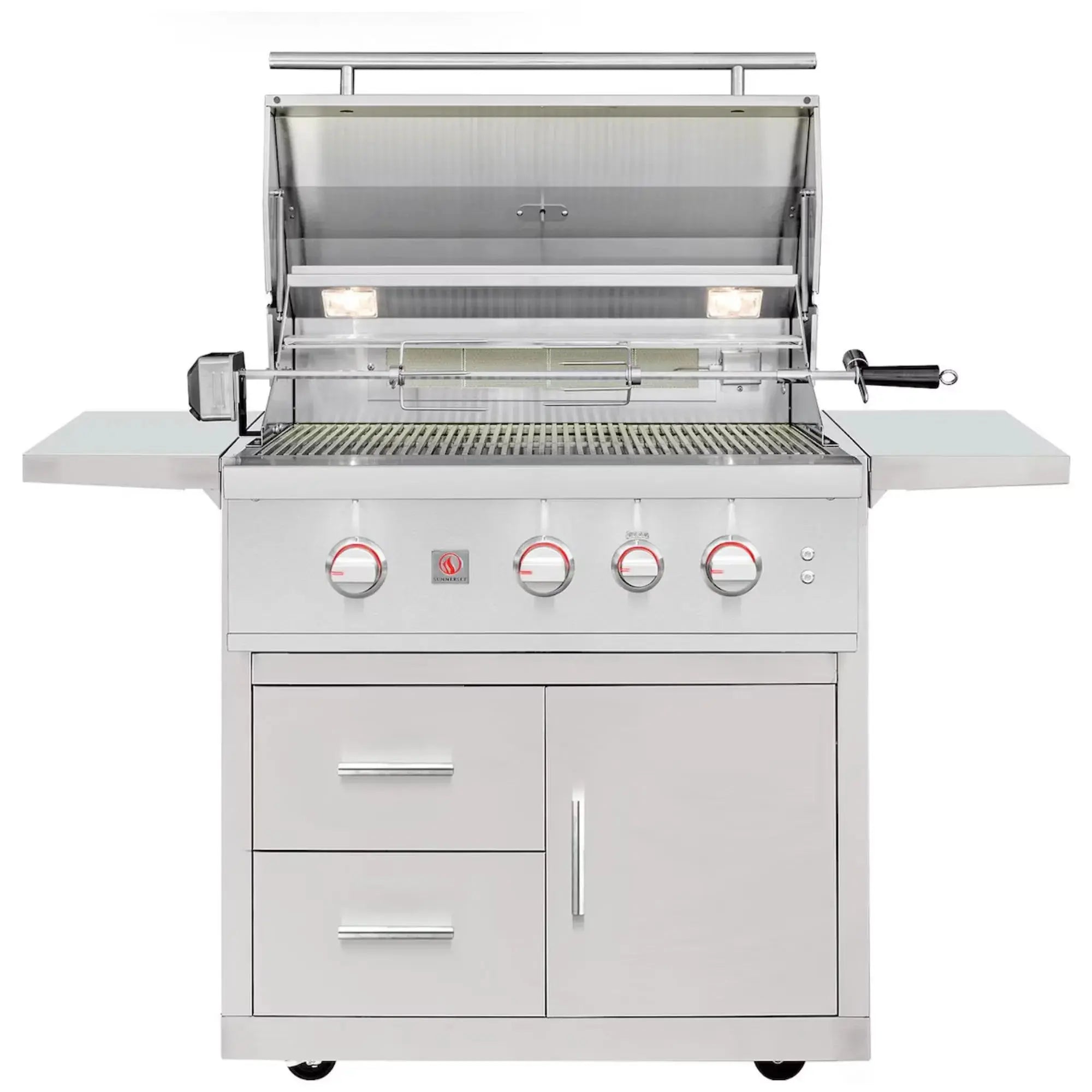
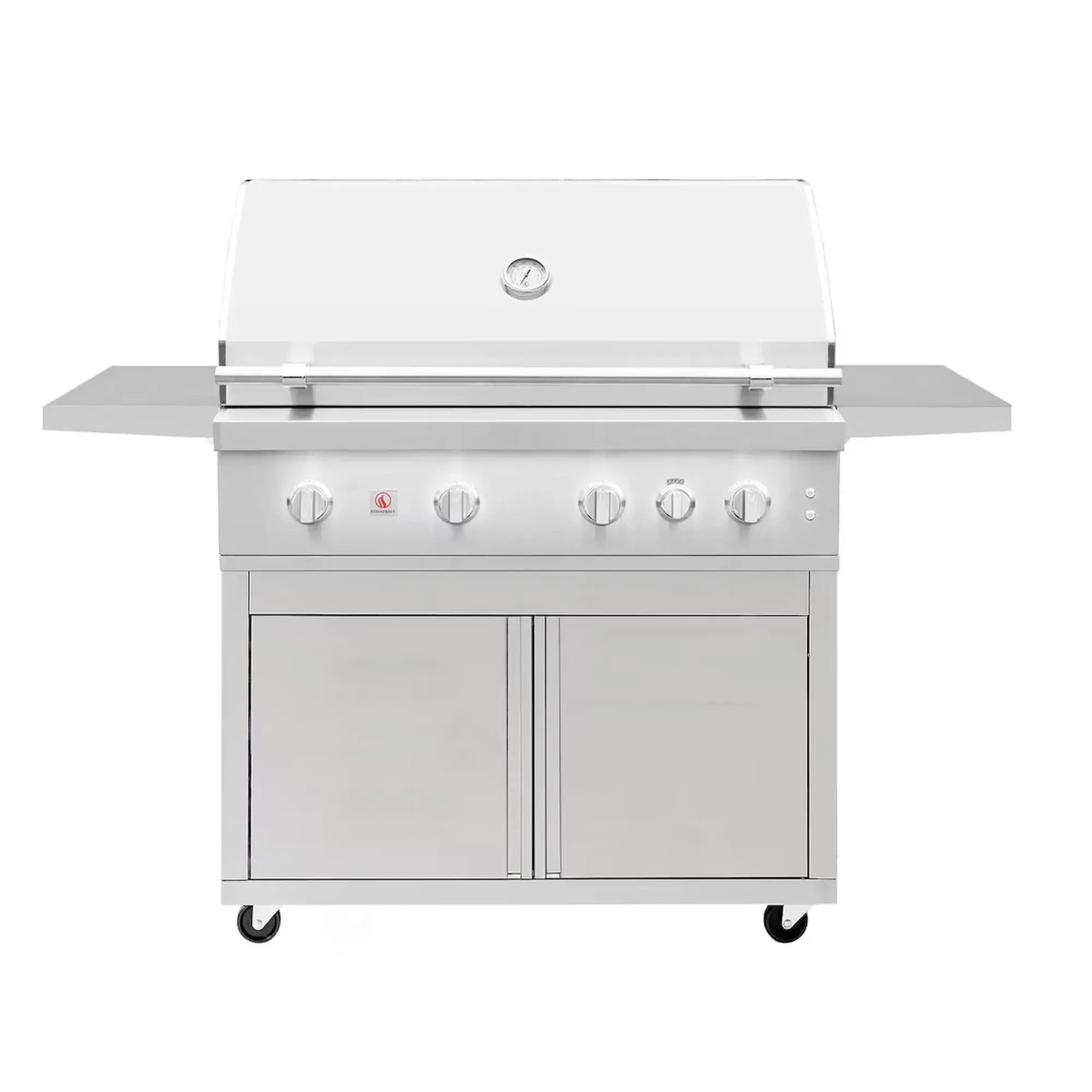
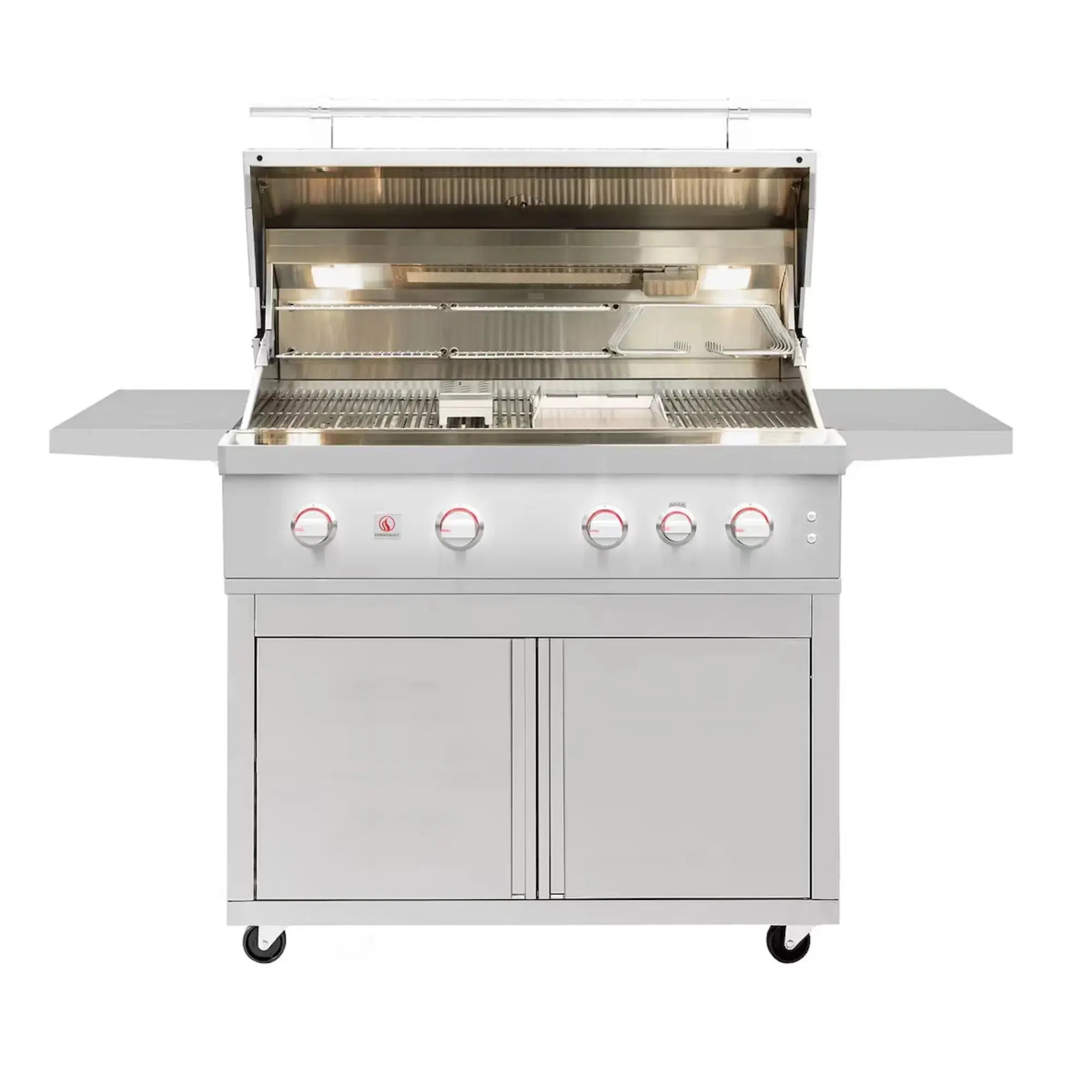
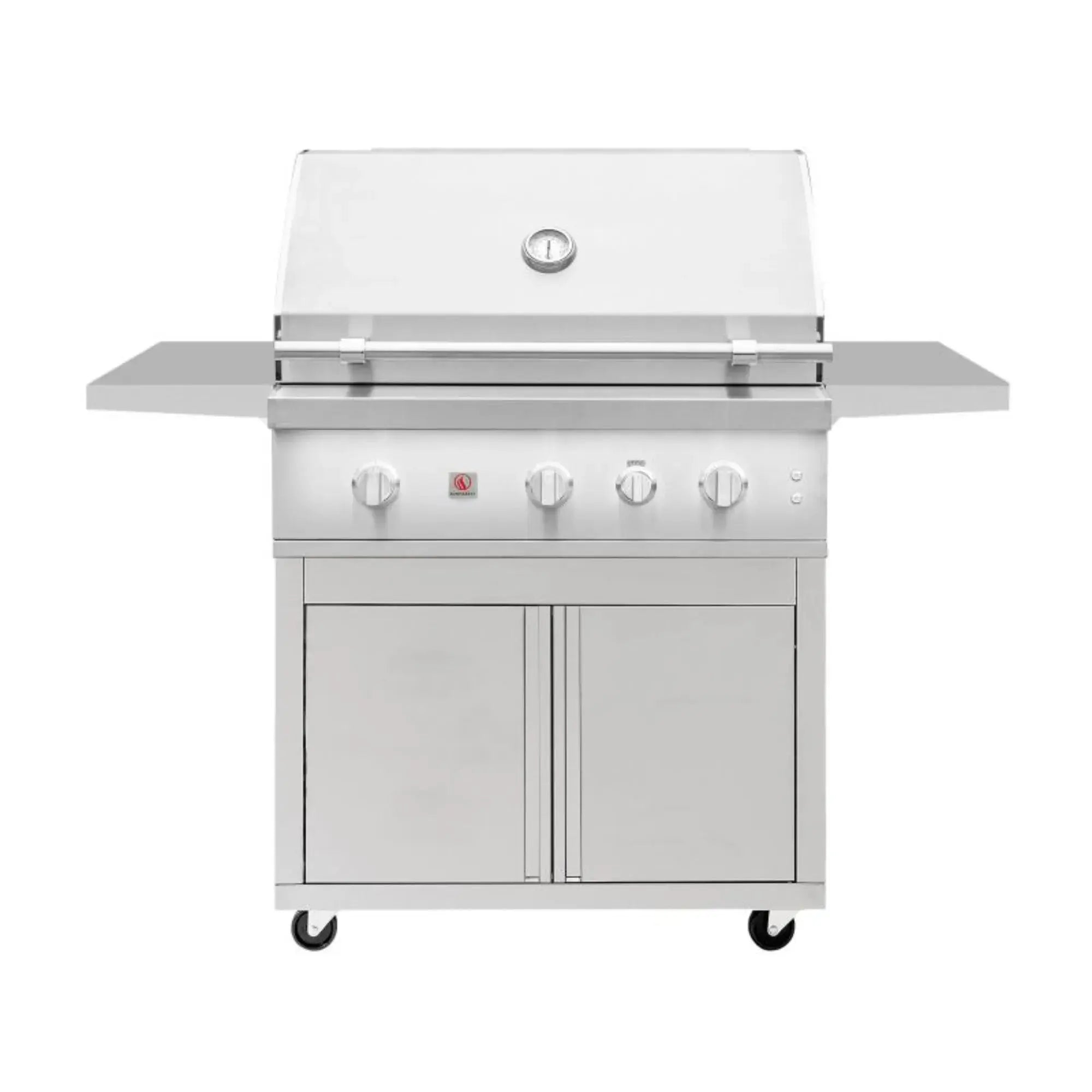
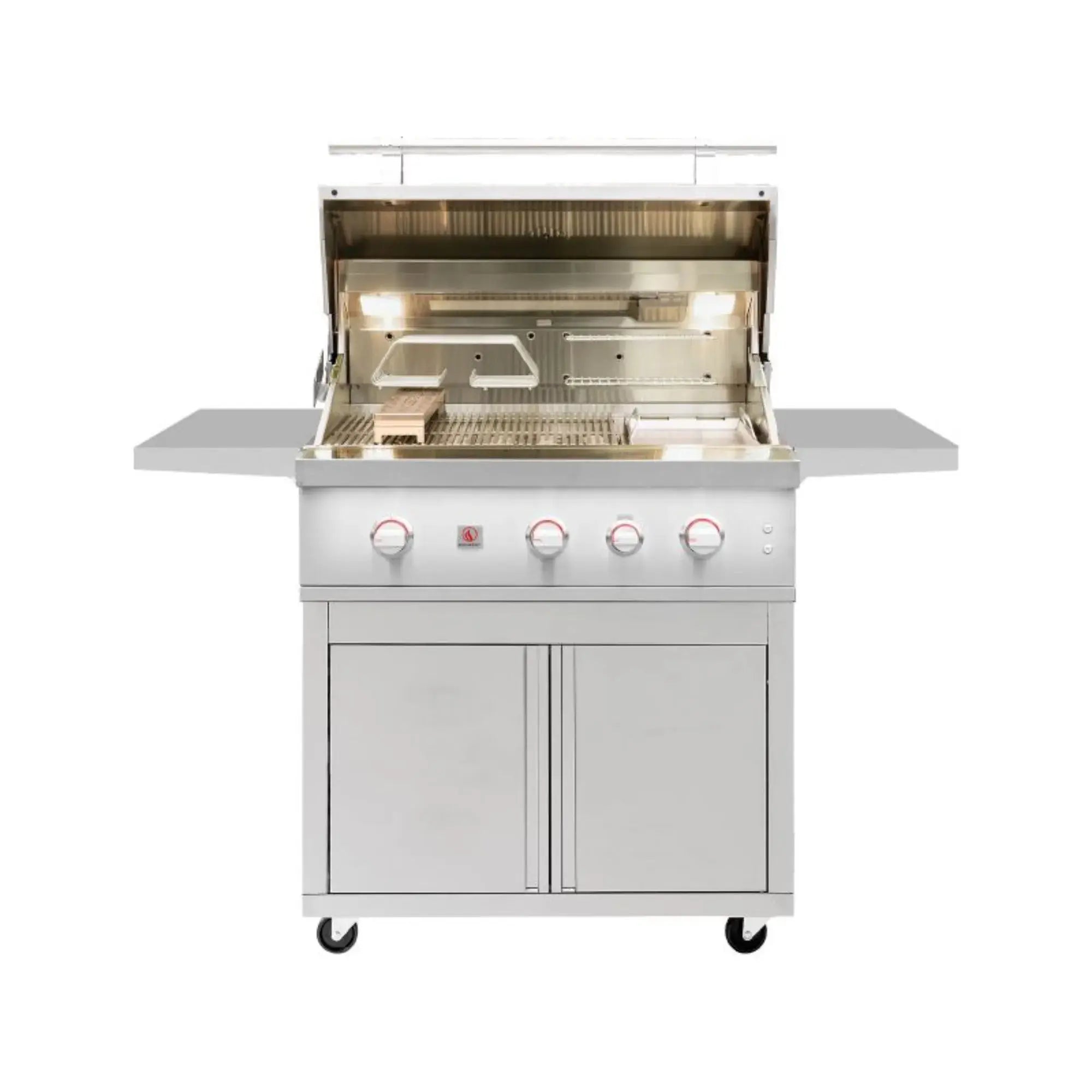
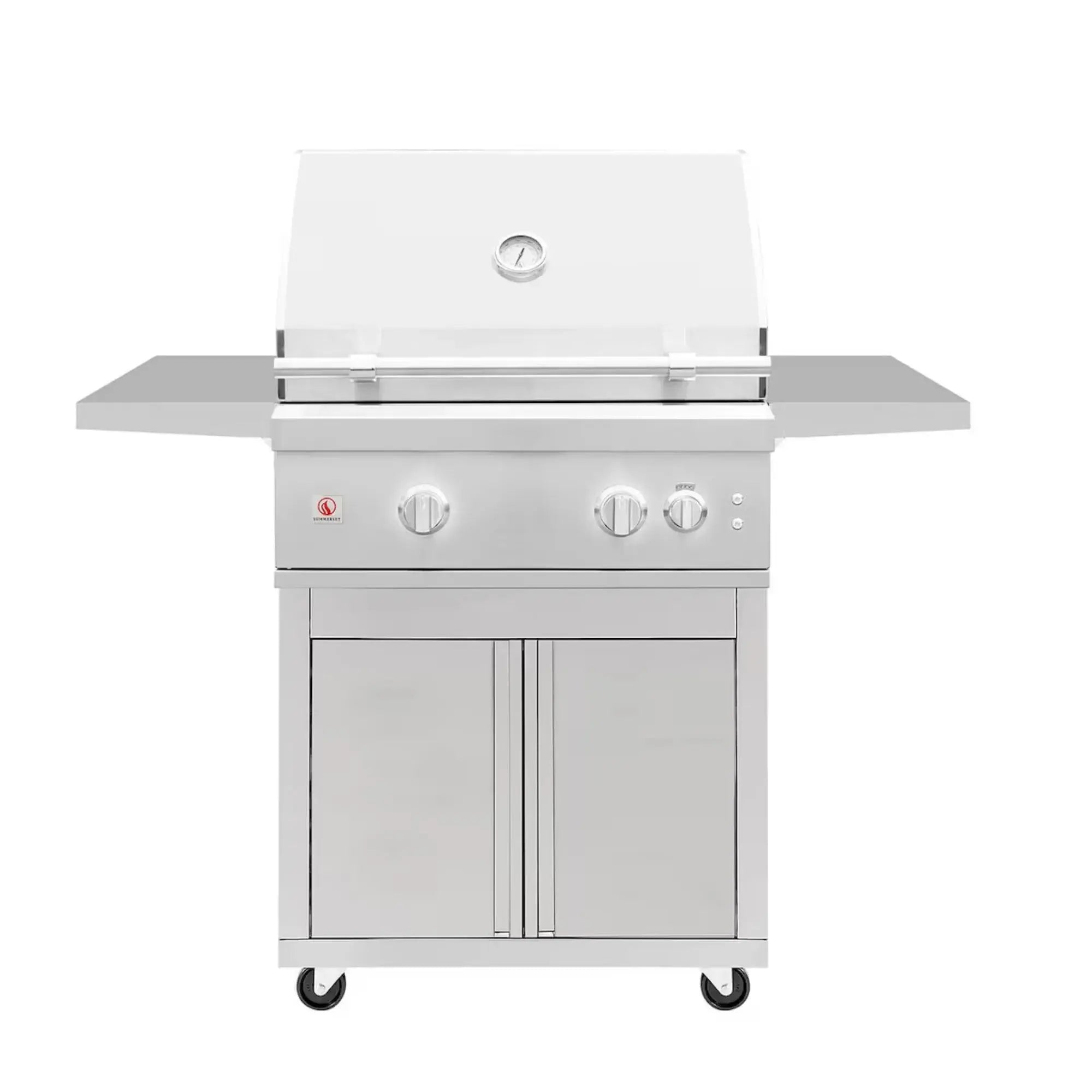
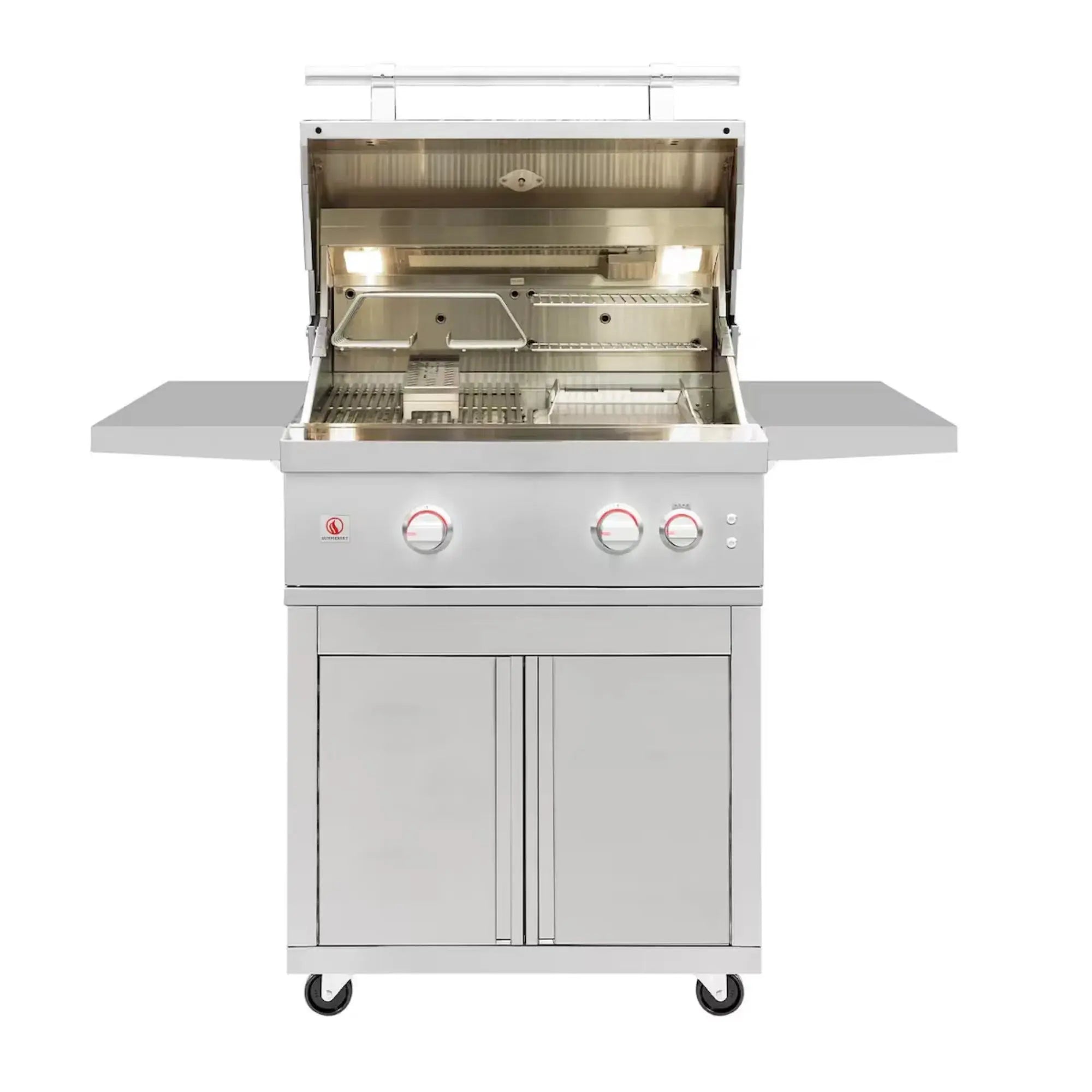
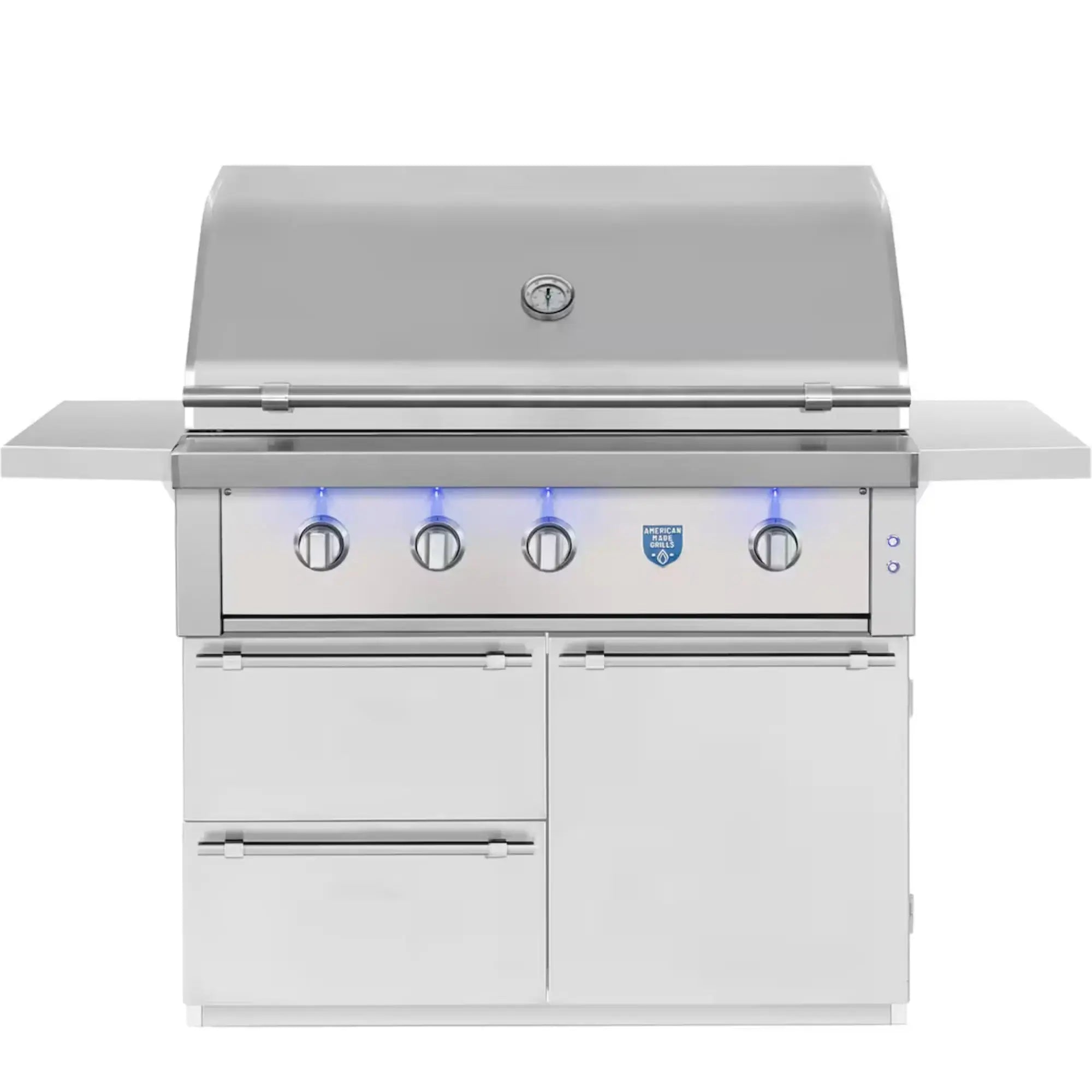
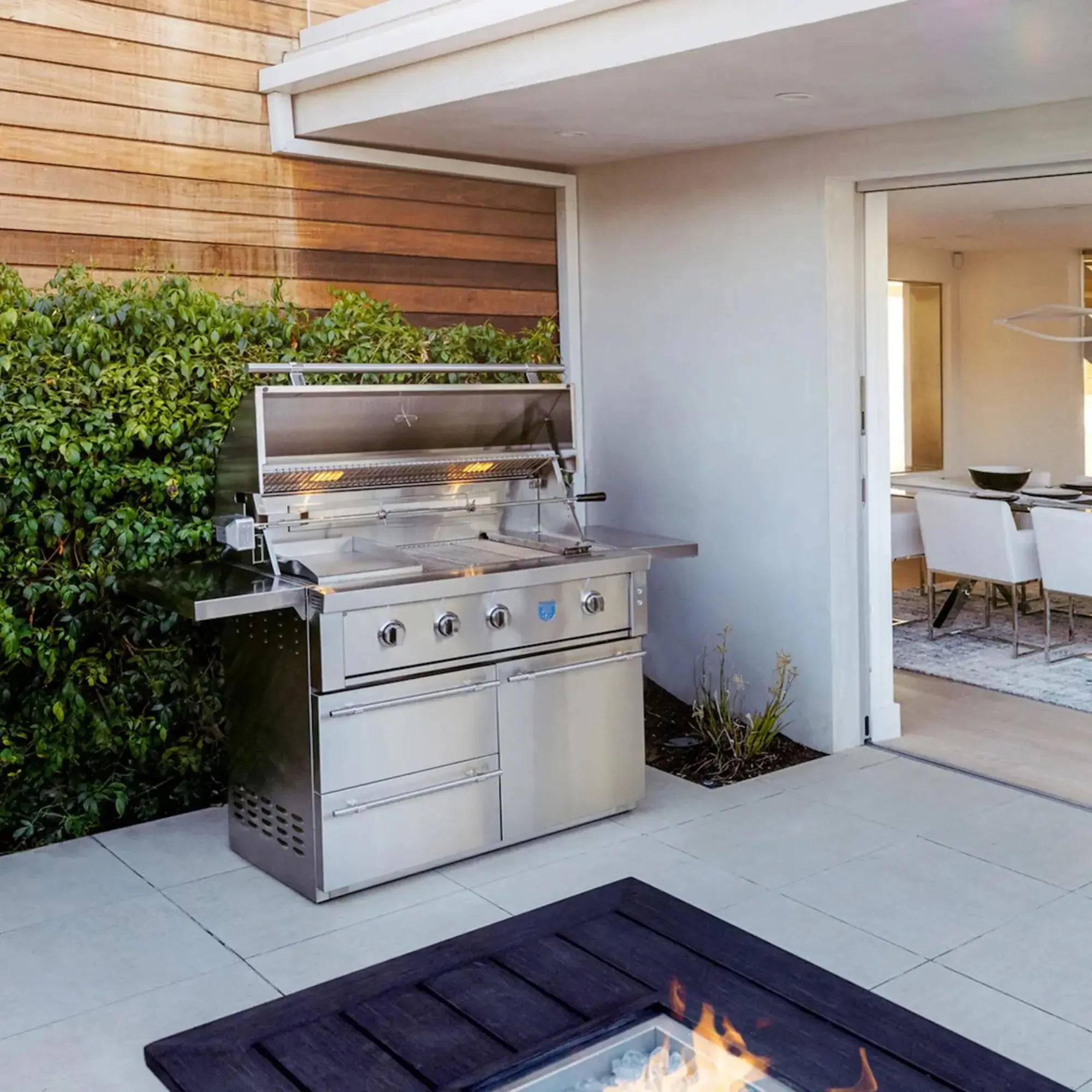
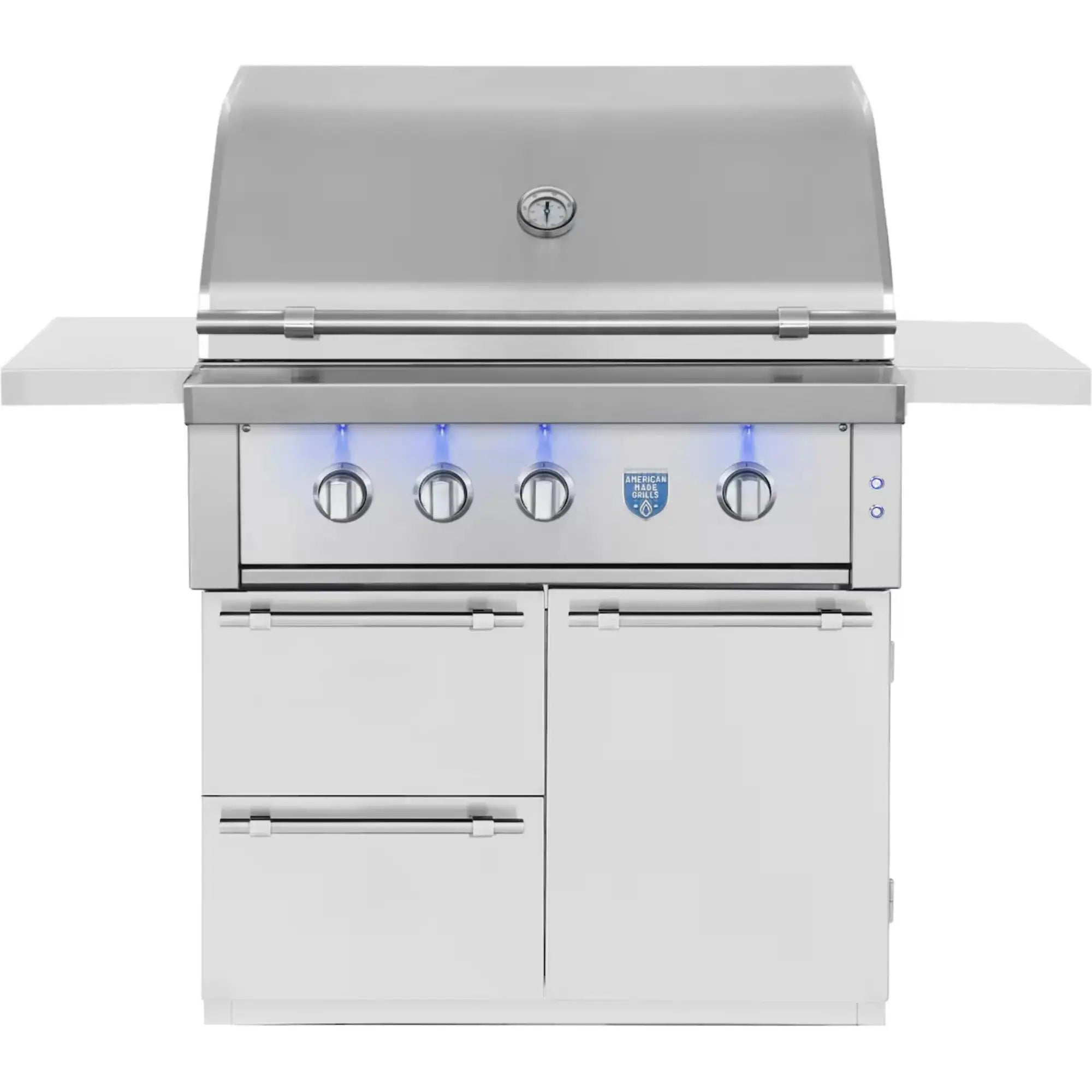

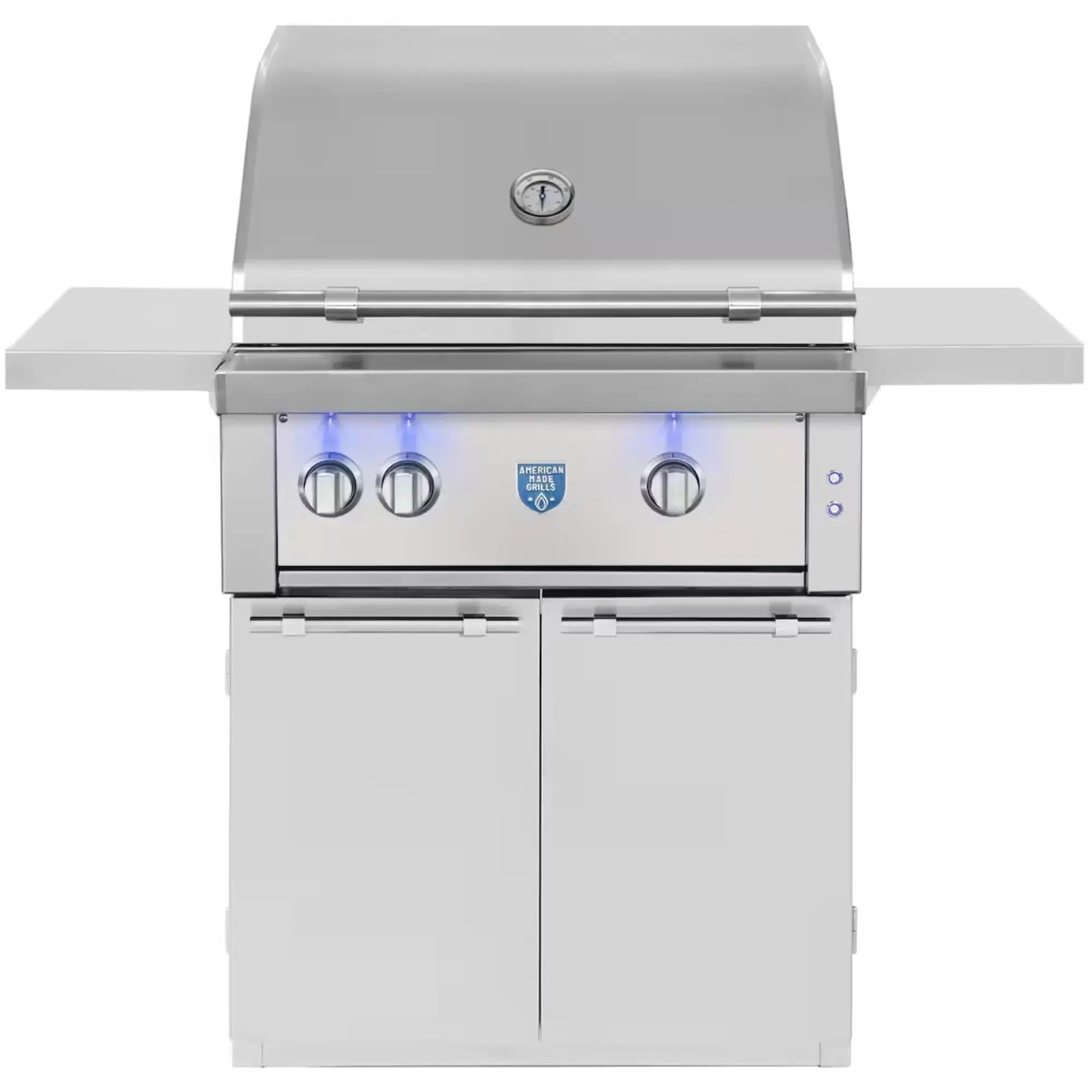
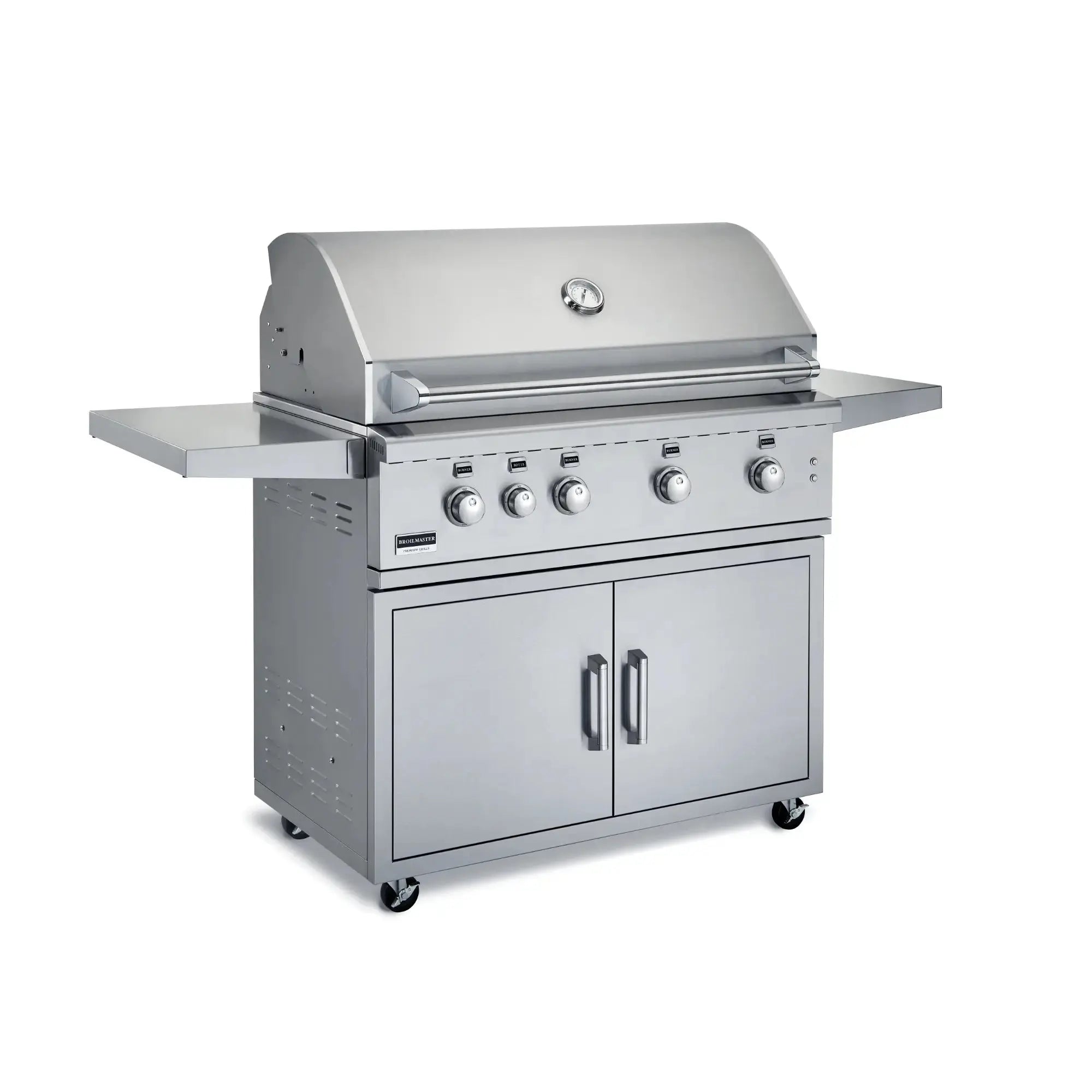
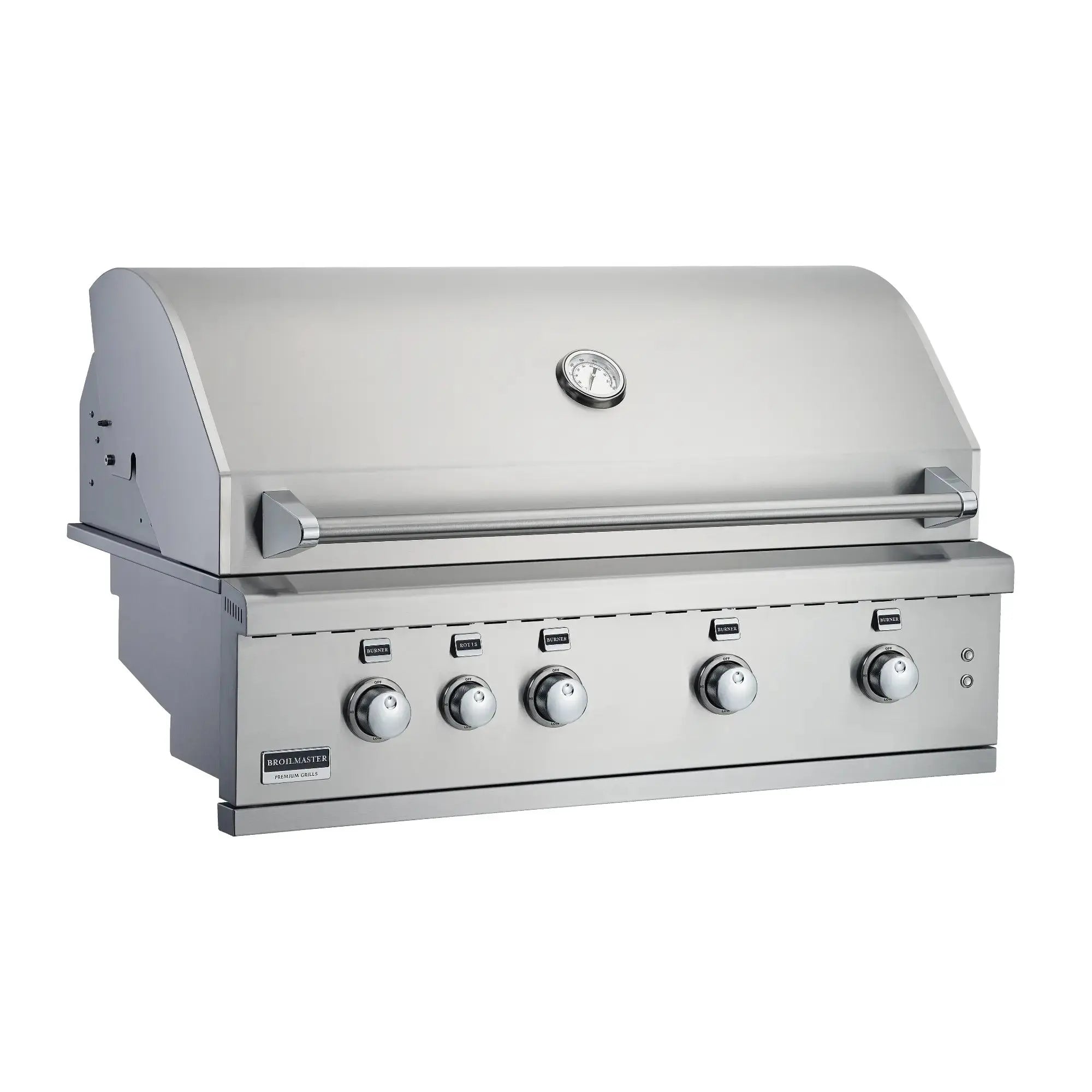
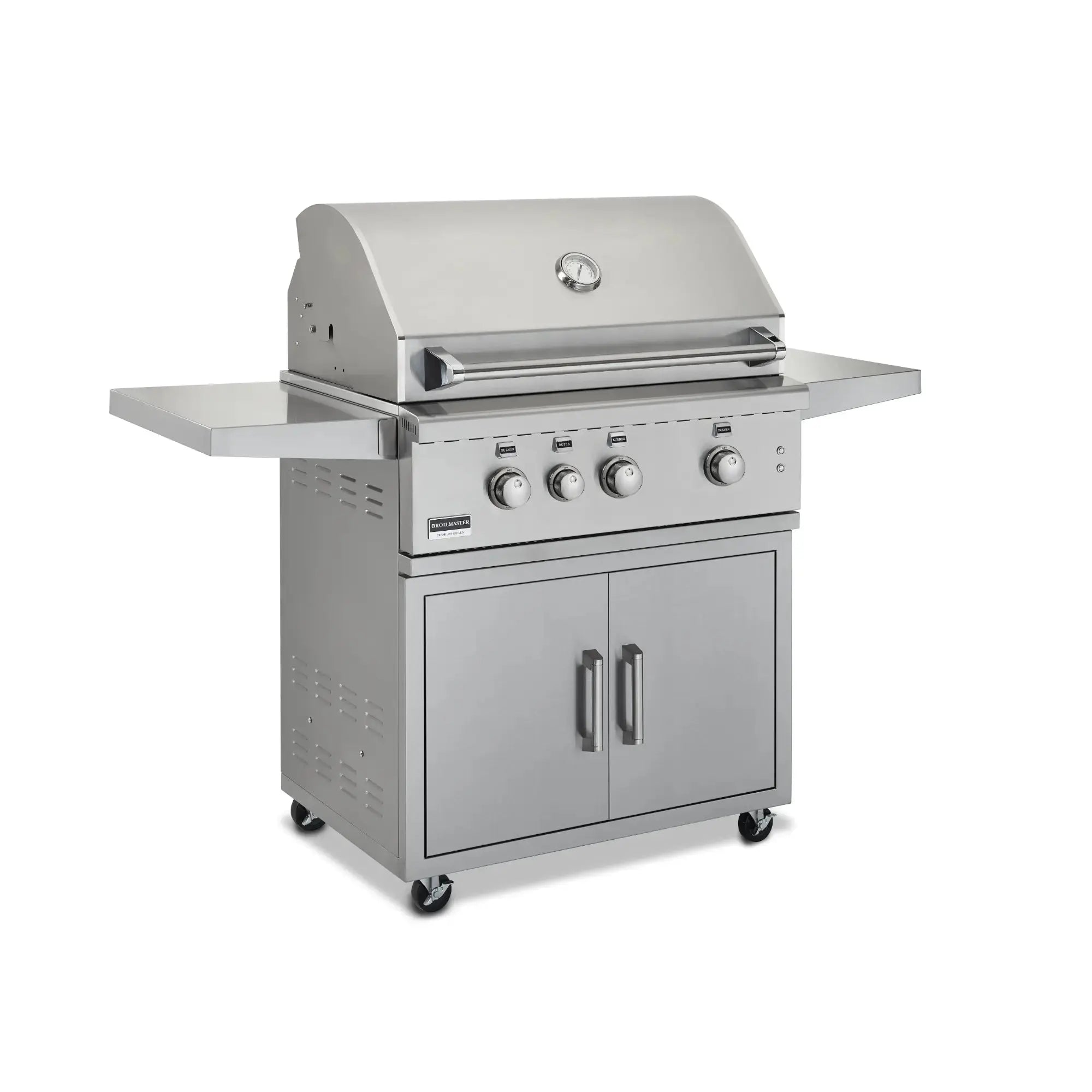
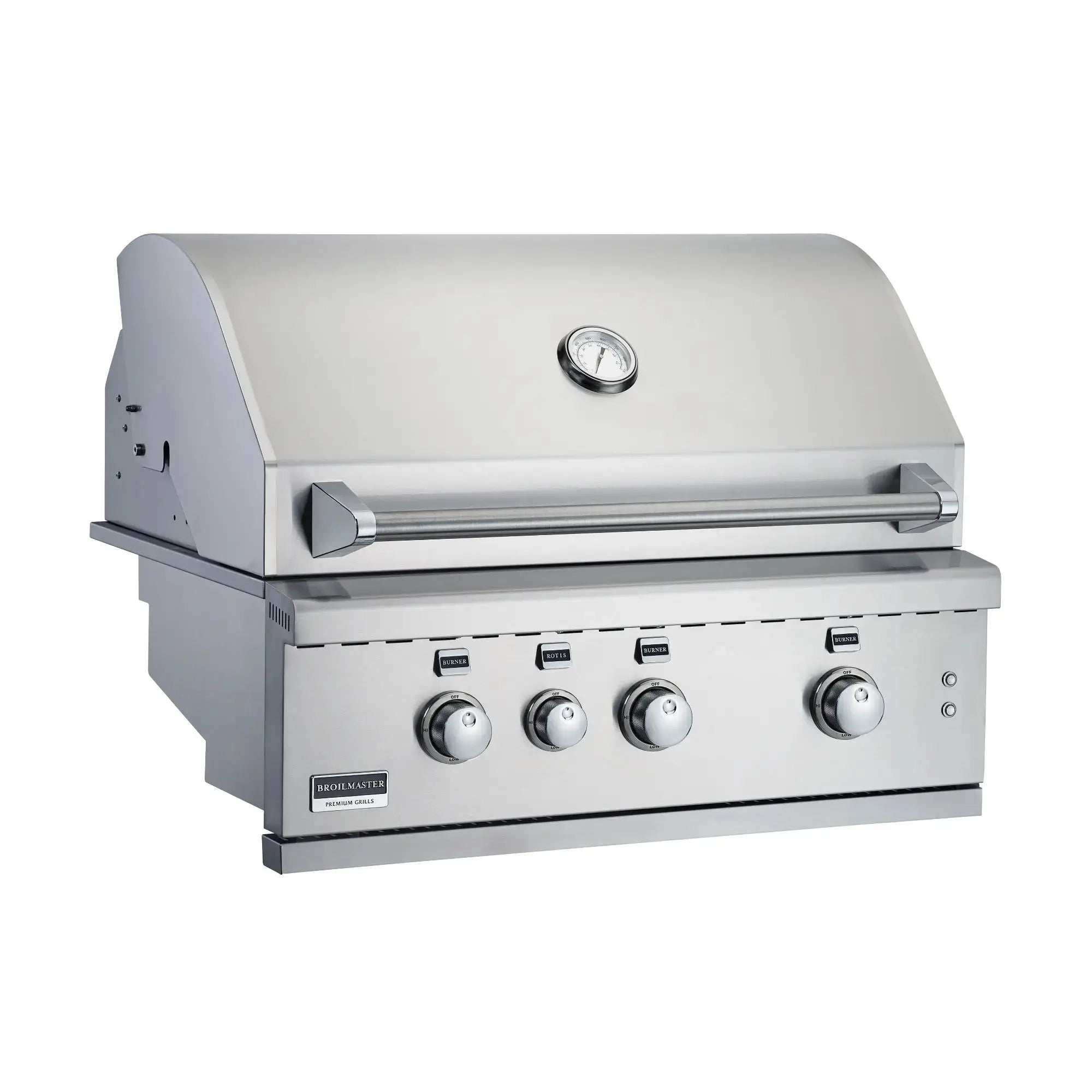
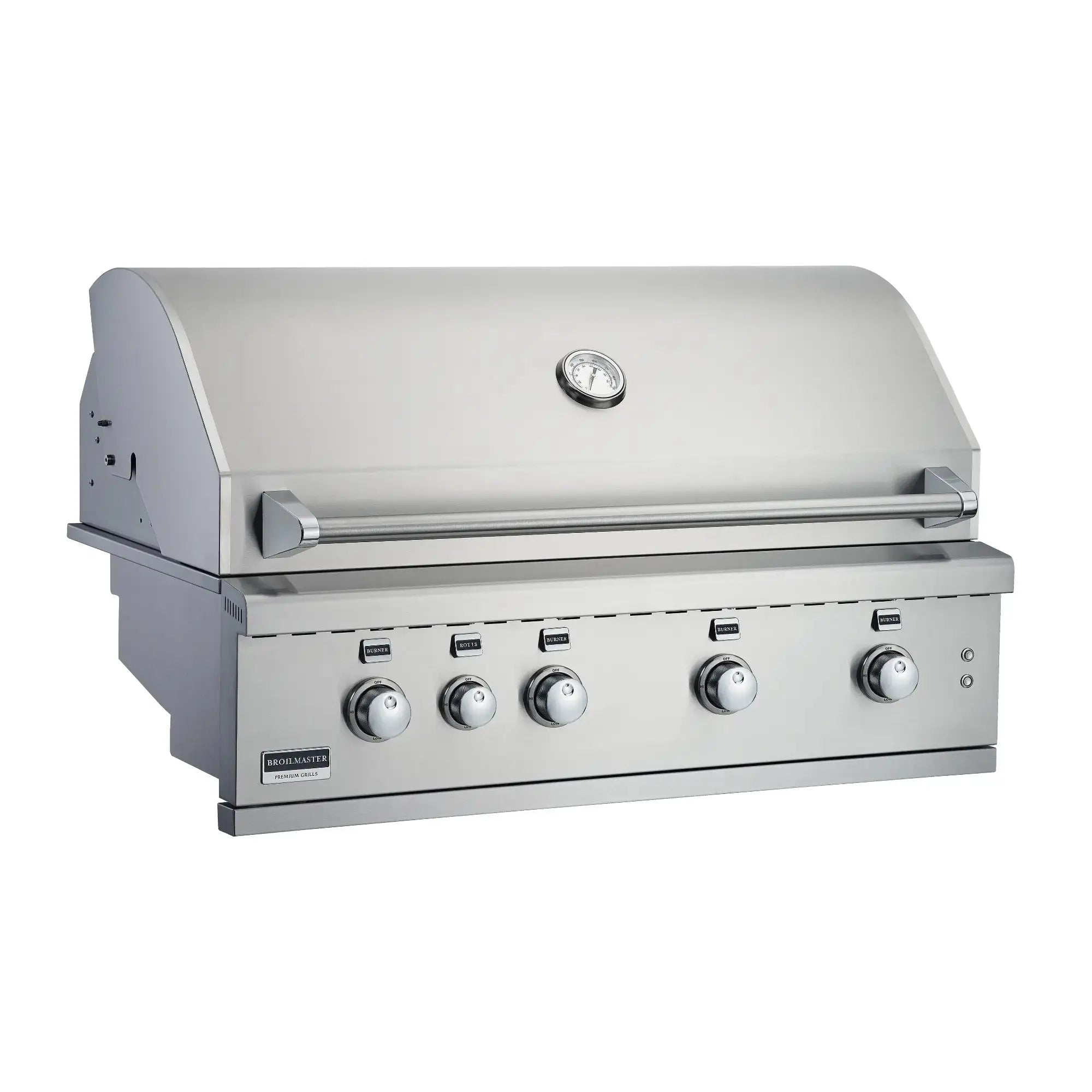
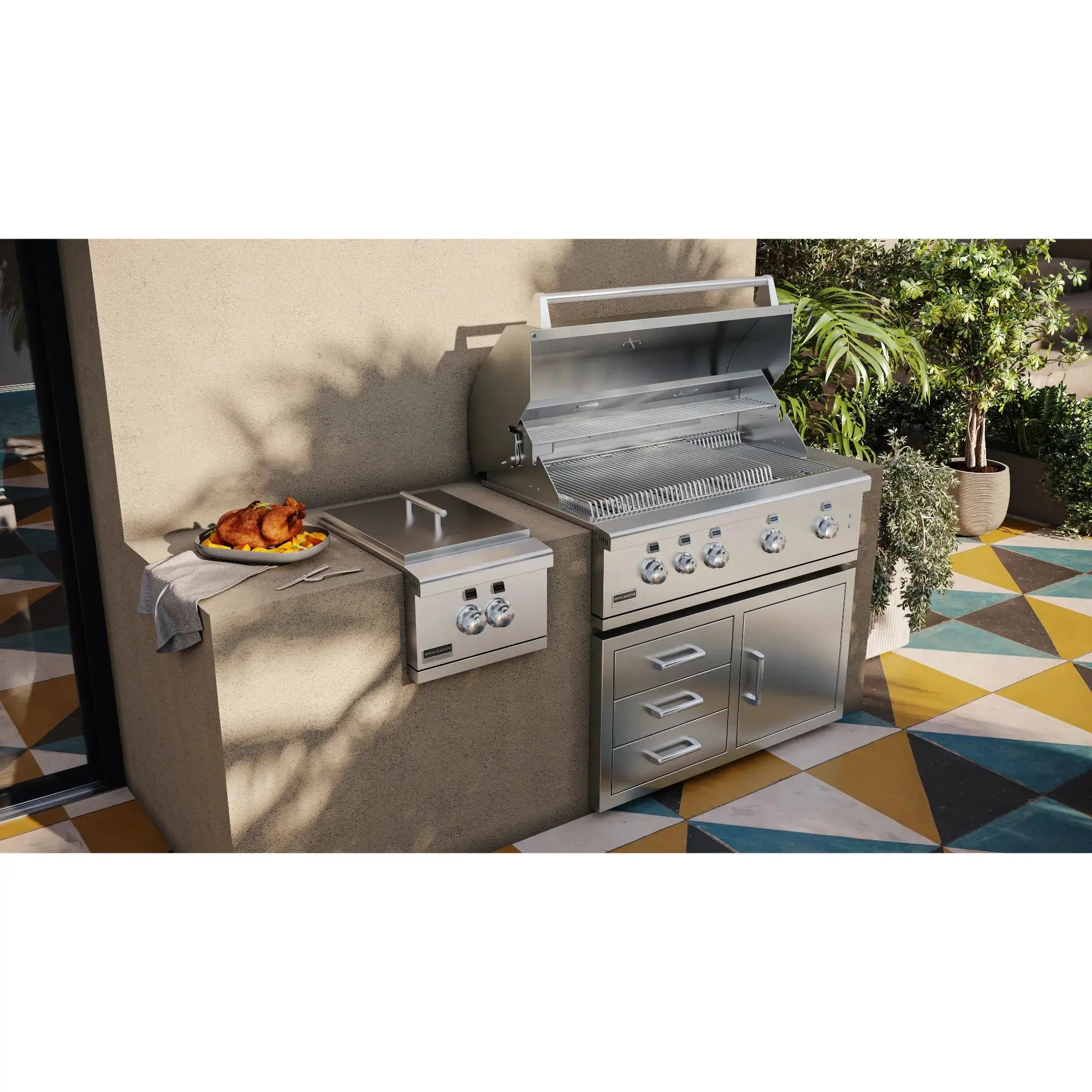
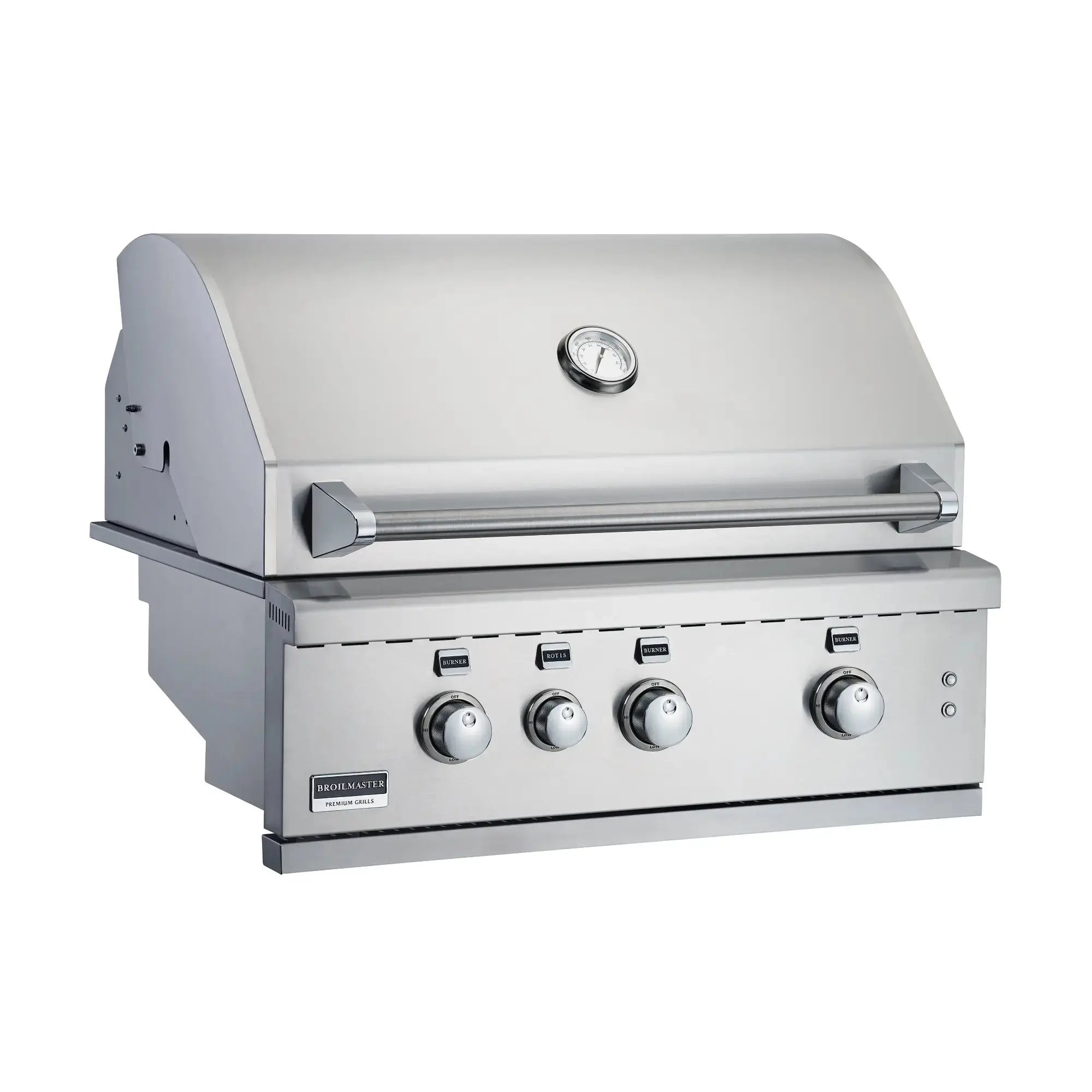
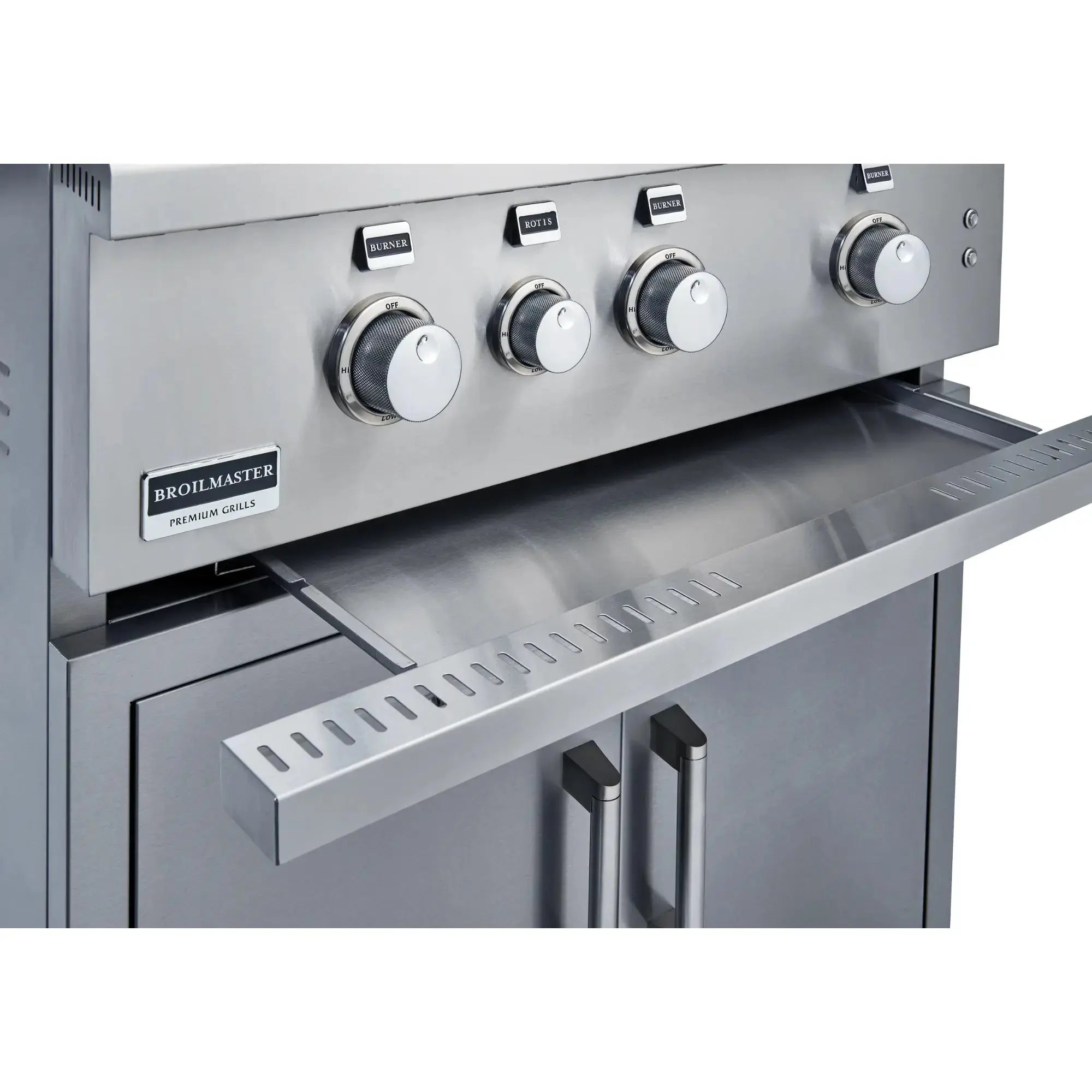
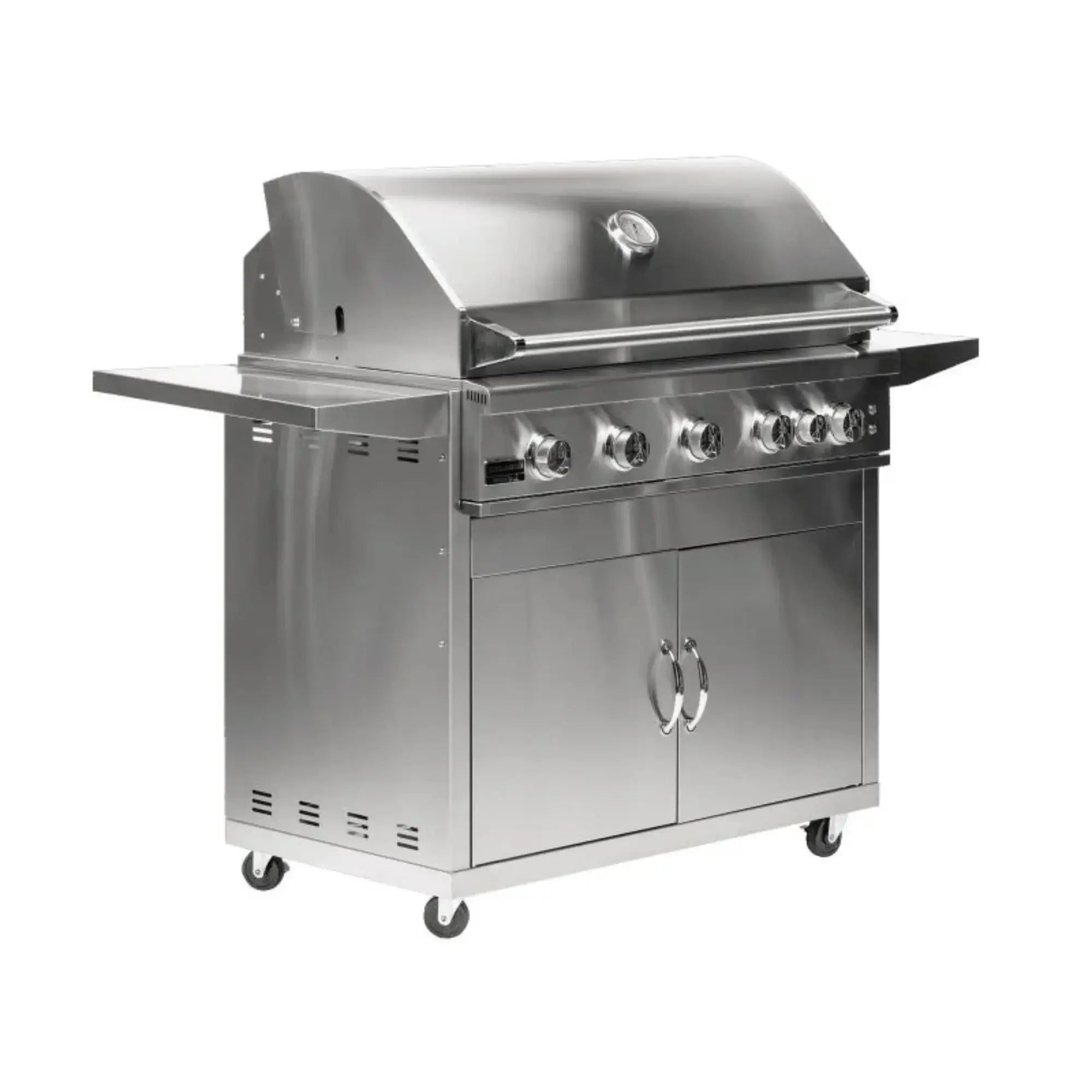
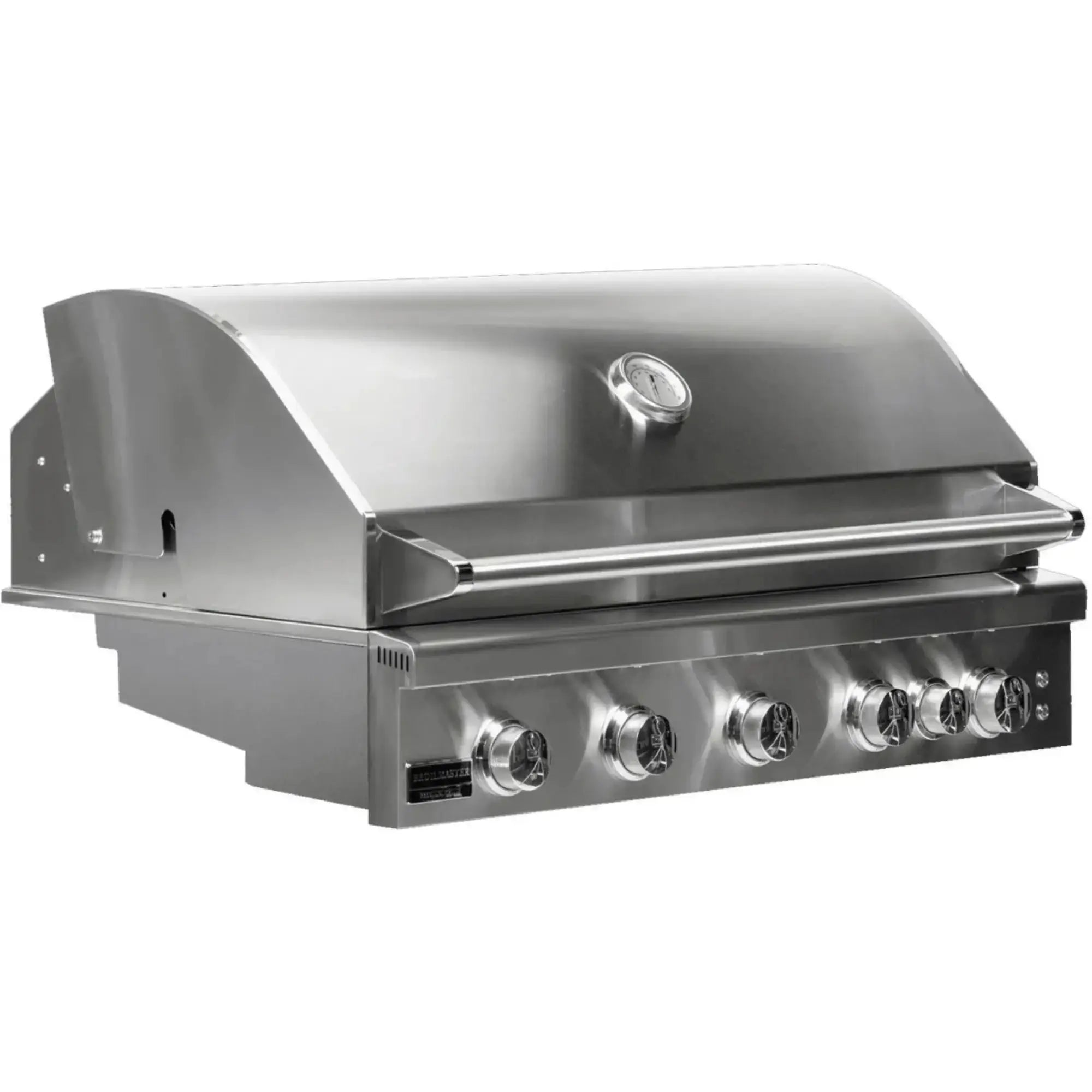
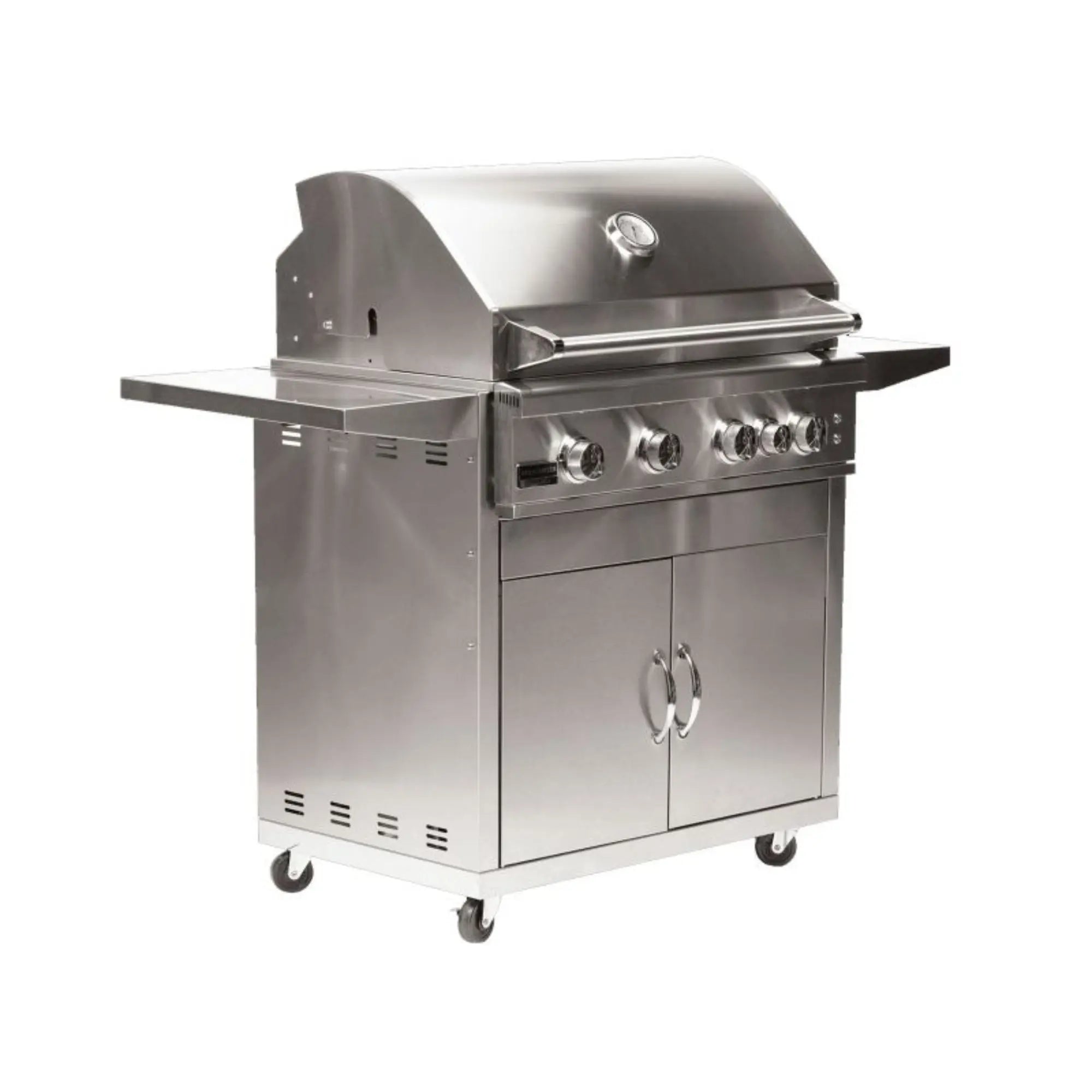
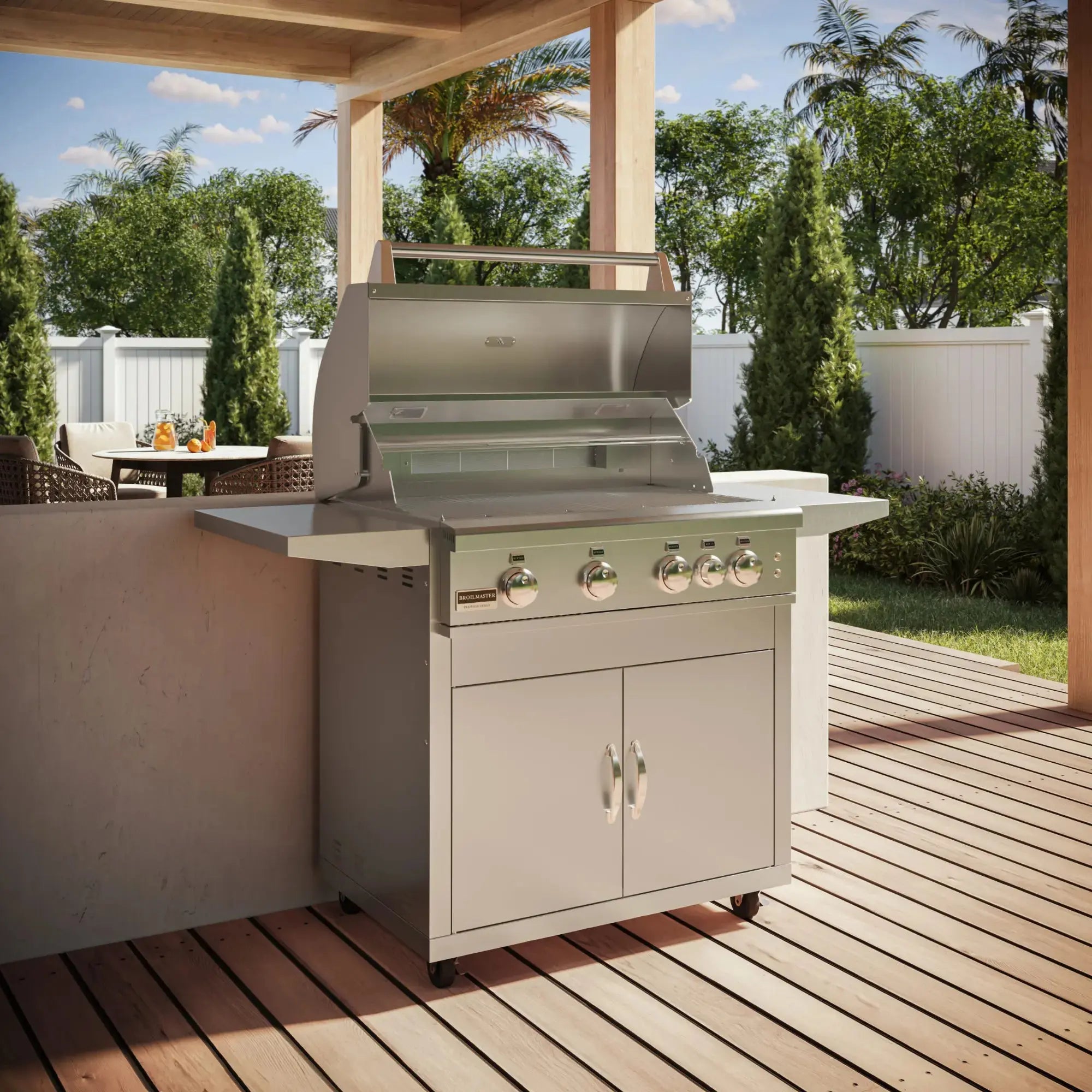
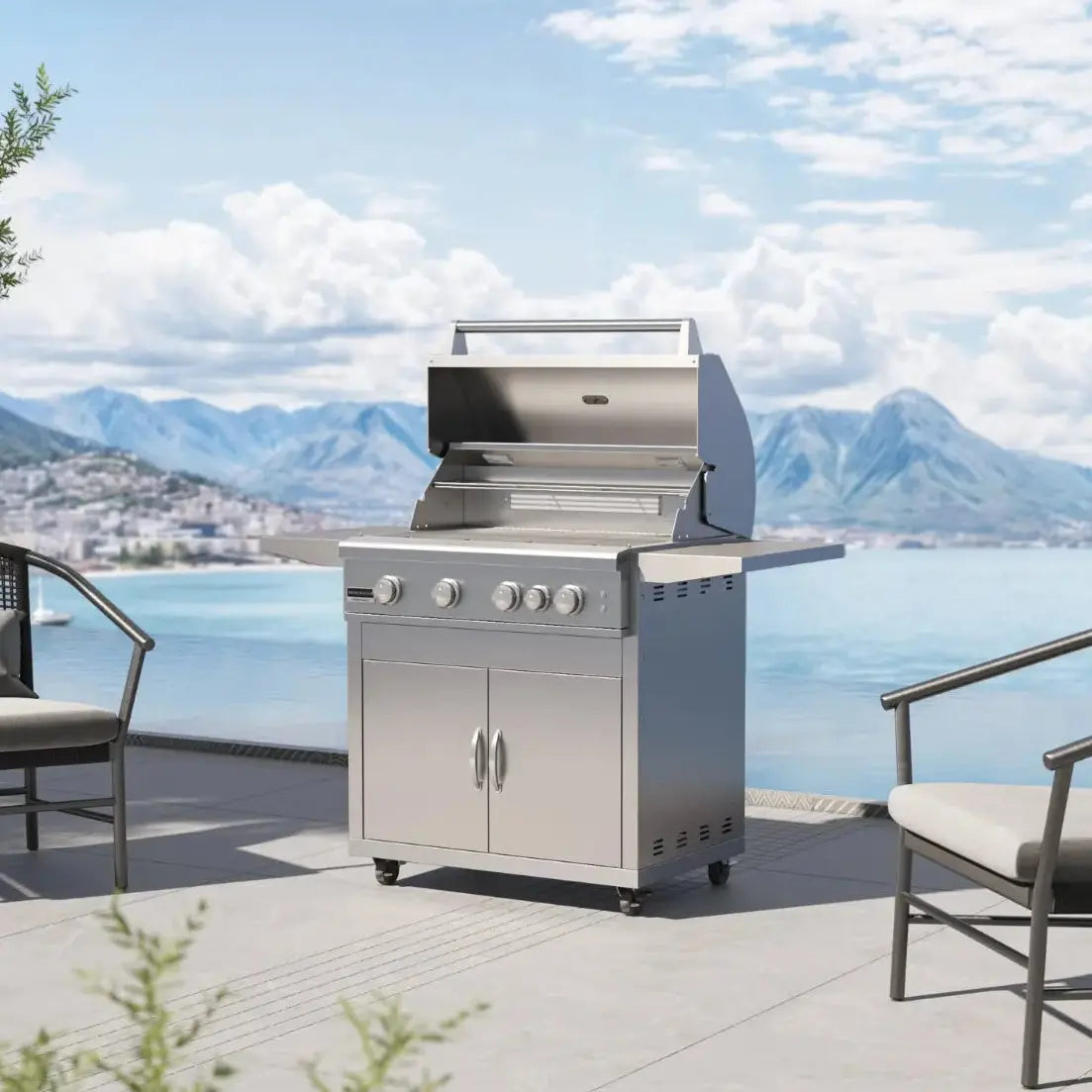
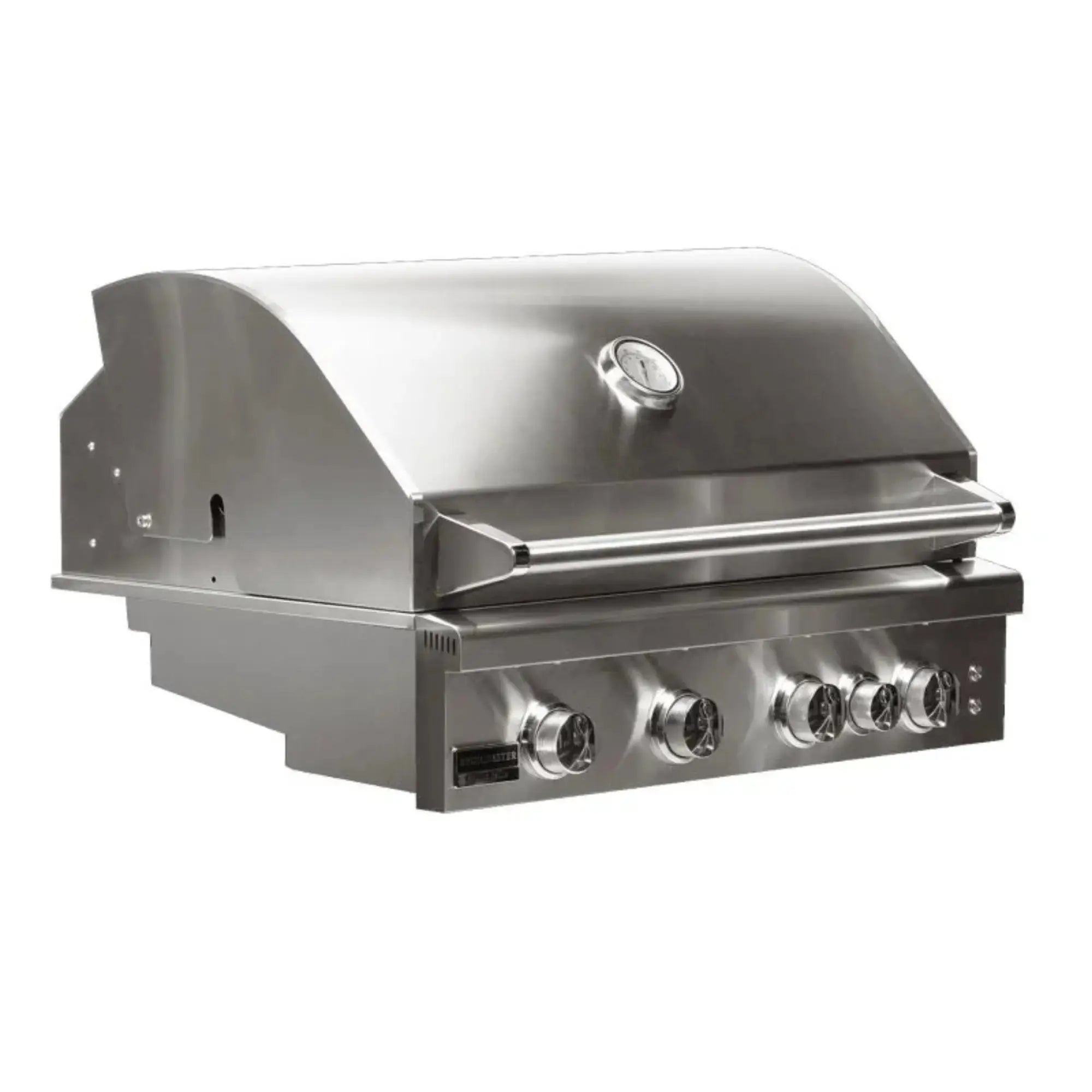
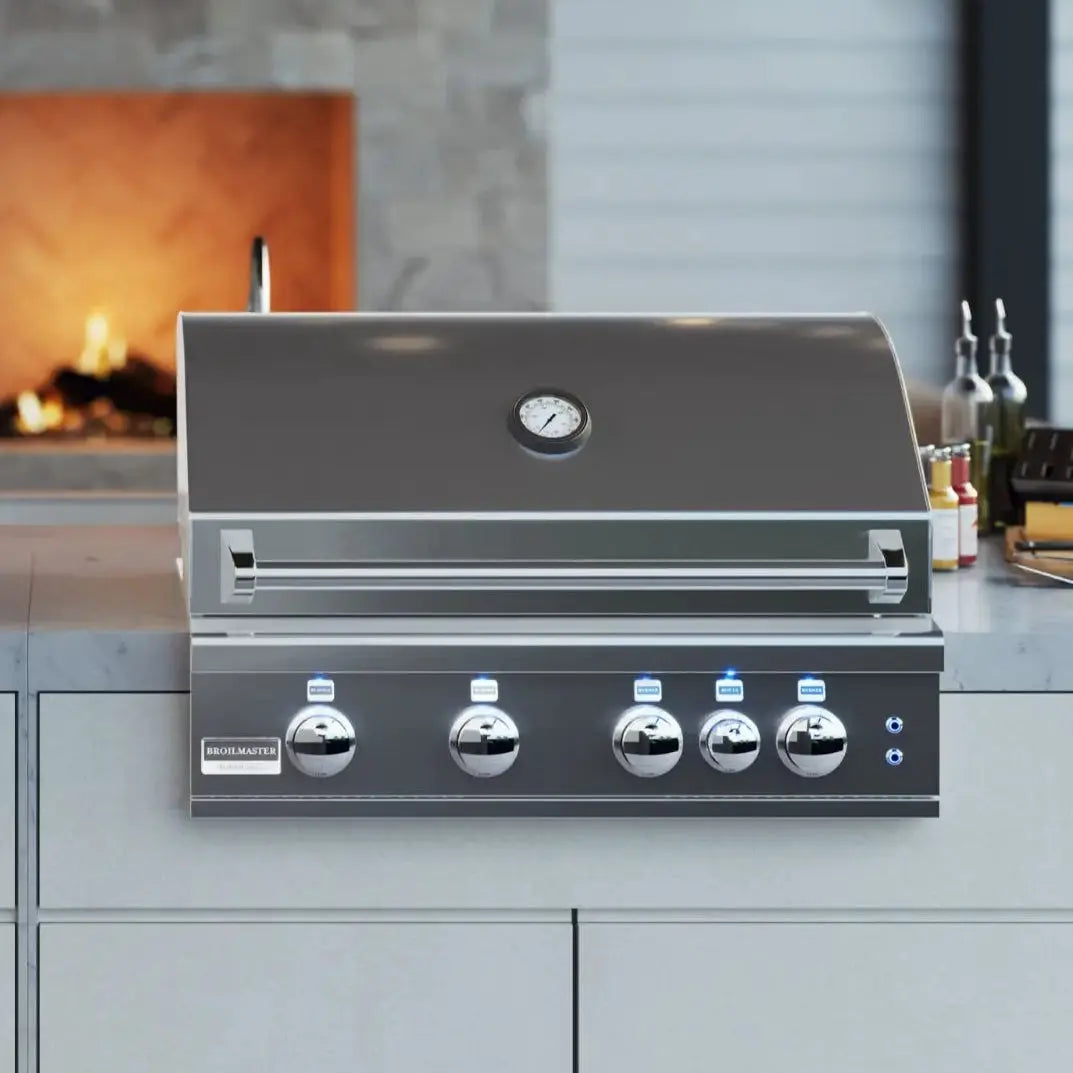
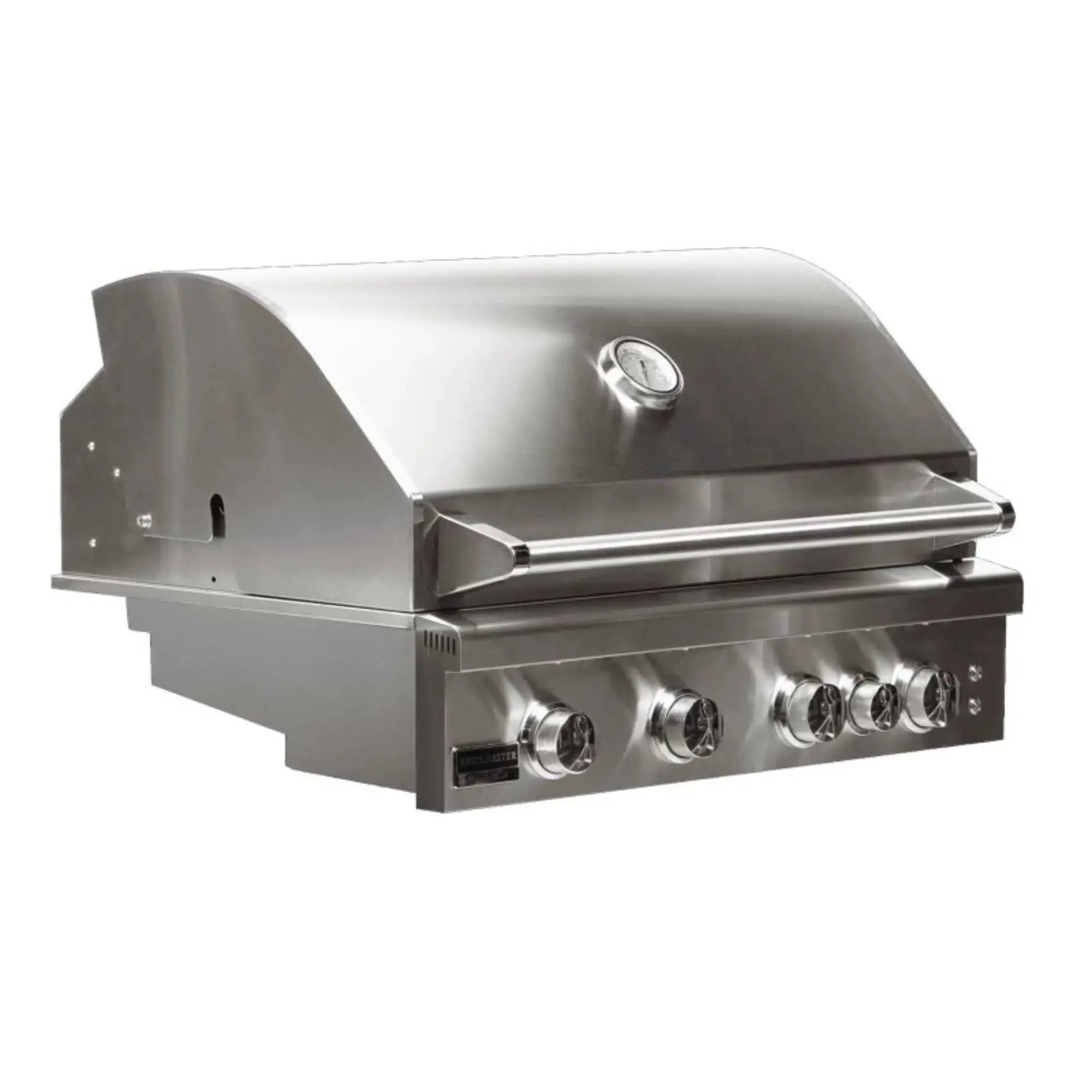
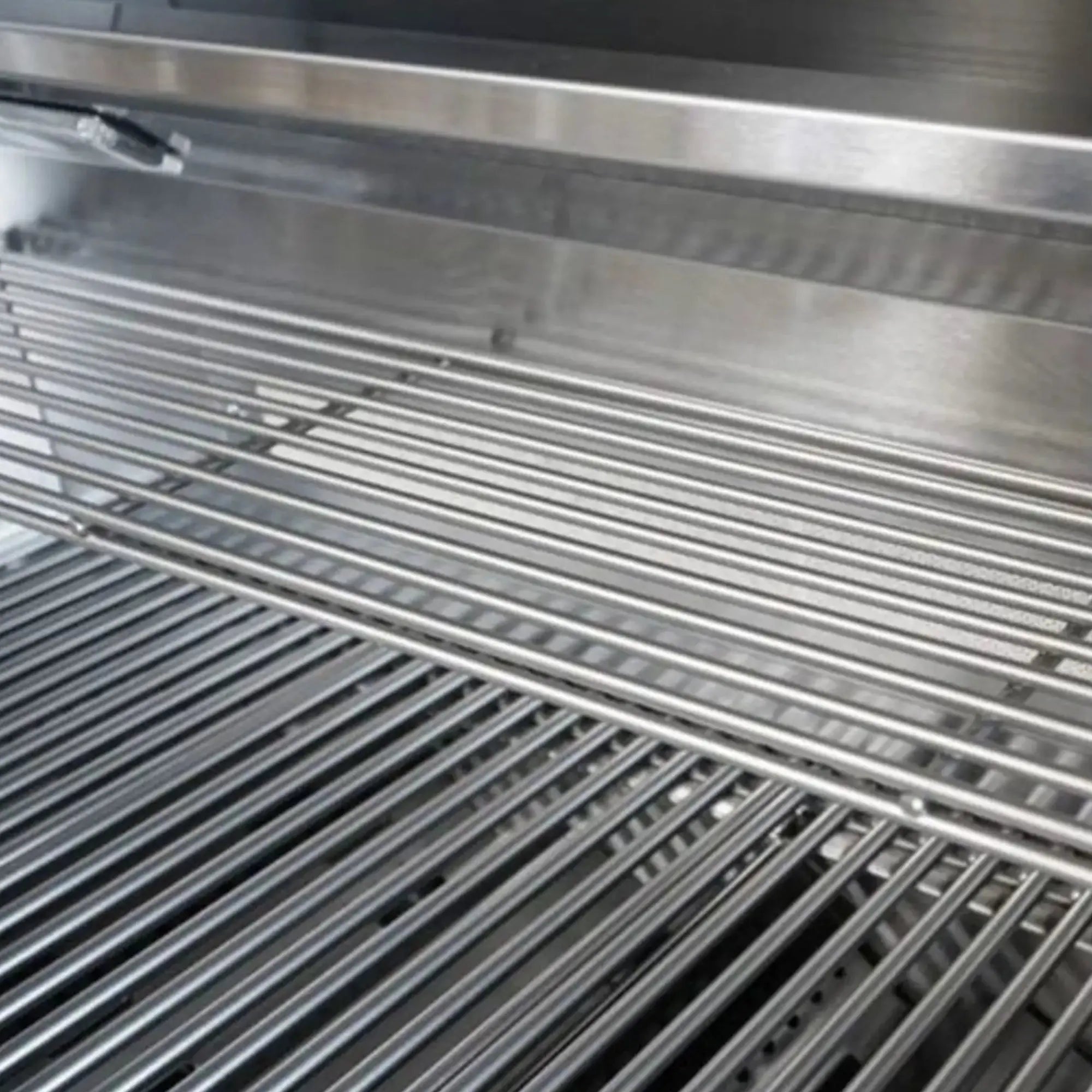
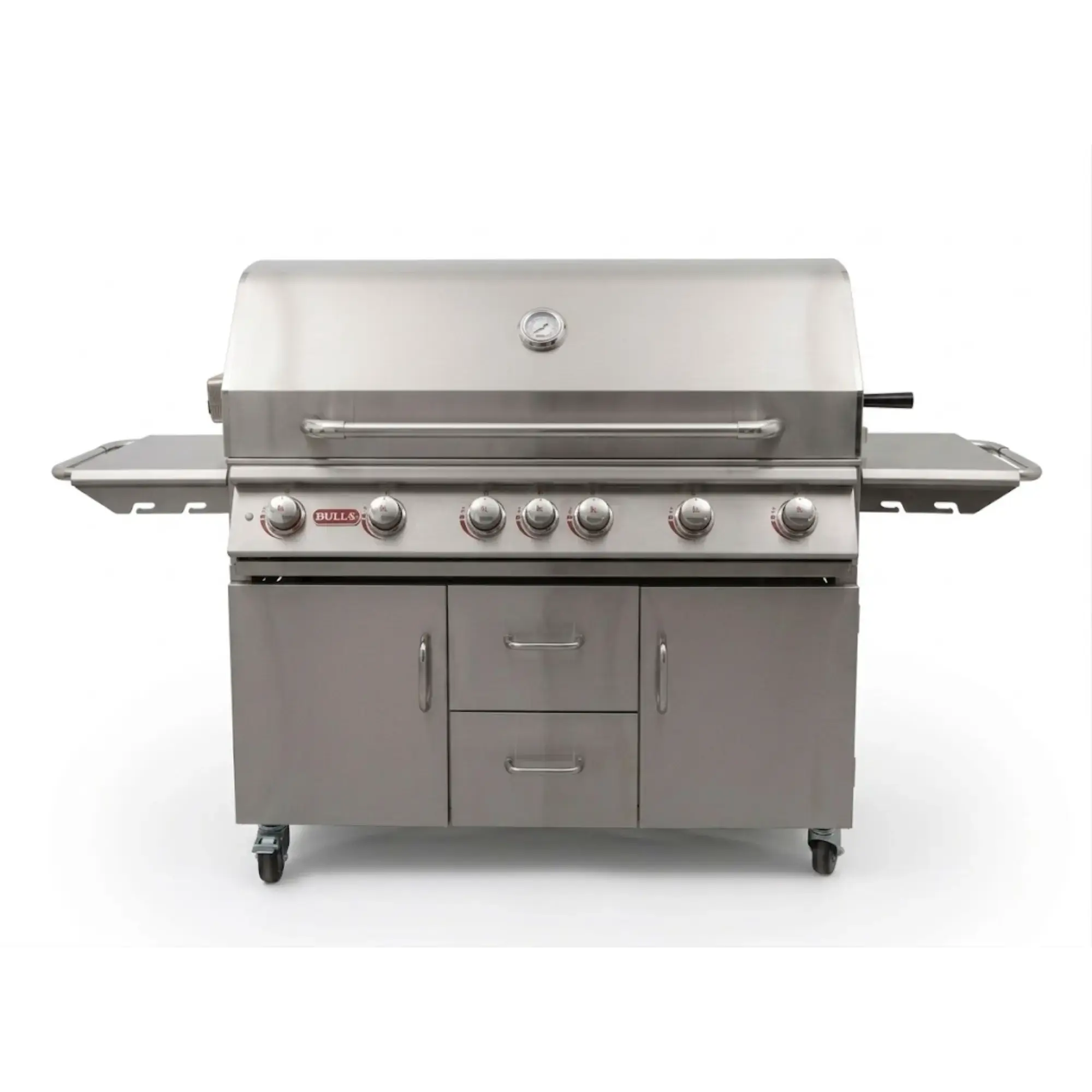
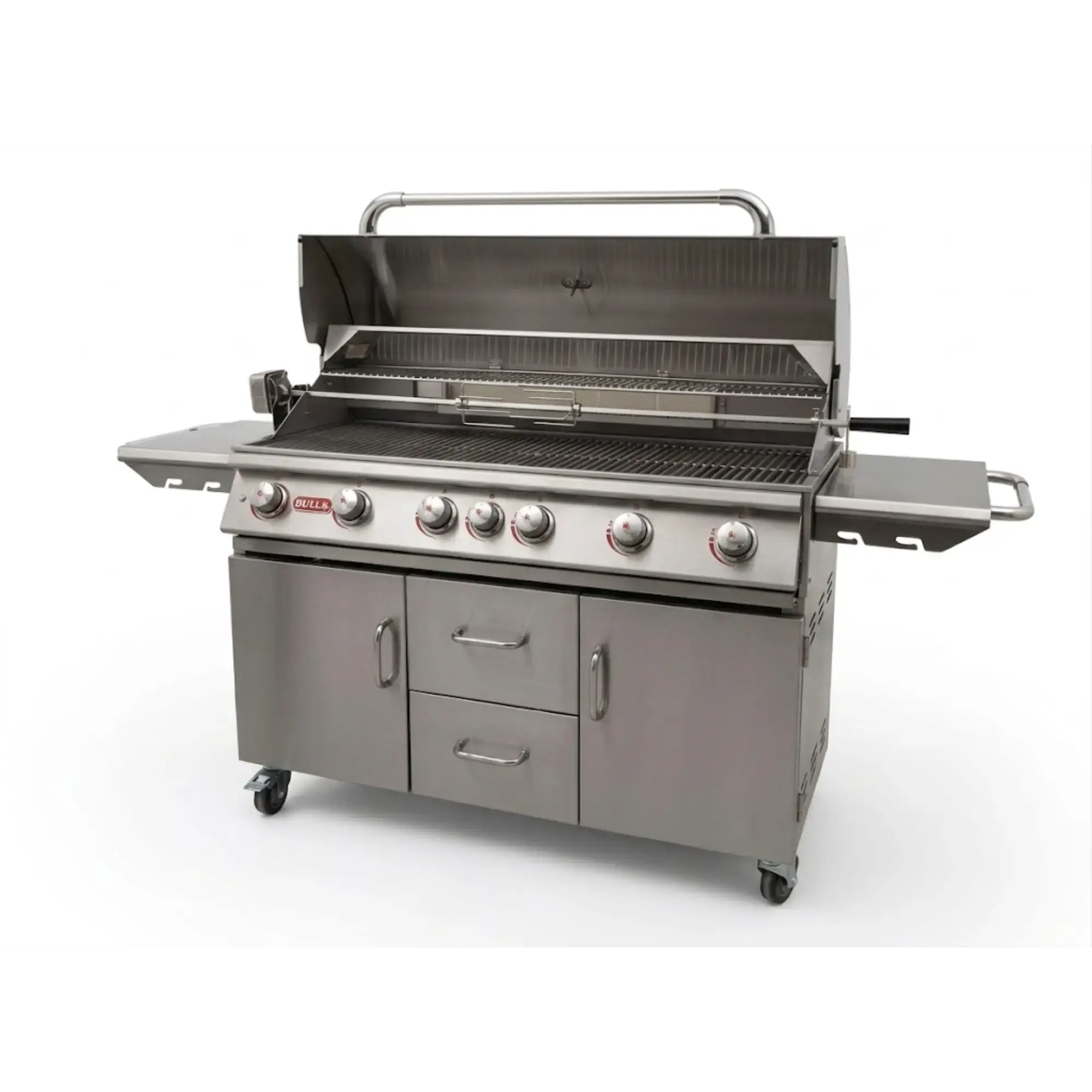
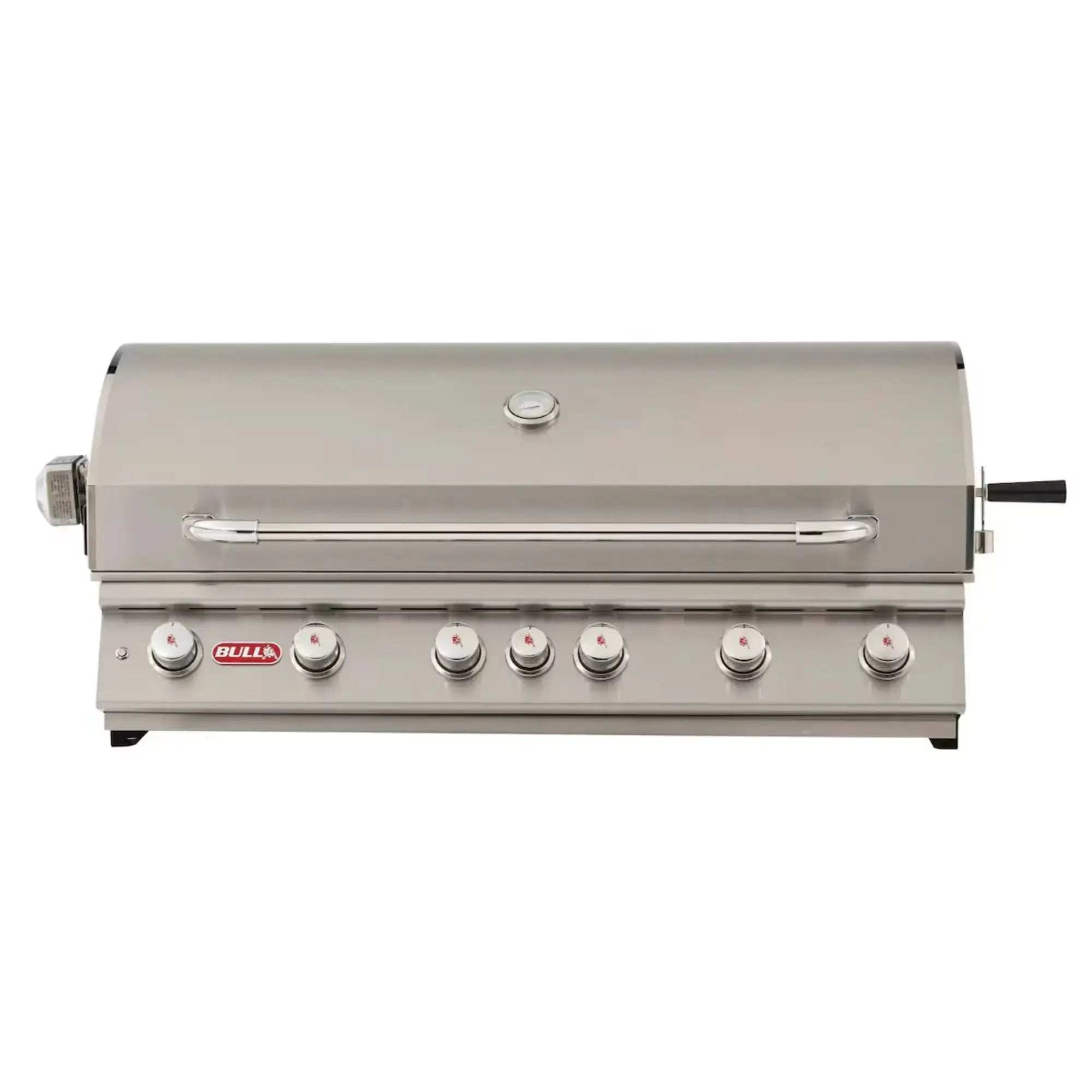
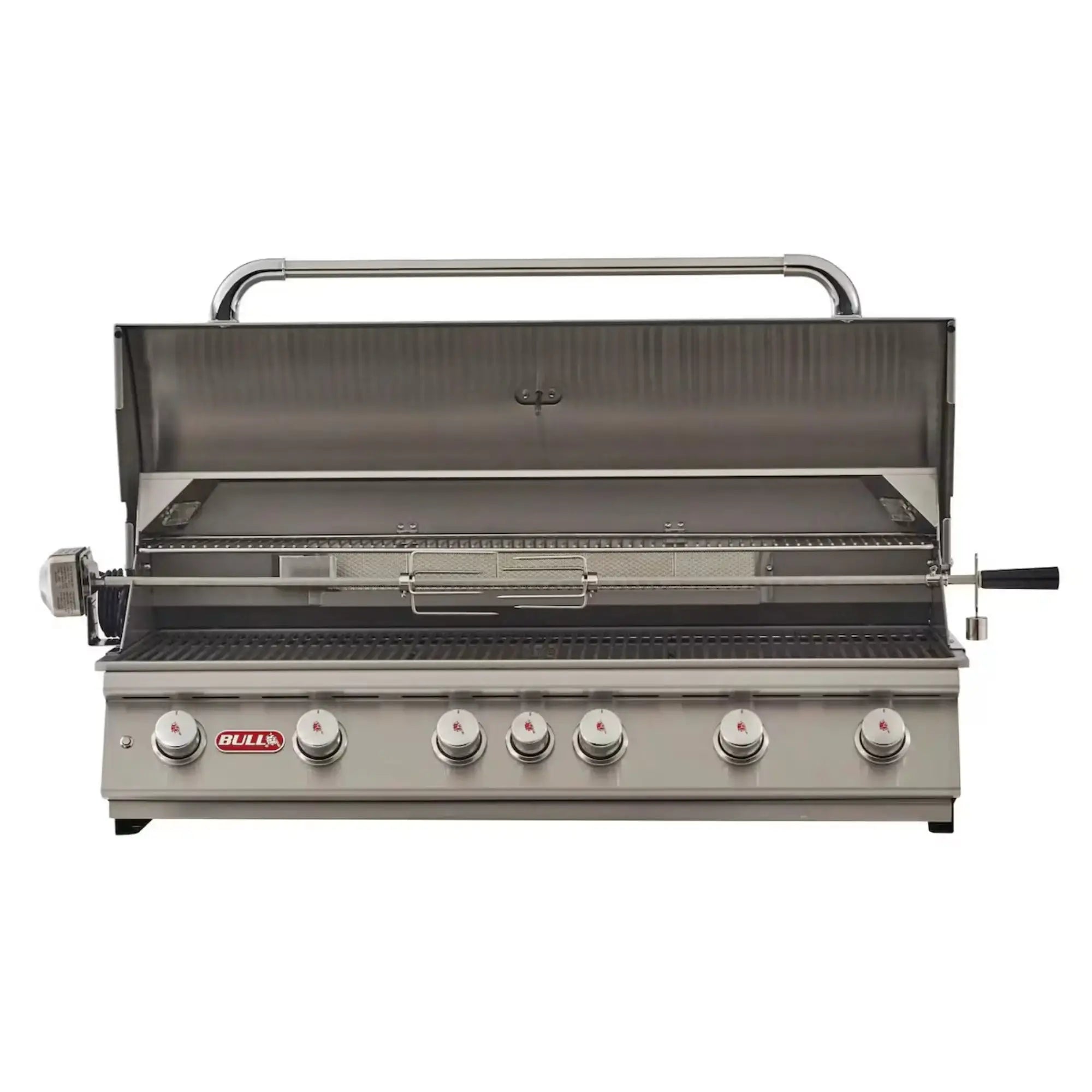
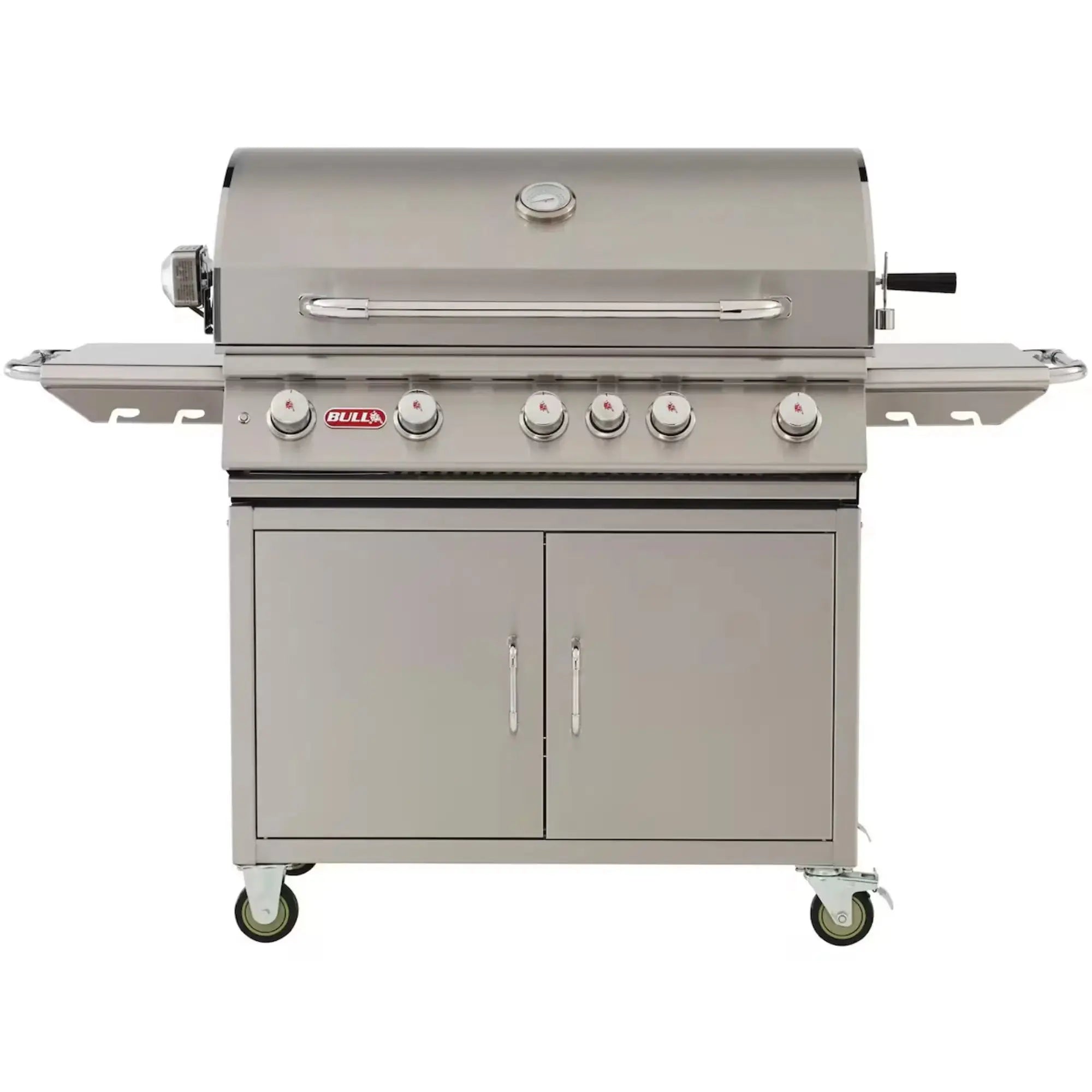
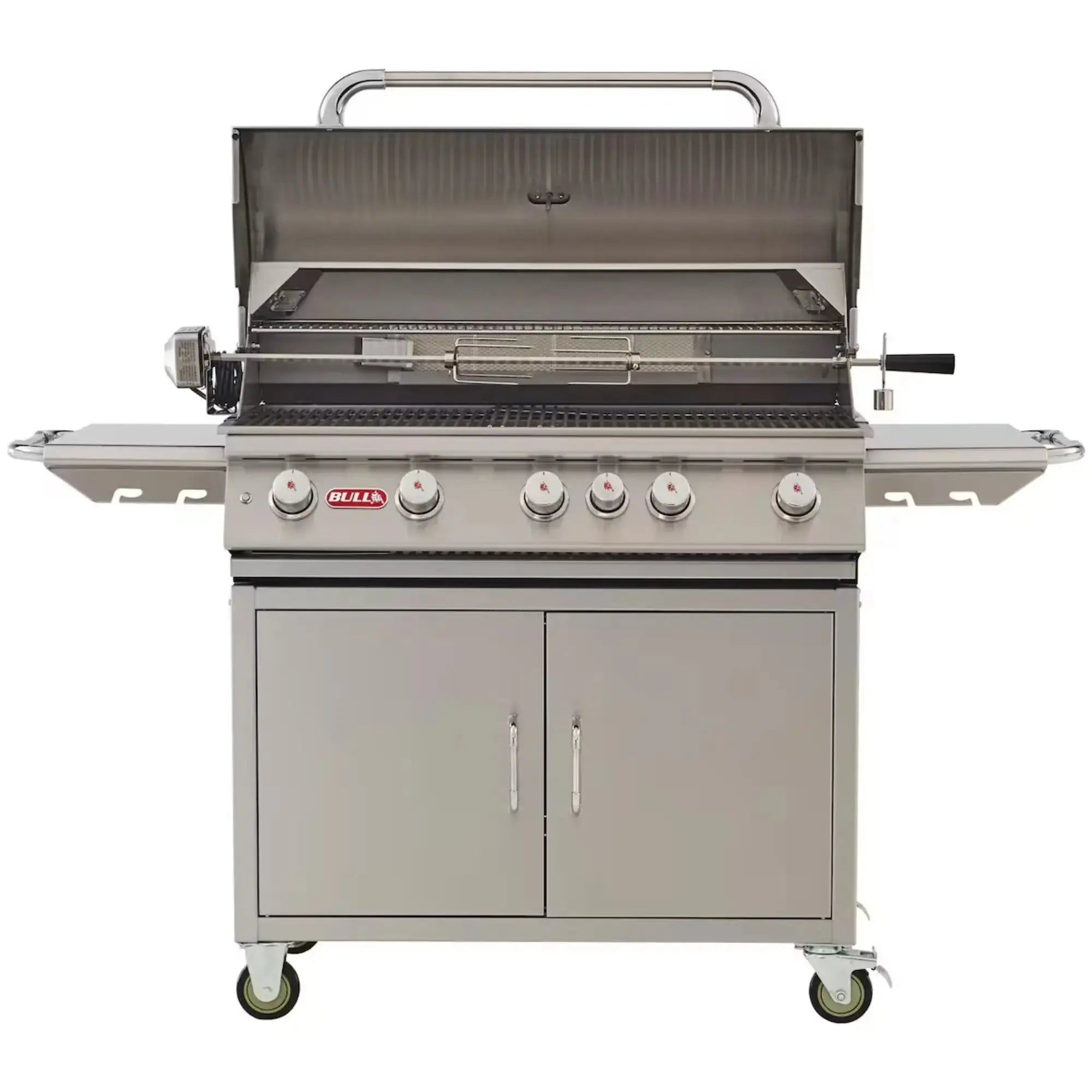
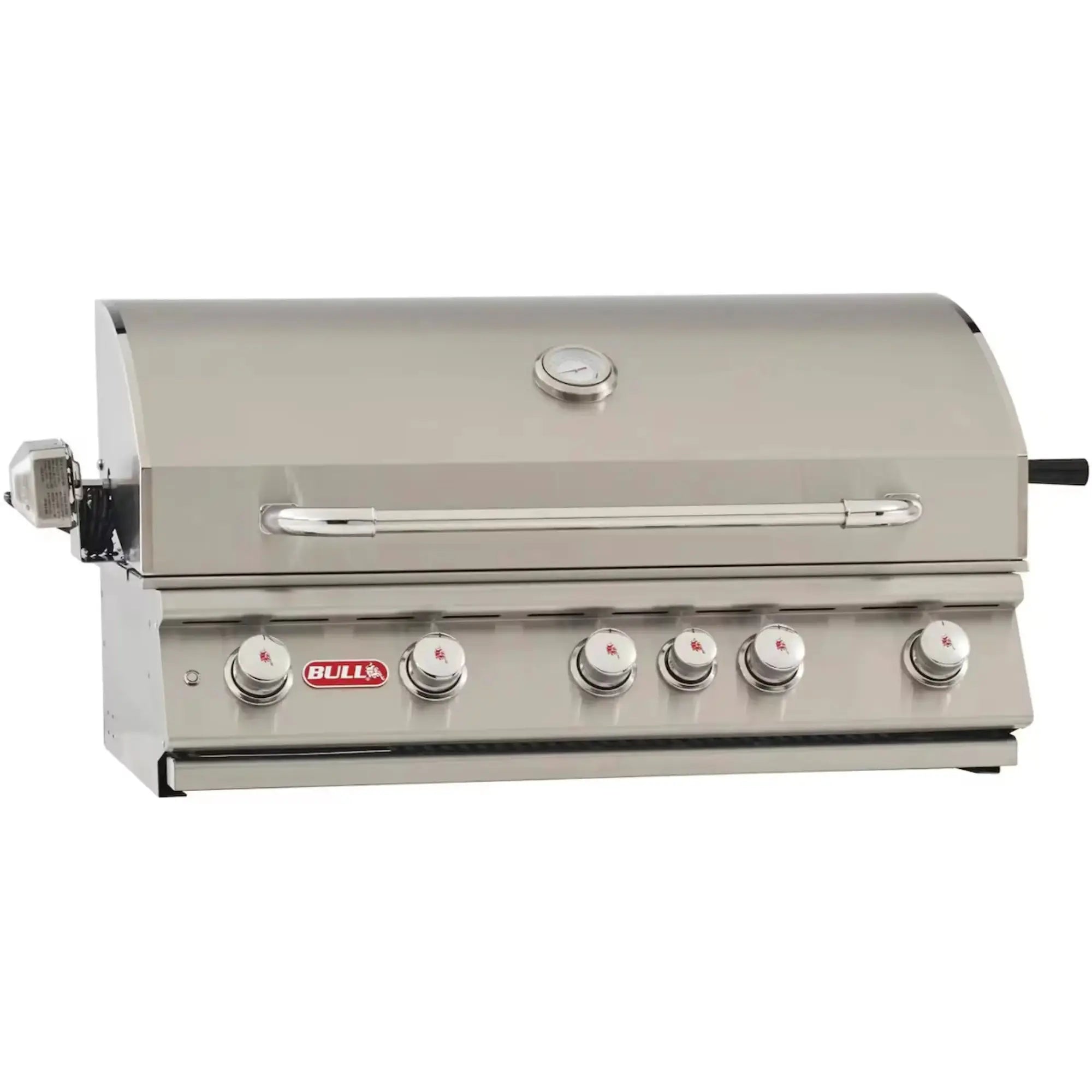
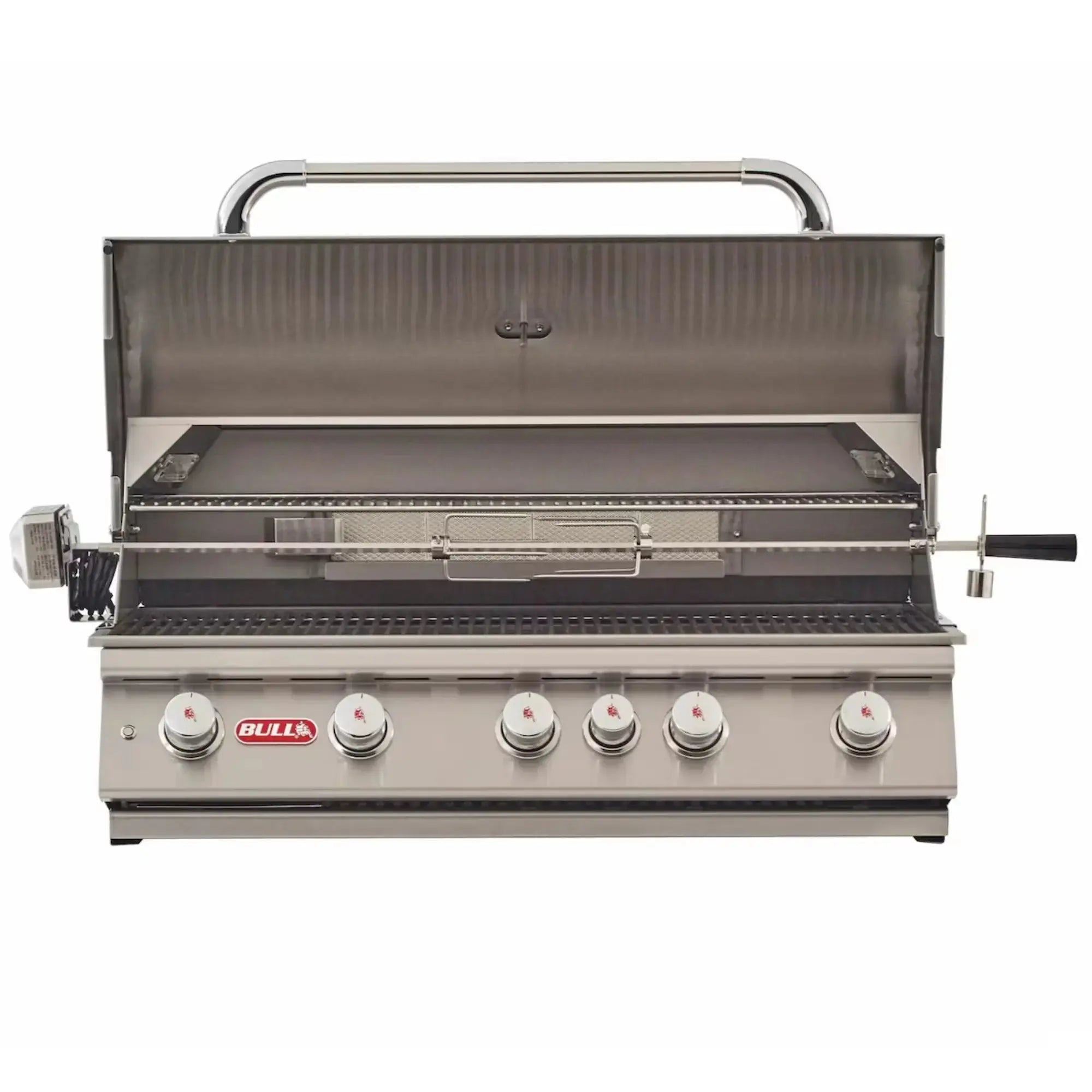


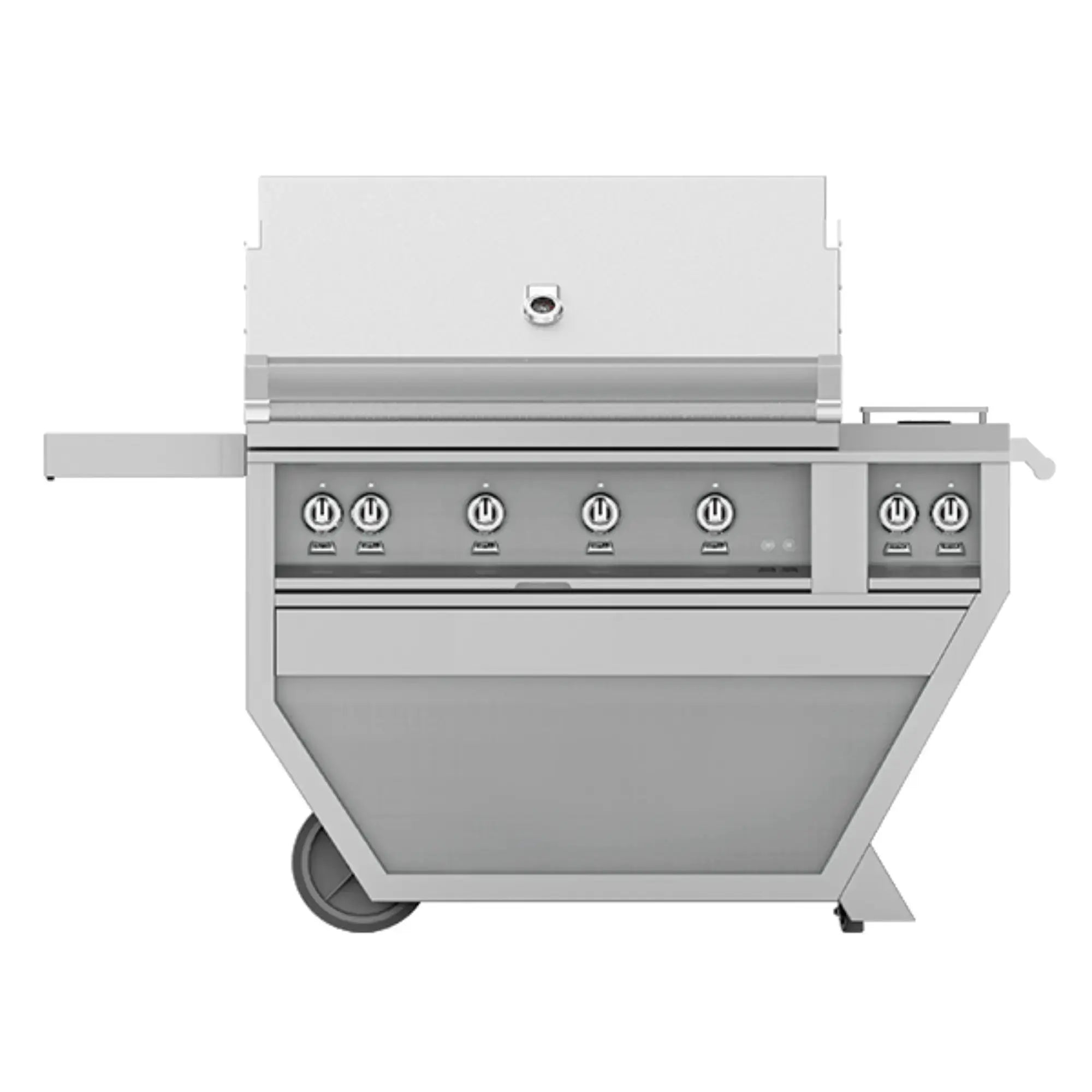
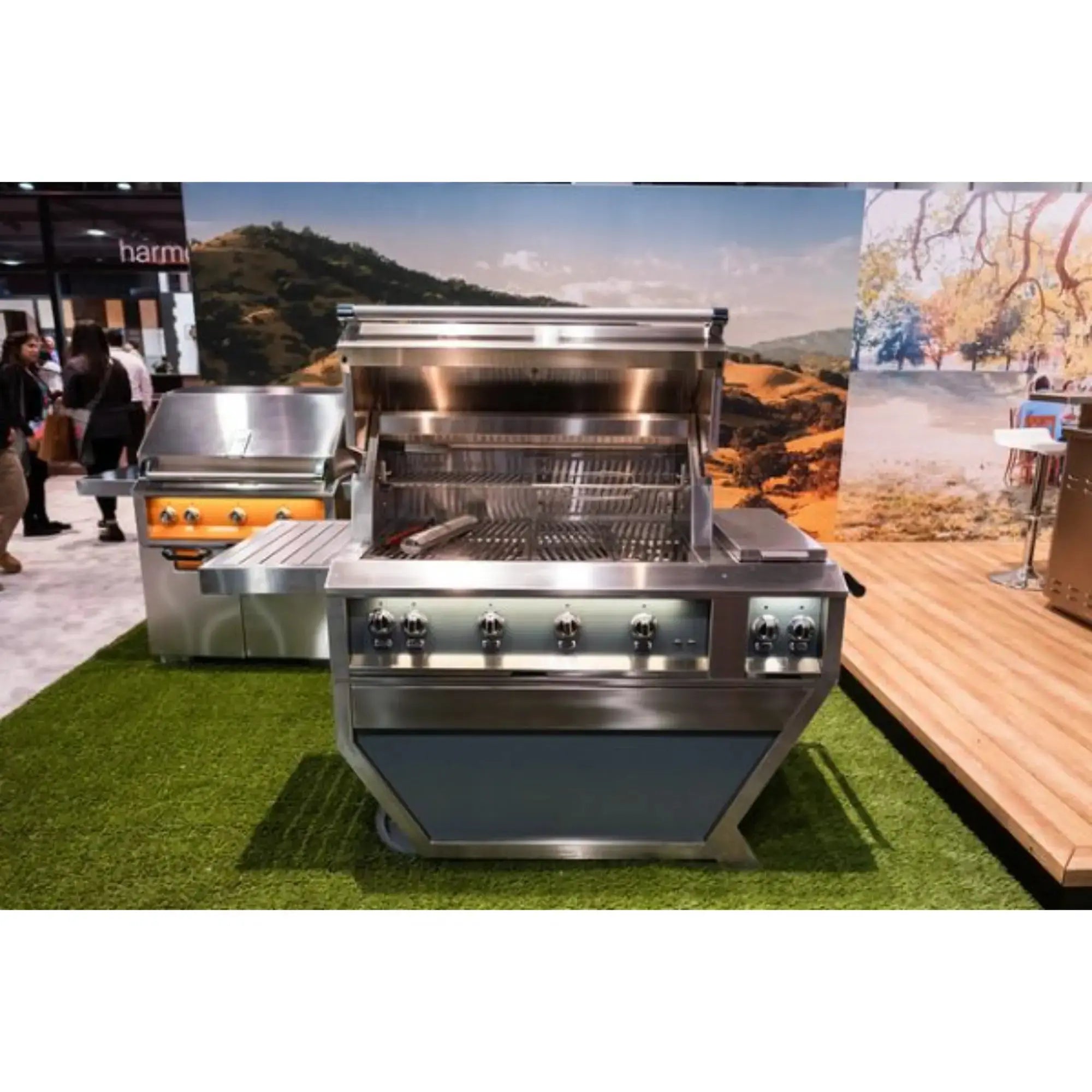
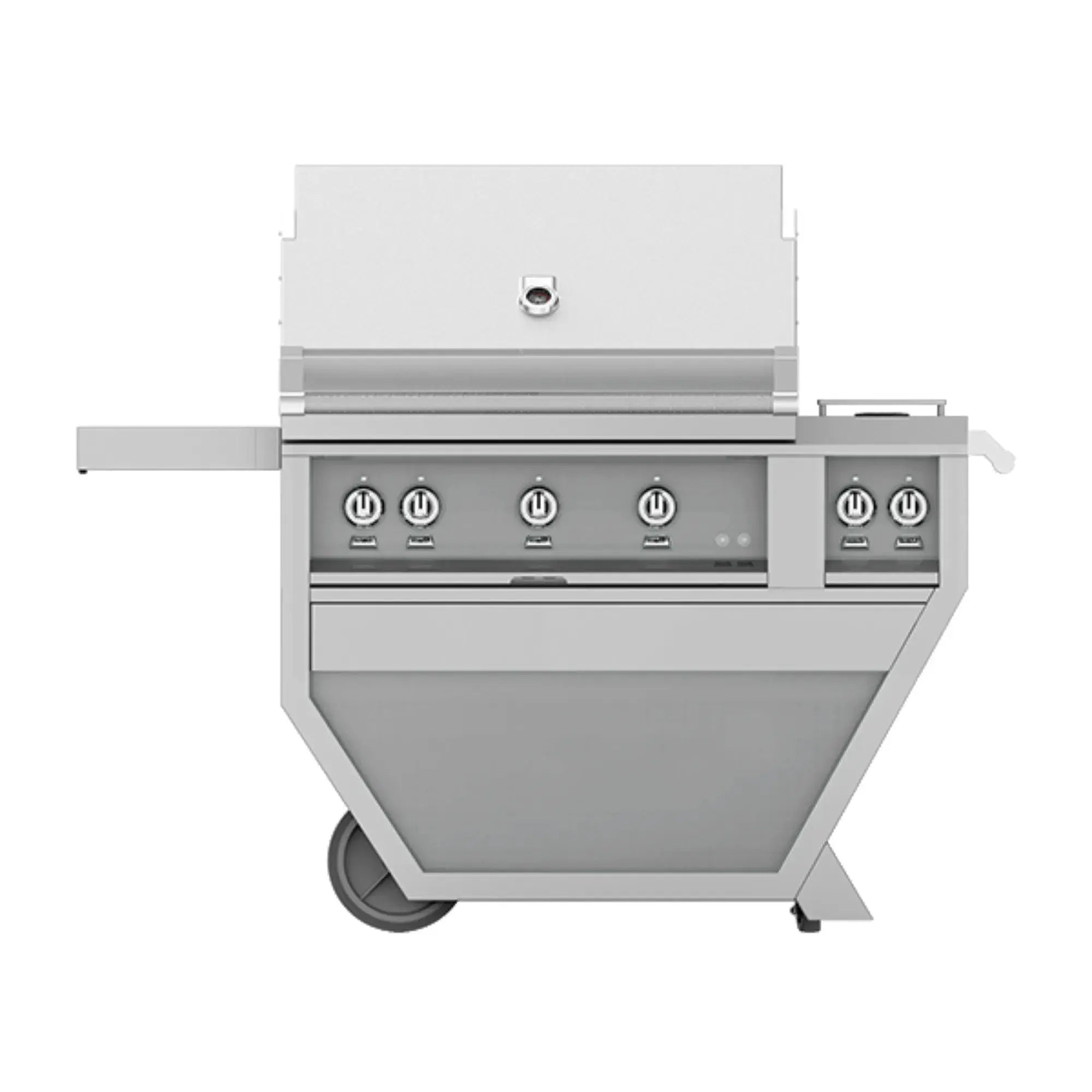
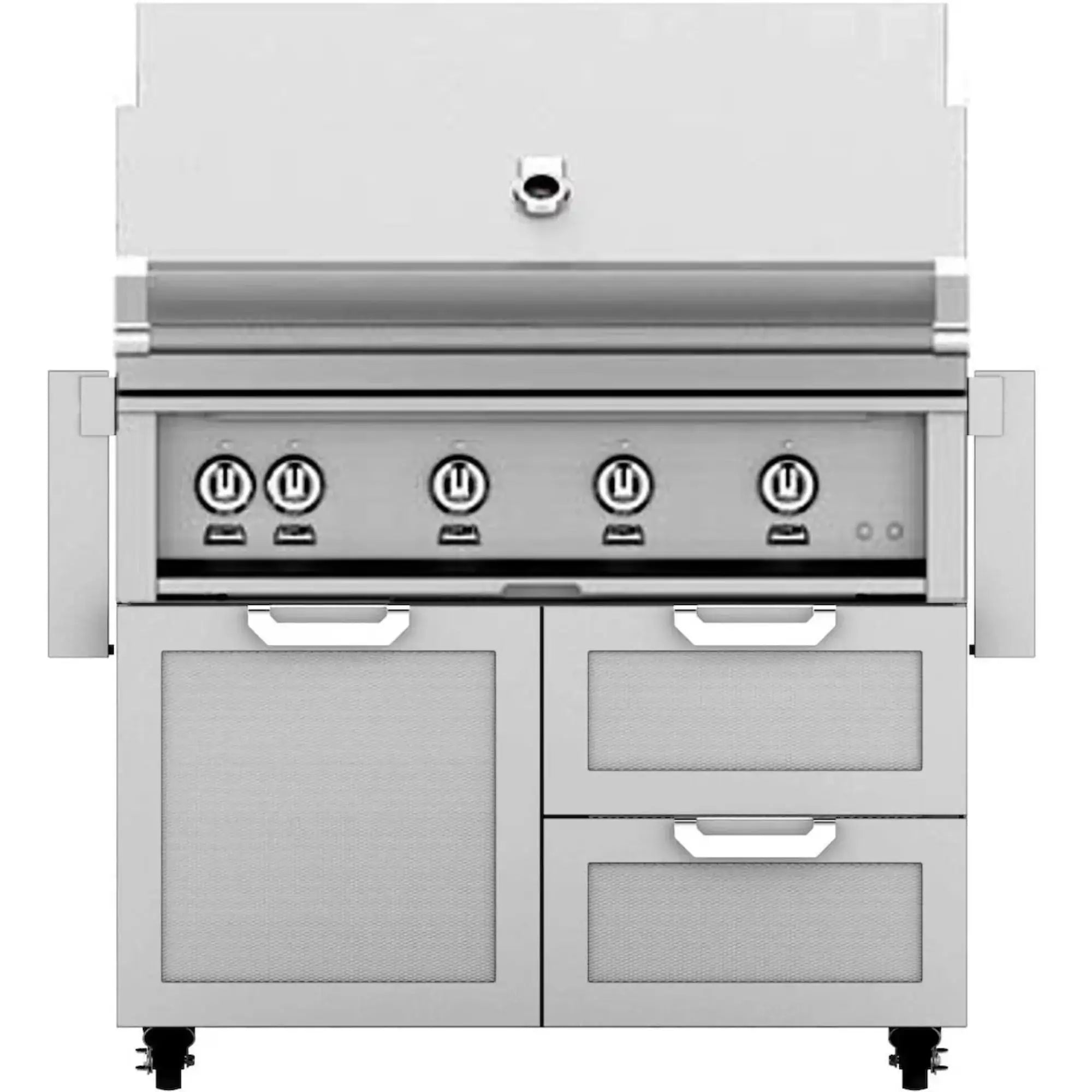
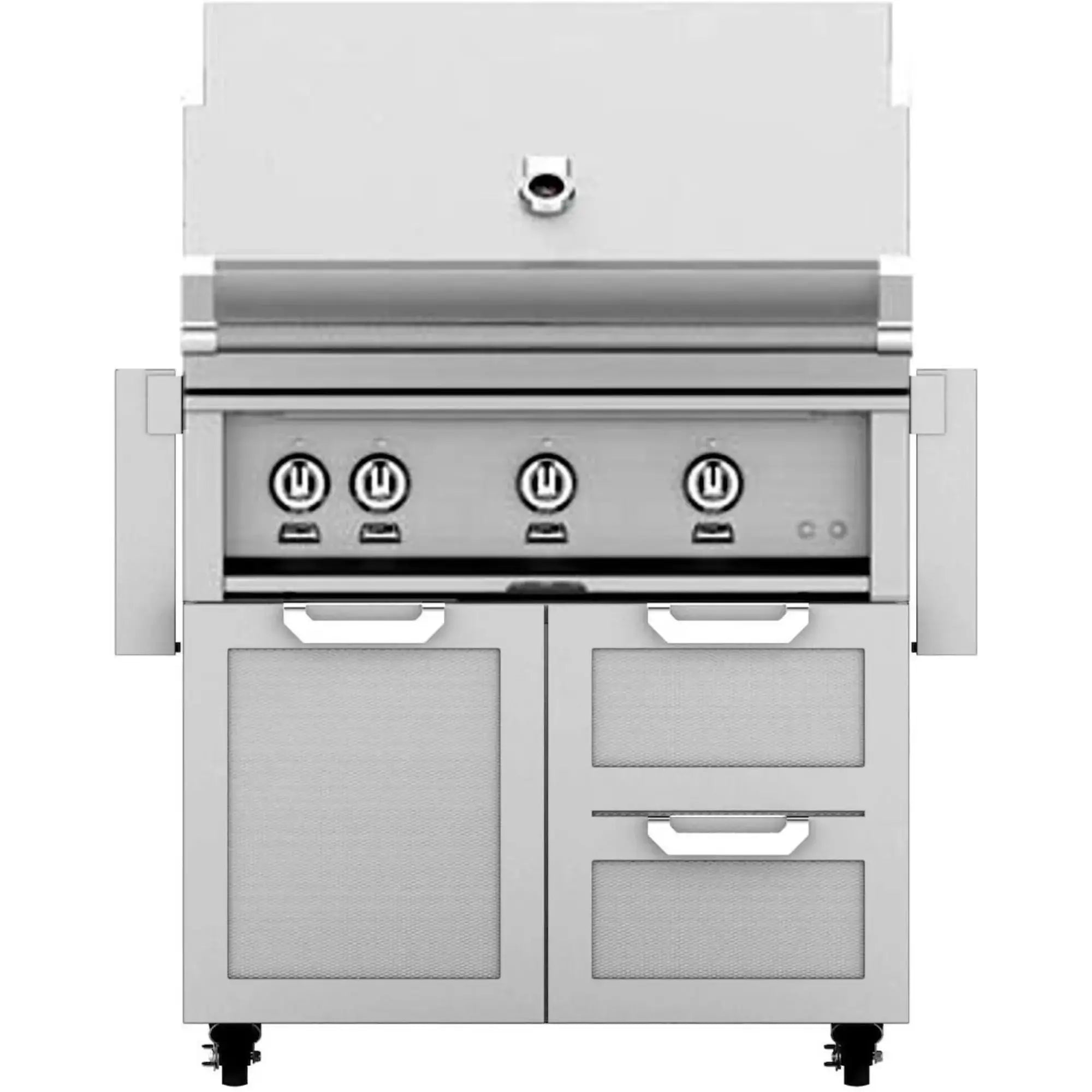
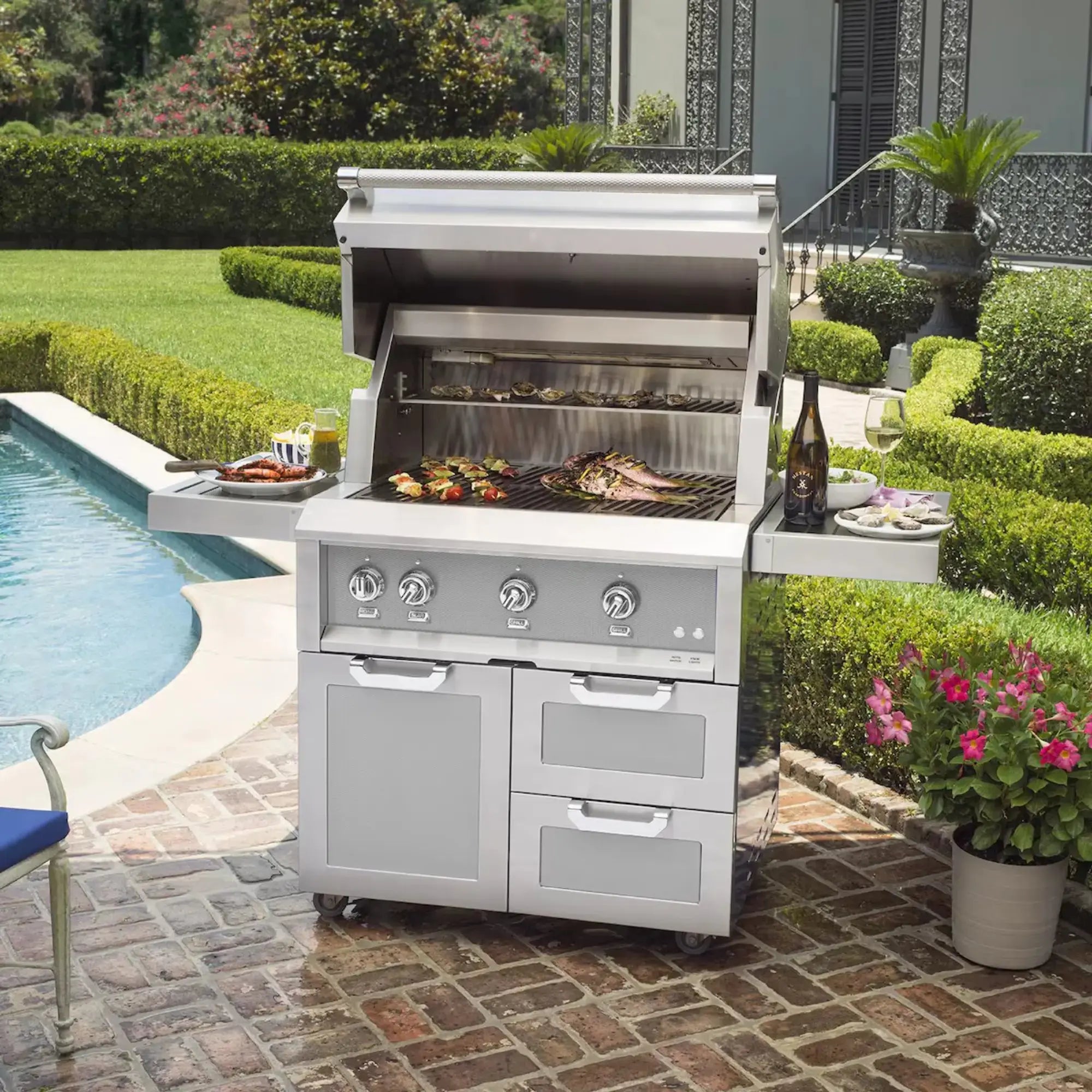
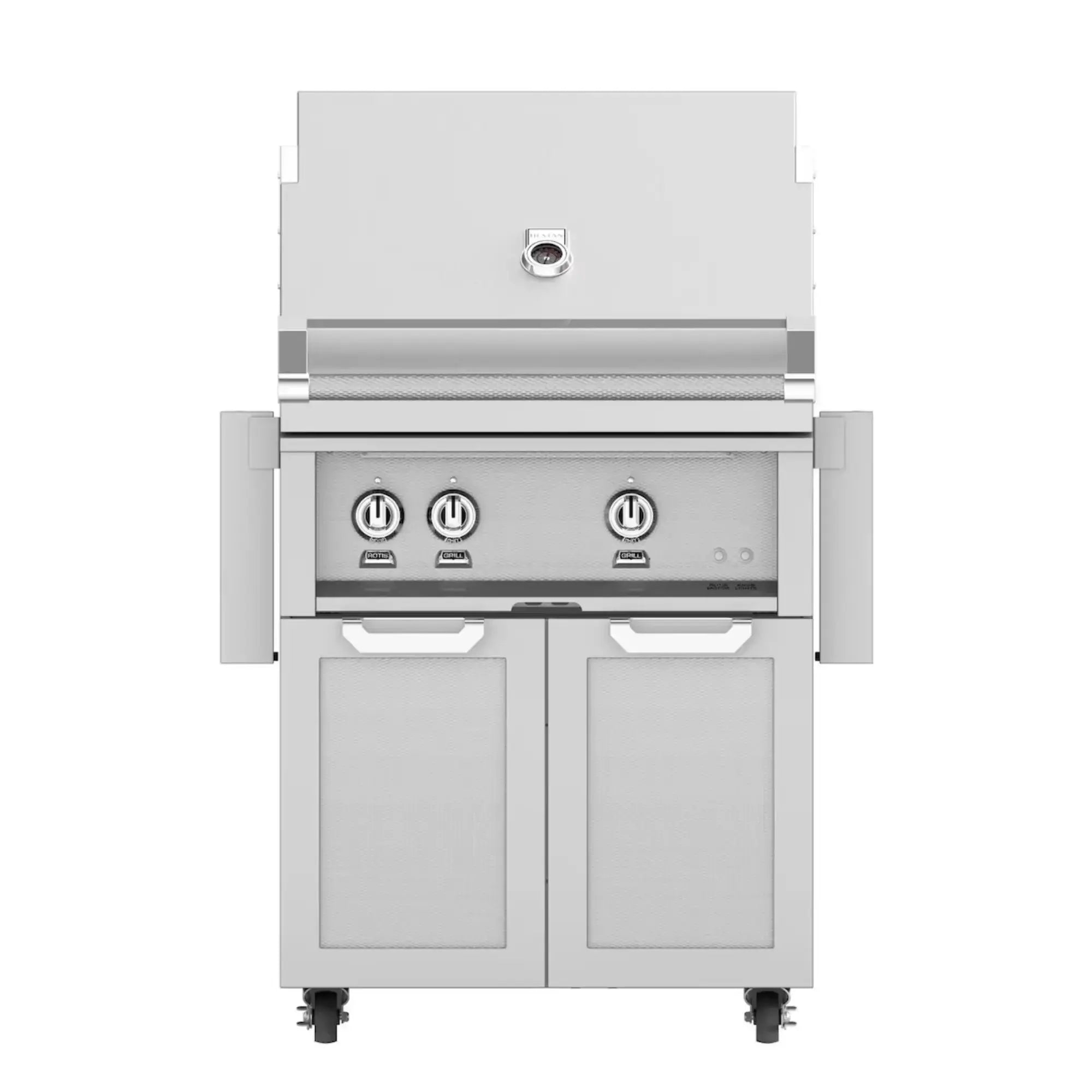
Shop premium infrared gas grills built to sear hotter than any standard burner. An infrared grill puts a high-intensity searing zone in your backyard, reaching steakhouse temperatures for a perfect crust on steaks, chops, and burgers. Browse freestanding and built-in infrared BBQ grills below, each pairing everyday convection burners with a dedicated infrared sear or rotisserie burner.
What Is an Infrared Grill?
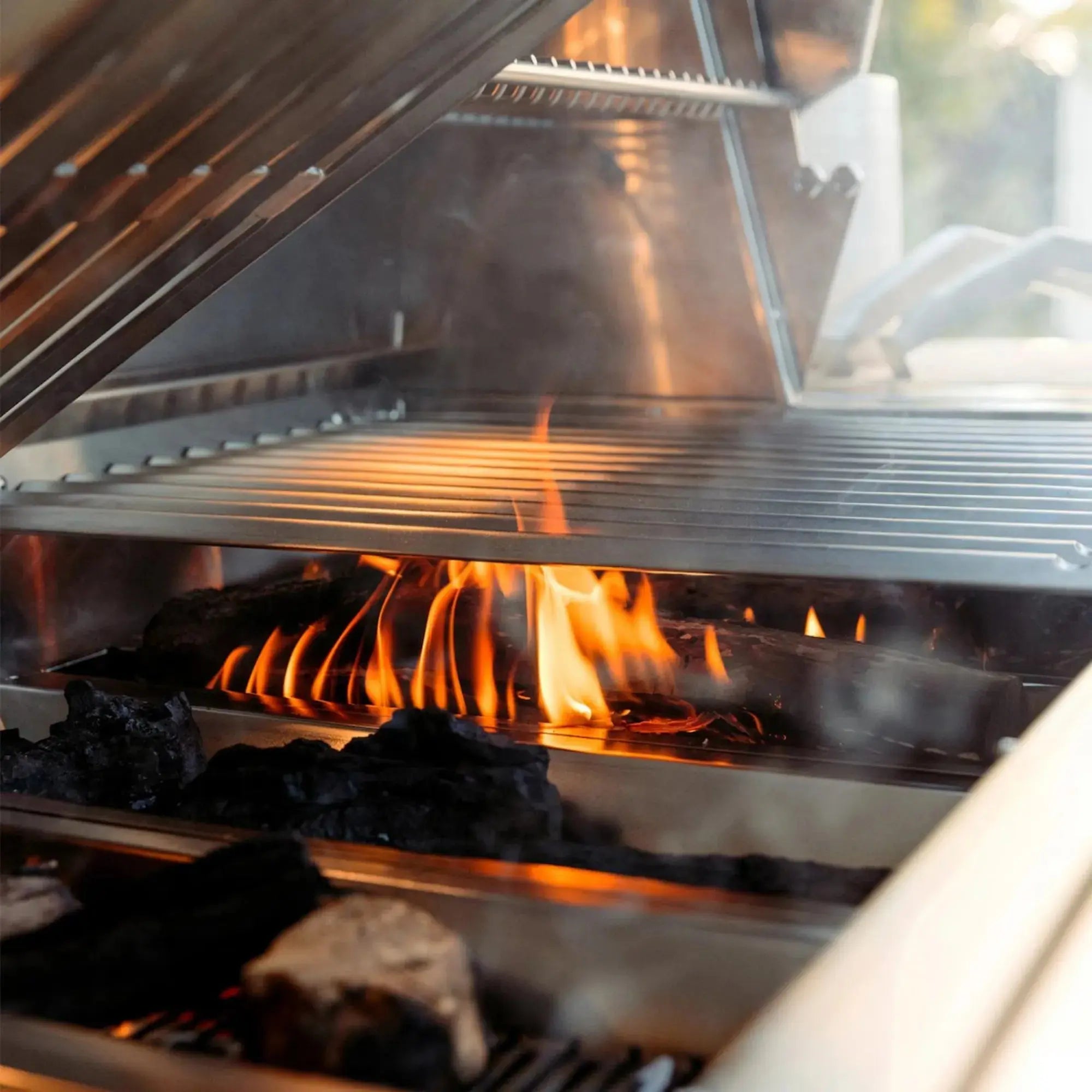
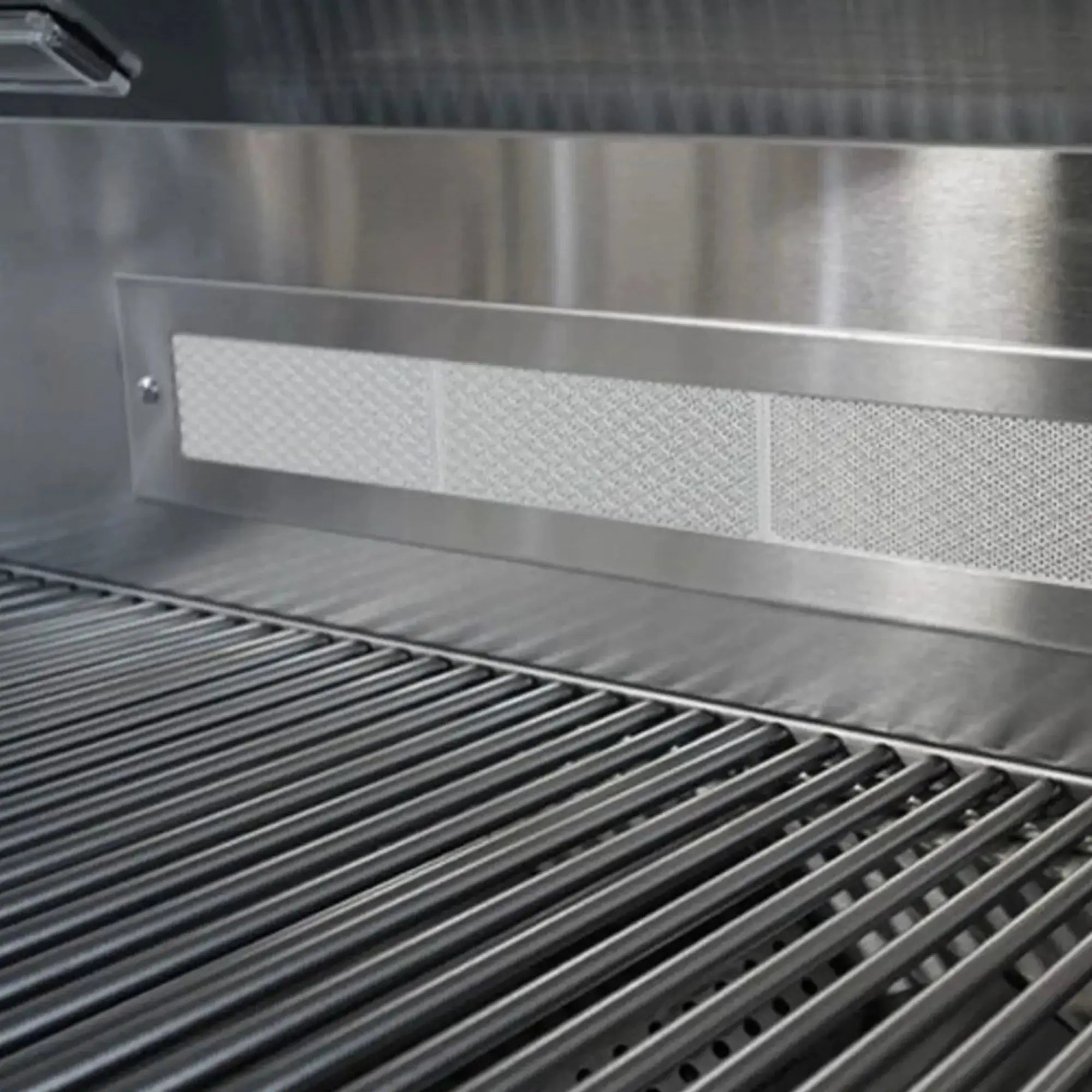
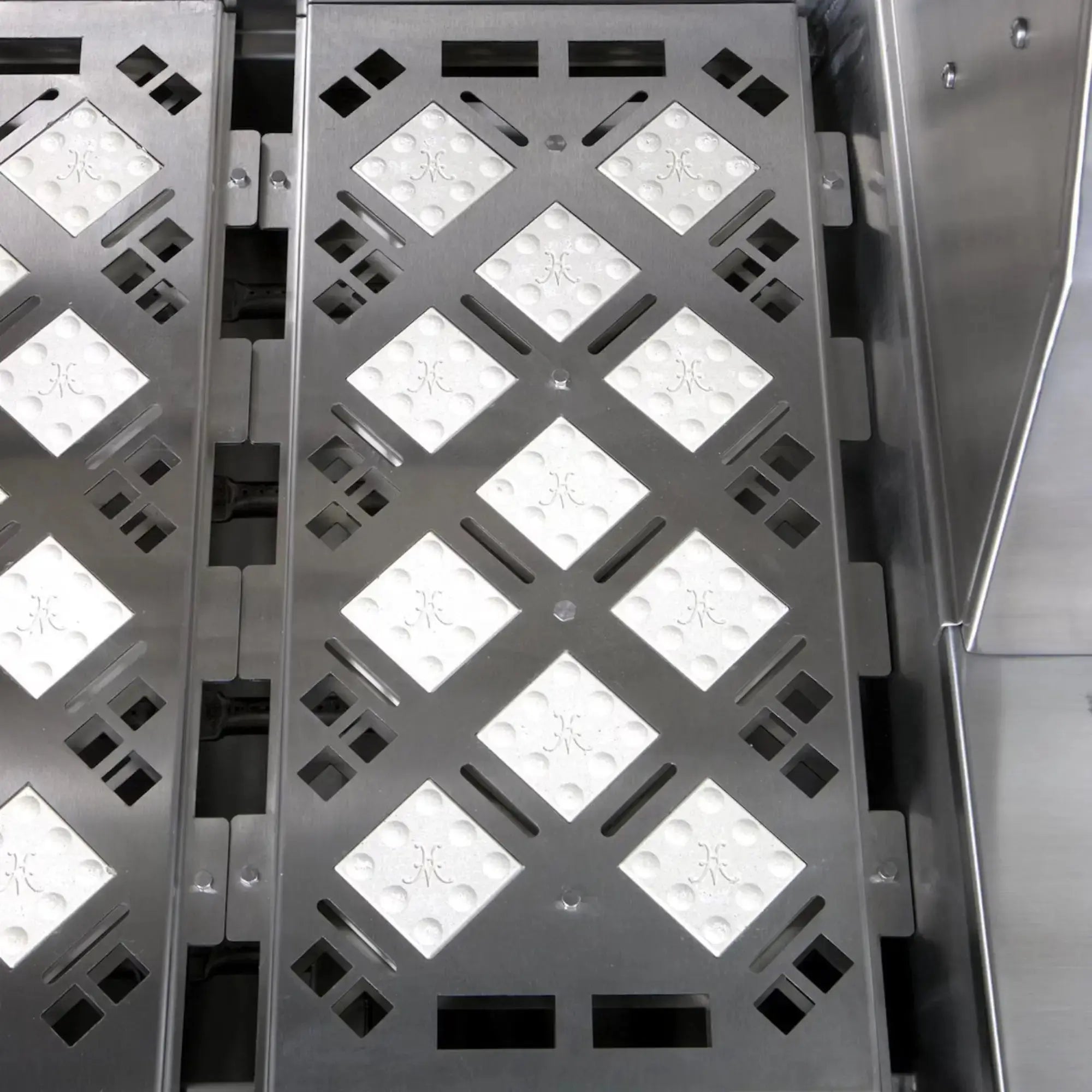
An infrared grill uses a burner that heats a solid surface, usually a ceramic or metal plate, which then radiates intense infrared heat directly onto your food instead of heating the air around it like a traditional convection burner. The result is much higher surface temperatures, often 700-1,000°F or more, which sears meat fast, locks in juices, and produces a steakhouse-quality crust. Infrared heat is also more even and far less affected by wind, since it doesn't rely on moving hot air.
Most infrared grills are gas grills that combine standard convection burners for everyday cooking with a dedicated infrared burner for searing. You get gentle, even heat for chicken and vegetables, plus a high-intensity zone for steaks and chops.
How Does an Infrared Grill Work?
A gas flame heats an infrared emitter (a ceramic tile or metal plate) until it glows. That emitter radiates heat directly to the food as infrared energy, the same way the sun warms your skin. Because almost no energy is wasted heating the surrounding air, an infrared burner reaches searing temperatures in minutes and delivers intense, consistent heat right at the grate. This direct radiant transfer is what makes infrared so effective for searing and so resistant to wind and temperature swings.
Infrared Gas Grill vs. Traditional Gas Grill
Heat intensity: Traditional gas burners top out around 500-600°F at the grate. Infrared burners reach 700-1,000°F+, which is what creates a true sear and char.
Searing: Infrared is built for it. For a steakhouse crust on a thick cut, an infrared sear burner does in a fraction of the time what a standard burner can't fully achieve.
Everyday cooking: Traditional burners are more forgiving for low-and-slow and delicate foods, which is why quality infrared grills include both burner types rather than going infrared-only.
Wind and weather: Infrared heat is radiant, so it holds temperature on windy patios far better than convection heat that blows away.
Fuel efficiency: Infrared burners hit target temperature faster and waste less gas heating the surrounding air, so high-heat cooking is often more efficient.
How to Choose the Best Infrared Grill
Infrared burner type: Decide between an infrared sear burner (a dedicated high-heat zone for searing steaks and chops) and a rear infrared rotisserie burner (paired with a rotisserie for roasting whole chickens, roasts, and larger cuts). Many premium grills include one or both.
Freestanding vs. built-in: Freestanding grills roll into place and are ready to use, while built-in models drop into an outdoor kitchen island for a seamless look. Decide this first, since it shapes every other choice.
Size and burner count: Match primary burners to how many people you cook for. A 3-4 burner grill suits most families; 5-6 burners suit frequent entertainers, and bigger grills bring more total BTUs and searing space.
Build quality: Look for heavy-gauge 304 stainless steel, solid welds, and quality grates. On a high-ticket grill that lives outdoors year-round, construction is what separates a 5-year grill from a 15-year one.
Fuel type: Most infrared grills run on propane or natural gas. Natural gas needs a fixed line and never runs out mid-cook; propane offers placement flexibility. Confirm which configuration you're ordering.
Frequently Asked Questions About Infrared Grills
Are infrared grills worth it?
If you care about searing steaks, chops, or burgers with a true high-heat crust, yes. An infrared burner reaches temperatures a standard gas burner can't, and it does it fast. If you only ever cook low-and-slow, the premium matters less, but most quality infrared grills include standard burners too, so you lose nothing.
Are infrared gas grills better than regular grills?
For searing and high-heat cooking, yes. Infrared delivers hotter, more even, more wind-resistant heat. For low-and-slow or delicate foods, standard convection burners are easier to control, which is why the best infrared grills combine both.
How hot do infrared grills get?
Infrared sear burners typically reach 700-1,000°F, and some premium drop-in sear burners hit up to 1,600°F, well above the 500-600°F ceiling of a typical convection gas burner.
Do infrared grills use propane?
Most infrared grills run on either propane or natural gas, and many are convertible. The infrared burner itself works the same on both fuels; choose based on whether you want a fixed gas line or the flexibility of a propane tank.
Do I need an infrared burner on my grill?
You need one if searing matters to you, whether that's restaurant-quality steaks or rotisserie roasting. If you mostly grill burgers, chicken, and vegetables at moderate heat, a standard grill is fine. An infrared burner is an upgrade for high-heat performance, not a requirement for everyday cooking.
Can you cook everything on an infrared grill?
Yes, because nearly all infrared grills pair infrared burners with standard convection burners. Use the standard burners for chicken, fish, and vegetables, and the infrared zone for searing. The hybrid layout is standard for exactly this reason.
How do you clean an infrared grill?
Infrared burners are designed to self-clean by burning off residue at high heat. Run the burner on high for a few minutes after cooking, then brush the grates. The emitter surface generally needs little direct maintenance.
Are infrared grills safe?
Yes. Infrared grills are as safe as any quality gas grill and can actually reduce flare-ups, since grease is vaporized by the intense heat rather than dripping onto open flames. Follow standard gas-grill safety and clearance guidelines.
Browse our full selection of infrared grills above, or compare all gas grills and BBQ grills. Building an outdoor kitchen? See our built-in grills and components. Want to add searing power to a grill you already own? Browse our infrared sear burner upgrades.
Get the deals first
Exclusive offers, early access to sales, and seasonal patio tips — straight to your inbox.