
Outdoor Landscape Lighting: A Complete Buying Guide (2026)
The short answer: choosing outdoor landscape lighting comes down to four decisions. First, which fixture types to layer: path and area lights, bollards, deck and step lights, post and pier lights, and wall or accent lights. Second, brightness and color: landscape lighting is about atmosphere, not floodlighting, so aim for warm light around 2700K to 3000K and modest lumens. Third, the system: low-voltage (12V) for most yards, line-voltage for permanent architectural fixtures. Fourth, finish and style that match your home. Get those right and your yard reads layered and inviting after dark instead of patchy or harsh. This guide walks through each one.
In this guide
- What types of outdoor landscape lighting are there?
- How bright should landscape lighting be?
- Low-voltage vs line-voltage: which system?
- What does wet-rated mean, and why it matters
- How do you match finish and style to your home?
- How do you lay out landscape lighting?
- Fixture types at a glance
- Frequently asked questions
What types of outdoor landscape lighting are there?
Good landscape lighting layers a few fixture types rather than relying on one. Each does a different job:
- Path and area lights light walkways, garden beds, and the edges of a patio. They cast a soft pool of light downward so you can see where you are walking without glare.
- Bollards are short freestanding posts that throw light outward at knee to waist height. They define driveways, paths, and seating areas with a clean architectural look.
- Deck and step lights mount on posts, walls, or stairs to mark changes in level and add a warm glow close to where people gather.
- Post and pier lights sit on top of a column, pier, or fence post to anchor an entry or property line at eye level.
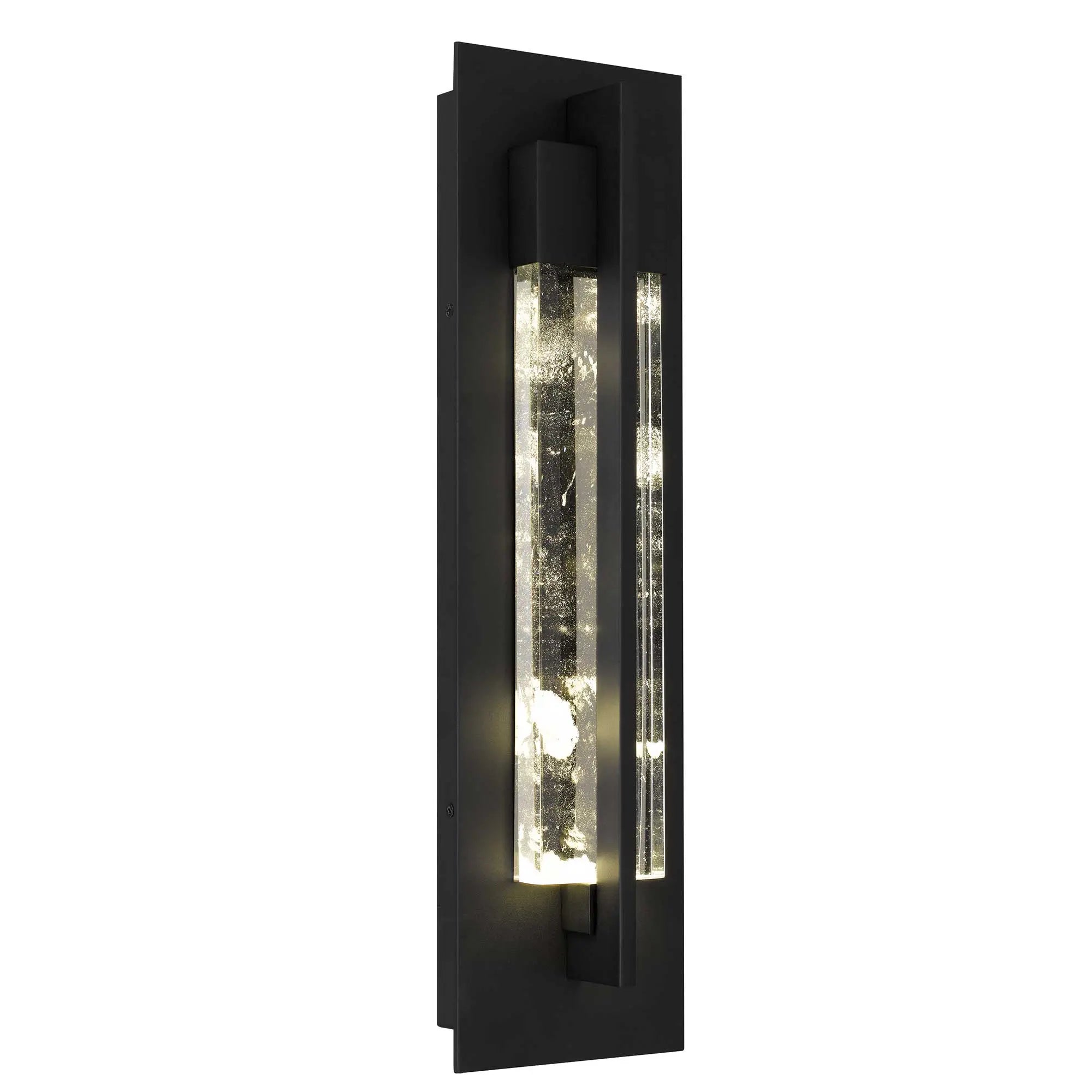
- Wall and accent lights wash a facade, highlight a tree, or graze a textured wall to create depth.
Most yards look best with two or three of these working together: path lights for safety, a deck or post light for presence, and an accent or bollard for character.


A handcrafted, wet-rated post fixture that brings warm, traditional character to a path or garden bed.
How bright should landscape lighting be?
Brighter is not better outdoors. Landscape lighting works by contrast: small pools of warm light against the dark read as inviting, while too much output flattens everything and creates glare. Two settings matter:
Color temperature. Aim for 2700K to 3000K, a warm white that flatters plants, stone, and skin. Cooler light above 4000K looks blue and clinical in a garden.
Brightness (lumens). Path and accent lights usually need only 50 to 200 lumens each. Reserve higher output for wall washing or lighting a tall tree. When in doubt, use more fixtures at lower output rather than a few bright ones.
Low-voltage vs line-voltage: which system should you use?
Most residential landscape lighting runs on a low-voltage (12V) system: a transformer steps your household 120V down to 12V, then a buried cable feeds the fixtures. Low voltage is safer to work around, more flexible to expand, and the standard for path, accent, and bollard lighting. Many quality fixtures, including the bollard below, are built as 12V landscape pieces.
Line-voltage (120V) fixtures wire directly into your home's power and suit permanent architectural lighting such as wall sconces, pier mounts, and post lanterns. They put out more light and never need a transformer, but installation should be done by a licensed electrician. A common setup uses line-voltage fixtures at the house and a low-voltage system out in the landscape.

A 12V low-voltage, wet-rated LED bollard in textured bronze. Clean modern lines for paths, drives, and seating edges.
What does wet-rated mean, and why it matters
Outdoor fixtures carry a damp or wet location rating. Damp-rated fixtures tolerate moisture but not direct water, so they belong under a covered porch or eave. Wet-rated fixtures are sealed to handle direct rain, snow, and sprinklers, which is what most landscape positions require. For anything out in the open, choose a wet-rated fixture. Every landscape piece featured here is wet-rated, so it can sit exposed year round.

How do you match finish and style to your home?
Fixtures are visible by day too, so match them to your architecture. Mission and craftsman styles in brass, bronze, or copper suit traditional, rustic, and Arts-and-Crafts homes. Clean modern shapes in textured bronze or matte finishes fit contemporary builds. Pick one finish family and carry it across your fixtures so the yard reads as a coordinated set rather than a collection of mismatched lamps. Living finishes like solid brass and copper develop a patina over time, which many homeowners prize.

A wet-rated, handcrafted deck and post light in craftsman brown, ideal for posts, piers, and stair landings.
How do you lay out landscape lighting?
Think in three layers, the same way you would light a room indoors. Start with safety: light steps, path edges, and grade changes so no one trips. Add task light where you actually use the space, such as a seating area or an outdoor kitchen. Finish with accent light to highlight a specimen tree, a water feature, or a textured wall. Place fixtures to light the surface, not the eye, and tuck sources behind plantings or below sightlines so you see the glow and not the bulb. Space path lights every 6 to 8 feet rather than lining them up like a runway.
Fixture types at a glance
| Fixture type | Best for | Where to place it | Typical system |
|---|---|---|---|
| Path & area light | Safe walking, garden beds | Along walkways, every 6 to 8 ft | Low-voltage |
| Bollard | Defining drives & seating | Path and driveway edges | Low-voltage |
| Deck & step light | Marking level changes | Posts, walls, stair risers | Low or line-voltage |
| Post & pier light | Anchoring entries | Columns, piers, fence posts | Line-voltage |
| Wall & accent light | Depth and drama | Facades, trees, walls | Line or low-voltage |
Frequently asked questions
How many lumens do I need for landscape lighting?
Less than most people expect. Path and accent lights usually need only 50 to 200 lumens each, because landscape lighting works by gentle contrast rather than brightness. Save higher output for washing a wall or lighting a tall tree.
Where should you place landscape lights?
Light surfaces, not eyes. Put path lights along walkways every 6 to 8 feet, deck and step lights at grade changes, and accent lights aimed at trees, walls, or features. Hide the source behind plantings or below sightlines so you see the glow, not the bulb.
Is low-voltage landscape lighting better than line-voltage?
For most of the yard, yes. Low-voltage (12V) systems are safer to work around, easy to expand, and ideal for path, accent, and bollard lighting. Line-voltage suits permanent architectural fixtures at the house, like wall sconces and post lanterns, and should be installed by a licensed electrician.
What color temperature is best for outdoor lighting?
Warm white in the 2700K to 3000K range. It flatters plants, stone, and skin, while cooler light above 4000K looks blue and harsh in a garden setting.
Can landscape fixtures stay outside in rain and snow?
Yes, as long as they are wet-rated. Wet-rated fixtures are sealed for direct rain, snow, and sprinklers. Damp-rated fixtures should only go under a covered porch or eave where they are shielded from direct water.
Light up your landscape
Explore wet-rated path, bollard, deck, post, and accent lighting from Meyda, Sonneman, and more at All Season Patio.
Shop outdoor lighting →Not sure where to start? Our team can help you plan a layered lighting layout.
Explore the full lighting guide. Ideas and how-to: patio lighting ideas, how to layer patio lighting, and lighting for patio ambiance. By fixture: wall sconces, pendant lights, flush-mount and ceiling lights, and post and lamp-post lights. Weatherproofing: weatherproof outdoor lighting and wet-rated vs damp-rated.