
Patio Lighting Ideas: 8 Ways to Light Your Patio (2026)
The best patio lighting ideas all share one principle: layer several small sources of warm light instead of relying on one bright fixture. Hang string lights overhead for atmosphere, add a pendant over the table and sconces by the door for everyday use, then light the path, steps, and a tree or two for depth and safety. Keep every bulb in the warm 2700K to 3000K range and choose wet-rated fixtures for anything exposed. Below are eight ways to do it, from quick wins to built-in fixtures, with real wet-rated pieces for each.

In this article
- Layer three types of light
- Hang string or festoon lights overhead
- Add a pendant over the table
- Frame the doors with wall sconces
- Light the path and steps
- Define zones with bollards
- Add flame with lanterns or a fire feature
- Uplight a tree or wall for drama
- Get the details right
- Frequently asked questions
1. Layer three types of light
Great patio lighting works like a well-lit room: it uses ambient light for overall glow, task light where you cook and eat, and accent light to highlight features. Relying on one bright floodlight flattens the space and creates glare. Spreading several softer sources around the patio is what makes it feel inviting. Start here, then use the ideas below as your layers. Our guide on how to layer patio lighting walks through the method in detail.
2. Hang string or festoon lights overhead
Overhead string lights are the fastest way to transform a patio, and they are the single most popular patio lighting idea for a reason. Zig-zag them across the space, run them along a pergola, or string them between the house and a post to create a soft ceiling of light. Choose warm-white bulbs and, if you can, put them on a dimmer so you can drop the level for evenings. For a permanent version of the same effect, layer in hardwired ambient fixtures from our patio ambiance lighting guide.
3. Add a pendant over the table
A pendant or hanging light centered over the dining or coffee table anchors the seating area and gives you real task light for eating and games. Hang it roughly 30 to 36 inches above the tabletop so it lights the surface without blocking sightlines, and keep the bulb warm and modest in output. See our picks in the best outdoor pendant and hanging lights roundup.
4. Frame the doors with wall sconces
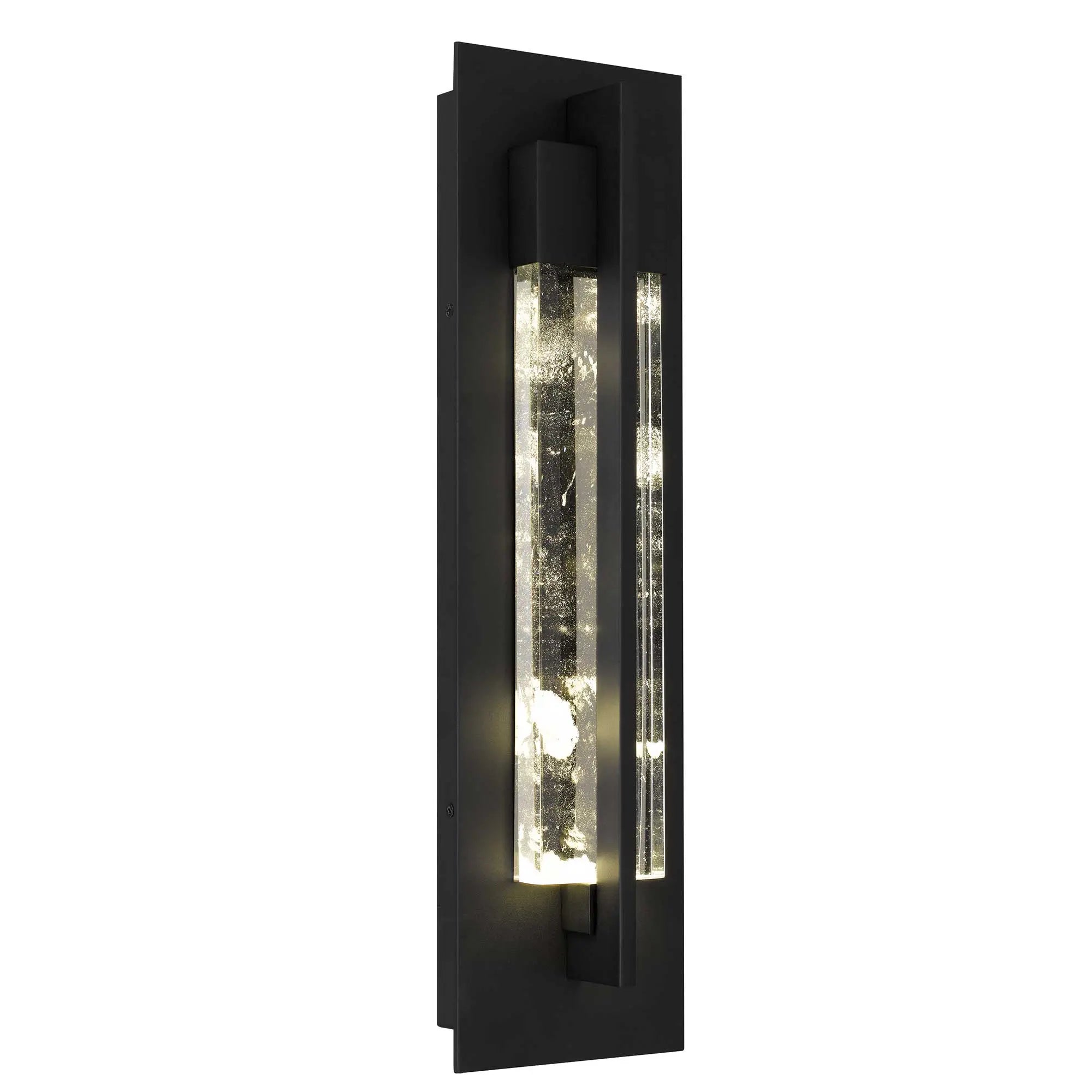
Wall sconces flanking a back door or garage give the house presence after dark and light the transition in and out of the patio. Mount them around eye level, about 66 inches to the center, and pair them symmetrically where you can. A clean, wet-rated sconce like the one below suits modern and traditional homes alike. Browse more options in our best outdoor wall sconces guide.

A slim, wet-rated soft-black sconce that frames a doorway with clean modern lines.
5. Light the path and steps
Path and step lighting is the safety layer, and it doubles as quiet accent light. Line walkways and garden beds with low path or post fixtures spaced every 6 to 8 feet, and add a dedicated deck or step light at every change in level so no one misjudges a stair in the dark. Keep the output gentle: you want a pool of light on the ground, not a runway. A handcrafted post fixture works for beds and path edges, while a mission-style deck light marks posts and stair landings.

A handcrafted, wet-rated post fixture that casts a warm pool of light over a path or garden bed.

A wet-rated, handcrafted deck and post light that marks stairs, piers, and landings with a warm glow.
6. Define zones with bollards
Bollards are short freestanding posts that throw light outward at knee to waist height. They are perfect for edging a driveway, marking the border of a patio, or separating a lounge area from a walkway without a wall. A row of matching bollards reads as clean and architectural, and a modern low-voltage model like the one below sits happily exposed year round.

A 12V, wet-rated LED bollard in textured bronze with clean lines for paths, drives, and seating edges.
7. Add flame with lanterns or a fire feature
Nothing warms a patio's mood like real flame. Gas lanterns give a soft, flickering glow that string lights cannot match, and a fire table or fire bowl doubles as both a gathering point and a source of ambient light. Use flame as an accent among your electric layers, not as your only light, and always keep a fire feature at a safe clearance from walls and furniture.
8. Uplight a tree or wall for drama
Aim a couple of accent lights up into a specimen tree, or graze the beam across a textured wall or fence, and the patio gains depth and a designer feel. Uplighting draws the eye past the seating area and makes a small yard feel larger after dark. Hide the fixtures behind plantings so you see the effect, not the source, and stick to one or two focal points rather than lighting everything.
Get the details right
Two settings separate patio lighting that looks warm and intentional from lighting that looks harsh. First, color temperature: choose bulbs in the 2700K to 3000K warm-white range, which flatters skin, plants, and stone. Anything above 4000K reads blue and clinical outdoors. Second, weather rating: any fixture exposed to rain or sprinklers should be wet-rated, while damp-rated fixtures belong only under a covered porch or eave. Our guides on weatherproof outdoor lighting and wet-rated vs damp-rated cover the ratings in full.
Frequently asked questions
What is the best way to light a patio?
Layer several warm, low-output sources rather than one bright light. Combine overhead string lights for ambiance, a pendant and wall sconces for task light, and path, step, and accent lights for safety and depth. Keep everything in the 2700K to 3000K range for a warm, inviting look.
How do I light a patio without it looking like a parking lot?
Avoid a single high-output floodlight. Spread the light across many small fixtures, aim them at surfaces rather than at eye level, put them on dimmers where possible, and choose warm-white bulbs. Gentle pools of light against the dark read as inviting; one bright source reads as harsh.
What color temperature is best for patio lighting?
Warm white, in the 2700K to 3000K range. It is flattering and cozy for an outdoor living space. Cooler light above 4000K looks blue and stark, which suits security lighting but not a patio you want to relax on.
Do patio lights need to be wet-rated?
Anything exposed to direct rain, snow, or sprinklers should be wet-rated. Damp-rated fixtures tolerate humidity but not direct water, so they belong under a covered porch or eave. When in doubt for an open patio, choose wet-rated.
How high should I hang patio string lights?
High enough to walk under comfortably, generally at least 8 feet, and ideally with a gentle drape between anchor points. Use warm-white bulbs on a dimmer, and support long runs with a cable or posts so they hang cleanly.
Light up your patio
Explore wet-rated sconces, pendants, path, deck, and bollard lighting from Troy, Meyda, Sonneman, and more at All Season Patio.
Shop outdoor lighting →More lighting guides: the complete outdoor lighting buying guide, how to layer patio lighting, best lighting for patio ambiance, and the best outdoor wall sconces.