The Complete Gas Fire Pit Buying Guide (2026): How to Choose Size, Fuel & Ignition
The short answer: choosing a gas fire pit comes down to three decisions. First, the fuel: propane if you want flexibility and zero installation cost, natural gas if you want a permanent feature you never refill. Second, the size: plan for 24 to 36 inches for 2 to 4 people, 36 to 44 inches for 4 to 6, and 48 inches or more for larger groups, with 6 to 7 feet of clear space around all sides. Third, the ignition: match-lit is the most affordable and reliable, while electronic ignition adds push-button or remote convenience. Get those three right and the rest is finish and budget. Whether you are shopping for a compact patio fire pit, a propane fire pit you can move around the backyard, or a built-in fire table, the same fundamentals apply. This guide walks through choosing the right outdoor fire pit, step by step.
In this guide
- Propane or natural gas: which fuel is right for you?
- What size gas fire pit do I need?
- How many BTUs should a gas fire pit have?
- What material should I choose: concrete or steel?
- Which ignition type is best?
- Comparison: matching the fire pit to your patio
- Is a gas fire pit safe under a covered patio?
- Frequently asked questions
Propane or natural gas: which fuel is right for you?
This is the first fork in the road, and it shapes everything else. Both fuels burn clean with no smoke, sparks, or ash. The difference is how they are supplied.
Propane runs off a refillable tank, usually hidden inside the fire pit base. It costs nothing to install, you can place the fire pit anywhere, and it burns hot. A standard 20-pound tank gives you roughly 4 to 4.5 hours of run time at full output. The tradeoff is that you will refill it, and propane costs more per unit than natural gas.
Natural gas connects to your home's gas line, so you never refill and never run out. Per-unit fuel cost is lower, which makes it cheaper over the long run. The catch is installation: running a dedicated gas line typically costs $1,000 or more and should be done by a licensed professional. As a rough rule, you need to use a natural gas pit for several hundred hours, often 5 or more years of regular use, before the fuel savings offset that install cost.
Industry data from the Hearth, Patio and Barbecue Association shows propane models make up the majority of residential installations, mostly because of that flexibility and zero up-front plumbing. Our recommendation: choose natural gas if a line already reaches your patio or you are mid-remodel, and choose propane for everyone else.

What size gas fire pit do I need?
Size is driven by two things: how many people you want to gather, and how much space you have. Use guest count to pick the diameter:
- 2 to 4 guests: a 24 to 36 inch fire pit is plenty.
- 4 to 6 guests: step up to 36 to 44 inches.
- 6 or more guests: go to 48 inches or larger, or a rectangular table format that seats people along the sides.
Then check your clearance. Leave at least 6 to 7 feet of open space on every side so people can walk past seated guests safely and the heat has room to disperse. Measure your patio before you fall in love with a size. A 54 inch round pit looks stunning in a showroom and cramped on a small balcony.

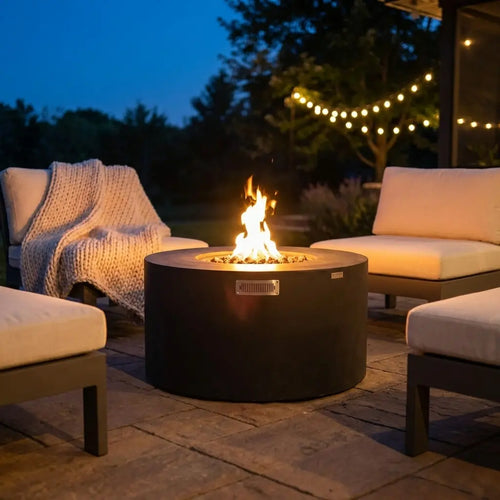
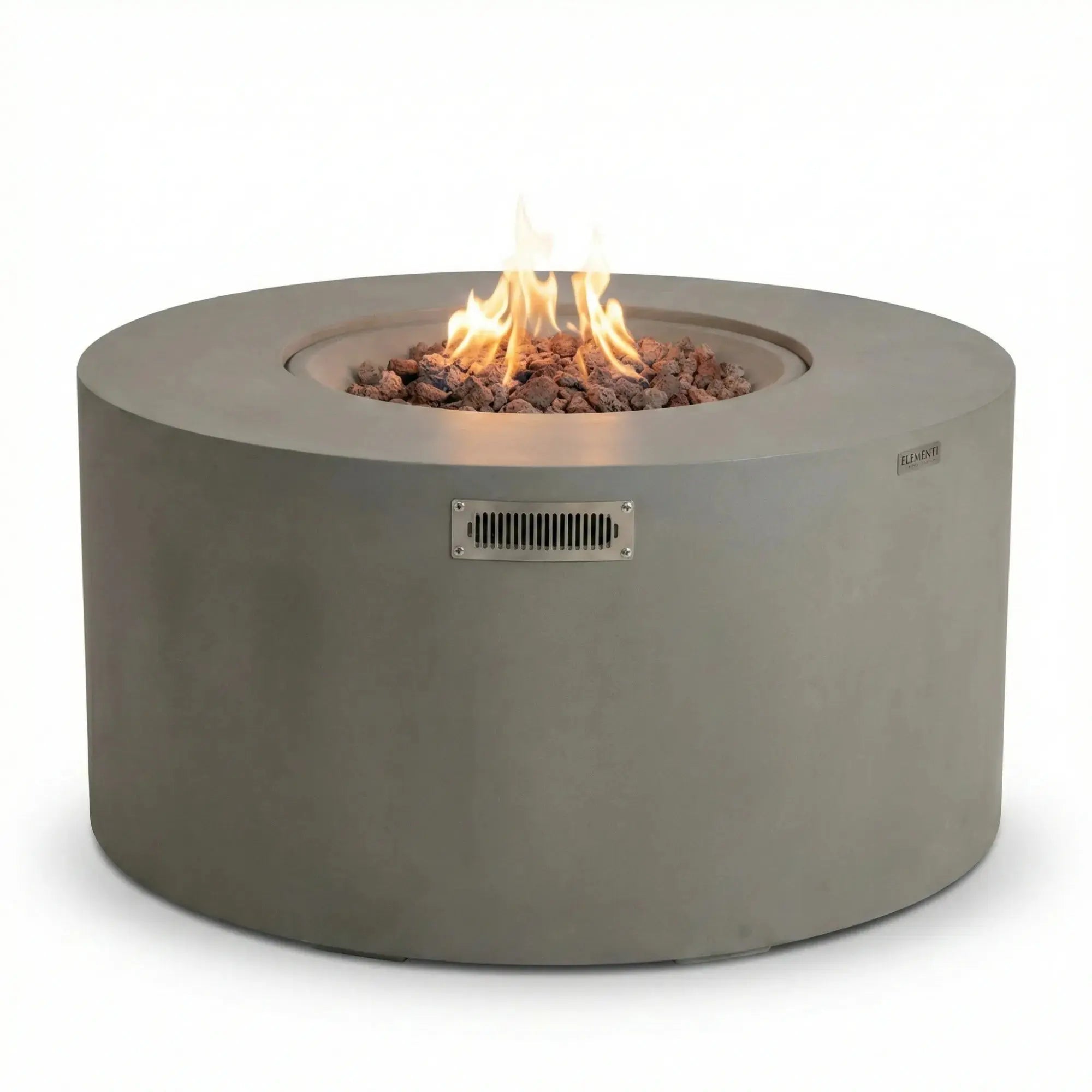
A 48 inch round GFRC concrete pit with a narrow ledge and a clean modern profile. Available in propane or natural gas and multiple ignition options.
How many BTUs should a gas fire pit have?
BTU (British Thermal Units) measures heat output. More BTUs means a bigger, warmer flame, but bigger is not automatically better. For most residential patios, 40,000 to 55,000 BTUs delivers a generous, comfortable flame. Step above 65,000 BTUs only for very large, exposed, or commercial-scale settings.
One myth worth clearing up: a high BTU rating does not make a fire pit dangerous. What matters for safety is ventilation, not raw heat output. A well-ventilated 55,000 BTU pit in open air is perfectly safe. Match the BTU to the size of the space you actually want to warm, and you will not overpay for heat you cannot feel.
What material should I choose: concrete or steel?
The best gas fire pits are built from weather-resistant materials that survive years of sun, rain, and temperature swings. The two most popular are GFRC concrete and powder-coated steel.
Glass-fiber reinforced concrete (GFRC) is a refined, lighter-weight concrete with a premium stone look. It holds heat, resists cracking, and suits homeowners who want a substantial, architectural centerpiece. Powder-coated steel is lighter, often available in more colors, and works well in table formats where you want a slimmer profile and a usable ledge for drinks and plates.

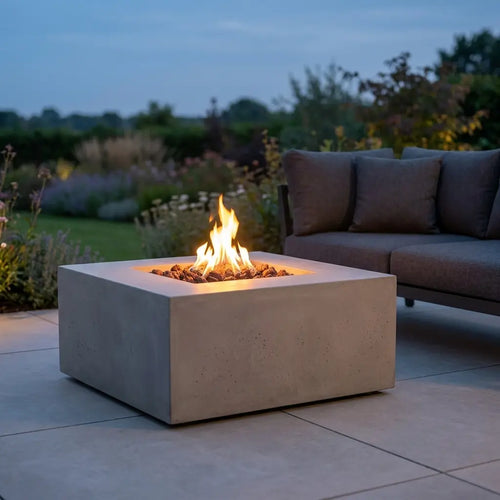
A 54 inch GFRC concrete pit with a hidden-tank design, so a propane tank tucks neatly out of sight. Sized to anchor a larger seating circle.
Which ignition type is best?
How you light the fire pit affects both price and daily convenience. There are three common options:
- Match-lit: the simplest and most affordable. You turn a gas valve and light the burner with a long match or lighter. Fewer parts means fewer things to fail, which is why many buyers on a budget prefer it.
- Spark ignition with flame sensing: a push-button spark lights the flame, and a sensor shuts off the gas if the flame goes out. A good middle ground of convenience and safety.
- Electronic ignition (low-voltage or plug-and-play): push-button or remote starting, often with flame-height control. The most convenient and the most expensive, and it usually needs a power source nearby.
If you light fires often and want effortless on-off control, electronic ignition earns its premium. If you want maximum reliability for the lowest cost, match-lit is hard to beat.

Comparison: matching the fire pit to your patio
Here is how the three decisions come together for common setups.
| Your situation | Recommended fuel | Size / format | Ignition |
|---|---|---|---|
| Small patio, 2 to 4 people, no gas line | Propane | 36 to 48 inch round | Match-lit or spark |
| Mid patio, frequent use, gas line available | Natural gas | 48 to 54 inch round | Electronic |
| Large gatherings, dining-style seating | Either | 72 to 84 inch rectangular table | Electronic or spark |

An 84 inch powder-coated steel table with a long linear flame and a wide ledge for drinks and plates. Built to seat a crowd along both sides.
Is a gas fire pit safe under a covered patio?
Yes, in most cases, as long as you respect clearance and ventilation, and confirm local code. Gas pits are safer than wood here because they produce no sparks, embers, or ash. The key numbers: most gas fire pits rated under 195,000 BTUs can operate beneath a structure with a minimum of 96 inches (8 feet) of overhead clearance, measured from the top of the pit to the lowest part of the cover. Pits above 195,000 BTUs belong in fully open air.
Two more cautions. First, ventilation is what keeps you safe, so never enclose a fire pit in a tight, unventilated space where carbon monoxide could build up. Second, watch your ceiling material: vinyl is heat-sensitive and can warp even at 8 feet of clearance, so non-combustible covers are safer. When in doubt, check your owner's manual and your city's requirements before installing.
Frequently asked questions
Are propane and natural gas fire pits safe to leave outside year round?
Yes. Quality fire pits built from GFRC concrete or powder-coated steel are designed for year-round outdoor use. A fitted cover extends their life by keeping rain and debris out of the burner, and propane tanks should be disconnected and stored upright in a ventilated space when not in use.
How long does a propane tank last in a gas fire pit?
A standard 20-pound propane tank lasts roughly 4 to 4.5 hours at continuous maximum output. Running the flame lower, which most people do once the fire is established, stretches that considerably.
Is natural gas cheaper than propane for a fire pit?
Per unit of fuel, yes, natural gas is generally cheaper, which makes it more economical over the long term. But it requires a professional gas line installation that often costs $1,000 or more, so the savings only pay off after years of frequent use.
What is the best size gas fire pit for most patios?
For a typical residential patio hosting 4 to 6 people, a 36 to 48 inch fire pit hits the sweet spot. Make sure you have 6 to 7 feet of clear space on all sides before committing to a size.
Do gas fire pits give off enough heat?
Yes. A residential gas fire pit in the 40,000 to 55,000 BTU range throws plenty of warmth for a seating circle. For very open or windy spaces, a higher BTU model or a glass wind guard helps keep the heat where you want it.
Ready to find your fire pit?
Browse propane and natural gas fire pits in concrete and steel, sized for patios big and small, at All Season Patio.
Shop all gas fire pits →Questions about fuel, sizing, or ignition? Our team is happy to help you choose.