Electric vs Gas Patio Heater - Which Is Best?
A patio heater can turn a space you use for three seasons into a place where dinner, game day, and late-night conversations continue well into cooler weather. But the electric vs gas patio heater decision is not just about which unit produces more heat. It affects where you can place the heater, how quickly guests feel comfortable, what the space looks like, and how much effort each use requires.
For most homeowners, the better choice comes down to the patio itself. An open pool deck needs a different heat source than a covered porch. A dining area used twice a week has different needs than an outdoor kitchen that hosts a crowd every weekend. Here is a practical breakdown of what separates electric and gas patio heaters, and where each one makes the most sense.
Electric vs Gas Patio Heater: The Main Difference
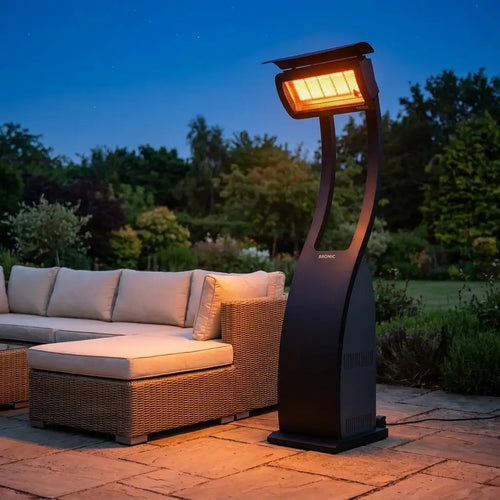
Electric patio heaters turn electricity into infrared heat. Rather than trying to warm every cubic foot of air around them, infrared models warm people, furniture, and surfaces within their direct path. They plug into a standard outlet in some cases, while larger, higher-output models may require a dedicated 240-volt circuit and professional installation.
Gas patio heaters use propane or natural gas to create a visible flame or radiant heat. Freestanding propane heaters are familiar for a reason: they offer substantial heat, need no electrical connection, and can be moved around an open patio. Natural gas heaters connect to a fixed gas line, giving you ongoing fuel without propane tank changes.

Neither type is automatically better. Gas generally produces more heat for larger, exposed areas. Electric is often easier to live with in covered or more design-conscious spaces where clean lines, quiet operation, and zone heating matter most.
Heat Output and Real-World Coverage
Heat output is usually the first comparison shoppers make, and gas has the advantage on raw numbers. A typical propane patio heater can produce 40,000 to 50,000 BTUs, sometimes more. That output can make a meaningful difference around a large dining table or conversation area when temperatures drop.
The catch is wind. A tall mushroom-style propane heater may have an impressive BTU rating, but much of that warmth can drift away on an exposed deck. In breezy locations, positioning matters as much as output. A heater placed close to the seating zone, with some shelter from wind, will feel more effective than a bigger unit set several feet away.
Electric heaters are measured in watts rather than BTUs. A 1,500-watt plug-in model is useful for close-range warmth, while hardwired 3,000- to 6,000-watt units can cover a more substantial seating area. Their heat is directional, so the goal is not to heat the entire backyard. The goal is to aim heat exactly where people sit or stand.
That distinction is especially useful under a covered patio. If your outdoor dining table sits beneath a roof, one or two properly placed infrared heaters can make the table comfortable without wasting energy warming open air beyond the patio edge.

Choose gas for broad, open-area heat
Gas is usually the stronger option for a large uncovered patio, a poolside seating area, or a backyard where furniture is rearranged often. A portable propane heater can follow the activity from the dining table to the fire pit area, and it provides fast heat without waiting for an electrical circuit to warm up.
It also makes sense for households that entertain in colder weather and want guests to feel the heat across a wider radius. If you have room to maintain proper clearance and ventilation, a freestanding gas heater remains one of the most capable tools for extending outdoor gatherings.
Choose electric for targeted comfort
Electric heaters shine when the layout is fixed and the seating area is defined. They work particularly well mounted on a wall, ceiling, or beam near an outdoor kitchen, covered porch, pergola, or lounge area. There is no tank at the base, no open flame, and no need to move the unit out of the way when the party ends.
For premium patios, this can be a major design advantage. A slim, low-profile electric heater can blend into an overhead structure far better than a tall freestanding unit. It also keeps the floor clear for dining chairs, traffic paths, and furniture placement.
Installation, Fuel, and Everyday Convenience
Portable propane heaters are the simplest gas option to start using. Assemble the heater, attach a standard propane cylinder, perform a leak check according to the manufacturer’s instructions, and place it on a stable, level surface with the required clearances. You are ready for heat without hiring an electrician or gas contractor.
The convenience changes once the tank runs low. Most propane patio heaters run roughly 8 to 12 hours on a 20-pound tank at high output, though actual runtime varies by model and setting. Keeping a second filled tank prevents an awkward interruption halfway through a dinner party.

Natural gas eliminates tank swaps, which is appealing for homeowners with an existing gas line near the patio. The trade-off is permanence. A licensed professional should size and install the gas connection, and the heater stays where the line allows it to stay. This is often worthwhile for a dedicated outdoor kitchen or covered entertaining zone used regularly.
Electric is the easiest option after it is installed. There is no fuel to purchase, no tank to store, and no pilot or ignition system to manage. For a small portable electric heater, setup can be as simple as plugging into a properly rated outdoor outlet. For larger models, plan for electrical work before you select the heater. A standard household outlet cannot safely support every high-wattage unit.
Avoid using extension cords unless the heater manufacturer specifically permits it and the cord is correctly rated for the load and outdoor use. Undersized cords can overheat and create a serious safety issue.
Safety and Covered-Patio Considerations
All patio heaters need clearance from people, furniture, umbrellas, curtains, ceilings, and combustible materials. The required distance varies by model, so the installation manual is not optional reading. It is the document that determines whether a specific heater belongs in your space.
Gas heaters are intended for open, well-ventilated outdoor locations. Combustion creates heat along with byproducts that need open airflow. Do not use a propane or natural gas patio heater in an enclosed porch, garage, or other confined area. Even a partially enclosed patio may not be suitable for every gas heater.
Electric infrared heaters are often a better fit beneath solid patio covers and pergolas, but only when the specific model is listed for that installation type and mounted at the required height and angle. Many homeowners assume any electric heater can go on a ceiling. That is not the case. Check the model’s weather rating, mounting guidance, circuit requirements, and clearance specifications before committing.

Families with children or pets may also prefer electric wall- or ceiling-mounted heaters because there is less chance of someone brushing against a hot freestanding post or tipping over a portable unit. Gas heaters include important safety features such as tilt shutoff on many models, but placement and supervision still matter.
Operating Costs: What You Will Actually Notice
Operating cost depends on local electricity and fuel pricing, the heater’s output setting, and how long you run it. Propane delivers a lot of heat quickly, but refilling cylinders is an ongoing expense. Natural gas is often less expensive per hour than propane where it is available, though the up-front cost of running a line can be significant.
Electric heaters are straightforward to estimate. Take the heater wattage, convert it to kilowatts, and multiply by your local electricity rate. A 1,500-watt heater uses 1.5 kilowatt-hours each hour at full power. A higher-output installed unit costs more per hour, but it can be more efficient in practice if it directs warmth precisely at the seating area instead of heating a large volume of air.
The better value is not always the lowest hourly cost. A gas heater that makes a large patio usable for ten guests can be worth more than a smaller electric unit that only keeps two people warm. On the other hand, running a powerful propane heater for a couple sitting under a covered porch may be unnecessary when a focused electric heater would do the job quietly.
How to Choose for Your Patio Layout
Start with where people actually gather. Measure the seating or dining zone rather than the entire yard. Then consider wind exposure, overhead cover, access to power or gas, and whether you want the heater to be portable or permanent.
A freestanding propane model is a practical choice for an open patio with flexible furniture and frequent larger gatherings. A natural gas heater is a strong long-term choice when the entertaining area is permanent and a gas connection is already planned. For covered patios, outdoor kitchens, and fixed lounge zones, mounted electric infrared heat often delivers the cleanest result.
Also think about how the heater fits with the rest of the outdoor environment. A heater should not block sightlines across the table, crowd a grill station, or force furniture into an awkward layout. The best patio heating plan is built around how the space is used, not around the heater alone.
Before you buy, map the seating area, confirm utility access, and read the clearance requirements for the exact model under consideration. A well-matched heater will disappear into the routine of using your patio - right up until a cool evening reminds you why you installed it.