Are Infrared Patio Heaters Safe for Your Patio?
A patio heater should make a cool evening more comfortable, not create another thing to monitor while friends are over. So, are infrared patio heaters safe? Yes, when the heater type matches the space, it is installed correctly, and everyone using it follows the manufacturer’s clearance and operating instructions.
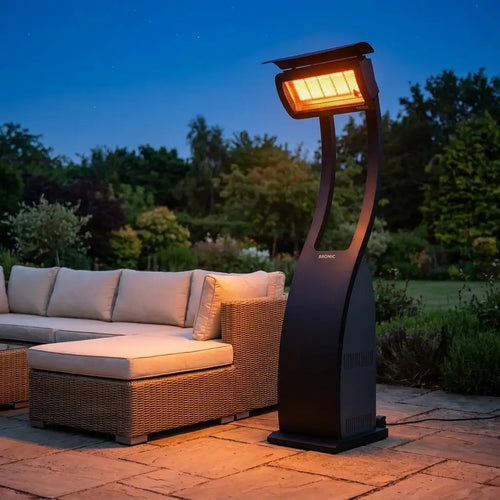
The word “infrared” can make this category sound more technical than it is. Infrared heaters warm people, furniture, and surfaces directly instead of trying to heat every cubic foot of outdoor air. That direct warmth is why they are popular for covered patios, dining areas, and outdoor kitchens. Safety, however, depends less on the infrared technology itself and more on the power source, placement, ventilation, and condition of the unit.
Are Infrared Patio Heaters Safe? The Short Answer
An infrared patio heater can be a very safe choice for an outdoor living area. Electric infrared models generally present the lowest operating risk because they do not use an open flame or produce carbon monoxide. Propane and natural gas infrared heaters are also widely used safely outdoors, but they require more attention to ventilation, fuel connections, tipping hazards, and clearance from combustible materials.
No patio heater is safe everywhere. A heater that works well beside an open-air pool deck may be a poor fit under a low pergola, near outdoor curtains, or in a screened porch with limited airflow. The right answer starts with the actual conditions of your patio, not just the heater’s heat output or appearance.
Why Infrared Heat Changes the Patio-Heater Equation
Traditional convection heat warms the air around it. Outdoors, wind carries much of that warmth away. Infrared heat travels as radiant energy and warms the people and objects in its path, which makes it more effective in open or breezy settings.
That efficiency can improve comfort, but the heating element itself operates at a high temperature. Keep the heater aimed only where it has a clear, manufacturer-approved path. Do not treat it like a work light that can be tucked into a corner, mounted under any roofline, or aimed through hanging fabric.
A quality unit includes safety engineering such as a protective grille, a stable mounting system, a tip-over shutoff on many freestanding models, and overheat protection on many electric models. Those features matter, but they are a backup, not permission to ignore basic placement rules.
Electric vs. Gas Infrared Heaters: Different Risks
Electric infrared patio heaters
Electric infrared heaters are often the simplest choice for covered patios, pergolas, and outdoor rooms because there is no combustion. They produce no carbon monoxide, no flame, and no propane tank to store or replace. Many wall-mounted and ceiling-mounted models also keep the heat source out of traffic paths, which is especially useful around dining tables and lounge seating.

Their main safety concerns are electrical capacity, weather exposure, and mounting. An outdoor heater must be rated for the location where it will be used. A unit installed in a damp or wet location needs the appropriate weather rating, and its outlet or hardwired connection should be protected by a GFCI where required.
Avoid lightweight indoor extension cords, overloaded outlets, and power strips. A larger electric heater may need a dedicated circuit or professional hardwired installation. If a cord feels hot, the breaker trips, or the plug is loose in the outlet, stop using the heater until the issue is corrected.
Propane and natural gas infrared heaters
Gas-fired infrared heaters offer strong heat and do not depend on your home’s electrical capacity. Freestanding propane models are flexible for open patios, while natural gas heaters can be a convenient long-term option when professionally connected to a gas line.

The trade-off is combustion. Gas heaters produce carbon monoxide and water vapor, which is why they are for outdoor use only unless a specific model is explicitly certified and installed for a different application. An open sidewall is not always enough to make a space safe. A tightly enclosed porch, garage, tent, or patio enclosed with winter panels can trap combustion byproducts.
Gas models also demand regular attention to hoses, regulators, valves, and tank connections. Before each season and after moving a heater, check for cracking, abrasion, or corrosion. If you smell gas, turn off the fuel supply, keep flames and electrical switches away from the area, and have the connection inspected before using the heater again.
Clearances Matter More Than Most Shoppers Expect
The most common patio-heater mistakes are not dramatic equipment failures. They are layout mistakes: a heater placed too close to a ceiling, a market umbrella, a canvas shade, decorative greenery, cushions, or a low-hanging string-light cord.
Every heater has required clearance distances above, beside, and in front of the unit. These measurements vary by model and may be larger than homeowners expect, particularly for high-output gas heaters. The manufacturer’s manual is the final authority. Do not substitute a general rule of thumb because the heater “seems far enough away.”
Mounting height deserves the same care. A ceiling-mounted electric heater installed too low can make the area directly below uncomfortably hot and put people too close to the element. Installed too high, it may provide weak heat while still exposing the ceiling above to unnecessary heat. A practical patio plan considers heater output, mounting height, seating position, and ceiling material together.
For freestanding propane heaters, use a level, hard surface. Keep the base clear of furniture legs, toys, planters, and foot traffic. Even models with tip-over switches can be damaged when knocked over, and a shutoff feature does not eliminate the need for a stable location.

Covered Patios Require a More Careful Approach
A roof overhead does not automatically rule out a patio heater. It does mean you need to choose with more care. Electric infrared heaters are often the natural fit for a covered patio because there are no combustion gases to manage. Still, the unit must have enough clearance from the ceiling, beams, fans, and any combustible finish materials.

Gas heaters under a covered structure can be appropriate only when the space has sufficient open-air ventilation and the specific heater’s instructions allow that use. This is not a place to make assumptions based on a neighbor’s setup. Low ceilings, vinyl ceilings, wood beams, closed-in walls, and retractable screens all change the safety picture.
If you are planning an outdoor kitchen or a finished lounge area, decide on heat early. Heater location affects electrical planning, gas-line routing, ceiling design, lighting placement, and furniture layout. It is far easier to build around a correctly specified heater than to force one into a completed space.
Everyday Habits That Keep a Heater Safer
Safe operation is usually straightforward. Turn the heater off when the area is unattended, and allow it to cool fully before covering, moving, or storing it. Keep children and pets away from the heater’s hot surfaces, and never dry towels, blankets, or clothing over a unit.
Do not use a patio heater as a substitute for an indoor heating appliance. Bringing a propane heater into a garage, shed, or enclosed porch during a cold snap is a serious carbon monoxide risk. Likewise, never use a patio heater near gasoline, aerosol cans, paint products, or other flammable vapors.
A seasonal inspection is worthwhile before the weather turns cool. Clean dust and debris from grilles and reflectors according to the manual. Check mounting hardware, electrical cords, and gas connections. Replace damaged parts with approved components rather than improvised hardware. For a hardwired electric heater or a natural gas installation, qualified installation is part of the safety plan, not an optional upgrade.
Choosing the Safer Fit for Your Space
For an open deck or uncovered patio, a properly positioned propane, natural gas, or electric infrared heater can work well. For a covered dining patio or pergola, electric infrared is often easier to integrate safely and cleanly. For a space that may be screened in or enclosed during cooler months, prioritize the heater’s approved use and ventilation requirements over the desire for maximum BTUs.

At All Season Patio, we encourage homeowners to look beyond the product photo and think through ceiling height, exposure to weather, seating zones, power or fuel access, and how the space changes across the seasons. The best heater is one that feels like part of the patio plan, not a hot appliance squeezed into an available corner.
A little planning gives you the benefit you wanted in the first place: comfortable evenings outside, with warmth directed where people actually gather and safety built into the way the space is used.