Built In Grills for a Better Outdoor Kitchen
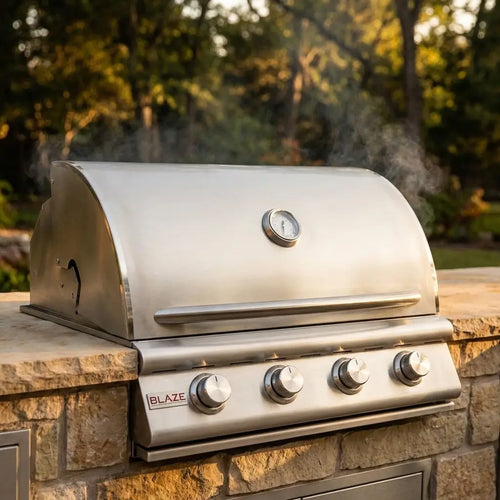
A freestanding grill can be moved when the patio layout changes. Built in grills make a different promise: this is where cooking happens. They create a permanent work zone for weeknight dinners, game-day crowds, and the kind of hosting where the cook stays part of the conversation instead of stepping away to a corner of the yard.
That permanence is exactly why planning matters. The grill head is only one part of the purchase. Fuel access, ventilation, counter space, island materials, clearances, and local installation requirements all affect how well the finished kitchen works. A practical breakdown before you choose equipment can prevent a beautiful island from becoming an inconvenient place to cook.
Start With the Way You Actually Grill
The right built-in grill is not automatically the largest one your budget can accommodate. Start with the number of people you cook for most often, then account for the occasions that matter most. A household that grills for four on weeknights and hosts 10 a few times each summer needs a different setup than someone regularly cooking for large family gatherings.

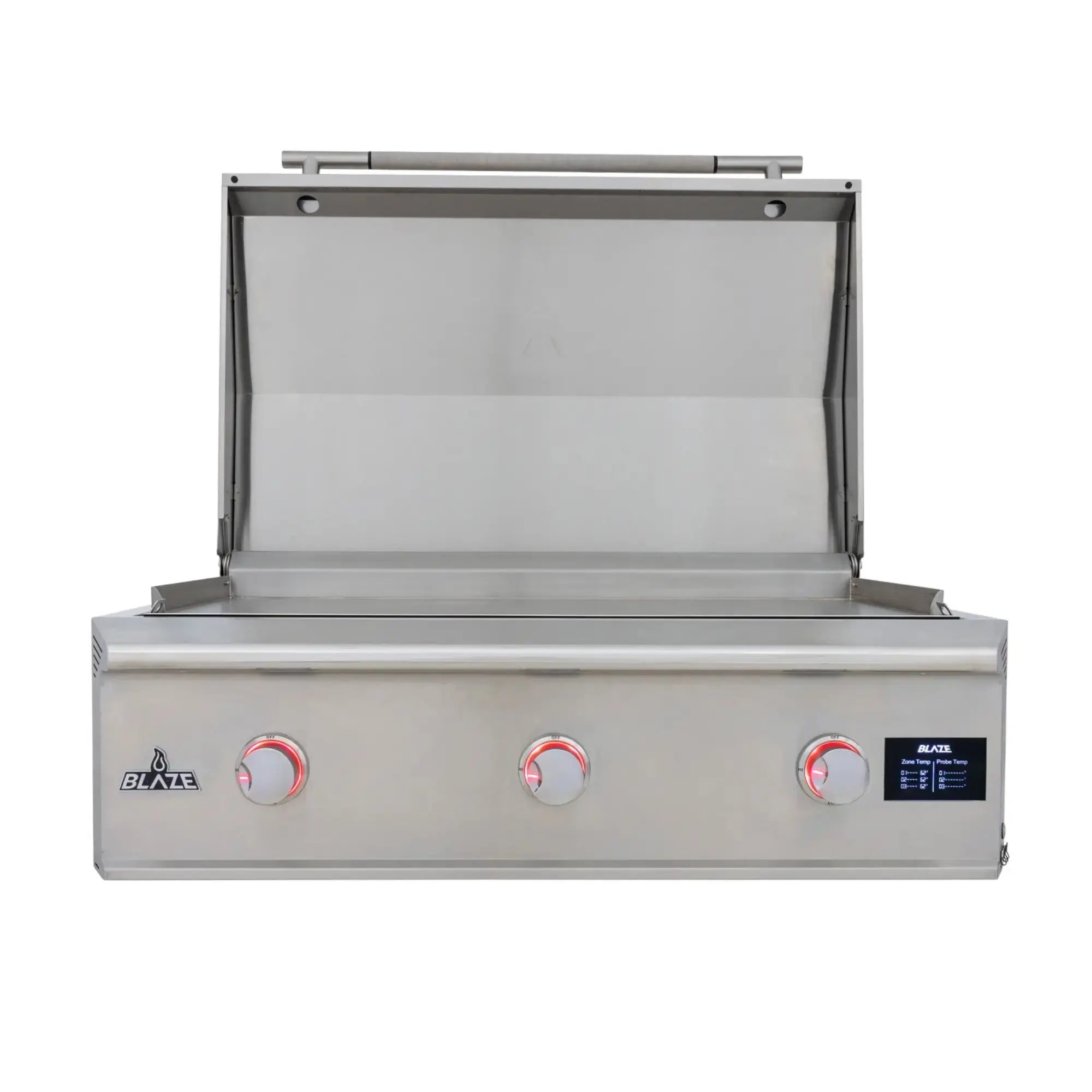
For many homeowners, a 32- to 36-inch grill provides the best balance of cooking area and island space. It is large enough to create heat zones for proteins and vegetables while leaving room for prep space. A 42- or 48-inch model makes more sense for frequent entertaining, multiple dishes at once, or cooks who want specialty features such as an infrared sear burner, rotisserie, or smoker box.
Do not judge capacity by burner count alone. Look at the primary cooking surface, warming rack, burner layout, and whether the grill can maintain distinct direct- and indirect-heat zones. Higher BTU ratings can be useful, but they do not automatically mean better performance. Grate material, firebox design, burner placement, hood construction, and heat retention matter just as much.
Choose the Fuel Before Designing the Island
Fuel is one of the first decisions because it shapes the entire installation. Natural gas is a strong choice for homeowners with an existing line nearby. It eliminates tank exchanges and supports frequent use, but it requires a properly sized gas connection and professional installation. Plan the line before the island is built, not after the countertops are installed.
Liquid propane offers flexibility and can deliver excellent grilling performance. It is often the easier option when extending a natural gas line is impractical. The trade-off is tank storage and refills. A propane cylinder cannot simply sit inside a sealed cabinet. The enclosure must be designed with the required ventilation and access specified by the grill manufacturer and applicable local codes.

Charcoal built-in grills appeal to cooks who want traditional live-fire flavor and are comfortable managing a more hands-on process. They can be a rewarding centerpiece, but they also need thoughtful ash handling, fire-safe clearances, and a location that keeps smoke from drifting into seating areas or toward the house. For some outdoor kitchens, a gas grill for daily use paired with a separate charcoal or ceramic cooker is the most flexible arrangement.
Plan the Island Around the Grill, Not the Other Way Around
A common mistake is choosing a grill head, then trying to fit it into a cabinet layout that was designed for looks alone. Every built-in grill has a manufacturer cutout specification, required clearances, and installation instructions. Those dimensions should guide the cabinet opening, countertop cutout, insulating liner requirements, and nearby storage placement.
Counter space is often more valuable than another accessory. Aim for a usable landing area beside the grill for platters, tools, and hot food. If possible, place a larger prep surface on the side closest to your indoor kitchen or refrigerator route. This reduces unnecessary trips while carrying raw ingredients, serving trays, or supplies.
A grill island also needs circulation space. The cook should be able to open the hood, step back, turn, and access drawers without blocking the main path through the patio. If the kitchen faces an outdoor dining area, leave enough room for guests to pass without standing directly behind the person grilling.
The components that earn their space

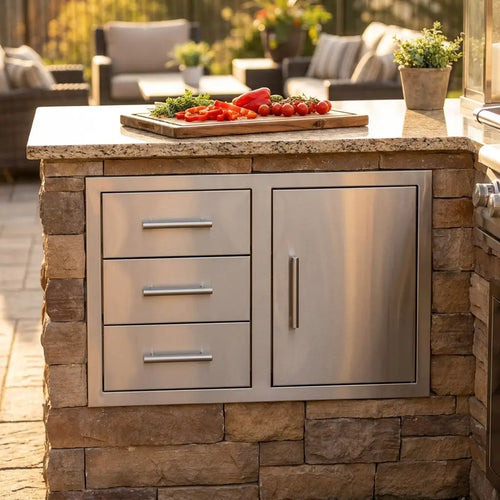
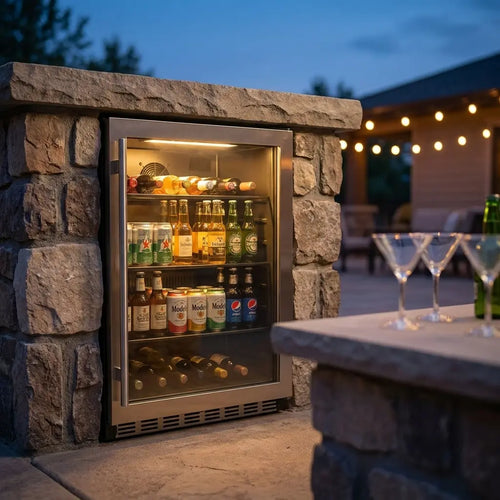
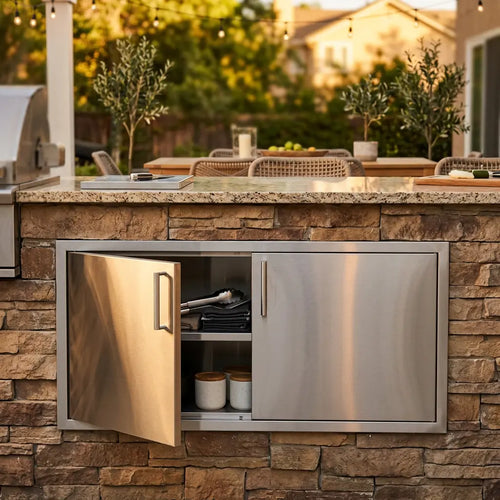
Storage drawers, a door for utility access, a trash pullout, and a quality outdoor refrigerator can make an outdoor kitchen substantially easier to use. But each component should solve a real problem. A shallow drawer near the grill for tools and temperature probes is useful. A large refrigerator may be worthwhile for frequent entertaining. A sink can be convenient, although it adds water lines, drainage considerations, and winterization needs in cold-weather regions.
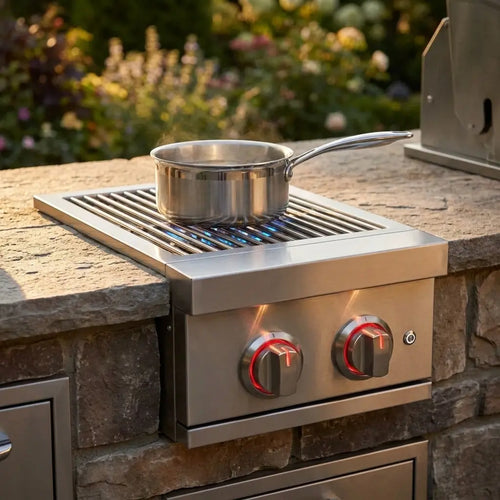
Avoid filling every available inch with accessories. An island crowded with doors, drawers, side burners, and appliances can lose the clear counter space that makes cooking comfortable. Choose the components you will use repeatedly, then preserve room to work.
Materials Need to Handle More Than Rain
Outdoor kitchens face heat, grease, UV exposure, wind-driven rain, temperature swings, and freeze-thaw cycles in many parts of the country. Materials that look good on day one may not perform equally well after several seasons.
Stainless steel is a practical choice for grill heads, access doors, drawers, and many outdoor appliances. Higher-grade stainless steel generally offers better resistance to corrosion, particularly near saltwater or in humid climates. Even premium stainless steel benefits from regular cleaning. Salt, grease, pollen, and grill residue can leave deposits that dull the finish or encourage surface corrosion over time.
For the island structure, masonry, concrete block, and properly built metal framing are common long-term options. Countertops should be selected for outdoor exposure rather than indoor appearance alone. Natural stone, porcelain, concrete, and certain engineered surfaces can work well when specified for exterior use. Ask about stain resistance, heat tolerance, sealing, and how the material responds to freezing conditions before committing.
If your patio receives strong afternoon sun, think beyond durability. Dark countertops can become uncomfortable to touch, and an unshaded grill station can make summer cooking less pleasant. A pergola, shade structure, or carefully placed umbrella can improve comfort, but keep all grill clearance and ventilation requirements in view.
Ventilation and Clearances Are Nonnegotiable
Built in grills produce heat, smoke, and grease vapor. The surrounding enclosure must allow the grill to operate safely and as intended. This is especially critical when installing a grill into combustible framing or placing it beneath a covered structure.
Some installations require an insulated jacket or liner to create the necessary protection between the grill and combustible materials. Others have specific requirements for side, rear, and overhead clearances. These specifications vary by model, so there is no universal shortcut. Use the grill's installation manual as the controlling document and confirm local building, fire, gas, and electrical requirements before construction begins.
Covered outdoor kitchens require extra attention. A grill should never be treated like an indoor appliance placed outside. If the design includes a roof, ceiling, or enclosure on multiple sides, proper airflow and, where appropriate, a rated ventilation hood may be necessary. An experienced contractor can help assess the structure, but the final design should always follow the appliance manufacturer's requirements and local code.
Build for Maintenance, Not Just the Reveal
The best outdoor kitchen is one you can clean, service, and enjoy without dismantling half the island. Make sure gas shutoffs, electrical connections, drip trays, and utility access points remain reachable. Leave enough clearance to remove burners, grates, and grease-management parts for routine care.
A fitted grill cover is worthwhile when the grill is not in use, particularly in areas with heavy pollen, snow, salt air, or falling debris. It is not a substitute for cleaning. Brush grates after cooking, empty grease trays regularly, inspect burners seasonally, and clean the exterior with products appropriate for the finish.
Winter should also be part of the plan for homeowners in colder climates. Outdoor refrigerators may need seasonal care depending on the model and location. Water lines must be protected from freezing. Stone and grout may need periodic inspection and sealing. These are manageable tasks, but they are easier when the kitchen was designed with local conditions in mind.
When a Built-In Grill Is Worth It
A built-in grill is a strong investment when outdoor cooking is a regular part of how you use your home and you want the patio to function as a cohesive living space. It is less compelling if you expect to relocate soon, prefer to move the grill around the yard, or have not yet settled on the patio layout. In those cases, a premium freestanding grill can be the smarter first step.
For a permanent outdoor kitchen, prioritize a well-made grill head, a correctly planned enclosure, and enough workspace over decorative extras. At All Season Patio, we see the best results when homeowners choose components for the way they cook, not simply the way a showroom kitchen looks.
Give the project the same care you would give an indoor kitchen: start with habits, confirm the technical details, and leave room for the meals and people you want to bring outside.