Best Patio Heater for Covered Patio Spaces

A covered patio gets used more often than an open deck - until the temperature drops and the whole space starts feeling like a cold storage room with cushions. Finding the best patio heater for covered patio areas is less about buying the hottest model on the page and more about matching the heater to your ceiling height, layout, ventilation, and how you actually entertain.
That distinction matters. Covered patios trap warmth better than fully open spaces, but they also limit where certain heaters can be used safely. A model that works beautifully in an open-air setup can be a poor fit under a roof, pergola, or partially enclosed structure. If you want reliable heat without second-guessing clearances or performance, the right choice starts with the space itself.
What makes the best patio heater for covered patio use?
The short answer is balance. You need enough output to make the area comfortable, but not a heater style that fights your structure. Overhead coverage changes airflow, heat reflection, and safety requirements. That is why covered patio buyers usually do best when they narrow the field by heater type first, then compare power and placement.
In most cases, electric infrared heaters are the easiest answer for covered patios. They heat people and surfaces directly instead of trying to warm all the surrounding air. That makes them efficient in semi-open environments where heat can still drift away. They also avoid on-site combustion, which simplifies use in many covered settings.
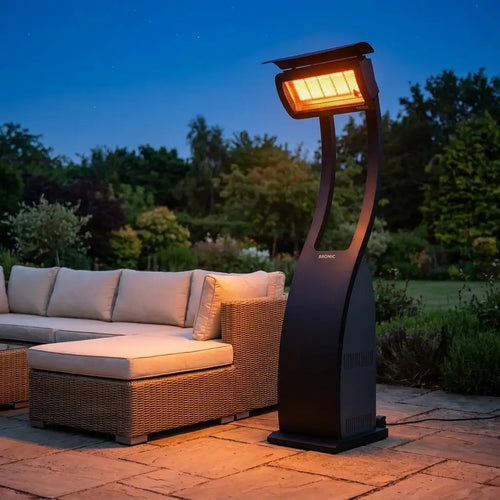
Gas heaters still have a place, especially in larger patios or outdoor rooms with generous ventilation, but they require more caution. A propane mushroom heater may throw a wide circle of warmth, yet its height, open flame, and clearance needs can make it awkward under low roofs. Natural gas units can be excellent when professionally planned, though installation is more involved.
Start with your patio structure, not the heater
A lot of buying mistakes come from shopping by BTUs or wattage before looking up. Ceiling height, beam placement, and side-wall exposure shape your options more than most shoppers expect.
If your covered patio has a standard roofline, a tongue-and-groove ceiling, or a finished outdoor room feel, mounted electric heaters often make the most sense. They keep the floor clear, direct heat where people sit, and look intentional in a design-conscious setup. This is especially appealing if you are building a cohesive outdoor kitchen or lounge area rather than dropping in a freestanding heater as an afterthought.
Pergolas are a little trickier. They count as covered spaces, but they are more open overhead and along the sides. That can work in your favor for ventilation, though it also means heat escapes faster. In that case, higher-performance infrared units or a carefully placed gas heater may be worth considering, depending on the exact structure.
If your patio is partially enclosed with walls, screens, or curtains, safety and ventilation become even more important. That is where reading manufacturer clearance requirements is non-negotiable. There is no universal "covered patio safe" label that applies to every model.
Electric vs gas for a covered patio

Electric heaters are usually the cleanest fit
For many homeowners, electric infrared is the best patio heater for covered patio comfort because it solves several problems at once. It starts quickly, runs quietly, and does not require propane tank storage or a gas line if the right electrical service is already available. It is also easier to integrate into finished spaces where appearance matters.
Electric works especially well over dining areas, conversation sets, and outdoor kitchen seating. Wall- and ceiling-mounted units can be aimed at the occupied zone, which is a practical advantage over freestanding heaters that radiate more broadly but less precisely.
The trade-off is coverage. One compact electric heater may be perfect for a loveseat area but underpowered for a large sectional and dining zone combined. Bigger patios often need multiple units for even comfort.
Gas heaters can deliver bigger heat, with more constraints
Propane and natural gas heaters tend to produce more dramatic warmth, especially in large open spaces. If you host often, have a tall roofline, or want heat that reaches beyond one seating cluster, gas can be compelling.
But covered patio use requires extra discipline. Freestanding propane heaters need overhead clearance, side clearance, and stable placement. They also take up floor space, which is not ideal in traffic paths near dining tables or outdoor kitchens. Natural gas heaters remove the tank issue and can feel more permanent, but that usually means professional installation and planning from the start.
For buyers who want the strongest heat and have the right setup, gas can be the better performer. For buyers who want flexibility, cleaner aesthetics, and simpler day-to-day use, electric often wins.

Sizing matters more than chasing the highest number
A heater that is too small disappoints quickly. A heater that is too large can be inefficient, visually intrusive, or harder to place safely. The right size depends on square footage, ceiling height, openness on the sides, and how warm you expect the space to feel.
A small, well-sheltered patio might feel comfortable with a single electric infrared unit mounted over the main seating area. A broad covered patio with high ceilings and open sides may need two or three heaters arranged by zone. That zoning approach is usually smarter than trying to overpower the entire area with one oversized unit.
Think about occupancy, too. Are you heating a six-seat dining table on weekend nights, or trying to make the whole patio lounge-ready throughout the fall? If most of your use happens in one main conversation area, focus heat there first. You will get better comfort and better value.
|
Free Tool
Not sure what size you need?
Our BTU calculator takes your patio's size, ceiling cover, wind, and climate and tells you exactly how much heat you need — plus the right Bromic heater to match. Takes about 30 seconds.
Open the BTU Calculator →
|
Placement is where good heaters become great ones
The best heater can still feel underwhelming if it is installed in the wrong spot. Infrared heat works on line of sight, so placement should support where people actually sit, not just where mounting is convenient.
Overhead mounting works well when the heater can angle toward the seating zone. Wall mounting can be effective when it directs heat across the body rather than only toward shoulders or the top of the head. In larger patios, cross-coverage from two units often feels more natural than one very intense source.
For freestanding gas heaters, keep in mind that the warmest zone is not always where you want it. You may lose table space, crowd a walkway, or create uneven comfort where one person is warm and another is still reaching for a blanket.
Design and durability are part of the buying decision
Premium outdoor spaces should not feel patched together. If your patio includes quality furniture, exterior lighting, or a built-in grill island, heater choice affects the look of the whole space.
Mounted electric heaters usually offer the cleanest visual result. Slim profiles, darker finishes, and fixed installation can blend into modern and transitional patios better than a bulky freestanding unit. That matters if the heater will stay visible year-round.
Durability matters just as much. Outdoor-rated materials, proper weather resistance, and reliable brand support are worth paying for in this category. Patio heaters live in demanding conditions, and cheap models often show it fast through finish wear, inconsistent ignition, or weak output over time. This is one of those purchases where curated options from established brands tend to save frustration later.
A practical buying checklist for covered patios
Before you choose, measure the patio width and depth, note ceiling height, and identify how open the sides are. Then check your available power sources. If you have a convenient gas line, that changes the conversation. If you have strong electrical access and want a cleaner look, electric becomes more attractive.
Next, decide whether you want to heat the full patio or only the main living zone. This single choice helps narrow the right output and number of heaters quickly. Finally, verify manufacturer guidance on covered installation, clearances, and mounting orientation. That step is easy to skip and expensive to regret.
At All Season Patio, this is usually where shoppers benefit from talking through the layout instead of guessing from product photos. A heater should fit the patio you have, not the generic patio in a listing image.
So what is the best choice for most homeowners?
For most covered patios, a high-quality electric infrared heater is the best overall choice. It is efficient in semi-open spaces, easier to place, cleaner-looking, and better suited to the way many homeowners use covered patios for dining, lounging, and year-round entertaining.
That said, "best" still depends on the structure. If you have a large covered area with generous ventilation and want stronger whole-space warmth, a properly selected gas heater may be the better investment. If your patio is design-forward, moderately sized, and used in focused seating zones, mounted electric is hard to beat.
The right heater should make the space easier to enjoy, not harder to manage. When it matches the patio's layout and the way you live outdoors, you stop thinking about the equipment and start using the space on the nights you used to stay inside.