The Best Wood-Burning Fire Pits & How to Choose (2026)
The best wood-burning fire pit is a thick carbon or stainless steel bowl, sized to your space, that you burn seasoned hardwood in. For most backyards a 36 to 41 inch carbon steel pit is the sweet spot: big enough for a real fire and a circle of friends, heavy enough to last decades, and priced well below stainless. Step up to stainless steel if you are on the coast or want a near zero maintenance finish, and go to 48 inches or larger only if you have the open space and clearance for it. Below is how to choose the right size and material, how to burn it safely, and which woods to use (and which to never put in).
In this article
- What makes a great wood-burning fire pit?
- Carbon steel vs stainless steel: which is better?
- Our three best wood-burning fire pits
- What size wood-burning fire pit do I need?
- What wood should I burn (and what to avoid)?
- How do I care for a steel fire pit?
- Frequently asked questions

What makes a great wood-burning fire pit?
Three things separate a fire pit you will still love in ten years from one that warps and rusts out in two seasons: material thickness, build quality, and the right size for your space.
Steel gauge is the part most shoppers miss. Thin big-box pits are often made from sheet steel around 14 gauge or thinner, which is why they buckle and burn through. A serious wood-burning pit uses heavy carbon or stainless steel that handles repeated high heat without distorting. Look for a continuous welded bowl rather than bolted panels, a thick rolled rim that stays cool enough to use as a hand hold and resists warping, and drainage so rain and ash do not pool in the bottom.
After that, it is about fit. The pit should match the scale of your seating area and leave room for safe clearance on every side, which we cover further down.
Carbon steel vs stainless steel: which is better?
Both are excellent. The short version: carbon steel gives you the most fire pit for your money and a warm, weathered patina over time, while stainless steel costs more but shrugs off rust and stays cleaner looking with almost no upkeep. Here is how they compare on the things that actually matter.
| Factor | Carbon steel | Stainless steel |
|---|---|---|
| Look over time | Develops a warm rust patina, then settles | Keeps a clean silver finish |
| Rust resistance | Patina is the protection; surface rust is normal | High, ideal for coastal and wet climates |
| Maintenance | Low, just keep it covered and drained | Lowest, occasional wipe down |
| Price | More fire pit for the money | Premium |
| Best for | Most backyards, value seekers, the patina look | Coastal homes, low-maintenance buyers |
If you live within a few miles of salt water or simply do not want to think about your fire pit, stainless is worth the premium. Everyone else is well served by heavy carbon steel.
Our three best wood-burning fire pits
These are sculptural carbon steel pits from Fire Pit Art, built from heavy plate and fully welded, in the three sizes that cover most backyards. Each links to its live product page so you always see the current price and availability.

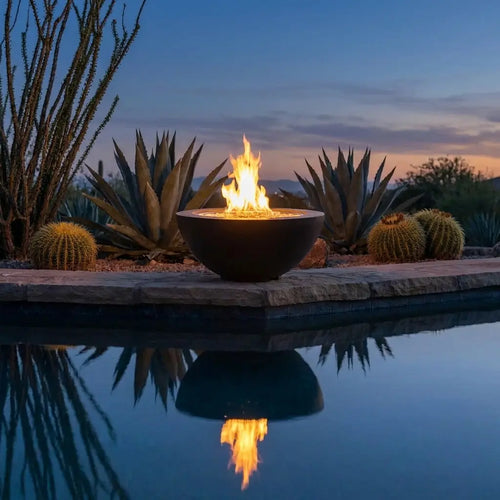
A clean, deep carbon steel bowl at the most popular size. Big enough for a real fire and a circle of chairs without dominating a patio.

The signature ringed bowl, a step up in size and presence. A great match for larger seating groups and open patios.


A statement-size bowl for large patios and crowds. Needs the open space and clearance to match, but nothing throws heat like it.
What size wood-burning fire pit do I need?
Match the bowl to your seating circle, not to the biggest pit you can afford. As a rule of thumb:
- 36 inch: ideal for 4 to 6 people and small to mid patios. The most popular size for a reason.
- 41 to 42 inch: comfortable for 6 to 8 people and larger seating groups.
- 48 inch and up: for big gatherings and open yards, where the pit becomes the centerpiece.
Then plan clearance. A widely used safety guideline is to keep a wood-burning fire pit at least 10 feet from your house, fences, trees, and anything else that can catch, and to set it on a non-combustible surface such as stone, pavers, or gravel rather than a wood deck or dry grass. Leave enough open space around the seating so people are not crowded against the heat. Always check your local fire codes and any HOA or burn-ban rules before your first fire.

What wood should I burn (and what to avoid)?
Burn seasoned hardwood. Oak, hickory, maple, ash, and birch that has been dried for at least six months to a year burns hotter, longer, and with far less smoke than green or wet wood. Softwoods like pine and cedar light fast and smell great but pop, spark, and burn out quickly, so use them to get started rather than as your main fuel.
Just as important is what you never put in a fire pit:
- Treated, painted, or stained wood, including old deck boards and pallets, which release toxic chemicals when burned.
- Plywood, particleboard, and MDF, which contain glues and resins.
- Green or wet wood, which smokes heavily and coats your pit in creosote.
- Trash, cardboard, and accelerants like gasoline or lighter fluid, which flare dangerously and can damage the steel.
- Driftwood, which can release harmful salts and chemicals.
For cleaner burning and far less smoke, stick to dry, well-seasoned hardwood. As for what goes in the bottom of the pit, you do not need sand or lava rock in a quality steel bowl. A thin layer of ash actually helps insulate the base, so just let a little build up and clear it when it gets deep.
How do I care for a steel fire pit?
Steel fire pits are low maintenance, not no maintenance. Empty ash once it cools and before it gets damp, since wet ash holds moisture against the metal. Keep the pit covered when it is not in use so rain does not pool inside. With carbon steel, expect a rust patina to form. That is normal and protective, not a defect. If you prefer to slow it down, a high-heat fire pit paint or a light coat of oil on a clean, dry surface helps. Stainless steel just needs an occasional wipe to look its best. Done consistently, this routine keeps a good steel pit going for decades.
Frequently asked questions
Can you burn treated or painted wood in a fire pit?
No. Treated, painted, and stained wood release toxic chemicals such as arsenic and other compounds when burned, which are harmful to breathe and bad for the soil around your pit. Only burn natural, untreated, seasoned firewood.
What should you not burn in a fire pit?
Avoid treated, painted, or stained wood, plywood, particleboard and MDF, green or wet wood, driftwood, trash and cardboard, and any accelerants like gasoline or lighter fluid. Stick to seasoned hardwood, with a little softwood kindling to start.
What do you put in the bottom of a wood-burning fire pit?
In a quality steel fire pit, nothing special is required. A thin layer of ash insulates the base and is fine to leave between fires. You do not need sand or lava rock for a wood fire, and a built-in drain hole should be kept clear so water can escape.
How long does a load of firewood burn in a fire pit?
A typical load of seasoned hardwood burns for roughly 1 to 2 hours before it needs topping up, depending on wood type, how much you load, and airflow. Hardwoods like oak and hickory burn longest; softwoods burn out faster.
Are wood-burning fire pits legal where I live?
It depends on your area. Many places allow them with conditions, while some cities, counties, and HOAs restrict open burning or issue seasonal burn bans, and parts of California and other regions have air-quality rules that limit wood burning on certain days. Always check your local fire department and ordinances before lighting your first fire.
Find your wood-burning fire pit
Heavy carbon and stainless steel pits built to last decades, in the size that fits your space.
Shop wood-burning fire pits →Free shipping and expert help choosing the right size.
Planning a fire feature? See our complete gas fire pit buying guide if you are weighing gas instead, or get inspired by 9 small backyard fire feature examples.