Pergola Compatible Patio Heaters That Fit
A pergola creates the kind of outdoor room people actually want to use after sunset. But adding heat under that structure is not as simple as rolling in a propane tower heater. Pergola compatible patio heaters need to work with your ceiling height, roof material, airflow, electrical or gas access, and the manufacturer’s stated clearances. Get one of those details wrong, and a heater that looked perfect online can become ineffective, inconvenient, or unsafe.
The good news is that a pergola does not automatically rule out patio heat. It just calls for a more deliberate choice. For many covered patios, a properly specified electric infrared heater is the cleanest answer. In other layouts, a professionally installed gas unit or a carefully positioned freestanding heater may make sense. The right option depends on the structure and how you plan to use the space.
Start With the Pergola, Not the Heater
Before comparing finishes, BTUs, or wattage, look up. Your pergola’s overhead design determines which heater categories are realistic. An open-slat pergola behaves very differently from one with a solid roof, a retractable canopy, or a louvered system.
Open rafters allow rising heat, exhaust, and moisture to escape more easily. That can help with ventilation, but it also means wind can pull warmth away quickly. A solid roof traps more heat around the seating area, yet it creates stricter requirements for clearance, ventilation, and mounting. Fabric shades and retractable canopies deserve extra caution because radiant heat, hot exhaust, and open-flame appliances may damage the material or create a fire risk.
Measure the finished height from the patio floor to the lowest obstruction, not just to the highest beam. Then identify the construction materials above and around the planned heater location: wood, composite, metal, vinyl, fabric, or masonry. Those details matter because every heater model has its own clearance requirements for combustible materials.
Do not treat a general clearance recommendation as interchangeable with the instructions for a specific unit. The manufacturer’s installation manual is the deciding document, and local code requirements may add another layer. When gas piping, electrical circuits, or permanent mounting are involved, a qualified installer should review the plan before you buy.
Why Electric Infrared Heaters Usually Work Best
For many homeowners, wall-mounted or ceiling-mounted electric infrared heaters are the most practical pergola-compatible patio heaters. They heat people, furniture, and nearby surfaces directly rather than trying to warm all of the air under the roof. That makes them more useful in semi-open spaces where a breeze would quickly defeat a conventional convection heater.

Electric units also avoid open flames and combustion exhaust at the seating area. They can be mounted to a wall, beam, or approved ceiling bracket, keeping the floor clear for dining chairs, a sectional, or an outdoor kitchen. Premium models often offer multiple heat settings, remote controls, timers, and low-glare elements that feel less harsh during an evening meal.
There are trade-offs. Electric infrared heat is directional, so placement matters more than raw output. A single heater pointed at a large 16-by-20-foot pergola will not make every corner equally comfortable. You may need two or more units aimed at distinct zones, such as a dining table and a lounge grouping.
Electrical capacity is another factor. Higher-output heaters often require a dedicated 240-volt circuit rather than a standard outlet. That is not a drawback when planned during a patio renovation, but it can add cost to an existing space. It is still usually a cleaner long-term solution than storing propane cylinders or moving a floor-standing heater around each time guests visit.
Aiming and mounting make the difference
An infrared heater should be aimed toward where people sit, not straight down into an empty walkway. Mounting height affects both comfort and coverage. Too high, and the heat feels weak at chair level. Too low, and the unit may feel overly intense or fail to meet required clearances.

A good layout places heaters along the perimeter or on structural beams so their radiant field reaches the seating zone at an angle. This also reduces the chance that someone will stand directly beneath the unit for an extended period. If the pergola has a fan, plan the heater locations with fan blades and airflow in mind. Strong airflow can make even a well-sized heater feel less effective.
Can You Use Propane Under a Pergola?
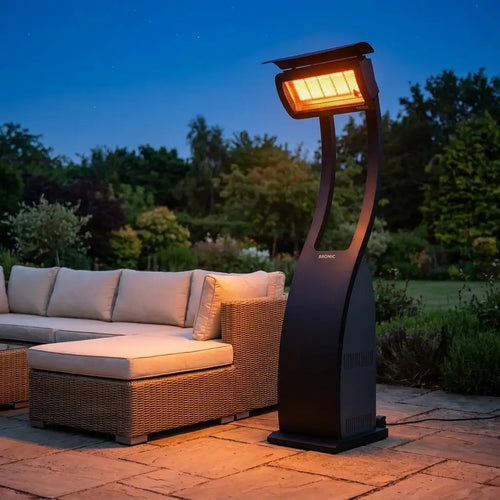
Sometimes, but this is where homeowners should slow down. Freestanding propane patio heaters are designed for open-air use, and many models require generous overhead clearance. Their flame, hot reflector, and combustion exhaust make them a poor fit beneath low rafters, solid roofs, fabric canopies, or enclosed side walls.
Even under an open pergola, the answer depends on the exact heater and its manual. A tall mushroom-style heater may need more vertical clearance than the structure provides. It also occupies valuable floor space, and its heat can be pushed off target by wind. That is frustrating when the goal is a polished, permanent outdoor room rather than a temporary event setup.
Tabletop propane heaters can be convenient for a small bistro table, but they should not be treated as a substitute for whole-patio heating. They offer localized warmth and still need safe clearance from umbrellas, drapery panels, cushions, and overhead materials.
If you prefer gas heat, a fixed natural gas infrared heater can be a better option than a portable propane unit for certain covered patios. It eliminates cylinder changes and can provide substantial output. However, it must be selected for the mounting orientation and ventilation conditions of the space, then installed by a licensed professional. Gas is not a category for improvising around a beautiful wood pergola.

Size Heat for the Seating Zone
A common mistake is sizing a heater by the entire patio footprint. Heat the areas people occupy most often instead. A dining table for six, a sectional, and a bar-height counter may each need their own heat plan, especially if the pergola is open on multiple sides.
Think through four real-world factors before choosing output:
- The size of the active seating area, not unused patio space
- The pergola’s openness and typical wind exposure
- Ceiling height and available mounting locations
- How often you want to use the patio in colder weather
In a mild climate, modest infrared coverage may extend the season comfortably. In a colder region, the same patio may need multiple higher-output units, side screens, or a more sheltered layout to feel worthwhile in late fall. Patio heaters improve comfort, but they cannot fully overcome freezing temperatures and constant wind in an open structure.
This is also why a cohesive plan often performs better than buying one oversized heater. Pairing targeted overhead heat with weather-resistant curtains, a partial privacy wall, or a windbreak can make the warmth feel far more consistent. The goal is not to turn your backyard into an indoor living room. It is to create a space that stays pleasant long after the sun goes down.
Protect the Look of the Space
A heater should earn its place visually as well as functionally. Under a modern aluminum pergola, a slim black or stainless electric unit can disappear into the beams. Under a cedar structure, a low-profile heater mounted in a thoughtful location can preserve the warmth of the wood without crowding the architecture.
Avoid placing a heater where it becomes the first thing guests see from the house or blocks a key sightline to a fire pit, outdoor kitchen, or view. Concealed wiring and intentional placement make a meaningful difference in a premium outdoor project. It is also worth planning controls early. A wall switch, remote, or smart control option is much more convenient than climbing onto furniture to reach a hard-to-access unit.
A Safer Way to Make the Final Choice
Bring your measurements, photos of the pergola, and a rough furniture layout to the selection process. That makes it easier to compare the heater’s required clearances, mounting options, electrical needs, and coverage area against the space you actually have.
If the structure has a low roof, combustible materials, fabric panels, or limited ventilation, do not force a heater into the design. Rework the placement, choose an approved electric model, or heat an adjacent open area instead. The best patio heater is not simply the one with the highest output. It is the one that provides dependable warmth while respecting the structure, the layout, and the way your family gathers outside.
A well-planned heater becomes part of the reason a pergola gets used on a cool Tuesday night, not just during perfect-weather weekends. Choose for the real conditions of your patio, and the space will feel considered for years instead of compromised from day one.