Natural Gas vs Propane vs Electric Patio Heaters: Which to Buy?

Quick answer: choose natural gas if you want unlimited runtime and the lowest fuel cost and you can plumb a line; choose propane if you want the same strong heat with no plumbing and full portability; choose electric infrared if you want clean, silent, flame-free warmth for a covered patio or balcony. All three keep you warm. They differ on install, running cost, portability and where they are safe to use. Here is how to pick.
In this article
- Natural gas vs propane vs electric: at a glance
- Natural gas patio heaters
- Propane patio heaters
- Electric patio heaters
- Which should you buy?
- FAQ
Natural gas vs propane vs electric: at a glance
| Natural gas | Propane (LP) | Electric | |
|---|---|---|---|
| Heat output | High | High | Medium, directional |
| Running cost | Lowest | Higher (bottled fuel) | Low to medium |
| Runtime | Unlimited | Limited by tank | Unlimited |
| Install | Needs a gas line | None, just a bottle | Needs a circuit |
| Portability | Fixed | Fully portable | Fixed (mounted) |
| Best for | Open patios, frequent use | Flexibility, no plumbing | Covered patios, balconies |
Natural gas patio heaters
A natural gas heater ties into your home's gas supply, so it never runs out and costs the least per hour to run. That makes it the pick for a patio you heat often and do not plan to rearrange. The trade-off is installation: you need a gas line run to the heater's location, which usually means a mounted unit and a one-time plumbing job. Once it is in, you get strong, wind-resistant heat at the flip of a switch.


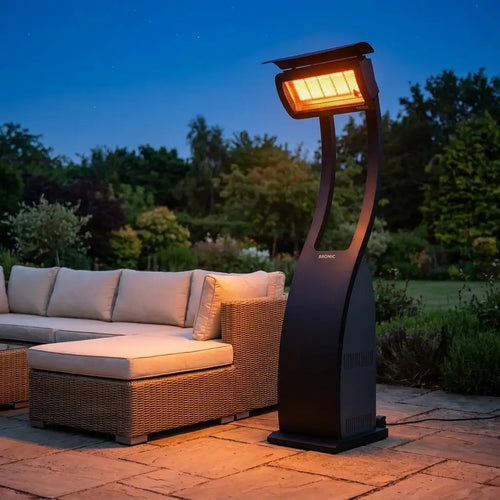
A mounted natural-gas or propane radiant heater that clears the floor and throws serious heat over a dining zone.
Propane patio heaters
Propane, also called LP, delivers the same strong heat as natural gas but from a refillable bottle, so there is nothing to plumb and nothing to install. That is its superpower: total portability. Roll a freestanding propane tower to wherever people are gathering, then store it away in the off-season. The catch is that bottled fuel costs more per hour than piped natural gas, and you will swap or refill tanks. For most homeowners who do not want a plumber involved, that is a fair trade.

A portable propane tower that heats a wide circle, no mounting or wiring required. Roll it wherever the party moves.
Electric patio heaters
Electric infrared heaters skip flame and fuel entirely. They warm people and surfaces directly with radiant heat, switch on instantly with no smell or fumes, and run near silently. That makes them the natural choice for covered patios, porches, balconies and semi-enclosed spaces where a gas flame is a poor fit. They do need a suitable electrical circuit, and their heat is directional rather than all-around, so aim them where people actually sit.


Glass-fronted infrared warmth with no flame, no gas line and no fumes. Ideal for covered patios and balconies.
Which should you buy?
If you have an open patio, use it constantly, and can run a gas line, natural gas gives you the cheapest, most permanent heat. If you value flexibility and want zero installation, propane gets you the same warmth on wheels. If your space is covered or you simply want no flame, fumes or noise, electric infrared is the cleanest answer. Many homeowners end up with a mix: a mounted electric over the covered dining zone and a propane tower for the open lounge. Not sure how it all fits together? Start with our complete patio heater buying guide.
Frequently asked questions
Is natural gas or propane cheaper for a patio heater?
Natural gas is cheaper to run because it feeds from your home supply at utility rates, while propane is bottled and costs more per hour of heat. Natural gas needs a plumbed line, though, so propane wins on install cost and portability.
Are electric patio heaters as warm as gas?
Electric infrared heaters produce less total heat than a large gas unit, but because they warm people and objects directly rather than heating the air, they feel very effective in covered and sheltered spaces. In open, windy areas, gas has the edge.
Can I convert a propane heater to natural gas?
Some gas heaters are available in, or convertible to, either fuel, but it depends on the specific model and requires the correct conversion kit and a qualified installer. Always confirm the fuel type before you buy rather than assuming a heater can switch.
Which patio heater is safest for a covered patio?
Electric infrared is the safest choice under a roof because it has no open flame and no exhaust gases. Gas heaters can be used under cover only if they are outdoor-rated, mounted, and installed with the required clearance and ventilation.
Find your fuel and your heater
Compare gas and electric patio heaters side by side, or ask a specialist which fuel suits your space.
Shop patio heaters →Free shipping on Bromic. Price-match guarantee. Talk to a real patio specialist before you buy.