How to Choose a Patio Heater (2026): Gas, Electric or Freestanding

The right patio heater comes down to two decisions: fuel (gas or electric) and mounting (freestanding, or fixed to a wall or ceiling). Gas heaters throw more raw heat and need no power outlet, so they suit open, larger spaces. Electric infrared heaters are cleaner, quieter and safe under a covered roof, so they suit balconies, porches and enclosed patios. Get those two calls right and everything else, coverage, controls and looks, falls into place. This guide walks you through all of it.
In this article
- What are the main types of patio heater?
- Gas or electric: which is right for you?
- How much heating power do I need?
- Where should you put a patio heater?
- Which features actually matter?
- Which brand should you buy?
- FAQ
What are the main types of patio heater?
Patio heaters split two ways. First by fuel: gas (natural gas plumbed to a line, or liquid propane from a bottle) and electric (radiant infrared elements that run off power). Second by how they are installed: freestanding or portable units that stand on the ground, and mounted units fixed to a wall or ceiling.
Gas freestanding towers are the classic "mushroom" heater and its modern cousins. They heat a circle around them and move wherever you roll them. Mounted radiant heaters, gas or electric, clear the floor entirely, aim heat down and out over a defined zone, and look far tidier over a dining table or built-in seating.

Gas or electric: which is right for you?
Short version: choose gas for open-air patios, big spaces and maximum heat with no outlet nearby. Choose electric for covered patios, balconies and anywhere you want no flame, no fumes and near-silent, instant warmth. Electric infrared also wastes no heat warming the air it does not need to, it warms people and objects directly, which is why it works even in a light breeze under a roof.
Gas puts out more heat per unit and shrugs off wind, but needs clearance above and around it and, for natural gas, a plumbed line. Electric needs a suitable circuit but installs cleanly and costs less to feature-for-feature. We break the running costs and trade-offs down fully in our natural gas vs propane vs electric patio heater comparison.

A portable propane tower that heats a wide circle, no mounting or wiring required. Roll it wherever the party moves.

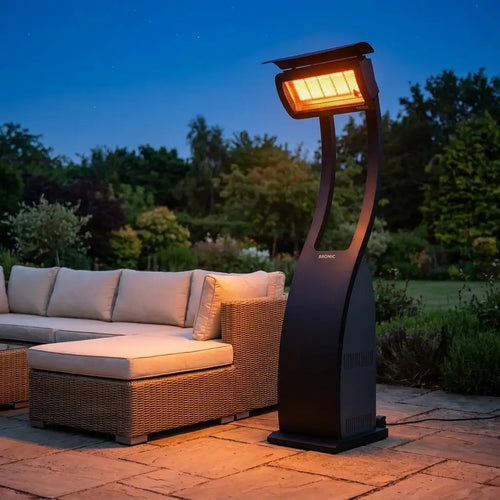
Glass-fronted infrared warmth with no flame, no gas line and no fumes. Ideal for covered patios and balconies.
How much heating power do I need?
Gas output is measured in BTUs, electric in watts. As a rough planning rule, you want roughly 100 to 150 BTUs per square foot of open patio you want to keep comfortable, or about 1 electric watt per 10 square feet of a sheltered space. Wind, an open vs covered setting and how cold your evenings get all move that number.
| Space | Rough coverage needed | Good fit |
|---|---|---|
| Small balcony or 2 chairs | Up to 100 sq ft | One 2300W to 3400W electric |
| Covered dining patio | 150 to 250 sq ft | One mounted gas 300 series, or a 6000W electric |
| Open lounge area | 250 to 400 sq ft | A freestanding gas tower, or two mounted units |
| Large entertaining deck | 400+ sq ft | Multiple mounted gas 500 series units |
When in doubt, size up or add a second unit rather than expecting one heater to stretch. Two smaller heaters spread even warmth better than a single overworked one.
Where should you put a patio heater?
Placement decides both comfort and safety. Mounted heaters need clear space above and in front of them, follow the maker's stated clearances to anything combustible, and keep any heater well away from walls, fabric awnings and low ceilings that are not rated for it. Freestanding gas towers need a flat, stable surface and open air above, never use one indoors, in a garage or under an enclosed roof. General outdoor-fire safety guidance from the U.S. Fire Administration is worth a two-minute read before your first burn.
For a covered patio, mounted electric is usually the safest, cleanest choice because there is no open flame or exhaust. If you want gas under a roof, it must be an outdoor-rated mounted gas heater installed to spec with the required overhead clearance and ventilation.


A mounted natural-gas or propane radiant heater that clears the floor and throws serious heat over a dining zone.
Which features actually matter?
Beyond fuel and size, a few things separate a heater you love from one you tolerate. Look for a proper ignition and control system (electronic ignition and a wall switch or remote beat a manual knob), a weather rating that matches your exposure (marine-grade if you are near salt air), a finish that suits the space (black, white or brushed), and a heat screen or glass front on premium models that both looks sharp and directs warmth.
Directional infrared heaters give you instant heat the moment they switch on, with no warm-up and no gas smell, which matters when guests arrive and you want the patio comfortable right away.
Which brand should you buy?
For premium radiant patio heat, Bromic is the category benchmark, and it is the line we stock most deeply. Its Smart-Heat range covers gas and electric, freestanding and mounted, entry to marine-grade, so you can match the exact heater to your space without switching brands. The Tungsten series is the workhorse; the Platinum series adds a ceramic glass front and slimline looks for a near built-in finish. We compare the two head to head in our Bromic patio heaters guide, and you can browse the full range in the Bromic heating collection.
Already thinking about the wider setup? Our roundup of ways to extend your patio season with outdoor heating pairs heaters with the rest of a cold-weather-ready patio.
Frequently asked questions
Are electric or gas patio heaters cheaper to run?
It depends on local energy prices, but electric infrared is often cheaper to run per hour of comfort because it heats people directly instead of warming the surrounding air. Gas usually costs more per hour but delivers more total heat, which matters in open or windy spaces. See our fuel comparison for the full breakdown.
Can I use a patio heater under a covered patio?
Yes, with the right type. Mounted electric infrared heaters are made for covered and semi-enclosed spaces because they produce no flame or exhaust. Gas heaters can be used under a roof only if they are outdoor-rated, mounted, and installed with the manufacturer's required overhead clearance and ventilation. Never use a freestanding gas tower under an enclosed roof.
How many patio heaters do I need?
Plan for one heater per roughly 150 to 250 square feet of covered space, then add a unit for open or windy areas. Two well-placed heaters almost always give more even warmth than one large heater working overtime.
Do patio heaters work in the wind?
Radiant heaters, both gas and electric, hold up far better in a breeze than convection-style heaters because they warm objects and people directly rather than heating the air. In consistently windy spots, mounted radiant units and some wind protection will keep the warmth where you want it.
What size patio heater do I need for a dining table?
For a standard covered dining zone of about 150 to 250 square feet, a single mounted gas 300 series or a 6000W electric heater centered over the table is usually enough. Larger tables or open settings benefit from a 500 series gas unit or a pair of heaters.
Ready to warm up your patio?
Browse our full range of gas and electric patio heaters, or talk to a specialist about the right fit for your space.
Shop patio heaters →Free shipping on Bromic. Price-match guarantee. Talk to a real patio specialist before you buy.