Fire Pit Table Ignition Systems and Fuel Types (2026 Guide)
Fire pit table ignition systems come in three main types: match-lit, spark or push-button (piezo), and electronic (battery or plug-in). Match-lit is the simplest and cheapest, spark ignition adds a one-press starter with no wiring, and electronic ignition gives you the most convenient, hands-off lighting, often with a key or switch. Your fuel choice, propane or natural gas, is a separate decision that pairs with any of these systems.

Part of our Ultimate Fire Pit Table Buyer’s Guide.
Once you understand how a fire pit table lights and what it burns, the rest of the buying decision gets a lot easier. Below we break down each ignition system, compare them side by side, and explain how propane and natural gas change the way you light and use your table.
What are the main fire pit table ignition systems?
Every gas fire pit table needs a way to introduce a spark or flame to the burner. There are three common approaches, and the one you pick affects price, convenience, and long term reliability.
Match-lit ignition is the most basic. You open the gas valve and light the burner with a long match or a lighter. There is no electronic starter, nothing to wire, and very little that can fail. It is the most affordable option and the easiest to service, but it does ask you to get your hand close to the burner during startup.
Spark or push-button ignition uses a piezo igniter. Press the button, it produces a spark, and the gas lights. This is the sweet spot for many buyers because there is no battery to replace in most designs and no wiring, yet you never bring a flame to the burner yourself. Some tables pair the spark with a safety valve that holds the gas open only while you press.
Electronic ignition is the most convenient. A battery pack or plug-in module creates the spark, and you light the table with a knob, switch, or key. Many electronic systems include a flame-sensing safety feature that shuts off gas if the flame goes out. This is the closest thing to the ease of a gas stove, but it has the most parts and depends on power.
How do the ignition systems compare?
Here is a quick side by side look at the three systems so you can match one to how you actually plan to use your table.
| Ignition type | How you light it | Best for | Trade-off |
|---|---|---|---|
| Match-lit | Long match or lighter | Budget buyers, easy repairs | Hand goes near the burner |
| Spark / push-button | Press a piezo button | Most homeowners | Piezo can wear over years |
| Electronic | Knob, switch, or key | Convenience and safety features | More parts, needs power |
Which ignition system should you choose?
If you want the simplest possible table and do not mind lighting it by hand, match-lit is dependable and inexpensive. If you want easy lighting with almost nothing to maintain, spark or push-button ignition is the best fit for most patios. If you entertain often and want a switch-and-go experience with built-in safety shutoff, go electronic and accept that you will occasionally change a battery or check a connection.
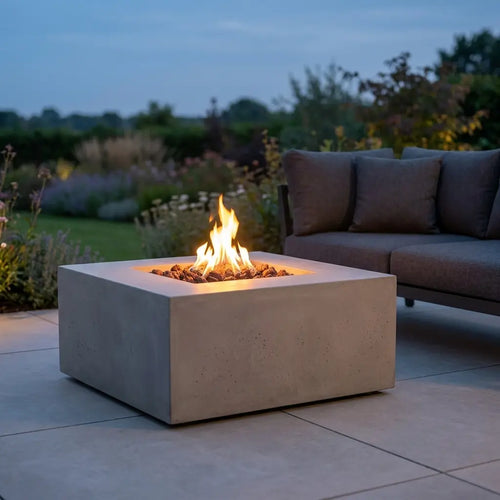
A table like the one below shows how a premium build pairs a reliable ignition with a wide, even flame, so lighting it becomes the easy part of your evening.

Chat-height table with a clean electronic-style light-up and a wide, even flame for easy entertaining.
Propane or natural gas: which fuel type is right for you?
Ignition is how you light the table. Fuel is what keeps it burning, and the two big choices are liquid propane and natural gas. Both work with any of the ignition systems above, so you are really answering two separate questions when you shop. For a deeper look, see our full comparison of propane vs natural gas fire pit tables and our broader gas fire pit tables guide.
Propane runs off a refillable tank, usually a standard 20 pound cylinder that many tables hide inside the base. The upside is portability and zero installation: unbox it, connect a tank, and light. The downside is that you have to monitor the tank level and refill or swap it. Propane also burns a bit hotter per unit, which many people like for ambiance.
Natural gas connects to your home gas line, so you never run out and never refill. The trade-offs are that the table stays put once plumbed and you need a gas line run to the spot, which is a one-time cost and usually a professional job. If your table lives in a fixed location on a deck or patio, natural gas is hard to beat for convenience.
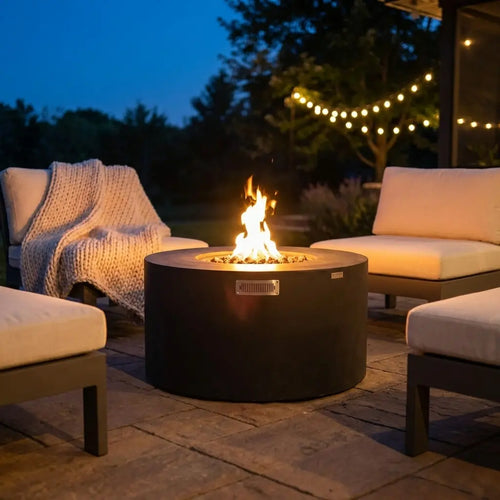
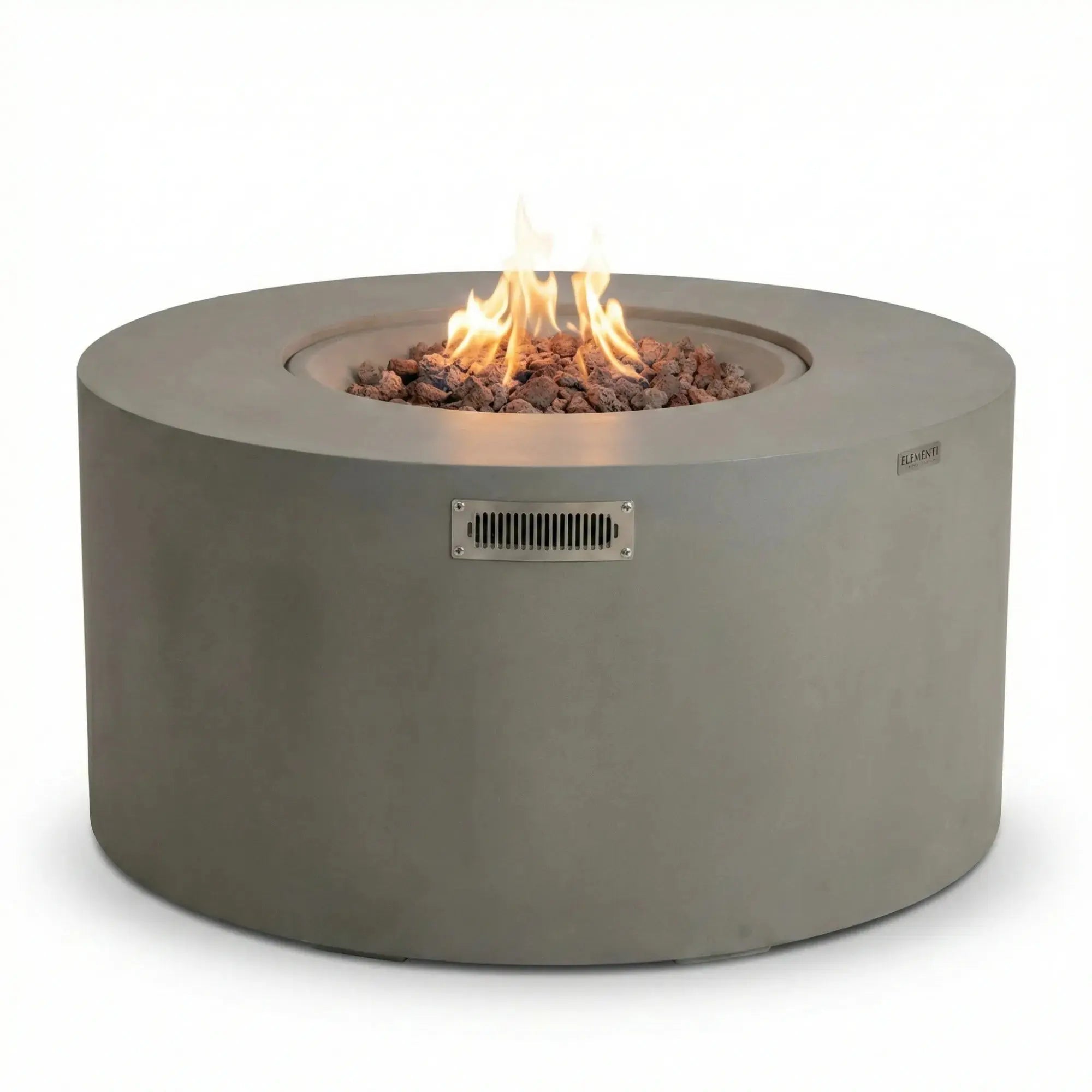
If you value flexibility and a quick setup, propane wins. If you want a permanent, refill-free centerpiece, natural gas is the better long term pick. A hidden-tank propane design, like the round table below, gives you the freedom of propane without a visible cylinder.

Round concrete table that tucks the propane tank inside the base for a clean, cordless look.
How do ignition and fuel work together?
Think of it as a grid. Any ignition type can pair with either fuel. A match-lit propane table is the simplest and cheapest combination. A spark-ignition natural gas table gives you effortless lighting with no refills. An electronic natural gas table is the most hands-off setup of all, closest to flipping on a gas fireplace indoors. Decide how you want to light the table first, then choose the fuel that fits where the table will live and how portable it needs to be.
Frequently asked questions
Do I need electricity for an electronic ignition fire pit table?
Not always. Many electronic systems run on a battery pack, so no outlet is required. Some higher-end setups plug in or hardwire. Check the product specs, and if your table lives far from an outlet, a battery-powered electronic or a spark ignition avoids the wiring question entirely.
Is a spark igniter reliable over time?
Yes, piezo spark igniters are generally very dependable and have no battery to replace. Over many years the spark element can weaken, but it is an inexpensive, easy part to swap. Keeping the burner and igniter tip clean and dry goes a long way toward consistent lighting.
Can I convert a propane fire table to natural gas?
Sometimes, if the manufacturer offers a conversion kit for that model. It is not a universal swap, and it should be done according to the maker instructions, ideally by a qualified installer. If you already know you want natural gas, it is usually simpler to buy a table configured for it.
Which ignition system is safest?
Electronic systems often add a flame-sensing safety valve that cuts gas if the flame goes out, which is a nice feature. That said, all three types are safe when used correctly. The bigger safety factors are proper clearance, good ventilation, and never leaving a lit table unattended.
How long does a propane tank last on a fire pit table?
A standard 20 pound propane tank typically lasts a handful of evenings, depending on your table BTU output and how high you run the flame. Running at a lower flame stretches it considerably, and keeping a spare tank on hand means you are never caught mid-gathering.
Related: How to Light a Fire Pit Table and Why It Will Not Stay Lit.
Find your perfect fire pit table
Browse match-lit, spark, and electronic ignition tables in propane and natural gas.
Shop fire pit tables →