Propane vs Natural Gas Fire Pit Table: Which Should You Buy?
Propane fire pit tables run on a refillable tank that hides inside the table, so they work anywhere with no installation, but you refill the tank. Natural gas tables connect to your home's gas line for unlimited, never-refill fire at a lower cost per hour, but they need a plumbed gas line and stay in one place. Choose propane for flexibility and instant setup, and choose natural gas for the lowest running cost and never having to refill, if you have a gas line or are willing to run one. Here is the full comparison.
In this article
- Propane vs natural gas: the quick answer
- Propane vs natural gas: side by side
- Propane fire pit tables: pros and cons
- Natural gas fire pit tables: pros and cons
- Compare a propane and a natural gas table
- Can you convert from propane to natural gas?
- Frequently asked questions

Propane vs natural gas: the quick answer
Propane (also called LP) tables are self-contained: a standard 20 lb tank tucks inside the table base, so there is nothing to install and you can place or move the table anywhere. The trade-off is refilling the tank and a slightly higher cost per hour. Natural gas (NG) tables tie into your home's gas supply, so the fire never runs out and costs less per hour to burn, but you need a gas line installed by a professional and the table stays put. Both throw the same great heat. The decision is really about installation, portability, and how often you will use it.
Propane vs natural gas: side by side
| Factor | Propane (LP) | Natural gas (NG) |
|---|---|---|
| Fuel source | Refillable 20 lb tank, hidden in the table | Your home's natural gas line |
| Installation | None, ready to use | Gas line run by a licensed pro |
| Portability | Move it anywhere | Fixed location |
| Running cost | Higher per hour, plus refills | Lower per hour, unlimited |
| Refilling | Swap or refill the tank | Never |
| Best for | Renters, flexibility, no gas line | Homeowners who use it often |
Propane fire pit tables: pros and cons
Propane is the plug-and-play option. There is no installation, you can put the table wherever you like and move it later, and a hidden compartment keeps the tank out of sight. That makes propane ideal for renters, balconies and decks without a gas line, and anyone who wants to be up and running the day it arrives. The downsides are real but manageable: you will refill or swap the 20 lb tank periodically (a tank typically lasts somewhere around 4 to 10 hours of burn time depending on the table's BTU output), it is frustrating to run out mid-evening, and propane costs a little more per hour than natural gas.
Natural gas fire pit tables: pros and cons
Natural gas is the set-it-and-forget-it option. Once it is connected to your gas line, the fire never runs out, there is no tank to store or refill, and it costs less per hour to burn, which adds up if you use the table often. The catch is the install: you need a licensed professional to run a gas line to the table's location, which is an upfront cost, and the table then stays put. Some tables also need a natural gas conversion or a model built specifically for NG, so check the listing before you buy.
Compare a propane and a natural gas table
Here is one of each. Both link to their live product pages for the current price.

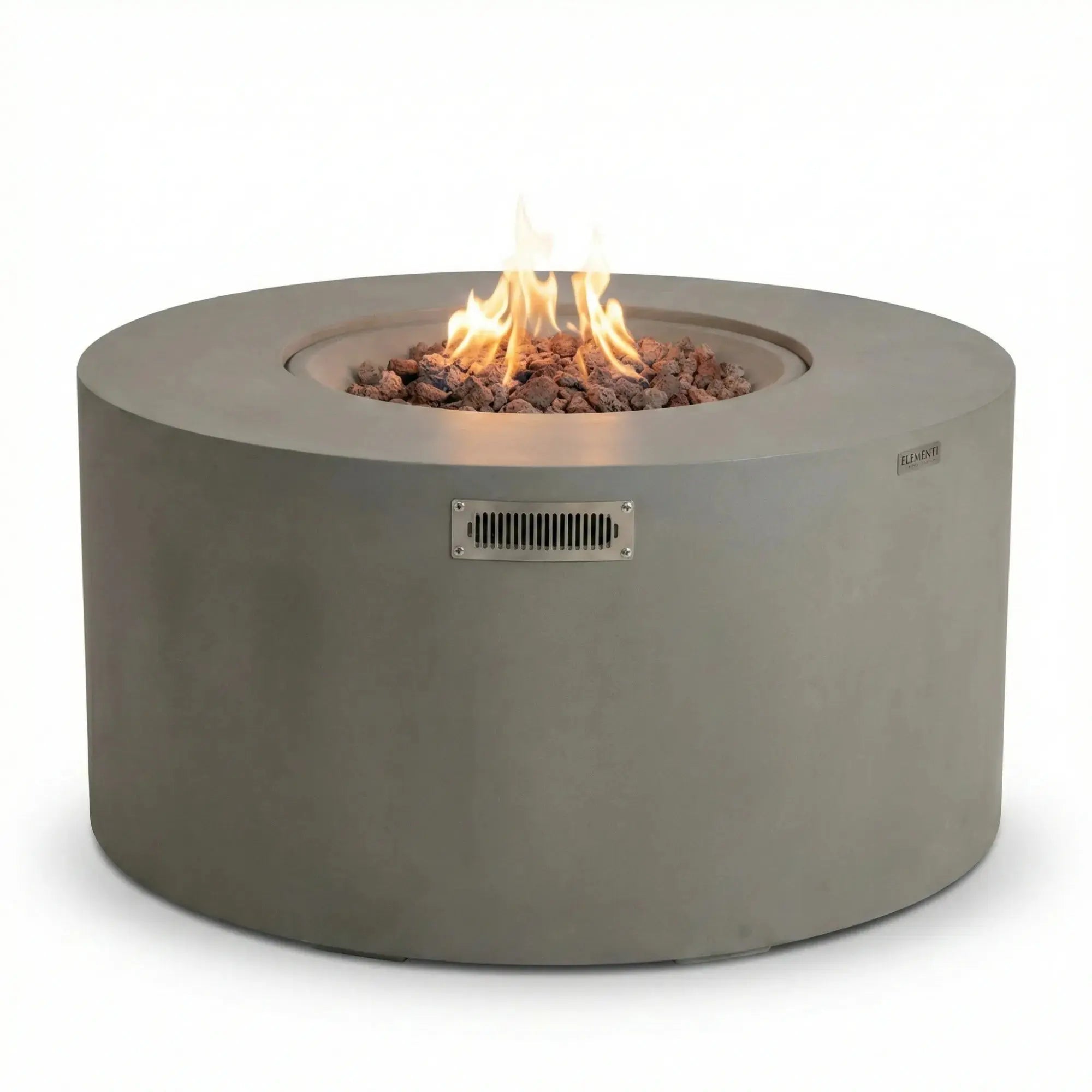
An Elementi round concrete table with a hidden propane tank inside the base, so it works anywhere with no gas line.

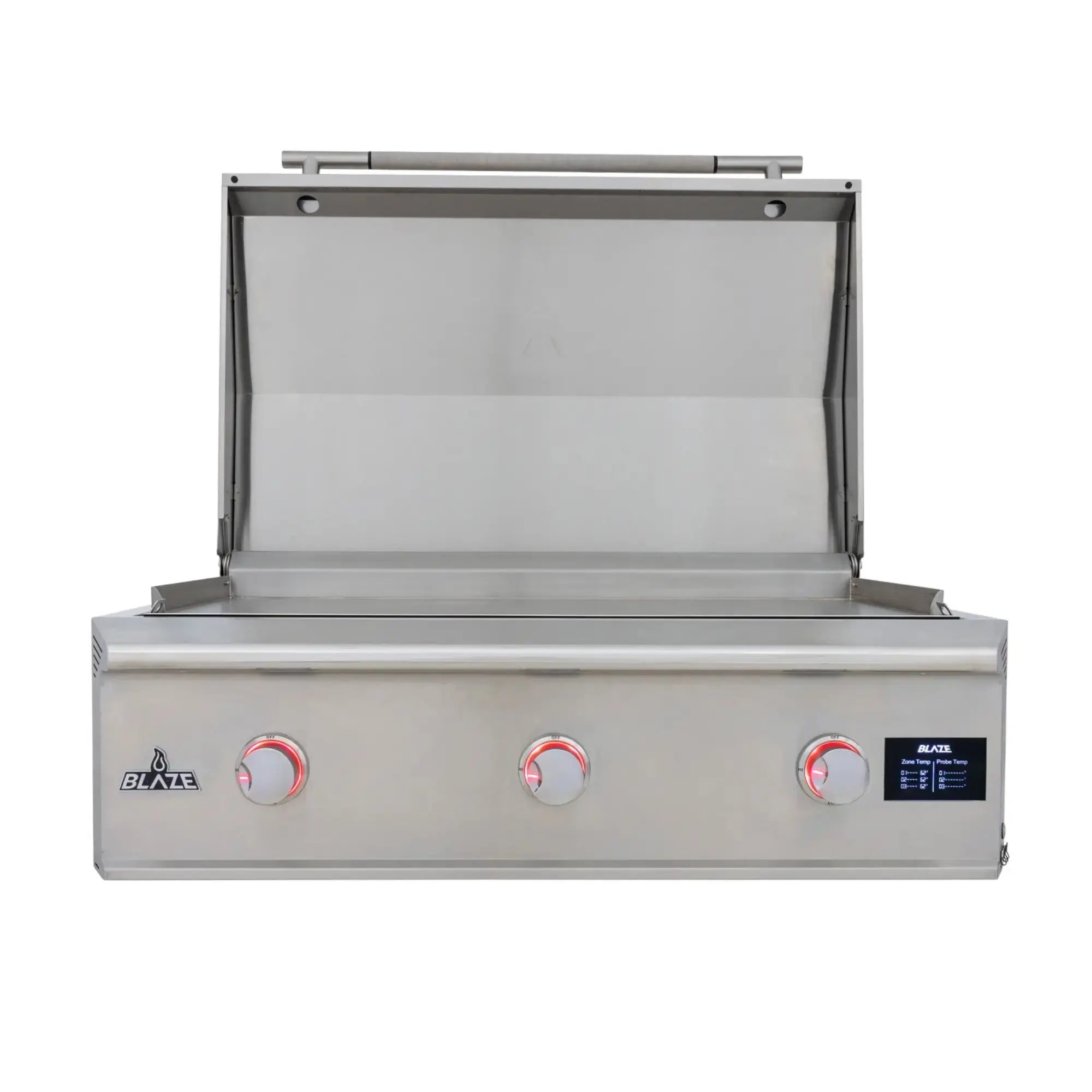
A premium steel table built for a natural gas line, so the fire never runs out and costs less to burn.
Can you convert a fire pit table from propane to natural gas?
Often, yes. Many fire pit tables can be switched between propane and natural gas with a conversion kit, and some are sold in separate LP and NG versions, so the simplest path is to buy the one that matches your fuel. Either way, gas work should always be done by a licensed professional. If you think you might add a gas line later, it is worth checking whether your chosen table offers a conversion before you buy.
Frequently asked questions
Is propane or natural gas better for a fire pit table?
Propane is better for flexibility and instant setup with no installation, while natural gas is better for convenience and lower running cost if you have a gas line. Choose propane if you want portability or do not have gas service; choose natural gas if you use the table often and can connect to your home's line.
Do natural gas fire pit tables cost less to run?
Yes. Natural gas generally costs less per hour to burn than propane, and you never buy or refill tanks. The savings matter most if you use the table frequently, which helps offset the upfront cost of running a gas line.
How long does a propane tank last in a fire pit table?
It depends on the table's BTU output, but a standard 20 lb propane tank typically lasts somewhere around 4 to 10 hours of burn time. Higher-output tables empty a tank faster; turning the flame down extends it.
Can you convert a propane fire table to natural gas?
Many tables can be converted with a kit, and some come in dedicated propane or natural gas versions. Check the product details, and always have a licensed professional handle the gas connection and any conversion.
Do you need a gas line for a fire pit table?
Only for a natural gas table, which must be plumbed to your home's gas supply by a pro. A propane table needs no gas line because it runs on a refillable tank stored inside the table.
Shop fire pit tables by fuel
Propane and natural gas fire pit tables from top brands, with free shipping.
Shop fire pit tables →Browse propane and natural gas tables.
More fire pit table guides: round vs rectangular, what size you need, concrete vs steel vs copper, the best fire pit tables, and fire glass vs lava rock.