How to Choose a Fire Feature
Fire pit, fire pit table, fire bowl, patio heater — they all do something different, and they're easy to confuse if you're shopping for the first time. Here's the practical breakdown: what each one is for, what fuel it uses, what it costs to run, and which one fits how you actually use your patio.
The four main types, in plain terms
Fire pit
The classic. A wide, open vessel — round, square, or rectangular — with a fire bowl in the center. You pull chairs around it. The fire is the centerpiece. No table surface, no integrated seating. It's about gathering around flame.
Best for: Patios where you have separate seating already and want a focal point. Conversation around the fire.
Fire pit table

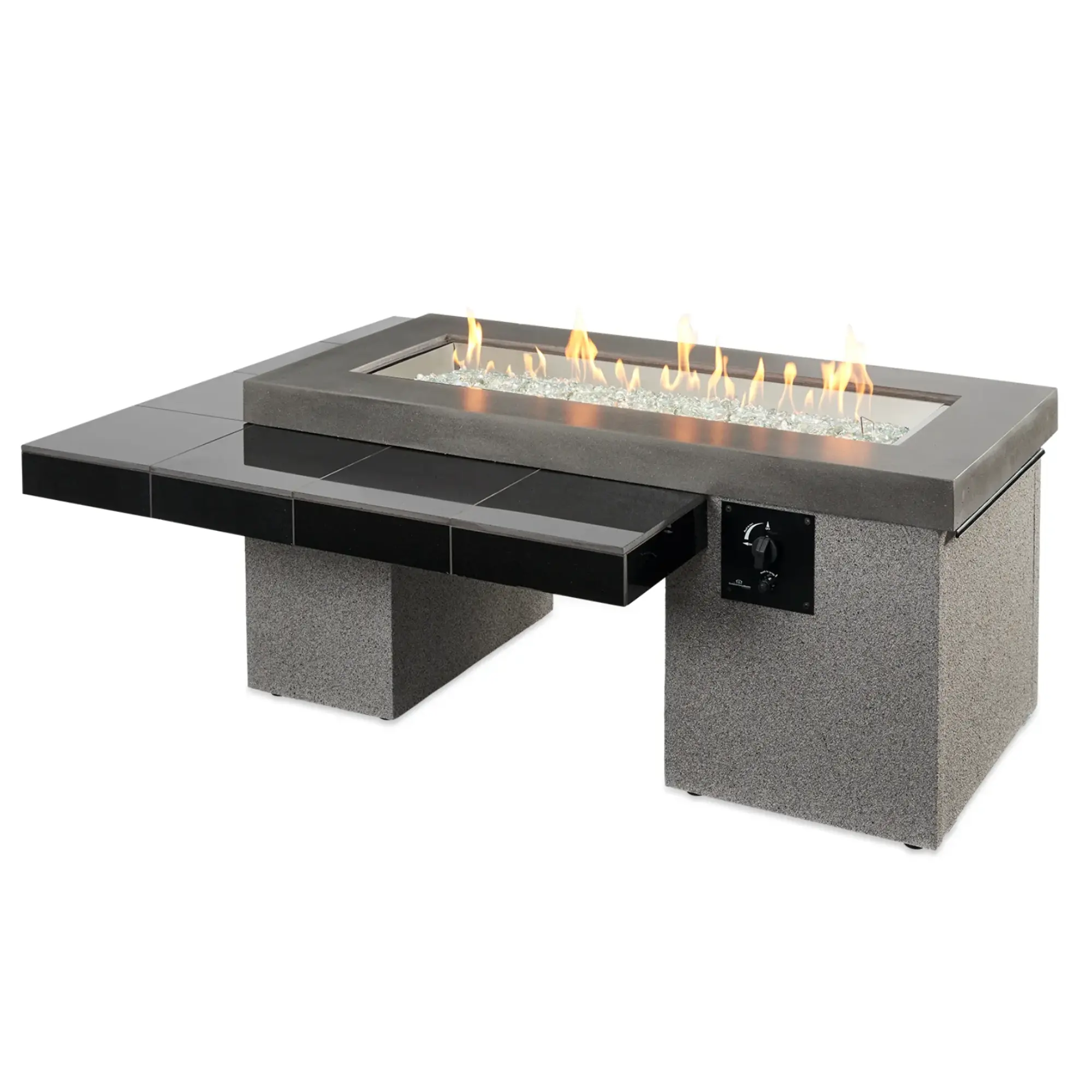
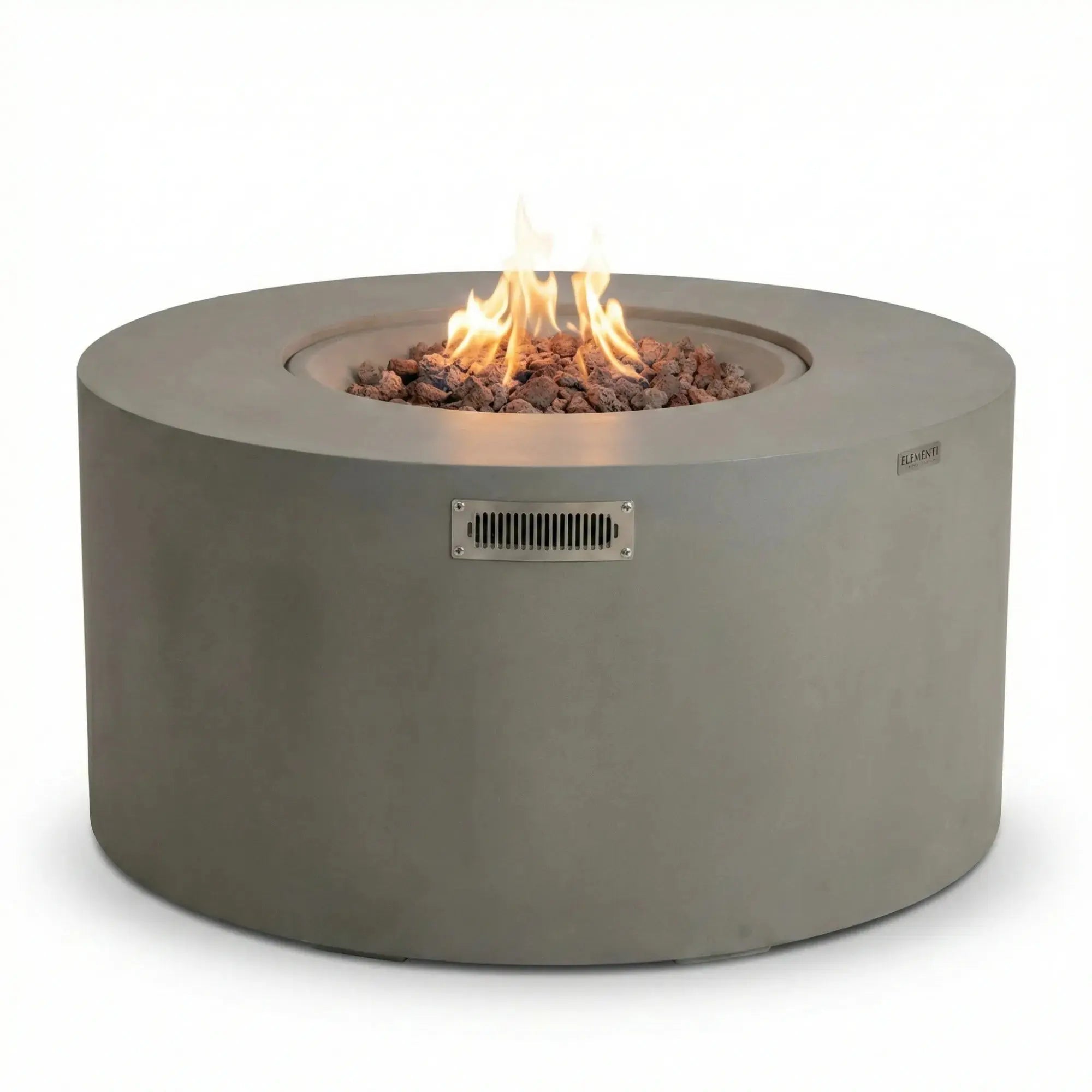
A fire pit built into a coffee-table-height surface — usually 25 to 30 inches tall. Drinks and small plates go on the surrounding ledge; the fire sits in a recessed center. You can sit at it like a regular outdoor table when the fire's off.
Best for: Most people. The double-duty (table when off, fire when on) is the highest practical value of any fire pit table. If you only get one, get this.
Fire bowl

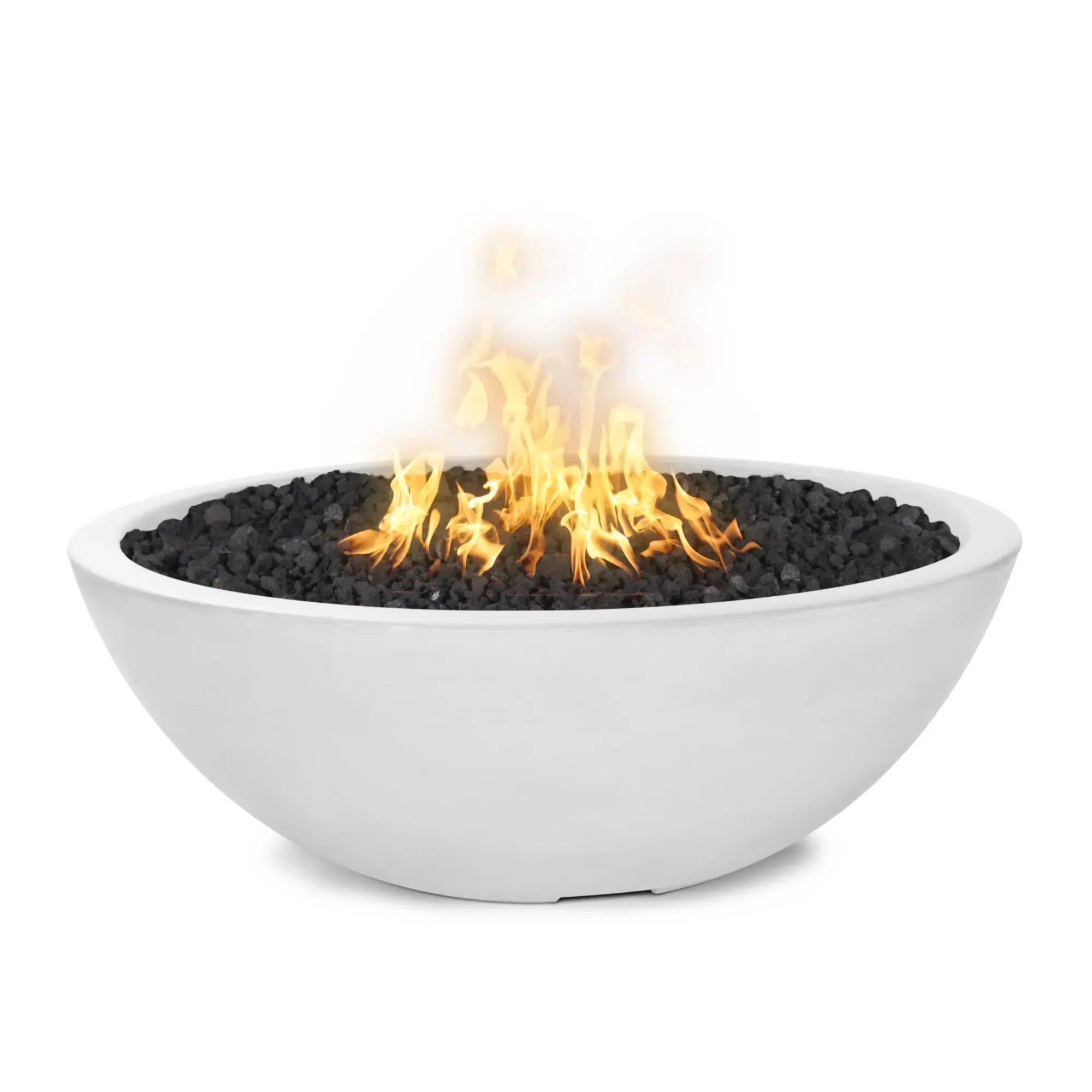
Smaller, more sculptural. A standalone fire vessel — usually 24 to 36 inches across — that sits low to the ground. More architectural than a fire pit, less integrated than a table. Often paired with formal landscaping or modern patios where the fire is meant to read as a design element.
Best for: Modern aesthetics, smaller patios, anywhere you want fire as a visual punctuation rather than the room's centerpiece.
Patio heater

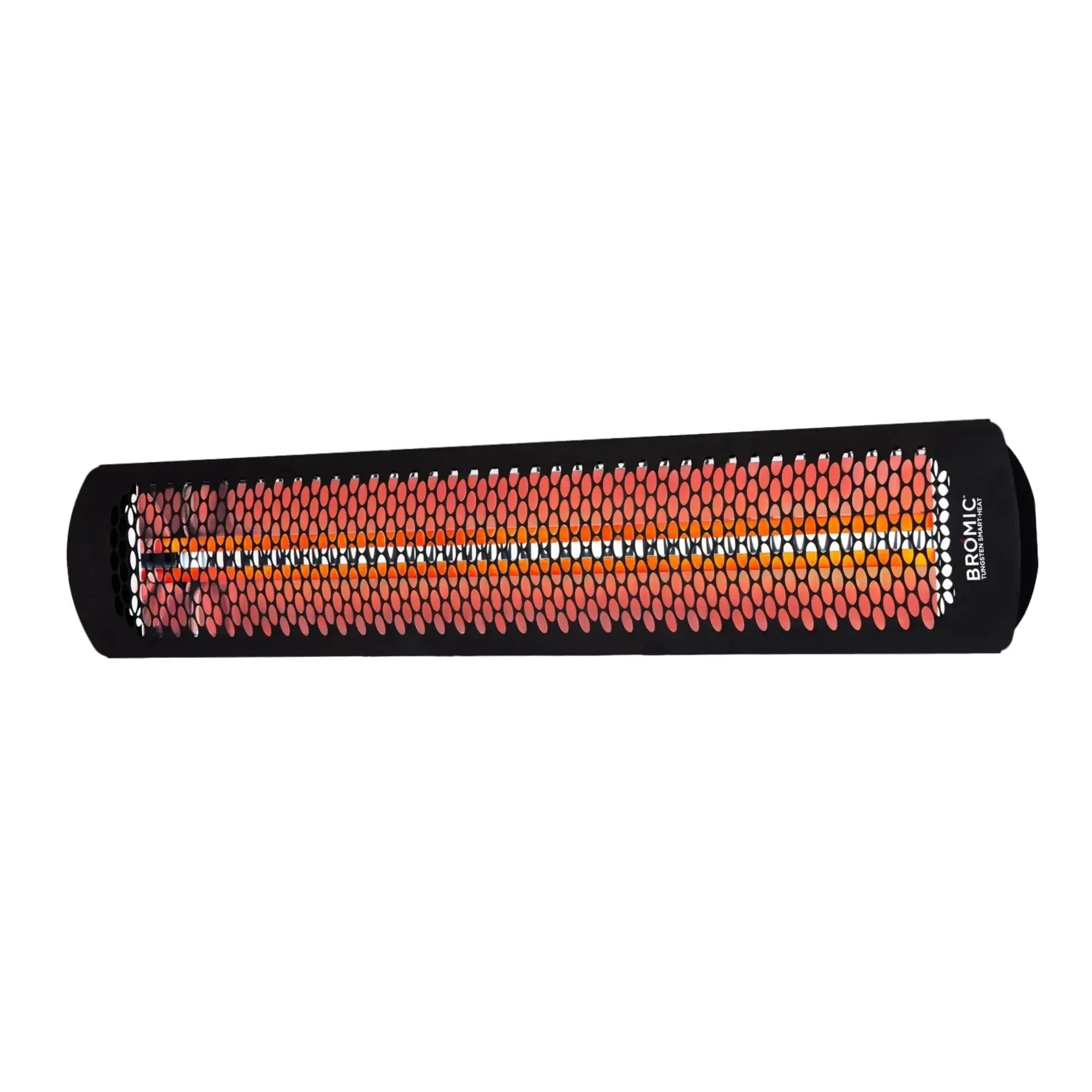
Different category — heat without flame. Tall, vertical units (the "mushroom" style or modern square towers) that throw heat downward over a 6–10 foot radius. No gathering element, just warmth. Run on natural gas, propane, or electric.
Best for: Restaurants, dining tables you want usable in shoulder seasons, covered patios where an open flame isn't safe. Not a substitute for a patio heater's atmosphere.
Fuel: gas vs. wood
Gas (natural gas or propane)
Push a button, fire starts. Push again, fire stops. No wood to buy, no smoke to manage, no cleanup. Heat output is consistent and adjustable.
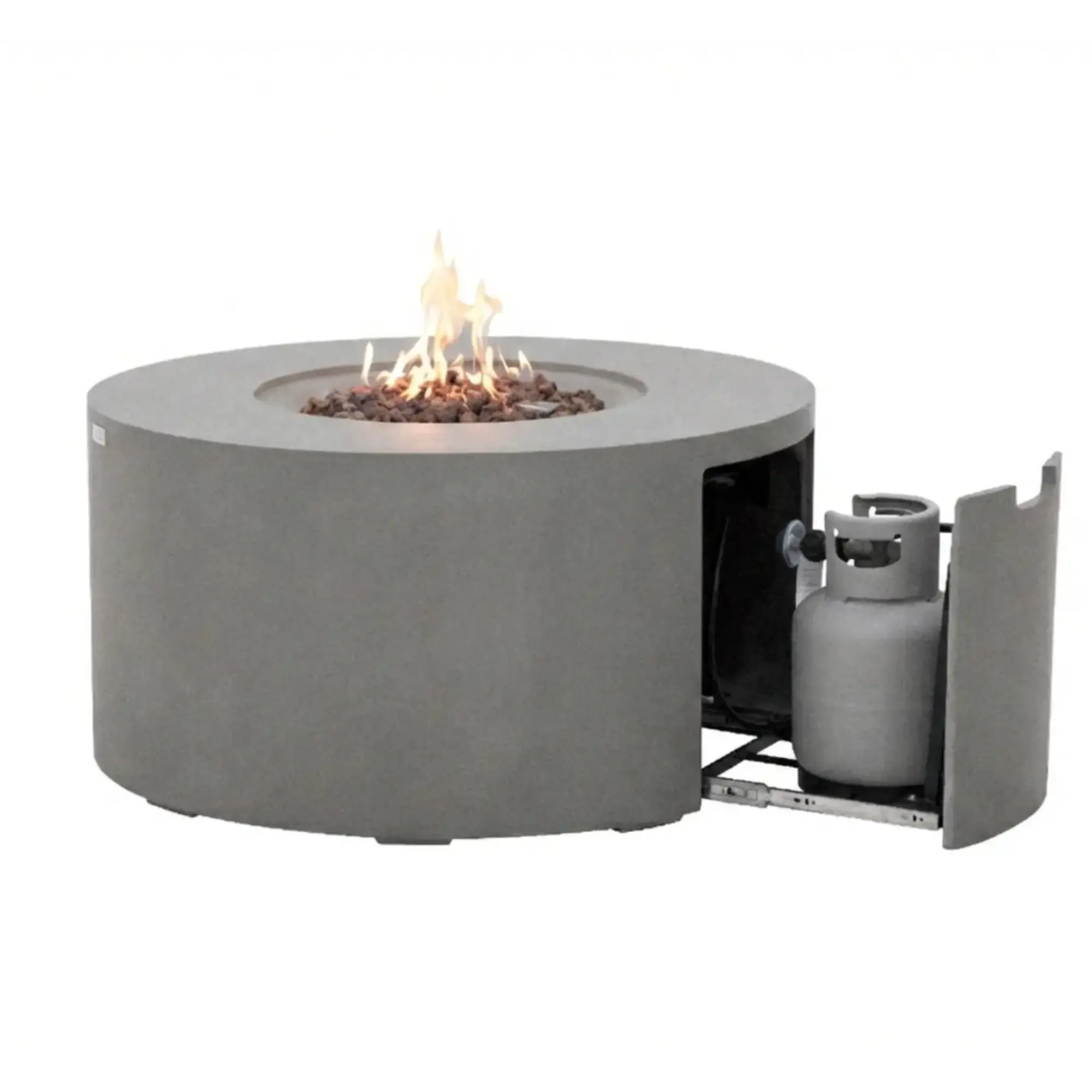
Natural gas requires a permanent line run from your house — one-time cost, but the fire feature stays put. Propane uses a 20lb tank hidden in the unit; portable but you'll swap tanks.
Almost every modern fire pit and fire pit table sold today is gas. There's a reason: it's just easier.
Wood-burning
Real fire. Pop, crackle, smoke, the smell. Higher peak heat than gas, no fuel line required, no monthly gas bill. The downside is everything wood takes — buying, storing, splitting, hauling, cleanup, and ash management. Local code in some neighborhoods restricts wood burning, especially in suburbs.
If you have a wooded property and you actually enjoy the ritual of building a fire, wood is the most rewarding choice. If you want fire on demand on a Tuesday night, get gas.
Sizing — how big do you need?

Fire pit and fire pit table sizing is mostly about how many people sit around it. A rough rule:
- Up to 36" diameter / square: 4 chairs comfortably
- 42–48": 6 chairs
- 54–60": 8+ chairs
- 72"+: Large gatherings, restaurant-style
You want at least 24 inches of clearance from the edge of the fire feature to the front of seating. Closer than that and feet get warm.
BTU output is the heat measurement. Gas fire pits typically run 40,000–80,000 BTU. The bigger the table, the more BTUs you want — a 60-inch table with a 40,000 BTU burner looks underpowered.
Materials and what holds up outside
- Concrete / GFRC (glass-fiber-reinforced concrete): Most popular for fire pit tables right now. Looks like stone, weighs less, doesn't crack as easily. Sealed surface handles weather well.
- Steel (powder-coated or Corten): Modern look, very durable. Corten weathers to a rust patina intentionally — some people love this, some hate it.
- Stone / granite: Heaviest, most permanent-looking. Effectively immovable once installed.
- Aluminum: Lightweight, won't rust, but feels less premium than concrete or steel.
- Avoid: Untreated wood near the firebox, painted finishes that aren't outdoor-rated, hollow plastic.
What to look for when shopping

- CSA or ETL certification. Not optional for gas fire features. Confirms the unit meets safety standards. Cheap units off Amazon often skip this.
- Stainless steel burner. The burner is the part that ages fastest. Stainless lasts; standard steel rusts.
- Hidden tank storage (if propane). Otherwise the tank lives next to the table and looks awful.
- Wind guard option. A glass shield around the flame stops wind from blowing it out and lets you keep the fire going on breezy nights.
- Cover included or available. UV destroys finishes. Plan to cover it when not in use.
Next step
Browse fire features, or get a recommendation from someone on our team.
Shop Fire & Heat Talk to a Specialist