
How to Select Exterior Wall Lighting
A front entry with the wrong wall light can make a well-designed home feel unfinished fast. Too small, and it disappears against the siding. Too bright, and it throws glare across the porch instead of making guests feel welcome. If you're figuring out how to select exterior wall lighting, the right answer usually comes from balancing three things at once - function, scale, and weather performance.
Exterior wall lighting is one of those categories where a quick visual pick often leads to regret. A fixture may look great in a product photo but feel undersized next to a garage door, cast light in the wrong direction, or wear poorly in coastal air. A better approach is to start with where the light will go and what you need it to do, then narrow the style from there.
How to select exterior wall lighting by location
The first question is not finish or shape. It is placement. A wall light at the front door does a different job than a light beside the garage, along a side path, or near an outdoor kitchen.

At the front entry, the goal is usually a mix of safety and curb appeal. You want enough light to clearly see the lock, the threshold, and a visitor's face without creating harsh shadows. If you have a single fixture next to the door, it needs to carry more of the visual weight. If you have room for a pair, you can often go slightly smaller on each fixture while getting a more balanced look.
Garage lighting typically needs broader coverage. These fixtures are often viewed from the street, so scale matters more than many homeowners expect. A fixture that looked substantial on a screen can look undersized when mounted next to a wide garage opening. For patios, grilling zones, and secondary doors, task visibility matters more. You may want a wall light that directs illumination downward where people are moving, cooking, or carrying items in and out.
This is where trade-offs show up. Decorative lantern-style fixtures can be perfect for an entry, but a more directional sconce may work better beside a service door or outdoor kitchen wall. Good lighting plans are rarely one-style-fits-all.
Get the size right before you choose the style
Scale is where a lot of exterior lighting decisions go off course. Homeowners often choose too small because they are worried a larger fixture will overwhelm the facade. In practice, slightly larger exterior wall lights usually look more intentional, especially on taller elevations and wider walls.

For a front door, a common rule is that the fixture should be about one-third to one-quarter the height of the door. If you're using two fixtures on either side, each one can be a bit smaller. For garage doors, many people use the door height as a reference point and choose fixtures around one-quarter to one-third of that height, depending on the wall space and architectural style.
Those rules help, but they are not absolute. A compact fixture can look right on a narrow side entry, while a large carriage light may suit a two-story foyer wall. What matters is visual proportion from the street and from up close. If the fixture looks like an afterthought in relation to the trim, columns, or garage mass, go up a size.
Match the fixture style to the home, not just the trend
A well-made light fixture should last years, so trend-chasing rarely pays off. The better move is to choose a style that supports the architecture already in place.
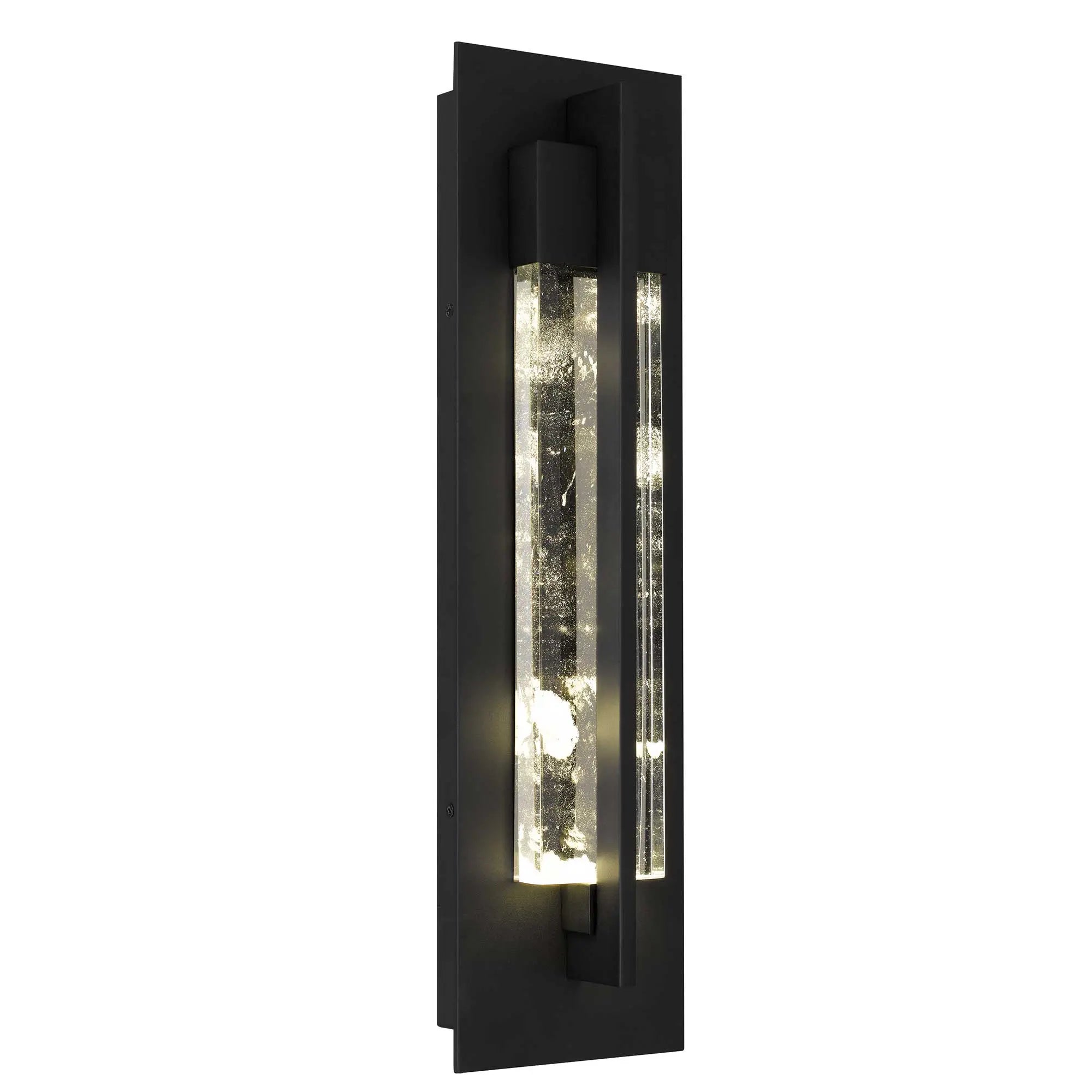
Traditional homes often work well with lanterns, carriage-style fixtures, and classic black, bronze, or copper finishes. Modern homes usually benefit from cleaner lines, simpler profiles, and finishes like matte black, natural brass, or textured metallics. Farmhouse and transitional exteriors can go either way, but consistency matters. If your exterior includes black window frames, simple railings, and minimal trim, an ornate scrollwork sconce will probably feel disconnected.

The glass matters too. Clear glass looks crisp and shows off the bulb, which can be great if you want a more open, updated look. The trade-off is that dust, pollen, and water spots show more easily. Seeded or frosted glass softens the light and can hide wear better, but it may also reduce sparkle and make the fixture feel a bit more traditional.
Brightness matters more than bulb count
When homeowners ask how to select exterior wall lighting, they often focus on the number of bulbs in the fixture. That is not the best measure of usable light. What matters is light output, beam direction, and how the fixture interacts with the surface around it.
For most entry applications, you want enough brightness to navigate safely and identify faces without flooding the porch. In many cases, moderate lumen output is enough, especially if the fixture is mounted at the correct height and paired with warm-color bulbs. Around garages and work zones, you may want more output, particularly where there is no overhead lighting.
Color temperature also changes the feel. Warm white light, often in the 2700K to 3000K range, tends to be the most welcoming for residential exteriors. Cooler light can appear stark on a home facade and may make outdoor living areas feel less comfortable at night. If the space is meant for entertaining, grilling, or relaxing, warmer light is usually the safer choice.
One caution: brighter is not always better. Excessive brightness can create glare, flatten architectural detail, and make it harder for eyes to adjust to darker parts of the yard.
Wet rating, materials, and finish are not minor details
Exterior lighting lives outside year-round, so material quality is part of the buying decision, not a small print detail. A fixture on a fully exposed wall needs to handle direct rain, temperature swings, and UV exposure. A fixture under a deep covered porch still needs exterior durability, but it may not need the same level of exposure protection.
Look closely at the rating. Wet-rated fixtures are built for direct exposure to rain and weather. Damp-rated fixtures are better suited for covered areas that are protected from direct water. Choosing the wrong rating can shorten the life of the fixture and create avoidable maintenance issues.
Material choice also matters based on climate. Coastal environments are harder on metal finishes, and some lower-grade fixtures will show corrosion quickly. Powder-coated aluminum, solid brass, copper, and other weather-resistant materials usually hold up better over time than thinner commodity metals. This is one reason premium fixtures often justify their price. They are not just selling a look. They are built for years of outdoor use.
Placement and mounting height make or break the result
Even a great fixture can perform poorly if it is mounted in the wrong spot. For front doors, wall lights are often centered around eye level, usually somewhere near 66 to 72 inches from the ground to the center of the fixture, depending on door height and surrounding trim. If the fixture is too high, the light can feel disconnected from the entry. Too low, and it may look awkward or throw light poorly.
For a single light beside the door, mount it on the same side as the handle when possible. That tends to improve visibility where people actually use the entry. For double fixtures flanking a doorway or garage, keep the heights consistent and check sightlines from the street as well as from the porch.
If the wall surface is stone, brick, or textured siding, think about how shadows will fall. Some fixtures create dramatic up-and-down patterns that look great on smooth surfaces but uneven on highly textured walls. It depends on the effect you want.
Think about the full outdoor space
The best exterior wall lighting choices do not happen in isolation. If you already have landscape lighting, post lights, step lights, or lighting around a patio or outdoor kitchen, your wall fixtures should support that plan instead of competing with it.

This is especially relevant for homeowners building more complete outdoor living spaces. A bright pair of garage sconces, a softly lit front entry, and warmer task lighting near a grill area can all work together, but only if they feel coordinated in finish, brightness, and design language. At All Season Patio, that kind of consistency matters because outdoor spaces tend to perform better when products are chosen as part of a whole environment, not as isolated upgrades.
A practical way to narrow your options
If you're stuck between several fixtures, narrow the decision in this order: exposure rating, size, light output, style, then finish. That keeps you from falling for a look that does not fit the wall, the weather, or the job.
It also helps to ask one simple question before buying: what would bother me more in a year - a fixture that feels slightly larger than expected, or one that looks too small and underperforms every night? In most cases, undersized and underpowered is the mistake people notice longer.
The right exterior wall light should look intentional in daylight and useful after dark. If it fits the architecture, holds up to the climate, and puts light where people actually need it, you are making a better investment than someone choosing on appearance alone. Give the fixture a real job to do, and the style choice usually gets easier from there.