Fire Pit Table Placement and Safety: Where to Put It (2026)
Put your fire pit table on a level, non-combustible surface with at least 10 feet of clearance from your house, exterior walls, fences, and any overhanging structure. Keep 3 feet of open space on every side for seating and foot traffic, and never run it under a low roof, a solid pergola cover, or tree branches that can trap heat and smoke. Concrete, pavers, and natural stone are the safest surfaces, while wood decks and grass need a bit more planning before you light the first flame.

Part of our Ultimate Fire Pit Table Buyer’s Guide.
Getting placement right is the single biggest safety decision you make with a gas fire pit table, and the rules are simple once you know them. Below we cover clearance from your home, which surfaces work, overhead and ventilation needs, wind, and how to keep kids and pets safe.
In this article
- How far should a fire pit table be from the house?
- What surfaces are safe for a fire pit table?
- How much overhead clearance and ventilation does a fire pit table need?
- How much space should you leave around a fire pit table?
- Does wind affect where you place a fire pit table?
- How do you keep kids and pets safe around a fire pit table?
- Frequently asked questions
How far should a fire pit table be from the house?
Keep your fire pit table at least 10 feet from your house, exterior walls, wood fences, and any other structure. This distance protects siding, windows, and railings from radiant heat and keeps stray embers or flare-ups away from anything combustible. Ten feet is the widely accepted minimum for residential setups, and many manufacturers and local codes ask for the same, in line with outdoor fire safety guidance from the U.S. Fire Administration. If your yard is tight, treat 10 feet as a floor, not a target, and give yourself more room whenever you can.
Gas fire pit tables run cleaner than wood, but they still throw real heat. Radiant warmth drops off quickly with distance, so those extra few feet make a noticeable difference for both comfort and safety. For a full breakdown of setbacks and local code language, see our guide on fire pit distance from the house.
What surfaces are safe for a fire pit table?
The best surface is a level, non-combustible one: poured concrete, concrete pavers, brick, or natural stone. These handle heat, will not catch a stray ember, and keep the table stable so it cannot rock or tip. A flat surface also matters for gas tables because a level burner keeps the flame even and the fuel flowing correctly.
Here is how the common patio surfaces compare.
| Surface | Safe to use? | What to keep in mind |
|---|---|---|
| Concrete or stone patio | Best choice | Level, non-combustible, and stable. Nothing extra needed. |
| Pavers or brick | Yes | Make sure they are level and settled so the table does not rock. |
| Wood or composite deck | With care | Use a heat-resistant mat or pad and confirm the deck can hold the weight. |
| Grass or dirt | Not ideal | Uneven and unstable. Set pavers underneath to create a firm, level base. |
On a wood or composite deck, add a heat-resistant mat or a set of pavers under the table to shield the boards from radiant heat and any drips. On grass or dirt, lay down pavers or a stone pad first so the table sits level and will not sink or wobble as the ground shifts.

How much overhead clearance and ventilation does a fire pit table need?
A fire pit table needs open sky above it. Plan for a minimum of 10 feet of vertical clearance and keep it clear of low roof lines, solid pergola tops, awnings, umbrellas, and overhanging branches. Anything that traps rising heat becomes a fire risk, and gas tables also produce combustion byproducts that need to disperse into open air.
This is why a fire pit table should never run indoors, in a garage, or in any enclosed space. If your only spot is under a covered structure, you need real ventilation and generous overhead room, not a solid ceiling a few feet above the flame.
How much space should you leave around a fire pit table?
Leave at least 3 feet of clear space on every side of the table before you place chairs, sofas, or side tables. That gap gives people a safe path to walk, keeps cushions and clothing away from the flame, and leaves room to step back quickly if anything flares. For seating comfort, most people land about 2 to 3 feet from the table edge, close enough for warmth without crowding the fire.
Keep railings, privacy screens, string light poles, and planters out of that clear zone too. A common mistake is tucking a fire pit table into a corner against two railings, which traps heat and removes an escape path. Give the table breathing room on all sides and your patio will feel safer and more usable.

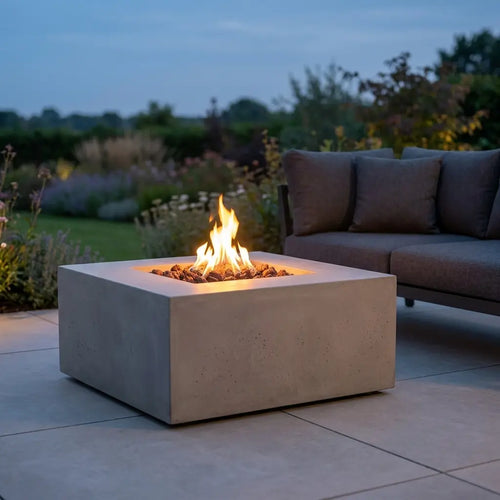
A stable, chat-height gas table that fits neatly into an open patio layout with room to spare.
Does wind affect where you place a fire pit table?
Yes. Wind can push flames sideways, scatter heat toward furniture, and blow out or destabilize the burner on a gas table. Place your table where a wall, hedge, or fence sits far enough away to break strong gusts but still keeps your clearances, ideally 10 feet or more from that windbreak. Avoid narrow gaps between structures where wind funnels and speeds up.
If your patio is exposed, a purpose-made wind guard that sits on the burner can help keep the flame steady without moving the table off its safe surface. On very windy days, the safest choice is simply to keep the table off. A round table with a lower profile can also handle breezy spots well, and a design with a hidden propane tank keeps the footprint clean and easy to position.

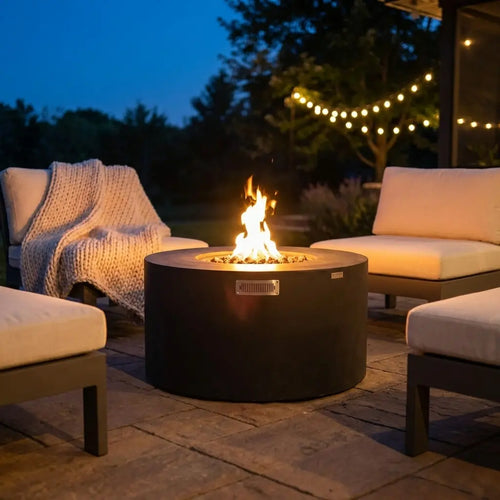
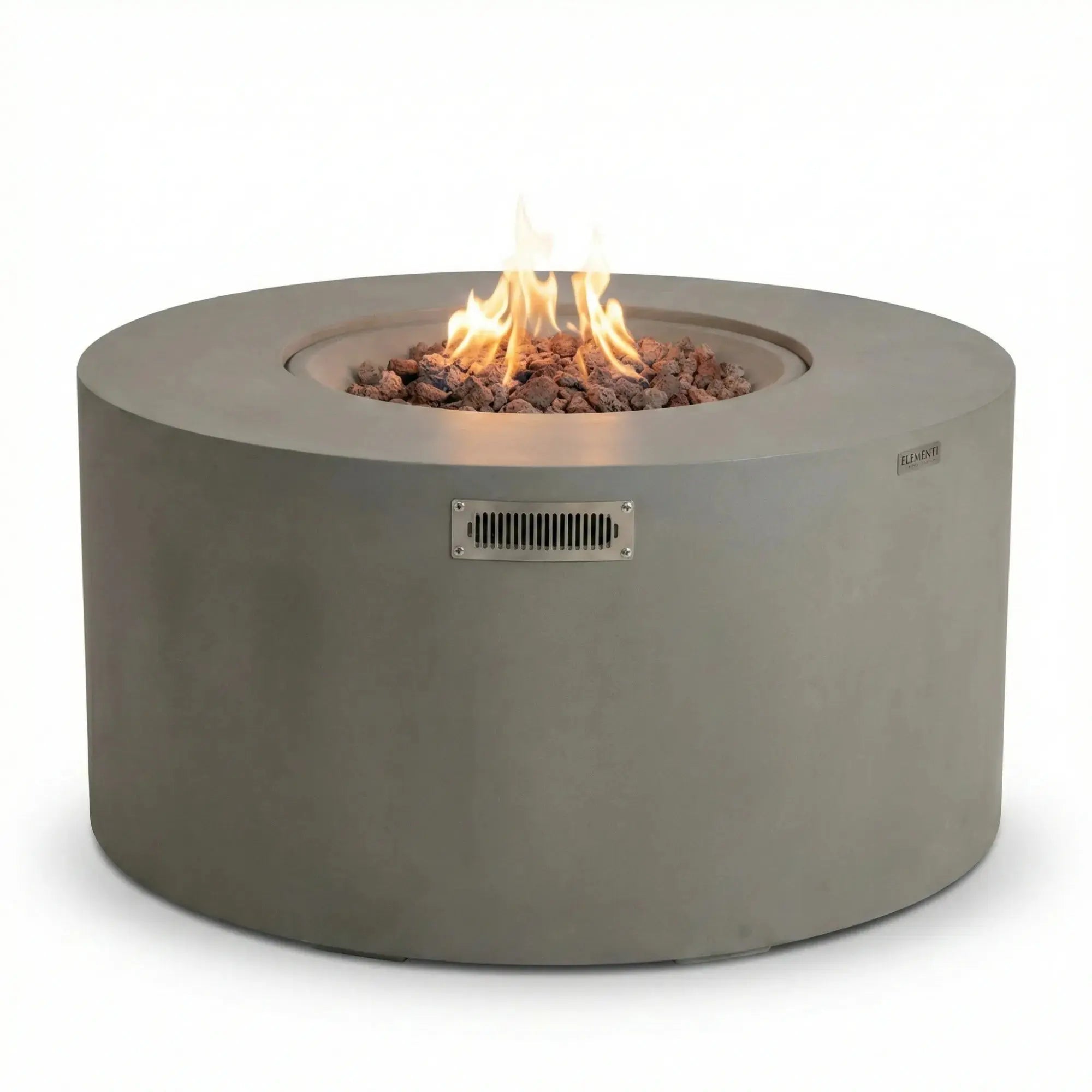
A compact round concrete table with a hidden propane tank, easy to center in an open space.
How do you keep kids and pets safe around a fire pit table?
Set a clear no-go zone of about 3 feet around the lit table and treat it as a rule everyone knows. The tabletop and surround stay hot after the flame is out, so never let a child or pet touch the surface until it has fully cooled. An adult should stay within arm’s reach whenever the table is on, and the burner controls should be turned fully off and, if possible, locked or shut at the fuel source when the fire is done.
A chat-height or dining-height table keeps the flame higher and less accessible than a low coffee-table style, which helps with small children and curious pets. Store lighters and matches out of reach, and keep the seating arranged so no one has to step over or lean across the fire to sit down.

Frequently asked questions
Can a fire pit table go on a wood deck?
Yes, with care. Place a heat-resistant mat or a set of pavers under the table to protect the boards from radiant heat, keep the usual 10 feet of clearance from walls and railings, and confirm your deck can support the table’s weight, especially models with a stone or concrete top.
How far should a fire pit table be from a fence or wall?
Keep at least 10 feet between the table and any fence, wall, or structure. Wood fences and siding are combustible and vulnerable to radiant heat, so more distance is always better if your space allows it.
Can you put a fire pit table under a covered patio or pergola?
Only if there is generous overhead clearance and real open-air ventilation. A solid roof, low pergola cover, or awning traps heat and combustion byproducts, so an open-sky location is far safer. When in doubt, place the table in the open.
What is the best surface for a fire pit table?
A level, non-combustible surface such as concrete, pavers, brick, or natural stone. These are stable and fireproof. On grass or a wood deck, add pavers or a heat-resistant pad to create a firm, protected base.
How much clearance does a fire pit table need on the sides?
Leave at least 3 feet of clear space on every side before placing furniture, with seating about 2 to 3 feet from the table edge. This keeps a safe walking path and a quick way to step back if the flame flares.
Related: Using a Fire Pit Table Under a Covered Patio.
Ready to set up your fire the right way?
Browse gas fire pit tables built for safe, easy placement on any patio.
Shop fire pit tables →