How Far Should a Fire Pit Be From a House? Safe Distances & Rules
A fire pit should sit at least 10 feet from your house and any other structure or combustible material. For wood-burning fire pits, which throw sparks and embers, give yourself more room: aim for 15 to 25 feet. Always keep at least 10 feet of overhead clearance below branches, pergolas, and awnings, and check your local fire code, since some areas require greater setbacks. Below are the exact distances for houses, fences, trees, and seating, plus how gas and wood-burning pits differ and how to stay safe in wind.
In this article
- How far a fire pit should be from a house
- Does fire pit type change the distance
- Fences, trees, and property lines
- Clearance for seating
- The safest surface
- Wind and weather
- Permits and codes
- Frequently asked questions

How far should a fire pit be from a house?
Ten feet is the widely recognized minimum. The National Fire Protection Association (NFPA) suggests keeping a fire pit at least 10 feet from anything that can burn. Building codes go further for larger open fires: under the International Fire Code, recreational fires must be at least 25 feet from a structure and portable outdoor fireplaces at least 15 feet. Distances vary by jurisdiction, but most fall within this range:
| Structure or hazard | Minimum distance |
|---|---|
| Main house (gas fire pit) | 10 feet |
| Main house (wood-burning) | 15 to 25 feet |
| Fences and property lines | 10 to 15 feet |
| Overhanging branches (overhead) | 10 feet of clearance |
| Dry grass, shrubs, mulch | 10 feet |
| Sheds, garages, other structures | Follow local code |

When in doubt, more distance is always safer. The numbers above are minimums, not targets. A few code reminders before you dig in: check your city or county fire code first, watch for seasonal burn bans and red-flag days, follow any HOA setback rules, and remember that permanent or gas-line installs may need a permit.
Does fire pit type change how far it should be?
Yes, and it is the single biggest factor. A gas fire pit produces a clean, controlled flame with no flying embers, so a 10-foot setback is usually enough. A wood-burning fire pit pops, sparks, and sends embers into the air, so it needs the wider 15 to 25 foot buffer and a spark screen. If your yard is compact, a gas fire table is often the only way to stay code-compliant without giving up your whole patio.


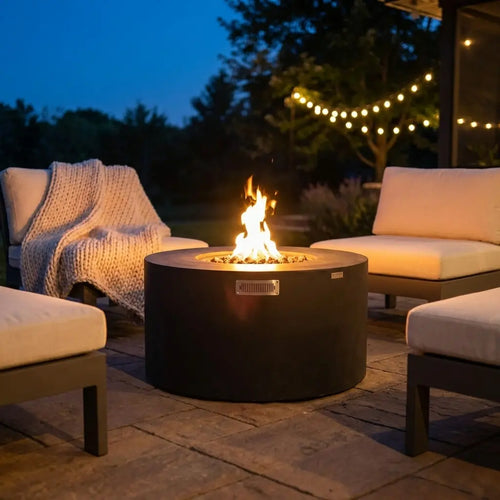
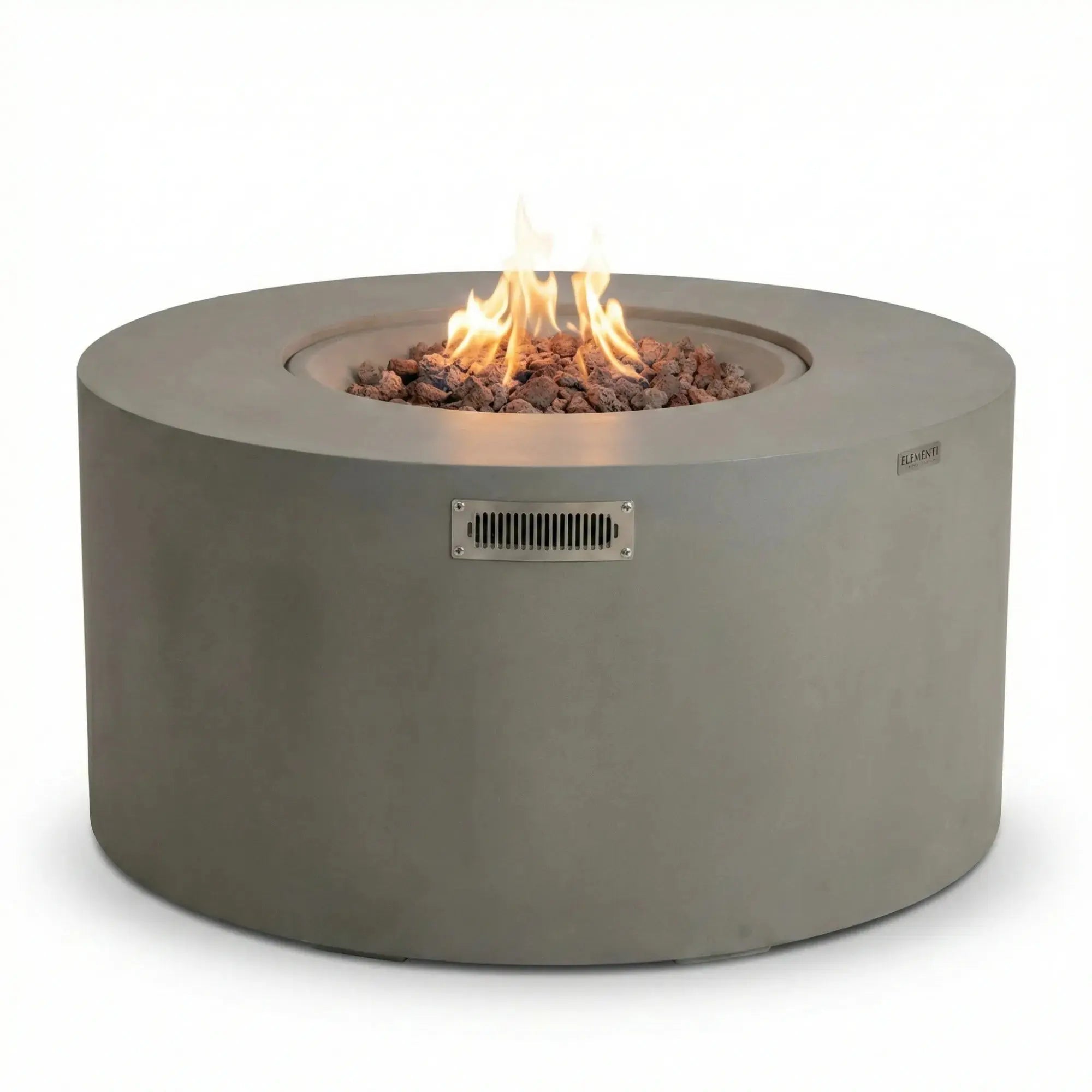
A controlled, ember-free flame in a 36-inch footprint, ideal for smaller patios where a 10-foot setback is easier to hit.
How far should a fire pit be from a fence, trees, and property lines?
The same 10-foot rule is a safe baseline for fences and property lines, and 10 to 15 feet is better if the fence is wood or vinyl. Vegetation deserves extra care:
- Fences: keep 10 to 15 feet, especially from wood or vinyl, which melts and ignites faster than metal or masonry.
- Trees and shrubs: maintain at least 10 feet of clearance to the sides and overhead. Trim back branches that hang over the pit.
- Property lines: many codes require a setback here too, and it keeps smoke and heat off your neighbors.
- Dry grass and mulch: these catch quickly, so keep a 10-foot gap or place the pit on a non-combustible pad.
How much room do you need around a fire pit for seating?
Plan for a clear, comfortable zone so people are near the warmth but never in the danger zone. A good rule is to leave at least 3 feet of open space between the fire pit edge and any chair, and 5 to 7 feet from the center of the flame to the seating. That gives room to walk behind chairs, pull back from the heat, and exit quickly if needed. For a typical round pit, a total seating diameter of about 12 to 16 feet works well.
What is the safest surface for a fire pit?
A fire pit should always sit on a level, non-combustible surface such as gravel, stone, pavers, or concrete. Never place one directly on a wood deck, dry grass, or any surface that can burn or warp. If you only have a deck or patio, add a fire-resistant pad or heat shield underneath, and confirm the manufacturer approves that setup. A stable, non-combustible base also keeps the pit from tipping.


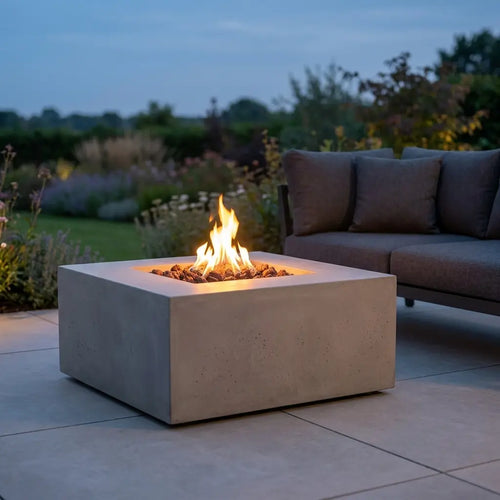
Handcrafted glass-fiber concrete that doubles as its own non-combustible base, a stable, code-friendly centerpiece for patio or paver areas.
How do wind and weather affect fire pit safety?
Wind is the fastest way for a controlled fire to become a spreading one. Avoid using your fire pit when wind speeds top 10 to 15 mph, since gusts can carry embers well beyond your safe zone. A few habits keep things calm:
- Position the pit in a wind-sheltered spot, out of open, gusty corridors.
- Use a spark screen on wood-burning pits and a wind guard on gas flames.
- Keep a hose, sand bucket, or fire extinguisher within arm's reach.
- Skip the fire on very dry, windy, or red-flag days.


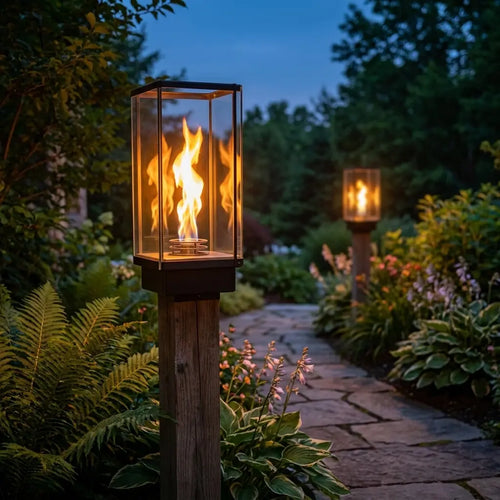
A tempered glass guard that steadies the flame on breezy nights and keeps heat where you want it.
Do you need a permit for a backyard fire pit?
It depends on where you live and what you are installing. Portable, store-bought fire pits and fire tables usually do not need a permit, but they still have to meet local distance and burn rules. Permanent, built-in fire features, or anything tied into a natural gas line, often do require a permit and inspection. Before you build or buy, call your local fire department or building office, and check any HOA guidelines. It is a five-minute call that can save a fine or a failed inspection.
Fire pit safety checklist
- Keep the pit 10 feet from structures (15 to 25 feet for wood-burning).
- Maintain 10 feet of overhead and side clearance from branches and structures.
- Place it on level, non-combustible ground.
- Never leave a fire unattended, and keep kids and pets at a safe distance.
- Keep water or an extinguisher nearby every time you light it.
- Fully extinguish the fire, and for wood pits, soak and stir the ashes before you leave.
- Dispose of cooled ashes in a metal container, never in with regular trash.
- Inspect the pit each season for rust, cracks, or gas leaks.
Frequently asked questions
How far does a fire pit need to be from the house?
At least 10 feet from the house and any structure for a gas fire pit, and 15 to 25 feet for a wood-burning pit. Local codes can require more, so confirm with your fire department before installing.
Can a fire pit be too close to the house?
Yes. Anything closer than 10 feet risks heat damage to siding, embers reaching the roof or gutters, and code violations. Vinyl siding in particular can warp or melt from radiant heat well before flames ever reach it.
How far should a gas fire pit be from the house?
Around 10 feet is the standard minimum for gas fire pits and fire tables, because the flame is contained and produces no flying embers. Always follow the manufacturer's clearance rating and your local code.
How far should a fire pit be from a fence?
Keep 10 to 15 feet, and lean toward the larger number for wood or vinyl fences, which ignite or melt faster than metal or masonry.
How far should you sit from a fire pit?
Leave at least 3 feet between the pit edge and your chair, or roughly 5 to 7 feet from the center of the flame. That keeps you comfortable in the warmth while leaving room to move back and exit safely.
How do you put out a fire pit safely?
For gas, simply turn off the fuel supply. For wood, let the fire burn down, then douse it with water, stir the ashes, and douse again until there is no heat, steam, or hiss. Never leave until the ashes are cold to the touch.
Ready to create your perfect patio?
Explore our full range of fire pits, from clean-burning gas fire tables to classic wood-burning pits. Designed for beauty, built for safety.
Shop fire pits →Keep reading: how to choose the right fire pit, the gas fire pit table buyer's guide, and the safest surfaces for a fire pit or fire table.