
How to Choose Your Grill
Gas or charcoal? Built-in or freestanding? This is the honest, no-nonsense rundown of what actually matters when you're buying a grill — so you end up with the one that fits how you actually cook, not what a salesperson says you should want.
Start With How You'll Use It
Before you even look at specs, answer three questions:
- How often will you grill? Weekly? Daily? A few times a year?
- How many people do you typically cook for? A family of four needs a very different grill than someone hosting 20-person backyard parties.
- Do you cook, or do you BBQ? Burgers and steaks are "cooking" — low-and-slow ribs and briskets are "BBQ." Different tools for different jobs.
Everything that follows flows from these answers.
Fuel Type: The First Real Decision
Gas (Natural Gas or Propane)
Gas is the default for a reason. It lights in seconds, heats up fast, and lets you dial in the temperature without babysitting. If you want to grill on a Tuesday night after work without planning ahead, get gas.
Natural gas hooks directly into your home's gas line — no refilling tanks, cheaper per BTU, but it requires a gas line to the grill location. Propane is portable and works anywhere, but you'll run out mid-cook at some point.
Charcoal
Charcoal grills run hotter and deliver real smoke flavor gas can't match. They're cheaper to buy, but they take 20-30 minutes to get going, they're messier, and temperature control takes practice. If flavor matters more than convenience, charcoal wins.
Pellet
Pellet grills are the modern compromise — wood-fired flavor with electronic temperature control. You load wood pellets into a hopper, set a temperature on a digital display, and the grill maintains it. Great for smoking, roasts, and low-and-slow. Not ideal for high-heat searing (though newer models are getting better at this).
Wood (and hybrid wood/charcoal)
Brands like Arteflame run on pure wood or a wood/charcoal mix. Maximum flavor, maximum effort. These are for people who see grilling as a ritual, not a weeknight chore.
Built-In or Freestanding?
Freestanding
A grill on legs or a cart. You can move it, take it with you when you move houses, and it doesn't require any construction. Most people should buy freestanding.
Built-In
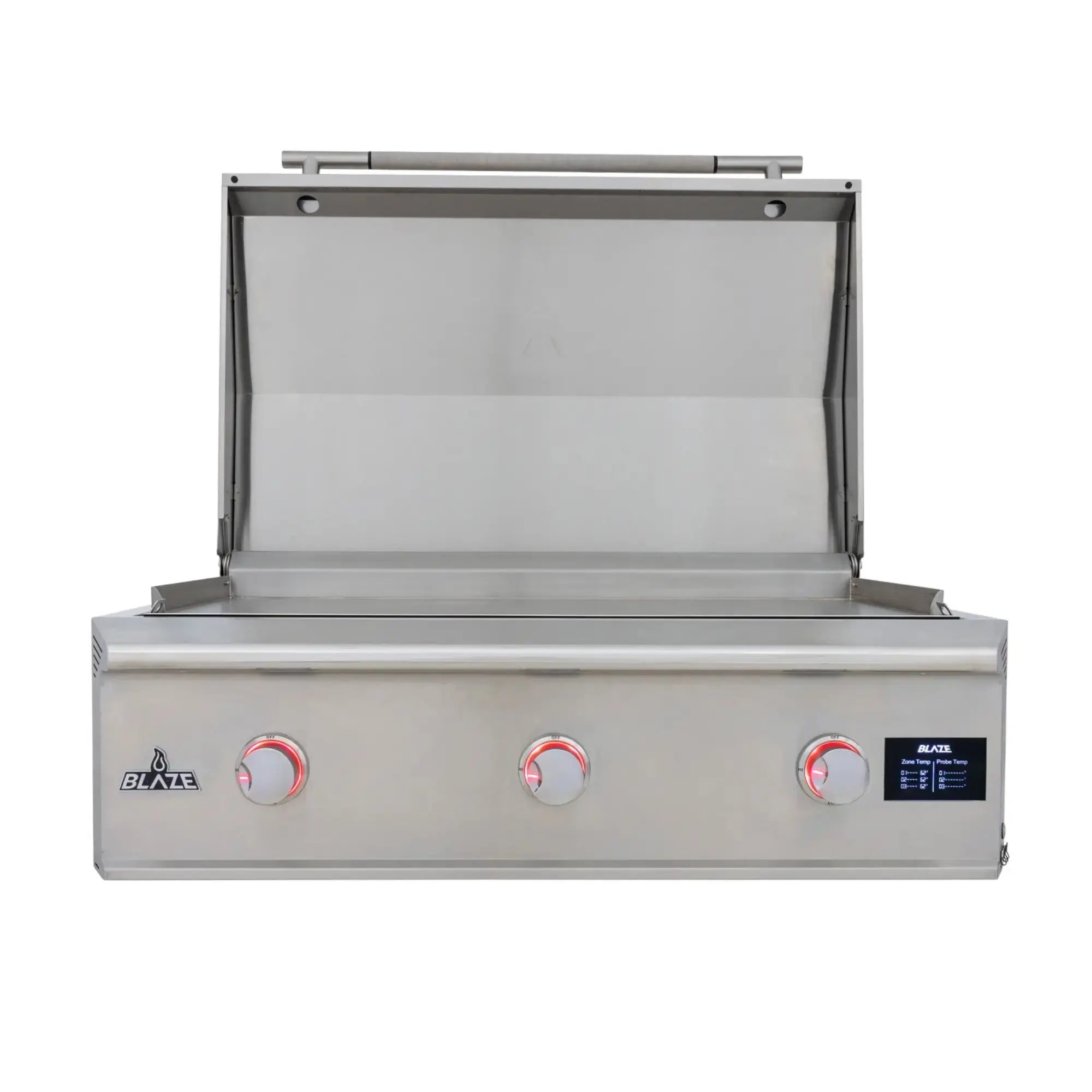
Designed to drop into an outdoor kitchen island — either one you have built, or a prefab island. Built-ins are a commitment: they assume you're creating a permanent outdoor cooking space, often with a sink, storage, a side burner, and refrigeration alongside.
Built-ins generally look more polished and integrate with other components, but you'll spend meaningfully more on the grill itself plus the island or construction around it. Budget accordingly.
Size & Burner Count
Cooking surface is what actually matters — not burner count. A 32-inch grill with three burners might give you more usable space than a 30-inch grill with four crammed-together burners.
| Household | Typical Size | Burner Count |
|---|---|---|
| 1–2 people | 24–28 inches | 2–3 |
| 3–5 people | 30–36 inches | 3–4 |
| 6+ / frequent hosts | 40+ inches | 4–6 |
Bigger isn't always better. A 42-inch grill for a family of three means you're heating empty real estate every time you cook — which costs more fuel and delivers worse results because the heat disperses.
Materials Matter More Than Marketing
"Stainless steel" ranges from flimsy rolled sheet metal to heavy-duty 304-grade. The grade matters because it determines rust resistance and how long the grill will last outdoors.
- 304 stainless steel: Best grade for outdoor grills. Resists corrosion, handles high heat, holds up for years.
- Marine-grade 316 stainless steel: Even more corrosion-resistant. Worth it if you live near the ocean.
- Cast aluminum: Lighter, rust-proof, distributes heat well. Common in higher-end freestanding grills.
- Generic "stainless": Assume it's 430-grade (lower nickel content). Cheaper, but will develop surface rust over time.
If you want 304 stainless construction without paying premium-tier prices, Sizzler grills by Summerset use the same 304 stainless as Summerset's higher-end TRL and Alturi lines at a more accessible price.
Features Worth Paying For
- Infrared burner: Delivers intense, direct heat — makes steaks taste like they came off a steakhouse broiler.
- Rotisserie kit: If you love whole chickens or pork loins, worth every dollar.
- Lighting: Interior lights and control-knob lighting make a real difference for evening cooking.
- Heavy-duty grates: Cast iron or thick stainless rod grates hold heat better and produce better sear marks than thin wire grates.
- Wi-Fi / app control: Gimmicky on gas grills, genuinely useful on pellet grills where you're managing long cooks.
Features That Are Usually Not Worth It
- Smoker boxes built into gas grills: They produce minimal smoke flavor. If you want to smoke, buy a smoker or pellet grill.
- Extreme BTU numbers: Raw BTU output doesn't equal better grilling. Efficient heat distribution matters more than total output.
- Touchscreen control panels on basic gas grills: Analog knobs work better and last longer outdoors.
Budget Expectations
Here's what honest price ranges look like in 2026:
- $400–$900: Entry-level freestanding gas grills. Fine for occasional use. Expect to replace in 5–7 years.
- $1,000–$2,500: Mid-tier freestanding and entry-level built-ins. Solid stainless construction, better grates, longer life.
- $2,500–$6,000: Premium built-ins and high-end freestanding. Marine-grade stainless, infrared options, serious warranties.
- $6,000+: Professional-grade (Hestan, top-tier Blaze, custom builds). Restaurant-quality, lifetime build.
Still Not Sure?
Tell us how you cook and where you'll put it — we'll narrow down 3 options worth considering.
Talk to a Specialist →The Bottom Line
The best grill is the one you'll actually use. If convenience keeps you from firing it up, get a gas grill. If flavor is the whole point, get charcoal or wood. Pick a size that matches your household, invest in real materials, and skip the gimmicky features. Everything else is preference.