How to Clean and Maintain a Fire Pit Table (2026)
To clean a fire pit table, shut off the gas and let the table cool completely, then wipe the tabletop and burner pan with a soft cloth dipped in mild dish soap and warm water. Rinse the fire glass or lava rock separately, dry every surface fully, and fit a breathable cover before you walk away. A quick wipe after each burn plus a deeper clean two to three times a season keeps the finish, the burner, and the flame looking new for years.

Part of our Ultimate Fire Pit Table Buyer's Guide.
A fire pit table lives outside through rain, pollen, ash, and grease from the flame, so grime builds up faster than most people expect. The good news: cleaning is simple once you know which cloth, cleaner, and routine each material likes. Below is the full routine, a quick by material table, and the burner care that keeps your flame even and bright.
In this article
- What do you need to clean a fire pit table?
- How do you clean a fire pit table step by step?
- How do you clean each material?
- How do you care for the burner, fire glass, and lava rock?
- What cleaners should you avoid on a fire pit table?
- How should you store and cover a fire pit table in the off season?
- Frequently asked questions
What do you need to clean a fire pit table?
You do not need special chemicals. A short list covers almost every job:
- Two soft microfiber cloths, one for washing and one for drying
- Mild dish soap and a bucket of warm water
- A soft bristle brush or old toothbrush for the burner ports
- A garden hose or spray bottle for rinsing media
- A dry towel or colander to drain fire glass and lava rock
- A breathable, fitted cover for storage
Keep the harsh stuff in the garage. Abrasive pads, bleach, and solvent cleaners do more harm than the dirt they remove, which we cover further down.
How do you clean a fire pit table step by step?
Work through these steps in order and the whole job takes about fifteen minutes:
- Turn off the fuel and let it cool. Shut the propane tank valve or the natural gas line, then wait until the table is cool to the touch. Never clean around a warm burner.
- Remove the media. Scoop the fire glass or lava rock into a bucket or colander. Set the burner grate aside if it lifts out.
- Wipe the tabletop. Dip a cloth in warm soapy water, wring it out, and wipe the surround and rim. Work in the direction of any grain or texture.
- Clean the burner pan. Lift out loose ash and debris, then wipe the pan. Use the soft brush to clear any clogged burner ports so gas flows evenly.
- Rinse the media. Hose off fire glass or lava rock in a colander and let it drain. Skip soap here so nothing coats the stones.
- Dry everything. Buff the table dry with a clean cloth and let the media air dry fully before it goes back in. Trapped water can pop and spit when you next light up.
- Reassemble and cover. Return the media in an even layer, confirm the flame lights cleanly, then fit the cover once the table is cold and dry.

How do you clean each material?
The surround is where finishes differ most. Match your cleaner to the material and you will never dull or stain the surface. If you are still choosing a table, our guide to concrete vs steel vs copper fire pit tables breaks down how each one wears over time.
| Material | How to clean it | What to avoid |
|---|---|---|
| Concrete and GFRC | Mild soap and water, soft cloth. Reseal once a year to protect against stains. | Acidic cleaners, pressure washers, wire brushes |
| Steel and powder coat | Soapy water, then dry fully. Touch up chips with matching paint to stop rust. | Abrasive pads, leaving water to sit |
| Copper | Warm soapy water. Let the natural patina develop, or polish for shine. | Harsh metal polishes on aged patina |
| Marble and porcelain | pH neutral cleaner and a soft cloth. Wipe spills quickly. | Vinegar, citrus, and other acids that etch stone |
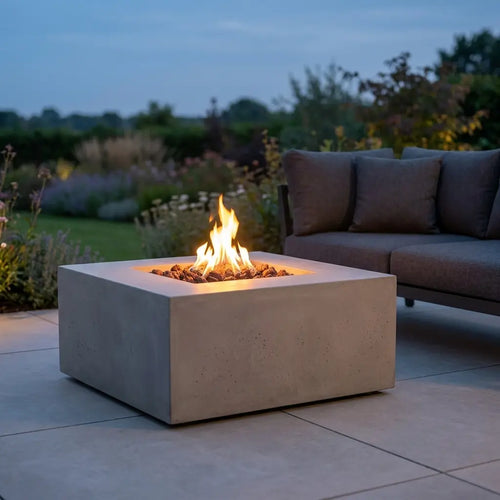
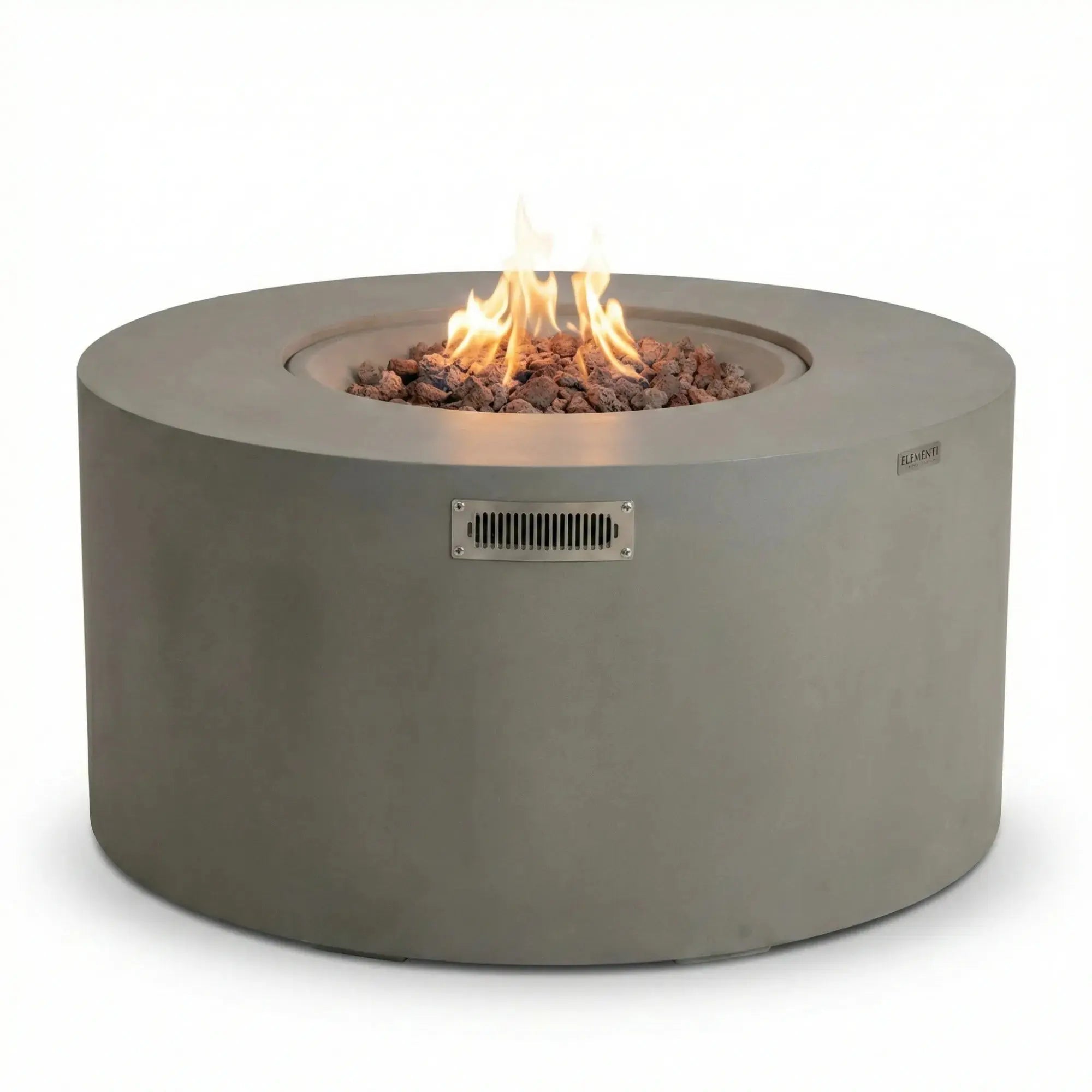
A sealed concrete table like the one below is one of the easiest surfaces to live with, since the finish resists staining and only asks for a wipe and a yearly reseal.

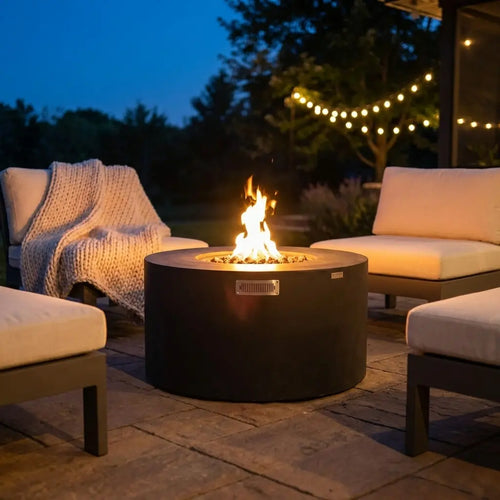
A chat height table with a sealed burner and an easy wipe down top that shrugs off a full season outdoors.
How do you care for the burner, fire glass, and lava rock?
The burner and media do the visible work, so a little attention here pays off in a cleaner, taller flame. Clear ash from the burner pan each time you deep clean, and run a soft brush across the ports so gas flows freely. If the flame looks low or uneven, a clogged port is usually the cause.
Fire glass rinses clean with plain water and lasts for years. Lava rock is more porous, traps soot faster, and eventually breaks down, so plan to replace it every couple of seasons. Not sure which suits you, our comparison of fire glass vs lava rock covers looks, heat, and upkeep side by side. Whichever you use, spread the media in an even layer and never bury the burner ports.
What cleaners should you avoid on a fire pit table?
The wrong product can permanently mark a finish. Keep these away from your table:
- Bleach and ammonia: they discolor powder coat and dull concrete sealers.
- Acidic cleaners, vinegar, and citrus: they etch marble, porcelain, and natural stone.
- Abrasive pads and wire brushes: they scratch every surface and strip protective coatings.
- Pressure washers: the force can crack GFRC edges and drive water into the burner.
- Solvent degreasers: they can soften sealers and leave a residue near the flame.
When in doubt, mild dish soap and water handle almost everything safely.

Sealed GFRC concrete with a hidden propane tank, so seasonal cleanup is a quick rinse and a wipe.
How should you store and cover a fire pit table in the off season?
Storage is where a table either lasts a decade or fades in two years. Give it a full deep clean first, then follow these steps before the cold sets in:
- Disconnect and store the propane tank outdoors, upright, and away from the table. Never store propane indoors.
- Cover the burner opening with the supplied lid or plug so water and pests stay out.
- Fit a breathable, fitted cover only after letting fire features cool fully (U.S. Fire Administration), once the table is completely cold and dry.
- If you can, move the table under a covered patio or into a shed for the harshest months.
- For heavy climates, elevate the feet slightly so the base is not sitting in standing water or ice.

Trapped moisture is the real enemy in winter, so a snug cover plus good drainage beats an unprotected table every time. For the full picture on buying, sizing, and long term care, keep our Ultimate Fire Pit Table Buyer's Guide handy.
Frequently asked questions
How often should I clean my fire pit table?
Wipe the top after each use to remove ash and soot, and do a full deep clean, including the burner and media, two to three times per season or whenever the flame looks uneven.
Can I leave water in the burner pan?
No. Standing water can rust steel components and will pop and spit when you light the burner. Always dry the pan and let rinsed media air dry fully before reassembly.
Do I need to reseal a concrete fire pit table?
Yes, once a year is a good rule. A fresh coat of concrete sealer protects GFRC against stains, moisture, and freeze thaw cycles, which keeps the surface looking new for far longer.
How do I stop my copper fire table from tarnishing?
You do not have to. Many owners let copper develop a natural patina. If you prefer the bright look, polish it a few times a season with a copper safe polish and dry it after every rain.
Is it safe to use a pressure washer on a fire pit table?
No. The high pressure can crack concrete edges, strip powder coat, and force water into the burner and gas lines. Stick to a cloth, mild soap, and a gentle hose rinse for the media.
Related: Can You Leave a Fire Pit Table Outside Year-Round.
Ready for an easy care fire table?
Browse sealed concrete, steel, and copper tables built to wipe clean and last for years.
Shop fire pit tables →