Electric vs Infrared Saunas: Which Is Right for You?
The difference comes down to how they heat you. A traditional electric sauna warms the air with a heater and rocks, reaching about 150 to 195°F with the option of steam, for that classic, enveloping deep heat. An infrared sauna uses infrared panels to warm your body directly at a gentler 110 to 140°F, with no steam. Choose a traditional electric sauna if you want the authentic, high-heat, steamy Finnish experience, and choose infrared if you prefer lower temperatures and a milder session. Here is the full comparison.
In this article
- What is the difference between electric and infrared saunas?
- Temperature and how the heat feels
- Electric vs infrared: side by side
- What about the health benefits?
- Which sauna should you choose?
- Our traditional electric saunas
- Frequently asked questions

What is the difference between electric and infrared saunas?
A traditional electric sauna, the classic Finnish style, uses an electric heater topped with sauna stones to heat the air inside the room. You can pour water over the hot stones to release a burst of steam, known as löyly, for a humid, enveloping heat. An infrared sauna works differently: instead of heating the air, infrared panels emit gentle radiant heat that warms your body directly, so the air around you stays much cooler and there is no steam.
Neither is simply better. They are two different experiences. One is the hot, steamy, traditional sauna that has been used for centuries; the other is a milder, lower-temperature session some people find easier to sit through.
Temperature and how the heat feels
This is where the two really separate. A traditional electric sauna runs hot, usually 150 to 195°F, and the heat feels intense and immersive, especially once you add steam. An infrared sauna stays around 110 to 140°F, and the heat feels gentler and more radiant, which makes longer sessions easier for people who find high heat uncomfortable. If you love that deep, sweat-it-out heat and the ritual of steam, traditional wins. If you want something milder, infrared appeals.
Electric vs infrared: side by side
| Factor | Traditional electric | Infrared |
|---|---|---|
| Heat source | Heater and stones warm the air | Panels warm the body directly |
| Temperature | 150 to 195°F | 110 to 140°F |
| Steam (löyly) | Yes, water over the stones | No |
| Heat-up time | About 30 to 45 minutes | About 10 to 15 minutes |
| The experience | Intense, social, authentic | Gentle, mild, dry |
| Best for | Traditional heat and steam, cold climates | Lower-heat preference, quick warm-up |
What about the health benefits?
Both styles share the core appeal of heat bathing: relaxation, easing tired muscles, and supporting recovery after exercise. Traditional saunas reach higher temperatures and are the type behind much of the long-running research on regular sauna use, while infrared appeals to people who want similar relaxation at a lower, more tolerable temperature. Whichever you choose, listen to your body, stay hydrated, and check with your doctor first if you have a heart condition, are pregnant, or have other health concerns.

Which sauna should you choose?
- Choose a traditional electric sauna if you want the authentic, high-heat experience with steam, you enjoy the social ritual, or you live in a cold climate where powerful heat matters.
- Choose an infrared sauna if you prefer a gentler, lower-temperature session, want the quickest warm-up, and are happy without steam.
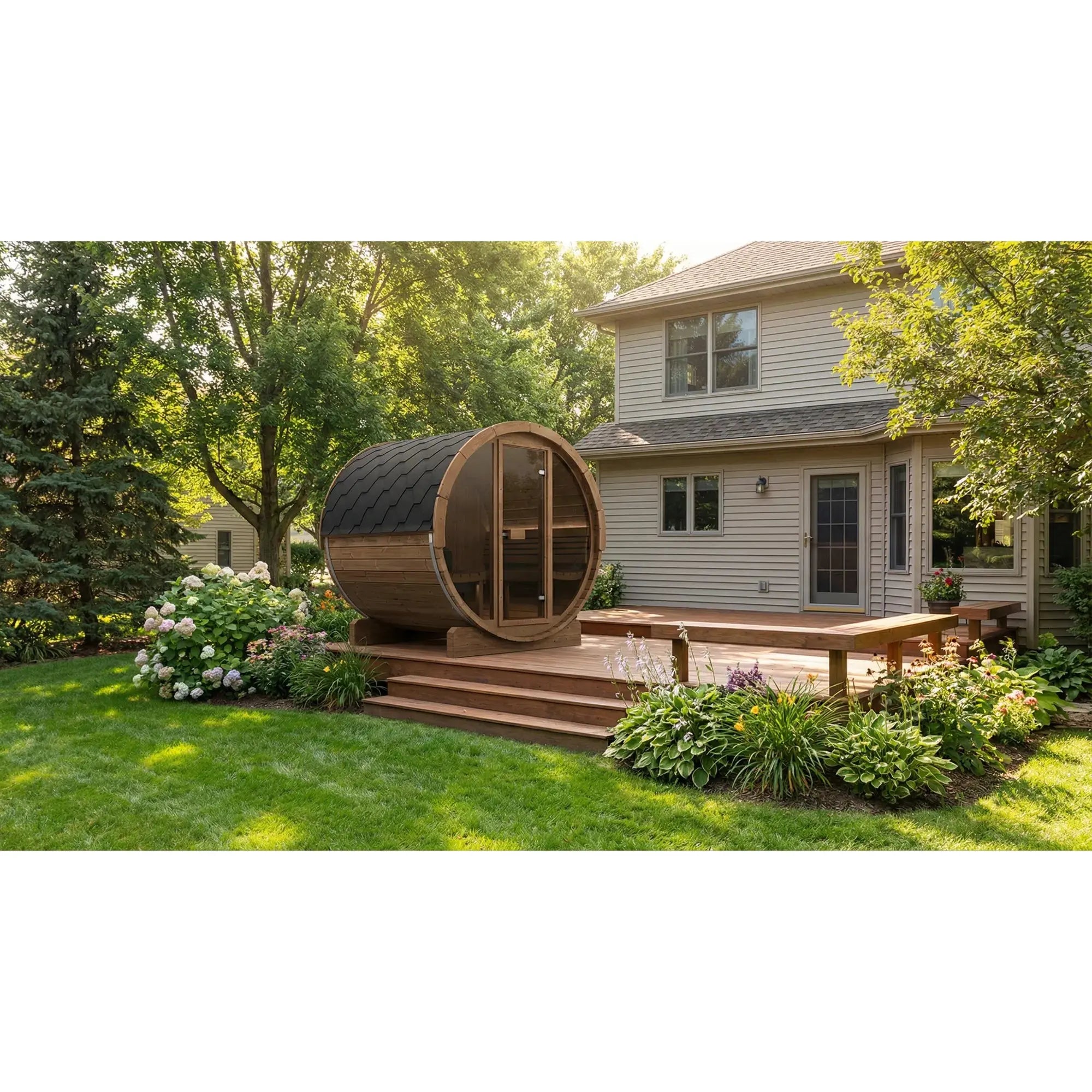
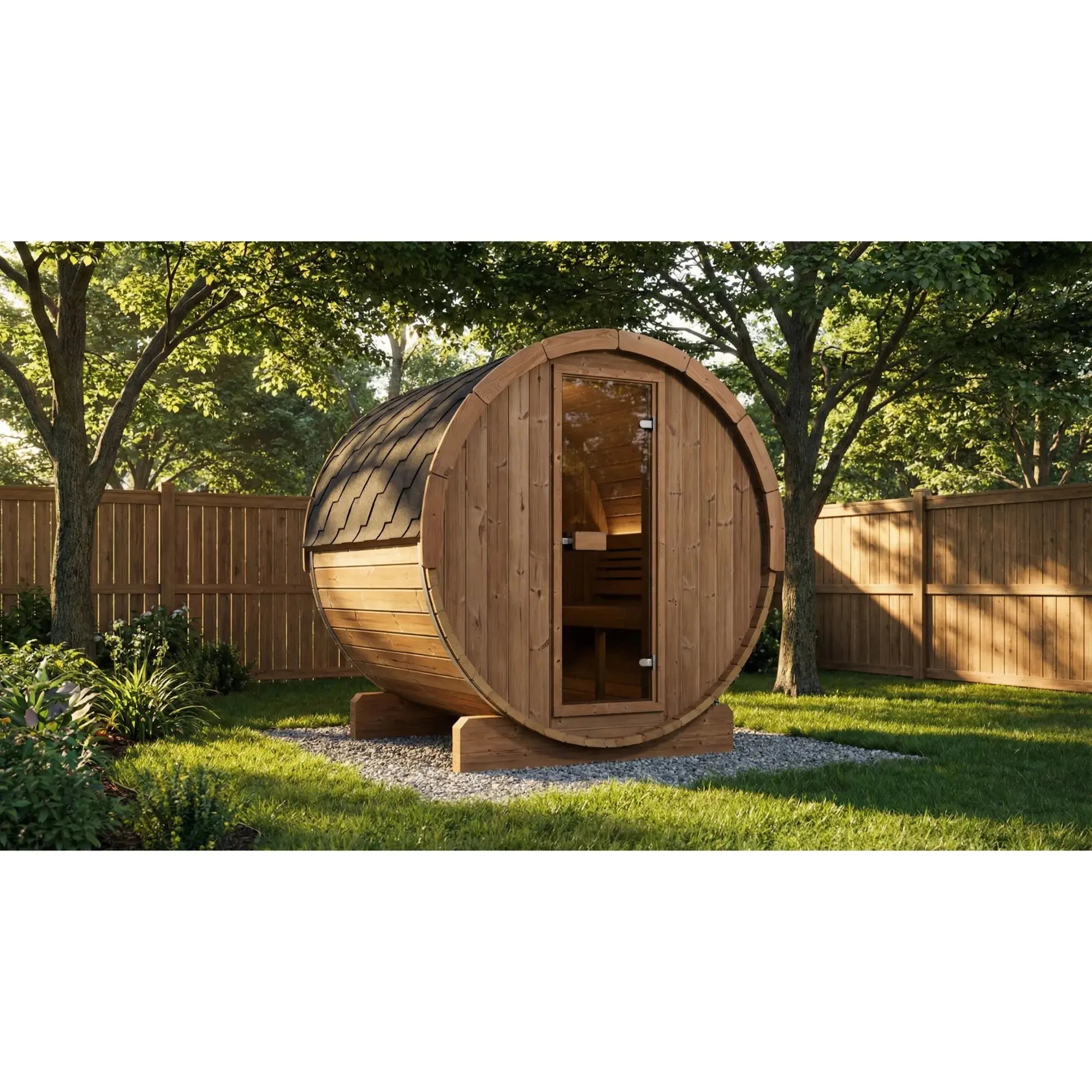
We specialize in premium traditional electric outdoor saunas, built from durable, heat-treated wood and fitted with Finnish Harvia heaters, so if the classic hot-and-steamy experience is what you are after, these are great places to start.
Our traditional electric saunas

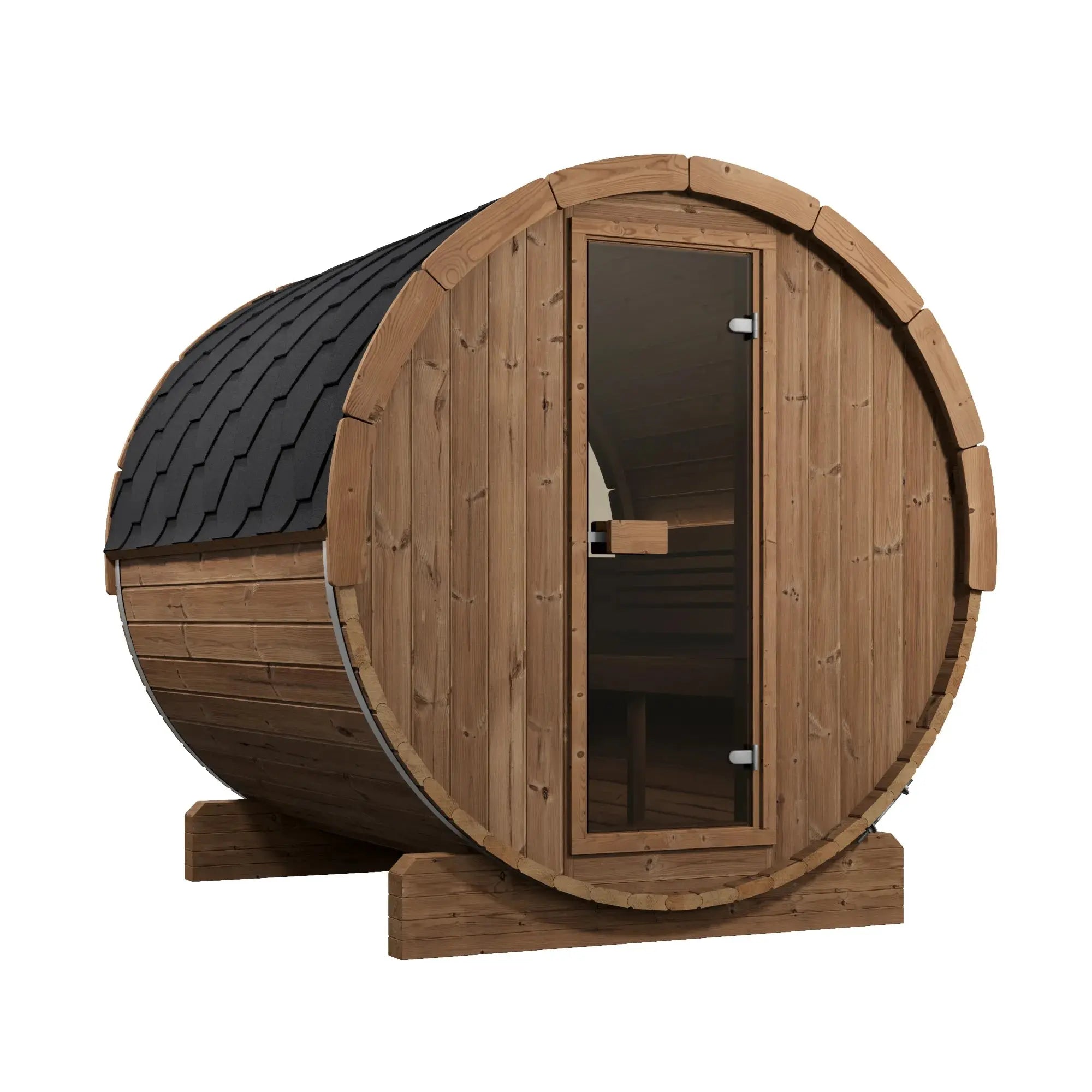
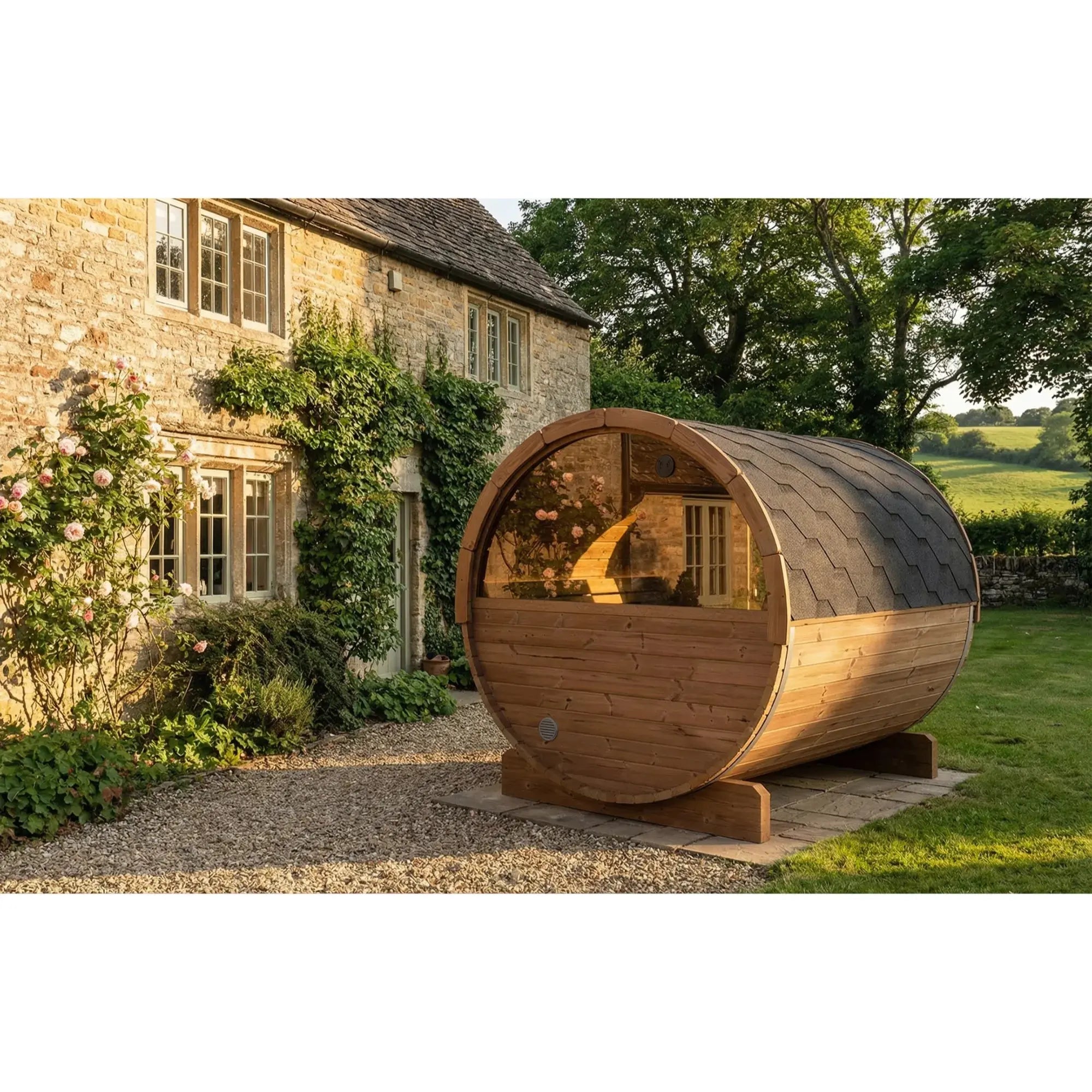
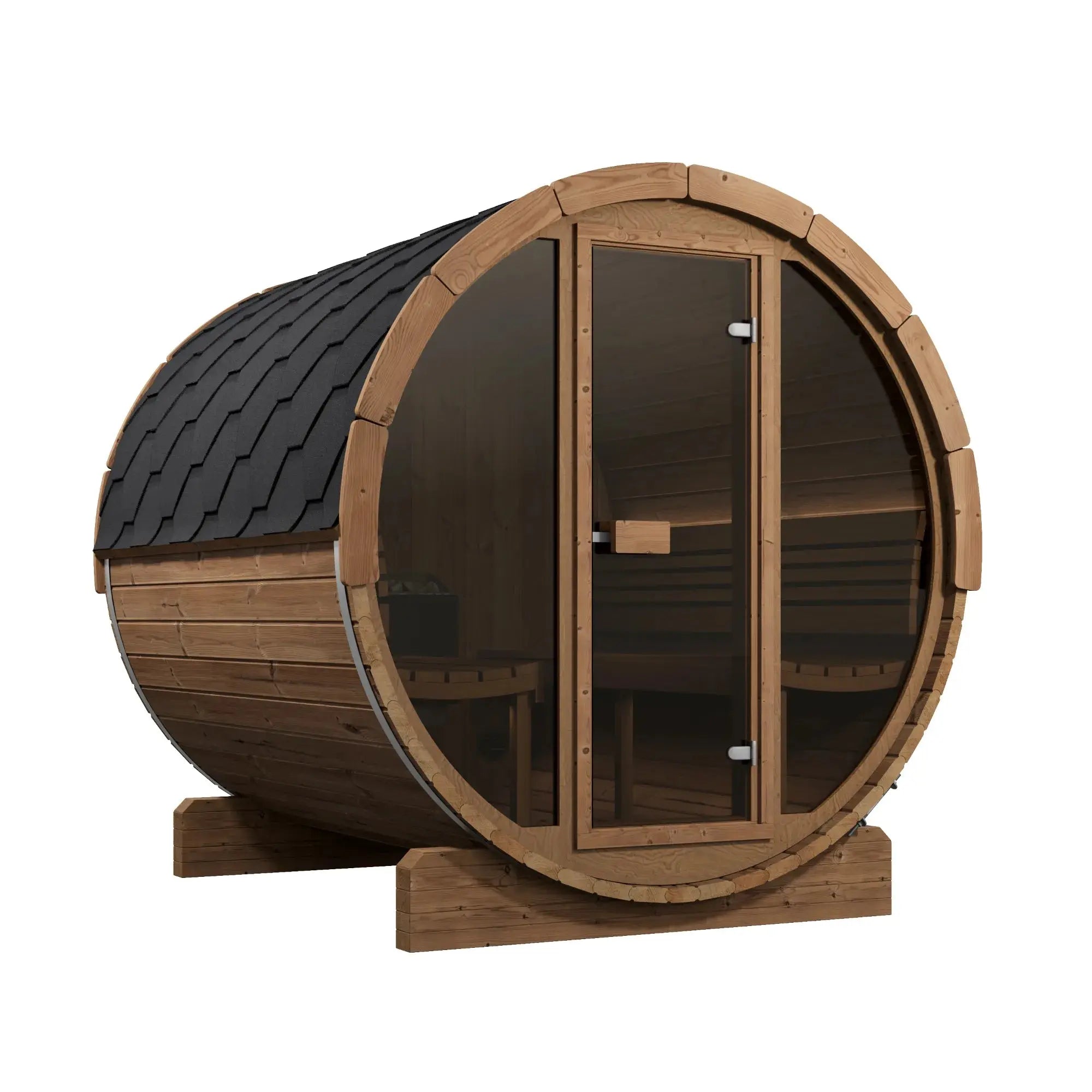
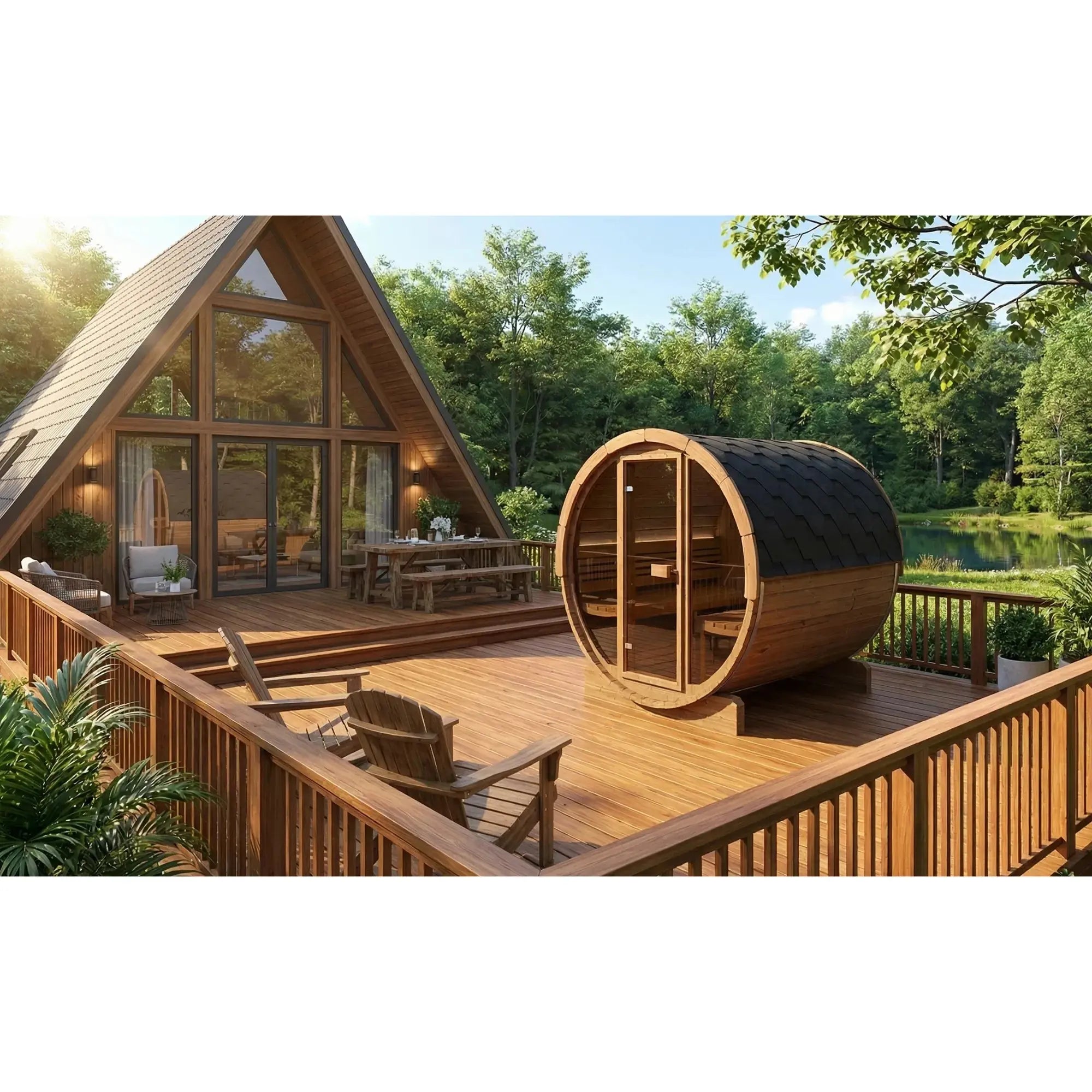
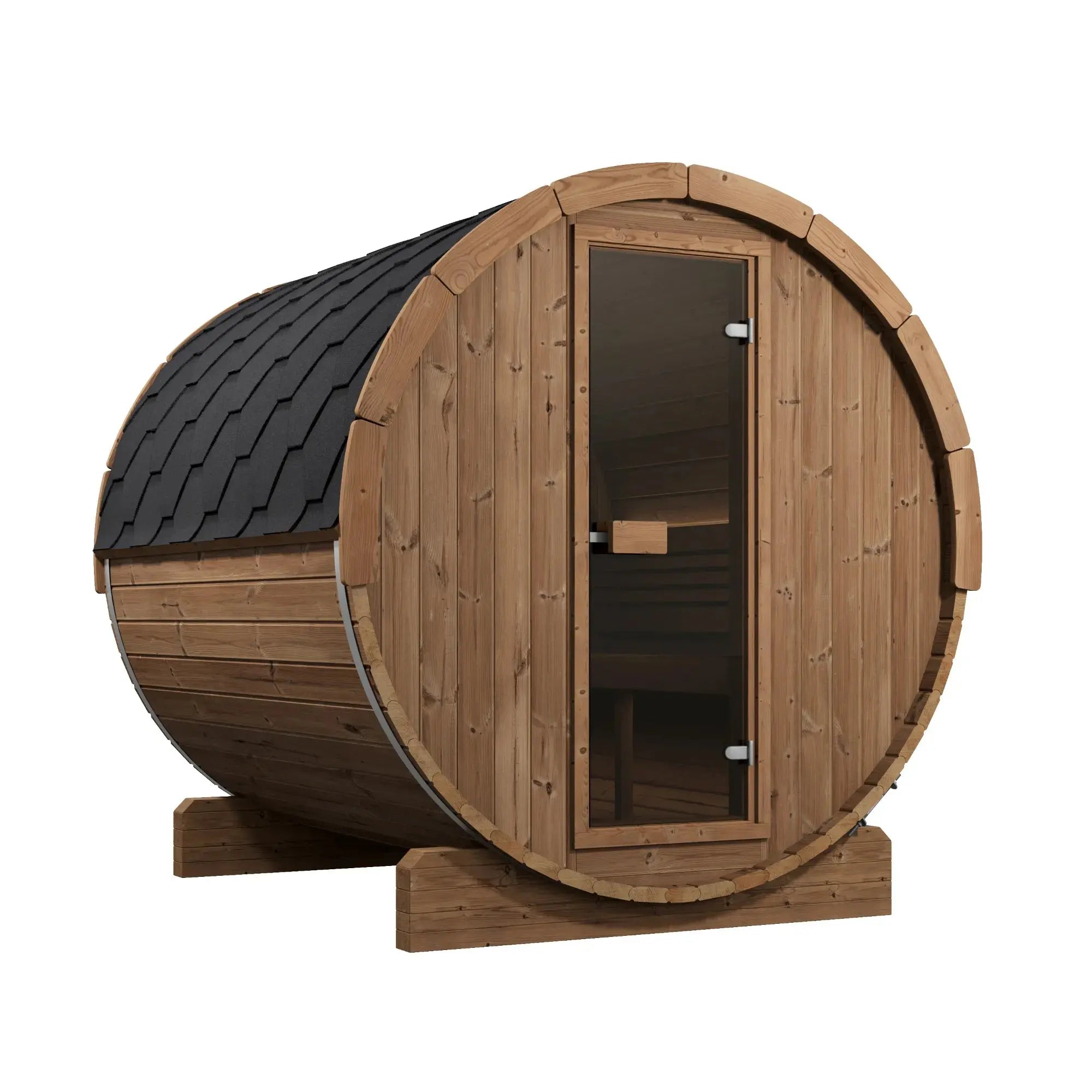
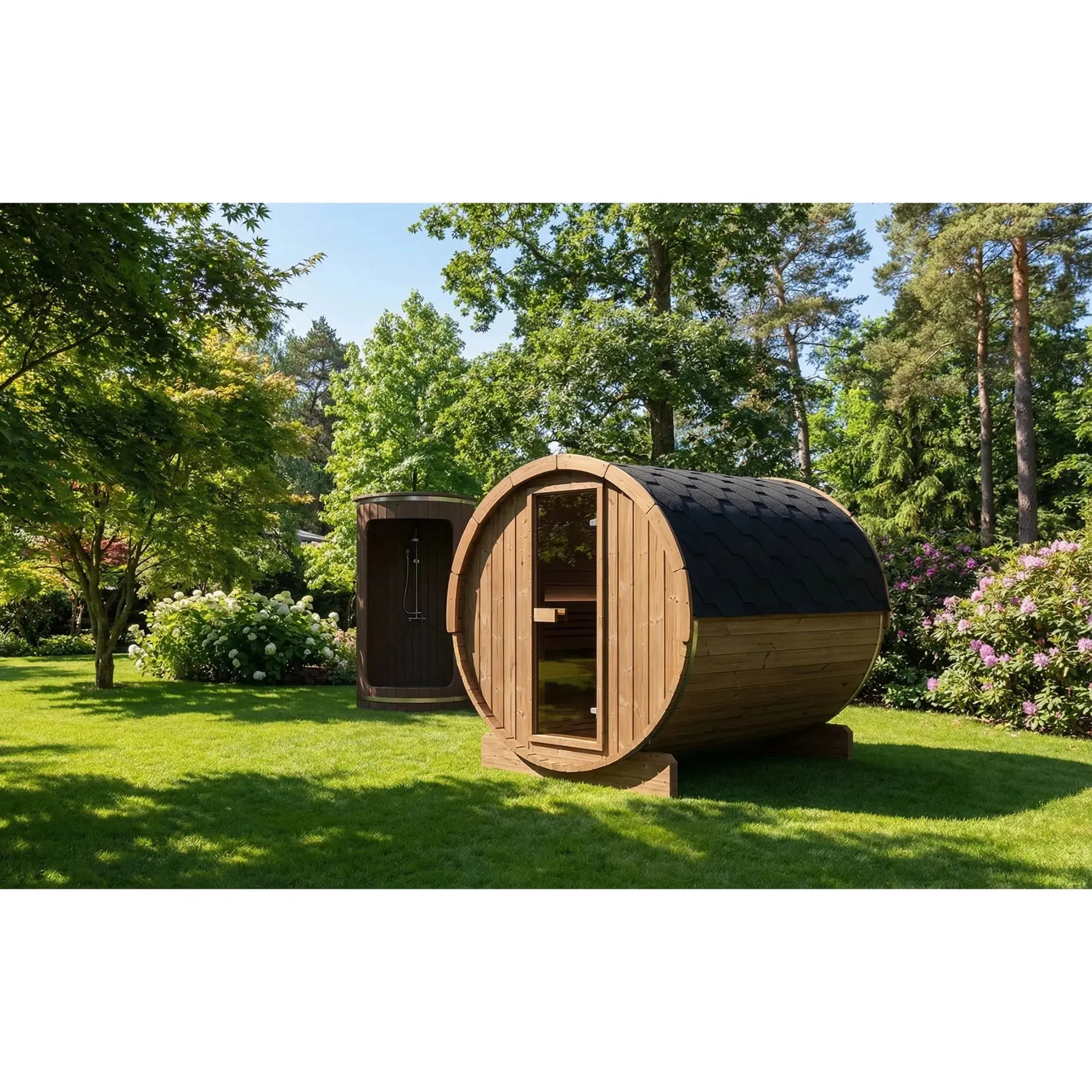
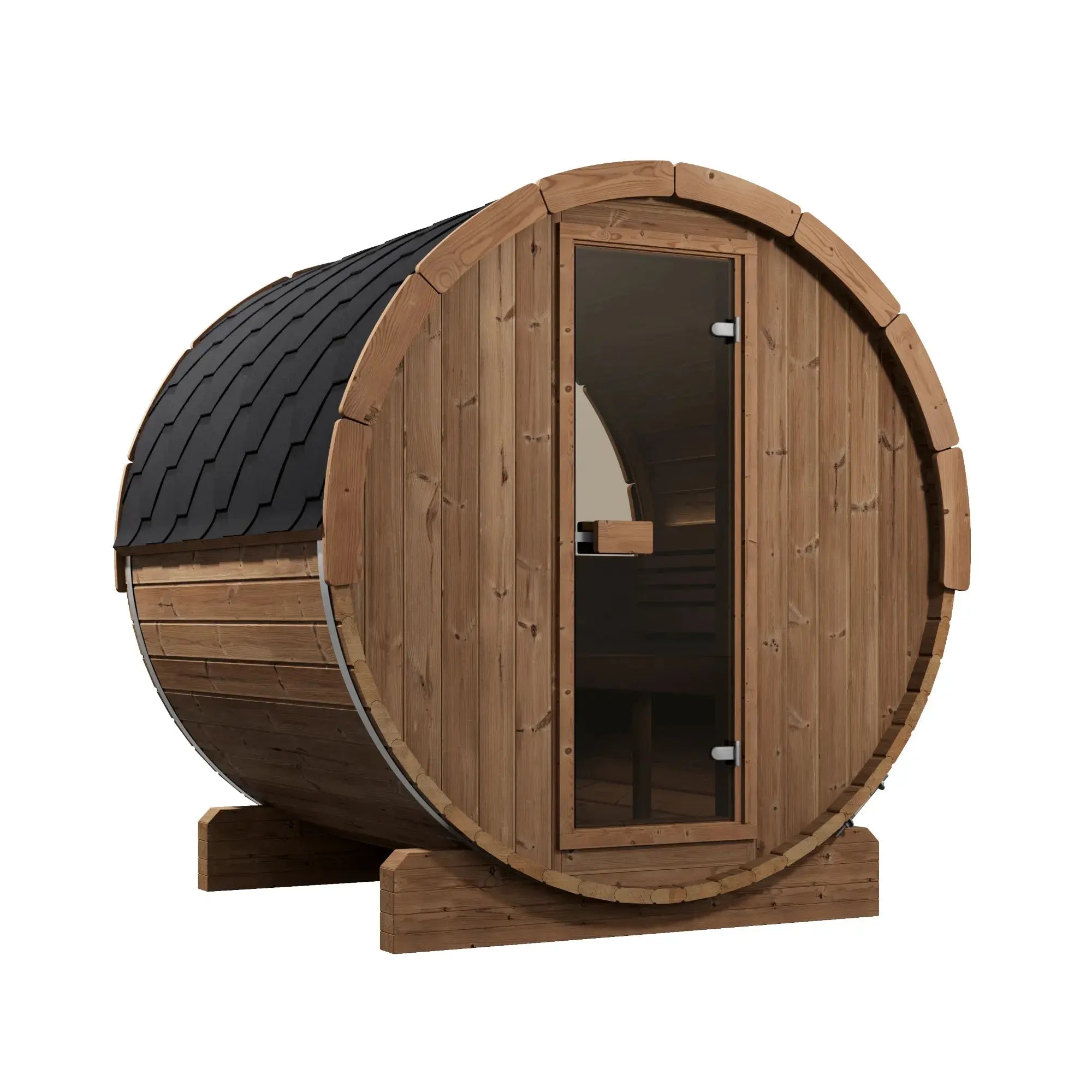
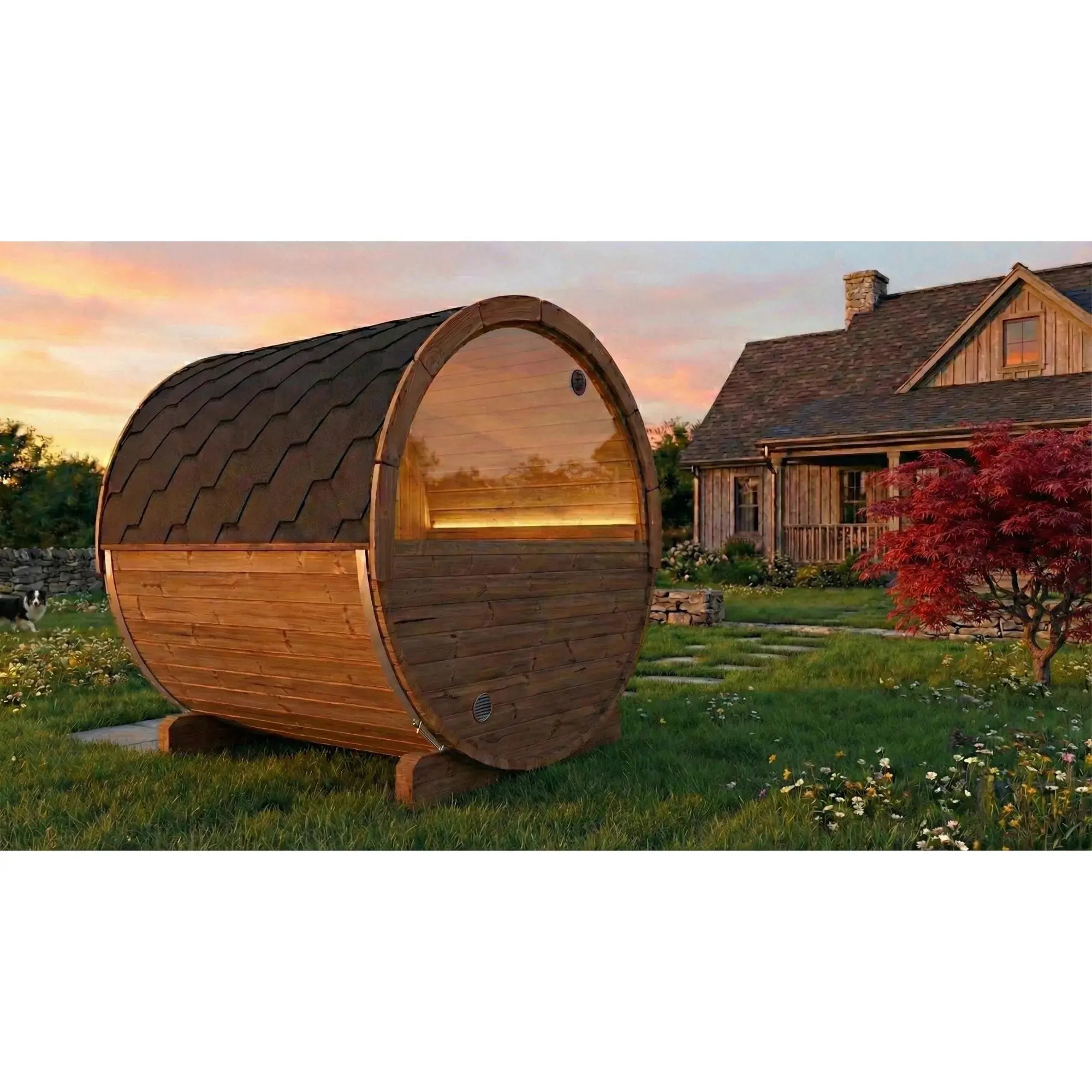
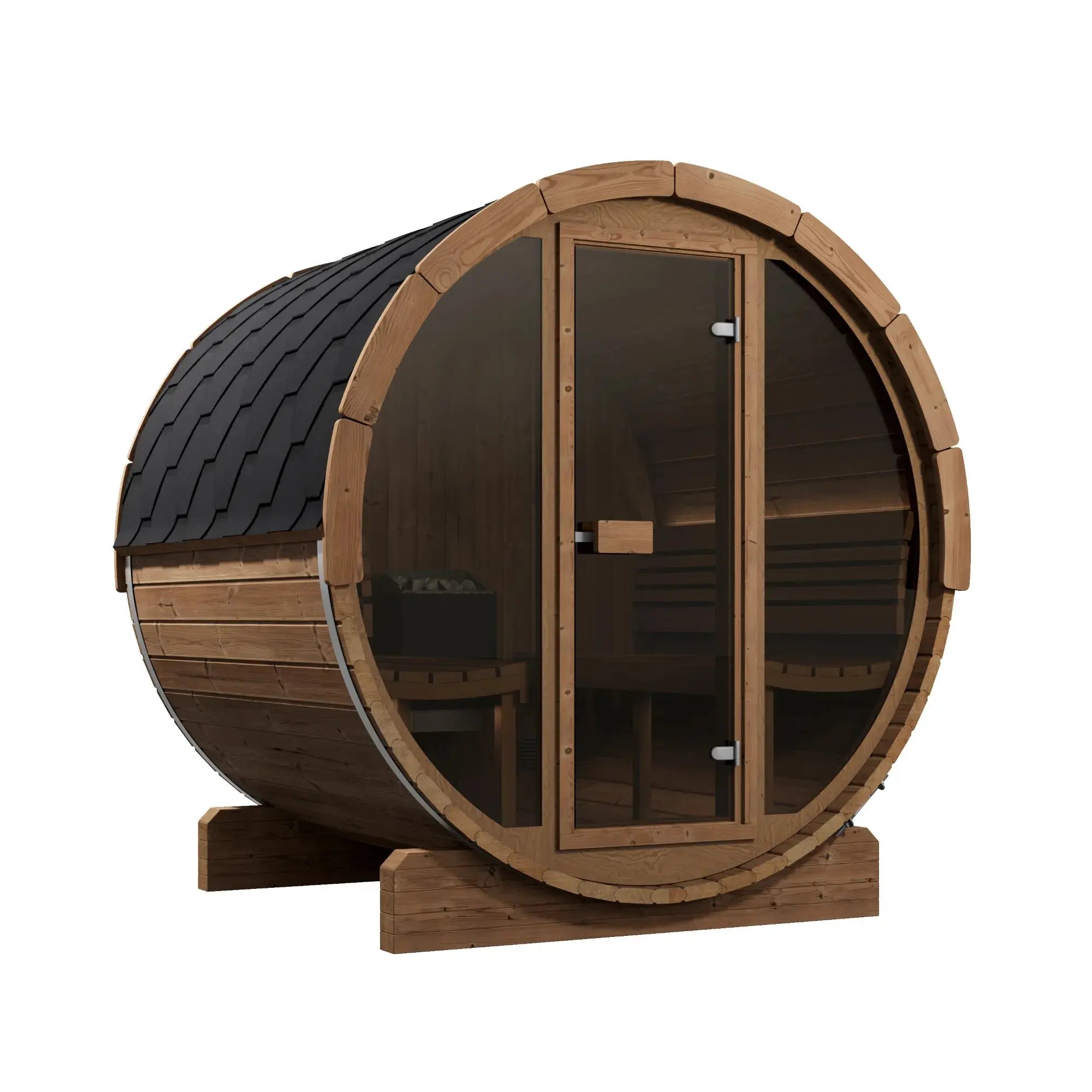
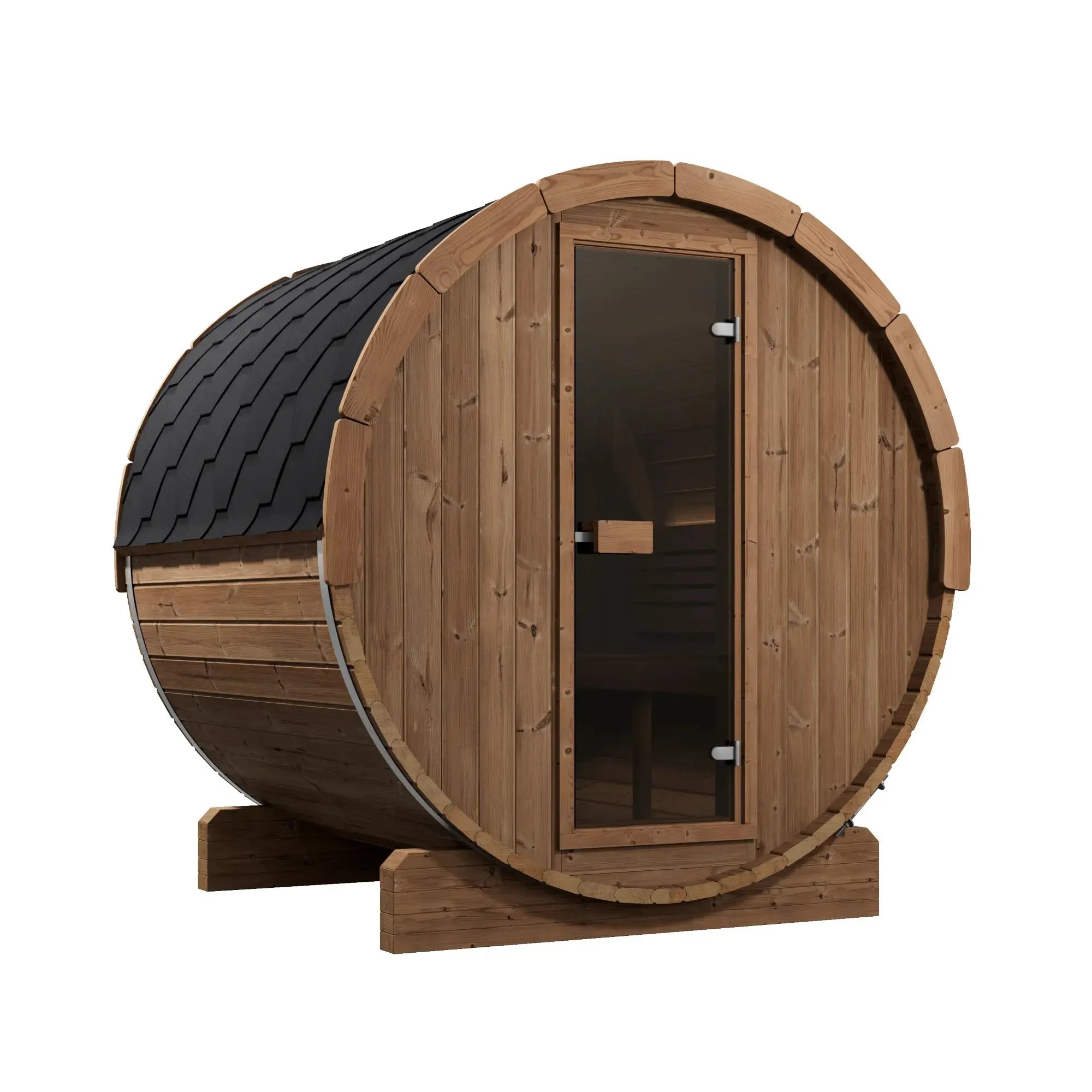
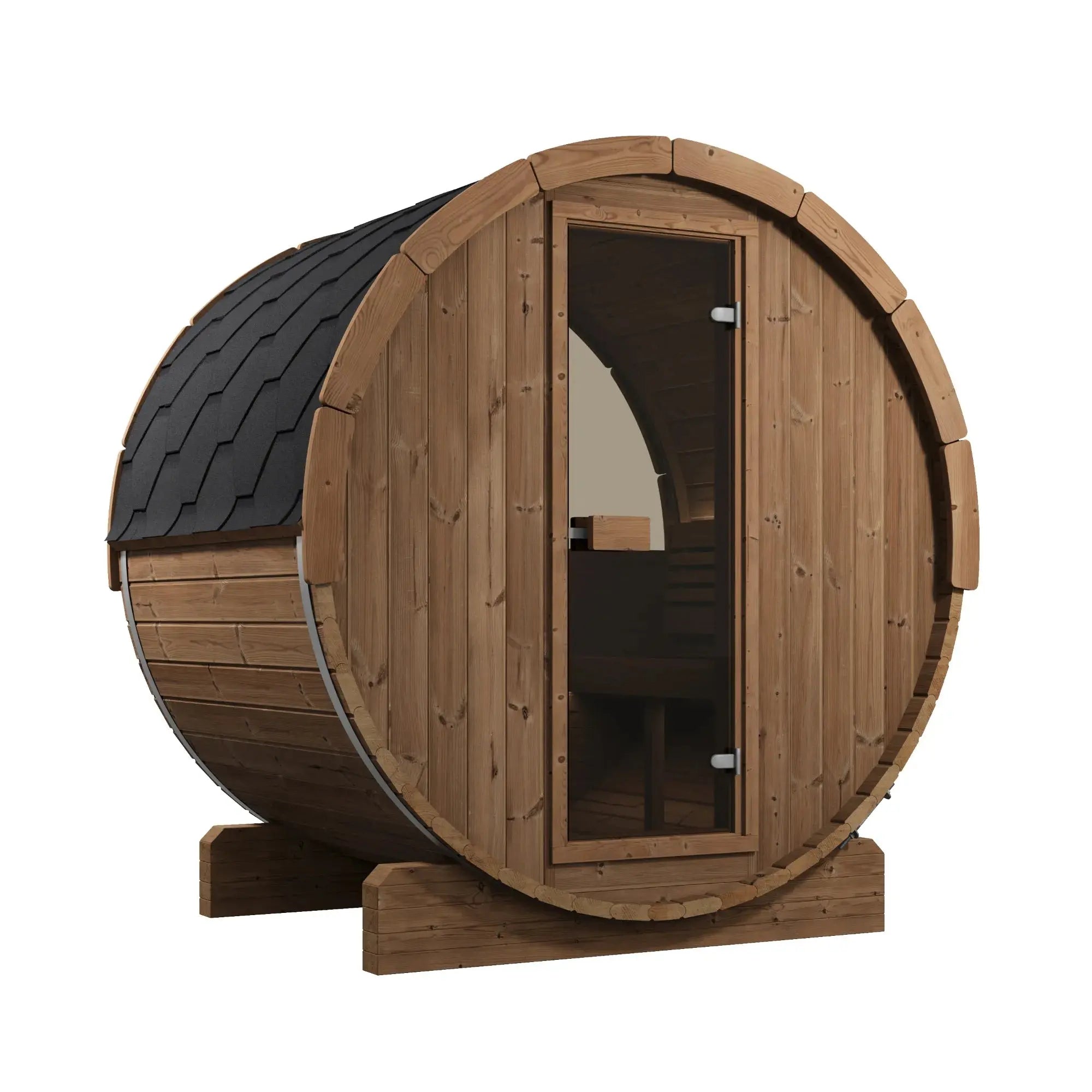
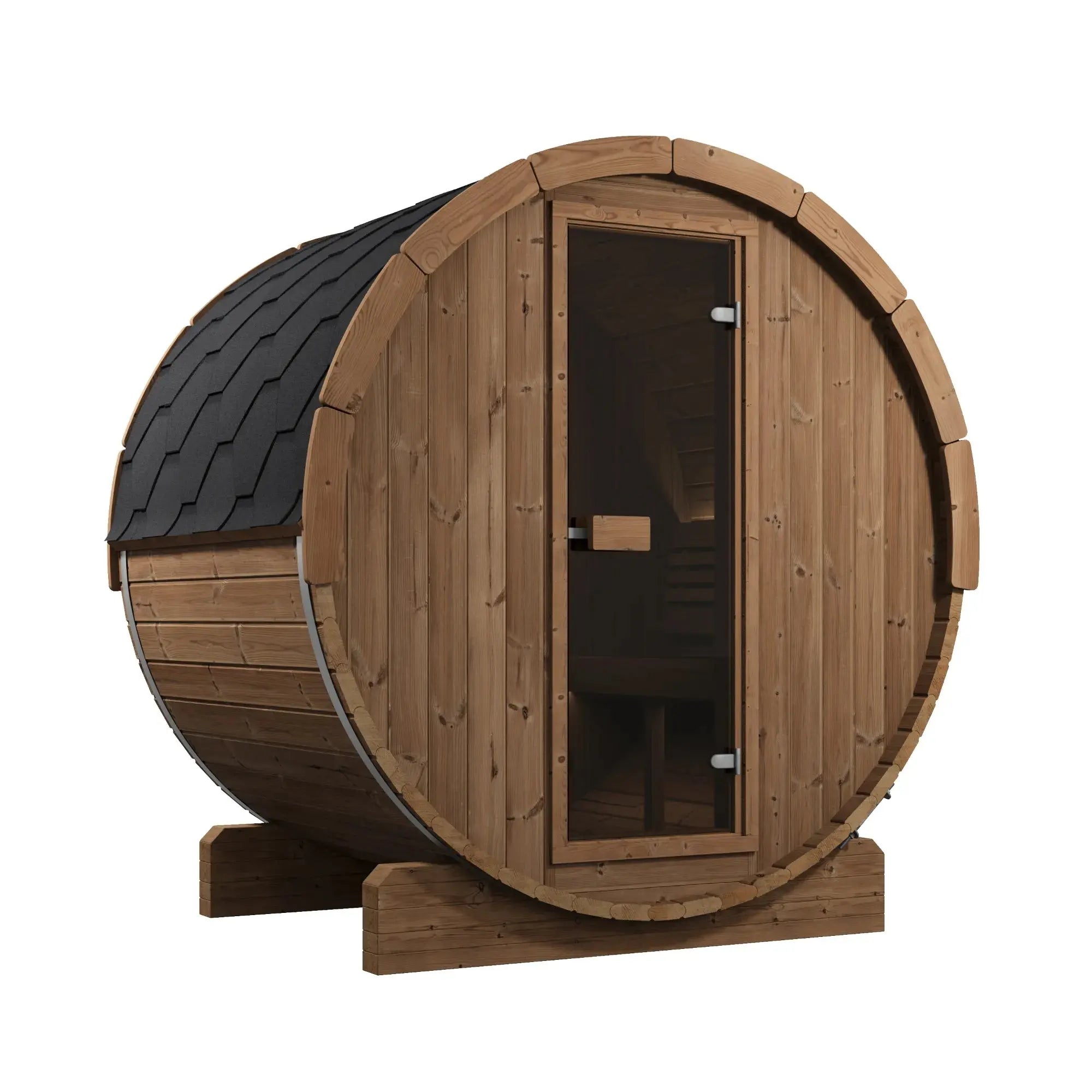
Heat-treated hemlock in the classic barrel shape, with a Harvia heater for true Finnish heat and steam.

A space-conscious cabin with two-level seating and the same authentic heater-and-stones experience.
Frequently asked questions
Is an infrared or traditional sauna better?
It depends on what you want. A traditional electric sauna gives you the authentic, high-heat experience with steam and works well in cold climates. An infrared sauna runs cooler and gentler with a faster warm-up. If you love classic sauna heat, go traditional; if you prefer mild warmth, go infrared.
Are traditional saunas hotter than infrared?
Yes. A traditional electric sauna typically runs 150 to 195°F, while an infrared sauna stays around 110 to 140°F. Traditional also lets you add steam by pouring water over the stones, which infrared cannot do.
Do you sweat as much in an infrared sauna?
You will sweat in both, but the feeling is different. Traditional saunas make you sweat through high air temperature and steam, while infrared warms your body directly at a lower air temperature. Many people find infrared easier to tolerate for longer.
Can you get steam in an infrared sauna?
No. Steam comes from pouring water over hot stones, which only a traditional heater provides. If steam and that humid heat are important to you, choose a traditional electric sauna.
Which sauna is better for cold climates?
A traditional electric sauna, because it heats the air to high temperatures and holds that heat well even when it is cold outside. For year-round use in a cold region, a powerful heater and a well-built cabin make a noticeable difference.
Find your traditional outdoor sauna
Premium FSC-certified wood saunas with Finnish Harvia heaters for authentic high heat and steam.
Shop outdoor saunas →Expert help choosing your size and heater.
Keep exploring our sauna guides: Harvia KIP vs Spirit heaters, what an outdoor sauna costs, what size sauna you need, and barrel vs cabin saunas.